2027 Best Certifications With Generous Transfer Credit Policies

Co-Founder and Chief Data Scientist
Students with prior college coursework often lose time and money when a new school accepts fewer credits than expected. Transfer-friendly academic certificates and associate degrees can reduce repeated coursework, but policies vary sharply by institution and by licensure field. U.S. Bureau of Labor Statistics projections for 2024-2034 show continued demand in several certificate-accessible fields, including 9% projected growth for electricians.
This guide helps former students, career changers, military learners, and working adults compare programs, verify transfer limits, estimate remaining time and cost, and avoid credentials that do not support their intended career.
Key Things You Should Know
- Generous transfer policies usually apply to credit-bearing academic certificates and associate degrees, not to third-party professional certifications; many colleges cap transfer credit by residency rules and require official transcripts.
- Prior general-education courses, including English composition, college algebra, psychology, anatomy, and computer applications, are often the most portable credits; occupational and clinical courses face tighter recency, grade, and licensing requirements.
- Compare the number of accepted credits, required in-residence credits, total remaining tuition, and state licensing eligibility - not advertised program length alone - before selecting a program.
Top 10 Best Certifications With Generous Transfer Credit Policies
Popular Trade School Programs
Transfer-friendly trade options include electrical technology certificates, HVAC/R certificates, welding certificates, construction management certificates, and associate degrees in industrial maintenance. General education and safety coursework may transfer most readily, while hands-on lab, shop, and apprenticeship requirements commonly must be completed through the new provider. Choose a credit-bearing college program when you may later pursue an associate degree; choose a noncredit training provider only when its employer recognition, equipment access, and required licensing preparation are clear. Electricians generally need apprenticeship training and state or local licensing in addition to classroom work.
Healthcare Programs
Common options include medical assisting certificates, practical nursing certificates, pharmacy technician certificates, medical billing and coding certificates, and associate degrees in nursing or dental hygiene. Healthcare programs may accept prior science and general-education credits, but anatomy, physiology, microbiology, and clinical coursework can have recency rules. A certificate is educational preparation; it is not automatically a professional certification or license. Confirm whether the program meets eligibility requirements for the relevant certification examination, clinical placement, and state board rules. Programs with patient-care clinicals are usually less flexible than fully online administrative-healthcare certificates.
Criminal Justice / Law Programs
Transfer-friendly choices include criminal justice certificates, homeland security certificates, paralegal certificates, legal studies certificates, and associate degrees in criminal justice. English composition, communication, psychology, sociology, and introductory law courses may transfer, subject to course equivalency review. A paralegal certificate can support entry into legal support work but does not authorize someone to practice law. Students considering police, corrections, or legal careers should check employer and state requirements because academy training, background screening, citizenship rules, or a bachelor's degree may be required for some roles.
Arts & Design Programs
Graphic design, digital media, photography, web design, animation, and interior design certificates often allow transfer of foundation art, software, writing, and general-education courses. Portfolio-based courses may be reviewed differently from transcripted academic credits. A credit-bearing certificate can be useful for building a focused portfolio or stacking into an associate degree, while a vendor-specific software certification demonstrates tool proficiency rather than college credit. Before transferring, ask whether the program requires current software versions, portfolio review, studio attendance, or specialized equipment that creates costs beyond tuition.
What are transfer-friendly certification programs and how do they work across U.S. colleges?
Transfer-friendly certification programs are usually academic certificate programs offered by community colleges, technical colleges, and universities that evaluate previously earned college credit toward a defined curriculum. They differ from professional certifications such as vendor, trade, or clinical certifications, which are awarded by a certifying body and generally do not accept college transfer credits in place of exam or experience requirements.
At U.S. colleges, the process normally begins with an application and official transcript review. A registrar or academic department compares completed courses with local requirements, then assigns equivalent credit, elective credit, or no credit. "Generous" does not mean unlimited: schools may require a minimum number of credits completed in residence, a minimum grade, and current coursework for technical subjects.
The comparison below separates common credentials so applicants do not assume every short program has the same transfer value.
| Credential type | Who awards it | How transfer usually works | Best use |
| Academic certificate | College or university | May accept prior college credit; may stack into a degree | Focused college-level training |
| Associate degree | College or university | Usually accepts general education and equivalent major courses | Broader entry-level preparation or later bachelor's transfer |
| Professional certification | Certifying organization | Usually requires an exam, experience, or approved training; academic credits may help eligibility only | Validating occupational competence |
| Noncredit career training | College, school, or private provider | Often does not carry transferable academic credit | Fast skills training when college credit is not needed |
Students seeking flexible, shorter academic pathways can also compare certificates I can get online, while confirming whether each option is credit-bearing and transferable.
How can students evaluate online vs campus certification programs that accept transfer credits?
Online and campus programs can award the same academic credential, but transfer acceptance, lab access, clinical placement, proctoring, and licensing eligibility may differ. The best format depends on whether the remaining requirements are primarily lecture-based or skill-based.
This comparison highlights the practical differences to verify before committing transferred credits to one provider.
| Decision factor | Online program | Campus or hybrid program |
| Transfer review | May be streamlined digitally, but equivalencies still require official review | Often includes direct advisor access for complex evaluations |
| Lecture courses | Useful for working adults and general education | Useful for students wanting scheduled instruction |
| Labs and clinicals | May require approved local sites or occasional residencies | Usually provides on-site equipment and local placement processes |
| Licensure preparation | Must be checked against the learner's state requirements | Often designed around the institution's home-state requirements |
| Hidden costs | Technology, proctoring, travel for intensives, local clinical compliance | Transportation, parking, tools, uniforms, and campus fees |
Request a written transfer evaluation before enrolling if possible. Then verify whether every remaining course can be completed at a distance and whether required field experiences are available where you live. Online delivery is a poor fit when a program cannot arrange the required supervised lab or clinical experience in your state.
Students who need a broad, low-residency route rather than a narrowly focused certificate may also review the easiest associate degree to get online options and compare their degree-completion rules.
What accreditation and licensing standards should transfer-friendly certification programs meet?
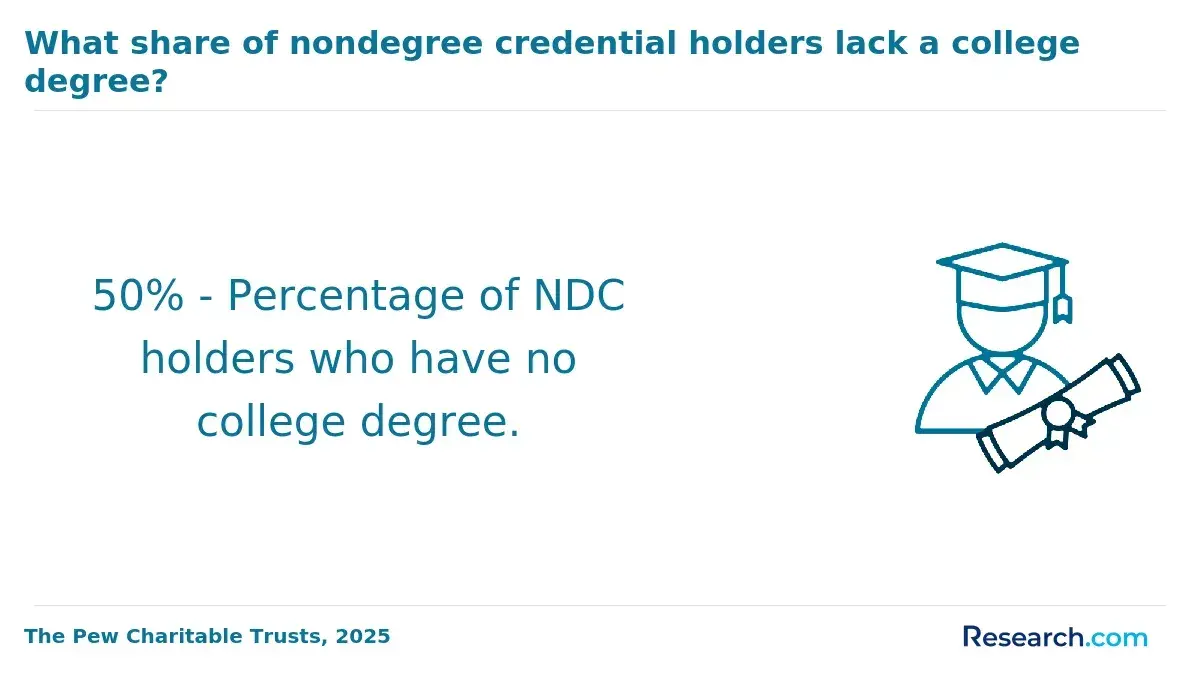
For academic certificates and associate degrees, start by verifying that the institution holds recognized institutional accreditation. Accreditation matters because other colleges, employers, state agencies, and financial-aid systems may rely on it when evaluating coursework. Programmatic accreditation is additionally important in regulated fields such as nursing, dental hygiene, medical imaging, and certain allied-health programs.
Licensure is separate from graduation. A school may award a certificate, yet its curriculum may not meet another state's educational, clinical, examination, or background-check rules. Ask the program to identify the licensing board standard it is designed to meet and obtain written confirmation for your state when studying online or relocating.
Use this verification sequence before paying a deposit:
- Confirm the institution's accreditation status through the accreditor and the appropriate federal or state directory.
- Check whether the specific program has required specialized accreditation or approval.
- Read your state licensing board's current education and clinical requirements for the target occupation.
- Ask whether transferred courses satisfy the program's prerequisites and whether they affect examination eligibility.
- Keep the written transfer evaluation, catalog year, and licensure disclosure with your enrollment records.
A red flag is a provider that promises licensing eligibility without naming the state board, required clinical hours, or examination pathway. Another is a school that markets "accreditation" without clearly identifying the accrediting organization and scope.
Which fields offer certifications where prior college credit or experience transfers most easily?
Fields with standardized lower-division coursework generally offer the easiest credit transfer. Business, information technology, criminal justice, liberal arts, health administration, and many design programs commonly accept general education and introductory courses when content and credit hours match. Technical trades and clinical healthcare programs may accept supporting coursework but often require learners to repeat practical training for safety, equipment, sequencing, or regulatory reasons.
The following categories show why prior credit can be valuable without assuming it will replace every requirement.
| Field | Credits commonly considered | Common limitation |
| Business and administration | Accounting, economics, communication, spreadsheets, management | Upper-level or software-specific courses may need current equivalents |
| Information technology | Programming, networking, math, operating systems | Older technical courses may not match current curriculum |
| Criminal justice and legal studies | Writing, social science, introductory justice or law | Specialized law courses may be institution-specific |
| Healthcare administration | Medical terminology, composition, psychology, health information basics | Clinical and regulated courses have stricter review |
| Skilled trades | Safety, technical math, blueprint reading, general education | Hands-on competencies may require local assessment |
Prior learning assessment, military training evaluation, challenge exams, and industry credentials can sometimes reduce requirements, but availability is school-specific. They are not the same as transfer credit, and fees or portfolio review may apply.
For students prioritizing speed over a degree pathway, these short certificate programs that pay well can help identify options, but learners should still confirm whether the credential carries academic credit.
What admission requirements apply when using existing credits for a new certification program?
Requirements depend on the provider and credential level. A college certificate may require a general application, official transcripts, placement testing or documented college-level readiness, and prerequisites for technical courses. Associate programs may add graduation requirements and a larger residency requirement. Noncredit programs and professional certification examinations may use entirely different enrollment or eligibility rules.
Applicants using existing credits should prepare the materials that make an evaluation accurate:
- Official transcripts from every previously attended college, even when no credential was completed.
- Course descriptions or syllabi for older, unusual, technical, or disputed courses.
- Documentation of military training, standardized examinations, licenses, or industry certifications if the school evaluates prior learning.
- Evidence of prerequisite grades, especially for math, science, writing, or healthcare courses.
- Immunization, background-check, drug-screen, physical, or CPR documentation when a clinical program requires it.
Do not assume a past passing grade will qualify. Programs may require a C or better, apply a time limit to science courses, or require a higher grade for competitive clinical admission. Ask whether admission to the college is separate from admission to the limited-enrollment program.
How do program length, tuition, and fees change when applying generous transfer credits?
Transfer credit can shorten completion time only when accepted courses apply directly to the new credential. A student with 18 applicable credits in a 30-credit certificate may have fewer classes left, but a residency rule could still require completion of a minimum number of credits at the new college. Credits accepted only as electives may not reduce the time to finish a tightly sequenced program.
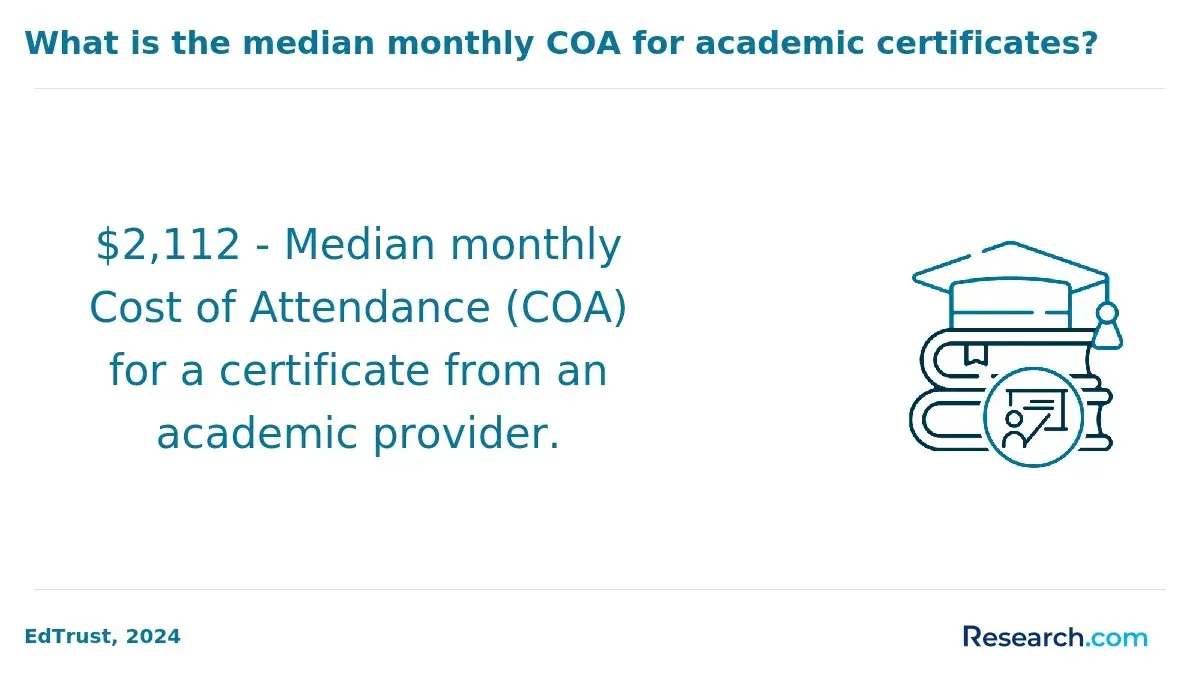
Tuition savings depend on the receiving school's rate and on costs that transfer cannot erase. Use the school's published per-credit tuition and mandatory-fee schedule to calculate the remaining academic bill, then add program-specific expenses such as books, equipment, uniforms, examinations, background checks, lab fees, clinical compliance, and travel.
This cost framework helps distinguish a genuinely economical transfer option from a program with a low advertised tuition rate.
| Cost or time factor | Effect of accepted transfer credit | What to verify |
| Tuition per required course | Usually reduced when a required course is waived | Whether transferred credit fills a requirement rather than an elective |
| Mandatory fees | May remain unchanged | Term, technology, lab, and graduation fees |
| Program sequence | May shorten only if prerequisites are cleared | Whether key courses are offered every term |
| Residency requirement | Can limit how few credits remain | Minimum credits that must be completed at the institution |
| Financial aid eligibility | May change with enrollment intensity and program eligibility | Credit load, aid rules, and satisfactory academic progress requirements |
Compare a written degree audit from at least two institutions. The cheapest option is not always the fastest if required courses are available only once a year, and the fastest option is not always best if it leaves you ineligible for licensure or future degree transfer.
What coursework and prerequisites typically qualify for transfer into certification programs?
Courses that transfer most predictably are those with clear college credit, matching learning outcomes, equivalent credit hours, and acceptable grades. General education is often easier to match than specialized coursework because institutions commonly share requirements in writing, quantitative reasoning, social science, and introductory computing.
Typical transferable coursework includes English composition, public speaking, college algebra or statistics, psychology, sociology, computer applications, accounting, introductory programming, medical terminology, anatomy and physiology, and basic business courses. However, acceptance does not guarantee that a course satisfies a particular requirement. A four-credit anatomy course, for example, may still be rejected for a healthcare sequence if it lacks a lab, is too old under the program's policy, or does not meet a required grade threshold.
Before applying, compare your transcript with the current catalog - not an old program map. If a course is denied, ask whether a syllabus review, challenge examination, competency demonstration, or substitution petition is available. Do not enroll in duplicate coursework until the appeal process and its timeline are clear.
Older adults who want a compact return-to-college route may find that one year degrees for seniors provide useful planning comparisons, particularly when prior credits have already satisfied general-education requirements.
What career paths, job roles, and salaries are common after these certification programs?
Career outcomes depend on the occupation, employer, state rules, work experience, portfolio, apprenticeship, and any separate certification or license - not on the certificate title alone. A transfer-friendly program is most valuable when it closes a specific competency gap and meets the educational requirement employers or regulators actually use.
Recent U.S. Bureau of Labor Statistics occupational data provides useful context for several paths commonly associated with certificate or associate-level education. These are median wages for the occupation, not a promise of earnings after completing a particular program.
| Career path | Common educational route | Median annual wage, May 2024 | Important limitation |
| Electrician | Technical coursework plus apprenticeship | $62,350 | Most workers need supervised training and state or local licensing |
| Dental hygienist | Accredited associate degree and licensure | $94,260 | A short certificate alone is generally insufficient |
| Paralegal or legal assistant | Certificate or associate degree, depending on employer | $61,010 | Requirements vary; this does not authorize legal practice |
| Graphic designer | Certificate, associate, or bachelor's degree plus portfolio | $61,300 | Employers often weigh portfolio quality and experience heavily |
Choose an entry-level certificate when it matches a clear job target and can stack into more education. Choose an associate degree when your field requires broader general education, licensure preparation, or advancement options. Consider an apprenticeship, portfolio program, or employer-sponsored training instead when hands-on experience matters more than additional classroom credit.
How can prospective students compare and choose reputable transfer-friendly certification providers?
Reputable transfer-friendly providers make their rules understandable before enrollment. They publish institutional accreditation information, catalog requirements, transfer-credit procedures, tuition and fee schedules, residency rules, student-support contacts, and - when relevant - state authorization and licensure disclosures. Marketing language such as "up to" a certain number of credits is not enough; your decision should rest on an individualized, written evaluation.
Use the following process to compare finalists fairly:
- Define the target job, required license or certification, and the highest credential you may eventually need.
- Create a list of every prior course, credit hour, grade, completion date, and applicable training credential.
- Request an official transfer evaluation and a remaining-course plan from each provider.
- Calculate total remaining cost, including non-tuition expenses and any travel, tools, clinical, or examination costs.
- Confirm course scheduling, residency requirements, online availability, and the ability to complete required practical experiences.
- Check whether credits earned after graduation can transfer into a related associate or bachelor's degree if your plans change.
- Read student complaint procedures, refund policies, and licensure disclosures before signing an enrollment agreement.
Common mistakes include choosing solely by the largest advertised transfer maximum, confusing an educational certificate with a professional certification, overlooking recency rules for sciences, and trusting verbal estimates from admissions staff. Ask for documentation, compare the same remaining requirements across schools, and treat any provider that will not explain accreditation, total charges, or career limitations as a warning sign.
Other Things You Should Know About
Often, yes, if the certificate is credit-bearing and offered by a college. Transfer acceptance depends on course equivalency, grade, age of coursework, program prerequisites, and the school's residency policy. Noncredit certificates and professional certifications generally do not use college transfer-credit systems.
There is no universal limit. Some schools accept substantial prior coursework, but many require students to complete a minimum number of credits through the institution. Ask for a written evaluation showing exactly which requirements transferred.
They can reduce tuition for courses you no longer need, but they may not reduce fixed fees, clinical expenses, tools, books, examination costs, or required in-residence credits. Compare total remaining cost rather than the number of credits accepted.
Only if the program meets the licensing requirements in your state, including required coursework, supervised practice, clinical hours, and examination eligibility. Verify this directly with the school and the relevant state licensing board before enrolling.
References
- Top Online Schools That Accept Transfer Credits https://www.edvisorly.com/student-guides/online-schools-that-accept-transfer-credits
- Findings (Beyond Transfer) - Public Agenda https://publicagenda.org/resource/beyond-transfer/findings/
- Accredited vs. Credit-Recommended vs. Transfer Policy: What It All Means for Your College Credits https://www.straighterline.com/blog/transfer-accredited-vs-credit-recommended-vs-transfer-policy-what-it-all-means-for-your-college-credits
- Transferology https://www.transferology.com/
- How to Transfer College Credits | McMillan Education https://www.mcmillaneducation.com/blog/how-to-transfer-college-credits/
- The Importance of Understanding Transfer Credit Policies https://www.sophia.org/blog/higher-education/understanding-transfer-credit-policies/
- How the College Credit Transfer Process Works and How it Can Be Improved | ACE Blog https://ace.edu/blog/how-the-college-credit-transfer-process-works-and-how-it-can-be-improved/
- Transfer Credit Policy on the Evaluation of Previous Training and Education https://catalog.tmcc.edu/rules-regulations/transfer-credit-policy-evaluation-previous-training-education/
- 50-State Comparison: Transfer and Articulation Policies https://www.ecs.org/50-state-comparison-transfer-and-articulation/
- Certificate vs Degree: Find the Best Fit for Your Goals https://beal.edu/certificate-vs-degree/