2027 Best Online Career Training Programs With Transparent Tuition

Co-Founder and Chief Data Scientist
Choosing online career training is difficult when schools advertise low monthly payments but do not clearly show total tuition, exam fees, equipment costs, or required in-person training. This guide helps prospective career changers, working adults, and recent graduates compare practical program types before enrolling.
U.S. Bureau of Labor Statistics projections show healthcare occupations are expected to grow faster than the average for all occupations from 2024 to 2034, making program quality and licensing fit especially important. Learn how to compare cost, schedules, recognition, and realistic job outcomes.
Key Things You Should Know
- Choose programs that publish a written total cost, including tuition, registration, technology, books, supplies, exam fees, background checks, clinical costs, and any required travel; a monthly payment is not the total price.
- Online career training can be a strong fit for administrative, technology, design, and some business roles, but many skilled-trade and healthcare pathways still require supervised labs, clinicals, externships, or state-approved in-person instruction.
- Career outcomes vary sharply by occupation: BLS reports a $62,350 median annual wage for electricians and a $44,200 median for medical assistants in May 2024, but completing an online certificate alone does not automatically qualify a student for either role.
Top 10 Best Online Career Training Programs With Transparent Tuition
Popular Trade School Programs
Online trade training commonly covers HVAC fundamentals, electrical theory, welding safety, plumbing basics, construction management, automotive service, and industrial maintenance. These are usually nondegree career-training certificates, though community colleges may offer credit-bearing certificates or associate degrees.
Fully online study works best for theory, codes, estimating, and safety; employers and licensing boards may still require documented shop hours, apprenticeships, or supervised field experience. Ask whether tuition includes tools, simulator access, certification-exam preparation, and local placement for practical training. An online program is not a substitute for an apprenticeship where a trade requires one.
Healthcare Programs
Online healthcare programs may prepare students for medical billing and coding, pharmacy technician, medical assisting, dental assisting, health information, or patient-care support. A school-issued certificate documents completion; a separate professional certification may require an exam and eligibility criteria.
Clinical occupations often need approved in-person labs, externships, background checks, immunizations, and state-specific authorization. Medical billing and coding can be largely online, while medical assisting usually cannot be. Confirm that the program meets the requirements of the credentialing organization or state board relevant to the job you want before paying a deposit.
Criminal Justice / Law Programs
Online options include legal studies certificates, paralegal studies certificates or associate degrees, court reporting preparation, security training, and criminal justice programs. A paralegal certificate can build legal research, writing, and procedure skills, but it does not make a graduate an attorney or independently authorized legal practitioner.
Requirements for paralegal employment vary by employer, while security licensing is regulated by states and may require fingerprints, training hours, or examinations. Compare whether coursework is credit-bearing, whether it can transfer into an associate or bachelor's degree, and whether practical legal software training is included.
Arts & Design Programs
Online arts and design training includes graphic design, UX design, digital marketing creative, photography, animation, web design, and video editing certificates. These programs are usually portfolio-driven rather than license-driven, so the value depends heavily on project quality, software access, instructor feedback, and employer relevance.
A short noncredit program may help a learner build specific skills quickly; a credit-bearing certificate or associate degree may be better for students seeking transfer options. Before enrolling, confirm whether Adobe or other software subscriptions, hardware, portfolio reviews, and career services are included in total tuition.
How do online career training programs compare to campus programs for flexibility and outcomes?
Online career training is generally more flexible because students can complete lectures, quizzes, and assignments asynchronously. Campus programs are often stronger when skill development requires expensive equipment, live supervision, clinical practice, or frequent instructor observation. Outcomes depend less on delivery label than on whether the program provides validated skills, practical experience, employer-relevant tools, and support through completion.
The comparison below separates flexibility from the requirements that cannot responsibly be moved fully online.
| Decision factor | Mostly online program | Campus or hybrid program |
| Schedule | Often asynchronous and easier to fit around work | Set meeting times, labs, or clinical shifts |
| Best fit | Billing, coding, design, legal support, IT, business operations | Clinical care, welding, electrical labs, automotive work, hands-on trades |
| Practical learning | Virtual simulations, projects, remote labs, local externships | Instructor-supervised equipment and practice |
| Key risk | Unclear local placement or limited live support | Less schedule flexibility and possible commuting costs |
Choose online delivery when the occupation accepts it and you can reliably complete independent work. Choose hybrid or campus training when a license, employer, or certification pathway expects documented practical hours. For learners deciding whether a longer academic route offers better flexibility or advancement, review what is the easiest master's degree alongside the actual education requirements of the target occupation.
What accreditation and state licensing requirements should online career training programs meet?
Accreditation, approval, and licensing are different checks. Institutional accreditation evaluates a college or school; programmatic accreditation evaluates a particular discipline; state authorization permits a provider to serve residents or operate training; and licensing boards determine whether education qualifies someone for a regulated occupation. A provider can be legitimate for one purpose without meeting every requirement for another.
Before enrolling in a regulated pathway, verify these points directly with the relevant organization rather than relying on an admissions representative.
- Identify the exact role and state where you intend to work.
- Check the state licensing board or regulator for required education, clinical hours, examinations, and background-screening rules.
- Confirm in writing that the specific online program, not merely the school, meets those requirements.
- Ask whether the program prepares you for a separate certification exam and whether exam eligibility has prerequisites beyond graduation.
- Save the school's written response, catalog page, and tuition disclosure before making a payment.
A major red flag is language such as "career-ready" or "certification prep" without naming the credentialing body, exam, state approval, or supervised experience required. If a school cannot document eligibility, consider a different program or an employer-sponsored apprenticeship.
How can students verify total tuition, fees, and hidden costs before enrolling online?
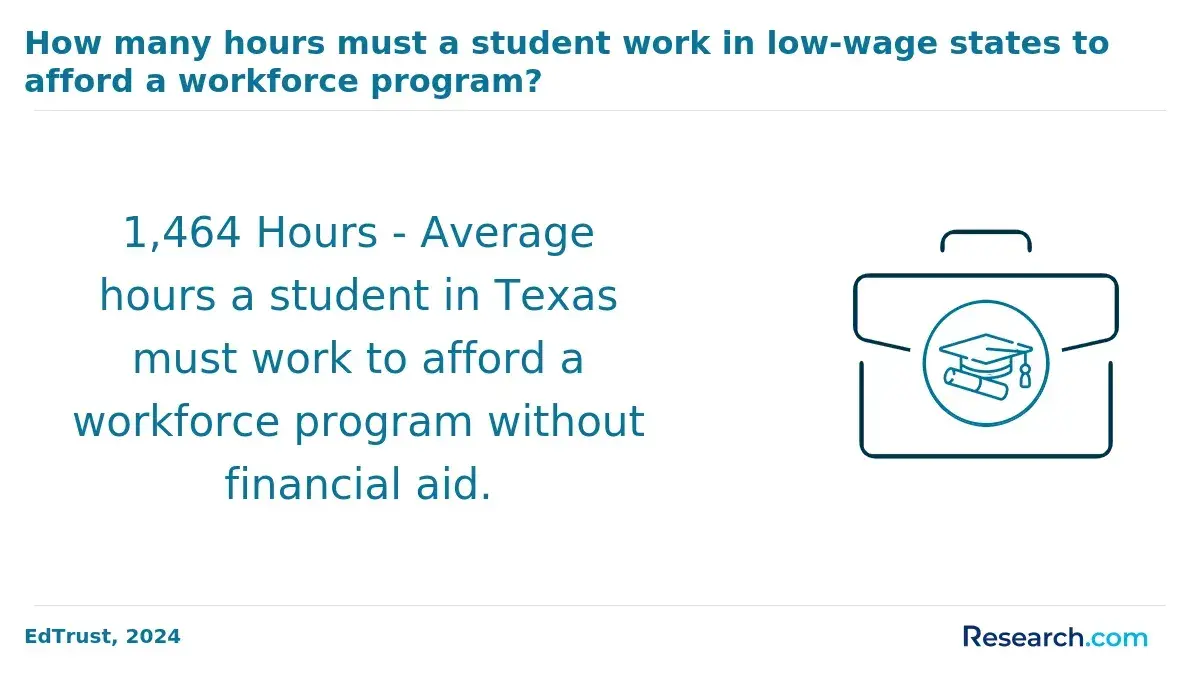
Transparent tuition means you can determine the realistic total cost before enrollment, not merely see a promotional price or installment amount. For a credit-bearing college certificate, ask for the published cost per credit and required credits. For a noncredit career program, request an itemized enrollment agreement showing the complete program price and refund terms.
Use this cost review to compare offers on an equal basis.
| Cost category | What to confirm | Why it matters |
| Tuition | Total program charge, not only monthly payment | Shows the base investment |
| Mandatory fees | Registration, platform, proctoring, graduation, and lab fees | Can materially change the final bill |
| Learning materials | Books, kits, tools, uniforms, software, and equipment | Some occupations require specialized supplies |
| Career-entry costs | Exam, license, background check, immunization, and travel costs | May be required before employment |
| Financing | Interest, origination fees, payment schedule, and cancellation terms | Low payments can obscure a high financed cost |
Ask for the itemization before you provide financial information or sign. Compare the total with local community college options, employer tuition assistance, workforce-agency grants, and apprenticeships. Do not assume federal student aid applies: eligibility depends on the institution, program, enrollment status, and student circumstances.
What admission requirements and prerequisites do reputable online career training programs have?
Reputable online career programs set requirements that match their level and the safety demands of the field. A short noncredit certificate may require only an application, identification, and minimum age. Credit-bearing certificates and associate degrees may require a high school diploma or equivalent, placement steps, prerequisite courses, or official records. Healthcare and public-safety programs can add drug screening, immunizations, CPR training, criminal background checks, or physical-capacity requirements.
Requirements worth confirming before applying include the following.
- Whether the credential is noncredit, credit-bearing, or stackable into a degree.
- Whether prior coursework, industry experience, or transfer credit can reduce time and cost.
- Whether a criminal record, health requirement, or residency rule could prevent clinical placement or licensing.
- Whether admission is open enrollment or selective because seats in labs and externships are limited.
Do not equate "no application fee" with no admission standards or no total cost. Students comparing degree-granting options can review colleges with free application fees, then verify each program's tuition, state authorization, and career-training requirements separately.
How long do online career training programs typically take, and what schedules are offered?
Completion time depends on credential type, course load, prerequisite knowledge, and required practical training. Some self-paced noncredit programs can be completed in a few months, but that timeline may exclude the time needed to secure an externship, take a certification exam, or satisfy a licensing board. Credit-bearing certificates commonly follow academic terms, while associate degrees generally take longer because they include general education and broader technical coursework.
Match the schedule to your constraints rather than selecting the shortest advertised timeline.
| Format | Typical scheduling model | Best for |
| Self-paced online | Start dates may be flexible; progress is independent | Experienced, highly self-directed learners |
| Instructor-led online | Weekly deadlines and cohort pacing | Learners who need structure and feedback |
| Hybrid | Online theory plus scheduled labs or clinicals | Fields requiring practical assessment |
| Part-time certificate | Fewer courses each term and longer completion period | Working adults with predictable time limits |
Ask how many hours per week are expected, whether live sessions are mandatory, what happens if you miss a clinical shift, and whether extensions cost extra. Accelerated pacing is useful only when you have enough study time and the program retains meaningful assessment and practice.
What curriculum, hands-on training, and externship options do top online career programs provide?
Strong online career programs teach job-specific knowledge and provide a credible way to demonstrate that learning. Depending on the field, this can include graded projects, simulations, live skills assessments, virtual labs, employer-reviewed portfolios, supervised clinicals, or local externships. "Hands-on" should mean more than watching demonstration videos.
Ask admissions staff to explain exactly how practical learning works and obtain the answers in writing.
- Who arranges the externship or clinical site, and what happens if no placement is available near you?
- How many supervised hours are included, and are they sufficient for state or certification requirements?
- Which tools, software platforms, machines, or equipment will you actually use?
- How is competence assessed by a qualified instructor or supervisor?
- Are career services available after completion, and do they offer coaching rather than job-placement guarantees?
A common mistake is treating an optional externship as equivalent to a guaranteed placement. If local practice is essential, prioritize a program with established local partners or choose a nearby campus program that can document its placement process.
What careers, job roles, and advancement pathways can these online programs lead to?
Online career training can support entry into support, technician, administrative, creative, and operations roles. It is most useful when the curriculum maps directly to a job's core tasks and the learner can show skills through a portfolio, practicum, exam, or supervised experience. It may be insufficient where employers require a degree, apprenticeship, license, extensive work history, or advanced certification.
The table shows how training type should align with a realistic next step rather than a guaranteed job title.
| Training focus | Possible entry pathway | Common advancement step |
| Medical billing and coding | Billing specialist, coding support, patient accounts | Experience plus applicable professional certification |
| HVAC or electrical theory | Helper, trainee, or apprentice where available | Documented field hours and trade licensing where required |
| Paralegal studies | Legal assistant or paralegal support role | Specialization and employer-recognized experience |
| Graphic or UX design | Junior designer, production artist, freelance project work | Stronger portfolio, specialization, and work experience |
Use job postings in your intended location to identify recurring requirements before selecting a program. If your objective is a degree-dependent occupation or a broader earnings comparison, explore degrees that make the most money and compare the additional time and cost with the career ceiling you want.
What salary ranges and earning potential are realistic after completing online career training?
Salary data should be treated as occupational context, not as a promise from a training provider. Pay varies by location, experience, employer, schedule, specialization, union status, and whether a worker meets licensing requirements. The following May 2024 U.S. Bureau of Labor Statistics median annual wages indicate the earnings landscape for selected occupations related to common training paths.
| Occupation | Median annual wage | Important qualification note |
| Electricians | $62,350 | Usually requires apprenticeship training and state licensing, not an online certificate alone |
| Medical assistants | $44,200 | Employer expectations and state rules may include accredited training or certification |
| Paralegals and legal assistants | $61,010 | Requirements vary by employer; a certificate can be one preparation route |
| Graphic designers | $61,300 | Portfolio quality and experience are central hiring factors |
Evaluate return on investment using total cost, time away from paid work, required post-program expenses, and the local entry-level market - not a single national median. Learners seeking a quicker, narrower skill signal can also compare easy certifications to get, while checking whether the certification actually appears in local job postings.
How can students evaluate job outlook and industry demand before choosing an online program?
Check demand before committing to tuition. The best indicator is not a school's marketing claim; it is the combination of government occupational data, current local job postings, employer conversations, and the education or license requirements attached to actual openings. BLS employment projections for 2024 to 2034 estimate 12% growth for medical assistants and 9% growth for electricians, compared with 3% growth for all occupations. Growth signals opportunity, but it does not measure openings in your specific city or guarantee hiring.
Use a short research process to reduce the risk of training for a role with limited local access.
- Search at least 20 current job postings in the location where you expect to work.
- Record repeated requirements for education, software, licenses, certifications, shifts, and experience.
- Compare those requirements with the program curriculum and written completion credential.
- Contact a few local employers, unions, or professional associations to ask what entry-level candidates need.
- Choose the least expensive credible pathway that satisfies the recurring requirements you found.
AI and automation are increasing demand for workers who can use industry software, interpret information, communicate with clients, and complete supervised technical tasks. Favor programs that teach current tools and durable job skills rather than promising that a single short course will make competition irrelevant.
Other Things You Should Know About
They can be legitimate, but quality varies. Verify the provider's identity, published tuition, refund policy, state authorization where relevant, practical-training plan, and whether the credential aligns with employer, certification, or licensing requirements.
It means the school provides the full expected cost before enrollment, including mandatory fees, materials, examinations, equipment, clinical expenses, and financing terms. If costs are only available after a sales call, request an itemized written estimate.
Sometimes, but only if the program meets the rules of the relevant state board and includes required supervised hours, examinations, and other eligibility conditions. Confirm eligibility directly with the board before enrolling.
No. A certificate is typically awarded by an education provider after completing training. A certification is usually awarded by a professional organization after meeting its standards, which may include an examination, experience, or continuing education.
References
- Finacial Aid | Payment Plans, Ignite ISA, Grants, GI Bill https://digitalworkshopcenter.com/about/financial-aid/
- 16 Artificial Intelligence Career Paths https://www.calmu.edu/news/artificial-intelligence-career-paths
- CourseCareers https://coursecareers.com/blog-posts/college-vs-online-career-training
- For-profit workforce training, funded by public dollars https://hechingerreport.org/wasted-money-how-career-training-companies-scoop-up-federal-funds-with-little-oversight/
- Accreditation: The Basics https://www.learnhowtobecome.org/accreditation/
- Trade School vs. College: Weighing cost, timelines & More https://www.midwesttech.edu/resources/careers/trade-school-vs-college-a-guide-to-weighing-your-options/
- Getting Financial Assistance for Career Training https://ccitraining.edu/blog/getting-financial-assistance-for-career-training/
- Find Scholarships for College for FREE | Fastweb https://www.fastweb.com/
- Accredited vs. Non-Accredited Training Providers: What's the Real Difference? https://aaa-accreditation.org/accredited-vs-non-accredited-training-providers-whats-the-real-difference/
- How to Get an Online Course Accredited (Step-by-Step 2026 Guide) https://learnybox.com/en/blog/how-to-get-an-online-course-accredited