2027 Model Drift Detection in an Online Data Science Master's: Courses, Projects, and Program Selection

Co-Founder and Chief Data Scientist
Model drift detection is a useful test of whether an online data science master's teaches more than model building. For prospective students interested in production machine learning, the decision is whether a program provides the statistics, engineering practice, and project access needed to recognize when a deployed model is becoming unreliable. This guide explains what substantive training looks like, how to compare online programs, and when a degree is worth considering over a narrower learning path.
Key Things You Should Know
- Look for a combination of statistical testing, machine learning evaluation, and MLOps—not just "drift" in a course description—and confirm that students can monitor a model in a substantial project.
- A strong portfolio project tracks changing inputs and outcomes over time, distinguishes drift from ordinary variation, and documents what should happen after an alert.
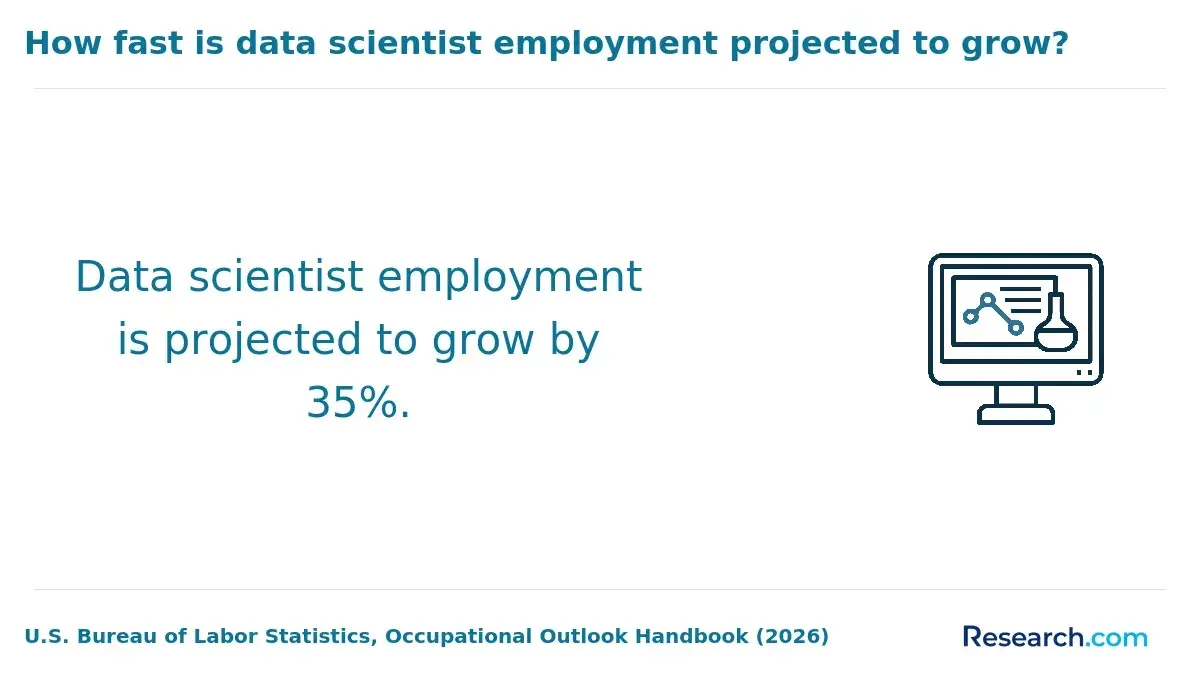
- The U.S. Bureau of Labor Statistics projects 35% growth in data scientist employment from 2025 to 2035; that is occupational context, not evidence that a particular master's leads to a monitoring job.
What Is Model Drift Detection in Data Science?
Model drift detection is the practice of checking whether a deployed model's data or results have changed enough to warrant investigation. Data drift describes changes in input distributions; concept drift describes changes in the relationship between inputs and the outcome being predicted. Neither automatically means the model has failed. A seasonal shift, a broken data pipeline, and a genuine change in customer behavior can produce similar-looking alerts but call for different responses.
Meaningful graduate-level work connects monitoring to statistical inference and operational decisions. Students should learn to establish a reference period, compare appropriate time windows, account for sample size and seasonality, and examine model performance once outcome labels arrive. They should also understand why a distribution test or population stability index alone cannot establish that predictions have become less accurate. In applications with delayed outcomes, input checks may provide an early warning, while performance deterioration can only be confirmed later.
For program selection, ask whether students learn to investigate alerts and their consequences—not merely generate a dashboard. That distinction matters when an unnecessary retraining cycle is costly or a missed change affects consequential decisions.
What Courses Teach Model Drift Detection in an Online Master's?
Drift detection may be spread across several courses rather than taught under that exact title. The following course areas show what each should contribute; catalog titles alone do not establish how deeply a program covers the topic:
| Course area | Relevant learning | Evidence of depth to look for |
| Statistics and experimental methods | Distribution comparisons, uncertainty, sampling, and multiple-testing limitations | Assignments interpreting changes in time-ordered data |
| Machine learning | Evaluation metrics, calibration, validation, and changing relationships between features and outcomes | Work that compares model performance across periods or groups |
| Data engineering or MLOps | Data validation, logging, pipelines, alerting, and model versioning | A monitored workflow students build or operate |
| Applied project or capstone | Investigation and response when a model or its inputs change | A deliverable with thresholds, diagnostic evidence, and a response plan |
A passing mention teaches vocabulary; a course unit may teach a detection method; a dedicated elective can examine monitoring architecture and statistical trade-offs. Substantial project experience goes further by requiring students to work with imperfect data, delayed labels, and false alarms. Before applying, request recent syllabi or project briefs and ask whether these elements are required, elective, or unavailable to online students. Python and SQL, probability, and basic model evaluation are useful preparation for that work.
What Projects Build Practical Model Monitoring Skills?
A strong monitoring project starts with a predictive question and time-ordered data, not a preselected drift metric. For example, a student could train a demand-forecasting model on an earlier period and monitor later periods for changes in inputs and forecast error. The project should preserve a holdout period so the evaluation reflects what would have been known at the time.
These deliverables make the project useful evidence of practical skill:
- Define the model's intended use, reference period, monitoring cadence, and outcome measures before examining later data.
- Track input quality and distribution changes, then compare them with performance when labels become available; investigate plausible causes of alerts.
- Document thresholds and their trade-offs, including false alarms, missed changes, small samples, and expected seasonal patterns.
- Produce reproducible code, a concise monitoring report, and a response plan that distinguishes fixing a pipeline from evaluating a replacement model.
Public or properly authorized data is preferable for a shareable portfolio. If a proposed project uses employer data, confirm access, privacy rules, and what can be published before committing to it. A red flag in a program is a "deployment" project that ends at an initial accuracy score with no plan to observe the model afterward.
How Do Online and Campus Data Science Programs Compare?
Neither format inherently teaches drift detection better. The useful comparison is whether students in each format can take the same relevant courses, access computing resources, receive feedback on applied work, and complete a monitoring-focused project. An online program can suit a working professional who wants to test methods against appropriate work problems; a campus program may be preferable when in-person research supervision or a particular lab is central to the goal.
Ask whether lectures and team meetings are live, whether project partners must be available in a shared time zone, and whether online students can choose the same electives and capstone supervisors as campus students. Compare the full cost under the same assumptions, including mandatory fees and any travel, rather than treating either format as automatically cheaper. Online data science master's tuition options can provide a starting set of programs to price-check against each university's current schedule.
What Are the Admission Requirements for Online Data Science Master's Programs?
Requirements vary by institution. Programs may ask for evidence of programming, calculus or linear algebra, statistics, and prior academic performance; some specify prerequisite courses, while others evaluate equivalent preparation. Read the current admissions policy rather than assuming professional machine learning experience either replaces a required course or is required for admission.
For an applicant targeting model monitoring, the more useful question is whether they can interpret uncertainty, work with data in code, and evaluate a predictive model. A small, documented analysis can demonstrate readiness, but self-study does not formally satisfy a prerequisite unless the program confirms that it does. Applicants crossing into technical study from another field may find the preparation discussion in AI graduate programs for non-computer-science backgrounds helpful; verify the data science program's own rules separately.
How Long Does an Online Data Science Master's Take and Cost?
Time and total cost depend on required credits, course availability, enrollment pace, and tuition and fee policies. An advertised fast path may leave little room for a monitoring elective or a substantial capstone. If speed matters, compare accelerated online data science master's options against the sequence of courses needed for your technical goal, not duration alone.
Request a term-by-term plan showing when relevant courses run and whether the project is required. Then calculate the cost using the current per-credit or term tuition, mandatory fees, expected materials or computing expenses, and any required travel. Confirm how a slower pace, repeated course, or change in tuition could affect the total. If a school does not publish a dependable all-in figure, do not treat an advertised tuition figure as the complete cost.
How Can You Verify Data Science Program Accreditation?
Check the institution's current accreditation status first, using its accreditor's directory or the U.S. Department of Education's accreditation database. Confirm that the listing identifies the institution offering the degree, not merely a similarly named school. You can then ask whether the university makes any separate program-level accreditation claim and verify that claim with the named accreditor; do not assume every data science degree has, or needs, specialized accreditation.
Accreditation and permission to serve a student in a particular state are different questions. Before enrolling, ask the university to confirm that it can enroll students residing in your state and whether any in-person requirements apply. This check is especially important if you expect to move during the degree.
What Jobs Use Model Drift Detection and Machine Learning Monitoring?
Model monitoring can be part of a data scientist's work, especially when the role includes responsibility for models after launch. Machine learning engineers may build monitoring pipelines and deployment safeguards; MLOps or ML platform specialists may maintain shared logging, alerting, and model-management systems. Titles vary by employer, so examine job descriptions for production evaluation, data quality, incident investigation, and collaboration across modeling and engineering teams.
Choose a program with deeper software engineering and systems work if building monitoring infrastructure is the target. If the goal is to interpret changing model behavior and recommend a response, prioritize statistics, evaluation, and applied projects. For a wider view of roles a degree might support, see features about online data science study for sought-after data roles on educational websites. A master's is not automatically necessary for these jobs; relevant experience and a credible project may also demonstrate the required skills.
What Salary and Job Outlook Can Data Science Graduates Expect?
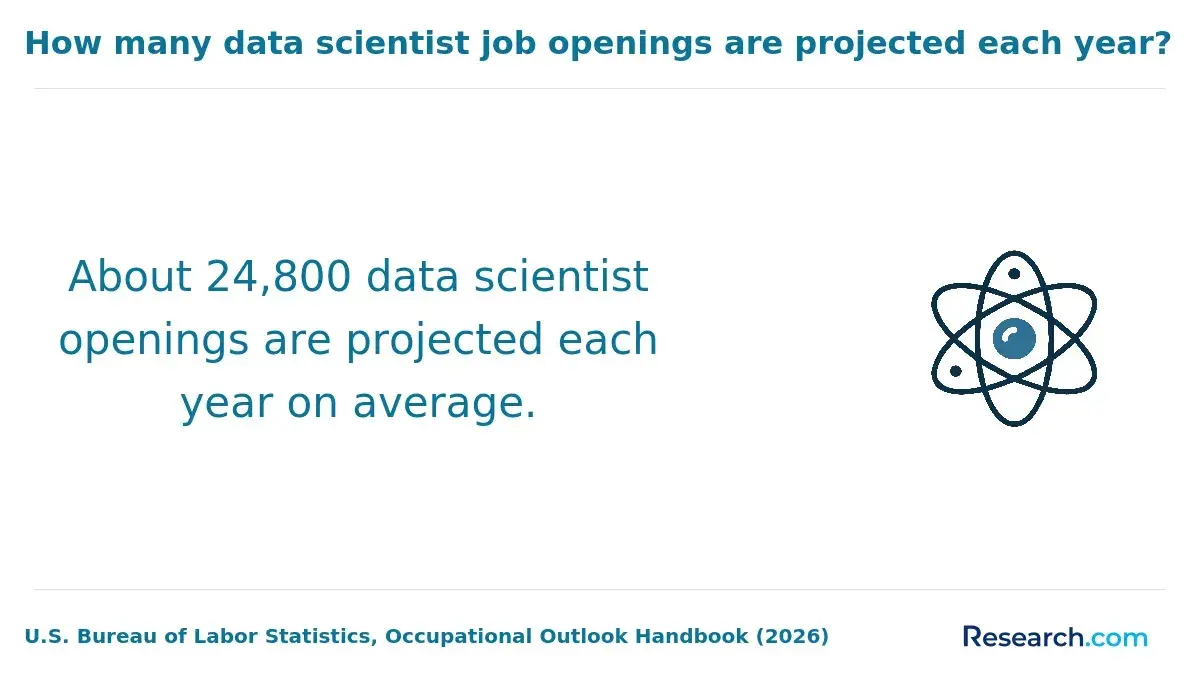
The U.S. Bureau of Labor Statistics reports a $120,230 median annual wage for data scientists in May 2025. That occupational median describes workers across experience levels; it is not an expected starting salary for a new graduate or a measure of the degree's effect on pay. BLS also projects strong employment growth for the occupation, but an opening for a data scientist is not necessarily a job focused on model monitoring.
For a personal return-on-investment estimate, compare a program's full cost and the work time it may displace with roles you could realistically pursue given your existing experience. Treat school-reported salary figures cautiously unless you can see who responded, when outcomes were measured, and whether respondents already worked in the field. Financial planning for a data science graduate degree is more useful than assuming the occupational median will repay tuition on a particular timetable.
Which Certifications Support Model Monitoring and Data Science Careers?
Cloud or machine learning platform certifications may help demonstrate familiarity with the tools an employer uses, particularly for infrastructure-focused roles. Their value depends on the target job and the current certification objectives; a credential covering model deployment does not necessarily assess drift investigation or statistical judgment.
If choosing between a certification and a master's, match the gap to the credential. A certification may suit someone who already understands model evaluation but needs practice with a specific platform. A master's is more suitable when the gap includes statistical foundations, broader machine learning training, and supervised project feedback. In either case, ask whether you will leave with work you can explain: what changed, how you checked it, and why you recommended a particular response.
Other Things You Should Know About Data Science
No. Drift describes a change in data or its relationship to outcomes; model decay usually refers to worsening usefulness or performance. Drift can occur without measurable decay, so the terms should not be used interchangeably.
Yes. A local workflow using time-ordered data, code, saved model predictions, and a reproducible report can demonstrate core monitoring decisions. Cloud tools become more important when the role requires operating production infrastructure.
Not by default. First investigate data quality, the cause of the change, and whether performance has worsened. Any replacement model should be evaluated before it takes over decisions.
Only with the employer's permission and within applicable confidentiality and privacy rules. Otherwise, describe your contribution at an approved level of detail or reproduce the approach with data you are authorized to share.
References
- Empirical data drift detection experiments on real-world... - PMC https://pmc.ncbi.nlm.nih.gov/articles/PMC10904813/
- Master of Science in Data Science - National University https://www.nu.edu/degrees/engineering-data-and-computer-sciences/programs/master-of-science-in-data-science/
- From concept drift to model degradation: An overview on performance-aware drift detectors - ScienceDirect https://www.sciencedirect.com/science/article/pii/S0950705122002854
- Data Drift vs. Concept Drift: What Is the Difference? | Dataversity https://www.dataversity.net/articles/data-drift-vs-concept-drift-what-is-the-difference/
- Model Drift in Deployed Machine Learning Models for Predicting Learning Success | mdpi.com https://www.mdpi.com/2073-431X/14/9/351
- What Is Model Drift? Types, Detection & Fixes | groundcover https://www.groundcover.com/learn/ai-observability/what-is-model-drift
- Data Drift in Streaming: Detecting and Managing Unexpected Changes | Conduktor https://www.conduktor.io/glossary/data-drift-in-streaming
- AI Model Drift Detection and Retraining: Production Guide | SmartDev https://smartdev.com/ai-model-drift-retraining-a-guide-for-ml-system-maintenance/
- What is data drift in ML, and how to detect and handle it | evidentlyai.com https://www.evidentlyai.com/ml-in-production/data-drift