2027 Best Stackable Credentials With the Best ROI

Co-Founder and Chief Data Scientist
Choosing a short credential is difficult when programs vary widely in cost, employer recognition, and transfer value. Stackable credentials can reduce risk by letting you earn a smaller certificate first and apply eligible credits toward a larger credential later.
The U.S. Bureau of Labor Statistics projects about 1.9 million healthcare occupational openings annually through 2033, illustrating why career-aligned training matters. This guide helps career changers, recent graduates, and working adults compare stackable pathways, estimate realistic ROI, and avoid programs that do not support their target job.
Key Things You Should Know
- Best ROI usually comes from a credit-bearing certificate that leads to a recognized certification, license, apprenticeship, or associate degree pathway - not from a standalone badge with unclear employer value.
- Healthcare, skilled trades, IT, and public-safety pathways can offer strong returns because training may take months rather than years; however, occupational pay depends on location, experience, licensure, and employer, not the certificate alone.
- Before enrolling, verify total cost, clinical or lab requirements, accreditation, exam eligibility, transfer rules, and local job listings; BLS projections show healthcare occupations are expected to have about 1.9 million openings per year through 2033.
Top 10 Best Stackable Credentials With the Best ROI
Popular Trade School Programs
Stackable trade pathways often begin with a basic certificate and progress to advanced technical coursework, apprenticeship milestones, or an associate degree. Options include welding, HVAC/R, electrical technology, automotive service, industrial maintenance, plumbing, and diesel technology.
A short certificate can build entry-level skills, but many trades require supervised work hours, an apprenticeship, or state and local licensing before independent practice. Choose a credit-bearing program when you may later pursue an associate degree; choose employer-sponsored training or an apprenticeship when paid work experience is the priority.
Healthcare Programs
Healthcare credentials can stack from nursing assistant or medical assisting coursework into practical nursing, registered nursing, health information, or allied-health pathways, depending on the school and state. Common options include medical billing and coding, pharmacy technician, medical assistant, sterile processing, phlebotomy, and practical nursing certificates.
Clinical placements, background checks, immunizations, and certification exams may add time and cost. For patient-care roles, confirm that the program meets your state's approval and eligibility rules; an online course alone may not satisfy required labs or clinical training.
Criminal Justice / Law Programs
Criminal justice and legal studies credentials can stack from a certificate in legal studies, corrections, homeland security, or crime scene investigation into an associate degree. Paralegal certificates may suit people who already hold a degree or want legal-support training, but they do not authorize graduates to practice law.
Police, corrections, and emergency-management roles commonly have agency-specific hiring, fitness, background, academy, or state requirements. Select a program that matches the role you want rather than assuming a general criminal justice certificate automatically meets public-safety employment standards.
Arts & Design Programs
Arts and design credentials can stack from short certificates in graphic design, digital photography, UX design, animation, web design, or digital marketing into an associate degree or portfolio-based specialization. Employer evaluation often centers on demonstrated work, software skills, and project experience, so a credential without portfolio development may have limited value.
Credit-bearing community-college programs can be a practical choice for learners who may continue to an associate or bachelor's degree. Noncredit programs can work for targeted software upskilling when the provider's curriculum matches current job postings.
What are stackable credentials and how do they work in career pathways?
Stackable credentials are intentionally connected educational awards that let learners build from a smaller, focused achievement toward a larger credential. A learner might complete a college certificate, apply those credits to an associate degree, then use the degree toward a bachelor's program. In another model, an industry certification may complement - not replace - college coursework.
The key distinction is that stackable does not simply mean "multiple certificates." A credential is genuinely stackable only when a school, system, or employer clearly documents how coursework, competencies, or credits apply to the next step. Credit-bearing academic certificates are most likely to have formal transfer pathways. Noncredit microcredentials may still be useful for skills development, but they often do not convert into college credit unless the provider has an established articulation agreement.
A practical pathway has three layers: an entry credential for employable basics, an intermediate credential for expanded responsibilities, and a degree, license, apprenticeship level, or advanced certification for longer-term mobility. This structure lets students pause after a milestone, work if needed, and return without repeating equivalent coursework.
| Credential type | Typical provider | What may stack | Best use |
| Credit-bearing certificate | Community college or accredited school | College credits toward a degree | Students wanting an academic pathway |
| Industry certification | Certifying organization | May support advanced certifications | Workers needing employer-recognized validation |
| Noncredit certificate or microcredential | College, vendor, or training provider | Sometimes converts through an agreement | Targeted skill building or rapid upskilling |
| Apprenticeship-related instruction | Employer, union, or training sponsor | Work hours, wage progression, and coursework | Trades learners seeking paid experience |
Which stackable credentials offer the highest salary potential and fastest ROI?
The highest-ROI stack is usually the one with the shortest credible route to a job you can realistically obtain, followed by a clearly usable next credential. Healthcare, information technology, skilled trades, and accounting-related pathways can perform well because employers may recognize specific competencies, exams, licenses, or work-based learning.
For salary context, the BLS reported a May 2024 median annual wage of $104,420 for registered nurses and $101,190 for information security analysts. These are occupation-wide figures, not earnings guarantees for certificate completers. Nursing requires approved education and licensure, while information security analyst roles commonly require substantial experience and may favor a degree; neither occupation should be treated as a direct outcome of a brief certificate.
| Pathway | Potential first stack | What drives ROI | Important limitation |
| Healthcare support to nursing | Nursing assistant or practical nursing pathway | Clinical demand and progression toward licensure | State approval and clinical requirements matter |
| IT support to cybersecurity | IT support coursework plus entry certification | Low-cost skill validation and experience building | Advanced security roles rarely require only a short credential |
| HVAC/R or electrical | Technical certificate plus apprenticeship | Paid work experience and licensing progression | Licensing rules vary by jurisdiction |
| Accounting support | Bookkeeping or accounting certificate | Useful software and employer-specific skills | Higher-level accounting roles often require a degree |
Compare these paths against your local job market, not national salary headlines. Learners considering a longer degree route can also compare most profitable college majors before deciding whether a certificate-first strategy is the better investment.
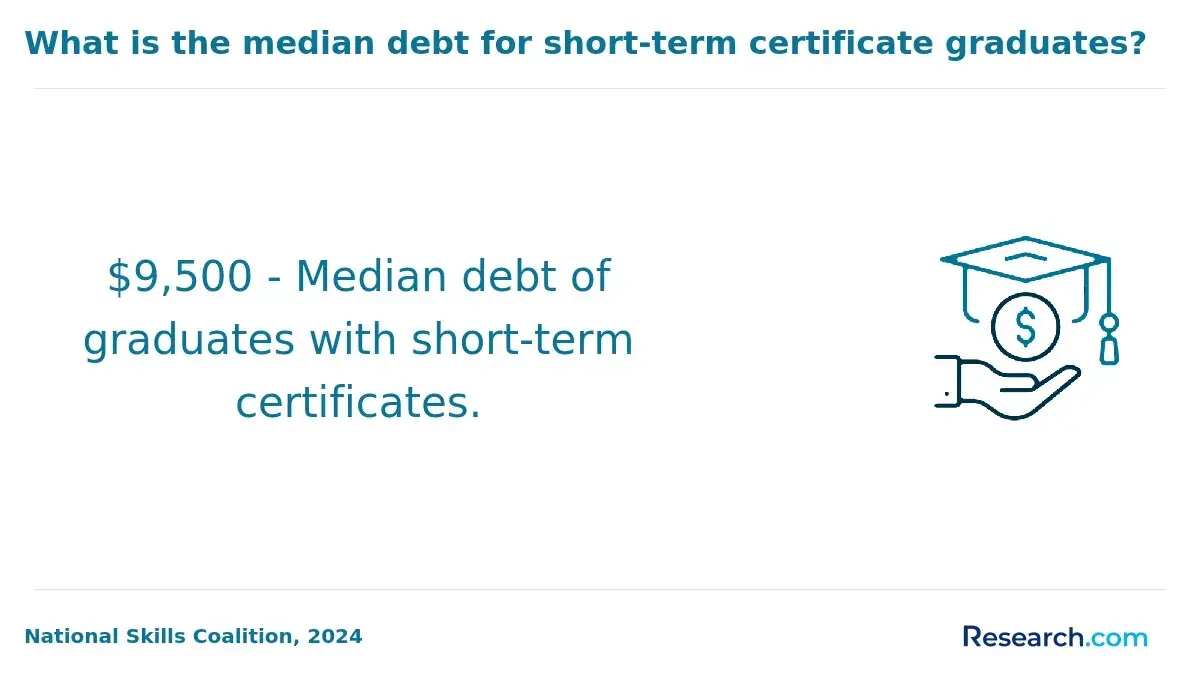
How do accredited stackable credential programs differ from non-accredited options?
Accreditation evaluates an institution or program against established quality standards; it is not the same as professional certification. An accredited college may offer credit-bearing certificates that can transfer within a documented pathway. Programmatic approval can be especially important in regulated fields such as nursing, medical imaging, and some allied-health occupations.
Non-accredited providers are not automatically poor choices. Vendor training, bootcamps, and employer programs can deliver useful job-specific skills, particularly in software or design. The trade-off is that credits may not transfer, federal student aid may not be available, and the credential's value depends heavily on employer recognition and portfolio or exam outcomes.
Check the appropriate type of recognition before paying tuition:
- Confirm institutional accreditation when you want academic credit, transfer options, or federal aid eligibility.
- Confirm program approval when a state board, licensing authority, or professional accreditor requires it for exam or license eligibility.
- Confirm industry relevance by reviewing the certification body, employer partners, curriculum, and current local job descriptions.
A red flag is a provider that uses vague phrases such as "internationally accredited" without naming a recognized accreditor, regulator, or credentialing organization. Ask for the exact agency name and verify it independently through the relevant government, accreditor, or licensing-board directory.
What admission requirements and prior experience are needed for stackable credentials?
Admission requirements depend on the credential type and level. A short noncredit course may require only payment and basic technology access. A college certificate may require a high school diploma or equivalent, placement testing, and prerequisites. Advanced certificates may require prior college coursework, a degree, active professional licensure, or relevant work experience.
Healthcare programs commonly add requirements because students enter clinical environments. These can include background checks, drug screening, immunization records, CPR training, physical examinations, and minimum grades in prerequisite science courses. Public-safety programs may use separate agency screening after graduation.
Before applying, separate "admission to the school" from "admission to the program." The following steps prevent an expensive surprise:
- Read the program handbook and identify every prerequisite, deadline, clinical, lab, and exam requirement.
- Ask whether your prior learning, military training, industry certification, or transfer credits will be accepted in writing.
- Confirm whether enrollment alone makes you eligible for a certification exam, license application, apprenticeship, or job placement process.
Do not assume a GPA requirement applies to every certificate, and do not assume that no stated GPA requirement means entry is unrestricted. Selective programs may rank applicants using prerequisite grades, entrance testing, interviews, or available clinical seats.
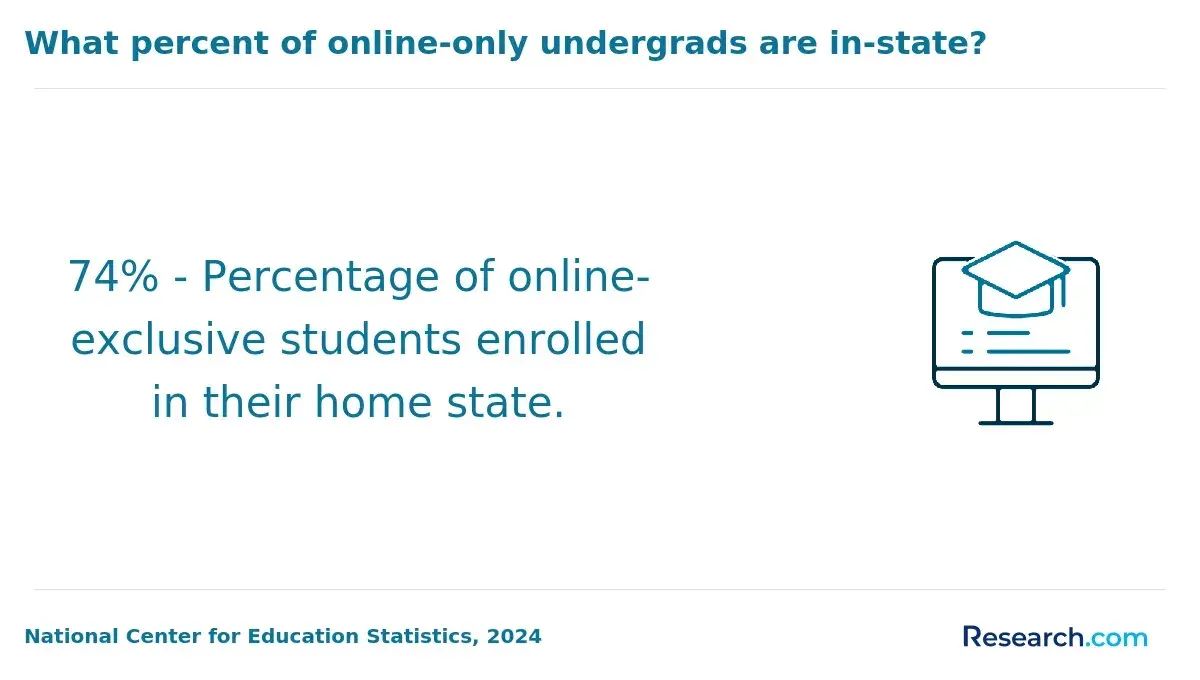
How do online stackable credential programs compare to campus-based formats?
Online stackable programs can be an efficient option for theory-heavy subjects such as IT, business, coding, medical billing, and digital design. Campus or hybrid formats are usually stronger when learners need hands-on equipment, labs, studios, clinical practice, or immediate instructor observation. The best format is the one that meets professional requirements while fitting your work schedule and learning needs.
| Factor | Online | Campus or hybrid |
| Scheduling | Often flexible, especially asynchronous courses | Usually set meeting times |
| Hands-on training | May require local labs or placements | Direct access to equipment and supervised practice |
| Networking | Requires deliberate outreach | More built-in peer and employer contact |
| Best fit | Self-directed learners in theory-based fields | Clinical, trade, and equipment-intensive learning |
This format comparison matters because convenience cannot compensate for missing required practice hours. If you want a remote-friendly academic pathway, explore 6-week college courses online, but confirm that accelerated pacing does not interfere with prerequisites or transfer plans.
For any online option, ask where labs occur, who arranges internships or clinical placements, whether students in your state may enroll, and whether remote proctoring, software, tools, or travel create extra costs.
What program length, tuition costs, and financial aid options should students expect?
Program length ranges from a few weeks for a noncredit skills course to one year or more for many academic certificates. A stackable associate-degree pathway generally takes longer because it includes general education and advanced technical coursework. Cost varies more by provider, residency, delivery format, equipment, and required exams than by the credential title alone.
The College Board's 2024-25 estimates placed average published tuition and fees at $4,050 for in-district students at public two-year colleges. This is a useful benchmark, not the price of a specific certificate: books, tools, uniforms, testing, background checks, transportation, and lost work time can materially change total cost.
| Cost factor | Why it affects ROI | What to verify |
| Tuition and mandatory fees | Determines direct educational cost | Per-credit versus program price and residency rules |
| Supplies and equipment | Can be substantial in trades and healthcare | Tools, software, uniforms, kits, and lab fees |
| Certification or licensing exams | May be required for employability or practice | Exam, application, renewal, and prep costs |
| Opportunity cost | Reduced work hours can outweigh tuition | Schedule, clinical hours, commuting, and unpaid placements |
Eligible credit-bearing programs may support federal aid for qualifying students, while noncredit offerings often do not. Complete the FAFSA when applicable, then ask about workforce grants, state aid, apprenticeships, employer tuition assistance, payment plans, and scholarships. Students aiming beyond certificates should compare an online doctorate only after confirming that their undergraduate and graduate pathway supports that goal.
What careers and job roles can stackable credentials lead to in major industries?
Stackable credentials can lead to entry-level work, advancement within a current field, or a bridge into a degree. The outcome depends on what employers actually require. A certificate may help qualify a candidate for support work, while a regulated or advanced role may require a license, associate degree, bachelor's degree, supervised experience, or employer training.
| Industry | Possible entry role | Common next stack | Career reality |
| Healthcare | Medical assistant, pharmacy technician, or nursing assistant | Advanced certificate, practical nursing, or associate degree | Scope of practice and credentials vary by state |
| Information technology | Help desk technician or junior support specialist | Vendor certification, networking, cloud, or cybersecurity coursework | Experience and a portfolio can be decisive |
| Skilled trades | Helper, technician trainee, or apprentice | Apprenticeship levels and licensing preparation | Hours and local licensing may be required |
| Legal support | Legal assistant or records specialist | Paralegal coursework or an associate degree | Does not authorize legal practice |
| Creative fields | Production assistant or junior designer | Portfolio, software specialization, or degree coursework | Demonstrated work often outweighs credential title |
Remote work is possible in some technology, business, design, and health-information roles, but it is not guaranteed by an online credential. Compare career fields with work from home degrees that pay good money if location flexibility is a major part of your ROI calculation.
What licensing, certification, or professional standards apply to stackable credentials?
Licensure, certification, and school certificates serve different purposes. A school certificate shows completion of a defined course of study. Professional certification is awarded by a certifying body after a candidate meets its requirements, which may include an exam, education, work experience, and continuing education. A license is government authorization to practice a regulated profession.
This distinction is critical in healthcare and trades. Completing a medical assisting, practical nursing, electrical, or HVAC program may be only one step toward work. Candidates may still need to pass an exam, complete supervised hours, register with a state board, or meet an employer's requirements.
Use these checks before enrolling in any pathway connected to regulated work:
- Identify the state licensing board or regulatory agency for the occupation and review its current eligibility rules.
- Ask the school whether the exact program, including online delivery, meets requirements in your state.
- Request the program's recent exam-eligibility and completion information, while recognizing that past results do not guarantee your outcome.
A common mistake is enrolling in a program marketed as "certification training" without learning whether the credential issuer, exam, and state regulator recognize it. Obtain answers before signing an enrollment agreement.
How can students evaluate and choose reputable stackable credential providers?
A reputable stackable provider makes its pathway transparent. It can identify the credential awarded, whether credits are academic or noncredit, the receiving program or institution, total estimated charges, and any external exam or licensing requirements. It should also give prospective students enough information to compare outcomes without pressure tactics.
Evaluate providers using a consistent process rather than choosing solely on speed or advertised tuition:
- Start with the job: collect several local job postings and note the required education, licenses, software, certifications, and experience.
- Map the credential: get written confirmation of exactly what credits, competencies, or courses apply to the next credential.
- Calculate full cost: include tuition, fees, equipment, exams, commuting, childcare, and potential lost wages.
- Verify recognition: check institutional accreditation, program approval, certification-body recognition, and state authorization where relevant.
- Compare support: ask about tutoring, career services, clinical placement policies, apprenticeship connections, and withdrawal/refund rules.
Walk away from providers that promise jobs, salaries, licensing, or transfer credit without written terms. Also be cautious when a program cannot explain who recognizes its credential, where graduates complete required practical training, or what happens if you relocate to another state.
Other Things You Should Know About
They can be worth it when each credential has a documented next use: entry-level employment, eligibility for a recognized exam, employer advancement, or credit toward a larger program. They are less compelling when the provider cannot show how the credential is recognized or transferred.
A stackable certificate is usually an educational award from a school. A certification is a professional credential awarded by a certifying organization after meeting its standards. A certificate program may prepare you for a certification exam, but completion does not automatically mean you are certified.
Possibly. Federal aid may be available for eligible students in qualifying credit-bearing programs at participating institutions. Many noncredit courses do not qualify, but workforce grants, employer assistance, scholarships, and payment plans may be available.
Choose the smallest credential that is recognized for your immediate target role and clearly applies to the next step you want. Confirm local hiring requirements, transfer policies, total cost, and any licensing or clinical obligations before enrolling.
References
- Stacked Credentials and Employment https://services.intead.com/blog/stacked-credentials-employment
- Stackable Credentials Explained https://diplomasafe.com/stackable-credentials/
- What Are Stackable Credentials and Why Do They Matter? https://www.pltw.org/blog/what-are-stackable-credentials
- New Study Proves Noncredit Credentials Deliver Major ROI | Fast Forward https://fastforwardva.org/new-study-proves-noncredit-credentials-deliver-major-roi/
- Microcredentials: Empowering Modern Learners & Employers https://evolllution.com/microcredentials-empowering-modern-learners-employers
- A Research-Based Look at Stackable Credentials https://www.parchment.eu/blog/podcast-episode-9-a-research-based-look-at-stackable-credentials/
- Making sure you're not a bot! https://www.iastatedigitalpress.com/jtmae/article/id/14484/
- What are Stackable Credentials? https://assess.com/stackable-credentials/
- 6 Things to Know About Stackable Credentials https://www.devry.edu/blog/6-things-about-stackable-credentials.html
- Unlocking Success with Micro-Credential Stackable Credentials: Micro Programs - Huge Possibilities https://ubisglobal.com/blog/ubis-micro-credentials/