
2027 Online Data Science Master's for Policy Analysts: A Career Transition Guide

Co-Founder and Chief Data Scientist
Policy analysts already know how to frame public problems, assess evidence, and explain findings to decision-makers. Moving into data science usually means adding stronger programming, statistical modeling, and data-management skills - not abandoning that experience. This guide helps working analysts decide whether an online master's is worth the investment, which roles make sense as a next step, and what to check before enrolling.
Key Things You Should Know
- The strongest transition builds on policy expertise: target roles that need both technical analysis and an understanding of programs, populations, or public decisions.
- Choose a program with substantial coding, statistics, and applied projects; a degree title alone does not establish technical depth.
- The U.S. Bureau of Labor Statistics (BLS) projects 35% growth in data scientist employment from 2025 to 2035, but that occupation-wide forecast does not predict an individual graduate's prospects.
What is an online data science master's for policy analysts?
It is a graduate data science degree completed primarily online and used to move from interpreting policy evidence toward building, testing, and communicating data-driven analyses. Policy analysts may apply those skills to program evaluation, forecasting, service delivery, or research. The degree is not necessarily policy-specific; its value depends on whether students can apply technical coursework to consequential policy questions.
Program names alone are a poor guide. A useful option might be called data science, applied statistics, analytics, or public policy with a rigorous quantitative concentration. Compare required courses and projects rather than assuming similarly named degrees teach the same skills. If speed is a major constraint, a guide to shorter online data science master's degrees can help identify formats to investigate, but confirm the current schedule and technical requirements with each school.
Why should policy analysts earn a data science master's degree?
A master's can provide structured practice in methods an analyst's current job may not teach, along with faculty feedback and a substantial project. Existing strengths - research design, stakeholder communication, and awareness of implementation constraints - remain useful. The educational gap is often the ability to write reproducible code, work with larger or less tidy datasets, and evaluate predictive models appropriately.
A degree is not automatically necessary for every transition. Choose one when target job postings consistently call for graduate-level quantitative training, you need sustained instruction rather than isolated courses, or you cannot build credible technical work in your current position. Targeted courses and a portfolio may be a better first step if you can already meet the roles' technical requirements. Before applying, compare several real postings with your skills; do not treat an appealing program curriculum as proof that its graduates qualify for a particular job.
What careers can policy analysts pursue with a data science master's?
The most realistic next role often combines new technical skills with a policy domain the analyst already understands. These examples differ in how much modeling and engineering work they require.
| Potential role | Value of policy experience | Technical work to demonstrate |
| Program evaluation or quantitative research analyst | Defining outcomes and interpreting interventions | Statistical analysis, reproducible reporting, and research design |
| Public-sector or nonprofit data scientist | Understanding administrative data and service decisions | Programming, data preparation, model evaluation, and communication |
| Health policy analytics specialist | Interpreting coverage, access, or population-health questions | Analysis suited to sensitive health data and the employer's privacy rules |
| Product or operations analyst at a civic-technology organization | Connecting measures to user needs and policy constraints | SQL, experimentation, dashboards, and clear metric definitions |
For health policy work, distinguish a general data science degree from training focused on clinical applications. Analysts pursuing that specialization can review AI graduate programs for healthcare-related careers and compare their health-data and privacy content with their target jobs. An entry into a data scientist role is possible, but analysts with limited coding experience may find an adjacent quantitative analyst position a more credible first move.
What do online data science master's programs teach policy analysts?
Relevant coursework usually spans programming, databases or SQL, statistics, machine learning, data visualization, and responsible data use. For a policy analyst, the crucial distinction is between learning to run a tool and learning when its output supports a decision. Look for instruction in uncertainty, study design, model validation, and the limits of observational data.
A strong portfolio project could analyze a public dataset to answer a narrowly framed service-delivery question, document data cleaning, compare an appropriate baseline with a more complex method, and explain limitations to a nontechnical audience. A project that reports predictive accuracy without addressing selection bias, unequal impacts, or what a policymaker could actually change is weaker evidence of policy-ready judgment.
Check syllabi and capstone descriptions for substantial hands-on work, not just mentions of Python or machine learning. If you want to design production systems rather than analyze policy outcomes, investigate whether the program also teaches software engineering and deployment; those skills should not be assumed from a data science degree title.
What are the admission requirements for online data science master's programs?
Requirements vary by institution. Programs may ask for a bachelor's degree, transcripts, a statement of purpose, recommendations, and evidence of preparation in calculus, linear algebra, statistics, or programming. Some offer preparatory coursework; others expect applicants to arrive with those skills. Policy experience can strengthen an application without necessarily satisfying a formal math or coding prerequisite.
Before paying an application fee, compare each program's published prerequisites with courses on your transcript. If a requirement is unclear, ask admissions whether recent coursework or documented professional experience satisfies it, and obtain the answer for your situation. A short coding project may demonstrate readiness even where it does not replace a required course.
Applicants weighing data science against AI-focused study can explore graduate AI options for career changers without a CS degree. Whichever route you consider, verify the actual math and programming expectations rather than assuming a program welcomes every non-CS applicant.
How long do online data science master's programs take and cost?
Completion time depends on required credits, course availability, and whether a working student enrolls part time. An advertised fast track may require a course load that is unrealistic alongside full-time policy work. Ask for a term-by-term plan showing when required classes are offered, how long students may take to finish, and whether a capstone can be completed remotely.
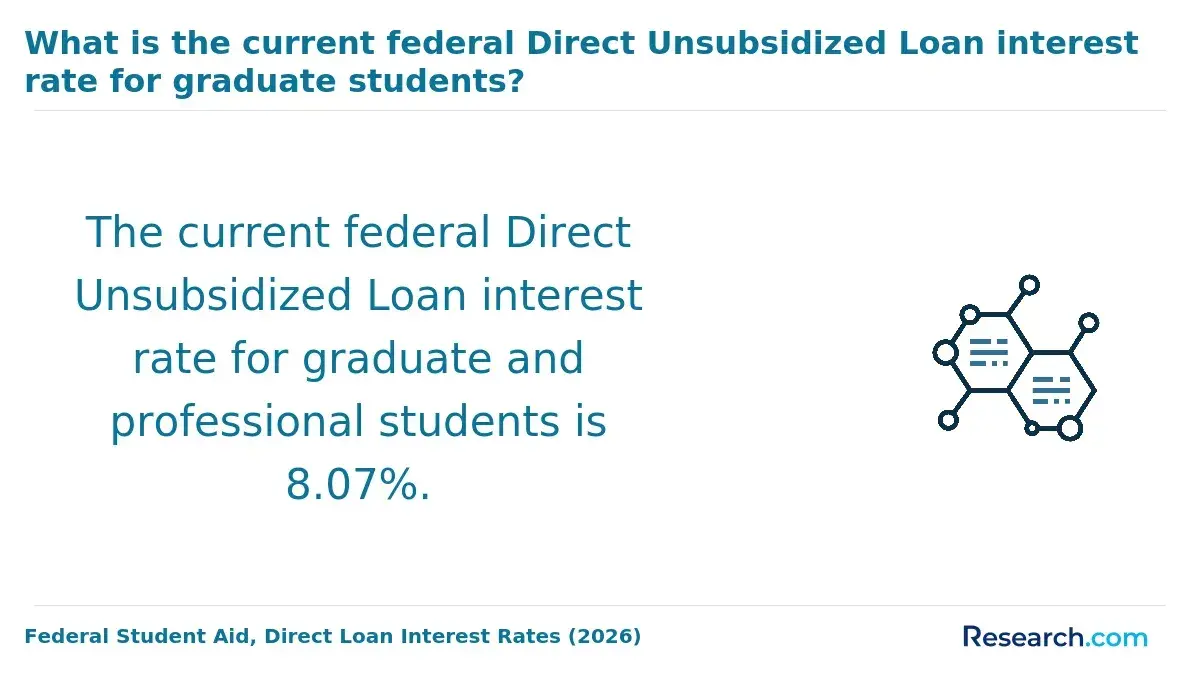
For cost, calculate required credits multiplied by the applicable per-credit tuition, then add mandatory fees. Check separately for software or materials, any travel requirement, financing costs, and income you would forgo by reducing work hours. This produces a more useful comparison than tuition alone. You can compare tuition for data science master's degrees to build a shortlist, then verify current prices and fees on each institution's official schedule. Ask your employer whether tuition assistance applies before estimating what you would pay yourself.
How do online and campus-based data science master's programs compare?
For an employed policy analyst, the main difference is often access and scheduling, not whether the credential can teach rigorous methods. Compare the actual course sequence, instructors, projects, and support services; delivery format alone does not establish quality.
| Consideration | Online program | Campus-based program |
| Fit with full-time work | May reduce commuting, but live sessions and group work can still limit flexibility | May require local attendance or a work-schedule change |
| Technical collaboration | Depends on remote office hours, peer work, and project design | May offer more routine in-person collaboration |
| Professional connections | Depends on deliberate access to classmates, faculty, and alumni | May make campus events and local employer contacts easier to use |
Choose online study if keeping your job and location is essential and the program's live-session schedule is workable. Campus study may be more suitable if you want frequent in-person collaboration and can attend consistently. Ask to see how online students reach alumni and employers; alumni networking as a factor in AI master's selection offers a related lens, though access should be verified for the specific data science program.
How can policy analysts verify data science program accreditation?
Confirm that the institution holds recognized institutional accreditation; do not assume that a data science degree must have separate programmatic accreditation. Check the accreditor shown on the school's official site against the U.S. Department of Education's recognized-accreditor information, and make sure the institution and degree name match the program you plan to enter.
If you will study from another state, also ask the institution whether it is authorized to enroll students where you live. Accreditation, state authorization, and a particular employer's hiring requirements are separate questions. Treat an unclear school identity, unverifiable accreditation claim, or refusal to explain online enrollment eligibility as a reason to pause before depositing.
What salaries can policy analysts earn after a data science master's?
BLS reports a $120,230 median annual wage for U.S. data scientists in May 2025. That is an occupation-wide midpoint, not a starting salary for policy analysts or an outcome attributable to a master's degree. Pay after a transition depends on the role, employer, location, technical responsibilities, and experience the analyst brings.
For a personal return-on-investment decision, compare compensation in jobs you could plausibly pursue with compensation in your current career path, then weigh that possible difference against total education costs. Do not use the data scientist median as an assumed postgraduation offer - especially if your likely first move is into an adjacent analyst role.
What is the job outlook for policy analysts with data science skills?
BLS projects 35% U.S. employment growth for data scientists from 2025 to 2035. This suggests substantial occupation-wide demand, but it does not measure openings specifically for policy analysts, predict demand in one city or agency, or guarantee an easier transition for a degree holder.
Competition and the use of AI-assisted analysis make it important to show what you can independently validate and explain. A useful next step is to collect postings from your intended employers and identify recurring requirements: for example, whether they emphasize evaluation methods, SQL, Python, domain knowledge, or production modeling. Choose the program - and portfolio projects - that addresses those requirements rather than relying on a national growth figure alone.
Other Things You Should Know About Data Science
Only if your employer permits it and you can comply with confidentiality, privacy, and data-use rules. When permission is uncertain, use public or appropriately licensed data and describe your work without exposing restricted information.
Not for every role. Clearance and suitability requirements depend on the position and agency; read the specific announcement before applying.
Online delivery alone does not determine eligibility. The federal loan type, qualifying employment, and repayment requirements matter; verify the current rules and your circumstances with Federal Student Aid.
Follow the program's or employer's disclosure rules. Be ready to explain and reproduce your own data preparation, code, analysis, and conclusions rather than presenting unverified AI-generated work as independent analysis.
References
- Role profile: strategy policy analyst | civilservice.gov.uk https://analysisfunction.civilservice.gov.uk/careers/role-profiles-and-career-pathways/role-profile-strategy-policy-analyst/
- Cost of Attendance (Budget) | 2025-2026 Federal Student Aid Handbook https://fsapartners.ed.gov/knowledge-center/fsa-handbook/2025-2026/vol3/ch2-cost-attendance-budget
- DAPIP | Homepage - Office of Postsecondary Education (OPE) https://ope.ed.gov/dapip/
- Federal Government Data Science Jobs | USAJOBS https://data-science.usajobs.gov/
- Types of Financial Aid: Grants, Work-Study, and Loans | studentaid.gov https://studentaid.gov/understand-aid/types
- Data Science: Policy, Governance & Society (Online) | Brown University https://graduateprograms.brown.edu/graduate-program/data-science-policy-governance-society-online-scm
- What preparations do I need for graduate education? | Statistics & Data Science Graduate Interdisciplinary Program https://stat.arizona.edu/what-preparations-do-i-need-graduate-education
- Online Master of Data Science Admission Requirements at Rice https://csweb.rice.edu/academics/graduate-programs/online-mds/admissions
- What all policy analysts need to know about data science | Brookings https://www.brookings.edu/articles/what-all-policy-analysts-need-to-know-about-data-science/
- Cost to Attend - Cornell Office of Financial Aid https://finaid.cornell.edu/cost-to-attend


