
2027 Choosing an Online Data Science Master's for a Career in Airports

Co-Founder and Chief Data Scientist
An online data science master's can help you move into airport analytics, but the degree title alone says little about its usefulness for aviation. Airport operators need people who can analyze flight delays, passenger flows, capacity, and operational trade-offs - not just build models in isolation. This guide is for aviation professionals considering a technical transition and data science applicants targeting airports. It explains how to evaluate programs, costs, and career paths before you enroll.
Key Things You Should Know
- Prioritize statistics, programming, optimization, and an applied project you can connect to airport operations; an aviation-branded degree is not essential.
- Check whether the program lets online students complete a substantive project using accessible aviation data, rather than assuming it provides access to restricted airport systems.
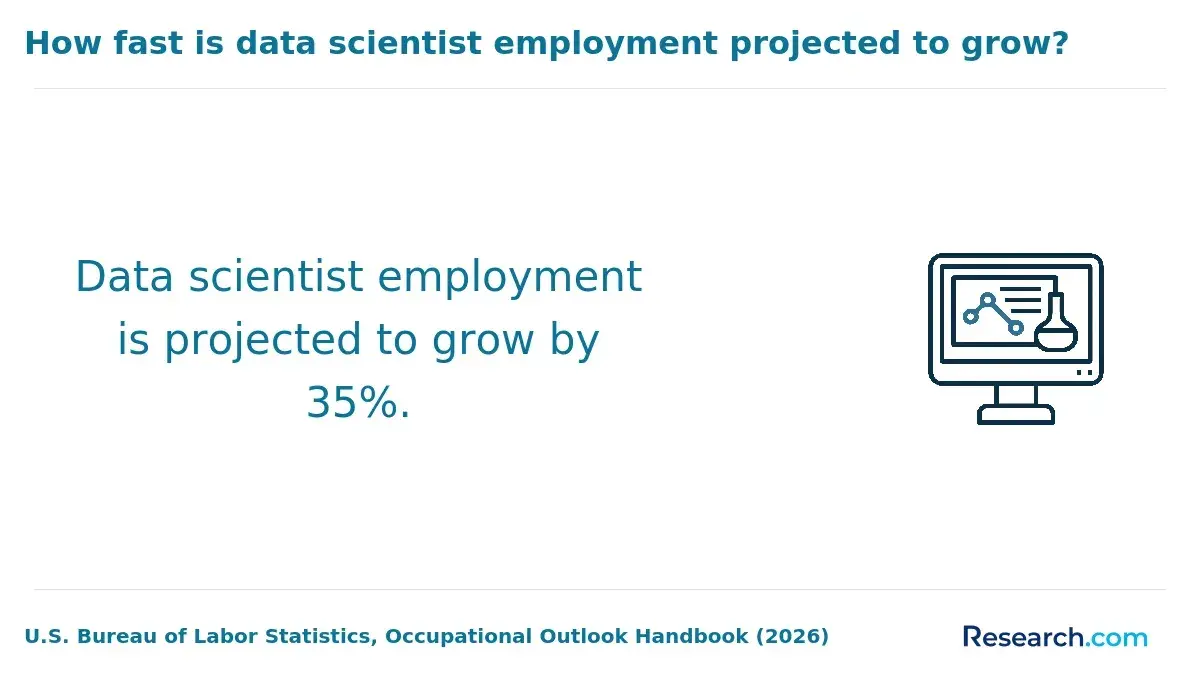
- The U.S. Bureau of Labor Statistics projects 35% growth in data scientist employment from 2025 to 2035, but that projection covers all industries - not airport jobs specifically.
What is a data science master's degree for airport careers?
It is a graduate program in statistical analysis, computing, and data-driven decision-making that you apply to airport problems. Most applicants should assess broadly named data science or analytics degrees by their courses and projects rather than look for an "airport data science" degree.
Airport work may involve forecasting passenger demand, studying delays and connections, estimating checkpoint queues, planning gate use, or monitoring asset performance. These problems require more than prediction: analysts must account for changing schedules, operational constraints, incomplete data, and the consequences of a recommendation for passengers and staff. Airline, airport, and government roles overlap, but their data access and decision authority differ.
Why choose an online data science master's for aviation?
Online study may let an airport or airline employee keep working while developing technical skills and using workplace experience to frame projects. Its value depends on the actual schedule: live sessions, team meetings, exams, or a required visit can make an otherwise flexible program difficult for someone working rotating shifts.
Choose a broad data science degree if you want forecasting, statistics, and operational analytics across several aviation roles. A narrower AI degree may suit someone primarily interested in machine-learning systems; a guide to online AI programs can help you examine that alternative. Do not trade away statistical foundations or applied projects solely for more AI-labeled courses.
Which airport careers can a data science master's prepare you for?
The strongest target depends on your prior experience as well as the degree. This comparison shows the problems behind several potential roles; job titles and responsibilities vary by employer.
| Potential role | Typical analytical focus | Experience that strengthens fit |
| Airport operations analyst | Capacity, delays, turnaround performance, and resource use | Airport operations or process improvement |
| Aviation data scientist | Forecasting, modeling, and evaluation across operational datasets | Programming, statistics, and deployed or reproducible projects |
| Passenger-experience analyst | Demand patterns, queues, and service performance | Customer operations, research, or service planning |
| Airline network or scheduling analyst | Demand forecasts and schedule trade-offs affecting airports | Airline planning or optimization |
An airport employee may find an operations-analytics role a more direct transition than a senior data scientist position. Conversely, an experienced data scientist may need aviation-domain knowledge more than another general modeling course. If you are still choosing an industry, healthcare applications in artificial intelligence graduate study illustrates a different domain path; its sector-specific preparation should not be mistaken for airport preparation.
What coursework should an airport-focused data science master's include?
Look for a combination of statistical depth and operational application. A catalog mention of "aviation" matters less than the opportunity to practice the methods airport decisions require.
- Statistics and forecasting: probability, regression, time-series methods, uncertainty, and evaluation of predictions over time.
- Data engineering: SQL, Python or another relevant language, data cleaning, and joining records with different timestamps and definitions.
- Operations methods: optimization, simulation, or queueing concepts for constrained decisions such as staffing and gate allocation.
- Responsible analysis: data governance, privacy, security, and clear communication of model limits to operational stakeholders.
- Applied work: a capstone or substantial project with a defined airport question, appropriate data, a baseline, evaluation, and a usable recommendation.
Ask whether online students can propose their own capstone topic and what data they may use. Public aviation datasets can support credible work, but public flight records do not automatically include passenger identities, checkpoint activity, or an airport's internal systems. A student without a computing major can compare bridge-course expectations with those discussed for AI programs for applicants without a computer science major; preparation advice is not proof that a particular data science program will waive prerequisites.
How can you verify an online data science program's accreditation?
Verify the institution's current accreditation through the U.S. Department of Education's accreditation database or the accreditor's own directory, and confirm that the online degree is awarded by that institution. Then check the university's disclosures for authorization to enroll students in your state. Institutional accreditation, state authorization, and any specialized program accreditation are separate questions; do not assume one establishes the others.
A useful warning sign is a program page that promotes accreditation without naming the accrediting body or clearly identifying the degree-granting institution. Ask admissions for clarification before paying a deposit. Accreditation does not, by itself, establish that the curriculum fits airport work or that an employer will value the credential.
What are the admission requirements for an online data science master's?
Requirements vary by school. Programs may ask for a bachelor's degree, transcripts, evidence of quantitative and programming preparation, recommendations, a statement of purpose, or work experience. Some provide preparatory coursework; others expect applicants to arrive ready for graduate-level statistics and coding. A course or self-study project can demonstrate preparation without necessarily satisfying a formal prerequisite.
If you work in aviation, use your application to connect an operational problem you understand with the analytical skills you want to gain. Before applying, compare your transcript and projects with each program's published requirements, then ask admissions whether a missing course must be completed for credit and by what deadline. Do not assume aviation experience substitutes for calculus or programming when a program explicitly requires them.
How long do online data science master's programs take and cost?
Neither duration nor price has a reliable universal figure: credit requirements, course availability, enrollment pace, residency status, and fees vary. Compare a full degree plan at the pace you can sustain, not a headline per-credit rate or an advertised fastest completion time.
For each shortlisted program, request a current cost and schedule estimate that separates tuition, mandatory fees, software or materials, any required travel, and financing costs. Check whether a capstone is offered every term and whether part-time students can take required courses in a workable sequence. Employer tuition assistance may lower your cost, but eligibility and repayment conditions need confirmation. A budget planning for an online AI master's resource offers a related framework for comparing graduate study costs; use the data science program's own current fee schedule for your final calculation.
How do online and campus data science programs compare for airport careers?
Both formats can teach the same analytical foundations, but they offer different ways to build aviation connections. Online study may better preserve a current airport job and make that experience available for projects. Campus study may be preferable when a particular program offers relevant faculty, local employer partnerships, or in-person project access that you could actually use. Neither format guarantees an airport placement.
For an online option, confirm live-meeting times, group-project expectations, capstone supervision, career-service access, and any campus attendance requirement. For a campus option, weigh travel or relocation and time away from work against its specific opportunities. Choose based on the project and professional access available to you, not on a blanket assumption that one delivery format is more respected.
What salaries and job outlook can airport data science professionals expect?
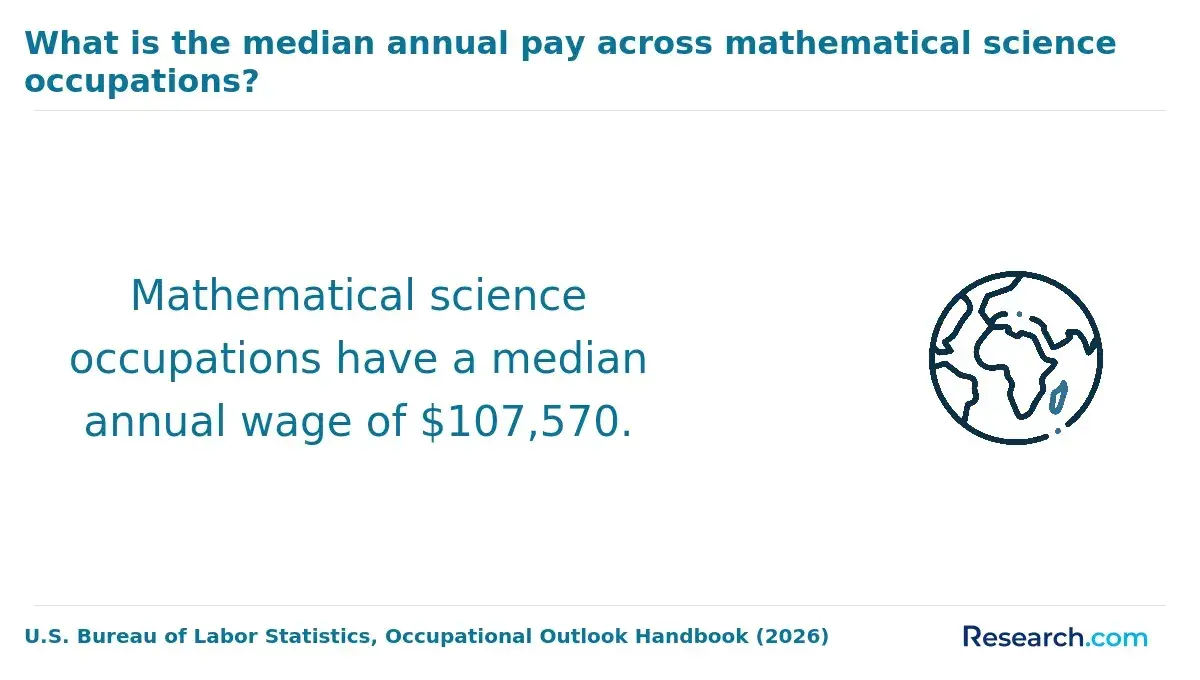
The U.S. Bureau of Labor Statistics reports a median annual wage of $120,230 for data scientists in May 2025. That is a national figure across industries, not an airport salary or an expected starting wage after graduation. Airport operations analysts may also fall under different occupational categories, so compare actual job postings by duties, location, and required experience rather than applying one data scientist figure to every aviation role.
The BLS projects strong growth for data scientists overall, but it does not establish how many openings will be at airports. Prior experience, employer type, geography, and whether the job is operational analysis or data science all affect pay. A data science graduate salary guide by industry can add context, but do not treat an industry comparison - or a graduate salary - as a pay increase caused by the degree.
Which certifications and skills strengthen an airport data science career?
Prioritize demonstrable skills over collecting credentials. SQL, programming, statistical evaluation, forecasting, and communicating uncertainty are broadly useful. For operations-oriented work, optimization or simulation experience can distinguish a candidate who can recommend feasible changes from one who only predicts outcomes.
Build a portfolio project around a specific decision, such as forecasting flight-arrival pressure or comparing a baseline queue model with an alternative staffing scenario. Document the data's limits and avoid claiming that a public-data result describes a particular airport's internal performance. A cloud or analytics-platform certification may help when it matches tools named in your target postings, but it is not a substitute for explaining your methods and operational assumptions. Before enrolling, review several target jobs and favor the program that helps you produce evidence of the skills they repeatedly require.
Other Things You Should Know About Data Science
No. Publicly available aviation data can support a project, although its scope and detail may be limited. Define a question the available data can actually answer, and label any operational assumptions.
Only if your employer authorizes that use and the university's data-handling rules permit it. Ask both parties before transferring records to a course platform or sharing a project publicly.
Not necessarily. Relevant operations experience or a strong applied portfolio may also demonstrate fit. If an internship is important to your transition, verify that the program supports online students pursuing one.
If you already meet the technical requirements of your target jobs, a focused project may test your interest at lower cost. Consider a master's when substantial skill gaps remain and its coursework, support, and projects address them.
References
- Gateways Program | Federal Aviation Administration https://www.faa.gov/jobs/students/gateways
- Accreditation in the U.S. | ed.gov http://www.ed.gov/laws-and-policy/higher-education-laws-and-policy/college-accreditation/accreditation-in-the-us
- Student Internship and Recent Graduate Opportunities | transportation.gov https://www.transportation.gov/careers/student-internship-and-recent-graduate-opportunities
- Machine learning and mixed reality for smart aviation | sciencedirect.com https://www.sciencedirect.com/science/article/pii/S0969699723000807
- Online Program - UChicago Data Science Institute https://datascience.uchicago.edu/education/masters-programs/online-program/
- What Can I Do With a Degree in Data Science? Career Paths & Skills | Harvard SEAS https://seas.harvard.edu/news/what-can-i-do-degree-data-science-career-paths-skills
- 13 Top Data Science Careers: Key Insights | Syracuse University https://ischool.syracuse.edu/data-science-careers/
- Master of Science in Data Science & Analytics | FAU Business https://business.fau.edu/masters-phd/data-science-analytics/
- Careers in Aviation Data | cirium.com https://www.cirium.com/about/careers/
- Airline Data Analytics: The Evolving Role of Analysis and New Data | OAG Aviation Worldwide Limited https://www.oag.com/blog/airline-data-analytics-evolves-the-role-of-new-data


