2027 Best Career Training Programs With 2.0 GPA Admission

Co-Founder and Chief Data Scientist
A 2.0 GPA can narrow some college options, but it does not rule out practical career training. Many workforce certificates, diplomas, apprenticeships, and open-access community-college programs review applicants using more than GPA alone. This matters especially in healthcare: the U.S. Bureau of Labor Statistics projects about 1.9 million healthcare occupational openings each year from 2023 to 2033. This guide explains which programs may be realistic, what "2.0 GPA admission" actually means, how online and campus formats differ, and how to avoid paying for training that does not support your target job.
Key Things You Should Know
- A 2.0 GPA may meet minimum admission standards for some career-training providers, but selective healthcare cohorts, financial-aid rules, and licensing pathways can require stronger academic performance or placement-test results.
- Short certificates and diplomas can lead to entry-level skills faster than an associate degree, while credit-bearing programs may offer better transfer and stackability options.
- Before enrolling, confirm total cost, state licensing eligibility, accreditation, required clinical or shop hours, and whether employers in your area recognize the credential.
Top 10 Best Career Training Programs With 2.0 GPA Admission
Popular Trade School Programs
Trade programs often emphasize placement tests, interviews, attendance readiness, and physical ability more than high school GPA. Common certificate or diploma options include welding, HVAC/R, electrical technology, plumbing, automotive service, diesel technology, industrial maintenance, and commercial driving. Apprenticeships can be a stronger choice for learners who want paid work while training, although entry standards vary by sponsor. Choose a credit-bearing community-college certificate if you may later pursue an associate degree; choose a short noncredit program only when local employers recognize it and it teaches the equipment or safety standards used in the field.
Healthcare Programs
Possible entry points include medical assisting, pharmacy technician, dental assisting, practical nursing prerequisites, medical billing and coding, phlebotomy, and nursing assistant training. A 2.0 GPA may be enough for general college admission, but limited-enrollment clinical programs commonly use separate prerequisite grades, entrance exams, background checks, immunizations, and drug screening. A school certificate is not the same as professional certification or state licensure. Verify whether the curriculum qualifies graduates to take the relevant certification examination or meet your state's licensing requirements before paying a deposit.
Criminal Justice / Law Programs
Criminal justice certificates and associate degrees can introduce corrections, policing, courts, security, emergency management, and legal procedures. Legal studies or paralegal certificates may suit office-based work, but requirements for using the title "paralegal" vary by employer and jurisdiction. Police academies, corrections agencies, and security employers may impose separate age, fitness, background, driving-record, and psychological-screening standards. A 2.0 GPA can support admission to some foundational programs, yet it does not override agency hiring standards. Ask whether the program includes academy eligibility, internship options, or only academic coursework.
Arts & Design Programs
Graphic design, digital media, photography, web design, video production, fashion, interior design, and cosmetology are common career-training paths. Admissions may rely on a portfolio, audition, interview, placement assessment, or open enrollment rather than GPA alone. For digital fields, a portfolio showing software, design, and problem-solving skills can matter more to employers than the credential title. For cosmetology and some interior-design roles, state rules may require approved instruction hours and an examination. Confirm software costs, equipment needs, portfolio support, and whether the program's format gives you meaningful feedback on creative work.
What career training programs accept a 2.0 GPA?
Career training programs that accept or may consider a 2.0 GPA include open-access community-college certificates, technical-college diplomas, workforce programs, adult education, some proprietary-school programs, and employer-sponsored apprenticeships. "Accept" does not always mean automatic entry into every program. A college may admit a student generally while requiring higher grades for a competitive nursing, radiography, or advanced technical cohort.
This comparison helps separate broad institutional admission from entry into a specific career track.
| Program type | How GPA is commonly used | Best fit | Important limitation |
| Open-access certificate | May use placement rather than a minimum GPA | Adults seeking a short entry path | Developmental coursework can extend completion time |
| Technical diploma | Often considers GPA alongside readiness testing | Hands-on skilled trades | Tool, uniform, and exam costs may be separate |
| Associate degree | 2.0 may meet general admission at some schools | Students wanting transferable college credit | Competitive majors can impose higher internal standards |
| Apprenticeship | Usually evaluates eligibility, aptitude, and sponsor criteria | Earn-while-you-learn training | Openings can be limited and selection can be competitive |
| Noncredit workforce training | May have no traditional GPA review | Focused, employer-aligned upskilling | Credits may not transfer to a degree |
Consider a degree path only if it matches your long-term goal. Learners who need broader general education, transfer options, or careers requiring a bachelor's degree can compare an easiest bachelor degree to get with a shorter workforce credential rather than assuming either route is universally easier.
Which online programs accept a 2.0 GPA?
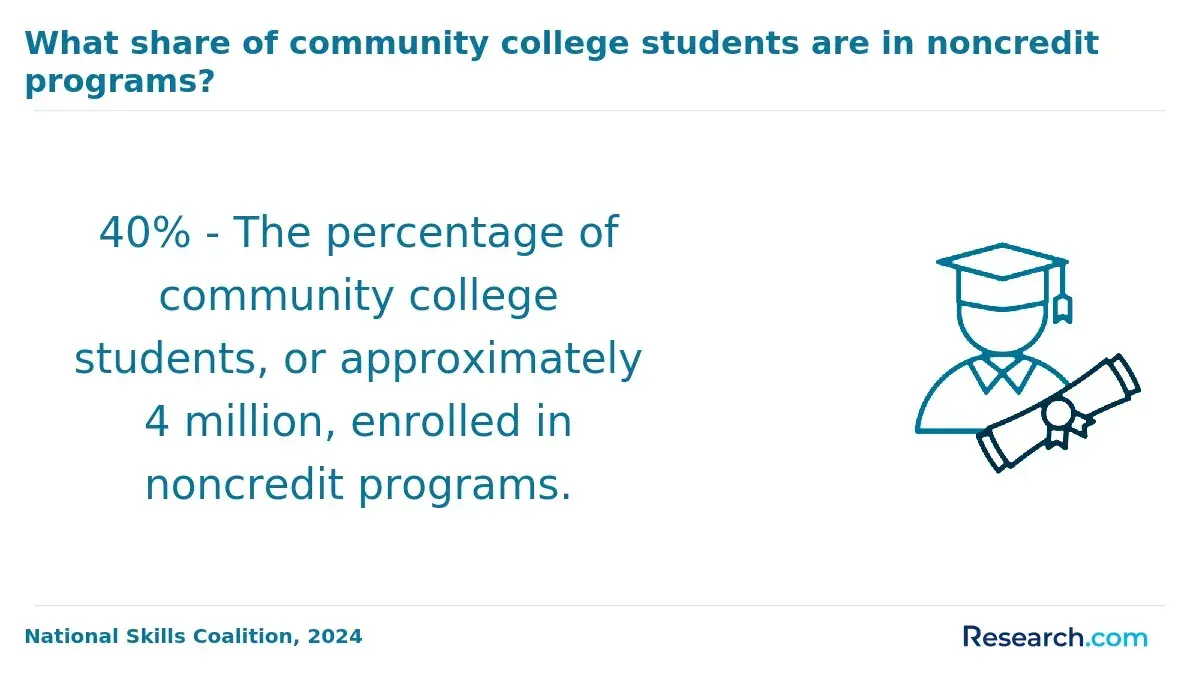
Online career training can be a practical option for learners with work or family obligations, and many providers do not use a traditional GPA threshold for noncredit courses. Fully online options are most realistic for billing and coding, bookkeeping, IT support, project coordination, legal studies, business software, and some digital-design training. Programs requiring labs, clinical practice, driving, cosmetology hours, or hands-on equipment are usually hybrid rather than fully online.
Online delivery does not remove professional requirements. Before applying, verify that clinical placements are available near you, required software works on your computer, proctored exams are manageable, and the program meets any state-specific rules. Service members and veterans may also benefit from comparing online colleges for military when evaluating schedule flexibility, transfer policies, and education benefits.
How do campus and online training programs compare?
Campus and online programs can teach similar theory, but they do not offer the same learning environment or access to required equipment. The right format depends on whether your target occupation requires supervised practice, clinical exposure, or licensing hours.
| Decision factor | Campus or hybrid program | Online program |
| Hands-on practice | Usually provides labs, equipment, and instructor supervision | May require local placements or separate lab intensives |
| Schedule | Fixed meeting times support routine | May offer greater flexibility but requires self-management |
| Networking | Direct contact with instructors, classmates, and local employers | Depends heavily on virtual career services and local outreach |
| Licensure preparation | Often easier to document required practical hours | Must be confirmed state by state before enrollment |
| Best use | Trades, clinical care, labs, and studio-based work | Administrative, technology, and theory-heavy training |
Do not choose online solely because it appears faster. A program that saves commuting time but cannot arrange a required practicum may cost more time overall. Ask for the weekly workload, live-session schedule, placement process, and withdrawal policy in writing.
What admissions requirements do these programs have?
Admissions requirements depend on the provider and credential level. A school advertising a 2.0 minimum may still require a high school diploma or equivalent, official transcripts, identity documents, placement testing, and a meeting with an advisor. Programs serving adult learners may use ability-to-benefit, readiness, or prior-experience reviews instead of GPA alone.
For selective or regulated programs, compare these requirements before applying:
- Check whether the 2.0 GPA applies to college admission, the specific program, or only conditional admission.
- Identify prerequisite courses and the minimum grade required in each one.
- Ask whether placement-test results can place you directly into career coursework.
- Request the full cost sheet, including books, supplies, uniforms, exams, insurance, and background checks.
- Confirm clinical, lab, internship, or apprenticeship eligibility before committing tuition.
Applicants with a low GPA can strengthen an application through recent coursework, a clear employment history, relevant certifications, a portfolio where applicable, and strong placement scores. Do not hide academic history: ask whether academic advising, probation policies, or preparatory courses can create a realistic route into the program.
How long do career training programs take?
Career training can last from a few weeks to about two years, depending on the credential, required practical hours, and whether you study full time. Short noncredit programs can teach a narrow skill quickly, while certificates often take several months to one year. Diplomas and associate degrees commonly take longer because they include more technical coursework, general education, or clinical requirements.
Completion time is not the same as job readiness. A six-month HVAC certificate may be enough for entry-level work, while registered nursing, radiologic technology, and many licensed trades require substantially more education, supervised experience, examinations, or apprenticeships. If your eventual goal is graduate study after building experience, compare program transferability early; accelerated options such as online PhD programs for working professionals are a separate, advanced education decision and generally require prior degrees.
How much do career training programs cost?
Total cost varies more by provider, program length, and required equipment than by GPA. As a national benchmark, College Board reported average published tuition and fees of $4,050 for in-district students at public two-year colleges in the 2024-25 academic year. That figure is useful for comparison, but it excludes many career-training expenses and does not represent every certificate or private trade school.
Build a complete budget that includes tuition, fees, books, tools, laptops, software, uniforms, testing, licensure applications, transportation, childcare, and income lost if class schedules reduce work hours. Federal aid may be available for eligible students in qualifying credit-bearing programs, while some short noncredit programs rely on workforce grants, employer support, payment plans, or personal funds.
Compare cost against the level of credential you actually need. If a career requires graduate education, an entry-level certificate is not a substitute; learners planning a later step can explore online affordable master's programs after confirming bachelor's-degree and field prerequisites.
Which jobs can these programs lead to?
A career-training program can support entry-level employment, but outcomes depend on local demand, employer standards, licensing rules, prior experience, and the quality of your practical training. The most direct routes are generally those aligned with a recognized occupation, employer partnerships, or an approved licensing pathway.
The following examples show the type of work each path may support, not guaranteed placement.
| Training area | Potential entry-level roles | Common next step |
| HVAC, electrical, plumbing | Helper, installer trainee, maintenance technician | Apprenticeship, supervised experience, or trade licensing |
| Automotive and diesel | Service technician trainee, lube technician, shop assistant | Manufacturer or ASE-related certification preparation |
| Medical support | Medical assistant, pharmacy technician, nursing assistant, billing specialist | Certification exam, state registry, or additional clinical training where required |
| Criminal justice and legal studies | Security officer, records clerk, corrections support, legal assistant | Agency screening, academy training, or employer-specific requirements |
| Digital design and media | Production assistant, junior designer, content support specialist | Portfolio development and software-specific skill building |
AI-enabled tools are changing administrative, design, and technology workflows, so prioritize programs that teach judgment, verification, client communication, safety, and current software - not just a single tool. In skilled trades and patient-facing care, supervised practical competence remains especially important.
What salaries can graduates expect?
Salary information is best used as a labor-market benchmark, not as a promise of what certificate graduates will earn. Pay varies by state, metropolitan area, union coverage, shift, experience, credentials, and employer. The U.S. Bureau of Labor Statistics reported a 2024 median annual wage of $62,350 for HVAC mechanics and installers, illustrating why a recognized trade pathway can be financially compelling; however, new workers and trainees may earn less, and state licensing requirements can apply.
For healthcare support, administrative, justice, and design roles, compare local job postings with occupational wage data and ask schools for program-specific completion, licensure-exam, and employment information where they are required to report it. Be cautious when a provider markets a high occupational median wage without showing whether its program alone qualifies a graduate for that occupation.
How do accreditation and licensing affect program choice?
Accreditation and licensing can determine whether a program is worth completing. Institutional accreditation matters most when you want federal financial aid, transferable academic credit, or a degree from a recognized college. Programmatic accreditation is especially important in regulated fields when an accreditor, licensing board, or employer requires it. A noncredit workforce certificate may be legitimate without institutional accreditation, but its value depends on employer recognition and whether it meets a clearly defined training standard.
Use these checks to avoid common and costly mistakes:
- Do not assume a school's general accreditation means your specific program qualifies you for licensure or certification testing.
- Do not rely on verbal claims about clinical placements, apprenticeship connections, job placement, or transfer credit; request written confirmation.
- Do not compare tuition alone; include mandatory equipment, examination, travel, and repeat-course costs.
- Do not enroll in an online clinical or licensed-field program until the relevant state board confirms eligibility for your state.
- Do not confuse a completion certificate from a school with an industry certification awarded by an independent certifying body.
A strong choice is one that matches the actual entry requirement for your desired role. If the role needs a license, start with the state board's education rules; if it needs employer-recognized skills, review local job postings and ask which credentials hiring managers request.
Other Things You Should Know About
Often, yes. Open-access colleges, workforce programs, technical schools, and some apprenticeships may admit applicants with a 2.0 GPA or evaluate readiness in other ways. Competitive programs can require higher prerequisite grades after general admission.
Usually not by itself. A college may admit you generally with a 2.0 GPA, but nursing cohorts often require specific prerequisite grades, entrance testing, clinical eligibility, and a competitive application review.
They can be, particularly in technology, administration, and digital fields, when the curriculum teaches current job skills and the provider is credible. For licensed or hands-on occupations, confirm required labs, clinical hours, and state approval.
Choose a certificate when you need focused, near-term skills and the target job recognizes it. Choose an associate degree when you need broader coursework, want transferable credit, or expect to advance into roles requiring a longer academic pathway.
References
- Delivering on Student Expectations with Career Pathways https://moderncampus.com/blog/delivering-on-student-expectations-with-career-pathways
- How Schools Can Support College and Career Readiness https://www.onegoal.org/about/blog/how-schools-can-support-college-and-career-readiness/
- Paid Training Jobs in California: 15 Options (+ an Alternative) https://climbhire.co/career-development/paid-training-jobs-california/
- GRADUATE EMPLOYMENT RATES https://www.westerntech.edu/career-services/graduate-employment-rates/
- The Career Training Program http://www.teachnycprograms.net/getpage.php
- Career and College Promise | NC DPI https://www.dpi.nc.gov/students-families/enhanced-opportunities/advanced-learning-and-gifted-education/career-and-college-promise
- Building a Strong Middle Class Through Career Pathways Programs - Center for American Progress https://www.americanprogress.org/article/building-strong-middle-class-career-pathways-programs/
- Student Worker Program - LAC Jobs - Start HERE https://hr.lacounty.gov/student-worker-program/
- Can I Enroll in a Career Training Program without a High School Diploma? - Central Coast College https://centralcoastcollege.edu/2021/07/15/can-i-enroll-in-a-career-training-program-without-a-high-school-diploma/
- Do Trade Schools Improve Job Placement Success https://tidewatertechtrades.edu/blog/do-trade-schools-help-job-placement/