2027 Best Stackable Credentials With Career Coaching

Co-Founder and Chief Data Scientist
Key Things You Should Know
- Choose a credit-bearing stack only when each certificate has a documented pathway into the next credential; otherwise, a lower-cost industry certification or apprenticeship may be the better investment.
- Career coaching matters most when it includes employer connections, résumé feedback, interview practice, and published placement definitions - not just self-service job-board access.
- BLS projects healthcare occupations to add about 1.9 million jobs from 2023 to 2033, but occupational wages and licensing rules vary by role, state, education level, and prior experience.
Top 10 Best Stackable Credentials With Career Coaching
Popular Trade School Programs
Trade pathways often stack a basic occupational certificate into an advanced certificate, apprenticeship, or associate degree. Common options include welding, HVAC/R, electrical technology, industrial maintenance, diesel technology, and construction management. Entry certificates can build safety and technical foundations, while advanced study may add diagnostic, code, or supervisory skills. Many hands-on trades require campus labs, clinical-style shop hours, or registered apprenticeships. Ask whether tuition includes tools, protective equipment, exam fees, and required work-based learning. For licensed trades, confirm that the curriculum meets your state's education or apprenticeship requirements.
Healthcare Programs
Healthcare stacks may progress from nursing assistant or medical billing certificates to practical nursing, registered nursing, allied health, or health-information programs. Medical assistant, pharmacy technician, sterile processing, and phlebotomy certificates may prepare learners for employer-recognized certification exams, but program completion alone is not the same as certification or state licensure. Clinical placements, background checks, immunizations, drug screening, and CPR training can add time and cost. Choose a program only after verifying its clinical-placement process, accreditor where applicable, exam eligibility, and whether credits apply to a later degree.
Criminal Justice / Law Programs
Stackable options include criminal justice certificates, corrections training, legal studies certificates, paralegal studies, cybercrime investigation, and emergency management. A certificate can introduce legal procedure, report writing, ethics, or digital evidence, then apply toward an associate degree at participating institutions. It does not automatically qualify a graduate for police employment, bar admission, or independent legal practice. Police agencies use their own hiring standards, and paralegal employers may prefer education, experience, or voluntary certification. Compare local employer requirements before selecting a specialization, especially for public-safety roles with background and fitness screening.
Arts & Design Programs
Arts and design stacks can include graphic design, UX/UI foundations, digital media, photography, animation, web design, and portfolio-development certificates. These programs work best when each level produces reviewed work samples and teaches current software or workflow practices. A certificate may support entry-level freelance or production work, while an associate degree can add broader design, communication, and internship coursework. Employers commonly evaluate portfolios alongside credentials, so coaching should include portfolio critiques, project selection, and client-ready presentation. Verify software costs, hardware expectations, intellectual-property policies, and whether online students receive meaningful critique.
What are stackable credentials with career coaching and how do they work?
Stackable credentials are intentionally connected learning milestones: a short certificate, badge, diploma, industry certification preparation program, or college credential can build toward a higher credential or a defined occupational skill set. Career coaching adds structured help turning that learning into a job search or advancement plan.
A strong pathway has a written sequence, clearly states which credits or competencies carry forward, and identifies the next credential. For example, a learner might complete an entry-level information technology certificate, earn a vendor-neutral certification separately, then apply eligible academic credits toward an associate degree. The provider may be a community college, university, workforce agency, union training program, employer, or private training company. Transfer and recognition are never automatic across providers.
How do stackable credential pathways compare to traditional degrees for career advancement?
Stackable pathways can improve flexibility because learners can pause after a useful milestone, test career fit, and return later. Traditional degrees generally offer broader general education, deeper theory, campus resources, and clearer qualification for roles that explicitly require a bachelor's degree or higher.
The comparison below focuses on decision factors rather than promising employment outcomes. Readers evaluating long-term advancement should also review top degrees in demand for the future before deciding whether a short pathway aligns with the education level employers seek in their target field.
| Factor | Stackable credential pathway | Traditional degree pathway |
| Early milestone | Often offers a certificate or badge before the full pathway ends | Usually offers the primary credential at degree completion |
| Career focus | Usually targeted to specific skills or roles | Usually combines major coursework with broader education |
| Transferability | Depends on written articulation and credit policy | Depends on institution and receiving-school transfer rules |
| Best use | Skill updates, entry routes, career pivots, and staged study | Fields requiring a degree or broad advancement options |
A stack is not automatically cheaper. Repeated enrollment fees, separate examinations, supplies, and credits that do not transfer can raise total cost. Ask for the total price of the entire sequence, not only the first certificate.
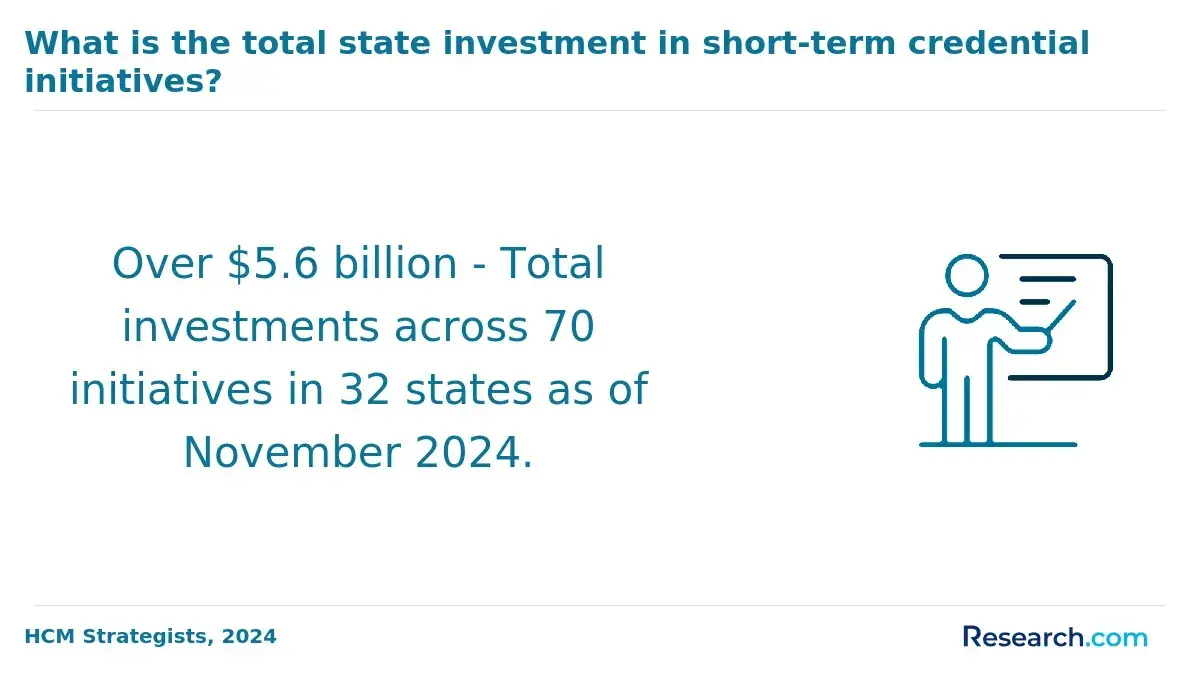
What should I look for in accredited stackable credential programs with coaching?
Accreditation and recognition should match the credential type. For a credit-bearing college certificate or degree, confirm institutional accreditation and obtain written confirmation of how credits apply to the next program. For a noncredit workforce program, examine employer partnerships, instructor qualifications, completion requirements, and whether it prepares students for a recognized certification examination. Institutional accreditation does not by itself make every program suitable for a professional license.
Use these questions during an admissions or advising conversation. They help distinguish a genuine career pathway from a collection of unrelated courses.
- Which specific credits, competencies, or courses transfer into the next credential, and what grade minimum applies?
- Is the credential credit-bearing, noncredit, or an exam-preparation program, and who issues it?
- What licensing, certification-exam, clinical, lab, background-check, or supervised-experience requirements remain after completion?
- How is job placement defined, measured, and verified, and which local employers have hired participants?
- What are the full charges for tuition, supplies, software, examinations, retakes, and required travel?
Do not confuse an accredited institution with programmatic approval. Nursing, aviation, counseling, and other regulated fields may have additional rules. If affordability is central, compare tuition, transfer policies, and support services among online colleges, then verify that the exact credential - not merely the school - fits the intended career.
Which industries offer the strongest career outcomes for stackable credential graduates?
The strongest outcomes usually occur where a credential maps to a defined employer need, required technical skill, or regulated progression. Healthcare support, information technology, skilled trades, business operations, logistics, and certain public-safety support roles can offer clear entry points, but the value of the same certificate can differ substantially by local labor market.
This comparison shows why occupation requirements matter more than a program's marketing label.
| Industry area | Common stackable starting point | Important limitation |
| Healthcare | Support certificate plus clinical or exam preparation | Many roles require state approval, certification, or licensure |
| Information technology | Foundational certificate plus vendor or vendor-neutral certification | Projects, troubleshooting ability, and experience affect hiring |
| Skilled trades | Technical certificate plus apprenticeship or field hours | Licensing and supervised-hour rules vary by state |
| Logistics | Supply-chain, warehouse, or commercial-driving training | Driving and equipment roles may require separate credentials |
| Business operations | Bookkeeping, project coordination, or data-support certificate | Advancement may require experience or a degree |
AI adoption increases the value of workers who can validate outputs, communicate with customers, maintain equipment, protect data, and apply field-specific judgment. Favor programs that teach current tools while also building durable problem-solving and communication skills.
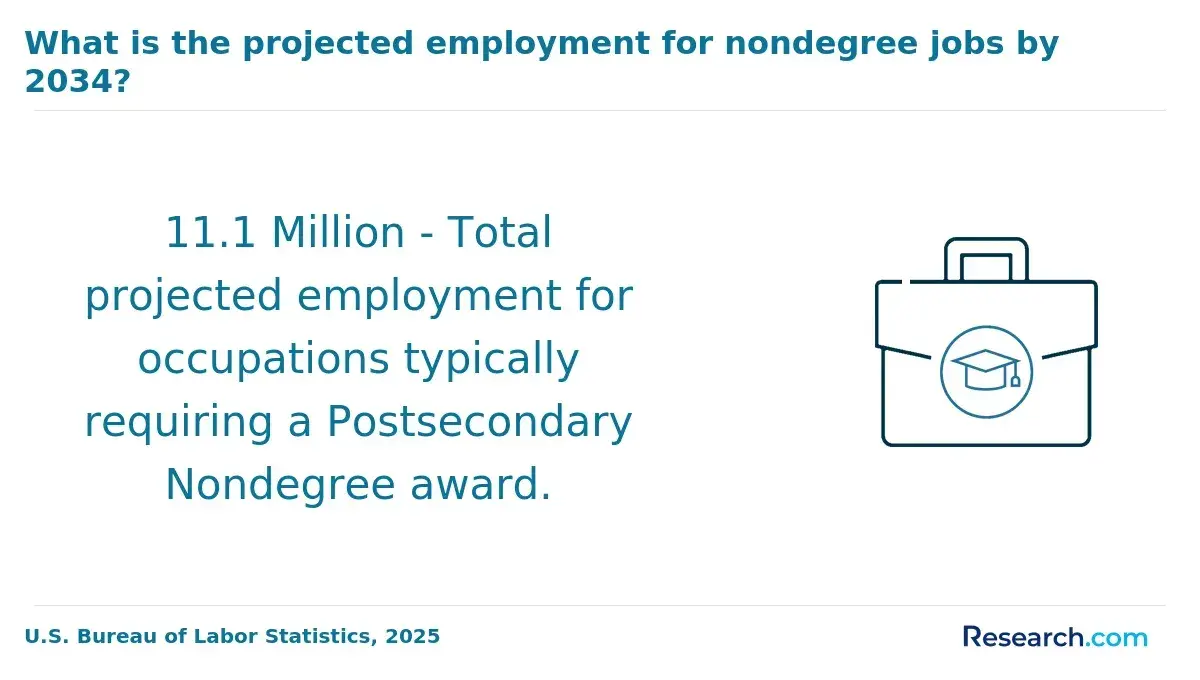
How do online and campus-based stackable credential programs differ in flexibility and support?
Online stackable programs can suit working adults when coursework is asynchronous, coaching appointments are available outside standard business hours, and required exams or practical experiences are manageable locally. Campus-based programs are usually stronger for equipment-intensive trades, clinical education, studio critique, and immediate access to instructors and peers.
The format comparison below helps identify whether flexibility is genuine or simply shifts responsibility to the learner.
| Consideration | Online or hybrid | Campus-based |
| Schedule | May allow asynchronous theory courses | Often follows fixed class and lab times |
| Hands-on learning | May require local placements, residencies, or proctored labs | Usually provides on-site labs and equipment |
| Coaching access | Depends on appointment availability and response times | May include in-person advising and events |
| Networking | Requires deliberate virtual employer engagement | May offer local employer visits and peer connections |
Before enrolling online, ask who arranges placements, whether your state is eligible, and how quickly coaches respond. Learners who need a fully online route can also review free online college applications to reduce the cost of comparing eligible institutions.
What admission requirements and prior experience are needed for stackable credential pathways?
Requirements range from open enrollment to selective admission. A short noncredit certificate may require only age, identity, basic digital access, and payment. Credit-bearing college certificates commonly require a high school diploma or equivalent, placement or prerequisite coursework, and an application. Advanced stacks may require completion of the earlier credential, a minimum course grade, work experience, or an active professional license.
Regulated and hands-on programs may add requirements that are not typical college admissions criteria. Healthcare programs can require immunizations, background checks, physical capability documentation, CPR, and clinical eligibility. Commercial driving, public safety, and apprenticeships may impose driving-record, fitness, drug-screening, or employer-selection requirements.
Do not assume prior learning will count. Request a written evaluation of transfer credit, military training, industry certifications, or work-based learning before paying for duplicate coursework. If a provider promises "no requirements," verify whether that applies only to initial enrollment rather than clinical placement, certification examination, or progression to the next credential.
How long do stackable credential programs take and what do they typically cost?
Time and cost depend on whether the first credential is a short training course, a credit-bearing certificate, an associate degree, or a sequence that includes an external certification exam. A focused certificate may take weeks or months; an associate-degree pathway commonly takes longer because it includes more technical and general-education coursework. Part-time pacing extends the calendar but may make employment easier to maintain.
Estimate the full pathway cost rather than comparing advertised tuition alone. The following categories are the expenses most likely to change the return-on-investment calculation.
- Tuition and mandatory institutional fees for every credential level
- Books, software subscriptions, tools, uniforms, equipment, and internet access
- Certification, licensure, examination, fingerprinting, background-check, and retake fees
- Transportation, clinical or lab travel, childcare, and income lost during required daytime training
- Interest and repayment obligations if borrowing is necessary
Federal aid eligibility depends on the program, institution, enrollment level, and student circumstances; many short noncredit programs do not qualify. Ask the financial-aid office which costs are eligible before enrolling. For a longer education comparison, review best degrees to make money, while remembering that occupational earnings data do not guarantee an individual outcome.
What types of career coaching and job placement support do these programs provide?
Career coaching ranges from a single résumé workshop to sustained, one-to-one support throughout training and the job search. The most useful services are connected to a learner's target role, location, schedule, and prior experience rather than generic advice.
Ask providers to explain which services are included and how long access continues after completion. Strong offerings may include the following:
- Career-goal assessment and a written plan linking each credential to a target role
- Résumés, LinkedIn profiles, portfolios, mock interviews, and salary-negotiation preparation
- Employer introductions, internships, apprenticeships, work-based learning, or hiring events
- Job-search accountability, application feedback, and support after an unsuccessful interview
- Alumni mentoring and referrals to public workforce services when a program cannot place students directly
A major red flag is vague placement language. Ask for the reporting period, the number of completers counted, the definition of "placed," whether jobs were related to training, and whether part-time, temporary, or incumbent-worker promotions are included. Coaching improves preparation; it cannot guarantee an offer.
What salaries and job outlook can I expect with stackable credentials in key fields?
Salary information should be used as labor-market context, not as a promise attached to a credential. The BLS Occupational Outlook Handbook reports national median annual wages and projections for occupations, while actual pay varies by state, employer, shift, union coverage, experience, and education. Some listed occupations require more than a certificate.
These BLS 2024 median annual wage figures and 2023-2033 projections illustrate why learners should match a stack to a specific role and its entry requirements.
| Occupation | 2024 median annual wage | 2023-2033 outlook | Credential caution |
| Medical assistants | $44,200 | Much faster than average growth | Employer preferences and certification expectations vary |
| Licensed practical and licensed vocational nurses | $62,340 | Faster than average growth | Requires state-approved education and licensure |
| Computer support specialists | $61,550 | Faster than average growth | Some roles accept certificates; others prefer degrees or experience |
| Electricians | $62,350 | Much faster than average growth | Typically requires apprenticeship and licensing progression |
| Paralegals and legal assistants | $61,010 | Little or no change projected | Employers may prefer an associate degree or bachelor's degree |
Use national figures as a starting point, then check local job postings for required credentials, shift expectations, and experience. A pathway is more compelling when the first credential can support work while later credentials expand responsibilities or qualify the learner for a required examination.
Other Things You Should Know About
They can be worthwhile when each step has documented value: a usable skill, recognized credential, transferable credit, or route to a required license or higher credential. They are a weaker choice when the provider cannot show how credits, coaching, and employer relevance connect.
No. Coaching helps with career planning, applications, résumés, interviewing, and networking. Job placement refers to a provider's reported employment outcomes and should be evaluated using its definition, time frame, and evidence.
Employers typically care most about the issuing organization, demonstrated skills, required licenses or certifications, and relevant experience. Online delivery can be acceptable, but practical fields may still require verified labs, clinical training, supervised hours, or in-person assessments.
References
- Stackable Credentials: Building Career Ladders That Actually Lead to Jobs | Mapademics https://www.mapademics.com/resources/whitepapers/stackable-credentials-career-pathways
- What Are Stackable Credentials and Why Do They Matter? https://www.pltw.org/blog/what-are-stackable-credentials
- Stackable Credentials | Learn & Work Ecosystem Library https://learnworkecosystemlibrary.com/topics/stackable-credentials/
- Stackable Credentials in Career Education at California Community Colleges https://www.ppic.org/publication/stackable-credentials-in-career-education-at-california-community-colleges/
- Free Career Training Programs: A 2026 Guide https://flashpass.com/blog/free-career-training-programs-find-a-credible-path-in-2026
- Microcredentials: Empowering Modern Learners & Employers https://evolllution.com/microcredentials-empowering-modern-learners-employers
- The 5 Best Coaching Certification Programs in 2026 https://coaching.success.com/blog/best-coaching-certification-programs-2026
- Building Stackable Credentials That Truly Deliver Value and Economic Mobility: 7 Steps for Success https://mcacs.talentfirst.net/building-stackable-credentials-that-truly-deliver-value/
- Foundational Career Coach Skills Training https://www.jff.org/idea/foundational-career-coach-skills-training/
- EdAssist | When to consider stackable skills training https://www.brighthorizons.com/resources/blog/edassist/when-to-consider-stackable-skills-training