2027 Best Microcredentials for Military Spouses

Co-Founder and Chief Data Scientist
Frequent moves can interrupt a degree plan or make local licensing difficult, so military spouses often need training that travels with them. Microcredentials are short, skills-focused credentials offered by colleges, industry groups, and training providers; they can build job-ready evidence faster than a degree, but quality and employer value vary widely.
This guide compares practical options, funding, delivery formats, and outcomes. The Department of Defense's My Career Advancement Account program can provide eligible spouses up to $4,000 in career education funding, making careful program selection especially important.
Key Things You Should Know
- Prioritize portable credentials tied to demonstrable skills, such as IT support, bookkeeping, project coordination, medical billing, or digital design; a short certificate is not the same as an industry certification or a state license.
- Eligible spouses may receive up to $4,000 through MyCAA, but funding does not make every program a good investment: verify total fees, required exams, equipment, and whether the credential is recognized by employers.
- For occupational context, the U.S. Bureau of Labor Statistics projects employment for information security analysts to grow 29% from 2024 to 2034, while many entry-level paths still require experience or a broader degree alongside a microcredential.
Top 10 Best Microcredentials for Military Spouses
Popular Trade School Programs
Short trade certificates can suit spouses who expect to remain in one area long enough for hands-on training and local employment. Options include HVAC technician, welding, electrical technician, automotive service, CDL preparation, and construction estimating. Compare required lab hours, apprenticeship pathways, tools, and state licensing rules before enrolling.
HVAC, electrical, and welding certificates may support entry into supervised work, but they do not automatically confer a journeyman license. A credit-bearing certificate can be a better choice when it stacks into an associate degree; a noncredit course may be faster for a narrowly defined skill.
Healthcare Programs
Healthcare microcredentials work best when they lead to a clearly defined support role or prepare a learner for a separate exam. Common options include medical billing and coding, pharmacy technician, medical assistant, dental assisting, sterile processing, and electronic health record training.
Remote-friendly billing and coding is more portable than patient-care roles, which usually require clinical placements and may face state-specific rules. Confirm whether the program prepares students for a recognized certification exam, includes exam fees, and meets any state requirements. Do not assume a short online course alone qualifies someone for clinical employment.
Criminal Justice / Law Programs
Legal studies, paralegal support, court reporting, legal transcription, cybersecurity fundamentals, and emergency management certificates can appeal to spouses interested in public service or legal operations. Paralegal certificates are most useful when offered by an established college and when employers in the intended market recognize the curriculum; some roles prefer a degree or prior legal experience.
Court reporting and certain public-safety jobs have intensive skill, testing, or state-specific requirements. For a portable path, consider legal operations, compliance support, records management, or e-discovery skills rather than assuming a criminal justice certificate creates law-enforcement eligibility.
Arts & Design Programs
Digital marketing, UX design, graphic design, video editing, web content, photography, and social media certificates can support freelance or remote work because a portfolio can move between duty stations. Choose programs that require real projects, feedback, accessible software, and a final portfolio rather than only video completion.
Adobe, design-platform, or analytics certifications can complement a program certificate, but employers typically evaluate work samples and practical ability. A short credential is a sensible starting point for career exploration; a longer portfolio-based program may be better for spouses seeking agency, in-house, or advanced design roles.
What types of microcredentials are most valuable for military spouses today?
The most valuable microcredential is the one that solves a specific hiring problem in a career that can survive a permanent change of station. For many military spouses, that means an employer-recognized certification, a college-issued short certificate with assessable projects, or a stackable credential, not a generic completion badge.
Portable value is strongest when the credential combines a defined job function with proof of competence. The comparison below helps distinguish common choices.
| Credential type | Best use | Key limitation |
| Industry certification | Validating a standardized technical skill, such as IT, bookkeeping, or project management | May require an exam, renewal, or prior experience |
| College microcredential | Structured training with instructor feedback; sometimes stackable for credit | Employer recognition and transfer rules vary |
| Professional certificate | Career exploration and portfolio-building in business, data, or design | Often noncredit and not a license or professional certification |
| State-regulated training certificate | Preparing for a specific exam or supervised role in healthcare or trades | May not transfer across state lines |
Technology adoption is increasing the value of digital fluency, but automation also makes generic course completion less persuasive. Look for applied work in spreadsheets, customer relationship management systems, data analysis, AI-assisted workflows, or industry software. A self paced bachelor's degree can be a better long-term option when the target occupation routinely requires a degree, while a microcredential is better for testing a field or filling one immediate skill gap.
How do online microcredential programs compare with on-base or local campus options?
Online programs usually offer the best continuity through moves, deployments, childcare changes, and irregular schedules. They are particularly practical for technology, business operations, marketing, bookkeeping, and design.
On-base education offices, local community colleges, and campus programs can be stronger for occupations requiring labs, clinical experiences, equipment, proctored practical exams, or local employer relationships.
Use the format comparison to match convenience with the evidence employers or licensing boards actually expect.
| Format | Usually best for | Trade-off to check |
| Fully online, asynchronous | Remote-friendly skills and flexible schedules | Self-management, limited live practice, and proctoring rules |
| Online with live sessions | Instructor access and cohort accountability | Time-zone conflicts during moves or overseas assignments |
| On-base or local campus | Hands-on trades, clinical training, and networking | Continuity if a move occurs before completion |
| Hybrid | Programs needing both theory and supervised practice | Required in-person dates and placement availability |
Before choosing an online option, ask whether labs can be completed near a future duty station and whether a practicum is guaranteed or merely the student's responsibility. Spouses seeking a broader, transferable academic route can also compare 1 year associate degree programs online. A degree may provide more general education and transfer options than a standalone microcredential, though it usually requires a larger time commitment.
What accreditation and quality standards should military spouses look for in microcredentials?
Quality standards depend on the credential. For a college-issued, credit-bearing microcredential, institutional accreditation matters because it supports academic oversight and may affect transferability.
For a noncredit professional certificate, the more relevant questions are who designed it, what learners are assessed on, and whether employers recognize it. For healthcare and trades, program approval, exam eligibility, and state board requirements can matter more than a provider's marketing language.
Check these items before paying a deposit, especially when a program claims it will lead to certification or licensure.
- Identify the issuer: a regionally or nationally recognized institution, a professional association, an exam vendor, or a private training company.
- Ask whether the award is academic credit, a noncredit certificate of completion, digital badge, or preparation for a separate certification examination.
- Request the complete curriculum, instructor qualifications, assessment method, required software or equipment, and total cost in writing.
- For regulated careers, confirm requirements directly with the state licensing board and the certification organization before enrolling.
- Check whether the credential can stack into a certificate, associate degree, or bachelor's degree, and obtain the policy in writing.
A school's general accreditation does not automatically mean every short program meets specialized licensing rules. When academic quality and transfer options matter, start by comparing accredited online universities, then verify the exact program rather than relying on the institution's name alone.
Which microcredentials align best with portable, remote, or freelance career paths?
The strongest portable career paths produce work that can be delivered digitally, documented in a portfolio, or performed under widely recognized national standards. Remote and freelance work can still be competitive, so choose a credential that creates tangible evidence: a project portfolio, sample reports, a certification score, or supervised experience.
These pathways generally fit military-spouse mobility better than location-dependent licensing, although no path guarantees remote work.
| Path | Useful microcredentials | Portability consideration |
| IT support and cybersecurity | Help desk, networking, cloud, security fundamentals | Remote roles exist, but employers may seek experience and background-screening eligibility |
| Bookkeeping and operations | Accounting software, payroll, spreadsheets, project coordination | Freelance work is possible; build client-ready samples and understand tax obligations |
| Digital marketing and content | Analytics, search marketing, social media, email platforms, content design | Portfolio and current platform skills matter more than course completion |
| Medical administration | Billing, coding, scheduling, health records | Some work is remote, but employers may prefer experience and recognized certification |
| Design and web production | UX, graphic design, web publishing, video editing | Client portfolio, contracts, and reliable software access are essential |
A highly specialized academic goal may eventually call for advanced education rather than serial short courses. For example, 1 year PhD programs online may be relevant only to experienced professionals evaluating accelerated doctoral study; it is not a substitute for an entry-level career microcredential.
What are typical program length, tuition costs, and funding options for military spouse microcredentials?
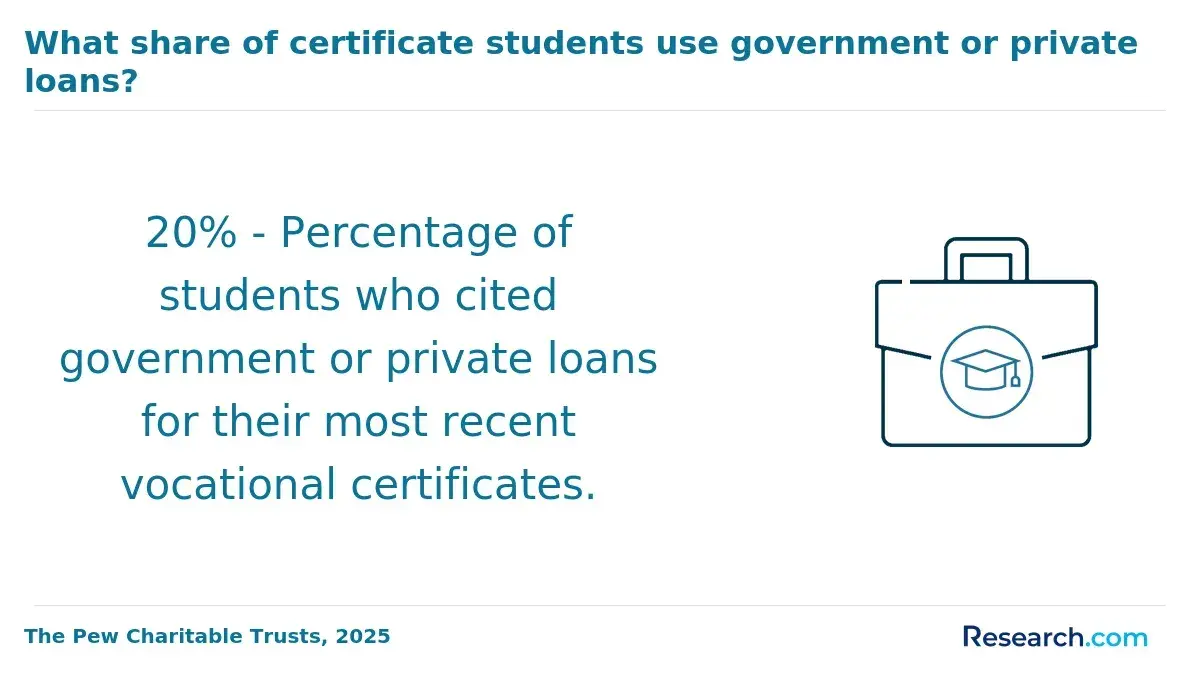
Most microcredentials range from a few weeks to roughly a year, depending on whether they are self-paced, instructor-led, credit-bearing, or tied to clinical or lab hours. Costs can range from low-cost online courses to several thousand dollars for college certificates, intensive bootcamps, exams, supplies, and required background checks. Compare the full cost, not tuition alone.
For eligible military spouses, MyCAA can provide up to $4,000 toward approved education and training leading to a license, certification, national test, or associate degree in a portable career field. Eligibility, approved programs, and funding procedures can change, so confirm details through the official MyCAA portal before enrolling or paying upfront.
Build a realistic budget by accounting for expenses that are often omitted from advertised tuition.
- Tuition or course subscription charges, including whether access expires before you finish.
- Certification exam, retake, proctoring, background-check, immunization, or licensing fees when applicable.
- Software subscriptions, laptops, tools, textbooks, uniforms, lab kits, and travel to required sessions.
- Childcare and lost work time for clinical placements, externships, or live classes.
- Renewal fees and continuing education requirements for certifications that must be maintained.
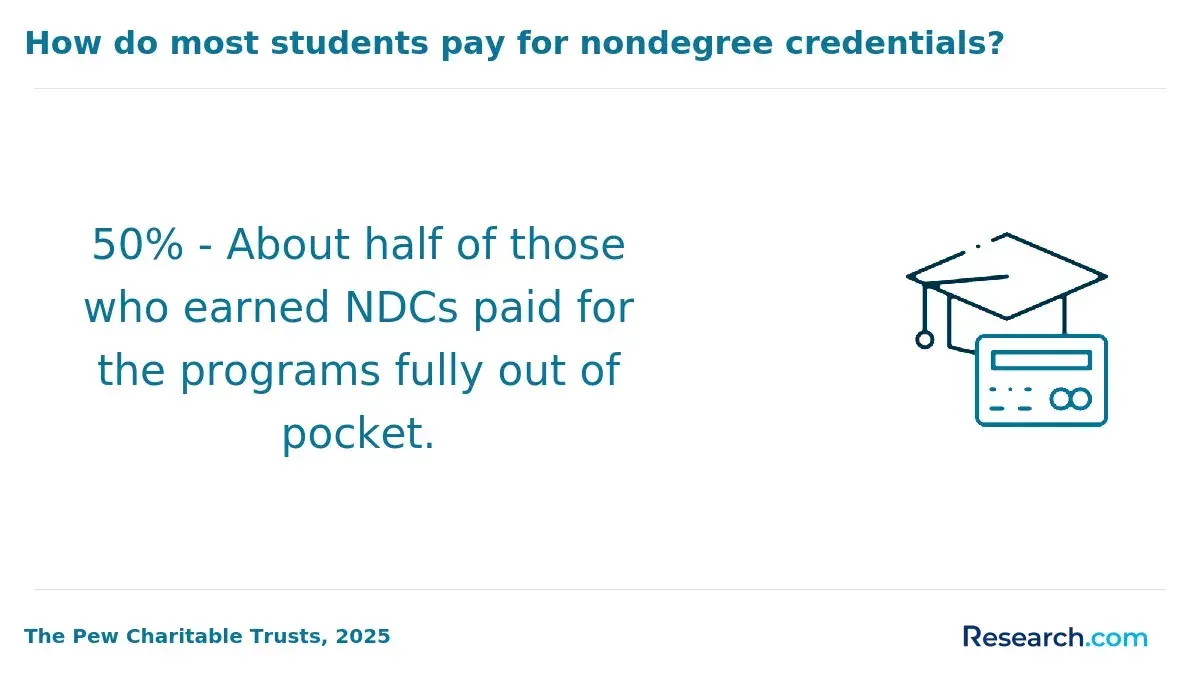
Federal student aid is more commonly available for eligible credit-bearing programs at participating institutions than for short noncredit badges. Ask the provider whether it accepts MyCAA, offers military tuition policies, permits payment plans, or has scholarships; do not assume private loans are worthwhile for a credential with unclear employer demand.
What admissions requirements and eligibility criteria apply specifically to military spouses?
Military-spouse status can support eligibility for military education benefits, but it does not replace a provider's academic, clinical, examination, or licensing requirements. Many noncredit microcredentials have open enrollment and require only payment, internet access, and basic computer skills.
College certificates may require an application, placement evaluation, transcripts, or prerequisites. Regulated programs can require background checks, immunizations, drug screening, CPR training, or a clinical-site approval process.
Before applying, separate benefit eligibility from admission eligibility. The following preparation sequence prevents a common and expensive error: starting training before confirming that the final exam or license is attainable.
- Define the target job, state or remote-work location, and whether the role requires a license, certification, degree, clearance, or experience.
- Confirm MyCAA eligibility and obtain any required education plan or approval before registering.
- Read the provider's prerequisites, attendance rules, technology requirements, withdrawal policy, and completion deadline.
- For exam-based credentials, verify that the certifying body, not just the school, will accept your education and experience.
- Save written confirmation of funding, transferability, clinical placement responsibility, and refund terms.
GPA and standardized tests are usually irrelevant to short, noncredit programs, but they can matter for academic certificates or degree pathways. Ask only when the program is credit-bearing or the school explicitly requires them.
What skills, coursework, and certifications do top microcredentials for military spouses usually include?
Top programs teach a narrow set of marketable skills and require learners to demonstrate them. The best curriculum varies by field, but a credible microcredential normally names the tools, tasks, assessments, and outcomes rather than promising vague "career readiness."
Look for coursework that fits the actual work you want to perform.
| Career area | Typical skills and coursework | Possible external credential |
| IT support | Troubleshooting, operating systems, networking, ticketing, customer support | Vendor-neutral or vendor-specific certification exam |
| Project and business operations | Scheduling, budgets, spreadsheets, documentation, stakeholder communication | Entry-level project management certification where eligible |
| Medical administration | Medical terminology, coding systems, claims, privacy, electronic records | Billing or coding certification exam, depending on provider and eligibility |
| Digital marketing | Analytics, campaign planning, content, email, search and social platforms | Platform or analytics certification |
| Design | Typography, layout, prototyping, accessibility, portfolio production | Software certification, though portfolio quality is often more important |
AI tools are increasingly part of office, marketing, design, and technology workflows. Choose programs that teach responsible use, fact-checking, data privacy, prompt evaluation, and human review rather than treating AI output as automatically accurate.
For certification preparation, confirm pass-rate claims independently and remember that a school certificate of completion is not the external certification itself.
What salary ranges and job outcomes can military spouses expect after completing microcredentials?
A microcredential can strengthen an application or help a spouse pivot into an adjacent role, but it does not set a salary by itself. Pay depends on occupation, location, experience, employer, security-clearance requirements, schedule, and whether the work is employee-based or freelance. Use occupational data as context, then review local or remote job postings for the credentials employers actually request.
The U.S. Bureau of Labor Statistics reported a 2024 median annual wage of $61,550 for computer user support specialists and $49,210 for bookkeeping, accounting, and auditing clerks. These are occupation-wide medians, not expected earnings after a microcredential; entry-level offers may be lower, while experience and specialized responsibilities can raise pay.
Evaluate outcomes by looking beyond salary claims. A credible provider should be able to explain what role the training targets, whether jobs require a separate exam or experience, and how it measures completion, certification attempts, or placement. Be cautious with programs that use broad salary figures from unrelated occupations or imply that a completion badge guarantees remote employment.
For a practical return-on-investment check, compare several current job postings with the curriculum. Count how often requested tools, portfolio requirements, certifications, and experience levels appear.
If postings consistently demand a degree, license, or two years of experience that the program does not address, treat the microcredential as a supplement rather than a complete career switch.
How can military spouses choose reputable microcredential providers and avoid low-quality programs?
Reputable providers make their credential type, curriculum, instructors, price, assessment, and limitations easy to verify. They do not rely on urgency, vague job guarantees, or claims that an online course automatically qualifies every student for a regulated occupation.
A community college, recognized university, established professional association, or well-known certification vendor can be a sensible starting point, but the exact program still deserves scrutiny.
Use this decision process before committing funds or MyCAA benefits.
- Start with three to five job postings for the role you want and list the recurring required skills, credentials, software, and experience.
- Match each program's syllabus and assessments to those requirements; prioritize applied assignments over passive video hours.
- Verify the issuer, credit status, external certification or licensing eligibility, and any state-specific restrictions.
- Calculate the all-in cost and time, including exams, equipment, travel, renewals, and unpaid practicum hours.
- Ask for written answers about instructor support, completion deadlines, refunds, career services, transferability, and who arranges placements.
- Choose the smallest credible credential that closes your immediate skill gap, then plan the next stackable step only if job evidence supports it.
Common red flags include pressure to enroll immediately, "guaranteed job" language, unnamed instructors, no published curriculum, misleading use of the word accredited, and refusal to explain exam or licensure eligibility.
Another frequent mistake is selecting solely by speed: the fastest course is poor value if it lacks a portfolio, practical assessment, employer recognition, or the supervised hours your target role requires.
Other Things You Should Know About the Best Microcredentials
No. MyCAA funding applies only to eligible spouses and approved education or training pathways. Confirm that both you and the selected program qualify before registration, because a provider's general military discount is not the same as MyCAA approval.
They can be worthwhile when they teach an in-demand, portable skill and provide credible evidence of competence at a manageable cost. They are less suitable when the target job requires a degree, substantial experience, or a state license the program does not address.
A certificate is usually awarded after completing a course or program. A certification is generally awarded by a certifying organization after meeting its standards, often including an exam, and may require renewal. Some certificate programs prepare learners for a separate certification exam.
IT support, cybersecurity fundamentals, bookkeeping, project coordination, digital marketing, web production, UX design, and medical administration can support remote or freelance pathways. Remote availability depends on the employer and the applicant's skills, portfolio, experience, and work-location eligibility.
References
- Remote Jobs for Military Spouses in IT | ACI Tech Academy https://www.acilearningtechacademy.com/blog/mission-possible-remote-jobs-for-military-spouses-in-it/
- Military Spouse and Military Caregiver Flexibilities https://www.commerce.gov/hr/military-spouse-and-military-caregiver-flexibilities
- Military Spouse Career-Building Tips & Assistance https://www.aafmaa.com/resource-center/military-spouse-career-building-tips-assistance
- Must Know Scholarship Programs for Military Spouses https://www.militaryfamily.org/must-know-scholarship-programs-for-military-spouses/
- Targeted Training Helps Military Spouses Find Sustainable Employment https://www.hiringourheroes.org/stories/targeted-training-helps-military-spouses-find-sustainable-employment/
- Military Spouse Employment Partnership | U.S. Department of the Interior https://www.doi.gov/veterans/msep
- Free Certifications - MSOP https://joinmsop.org/certifications