2027 Best Online Certifications With 6-Week Courses

Co-Founder and Chief Data Scientist
A six-week online course can be a practical way to build a targeted skill quickly, but it is not automatically a license, college certificate, or job guarantee. This guide is for career changers, working adults, and students comparing short credentials. It explains what six-week programs can realistically provide, how to vet providers, and when a longer pathway is necessary.
U.S. Bureau of Labor Statistics data for 2024 show that several accessible technical and healthcare occupations had median annual wages above $40,000, making focused training worth investigating when it matches employer requirements.
Key Things You Should Know
- A six-week course is usually a short noncredit course, professional certificate module, or exam-preparation program; confirm whether it awards an academic certificate, prepares you for an industry certification exam, or simply documents completion.
- Fast options commonly cover job-ready digital, administrative, customer-service, safety, and introductory healthcare knowledge, but hands-on trades and licensed clinical roles usually require supervised practice beyond six weeks.
- Use 2024 U.S. labor data as career context, not a promise: medical assistants had a $44,200 median annual wage and HVAC mechanics had a $59,810 median annual wage, but each role has different training and state requirements.
Top 10 Best Online Certifications With 6-Week Courses
Popular Trade School Programs
Six-week online trade courses can introduce construction safety, blueprint reading, OSHA concepts, basic electrical theory, HVAC fundamentals, or customer-service systems used by skilled-trades employers. They work best for people exploring a trade, preparing for entry-level helper work, or adding theory before a longer program.
They do not replace the lab hours, apprenticeship, supervised fieldwork, or state licensing required for electricians, plumbers, and many HVAC technicians. Compare a short course with an apprenticeship or a credit-bearing certificate if your goal is independent field work or licensure.
Healthcare Programs
Short online healthcare programs often cover medical terminology, billing and coding foundations, patient privacy, pharmacy vocabulary, or preparation for a separate certification exam. A completion certificate may help demonstrate knowledge, but it is different from a professional certification such as one earned through an external certifying body.
Medical assisting, phlebotomy, nursing, and most direct patient-care roles typically require clinical practice, background checks, immunizations, and state-specific rules that cannot be completed entirely online in six weeks. Verify whether employers in your area recognize the credential before paying.
Criminal Justice / Law Programs
Six-week online options in criminal justice and law commonly address legal research basics, court procedures, report writing, ethics, victim advocacy, or introductory paralegal concepts. They can help current support staff develop vocabulary or help prospective students test career interest.
They generally do not qualify a learner to practice law, become a police officer, work as a certified paralegal, or meet agency hiring standards. Those outcomes may require a degree, academy training, background investigation, physical testing, supervised experience, or an exam. Check employer postings before choosing a topic.
Arts & Design Programs
Short arts and design courses can build focused skills in graphic design software, digital illustration, user experience basics, photography editing, social media content, or portfolio presentation. These courses are especially useful when they produce work samples you can show clients or employers.
A six-week credential is less valuable when it consists only of videos and quizzes with no feedback or portfolio output. For design careers, employers often evaluate demonstrated ability more closely than course length. Learners seeking broader theory, critique, and transfer credit may prefer a certificate or associate degree.
What are the fastest online certifications you can complete in about six weeks?
The fastest legitimate online options are usually provider-issued completion certificates, microcredentials, or exam-prep courses rather than occupational licenses. They are designed to validate a narrow skill, not replace a full academic program. Browse available 6-week certification programs online with the provider's stated workload in mind: a six-week calendar may still require 8 to 15 study hours weekly.
This comparison separates the credential you receive from the career claim a provider may make.
| Six-week option | Typical outcome | Best fit | Important limitation |
| Software or data tools course | Completion certificate and project work | Office workers and career explorers | Usually not an industry certification |
| Google, Microsoft, or vendor exam prep | Preparation for a separate certification exam | Learners with some relevant experience | Exam fee and passing score may be separate |
| Medical billing or coding foundations | Entry-level knowledge or exam preparation | Administrative healthcare interests | Employer preferences vary; certification may require more study |
| Project management fundamentals | Completion certificate and workplace vocabulary | New coordinators and team leads | Does not substitute for experience-based credentials |
| OSHA or workplace safety training | Training record or course completion | Construction and industrial workers | Must match the employer's required training |
A short course is most useful when it solves a specific skills gap, supports a current job, or helps you decide whether to commit to a longer credential. It is a poor fit if an employer, state board, or certification body explicitly requires clinical hours, an apprenticeship, a degree, or documented work experience.
How do six-week online certification programs compare to campus-based options?
Online six-week programs are usually more flexible and faster to start than campus offerings because coursework can be asynchronous. Campus or hybrid options can be stronger when competency depends on equipment, instructor observation, clinical practice, or employer-connected labs. The right format depends on what must be verified at the end of training.
The comparison below shows where delivery format changes the value of a short credential.
| Decision factor | Online six-week course | Campus or hybrid option |
| Schedule | Often flexible, with weekly deadlines | Fixed meeting or lab times are common |
| Hands-on learning | Best for software, theory, and administrative skills | Better for equipment, patient care, and technical demonstrations |
| Networking | May rely on virtual office hours and peer forums | More direct access to instructors and local employers |
| Cost structure | May reduce commuting and housing costs | May include lab, facility, and material charges |
| Credential recognition | Depends on provider and outcome | May be stronger when offered by an accredited institution |
Choose online delivery when the target job values a demonstrable digital skill and you can maintain a disciplined schedule. Choose campus or hybrid training when a practical assessment is required. Learners who need a broader, credit-bearing academic path can also compare accelerated bachelor degree programs rather than stacking unrelated short courses.
What accreditation and licensing requirements should six-week online certificates meet?
Accreditation applies primarily to institutions and certain specialized educational programs; professional certification is granted by a certifying organization; licensure is permission from a government authority. A six-week provider may be legitimate without institutional accreditation if it offers noncredit workforce training, but it should describe its credential honestly and identify the organization behind it.
Before enrolling in a regulated field, verify the exact requirement with the relevant state board, employer, or certification organization. For example, an online course may prepare someone for an exam but may not meet clinical-hour, supervised-experience, or approved-program rules needed to sit for that exam.
Use this short verification sequence to avoid enrolling in a course that cannot serve your goal.
- Identify the job title, certification, or license you want before comparing courses.
- Read job postings and the appropriate state or national credential requirements for required education, examination, and experience.
- Confirm in writing whether the specific course is credit-bearing, exam-aligned, approved, or merely a completion program.
- Ask whether the credential has an expiration date, renewal requirement, proctored assessment, or continuing-education obligation.
Be cautious with providers that use "accredited" without naming an accreditor, imply a license is included, or refuse to explain what their credential permits you to do.
What admission criteria and prior experience do six-week certification programs require?
Admission requirements range from nearly none to substantial, depending on the credential type. Many noncredit online courses require only payment, basic computer access, and enough English-language proficiency to complete assignments. University continuing-education certificates may require an application, prior coursework, or professional experience. Exam-prep programs may recommend prior knowledge but do not control eligibility for the external exam.
Do not assume GPA, standardized tests, or transfer credit matter for every six-week option. These are more relevant to credit-bearing college certificates than to vendor training or continuing education. If you need academic credit, ask whether credits appear on an official transcript, whether they can apply to a degree, and whether the receiving institution will accept them.
Advanced learners considering a management or specialized academic transition should compare the prerequisites and workload of easy master's degrees with a short course. A six-week credential can strengthen a skill area, but it rarely replaces the academic background required for graduate study.
How much do six-week online certification programs cost, and are they worth it?
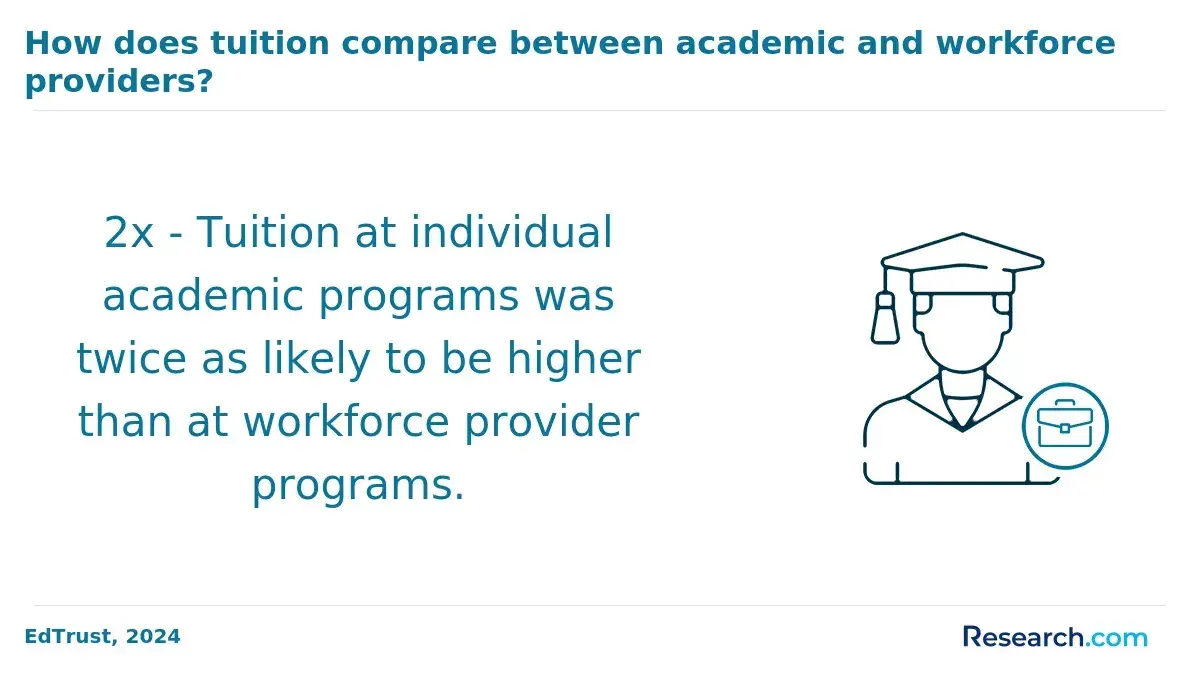
Six-week online programs can range from free introductory courses to several thousand dollars for instructor-led career training. Tuition alone is not the total price. Add required exam vouchers, textbooks, software subscriptions, equipment, background checks, proctoring, travel for clinical or practical assessments, and renewal fees where applicable.
This cost framework helps distinguish a low-cost skill course from an expensive program with limited career utility.
| Cost factor | Why it affects value | What to verify |
| Tuition | May cover instruction only | Full amount, payment schedule, and refund deadline |
| Certification exam | Often separate from course completion | Whether the voucher is included and exam eligibility rules |
| Required materials | Can materially change a low advertised price | Software, kits, books, and device specifications |
| Career services | Quality varies widely | Specific services, employer partners, and placement definitions |
| Credit value | Can affect long-term educational return | Transcript status and transfer policy |
A program is more likely to be worth the cost when it builds a skill requested in target job postings, includes an assessed project or exam preparation, and fits a clear next step. Ask about employer tuition assistance before borrowing. Federal student aid is generally tied to eligible programs at qualifying institutions, so many short noncredit courses do not qualify. Avoid financing a brief course with high-interest debt unless the outcome and repayment terms are clear.
What careers and job roles can six-week certifications help you qualify for?
A six-week program may help you compete for adjacent or entry-level work, particularly when paired with prior experience, a portfolio, or an employer referral. It usually cannot independently qualify you for occupations with statutory education, licensing, or supervised-practice requirements. Job titles are not standardized, so review local postings rather than relying on a provider's marketing label.
The roles below illustrate realistic ways short training can support a job search without overstating what the credential alone can do.
| Training focus | Potential roles to explore | What strengthens candidacy |
| Office software and bookkeeping basics | Administrative assistant, office coordinator, accounts support | Spreadsheet samples and relevant software proficiency |
| Digital marketing or social media | Marketing assistant, content coordinator, freelance support | Portfolio, analytics examples, and writing samples |
| IT support fundamentals | Help desk trainee, technical support representative | Hands-on troubleshooting practice and an industry exam |
| Medical administration | Patient-services representative, scheduler, billing support | Privacy training and employer-required systems knowledge |
| Safety and trade fundamentals | Laborer, installer helper, warehouse or site support | Employer-required safety training and practical experience |
People seeking quieter, task-focused career paths may also explore good paying jobs for introverts. Match the course to the actual work environment, not only the credential name: some roles involve heavy customer contact, while others emphasize independent technical or analytical work.
What salary ranges and earning potential are realistic after a six-week certification?
Salary expectations should start with the occupation, location, employer, schedule, and experience level - not with the course length. The U.S. Bureau of Labor Statistics reported a 2024 median annual wage of $44,200 for medical assistants and $59,810 for heating, air conditioning, and refrigeration mechanics and installers. Those figures describe workers in the occupations, including people with varying education and experience; they do not show what six-week course completers earn.
Short credentials can have the strongest financial case when they help an already-employed person take on a higher-value task, pass a recognized exam, or move into a role with a documented hiring pathway. A standalone completion certificate has weaker earning evidence when employers neither request it nor recognize the provider. Before enrolling, compare the total cost with realistic entry-level postings in your area, not national median wages alone.
How strong is the job outlook for fields that offer six-week online certifications?
Job outlook is strongest when short training supports a broader occupation with recurring employer demand, rather than when it follows a temporary trend. BLS projections for 2023 to 2033 estimate 15% employment growth for medical assistants, faster than the average for all occupations. That growth supports interest in healthcare administration and clinical support, but six weeks of online study alone may not meet employer or state requirements for patient-facing work.
AI and automation also affect credential value. Employers increasingly expect workers to use digital tools, review automated outputs, protect data, and communicate clearly with customers or teams. A focused course can help if it teaches current workflows and produces evidence of competency. Be skeptical of claims that a short credential "AI-proofs" a career; durable value comes from combining tool skills with judgment, domain knowledge, and practical experience.
How can you choose a reputable six-week online certification program and avoid scams?
A reputable six-week program states exactly what learners receive, how long work takes, what it costs, and whether it leads to an external exam, academic credit, or only a completion record. It also provides a real provider identity, instructor information or support channels, written policies, and a clear explanation of any licensure limitations.
Use these checks before payment, especially when a provider promises quick employment or unusually high income.
- Search target job postings first and identify the credentials, tools, and experience employers actually request.
- Compare the syllabus with the advertised outcome; a course promising a clinical or technical role should show how required practical competencies are addressed.
- Request the complete fee list, refund policy, assessment method, expected weekly hours, and any separate examination costs in writing.
- Confirm claims about accreditation, certification alignment, and licensing directly with the named institution, certifying body, or state board.
- Look for verifiable student-support contacts and avoid pressure tactics, guaranteed-job claims, fake countdown timers, or payment by irreversible methods.
The most common mistake is buying the fastest course before defining the required credential. Start with the job or certification target, then choose the shortest program that genuinely meets the next requirement. If a provider cannot explain that connection plainly, choose another option.
Other Things You Should Know About
To enroll in six-week online certification courses in 2027, you typically need a reliable internet connection, a computer with updated software, and sometimes specific hardware like a webcam. Always check course-specific requirements before enrolling to ensure compatibility with the course platform.
Some may be offered by accredited colleges, while many are noncredit programs from workforce-training or industry providers. Institutional accreditation does not automatically make a short course license-qualifying, and a legitimate noncredit course may not carry academic accreditation.
A certificate generally shows that you completed an educational program. A certification is a professional credential awarded by a certifying organization after meeting its standards, which may include an exam, experience, or renewal requirements.
Requirements vary widely. Some self-paced courses take only a few hours weekly, while instructor-led or exam-prep courses may require 8 to 15 hours or more. Review the syllabus, deadlines, and project expectations before enrolling.
References
- Best Online Certificate Programs | Enhance Your Skills https://bootcampgis.com/best-certificate-programs-online/
- Are short-term job training programs worth it? https://www.marketplace.org/story/2021/07/06/are-short-term-job-training-programs-worth-it
- 10 Best Online Learning Platforms 2026 | Guide for UK Learners https://royalopencollege.org/blog/education/best-online-learning-platforms/
- 6-Week Certification Programs: What You Can Really Finish Fast https://www.trade-schools.net/articles/6-week-certification-programs
- Online Certificate Programs | Certifications Programs https://www.uscareerinstitute.edu/online-certificate-programs
- The Value of Certificates vs. Degrees: What's Right for You? https://www.calmu.edu/the-value-of-certificates-vs.-degrees-whats-right-for-you
- Online Certificates for Job-Ready Skills | Grow with Google https://grow.google/certificates
- Best online certificates for career growth | edX https://www.edx.org/certificates
- How Much Does It Cost to Create an Online Course? A Complete Breakdown for Businesses That Want to Sell Courses https://oasis-lms.com/post/how-much-does-it-cost-to-create-an-online-course
- Best free certificate courses | Alison https://alison.com/certificate-courses