2027 Best Non-Degree Programs With No GPA Requirement

Co-Founder and Chief Data Scientist
A low GPA should not automatically block career training, but "no GPA requirement" can mean very different things across providers. Non-degree options may use open enrollment, a high school diploma, placement testing, interviews, or prerequisite coursework instead.
The U.S. Bureau of Labor Statistics projects medical assistant employment to grow 12% from 2024 to 2034, illustrating why short, job-focused training remains appealing. This guide compares practical pathways, costs, quality checks, career limits, and next steps so you can choose training that fits your goal.
Key Things You Should Know
- Many non-degree programs do not review college GPA, but they may still require a diploma or GED, age minimum, background check, placement test, prerequisite, or proof of immunizations.
- Short career training can lead toward entry-level work, but regulated fields such as nursing, electrical work, and legal support may require state approval, supervised experience, an exam, or a separate professional certification.
- For labor-market context, BLS projects 2024-2034 growth of 9% for electricians, 8% for HVAC mechanics and installers, and 12% for medical assistants; training alone does not guarantee access to these occupations.
Top 10 Best Non-Degree Programs With No GPA Requirement
Popular Trade School Programs
Trade programs commonly use open enrollment or basic eligibility screening rather than GPA review. Options include welding certificates, HVAC technician training, electrical pre-apprenticeship, plumbing coursework, diesel technology, automotive service, and commercial driver training. Choose a program tied to local employer demand and state rules, not simply the shortest option.
Electrician and plumbing paths often require paid apprenticeships and licensing after classroom instruction. HVAC training may prepare students for the separate EPA Section 608 certification exam. Ask whether tools, safety gear, testing, and exam fees are included in the quoted price.
Healthcare Programs
Healthcare non-degree options include medical assisting, phlebotomy, pharmacy technician, dental assisting, medical billing and coding, nursing assistant, and practical nursing certificates. Admissions may emphasize immunizations, CPR training, drug screening, background checks, entrance exams, or science prerequisites rather than GPA.
Clinical programs require in-person practice even when lectures are online. Verify that the curriculum meets employer, certifying-body, and state-board expectations before paying. A medical billing certificate can support administrative roles, while a practical nursing program generally leads toward a state licensure exam; they are not interchangeable pathways.
Criminal Justice / Law Programs
Common options include paralegal studies certificates, legal assistant training, court reporting coursework, security guard training, corrections certificates, and crime-scene or digital-forensics introductory programs.
A no-GPA policy does not override employer or agency screening: many roles require background checks, physical standards, citizenship or residency documentation, and state-specific training. Paralegal certificates can build legal research, writing, and document-management skills, but they do not authorize independent legal practice. For law-enforcement careers, confirm academy entry rules directly with the hiring agency before enrolling in private preparatory training.
Arts & Design Programs
Non-degree arts and design programs may cover various fields such as graphic design, UX design, photography, digital illustration, animation, interior design basics, fashion, music production, or web content creation. Many providers admit students without GPA review and evaluate work through projects rather than transcripts.
Portfolio quality, software fluency, deadlines, and client communication usually matter more to employers than the program label. Select training that produces work you can show publicly, while respecting confidentiality rules.
For regulated interior-design titles or advanced design roles, confirm whether a degree, experience, or separate credential is expected.
What are non-degree programs with no GPA requirement and who are they for?
Non-degree programs are organized learning experiences that do not award an associate, bachelor's, master's, or doctoral degree. They can award an academic certificate, a continuing-education certificate, a workforce credential, a completion record, or preparation for an external certification exam. "No GPA requirement" usually means the provider does not set a minimum high school or college GPA for admission; it does not mean there are no entry requirements.
These programs can fit adults changing careers, recent graduates who want a faster entry point, workers seeking a specific skill, and learners rebuilding an academic record. They are less suitable when a target occupation legally requires a degree, such as many registered nursing, engineering, or licensed professional roles.
The comparison below helps distinguish common pathways that are often grouped together even though their outcomes differ.
| Pathway | Typical provider | What it awards | Best use |
| Credit-bearing certificate | Community college or university | Academic certificate and college credits | Potentially stacking toward a degree |
| Noncredit career training | College continuing education or career school | Completion certificate | Job-specific, shorter training |
| Professional certificate | University, employer, or training provider | Provider-issued certificate | Focused professional skills and portfolio work |
| Industry certification | Independent certifying organization | Certification after meeting standards | Verifying competence through an exam or other requirements |
How do admission requirements work for programs that do not consider GPA?
Open-admission or no-GPA programs typically assess readiness through eligibility documents and program-specific requirements instead of academic averages. A school may accept applicants broadly but still limit seats in clinical, lab, or apprenticeship-connected cohorts.
Before applying, get the requirements in writing and check whether they apply at enrollment, before clinical placement, or before graduation.
- Confirm whether a high school diploma, GED, placement assessment, transcript, or prerequisite course is required.
- Ask whether background checks, drug screening, immunizations, physical exams, driving records, or fingerprints could affect participation or employment eligibility.
- Determine whether enrollment is open, rolling, cohort-based, or selective after an initial screening stage.
- Verify any age, English-language, computer, equipment, or attendance requirements that could affect completion.
A common mistake is reading "no minimum GPA" as "automatic admission to every component." Clinical placements, externships, and licensing pathways can impose separate standards. If you intend to later earn a degree, ask whether the certificate is credit-bearing and whether credits are accepted by the institution you may attend.
How can students verify accreditation and quality for non-degree certificate programs?
Quality review should match the type of training. Institutional accreditation matters most when you want academic credit, federal student aid eligibility, or a transferable college credential. Programmatic approval can matter more in regulated fields, while industry recognition and employer relationships may be most useful for software, design, or short professional training.
Use these checks before making a deposit. They help separate a legitimate training option from marketing that overstates career value.
- Identify the exact credential awarded and whether it is credit-bearing, noncredit, or preparation for an external exam.
- Ask the provider which accreditor, state agency, licensing board, or certifying organization recognizes the program, if any.
- Confirm claims directly with the relevant state licensing board or certification organization for your intended occupation.
- Request total-cost, withdrawal, refund, completion, placement, and externship policies in writing.
- Review instructor qualifications, required equipment, curriculum hours, and whether employers in your area recognize the training.
Red flags include vague claims of "national accreditation," promises of a guaranteed job or license, refusal to provide a catalog, and pressure to pay before you can review the full agreement. For students who ultimately need a degree, comparing online colleges with financial aid can clarify whether a credit-bearing route provides better long-term value.
What are the most common online and campus formats for non-degree programs?
Format should follow the skill being learned. Fully online programs work best for knowledge-based subjects such as billing and coding, project management, digital marketing, legal research, or introductory IT. Hands-on occupations usually require a lab, simulation, shop, clinical site, externship, or supervised field component.
This comparison shows why convenience should not be the only selection factor.
| Format | Usually works well for | Main advantage | Important limitation |
| Fully online | Business, technology, design, administrative skills | Schedule and location flexibility | May not satisfy practical-hour or licensure requirements |
| Hybrid | Healthcare theory, technical training, applied certificates | Combines remote study with supervised practice | Campus or site attendance remains mandatory |
| Campus-based | Welding, HVAC, automotive, lab and clinical training | Access to equipment and direct instruction | Less flexibility for work schedules |
| Self-paced online | Independent learners building discrete skills | Potentially faster completion | Requires strong time management and may lack live support |
Self-paced study can reduce scheduling friction, but it is not automatically cheaper or accepted for regulated training. Compare provider expectations with options described in cheapest self-paced online college resources if flexibility is your primary decision criterion.
How long do non-degree programs typically take and what do they cost?
Completion time ranges from a few weeks for narrow exam preparation to roughly one year or longer for clinical, technical, or credit-bearing certificates. The advertised tuition is only one cost component. Books, software, tools, uniforms, lab fees, certification exams, background checks, transportation, and lost work time can materially change the total.
Use a total-cost comparison rather than choosing solely by the lowest advertised price.
| Program type | Typical time range | Common cost drivers | Value question to ask |
| Short online professional certificate | Weeks to several months | Subscription or course fees, software | Will the projects demonstrate an employable skill? |
| Career-school trade program | Several months to about one year | Tools, shop fees, testing, transportation | Does it connect to apprenticeship or employer hiring? |
| College certificate | One or more terms | Per-credit tuition, fees, books | Are credits transferable or stackable? |
| Clinical certificate | Several months to more than one year | Clinical fees, health clearances, exams | Does it meet state and employer requirements? |
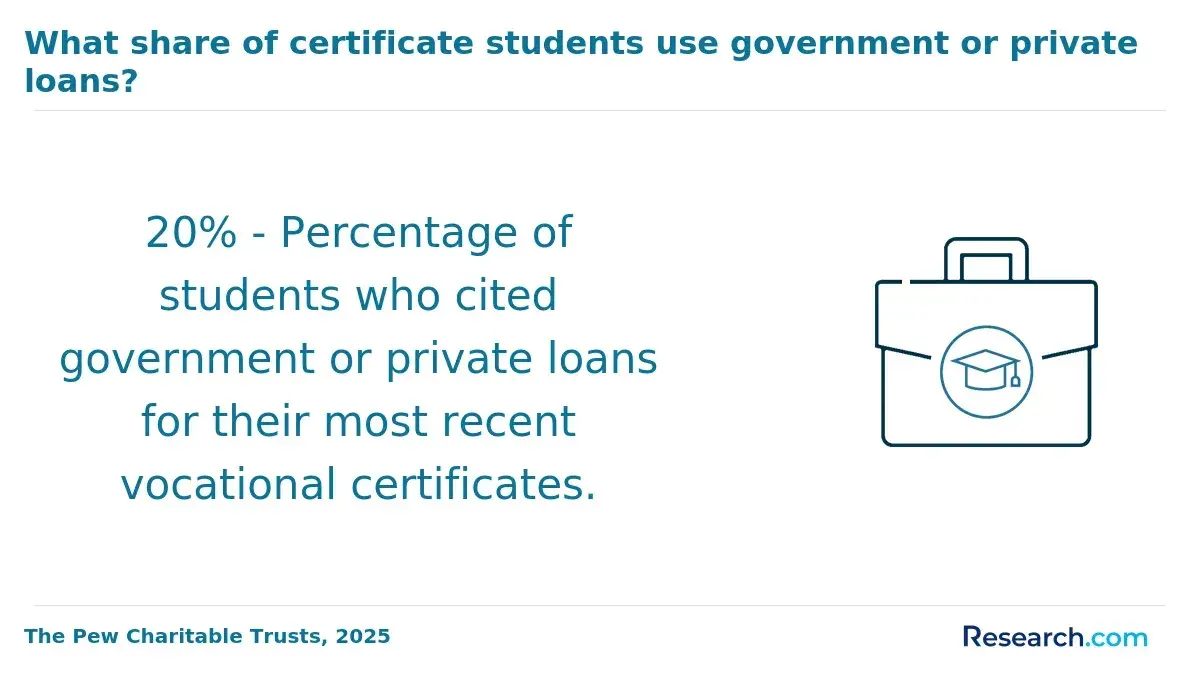
Federal aid availability depends on the institution and program's eligibility; many short noncredit offerings do not qualify. Employer tuition assistance, workforce-agency funding, payment plans, and scholarships may help, but compare borrowing carefully. If your career target requires graduate education instead, an affordable master degree may be a more direct investment than stacking unrelated short programs.
What coursework and skills do non-degree certificate programs usually include?
Coursework is usually narrower and more applied than degree coursework. Strong programs teach both technical tasks and the work habits employers expect: safety, documentation, communication, digital tools, problem-solving, and reliable attendance. The right curriculum depends on the occupation rather than the label "certificate."
Look for evidence that students practice skills under conditions similar to the job.
- Trade programs often include safety procedures, measurement, blueprint reading, equipment operation, diagnostics, and local code awareness.
- Healthcare programs may include medical terminology, anatomy basics, patient privacy, clinical procedures, electronic records, and supervised practice.
- Legal and criminal-justice programs can cover legal research, writing, ethics, records management, report writing, and evidence handling.
- Arts and design programs generally emphasize software workflows, visual communication, critique, portfolio development, and client-oriented revisions.
Ask for the syllabus, required practical hours, grading method, and a sample of graduate work. Programs that teach only test-taking may be useful for an exam but may not build a portfolio or hands-on competence. AI tools are increasingly part of workplace workflows, so evaluate whether the program teaches responsible use, verification, privacy, and original problem-solving rather than relying on automated output.
What careers can you pursue after completing a non-degree program?
A non-degree credential may support entry-level employment, advancement in a current role, or eligibility to take a separate certification or licensing exam. It does not by itself establish that an employer must hire you. Hiring can also depend on experience, location, portfolio, background screening, state rules, and demand in a local market.
The following examples connect program categories with realistic next steps, while showing where additional requirements are common.
| Training area | Possible entry point | Often needed beyond completion |
| HVAC or electrical | Helper, trainee, installer assistant | Apprenticeship, supervised hours, licensing or EPA credential as applicable |
| Medical assisting | Medical assistant or clinical support role | Employer preferences, clinical training, and possibly certification |
| Paralegal studies | Legal assistant, document specialist, paralegal support | Employer-required skills and experience; no independent legal practice |
| Graphic or UX design | Junior designer, production artist, freelance project work | Portfolio, software proficiency, and client or workplace experience |
When a degree is mandatory for the role you want, short training can still be useful as a test of interest or bridge skill, but it should not replace the required credential. Learners seeking the fastest graduate route for a degree-required pivot can compare a quickest cheapest master's degree with the time and prerequisites of their target profession.
What salary ranges and job outlook are realistic after these programs?
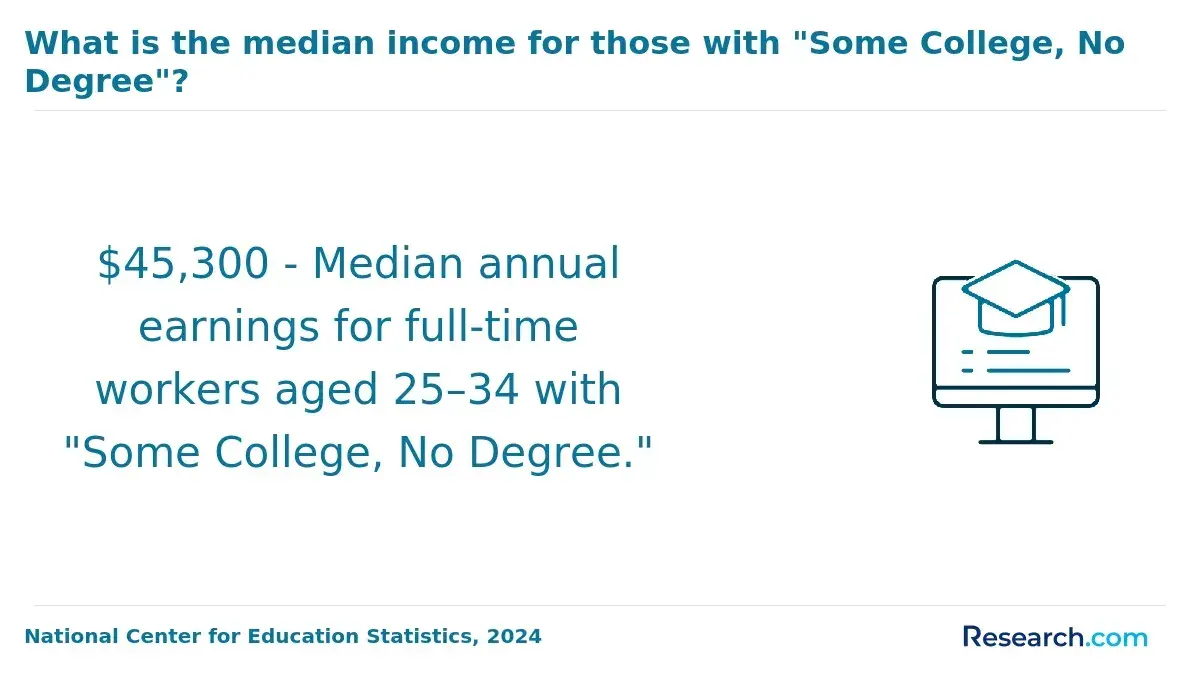
Occupation-level wage data is useful for evaluating a field, but it is not a promise of what a certificate holder will earn. Pay varies by state, employer, shift, union coverage, experience, and whether the role requires a license or apprenticeship. Entry-level pay can be substantially different from an occupation's median.
BLS 2024-2034 employment projections provide a directional view of demand, not a guarantee of openings in every city.
| Occupation | Projected employment change, 2024-2034 | How to interpret it |
| Medical assistants | 12% growth | Relatively strong national projected growth; confirm local clinical-employer demand. |
| Electricians | 9% growth | Demand outlook is positive, but entry commonly begins through apprenticeship. |
| HVAC mechanics and installers | 8% growth | Technical training can help, while field experience and required credentials remain important. |
| Graphic designers | 2% growth | National growth is slower; a differentiated portfolio and digital skills may matter heavily. |
Compare local job postings with the exact skills, software, licenses, and schedules a program teaches. Be wary of schools that cite a broad occupation's median wage without explaining that graduates may enter at a lower level or need additional credentials. A better ROI calculation compares total training cost, time away from work, local entry wages, and the likelihood of completing every required step.
How do licensing and industry certifications work for non-degree pathways?
Licensing and certification are separate from completing a school program. A license is government permission to practice a regulated occupation and is controlled by a state or other jurisdiction. A certification is generally awarded by a professional or industry organization after an applicant meets its standards, often through an examination. A certificate is the educational credential a provider gives for finishing coursework.
Follow this sequence to avoid enrolling in training that does not lead to the eligibility you need.
- Name the exact job title and the state where you expect to work.
- Check the relevant state board, agency, or employer for current education, exam, experience, and background-screening rules.
- Ask the school whether its program meets those rules and request the answer in writing.
- Budget separately for applications, examinations, renewals, continuing education, tools, and insurance where relevant.
- Confirm whether the credential transfers if you relocate, because state requirements can differ.
Examples include EPA Section 608 certification for technicians who handle regulated refrigerants, state nurse aide registries, practical-nursing licensure examinations, and security-guard licensing. Requirements change, so the regulator - not a school advertisement - should be the final source for eligibility. If a provider says a certificate "makes you certified," ask which organization awards the certification and what independent requirements remain.
Other Things You Should Know About
Often, yes. Many non-degree programs do not use GPA as an admission screen. However, you may still need a diploma or GED, prerequisite coursework, a placement assessment, or health and background clearances depending on the field.
Not necessarily. Open enrollment can apply to classroom admission while clinical placements, labs, externships, or advanced cohorts have separate capacity and eligibility requirements.
It depends on the school and program. Some eligible credit-bearing certificate programs may qualify for federal aid, while many short noncredit programs do not. Ask the financial-aid office about eligibility before enrolling.
Employer value depends more on the provider, curriculum, portfolio, required practical experience, and relevant certification or license than on online delivery alone. For hands-on or regulated careers, verify in-person training and state approval requirements.
References
- High-Paying, Fast-Growing Jobs Without a Degree https://www.rockwellinstitute.com/blog/jobs-dont-require-degree/
- Getting a job without a 4-year degree. Prospects increase with a certificate. https://www.luminafoundation.org/resource/non-degree-credentials-provide-value-for-adults-in-the-labor-market/
- Types of Financial Aid https://www.hhloans.com/types-of-financial-aid/
- 80 Highest Paying Jobs without a Degree (Over $50k) - USCI https://www.uscareerinstitute.edu/blog/80-Jobs-that-pay-over-50k-without-a-degree
- Aid for Non-Traditional Students - Finaid https://finaid.org/otheraid/nontraditional/
- What high-paying careers don't require a college degree? | Facet https://facet.com/career/careers-without-college-degree/
- Jobs That Don't Require a Degree: Your 2026 Guide - tripleten.com/blog https://tripleten.com/blog/posts/jobs-that-dont-require-a-degree
- Examining the Value of Nondegree Credentials | Strada Education Foundation https://www.strada.org/reports/examining-the-value-of-nondegree-credentials
- The market value of non-degree credentials: New evidence from 37... https://cepr.org/voxeu/columns/market-value-non-degree-credentials-new-evidence-37-million-us-workers
- Grounded Reality - A Perspective on Non-Degree Credentials - Wally Boston https://wallyboston.com/grounded-reality-a-perspective-on-non-degree-credentials/