
2027 Online Data Science Master's After a Bachelor's in Architecture: Prerequisites and Program Fit

Co-Founder and Chief Data Scientist
An architecture degree can be a useful starting point for an online data science master's, but it does not establish readiness for every program. Studio work, spatial reasoning, and experience with complex projects may transfer; programming, statistics, and calculus may need more preparation.
This guide helps architecture graduates identify those gaps, compare program expectations, and decide whether a data science master's fits their intended work.
Key Things You Should Know
- Architecture graduates can consider online data science master's programs, but eligibility depends on each program's stated degree and prerequisite requirements, not the architecture major alone.
- Compare your transcript and work against requirements for programming, statistics, calculus, and linear algebra. Software proficiency is not automatically equivalent to academic credit.
- The U.S. Bureau of Labor Statistics projects 35% growth in data scientist employment from 2025 to 2035, but that occupational outlook does not predict an individual graduate's job prospects.
What Is an Online Data Science Master's After an Architecture Degree?
For an architecture graduate, the degree is a transition from designing and evaluating built environments to analyzing data, building models, and communicating evidence-based findings.
Architectural training may be particularly useful when the question involves buildings, land use, energy, transportation, or spatial data. It does not replace the mathematical and computational foundation needed to evaluate a model.
Choose a data science degree if you want broad preparation in statistical analysis, programming, and machine learning. If your goal is specifically to develop AI systems, transitioning from another field to an AI master's is a related but distinct path to examine. If you mainly want to make better design decisions using dashboards or geospatial analysis, a narrower credential may meet your needs with less study.
Can Architecture Graduates Apply to Online Data Science Master's Programs?
Often, architecture graduates can apply to a data science master's program, but an eligible bachelor's degree is not the same as having every prerequisite. Programs set their own rules about acceptable majors, required courses, work experience, and whether deficiencies can be completed before or after admission. An architecture degree alone neither guarantees admission nor establishes ineligibility.
Start with the published admissions requirements, then ask the program how it evaluates preparation that is not obvious from a course title. A portfolio, computational design work, or professional experience may help demonstrate ability, but only the program can confirm whether any of it fulfills a formal course requirement.
Before paying an application fee, request clarification on missing prerequisites and whether an accredited, graded course completed elsewhere would satisfy them.
What Prerequisites Do Architecture Majors Need for Data Science?
Architecture curricula differ. Some graduates have taken calculus, used scripting tools, or analyzed building-performance data; others have primarily design and construction coursework.
The table separates potentially transferable experience from the preparation a data science program may expect you to document.
| Area | Potential architecture preparation | Gap to check against program requirements |
| Quantitative reasoning | Measurement, modeling, and evaluation of design alternatives | Calculus, linear algebra, and probability at the specified level |
| Working with data | Site, occupancy, environmental, or spatial datasets | Statistics, data cleaning, and interpretation of uncertainty |
| Computing | Parametric design, GIS, or software-based workflows | Programming, databases, and reproducible code |
| Communication | Presenting constraints and design decisions to stakeholders | Explaining model performance and limitations with evidence |
A short programming course can help you test your interest and prepare for graduate work. It does not necessarily satisfy a transcript-based prerequisite. The common mistake is to treat familiarity with design software as proof of programming or statistical readiness; compare actual coursework and projects with the program's stated standard.
How Do Online and Campus Data Science Master's Programs Compare?
Delivery format affects access and day-to-day learning more than the title of the credential does. Compare programs on the same academic criteria first, required courses, project work, and faculty support, then examine how each format would fit your schedule.
| Consideration | Online program | Campus program |
| Attendance | May offer remote or asynchronous coursework; live sessions can still be required | Typically involves scheduled, in-person attendance |
| Collaboration | Often relies on virtual teams and remote advising | May offer more routine face-to-face interaction |
| Location | May allow study without relocating, subject to enrollment rules | Usually requires living near or traveling to campus |
Online study is more suitable if you need to keep working in architecture and can manage independent study. Campus study may suit you better if frequent in-person collaboration is central to how you learn.
Ask either program about live meeting times, group projects, career support, and access to alumni; networking opportunities through AI master's alumni illustrate a useful question to ask of data science programs as well.
What Courses Do Online Data Science Master's Programs Include?
Relevant curricula commonly cover programming, statistics, data management, machine learning, and applied projects, but course titles and required depth vary. For an architecture graduate, the strongest fit closes foundational gaps while allowing work with spatial, building, environmental, or urban datasets where possible.
Look beyond a course called "AI" or "analytics." Check descriptions and assignments for hands-on coding, statistical evaluation, treatment of missing or biased data, and clear communication of results. A GIS elective can be valuable for a spatial career goal, but it is less useful if it displaces needed statistical foundations.
If you primarily want reporting and decision support rather than predictive modeling, comparing graduate data analytics degrees may reveal a better curricular fit.
How Long Does an Online Data Science Master's Take and Cost?
There is no reliable single timeline or price for online data science master's programs. Credit requirements, course load, prerequisite work, tuition policies, and fees differ by institution. A shorter advertised completion time may assume a course load that is difficult to combine with full-time architectural work.
To compare offers, calculate the full published tuition for the credits you must take, then add mandatory fees, required software or equipment, and any travel. Ask whether prerequisite courses carry separate charges and whether tuition can change during enrollment. Employer assistance can reduce your personal cost, but confirm eligibility and repayment conditions before relying on it.
If speed is your main priority and AI is your intended specialty, accelerated AI master's program options offer a separate comparison; verify that their workload and curriculum serve your goal rather than choosing on duration alone.
How Can You Verify Data Science Program Accreditation and Quality?
Verify the institution's current accreditation through its accreditor or an authoritative government listing, rather than relying only on a marketing claim. Also confirm that the institution can enroll students in your state and that the online program awards the credential described. Institutional accreditation does not, by itself, establish the quality or career fit of a particular data science curriculum.
Quality checks should be specific to your transition: review prerequisite policies, required technical courses, instructor access, project feedback, and whether students can pursue relevant applied work.
If AI will be central to your intended role, examine how the curriculum handles privacy, bias, and model accountability. Responsible AI tracks in graduate programs provide another way to assess that emphasis. Treat a vague promise of career placement without a defined outcome measure as a warning sign.
What Data Science Careers Can Architecture Graduates Pursue?
Possible directions include built-environment analytics, geospatial analysis, building-energy analysis, urban-data work, and general data analyst or data scientist roles. The most realistic first move depends on your existing projects and the technical skills you can demonstrate, not simply the new degree title.
Architecture experience remains useful when you can frame an analytical question that matters to a client or community and explain the constraints behind the data. For a portfolio, a stronger project tests a specific claim—for example, whether a model predicts building energy use better than a simple baseline—and documents data limitations.
Choose a program with substantial applied work if you need that evidence for a career change. A master's may be unnecessary if your target role mainly requires better reporting or GIS skills that you can acquire through focused coursework and projects.
What Salaries and Job Outlook Can Data Science Graduates Expect?
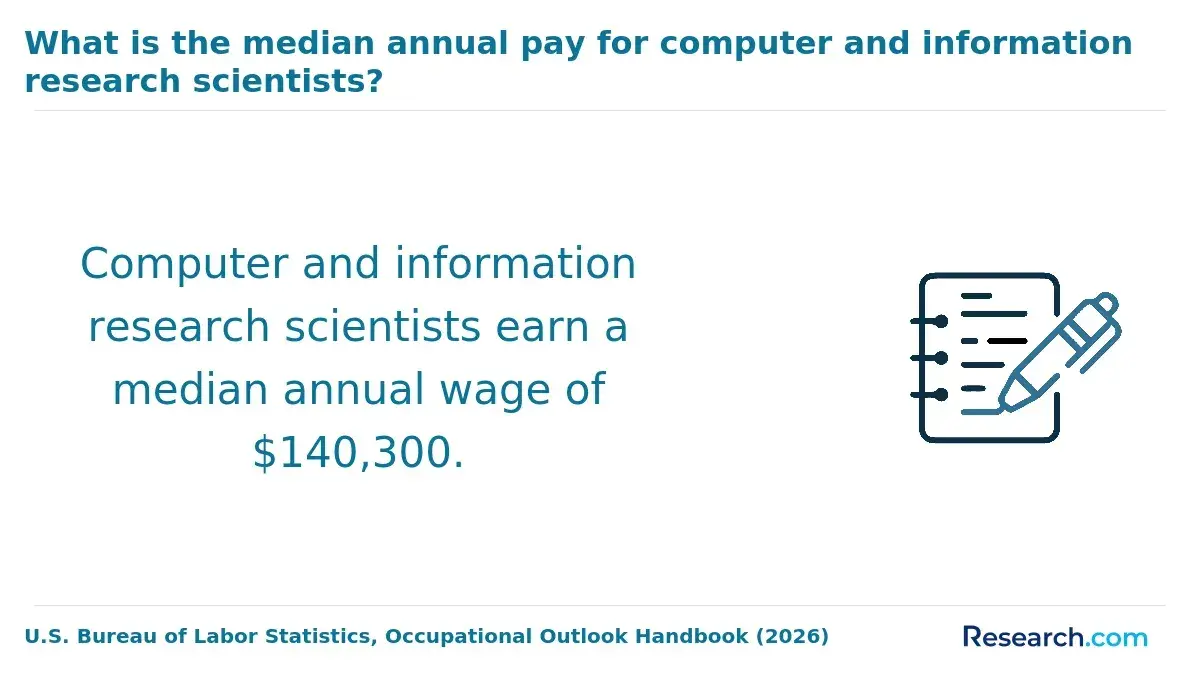
The U.S. Bureau of Labor Statistics reports a median annual wage of $120,230 for data scientists in May 2025. That is an occupation-wide figure, not an expected starting salary for someone moving from architecture into a first data role. Pay depends on the position, experience, location, and employer.
BLS projects 35% employment growth for data scientists from 2025 to 2035. Growth signals demand across the occupation, but it does not show how many openings suit architecture graduates or prove that a master's will produce a salary increase. Compare realistic target jobs with your current pay and the full cost of study before treating the degree as a financial investment.
Are Certifications Required for Data Science Careers?
There is no universal certification requirement for data scientist jobs. Employers set their own expectations, and a certificate in a particular tool is not interchangeable with graduate preparation in statistics and modeling. Architecture licensure is a separate matter; a data science credential does not replace requirements for practicing architecture.
If you are missing a prerequisite, prioritize learning that builds the required knowledge and can be accepted by the program where formal credit is needed. If you already meet admissions requirements, a focused certificate may help you explore a tool, but weigh it against a documented project that shows how you used that tool to answer a real question.
Other Things You Should Know About Data Science Programs
No. Architecture licensure is governed by applicable state requirements; a data science degree is not a substitute for the education, experience, and examination requirements that apply to architectural practice.
Only with appropriate permission and safeguards. Check contracts, confidentiality obligations, and the program's data-use rules first. Public or properly de-identified data may be a safer option.
Possibly. Check the program's published hardware, software, and remote-computing requirements before buying equipment; some coursework may use institution-provided computing resources.
That depends on the program's transfer-credit rules and whether the courses meet degree requirements. Ask for a course-by-course evaluation rather than assuming prior graduate-level or technical coursework will transfer.
References
- Master's in Data Science | Harvard SEAS https://seas.harvard.edu/masters-data-science
- MS in Data Science | Online | $9900 | Eastern University https://www.eastern.edu/academics/graduate-programs/ms-data-science
- Data Science vs. Data Analytics: What's the Difference? | Georgia Tech Professional Education https://pe.gatech.edu/blog/industry-trends/data-science-vs-data-analytics
- Data Science Masters - Master of Applied Science (M.A.S.) | Illinois Institute of Technology https://www.iit.edu/academics/programs/data-science-mas
- Applications Process & Requirements | Illinois https://siebelschool.illinois.edu/admissions/graduate/applications-process-requirements
- Prerequisite Key Topics - UVA School of Data Science https://datascience.virginia.edu/pages/prerequisite-key-topics
- Master of Science in Computer Science - Academics | utdallas.edu https://academics.utdallas.edu/fact-sheets/ecs/ms-computer-science/
- A Guide to Choosing Between Data Science vs. Data Analytics | UCLA MSOL Data Science https://www.msol.ucla.edu/data-science-engineering/articles/demystifying-data-guide-choosing-between-data-science-vs-data-analytics/


