2027 Best Career Training Programs With Low Textbook Costs

Co-Founder and Chief Data Scientist
Choosing career training is not just about finding the lowest tuition; books, tools, exam fees, uniforms, commuting, and lost work time can change the real price. U.S. Bureau of Labor Statistics projections for 2024-2034 show employment is expected to add about 3.1 million jobs, making targeted training valuable when it matches a genuine hiring need.
This guide helps prospective students compare low-cost trade, healthcare, legal, and design programs, identify hidden expenses, and choose credentials that fit their career goal.
Key Things You Should Know
- Public two-year colleges had average published tuition and fees of $4,050 for 2024-2025, according to College Board; local residency, grants, and open educational resources can reduce the price further.
- Programs with the lowest textbook costs typically use free open educational resources, digital course materials, included lab manuals, employer-paid training, or apprenticeships, but tools, licensing exams, and clinical costs may still apply.
- The best low-cost option is the shortest recognized program that meets the employer, certification, or state-license requirement for the specific job you want—not simply the program with the lowest advertised tuition.
Top 10 Best Career Training Programs With Low Textbook Costs
Popular Trade School Programs
Trade certificates and associate degrees prepare learners for hands-on technical work. Electrician, HVAC, welding, automotive technology, plumbing, and industrial maintenance programs often combine classroom safety instruction with lab practice or paid apprenticeship hours. Community-college certificates can cost less in books when they use digital manuals, while apprenticeships may let participants earn wages during training. Choose a credit-bearing certificate if you may later pursue an associate degree; choose an apprenticeship when the occupation and local union or employer pathway support it. Verify required tools, work boots, testing fees, and state licensing rules before enrolling.
Healthcare Programs
Healthcare career training includes medical assistant, pharmacy technician, dental assisting, practical nursing, phlebotomy, and billing and coding programs. A school certificate documents program completion; an industry certification, such as a pharmacy technician credential, is separate and may require an exam. Clinical programs can have low textbook costs through digital resources but may require scrubs, immunizations, background checks, CPR training, drug screening, and clinical travel. Medical assisting and nursing programs should be chosen carefully because employer expectations and state rules vary. Confirm that clinical placements, certification-exam preparation, and any required programmatic approval are included.
Criminal Justice / Law Programs
Low-cost options in this area include criminal justice certificates, associate degrees, paralegal studies, legal office administration, court reporting, and public safety training. A criminal justice certificate can introduce legal systems, report writing, ethics, and corrections work, but it does not automatically qualify a graduate for law enforcement employment. Paralegal programs may be especially useful when they offer legal research and drafting practice; some employers prefer programs approved by the American Bar Association. Textbook expenses can be higher when courses require current legal-reference materials, so ask whether databases, e-books, and updated codes are included in tuition.
Arts & Design Programs
Graphic design, web design, digital media, photography, drafting, UX foundations, and video production certificates can suit students who need portfolio-focused training rather than a full degree. These programs may keep textbook costs low because instruction relies on tutorials, software, and project briefs. However, software subscriptions, computer upgrades, cameras, drawing tablets, printing, and portfolio hosting can exceed book costs. A short certificate works best for learners building specific production skills; an associate degree may be stronger for students needing broader design theory and more portfolio time. Review required technology and ownership rights for student work before committing.
Which career training programs have the lowest total cost?
The lowest-cost career training is usually public, local, short, and closely tied to a required job qualification. It may be a noncredit workforce course, a credit-bearing community-college certificate, an employer program, or a registered apprenticeship. College Board reported average published tuition and fees of $4,050 at public two-year institutions for 2024-2025, but that figure does not represent tools, transportation, testing, or living costs.
This comparison shows where total costs often arise. Use it to compare the complete bill rather than tuition alone.
| Training route | Typical textbook pattern | Major non-tuition costs | Best fit |
| Community college certificate | Often low when courses use OER or library e-books | Fees, tools, lab supplies, transportation | Students seeking an academic credential that may stack into a degree |
| Registered apprenticeship | Usually limited or supplied by sponsor | Tools, work clothing, dues, travel | Workers entering a skilled trade with paid work-based learning |
| Employer training | Often included | Exam fees or repayment obligations in some agreements | People already hired by an employer with a defined role |
| Private career school | Varies widely | Equipment packages, certification tests, financing charges | Students who need a schedule or specialty unavailable locally |
A common mistake is comparing only monthly payments. Instead, request the total cost through completion, including repeat-course policies, exam attempts, supplies, commuting, childcare, and income lost while attending.
If your target occupation eventually requires advanced academic preparation rather than short workforce training, compare that route separately; some learners may ultimately consider one year doctoral programs only after meeting the relevant graduate prerequisites.
Are online career training programs cheaper than campus programs?
Online career training can be cheaper when it removes commuting, parking, housing, and printed-book costs. It is not automatically less expensive: private online providers may charge premium tuition, require proprietary platforms, or leave students to buy equipment and arrange local practical training.
The delivery format should follow the job's learning requirements. The comparison below helps distinguish courses that are usually suitable for online delivery from those that need supervised practice:
| Format | Usually works well for | Potential savings | Key limitation |
| Fully online | Medical billing, legal administration, IT support, design theory | Travel and printed materials | May provide limited hands-on practice and networking |
| Hybrid | Healthcare theory, drafting, some technical certificates | Fewer campus trips | Still requires scheduled labs or assessments |
| Campus or apprenticeship | Welding, electrical work, clinical care, equipment repair | Access to institutional equipment | Travel and schedule constraints can increase personal costs |
Before enrolling online, verify whether the credential is credit-bearing or noncredit, who provides instruction, whether required labs are local, and whether the program meets the rules of the state where you expect to work. Online convenience cannot substitute for clinical hours, supervised shop work, or licensure requirements.
Flexible online formats can also suit adults returning to education, including people exploring online degrees for seniors, but students should still confirm technology needs, academic support, and placement arrangements.
What accreditation should a career training program have?
Accreditation matters most when it affects financial aid, credit transfer, employer recognition, certification eligibility, or licensure. Institutional accreditation evaluates the school as a whole; programmatic accreditation evaluates a specific program. Neither term should be used as a vague quality label.
For a public or private college certificate, check that the institution is recognized by the U.S. Department of Education and confirm whether credits can transfer to your intended associate or bachelor's program. For healthcare programs, determine whether a programmatic accreditor is required for certification eligibility, clinical placement, or state approval. Nursing programs need approval from the relevant state board; a general institutional accreditation claim alone is not enough.
Trade training may not require programmatic accreditation, but apprenticeships should be registered or clearly recognized by the relevant employer, union, or state system. For noncredit training providers, focus on documented curriculum, instructor qualifications, employer partnerships, refund policies, exam eligibility, and verified outcomes rather than assuming academic transferability.
Red flags include a school that cannot name its accreditor, promises a license without explaining state requirements, pressures students to use private loans, or will not provide a written cost estimate and refund policy.
Which high-demand careers need certificates or licenses?
Many high-demand occupations require more than course completion. A certificate program can prepare someone for an examination or supervised experience, while a certification or license is issued separately by a certifying body or government agency. Requirements vary by state and employer.
Use this overview to identify when additional steps are likely after training:
| Career area | Common training credential | Possible additional requirement | Important caution |
| Electrician | Trade certificate or apprenticeship instruction | Documented work hours and state or local license exam | Rules differ by jurisdiction |
| HVAC technician | Certificate or apprenticeship | EPA Section 608 certification for regulated refrigerants | Employer requirements may exceed minimum rules |
| Practical nurse | Approved practical-nursing diploma or certificate | NCLEX-PN and state nursing license | Online-only programs generally cannot replace clinical education |
| Pharmacy technician | Certificate or employer training | State registration and, in some roles, national certification | State requirements are not uniform |
| Commercial driver | CDL training program | Commercial driver license and required testing | Medical and safety rules apply |
For readers comparing occupations by earning potential as well as training length, this guide to high paying certificate jobs can help frame options. Salary figures for an occupation describe that occupation overall; they do not prove that every certificate holder will earn the occupational median or qualify for every role.
How long do career training programs usually take?
Career training can last from a few weeks to about two years, depending on whether it is a noncredit course, certificate, diploma, apprenticeship, or associate degree. Short programs are useful for tightly defined skills, but regulated careers often require longer instruction, supervised practice, or exams after graduation.
Typical timelines help set realistic expectations before you compare advertised "fast-track" claims.
| Credential type | Typical timeframe | What it usually provides | When it may be insufficient |
| Short noncredit course | Weeks to months | Focused job skill or exam preparation | When an employer requires college credit, a license, or clinical experience |
| Career certificate or diploma | Several months to about one year | Structured entry-level preparation | When a broader general-education foundation is required |
| Associate degree | About two years full-time | Technical coursework plus general education | When a bachelor's degree is standard for advancement |
| Apprenticeship | Often multiple years | Paid work experience and progressive technical training | When the field does not use an apprenticeship model |
Acceleration is worthwhile only if the schedule still allows mastery and required practice hours. Students seeking a broader undergraduate credential rather than a short certificate can compare accelerated degree programs online and weigh the higher workload against the longer-term value of a bachelor's degree.
What do these programs teach in the curriculum?
Career training curricula are designed around job tasks, but the balance between theory and practice differs by provider. A credit-bearing certificate may include college-level technical courses that apply toward an associate degree. A noncredit workforce program may focus solely on immediate skills and may not transfer.
Most strong programs combine the following components because employers need both technical competence and dependable workplace performance:
- Technical foundations, such as electrical theory, anatomy, legal terminology, design software, or equipment operation.
- Applied practice through labs, simulations, projects, clinical rotations, internships, or supervised work experience.
- Safety, ethics, documentation, communication, and digital skills relevant to the occupation.
- Certification or licensure exam preparation when the program explicitly states that it prepares students for a separate credential.
Review course descriptions rather than relying on a program title. For example, "medical billing" may teach coding basics but not include national exam preparation; "web design" may teach software tools without providing enough portfolio feedback for competitive entry-level work.
What are the admission requirements for certificate programs?
Admission requirements depend on the provider and credential type. Community-college certificates commonly require an application and high school completion or equivalent, while selective clinical programs can require prerequisite courses, health documentation, testing, or background clearance. Private noncredit providers may have simpler enrollment processes but still require basic technology, age, or safety eligibility standards.
Before applying, gather the information below so that a low-cost program does not become an expensive delayed start:
- Ask whether the program is credit-bearing, whether credits transfer, and whether prior learning or military experience can reduce required coursework.
- Confirm prerequisites, placement testing, immunizations, criminal-background rules, physical requirements, and clinical or externship availability when relevant.
- Request the full program cost, including books, devices, software, kits, uniforms, tools, examinations, and graduation fees.
- Check whether financial aid, workforce grants, veterans' benefits, employer reimbursement, or installment plans are available and what eligibility rules apply.
Do not assume that an open-admission school means every program is open admission. Limited-seat healthcare, public safety, and lab programs may have separate competitive selection processes.
What jobs can graduates get after training?
Graduates can pursue entry-level roles aligned with their training, but job titles and hiring standards vary. A certificate is strongest when it matches a clearly defined entry route, such as HVAC helper or technician trainee, medical assistant, pharmacy technician, legal assistant, CAD drafter, junior graphic designer, or industrial maintenance trainee.
The credential should match the first job you can realistically pursue, not only a future title. This comparison distinguishes common outcomes:
| Program area | Examples of entry-level roles | What often improves advancement |
| Skilled trades | Apprentice, helper, technician trainee | Documented work hours, licensing, manufacturer training |
| Healthcare support | Medical assistant, phlebotomist, pharmacy technician | Certification, clinical experience, additional approved education |
| Legal support | Legal assistant, file clerk, intake specialist | Legal software skills, writing experience, paralegal coursework |
| Design and digital media | Production artist, junior designer, content assistant | A strong portfolio, current software skills, client experience |
Ask each provider for the occupations its curriculum targets, local employers that hire from the program, and whether job-placement figures distinguish full-time work from temporary or unrelated employment. Be cautious of schools that advertise broad job titles without explaining the typical entry-level role.
How much can graduates earn after career training?
Earnings after career training depend on occupation, location, shift schedules, experience, union coverage, licensing, and employer - not on a certificate alone. The Bureau of Labor Statistics reported a 2024 median annual wage of $62,350 for electricians, an occupation that generally develops through apprenticeship and licensing rather than a classroom certificate by itself. Use occupational wage data as a market reference, not a promise.
A practical return-on-investment review compares likely first-job pay in your area with the full training cost and time out of work. Programs that lead to regulated roles or paid apprenticeships can have a clearer pathway, while creative and general-office programs may depend more heavily on a portfolio, local demand, and prior experience.
To make a sound comparison, obtain written information on completion rates, exam pass rates where applicable, placement definitions, and the share of graduates working in related fields. Also ask whether wages reported by a school represent starting pay, all employed graduates, or a small group of high earners. Avoid borrowing more than the realistic entry-level wage and repayment plan can support.
Other Things You Should Know About
Programs using open educational resources, digital manuals, employer-provided materials, or included courseware often have the lowest direct book costs. Apprenticeships can also reduce textbook spending, although tools and work clothing may still be required.
Usually, because a certificate has fewer courses and takes less time. However, compare total costs and future needs: a credit-bearing certificate that stacks into an associate degree can be a better value than a nontransferable short program if you expect to continue studying.
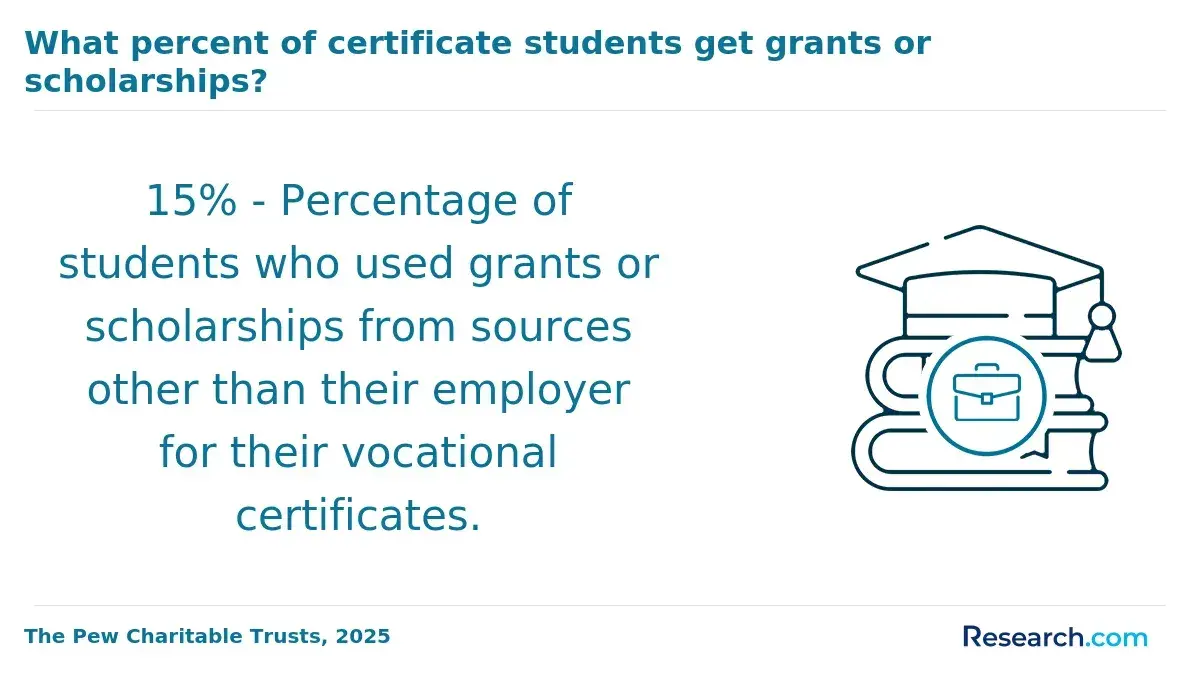
Eligible students may receive federal, state, institutional, workforce, veteran, or employer assistance, but availability depends on the school and program. Short noncredit courses often do not qualify for federal student aid, so ask before enrolling.
Choose the lowest total-cost program that is recognized for your intended job and meets any certification, licensing, clinical, or employer requirement. An inexpensive program is poor value if it does not qualify you for the work you want.
References
- Types of Financial Aid https://www.hhloans.com/types-of-financial-aid/
- How to find free job training | USAGov https://www.usa.gov/job-training
- Trade Schools Vs Community Colleges in New Jersey https://www.thetrainingcenter.com/articles/trade-school-vs-community-college
- Job Training in New York City - New York City Employment and Training Coalition https://nycetc.org/membership/full-member-list/job-training-programs-in-new-york-city/
- Trade School vs. College: Weighing cost, timelines & More https://www.midwesttech.edu/resources/careers/trade-school-vs-college-a-guide-to-weighing-your-options/
- Paying for College https://fcsua.org/payingforcollege/
- Student Financial Aid Options | VSAC https://www.vsac.org/pay/student-aid-options
- Free Career Training Programs: A 2026 Guide https://flashpass.com/blog/free-career-training-programs-find-a-credible-path-in-2026
- Student Financial Aid Models - Finance | Learn & Work Ecosystem Library https://learnworkecosystemlibrary.com/topics/student-financial-aid-models/
- Finance your education with these four simple options https://www.berks.edu/press-releases/finance-your-education-options-bti/