2027 Online Data Science Master's After a Bachelor's in Philosophy: Prerequisites and Program Fit

Co-Founder and Chief Data Scientist
A philosophy bachelor's degree does not rule out an online data science master's, but admission and success depend on your quantitative and programming preparation. Philosophy graduates may bring strengths in logic, argumentation, and evaluating assumptions; individual coursework varies, and those strengths do not replace calculus or coding where a program requires them.
This guide helps you identify gaps, compare programs with different entry expectations, and decide whether to apply now, take prerequisite courses, or choose a foundation pathway.
Key Things You Should Know
Key Things You Should Know
- A philosophy degree is not an automatic barrier; compare each program's stated math, statistics, and programming requirements with your transcript before applying.
- Choose a foundation-friendly program if you need structured preparation; choose a technically intensive program only if you can demonstrate readiness for its starting courses.
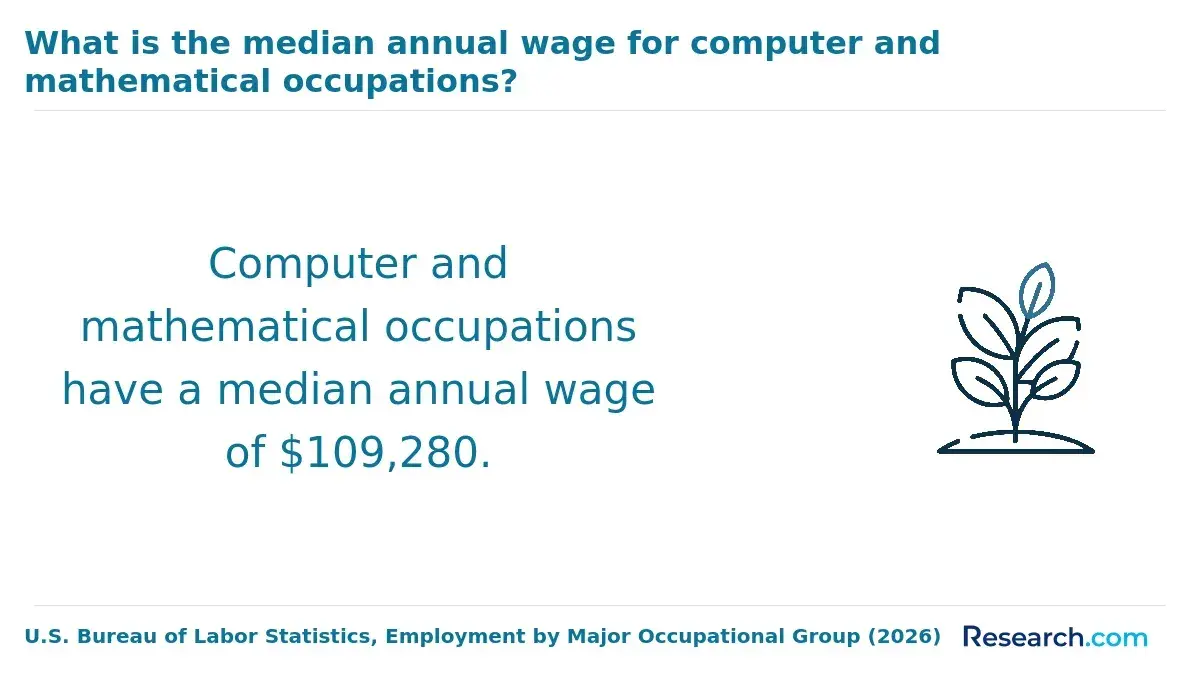
- The U.S. median annual wage for data scientists was $120,230 in May 2025, according to the Bureau of Labor Statistics (BLS), but that occupation-wide figure is not a forecast of a new graduate's pay.
Can you earn a data science master's online after studying philosophy?
Yes, if a program accepts applicants from varied undergraduate majors and you meet its specific entry requirements. A philosophy background can be useful when a data science project calls for careful definitions, transparent reasoning, and scrutiny of how a model's conclusions will be used. It does not, by itself, establish readiness to build or evaluate that model.
Your best route depends on the gap between your record and the program's first technical courses. If you already studied calculus, statistics, or programming through electives or work, a direct-entry program may fit.
If not, consider prerequisite courses or a program with a formal foundation sequence. Researching foundation pathways into artificial intelligence graduate programs can also help you understand what a structured bridge looks like, although an AI pathway is not automatically a substitute for data science prerequisites.
What prerequisites do online data science master's programs require?
Requirements vary: some programs specify completed college courses, while others assess equivalent knowledge or offer introductory coursework. The comparison below separates skills a philosophy graduate may already have from technical preparation worth checking on the transcript.
| Area | Possible prior preparation | Gap to check against program requirements |
| Reasoning and communication | Formal logic, research, and clear written arguments | Explaining statistical uncertainty and technical results |
| Mathematics | Varies substantially by electives and degree track | Calculus and linear algebra, where required |
| Statistics | Possible exposure through research methods | Probability, inference, and regression |
| Computing | Possible exposure through logic or independent projects | Python or another required language, SQL, and working with data |
A short course or self-directed project can help you test your interest and prepare for graduate work. It fulfills a formal prerequisite only if the program accepts that particular evidence. Before paying for a course, ask admissions whether it must be credit-bearing, what topics it must cover, and whether a minimum grade applies. Avoid assuming that a philosophy logic course satisfies a programming or mathematics requirement merely because the skills are related.
How do you choose an accredited online data science master's program?
Check the institution's current institutional accreditation through the accreditor or U.S. Department of Education, then examine the program itself. Institutional accreditation is not proof that the curriculum fits your preparation, that every state permits enrollment, or that the program provides the support you need. Confirm availability for your state of residence with the school.
For a philosophy graduate, the most revealing question is what happens before the first graduate statistics or machine-learning course. Compare the published prerequisite policy, availability of foundation courses, course sequencing, tutoring, and whether projects require substantial coding. Ask for syllabi or course descriptions when titles do not show the expected depth.
If your primary goal is building AI systems rather than analyzing data, compare the curriculum with guidance on choosing an online artificial intelligence degree instead of assuming the two degree labels are interchangeable.
What admission requirements should philosophy graduates expect?
Expect an application to document your undergraduate work and, depending on the school, include recommendations, a statement of purpose, a résumé, or evidence of technical readiness. Test policies and minimum grades are program-specific; do not assume either is universal.
Use the statement to connect your philosophy training to a concrete data problem, then address technical preparation plainly. A transcripted statistics course is clearer evidence of a course prerequisite than a claim of independent study; a reproducible coding project can demonstrate applied ability but may not replace required academic credit.
If your preparation is incomplete, ask whether you may finish prerequisites before enrollment, take them through the institution, or apply conditionally. Get the answer for the specific program rather than treating an advisor's general encouragement as an admission decision.
What courses are included in an online data science master's degree?
Curricula commonly combine statistics, programming, data management, machine learning, and applied analysis, but their depth and required sequence differ. Look past the course names: a program may introduce a method in one class, while another expects students to use it independently in advanced projects.
For a philosophy graduate, a sound curriculum should build from your actual starting point toward work you can demonstrate. Compare whether foundational material is taught for credit or expected before enrollment, whether statistical inference precedes advanced modeling, and whether a project requires you to clean data, justify a method, assess its limits, and communicate findings.
Ethics coursework may draw on your prior strengths, but it should complement rather than displace technical practice. If AI is the main attraction, use your intended work - not a fashionable course title - to guide planning an AI degree around professional objectives.
How long do online data science master's programs take and cost?
There is no reliable single timeline or price for this path. Published completion estimates may assume a particular course load and may exclude prerequisite study. For a philosophy graduate, the useful comparison is time and cost from your current preparation to graduation, not just time spent in the master's courses.
Request a written plan showing required credits, course availability, part-time options, maximum completion period, and any foundation courses. Compare tuition with mandatory fees, software or equipment needs, and any required travel; then ask which prerequisite costs fall outside the degree.
Financial aid and employer assistance depend on eligibility and program rules. Guidance on data science master's timelines and cost trade-offs is most useful after you have verified each school's current charges and your likely course sequence. A common mistake is choosing the shortest advertised program when the pace leaves no room to build missing math or coding skills.
How do online data science programs compare with campus-based programs?
The key distinction is not whether one format is inherently more rigorous. Compare the same academic requirements alongside how you will receive instruction, get help, and complete projects. An online program may suit someone who must keep working or cannot relocate; a campus program may better suit someone who wants regular in-person access to classmates and instructors.
Ask online programs whether classes are live or self-paced, when live sessions occur, how group projects are scheduled, and how students get help when stuck in statistics or code. Ask campus programs the equivalent questions about course scheduling and support. For a career changer, consistent feedback and enough time to practice may matter more than the delivery label.
What careers can follow an online data science master's degree?
Possible targets include data analyst, analytics specialist, and data scientist roles, but titles and technical expectations vary by employer. Philosophy training can be especially relevant to framing questions, checking assumptions, and explaining the consequences of an analysis. Employers will still need evidence that you can work with data and use the methods required for a particular role.
Choose projects with the target role in mind. An analyst-oriented project might emphasize data cleaning, SQL, interpretation, and a clear recommendation; a data scientist target may call for deeper modeling and evaluation. If your interest is healthcare, examine data access, privacy, and domain expectations before choosing electives or projects.
Resources for those considering AI graduate programs for healthcare career paths can inform that comparison, but a degree alone does not confer healthcare expertise. A master's is one route into data work, not a universal requirement for every entry-level analytics job.
What salary and job outlook can data science graduates expect?
BLS reports a median annual wage of $120,230 for U.S. data scientists in May 2025. That is the midpoint for workers in the occupation, not an entry-level offer or an outcome attributable to a master's degree. Your likely pay depends on the job, experience, employer, and location.
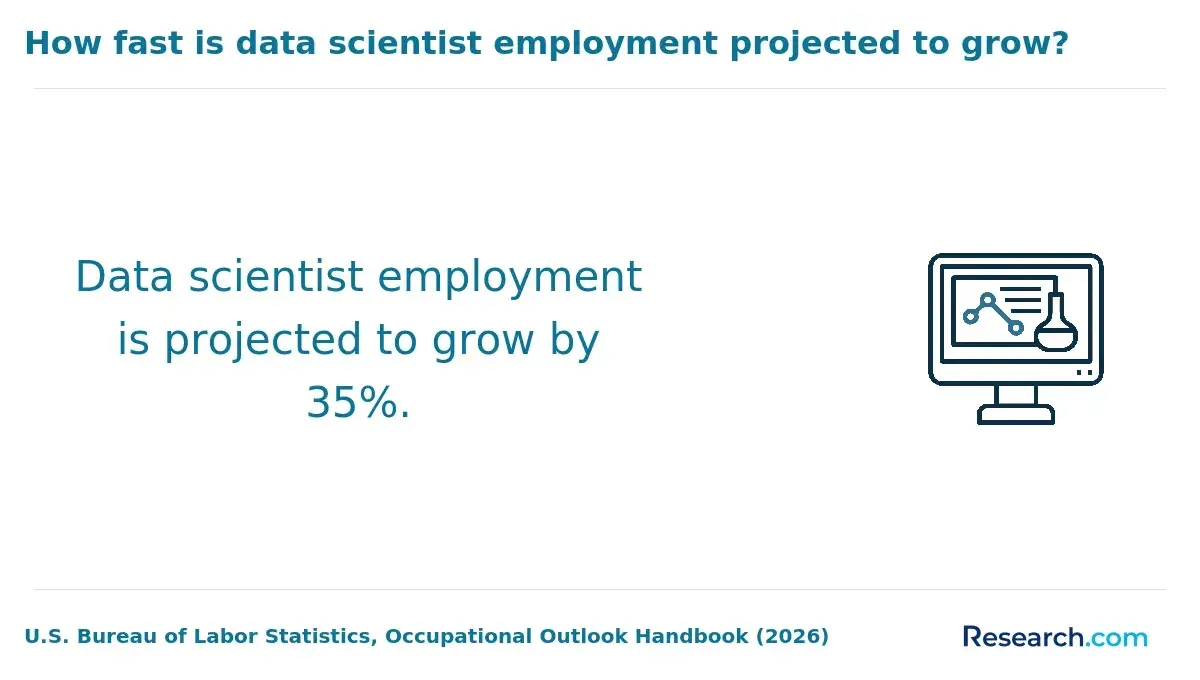
BLS projects data scientist employment to grow 35% from 2025 to 2035. Growth signals demand across the occupation, but it does not show how many positions welcome career changers or what preparation a particular employer expects. Use the projection as context, then inspect current openings for your target role to see which skills and experience requirements recur.
Are certifications or licenses required for data science careers?
Data scientist is not generally a licensed occupation in the United States. Employers may value a tool-specific certification, but it does not replace demonstrated statistics, coding, and project work - or a master's prerequisite that explicitly calls for college credit.
If a certification would help you learn a tool named in relevant job postings, compare its time and cost with a prerequisite course or substantial project. Choose the option that addresses your clearest gap. Also check whether a specialized job has separate professional or industry requirements; the absence of a general data science license does not remove obligations attached to other regulated work.
Other Things You Should Know About Data Science
Often, yes, if the program permits it and the dataset supports the project's objectives. Check usage terms, privacy concerns, and your instructor's project rules before committing to a dataset.
Diploma wording varies by institution. Ask the registrar for the exact wording if it matters to you, and distinguish the diploma from a transcript, which may contain different details.
It may, but doctoral programs set their own expectations for research preparation and faculty fit. If that is your goal, look for opportunities to conduct rigorous research and obtain detailed academic recommendations.
Ask prospective programs about faculty interaction, alumni access, project collaboration, and career events. Participate consistently and share work you can discuss; access to an online platform alone does not create a network.
References
- Accreditation in the U.S. | ed.gov http://www.ed.gov/laws-and-policy/higher-education-laws-and-policy/college-accreditation/accreditation-in-the-us
- Your Guide to Pursuing a Master's Degree in Applied Data Science and AI | du.edu https://ritchieschool.du.edu/news/your-guide-pursuing-masters-degree-applied-data-science-and-ai
- Master of Science | University of Maryland https://cmns.umd.edu/graduate/science-academy/data-science/master-science
- Prerequisite Key Topics - UVA School of Data Science https://datascience.virginia.edu/pages/prerequisite-key-topics
- What Can I Do With a Degree in Data Science? Career Paths & Skills | Harvard SEAS https://seas.harvard.edu/news/what-can-i-do-degree-data-science-career-paths-skills
- M.S. in Statistics and Data Science | Mathematics https://math.cas.lehigh.edu/graduate/ms-statistics-data-science
- 13 Top Data Science Careers: Key Insights | Syracuse University https://ischool.syracuse.edu/data-science-careers/
- Admission & Requirements, Data Science | American University https://www.american.edu/programs/shared/data-science/online/curriculum.cfm
- Learning Formats - Professional Development at Charlotte https://professional.charlotte.edu/student-resources/learning-formats/
- What Can You Do with a BA in Philosophy? | LSU Online https://online.lsu.edu/newsroom/articles/what-can-you-do-with-ba-in-philosophy/