2027 Best Parent Student Loans for Graduate School

Student Finance & Loan Expert
Parents considering loans to support their graduate student children often face complex choices. Rising tuition and living costs can strain family finances, making it difficult to identify the most suitable borrowing options. Many parents worry about balancing repayment terms, interest rates, and eligibility requirements.
This financial pressure may delay or deter graduate studies, impacting career prospects. Understanding the best parent student loans available can alleviate these concerns by offering tailored solutions that fit various financial situations. This article examines the leading parent student loan options to help families make informed decisions and fund graduate education responsibly.
- What are parent student loans for graduate school and how do they work? Parent grad loans
- How do federal parent loans for graduate students compare with private parent loans? Federal vs private
- What factors determine the best parent student loan for graduate school? Choosing a loan
- Who is eligible to take out parent loans for a graduate student, and what are the requirements? Eligibility
- How do interest rates, fees, and borrowing limits differ for parent grad loans? Rates and limits
- How do you apply for parent student loans for graduate school, including the FAFSA? Application steps
- What repayment options exist for parent loans, and how do they affect monthly payments? Repayment options
- Are parent student loans for graduate school eligible for forgiveness or discharge programs? Forgiveness options
- Can parent loans for graduate students be refinanced or consolidated, and when is it smart? Refinance or consolidate
- What risks do parent borrowers face, and how can families minimize long-term debt? Risks and strategy
What are parent student loans for graduate school and how do they work?
Parent student loans for graduate school, often called Parent PLUS loans, offer parents the option to borrow money to cover their child's graduate education costs.
These federally backed loans allow borrowing up to the total cost of attendance minus other aid and require a credit check that excludes most adverse credit histories. Unlike loans made directly to students, the legal responsibility lies with the parent borrower.
Parent grad loans work by sending funds directly to the school to pay for tuition, fees, and related expenses. Repayment usually starts 60 days after full disbursement, with deferment options while the student is enrolled at least half-time, though interest continues to accrue.
Loan terms feature fixed interest rates and origination fees; for example, federal Parent PLUS loans currently carry an 8.94% interest rate with a 4.228% origination fee.
Private parent loans, available through lenders partnered with platforms like Credible, have APRs ranging from 2.65% to 17.99% often without origination fees and may require a strong credit history. These can have either fixed or variable rates.
Parents should carefully consider the long repayment terms and credit impact. Graduate students cannot obtain federal Parent PLUS loans themselves; only parents are eligible.
If parents cannot or choose not to borrow, students should explore federal Direct Unsubsidized or Grad PLUS loans. Families seeking alternatives might also look into same day student loans for students.
Knowing the parent student loan options for graduate school and how parent grad loans work and qualify helps families make informed financial decisions.
How do federal parent loans for graduate students compare with private parent loans?
Federal parent loans for graduate students are limited since the Parent PLUS Loan program only applies to undergraduate expenses, excluding graduate school costs.
This means parents cannot directly access federal funds for graduate education, unlike private parent loans which, depending on the lender, may cover graduate programs. This distinction is essential when comparing federal parent loan benefits for graduate students and private loan options.
Private parent loans tend to offer greater flexibility for graduate education funding but come with variable interest rates, which can be fixed or variable and are often higher than federal rates. They typically require credit approval and possibly a co-signer.
Federal loans, on the other hand, usually feature fixed interest rates with borrower protections like income-driven repayment plans and deferment options that private loans generally lack.
Graduate students borrowing in their own names have access to options like Direct Unsubsidized Loans and Grad PLUS Loans, which provide borrower protections absent in many private loans.
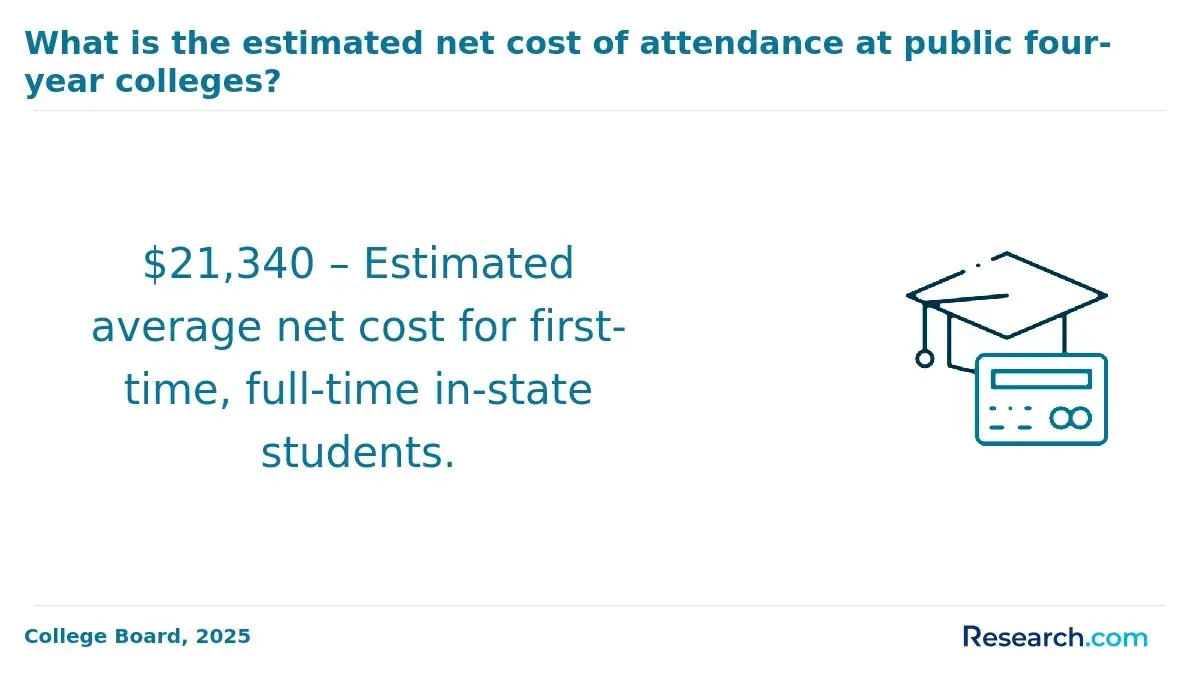
Parents should also consider that private lenders may finance average tuition and fees, which were $21,750 at private nonprofit universities and $12,220 at public universities, influencing loan amounts needed for graduate studies.
Evaluating a comparison of federal versus private parent student loans helps families align borrowing choices with financial goals. Often, a strategic combination of federal student loans taken by the graduate and private parent loans offers a balanced approach. For more detailed insights on flexible private loan options, consider resources like ascent student loans.
What factors determine the best parent student loan for graduate school?
The best parent student loan for graduate school depends on interest rates, repayment terms, borrower creditworthiness, and loan flexibility. When you compare interest rates on parent graduate student loans, it's important to note that Parent PLUS loans currently have a fixed 8.94% rate, while private parent loans may offer rates as low as 2.70% fixed APR for qualified borrowers. Lower interest rates reduce total repayment costs, but private loans often require strong credit or cosigners.
Repayment options vary significantly. Federal Parent PLUS loans provide standard, graduated, and extended plans, along with deferment and forbearance options during financial hardship.
Private loans might not offer this flexibility, so it's essential to review terms carefully to maintain manageable monthly payments throughout graduate school and early career stages.
Loan fees and borrower protections also matter. Parent PLUS loans charge an origination fee around 4.228%, which private loans often avoid. However, federal loans offer access to programs like Public Service Loan Forgiveness and income-driven repayment plans, generally unavailable with private lenders.
Examining eligibility requirements for the best parent student loans for graduate school helps determine qualification and benefits.
Consider these key factors:
- Check if you qualify for lower APR based on credit score.
- Verify if co-signers improve loan terms.
- Assess alignment with loan forgiveness programs or deferment options.
- Review origination fees and total costs over time.
- Understand repayment flexibility and penalties for missed payments.
For detailed insights, explore federal loans for MBA students, which share many features with graduate Parent PLUS loan options.
Who is eligible to take out parent loans for a graduate student, and what are the requirements?
Federal Parent PLUS loans for graduate students are available exclusively to biological or adoptive parents of dependent students enrolled at least half-time in a graduate or professional degree program.
The parent must be the borrower and pass a credit check; serious adverse credit usually disqualifies applicants unless they have an endorser or document extenuating circumstances. This setup means eligibility hinges on the parent's financial standing rather than the student's.
The student must attend an accredited institution with satisfactory academic progress. Unlike undergraduate Parent PLUS loans, graduate students cannot borrow personally through this program.
For those exploring parent loan eligibility requirements for graduate students in the United States, factors such as income and debt indirectly affect qualification since federal Parent PLUS loans do not impose formal income limits.
In private lending, who can cosign parent student loans for graduate school matters, as private loans often require stricter credit and income criteria. Cosigners may increase approval chances or be mandatory.
Parents should assess borrowing amounts carefully: median federal PLUS loan balances for graduate and professional studies hover around $29,400, with the top 25% owing $65,000 or more.
To apply, parents need a valid Social Security number, U.S. citizenship or eligible noncitizen status, and must not be in default on federal loans or owe federal grant overpayments.
Completion of the FAFSA is required. Those interested in managing their loan payments effectively can learn how to refinance student loans to potentially lower costs and improve repayment terms.
How do interest rates, fees, and borrowing limits differ for parent grad loans?
Interest rates on parent graduate student loans vary widely depending on the loan type. Federal Parent PLUS Loans typically carry fixed rates near 8.05% with an upfront origination fee around 4.228% deducted from the loan amount.
In comparison, federal graduate student loans for borrowers directly usually have lower rates, often below 7%. Private parent loans offer a broader range, generally between 5% and 12%, influenced by creditworthiness and often include variable rates that may increase over time.
Borrowing limits for Parent PLUS Loans are more flexible than direct federal graduate loans. Parents can borrow up to the full cost of attendance minus other financial aid, with no aggregate cap.
This contrasts with graduate students' federal loans, which have annual limits of $20,500 and total limits of $138,500. For example, if graduate tuition and living expenses amount to $50,000 annually, a Parent PLUS Loan can cover that entire sum, supporting broader financial needs.
This flexibility is critical as workers with graduate degrees generally see significant earnings increases-master's degree holders earn a median income of $86,000 annually, about 18% more than bachelor's graduates, while professional degree holders earn $116,000, according to data from the U.S. Bureau of Labor Statistics.
How do you apply for parent student loans for graduate school, including the FAFSA?
To apply for parent student loans for graduate school, start by completing the Free Application for Federal Student Aid (FAFSA). This form is essential for determining eligibility for the federal Parent PLUS Loan and other aid. The student provides personal and financial details, but the parent borrower must also be listed since they will be responsible for repayment.
Next, parents should apply for the Parent PLUS Loan on the U.S. Department of Education's Federal Student Aid website. This application includes a credit check; a poor credit history may require an endorser or lead to denial. Parents must accept the loan terms, which can cover up to the student's cost of attendance minus other aid.
Loan approval generally takes a few days, after which parents need to complete a Master Promissory Note (MPN), a legal agreement to repay. Some schools require entrance counseling to ensure borrowers understand their obligations.
Alternatives include private loans, often with lower interest rates but tighter credit rules and fewer protections. For example, a $40,000 loan over 10 years at an 8.94% Parent PLUS rate costs about $20,500 in interest versus roughly $10,800 at a 5% private loan rate. This represents nearly double the interest paid, according to Edvisors amortization examples.
Carefully comparing loan totals, repayment plans, and credit qualifications can prevent borrowing more than necessary and avoid financial strain.
What repayment options exist for parent loans, and how do they affect monthly payments?
Parent PLUS loans provide a variety of repayment options that affect monthly payments and loan duration. The standard repayment plan spreads payments evenly over 10 years, leading to higher monthly amounts but faster debt payoff.
Graduated repayment starts with lower monthly payments that increase every two years, ideal for parents expecting income growth. Extended repayment lengthens the term up to 25 years, reducing monthly payments but increasing total interest paid.
Income-Contingent Repayment (ICR) is the only income-driven option available for Parent PLUS loans, but only after consolidation into a Direct Consolidation Loan. ICR caps monthly payments at 20% of discretionary income or the fixed 12-year payment amount, whichever is less. This can substantially lower payments, making it suitable for borrowers with fluctuating or lower incomes.
Loan forgiveness options exist but are limited, mainly applying to loans repaid under income-driven plans for qualifying public service careers. Parents should carefully review eligibility criteria and terms before pursuing forgiveness.
For example, monthly payments on a $40,000 Parent PLUS loan vary with the plan chosen: about $460 under standard repayment, under $200 with extended repayment, and potentially less with the ICR plan during income hardship.
Considering that about 14% of Parent PLUS borrowers from 2018 defaulted within five years-compared to 9% of undergraduate Direct Loan borrowers according to a Brookings Institution analysis-choosing a sustainable repayment method and exploring consolidation options is vital to avoid default risks.
Are parent student loans for graduate school eligible for forgiveness or discharge programs?
Parent student loans for graduate school offer limited forgiveness or discharge options compared to federal loans held by the borrower. Federal Parent PLUS loans, the most common type of parent loans, qualify for some relief programs, though eligibility varies considerably.
Important forgiveness and discharge options for Parent PLUS loans include:
- Public Service Loan Forgiveness (PSLF): These loans aren't directly eligible but may qualify if first consolidated into a Direct Consolidation Loan and then repaid using an income-driven plan such as Income-Contingent Repayment (ICR).
- Disability or Death Discharge: Parent PLUS loans can be discharged if the borrower becomes totally and permanently disabled or dies.
- Closed School or Fraud Discharge: Loans may be canceled if the student's school closes or if fraud is proven.
Private parent loans typically lack formal forgiveness options unless specified by the lender's hardship provisions. Borrowers should thoroughly review the loan contract for any possible discharge clauses.
Credit scores heavily influence borrowing costs. Applicants with top FICO scores (780+) often secure rates approximately 3.5 percentage points lower than those with scores in the mid-600s, reducing the need for forgiveness through lower interest expenses.
Parents should carefully evaluate repayment and forgiveness limits before borrowing for graduate school. Consolidation and income-driven repayment plans can enhance access to relief programs, making sound financial planning essential to maximize benefits.
Can parent loans for graduate students be refinanced or consolidated, and when is it smart?
Federal Parent PLUS Loans can be consolidated through a Direct Consolidation Loan, which merges multiple federal loans into a single payment. This option simplifies repayment but may extend your loan term and increase the total interest paid.
Refinancing through a private lender could lower interest rates if you have strong credit and steady income. However, refinancing causes the loss of federal protections like income-driven repayment plans and loan forgiveness programs.
Refinancing can be beneficial if the new interest rate is significantly lower and you have a reliable repayment plan without needing federal borrower benefits. For instance, parents with high-interest PLUS loans might reduce monthly payments and total interest through refinancing. Consolidation is better suited for those seeking simplicity and consistent monthly bills, especially when managing multiple loan servicers.
Employer tuition assistance is another factor to consider. About 49% of full-time graduate students received employer financial assistance, with a median contribution of $5,250 annually (National Center for Education Statistics). This aid can reduce your loan amount and impact the decision to refinance or consolidate.
Before proceeding, ask yourself these questions:
- Can you afford monthly payments without federal protections?
- Will interest savings justify losing federal benefits?
- Are you ready for a credit check and any associated fees?
Compare current loan terms, interest rates, repayment options, and financial aid alternatives. Seeking professional financial advice tailored to your situation is recommended for better decision-making.
What risks do parent borrowers face, and how can families minimize long-term debt?
Parent borrowers often hold significant student loan debt, with many carrying balances well into retirement. The Consumer Financial Protection Bureau reports that 35% of parents aged 60 and over with federal Parent PLUS loans still owe money, with a median debt of $32,700. This prolonged debt can affect credit scores, financial stability, and retirement savings, posing challenges for those relying on fixed incomes.
To reduce this burden, families should create a clear repayment plan before borrowing. It is important to evaluate the total loan amount against expected education costs and avoid borrowing the maximum if other funding is available. Income-driven repayment plans or refinancing can ease monthly payments as graduates enter the workforce and help prevent growing interest.
Parents should also plan beyond college expenses. Younger parents might focus savings on faster repayment to avoid retirement debt. Those closer to retirement should carefully consider whether cosigning loans or shouldering debt is financially sound.
Additional strategies include:
- Using scholarships, grants, or employer tuition assistance to lower loan amounts.
- Encouraging graduate students to secure their own loans or participate in work-study programs to reduce reliance on Parent PLUS loans.
- Consulting financial advisors to balance education costs with long-term retirement goals.
Other Things You Should Know About
Yes, parent student loans for graduate school can impact the borrower's credit score. Timely payments help build or maintain good credit, while missed or late payments can significantly damage credit history. Since these loans typically involve credit checks, the parent's credit profile influences loan approval and interest rates.
Parents who take out student loans for graduate school may be eligible for certain tax deductions on interest payments, such as the Student Loan Interest Deduction. This deduction allows borrowers to reduce taxable income by up to $2,500 annually on interest paid, subject to income limits. However, not all loan types qualify, so it is important to consult IRS guidelines or a tax professional.
Yes, parent student loans can typically cover a range of education-related expenses such as room and board, books, supplies, and transportation costs. Lenders usually allow loan disbursements to cover the entire cost of attendance as certified by the school, giving borrowers flexibility in funding graduate school needs beyond tuition.