2027 Best Student Loans for Veterans

Student Finance & Loan Expert
Veterans returning to school often face unique financial challenges when seeking graduate education. Many encounter difficulty finding student loans tailored to their specific benefits and service history.
Standard loan options may lack the flexibility or favorable terms veterans require, resulting in increased financial strain. Navigating these options can be confusing without clear guidance on eligibility and repayment conditions.
This article explores the best student loans designed for veterans, highlighting key features, eligibility criteria, and repayment options to help borrowers make informed decisions and secure financing that aligns with their military service and educational goals.
- What are the best federal and private student loan options specifically for veterans? Best loans
- How do GI Bill, Yellow Ribbon, and military tuition benefits reduce the need for loans? GI Bill impact
- How should veterans choose between VA education benefits, federal loans, and private loans? Choosing options
- What eligibility rules and service requirements affect veterans' access to student loans? Eligibility
- How do interest rates, fees, and borrowing limits work for loans used by veterans? Rates & limits
- Which lenders and programs offer military discounts or special terms for veteran borrowers? Military perks
- How do repayment plans work for veterans, including income-driven options and auto-pay discounts? Repayment plans
- What student loan forgiveness and discharge programs are available to veterans? Forgiveness
- When should veterans consider refinancing or consolidating their student loans? Refinance
- How can deployed or active-duty veterans manage deferment, forbearance, and default risks? Deferment & risk
What are the best federal and private student loan options specifically for veterans?
Veterans looking for student loans in 2026 find the best federal student loans for veterans in Direct Subsidized and Unsubsidized Loans along with Perkins Loans. These federal loans feature fixed interest rates and flexible repayment plans designed for veterans' needs.
The Department of Veterans Affairs also supports the GI Bill, which helps reduce borrowing but remains underused; the Education Data Initiative reported that 47% of undergraduate student veterans in 2015-16 did not use GI Bill benefits. Those who borrowed without GI Bill benefits averaged $8,170 annually in loans versus $7,930 for GI Bill users, demonstrating the financial advantage of these benefits.
Top private loan options for veterans include those offered by veterans-focused credit unions or banks that collaborate with military communities, providing competitive interest rates, no origination fees, and benefits like deferred payments during active duty. However, private loans typically come with variable rates and offer fewer borrower protections than federal loans.
Veterans should evaluate:
- Eligibility for federal programs such as the Post-9/11 GI Bill and Veterans Educational Assistance Program (VEAP) to lower borrowing needs.
- Borrower advantages of federal student loans including income-driven repayment plans and loan forgiveness.
- Private loans only if federal options are insufficient, ensuring favorable terms and transparency.
For those curious about what can student loans be used for, understanding the differences between federal and private options can help make informed financial choices.
How do GI Bill, Yellow Ribbon, and military tuition benefits reduce the need for loans?
GI Bill, Yellow Ribbon, and military tuition benefits significantly reduce the need for student loans by covering or defraying large portions of education costs for veterans. The GI Bill provides monthly housing allowances and tuition coverage up to the in-state public university rate, lowering overall out-of-pocket expenses.
Yellow Ribbon programs further bridge gaps when tuition exceeds GI Bill caps, often covering private schools or out-of-state tuition. This combined support decreases veterans' reliance on borrowing to finance their education.
Military tuition benefits, including stipends and scholarships from various branches, also directly reduce loan dependence by funding classes or accrediting vocational training. These benefits ensure that many veterans can attend college with minimal debt, making loan repayment more manageable or unnecessary.
Impact of GI Bill and Yellow Ribbon programs on veteran education financing is clear through data from Veterans Education Success: veterans using GI Bill benefits to complete associate's degrees graduated with an average debt of $12,400, nearly half the $24,210 debt incurred by those not utilizing these benefits. This illustrates how leveraging such programs cuts cumulative student loan burdens substantially.
Practical implications include:
- Lower loan amounts improve veterans' financial stability post-graduation.
- Programs like Yellow Ribbon make private or out-of-state education accessible without excessive loans.
- Combined benefits support diverse educational paths, from traditional degrees to technical training.
Veterans seeking education funding should maximize these military benefits before considering loans, as they offer cost reductions that loans cannot match. Those exploring options on how to get student loans with bad credit can see that military benefits provide far better financial relief than most loan programs.
How military tuition benefits reduce the need for student loans is crucial knowledge for prospective veteran students aiming to minimize debt and improve educational affordability.
How should veterans choose between VA education benefits, federal loans, and private loans?
Veterans should prioritize VA education benefits, such as the Post-9/11 GI Bill, before considering federal or private loans due to their favorable terms and lower costs. These benefits often cover tuition directly, provide housing allowances, and book stipends that rarely require repayment.
When VA benefits do not fully meet educational expenses, federal student loans are a safer alternative, offering fixed interest rates and income-driven repayment plans to ease financial burdens after graduation. This approach aligns well with how to compare VA education benefits and federal student loans effectively.
Private loans, including the best private student loans for veterans in the United States, should be a last resort. They generally come with higher interest rates and fewer borrower protections, increasing the risk of long-term debt.
According to the Education Data Initiative's statistics, private loans make up only 7.3% of borrowers but account for nearly 12% of outstanding education debt, underscoring their disproportionate financial impact.
Veterans can compare options by considering:
- Whether VA benefits fully cover tuition and living expenses.
- The interest rates and repayment flexibility of federal student loans.
- Availability of deferment, forbearance, or forgiveness programs with federal loans.
- The higher cost and stricter terms associated with private loans.
If VA eligibility is insufficient or exhausted, federal loans provide a more secure borrowing environment. Private loans may be necessary for gap financing but require careful review of credit terms and lender reputation.
Veterans seeking funding options can explore MBA private student loans as a specific example, assessing their financial situation and future income before choosing any loan.
What eligibility rules and service requirements affect veterans' access to student loans?
Veterans' eligibility for student loans hinges largely on their service history criteria for veterans student loans and meeting federal education benefits requirements. Typically, veterans must be U.S. citizens or eligible noncitizens enrolled at accredited institutions and maintain satisfactory academic progress to qualify for federal student loans.
Active duty or veteran status with a minimum service period-often at least 90 days active duty or an honorable discharge-is necessary for benefits like the Post-9/11 GI Bill or Montgomery GI Bill. Reservists and National Guard members might also qualify if activated to service.
Veterans meeting these criteria often gain access to additional financial aid such as Pell Grants and federal Direct Subsidized Loans, which carry comparatively lower interest rates. For instance, the federal Direct Subsidized Loan interest rate for undergraduates is significantly lower than that for Direct PLUS Loans, which demonstrates the cost benefits available to eligible veterans.
Those who have used their GI Bill benefits can still apply for federal loans but may encounter higher out-of-pocket expenses. Private loans remain an option but usually require a creditworthy cosigner and come with higher interest rates. Veterans should submit the Free Application for Federal Student Aid (FAFSA) as loan eligibility and certain benefits depend on financial need and enrollment status.
Loan eligibility generally does not extend automatically to family members; dependents must apply separately for federal Direct PLUS Loans or alternative aid programs with their own criteria. For veterans comparing borrowing options, reviewing bank student loan rates can help identify the most affordable solutions.
How do interest rates, fees, and borrowing limits work for loans used by veterans?
Veteran student loans come with fixed federal interest rates that are generally lower than private loans. For instance, Direct Unsubsidized Loans for undergraduate veterans have rates around 5.5%, with graduate loan rates slightly higher. Programs like the Post-9/11 GI Bill offer education benefits that can reduce or eliminate the need to borrow.
Origination fees for federal veteran loans typically range between 1% and 4%, deducted from the loan disbursement. These fees impact the net amount received and should be considered carefully. Private loans may have different fees but lack consistent rates and the protections found in federal programs.
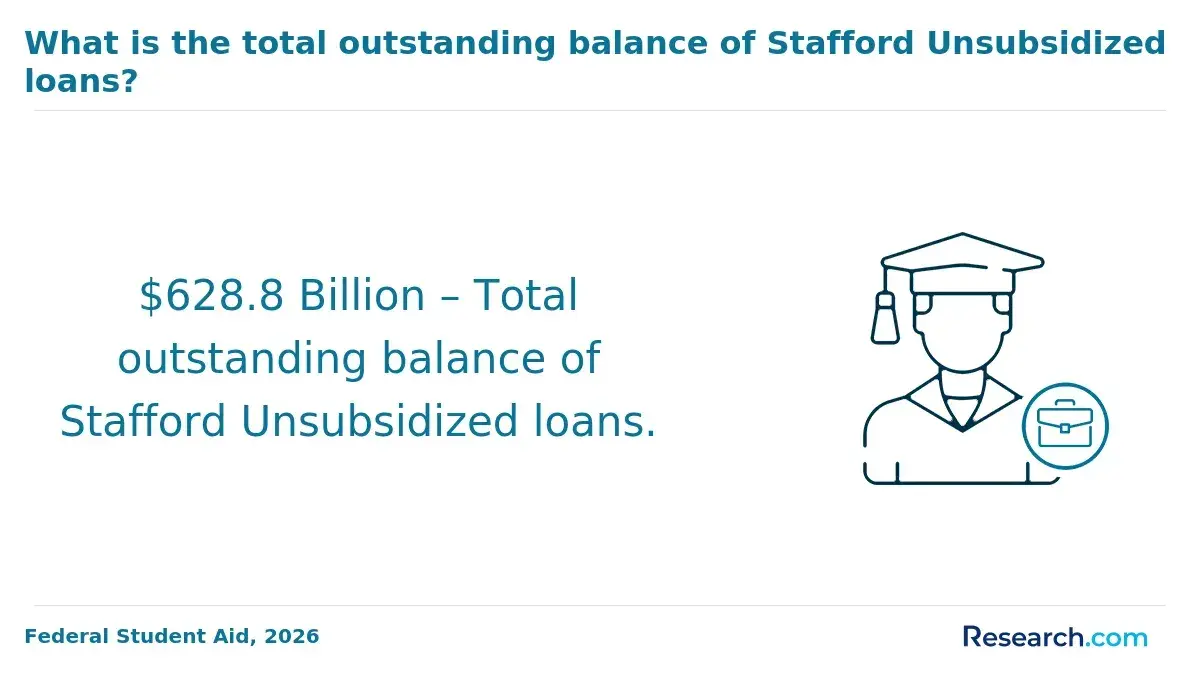
Borrowing limits are especially important for veterans pursuing graduate studies. After July 1, 2026, Grad PLUS Loans will be phased out, replaced by Direct Unsubsidized Loans capped at $20,500 annually and a $100,000 lifetime limit for most programs. This change reduces federal borrowing options, increasing reliance on alternative funding or private loans.
Veterans can mitigate borrowing needs by using benefit programs like the GI Bill, which help reduce interest costs and fees. Staying informed about loan fees and borrowing caps enables better financial planning and helps avoid costly repayment issues.
Which lenders and programs offer military discounts or special terms for veteran borrowers?
Many lenders and programs offer military discounts or special terms for veteran borrowers. The U.S. Department of Education's Federal Direct Student Loans include the Public Service Loan Forgiveness (PSLF) program, which has helped qualifying military service members achieve an average loan forgiveness of about $70,000. This demonstrates the strong value the PSLF program provides to veterans who work in public service.
Private lenders like Veterans United and USAA often extend lower interest rates or waive origination fees for veterans, considering military service as a factor for better loan terms. Navy Federal Credit Union provides personal loans with reduced rates for active duty and veteran members, alongside competitive student loan refinancing options.
The Military College Loan Program (MCLP) is another notable option, offering flexible repayment schedules and deferments tailored to those facing deployments or active duty. Some state-specific veteran education loans also provide interest rate reductions and waived eligibility requirements to improve access for veterans.
Veterans should first confirm their eligibility for federal benefits and consider combining PSLF with lenders offering military discounts to reduce overall loan costs. Consulting the Department of Veterans Affairs and branch education offices can help maximize benefits like the GI Bill, which decreases borrowing needs.
For those facing repayment difficulties, income-driven repayment plans compatible with military-specific loan terms and PSLF provide crucial support, making loan management more manageable during and after military service.
How do repayment plans work for veterans, including income-driven options and auto-pay discounts?
Veterans have access to several student loan repayment options designed to align payments with their financial situations. Income-driven repayment (IDR) plans such as Income-Based Repayment (IBR), Pay As You Earn (PAYE), and Revised Pay As You Earn (REPAYE) adjust monthly payments based on discretionary income, capping payments at 10-15%.
These plans also offer forgiveness after 20-25 years of qualifying payments, which is especially helpful for veterans with fluctuating incomes due to military or civilian work.
Additional benefits arise from using GI Bill education benefits along with loan consolidation or forgiveness programs. Veterans leveraging these resources often carry significantly less debt.
For example, Veterans Education Success reports that 79% of non-GI Bill veterans graduated with loans averaging $37,620, whereas 57% of GI Bill users had about 33% less debt, averaging $25,150.
Many lenders offer auto-pay discounts-typically a 0.25% interest rate reduction-when veterans set up automatic loan payments. This not only lowers interest costs but also promotes consistent repayment habits.
Practical steps to maximize benefits include:
- Evaluating eligibility for IDR plans early to ease payment burdens.
- Setting up auto-pay discounts to save on interest.
- Considering federal loan consolidation to simplify monthly bills.
- Utilizing GI Bill benefits to reduce overall loan dependence.
What student loan forgiveness and discharge programs are available to veterans?
Veterans have access to several federal student loan forgiveness and discharge programs tailored to reduce their loan burdens. One key option is the Total and Permanent Disability (TPD) discharge, which forgives loans if a veteran is disabled due to a service-connected condition. This requires official documentation from the Department of Veterans Affairs (VA).
Another vital program is Public Service Loan Forgiveness (PSLF), available to veterans working full-time in qualifying public service roles, including government and nonprofit organizations. Veterans must make 120 qualifying monthly payments under an eligible repayment plan to have their remaining loan balance forgiven.
Data from the Education Data Initiative reveals that veterans attending for-profit institutions face higher federal student loan default rates compared to those at public or nonprofit colleges. This underlines the importance of choosing schools carefully and using forgiveness programs effectively.
Other discharge options include borrower defense to repayment for schools that engaged in misconduct and closed school discharge if the institution shuts down while the veteran is enrolled. Additionally, federal loans are discharged if the veteran dies.
Income-driven repayment plans offer another path to loan forgiveness after 20 or 25 years of qualifying payments, which can be combined with PSLF to maximize benefits.
Veterans should maintain proper documentation and promptly check eligibility with the VA or loan servicers to utilize these options effectively.
When should veterans consider refinancing or consolidating their student loans?
Veterans should consider refinancing or consolidating student loans when it lowers interest rates, reduces monthly payments, or simplifies repayment. Refinancing may save money if private loan offers are better than current federal terms, but it eliminates federal protections like income-driven repayment plans and potential forgiveness.
Consolidation can help veterans with multiple federal loans by combining balances into one payment without losing federal benefits.
Refinancing works best if a veteran's credit score and income have improved, allowing access to lower interest rates. For example, reducing a $30,000 loan from 7% to 4% interest can cut monthly payments by 20% and shorten repayment time. Veterans planning to buy a home should reassess student loan status, as student debt impacts mortgage approval and affordability.
According to the VA's FY2024 Annual Benefits Report, VA-guaranteed purchase loans made up 10.6% of first-lien home-purchase originations, with average borrowed amounts of $334,578 for first-time veteran homebuyers.
Before refinancing or consolidation, veterans should evaluate:
- Need for federal protections during job loss or military deployment.
- Current versus offered interest rates.
- Total repayment costs across loan terms.
- Impact on eligibility for VA home loans or other benefits.
Prioritizing refinancing or consolidation should align with improved financial status, repayment simplification, and long-term housing or career plans.
How can deployed or active-duty veterans manage deferment, forbearance, and default risks?
Veterans on active duty can manage deferment, forbearance, and default risks by staying in close contact with their loan servicers and using military-specific relief programs.
The Servicemembers Civil Relief Act (SCRA) offers protections such as interest rate caps and payment postponements tailored to active-duty service members. Veterans should request military deferment or forbearance, which can temporarily suspend or reduce payments without accruing interest on subsidized federal loans during deployment.
Loan servicers often require deployment orders or similar documentation to approve these benefits. Submitting these promptly can prevent accidental loan default. After active duty, veterans are advised to enroll in automatic payment plans to maintain steady payments and avoid missed deadlines.
If financial struggles continue post-deployment, veterans should consider Income-Driven Repayment (IDR) plans. These plans limit monthly payments to a manageable portion of discretionary income and forgive remaining balances after 20 to 25 years.
Defaulting leads to serious consequences like wage garnishment and damaged credit. Veterans must respond quickly to missed payments and explore assistance programs available through the Department of Education or Veterans Affairs.
The wage gap between those with a bachelor's degree and a high school diploma highlights the importance of managing student loans effectively. Proper use of deferment and repayment options helps protect veterans' long-term financial health.
Other Things You Should Know About
Yes, veterans can often apply for federal student loans without needing a co-signer, as these loans do not require one. Private student loans may require a co-signer depending on the borrower's credit history and income. Veterans with a strong credit profile or stable income might qualify for private loans without a co-signer, but it varies by lender.
Yes, the Servicemembers Civil Relief Act provides valuable protections, including a cap on interest rates at 6% during active duty. Additionally, veterans may qualify for deferment or forbearance options on federal student loans while serving, which can temporarily pause or reduce payments. These protections help ease financial burdens without harming credit standing.
Veterans may qualify for various federal and state student loan repayment assistance programs designed for public service or military-related careers. For instance, serving in certain positions within the government or nonprofit sectors can make veterans eligible for loan forgiveness programs. Eligibility criteria and benefits can differ, so reviewing program specifics is essential.
In 2027, top-rated student loans for veterans include the VA Education Benefits, such as the Post-9/11 GI Bill and the Montgomery GI Bill, which provide financial support for education without the need to take on debt. Additionally, private lenders like SoFi and Navy Federal Credit Union offer competitive loan terms specifically for veterans.