2027 Special Education Degree Internship Outcomes Report: Paid Experience, Placement Rates, and Career Impact

Co-Founder and Chief Data Scientist
Special education students are choosing internships under real pressure, paid experience, licensure-ready practice, and stronger job placement all matter before graduation. The U.S. Bureau of Labor Statistics reported a $64,270 median annual wage for special education teachers in May 2024, making early career decisions financially meaningful.
This guide is for education majors comparing student teaching, district internships, paraprofessional roles, ABA placements, and hybrid options. You will learn how compensation, full-time offer potential, placement strategy, and skill development affect career ROI.
Key Things to Know About Internship Outcomes in Special Education Industry
- The strongest internship ROI usually comes from supervised district-based experience that builds IEP documentation, behavior support, family communication, and classroom management skills tied directly to entry-level special education roles.
- Paid special education experience exists, but it is more common in paraprofessional, tutor, camp, behavior technician, and district residency roles than in traditional student teaching, which is often unpaid and controlled by licensure rules.
- National special-education-specific conversion rates are not standardized, so students should use broader employer benchmarks such as NACE's recent finding that paid internship experience is associated with stronger job-offer outcomes, then verify each program's own placement history.
- How important are internships for Special Education degree students?
- How early should a Special Education student look for internship opportunities?
How important are internships for Special Education degree students?
Internships are highly important for special education degree students because this field is evaluated through demonstrated practice, not just coursework. Employers and school districts want evidence that a candidate can support diverse learners, follow legal documentation requirements, collaborate with general education teachers, and respond calmly to challenging classroom situations.
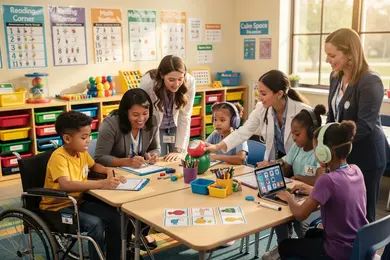
A special education internship may include observing IEP meetings, helping implement accommodations, collecting behavior data, adapting instructional materials, supporting assistive technology use, and working one-on-one or in small groups with students. In teacher preparation programs, the highest-stakes placement is often student teaching or clinical practice because it may be tied to graduation and state licensure eligibility.
The table below summarizes the main outcome signals students should understand before treating any internship as "good experience." These benchmarks are useful because special education internship outcomes vary by state, district, school type, and whether the placement is connected to licensure.
| Outcome factor | What recent data or market evidence shows | What it means for students |
| Wage context | BLS reported a $64,270 median annual wage for special education teachers in May 2024. | Internships should be evaluated as a pathway into a licensed profession, not only as a short-term campus job. |
| Hiring demand | NCES school staffing surveys published in 2024 continued to identify special education as a difficult-to-staff teaching area for many public schools. | Strong field experience can help candidates stand out, especially in districts with persistent vacancies. |
| Paid experience value | NACE's 2024 student and employer research continues to show that paid internship experience is associated with stronger job-offer outcomes than unpaid or no internship experience. | A paid placement can improve both finances and employability, but only if it also provides relevant supervised work. |
| Licensure connection | State-approved teacher preparation programs control required clinical hours and student teaching expectations. | A paid internship that does not count toward licensure may still be valuable, but it should not replace required clinical practice. |
The practical takeaway is that internships matter most when they create documented evidence of readiness. A student who can describe how they supported IEP goals, used data to adjust instruction, collaborated with related service providers, and received supervisor feedback will usually interview more effectively than a student who only lists "classroom helper" on a resume.
How early should a Special Education student look for internship opportunities?
Special education students should begin looking for internship opportunities at least two academic terms before they need the placement, and earlier if the internship must satisfy licensure, background check, fingerprinting, or district onboarding requirements. Waiting until spring can work for summer camps and tutoring roles, but it is risky for student teaching, paid district residencies, and competitive school-year placements.
Recruitment in education is less centralized than recruitment in finance or technology, but the timing still matters. Districts often plan staffing months ahead, universities assign clinical placements on fixed cycles, and agencies serving students with disabilities may require training before interns can work independently.
The timeline below shows how students should think about search timing. It is not a checklist of guarantees; it is a planning framework because deadlines vary by university, district, and state.
| Student stage | Best internship focus | Placement risk if delayed |
| First year | Volunteer tutoring, disability services exposure, youth programs, observation hours | Low risk, but missed early exposure can make later specialization choices harder. |
| Sophomore year | Paid camp aide, peer mentor, after-school support, introductory paraprofessional work if eligible | Moderate risk because paid roles may fill before summer. |
| Junior year | District internship, ABA clinic, assistive technology support, behavior support role, research assistantship | High risk because relevant experience begins influencing senior-year placements and references. |
| Senior year | Student teaching, clinical residency, paid long-term substitute or paraprofessional-to-teacher pathway where permitted | Very high risk because licensure timelines, supervision, and graduation requirements may be affected. |
Students comparing education internships with structured healthcare pathways should notice a timing similarity: regulated fields often require earlier planning than general campus jobs. For example, applicants researching online pharmacy programs will also find that clinical planning and compliance requirements can shape when hands-on experience begins.
A smart search sequence helps prevent last-minute compromises. Use the following steps when planning your application calendar:
- Ask your education department when clinical placement requests open and whether students are allowed to find their own placements.
- Confirm state and district requirements for background checks, fingerprinting, immunizations, mandated reporter training, and substitute permits if applicable.
- Build a target list that includes public schools, charter schools, private special education schools, ABA providers, disability nonprofits, summer transition programs, and university research labs.
- Apply first to placements that align with your desired age group and disability category, then broaden to related roles if deadlines are approaching.
- Track offer deadlines carefully and ask whether an early offer can be extended until you know whether it will satisfy licensure or credit requirements.
The common mistake is treating special education internships like ordinary part-time jobs. A role can be convenient and paid but still be a poor fit if it does not provide supervision, documentation practice, or exposure to the students and settings you hope to serve after graduation.
Special education students should look for internship programs that match their intended career path, not simply the first placement available. A future resource room teacher, autism support teacher, early intervention specialist, transition coordinator, and behavior interventionist may all need different kinds of field exposure.
The comparison below summarizes common internship environments. It helps students identify which settings are most likely to produce relevant skills, references, and post-graduation placement opportunities.
| Internship type | Best fit for | Typical strengths | Main limitation |
| Public school district placement | Students pursuing licensed teaching roles | IEP exposure, collaboration with general educators, realistic school routines | May be unpaid and tied to university placement rules. |
| Paid paraprofessional or instructional aide role | Students needing income and classroom experience | Daily student support, behavior routines, strong district networking | May not include planning or lead-teaching responsibilities. |
| ABA or behavior technician placement | Students interested in autism services or behavior support | Data collection, behavior intervention plans, structured skill acquisition | Can be narrower than school-based special education practice. |
| Summer camp or transition program | Students exploring disability services, life skills, recreation, or transition support | Hands-on support, communication practice, inclusion experience | Short duration may limit formal assessment and IEP exposure. |
| Assistive technology or accessibility internship | Students interested in instructional technology and accommodations | Device support, accessible materials, universal design for learning | May involve less direct classroom management. |
| Research or policy internship | Students considering graduate school, advocacy, or program evaluation | Data analysis, literature review, compliance awareness | May not build enough direct teaching evidence for school hiring. |
Students who are drawn to medically complex student populations should also compare education roles with healthcare training pathways. A LPN 6 month program serves a very different licensure purpose, but it can help clarify whether your long-term goal is classroom instruction, school health support, or clinical care.
When choosing among internship types, the best question is not "Which one sounds most impressive?" It is "Which one will help me prove readiness for the next role I want?" A paid paraprofessional job may be the best choice if you need income and district references. A formal student teaching placement may be essential if you need licensure hours. A behavior clinic may be ideal if you want to specialize in autism support but less complete if your target job is a cross-categorical classroom.
Special education internships should build the practical skills that employers cannot fully assess from transcripts. These include instructional adaptation, behavior support, data collection, legal and ethical awareness, assistive technology use, and communication with families and multidisciplinary teams.
The table below shows the core skills students should expect to practice in different internship roles. Use it to evaluate whether a placement is aligned with your career goals before committing.
| Skill area | What interns may do | Why it matters for outcomes |
| IEP support and documentation | Observe meetings, collect progress data, support accommodations, maintain confidentiality | District employers value candidates who understand compliance-sensitive documentation. |
| Behavior support | Track antecedents and consequences, support reinforcement systems, follow behavior intervention plans | Behavior readiness can influence hiring confidence in high-need classrooms. |
| Differentiated instruction | Adapt materials, scaffold assignments, support small-group instruction | Students need evidence that they can teach learners with varied needs. |
| Assistive technology | Support communication devices, text-to-speech tools, accessible documents, visual schedules | Technology fluency is increasingly important as schools expand digital accessibility. |
| Family and team communication | Draft supervised notes, participate in team check-ins, observe related service collaboration | Special education work depends on trust across teachers, families, therapists, and administrators. |
| Professional judgment | Protect privacy, follow supervision boundaries, reflect on bias, respond calmly to stress | Employers look for reliability and ethical maturity, especially in sensitive student situations. |
Technology is changing intern expectations. Schools increasingly use learning management systems, digital progress monitoring tools, communication platforms, AAC devices, and AI-assisted planning tools. Interns should understand that AI can help draft lesson ideas or simplify text, but it cannot replace professional judgment, student privacy rules, or individualized decision-making by licensed educators.
Special education also overlaps with physical development, adaptive recreation, and inclusive wellness. Students interested in adaptive physical education or motor-support programming may find it useful to compare education fieldwork with an online degree in exercise science, especially if they are deciding between classroom teaching, therapy-adjacent support, and inclusive fitness roles.
Strong interns make their learning visible. Keep a weekly reflection log that records what you observed, which strategies worked, what feedback you received, and what evidence you can discuss in interviews. Do not include identifiable student information. The goal is to translate field experience into interview-ready examples without violating confidentiality.
Remote special education internships can be useful, but they usually do not replace in-person classroom experience for students pursuing licensed teaching roles. The best format depends on whether the placement is meant to build direct student interaction, instructional design, research, assistive technology, or program support skills.
The comparison below helps students weigh remote, in-person, and hybrid options. It focuses on skill-building and career value rather than convenience alone.
| Format | Best use case | Career value | Risk to watch |
| In-person | Student teaching, classroom support, behavior intervention, paraeducator work | Strongest for classroom management, direct supervision, and district references | May involve commute costs, unpaid hours, and less scheduling flexibility. |
| Remote | Accessible curriculum design, tutoring, research, data projects, virtual transition support | Useful for technology, documentation, and program support evidence | May not satisfy licensure or direct practice expectations. |
| Hybrid | Assistive technology, family resource support, district projects with some school visits | Balanced option when structured supervision and student interaction are included | Can become vague if the employer lacks a clear workflow. |
An in-person placement usually offers the strongest return for students who need to prove classroom readiness. It allows interns to experience routines, transitions, sensory needs, peer interactions, behavior supports, and team communication in real time. These are difficult to fully replicate through remote work.
Remote internships make more sense when the outcome is a portfolio rather than a teaching reference. Examples include creating accessible instructional materials, supporting online tutoring, analyzing anonymized progress data, building parent resource guides, or helping a nonprofit evaluate disability services. These experiences can be valuable, especially for students interested in assistive technology, policy, curriculum design, or graduate research.
The red flag is any remote internship that promises special education experience but offers only generic administrative tasks. Before accepting, ask who will supervise you, what deliverables you will produce, whether you will interact with educators or learners, and how the work connects to your career goal.
Yes, paid internships and paid field experiences are available for special education degree students, but they are unevenly distributed. Traditional student teaching is often unpaid because it is embedded in teacher preparation and governed by state and university requirements. Paid opportunities are more common when the role is structured as employment, such as paraprofessional work, tutoring, camp support, behavior technician work, substitute teaching where allowed, or a district residency stipend.
Students should separate three financial questions: whether the placement pays wages, whether it counts for academic or licensure credit, and whether it creates out-of-pocket costs. A placement can be paid but not count toward licensure, or unpaid but required for graduation.
The table below summarizes common pay structures. Exact amounts vary by district, state, employer, union rules, grant funding, and student qualifications.
| Experience type | Typical compensation structure | Financial consideration |
| Student teaching or clinical practice | Often unpaid | May require tuition, transportation, background checks, and reduced outside work hours. |
| Paraprofessional or instructional aide role | Hourly wage through a school or agency | Can provide income and district experience, but duties may not equal student teaching. |
| ABA or behavior technician role | Hourly wage, sometimes with paid training | Good for behavior data experience, but school licensure relevance should be verified. |
| Summer camp or disability services program | Hourly pay, stipend, or seasonal contract | Often accessible to underclassmen, but may be short and less formal. |
| Teacher residency or grow-your-own program | Stipend, wages, tuition support, or service commitment | Can be high value, but may require working in a specific district after completion. |
When deciding whether an unpaid internship is worth accepting, focus on required status and replacement value. If it is required for licensure and provides strong supervision, it may be unavoidable and professionally valuable. If it is optional, unpaid, poorly supervised, and not clearly connected to your target role, it may be less valuable than a paid paraprofessional or tutoring job with direct student contact.
Students should budget for hidden costs. Common expenses include commuting, parking, fingerprinting, background checks, professional clothing, testing fees, missed wages from reducing other work, and unpaid planning time. These costs can change the real ROI of an internship, especially for students placed far from campus.
Special education internships can convert into full-time job offers, but conversion is less standardized than in corporate internship programs. School districts often hire based on licensure status, certification area, vacancy timing, union or HR rules, budget approval, and principal recommendations. That means an excellent intern may still need to apply formally through the district hiring system.
National special-education-specific conversion rates are not consistently published, so students should avoid assuming a fixed percentage. As a broader benchmark, NACE's 2024 employer research indicates that internships remain an important full-time recruiting channel, with paid interns generally seeing stronger offer outcomes than students without paid experience. For special education students, that pattern is most useful as a directional signal: structured, supervised, relevant experience improves hiring credibility, but it does not remove licensure and district hiring requirements.
The strongest return-offer pathways usually happen when the intern is already embedded in a school system. Districts can observe attendance, communication, professionalism, classroom presence, and fit with student needs. These qualities are difficult to judge from a resume alone.
Students can increase the chance of a direct job offer by treating the internship like a long interview. The following actions are especially important in school-based settings:
- Ask your cooperating teacher and university supervisor what "hire-ready" performance looks like for your certification area.
- Request mid-placement feedback rather than waiting for the final evaluation.
- Document accomplishments in safe, anonymized terms, such as progress monitoring systems used or instructional adaptations created.
- Build relationships with the principal, special education coordinator, related service providers, and grade-level teams without bypassing your supervisor.
- Ask HR when entry-level special education openings are posted and whether interns must apply through the same process as external candidates.
- Stay flexible about building, grade band, and disability category if your primary goal is district employment.
A key mistake is assuming good performance automatically creates an offer. In public education, even a supportive principal may not control final hiring. Students should secure references, apply early, monitor district postings, and keep a backup list of nearby districts or agencies.
Special education internships can affect long-term career outcomes by shaping specialization, licensure confidence, references, and first-job fit. The most valuable placements help students discover which environments they can sustain professionally: resource room, self-contained classroom, inclusion support, early childhood, transition services, autism programs, emotional and behavioral support, or assistive technology.
Career impact is not limited to landing the first job. A strong internship can help students avoid a poor first placement, enter interviews with realistic examples, understand workload demands, and identify mentors. That matters because early-career special education roles can be demanding, and fit often influences retention.
Students comparing helping professions with more technical degree paths should evaluate outcomes differently across fields. For example, guides to bioinformatics degree jobs focus heavily on data, lab, and computational roles, while special education internship ROI depends more on supervised practice, licensure alignment, and school-based references.
The table below shows how internship choices may influence longer-term career direction. It is most useful for students deciding whether to pursue a broad placement or a specialized one.
| Internship emphasis | Likely long-term advantage | Best next step after graduation |
| Inclusive classroom support | Stronger co-teaching and accommodation experience | Apply for inclusion, resource, or collaborative teaching roles. |
| Self-contained or intensive support classroom | More exposure to complex needs, routines, and behavior systems | Seek strong mentorship in first-year teaching positions. |
| Transition or life skills program | Experience with employment readiness, community access, and postsecondary planning | Consider transition coordinator pathways or secondary special education roles. |
| ABA or behavior-focused placement | Stronger data collection and intervention implementation | Evaluate school behavior support roles or graduate training if desired. |
| Assistive technology placement | Portfolio evidence in accessibility, AAC, and universal design | Look for districts investing in technology-supported inclusion. |
One extended co-op or residency may be better than multiple short placements when it provides deep mentorship and a realistic view of school routines. Multiple shorter internships can be better when a student is still deciding between age groups or service models. Recruiters and principals usually care less about the number of placements and more about whether the candidate can explain what they learned and how it changed their practice.
Special education internships can influence starting salary indirectly, but students should be careful about assuming a direct wage premium. Public school salaries are often set by salary schedules based on degree level, credits, years of experience, district contract, and state funding. An internship may not raise the starting step by itself unless it qualifies as paid experience under district rules.
The clearest salary impact comes through employability and placement quality. A strong internship can help a graduate secure a role sooner, access a preferred district, qualify for hard-to-staff incentives where available, or enter with stronger negotiation knowledge in non-district settings. In contrast, an unrelated or poorly supervised internship may do little for compensation.
Recent wage data provides useful context but not a promise. BLS reported a $64,270 median annual wage for special education teachers in May 2024, while teacher assistant roles had lower median pay. This gap matters for interns because paid aide roles can support short-term finances, but completing licensure-aligned clinical practice is usually the pathway toward certified teacher compensation.
Students should evaluate salary impact using these practical questions before choosing a placement:
- Does the placement count toward state-approved licensure or only toward general experience?
- Will the employer document paid hours in a way that a future district may recognize?
- Does the placement build skills tied to hard-to-fill roles, such as autism support, behavior intervention, bilingual special education, or secondary transition?
- Will the supervisor provide a detailed reference that speaks to instructional readiness rather than attendance alone?
- Are there service commitments, repayment clauses, or district restrictions attached to stipends or tuition support?
The best financial strategy is often blended: seek paid disability-related work early, then protect time for a high-quality licensure placement when required. This approach can reduce debt pressure while still building the supervised teaching evidence needed for stronger first-job placement.
Competitive special education internships are won through fit, readiness, and evidence. A strong applicant shows that they understand the responsibilities of supporting students with disabilities and can work professionally with teachers, families, specialists, and administrators.
Before applying, students should prepare a focused application package that demonstrates both compassion and competence. The following steps are practical ways to move from "interested student" to credible intern candidate:
- Create a one-page resume that highlights disability-related experience, tutoring, classroom observation, youth work, behavior support, language skills, assistive technology exposure, and relevant coursework.
- Write a short placement goal statement that names the age group, setting, and skills you hope to develop, such as IEP data collection, co-teaching, or transition planning.
- Ask faculty, cooperating teachers, supervisors, or campus disability services staff for references who can speak to reliability, professionalism, and student-centered communication.
- Prepare interview examples using real situations where you adapted instruction, de-escalated conflict, protected confidentiality, or collaborated with a team.
- Bring a simple portfolio with lesson adaptations, behavior data templates, reflection logs, anonymized case notes, or accessible materials you created for coursework.
- Follow up professionally after interviews and ask whether the placement includes supervision, feedback cycles, and opportunities to observe IEP-related processes.
Students should also be ready for district-specific screening. Many school-based internships require background checks, fingerprinting, mandatory reporter training, and confidentiality agreements. These requirements are not just administrative obstacles; they signal that the intern will be working around protected student information and vulnerable learners.
Common mistakes can weaken otherwise strong applications. Avoid sending a generic resume that says "works well with children" without showing special education relevance. Do not overstate your disability expertise if you are still learning. Do not accept a role with a vague description such as "help where needed" unless the supervisor can explain what skills you will practice and how performance will be evaluated.
If you receive competing offers, compare them by learning value rather than title alone. A lower-paid placement with daily coaching from a certified special education teacher may produce better long-term value than a higher-paid role with little feedback, while a paid district aide position may be worth prioritizing if it creates a realistic path to a post-graduation opening.
Other Things You Should Know About Special Education
Some are paid, especially paraprofessional, tutoring, camp, behavior technician, and residency roles. Traditional student teaching is often unpaid because it is part of a licensure program, so students should confirm whether a paid role also counts for required clinical hours.
A supervised school-based placement connected to your certification area is usually the strongest option. Look for experience with IEP support, differentiated instruction, behavior data, family communication, and feedback from a licensed special education teacher.
Yes, if it involves accessible curriculum design, tutoring, assistive technology, research, or program support. However, remote work usually cannot replace in-person clinical practice when direct classroom experience or licensure hours are required.
It may be worth it if it is required for licensure, provides strong supervision, and gives you direct evidence for future teaching interviews. Be cautious if the role is unpaid, optional, vague, and disconnected from your target special education career path.
- Supported internships https://www.gov.uk/government/publications/supported-internships-for-young-people-with-learning-difficulties/supported-internships
- The Internship Divide, Revisited https://snaaparts.org/findings/databriefs/which-skills-do-founders-and-freelancers-need-2
- Verifying Your Connection https://www.allfie.org.uk/inclusion-now-69/the-exploitation-of-young-disabled-people-transitioning-from-education-to-work/
- Why unpaid internships still exist despite hardships for young workers https://www.pbs.org/newshour/show/why-unpaid-internships-still-exist-despite-hardships-for-young-workers
- The Professional Skills and Values of an Internship - Workplace Options https://www.workplaceoptions.com/blog/the-professional-skills-and-values-of-an-internship/
- 15 Top Skills Every Student Intern Should Have https://www.fastweb.com/career-planning/articles/the-top-15-skills-every-student-intern-should-have.amp
- Internship Statistics in the USA (2023/2024) https://internexxus.com/internship-statistics-in-the-usa-2023-2024/