2027 Special Education Degree Recession Resilience Report: Which Career Paths Hold Up Best During Economic Downturns

Co-Founder and Chief Data Scientist
Choosing a special education career during economic uncertainty means looking beyond passion and asking which roles are likely to keep hiring when budgets tighten. BLS data shows special education teachers had about 34,600 projected annual openings and a May 2024 median wage of $64,270, signaling steady replacement demand even when growth is limited.
This guide is for students, career changers, teachers, and paraprofessionals comparing stability, salary risk, and career flexibility. You will learn how recession resilience differs across schools, healthcare settings, government agencies, nonprofits, private providers, and remote-capable roles.
Key Things You Should Know
- Special education teachers, school-based speech-language pathologists, occupational therapy practitioners, behavior specialists, and early intervention professionals tend to hold up best because their services are tied to legally required supports, disability services, and essential child development needs; however, no role is completely recession-proof.
- Recent BLS occupational data shows special education teachers had a May 2024 median wage of $64,270 and about 34,600 projected annual openings, making the field more stable through replacement demand than through rapid job growth.
- The strongest recession-resilience strategy is to combine licensure, classroom or clinical experience, documentation skills, assistive technology knowledge, and transferable competencies that allow movement between public schools, healthcare providers, early intervention programs, and remote service models.
- What Makes a Special Education Degree Career Recession-Resistant?
- Which Special Education Career Paths Offer the Strongest Job Stability During Downturns?
What Makes a Special Education Degree Career Recession-Resistant?
Recession resilience means a career is less likely to experience steep hiring freezes, layoffs, wage cuts, or demand drops during a weak economy. It does not mean permanent job security. Special education roles can still be affected by state budgets, district enrollment, grant funding, local tax revenue, Medicaid reimbursement, private-practice referrals, and leadership decisions.
Special education careers are often more resilient than many discretionary or consumer-dependent jobs because they serve students and clients with legally recognized needs. In K-12 schools, individualized education programs, disability accommodations, and federal special education obligations make many services difficult to eliminate, even when districts cut nonessential spending. In healthcare and early intervention settings, demand is also supported by developmental, therapeutic, and rehabilitation needs that do not disappear during recessions.
The key is to evaluate resilience across four factors: whether the service is legally required, whether the employer has stable funding, whether the role requires a hard-to-replace credential, and whether the skill set transfers to other settings. A licensed special education teacher in a shortage area usually has more downside protection than a short-term contractor delivering optional enrichment services. A therapist or specialist who can work across schools, clinics, home-based programs, and telepractice may have even more flexibility.
Education path matters because it determines which roles you can legally hold. Many teaching roles require a bachelor's degree, state-approved teacher preparation, student teaching, licensure exams, and special education endorsement. Advanced roles may require a master's degree, board certification, clinical licensure, or supervised practice hours. Program cost, accreditation, and state approval should be checked before enrollment because licensure requirements vary by state.
Current trends are changing how resilience works. Districts are expanding assistive technology, teletherapy, data-driven intervention, and inclusive education models. AI tools may reduce administrative burden, such as drafting lesson supports or organizing progress data, but they do not replace legally responsible educators, evaluators, therapists, or case managers. The more a worker combines human judgment, compliance knowledge, behavior support, and family collaboration, the harder that role is to automate or cut without service consequences.
Which Special Education Career Paths Offer the Strongest Job Stability During Downturns?
The most stable special education career paths are typically those attached to mandated services, licensed practice, shortage areas, and cross-setting demand. The table below compares common roles using recession-relevant factors; salary and outlook figures are national benchmarks, so readers should verify local pay scales and licensing rules before making a decision.
| Career path | Typical recession resilience | Why it tends to hold up | Salary and outlook context | Best fit |
| Special education teacher | High | IEP services, disability law, teacher shortages, and replacement hiring support continued demand. | BLS reported a May 2024 median wage of $64,270 and about 34,600 projected annual openings. | Students who want a licensed classroom role with strong public-sector relevance. |
| School-based speech-language pathologist | High | Communication services are commonly included in IEPs, and SLPs can work in schools, clinics, hospitals, and telepractice. | BLS reported a May 2024 median wage of $95,410 for speech-language pathologists. | People willing to complete graduate-level clinical training for higher mobility. |
| Occupational therapy practitioner | High | OT services support functional skills, accessibility, and rehabilitation across schools and healthcare settings. | BLS reported a May 2024 median wage of $98,340 for occupational therapists. | Students interested in clinical, school-based, and rehabilitation work. |
| Board-certified behavior analyst or behavior specialist | Moderate to high | Behavior intervention remains important when schools and families need support for autism, emotional disability, and intensive behavior needs. | Pay varies widely by credential, setting, and funding source. | Professionals comfortable with behavior assessment, data tracking, and family collaboration. |
| Early intervention specialist | Moderate to high | Developmental delay services are tied to public systems, healthcare referrals, and family-centered supports. | Compensation varies by state agency, nonprofit, school district, or provider contract. | Graduates who prefer young children, home visits, and interdisciplinary teams. |
| Special education coordinator or case manager | Moderate to high | Compliance, IEP documentation, service coordination, and family communication remain essential during budget pressure. | Often requires teaching experience and may pay more than entry-level classroom roles. | Experienced educators who want leadership without leaving special education. |
| Educational diagnostician or assessment specialist | Moderate | Evaluation and eligibility processes continue, but hiring depends heavily on district budgets and state rules. | Usually requires advanced preparation or specialized credentials. | Teachers who like testing, data interpretation, and eligibility decisions. |
| Private tutoring or learning specialist | Lower to moderate | Demand can remain strong among higher-income families but is more sensitive to household spending. | Income can be high but less predictable than salaried public-sector roles. | Professionals who value independence and can manage variable demand. |
The practical takeaway is that school-based and clinical roles with required credentials usually offer stronger recession protection than optional, fee-for-service roles. Higher-income private work can be attractive, but it often carries more demand volatility when families reduce spending.
Industry choice can matter as much as job title. A special education graduate working in a public school may face different risks than someone working for a private therapy company, edtech vendor, residential facility, or nonprofit provider.
| Industry | Recession-resilience rating | Reason demand may remain stable | Main risk to watch |
| Public K-12 education | Strong | Special education services are tied to legal obligations, enrollment, and public funding. | Local budget cuts, hiring freezes, caseload increases, and delayed vacancies. |
| Healthcare and rehabilitation services | Strong | Therapy, developmental support, and rehabilitation needs continue across economic cycles. | Insurance reimbursement, provider consolidation, and productivity expectations. |
| Early intervention and public disability services | Strong | Services for infants, toddlers, and children with disabilities often rely on public systems and referrals. | State funding variation and contractor instability. |
| Nonprofit disability service providers | Moderate | Mission-driven services may remain essential for families and schools. | Grant cycles, fundraising pressure, and lower pay scales. |
| Private therapy practices | Moderate | Credentialed services may continue if covered by insurance or school contracts. | Client cancellations, reimbursement changes, and small-business cash flow. |
| Edtech and curriculum companies | Lower to moderate | Accessible learning tools and compliance software can be useful to districts. | Sales cycles, venture funding, and district purchasing slowdowns. |
| Private tutoring and enrichment services | Lower | Some families continue paying for individualized support. | Discretionary household spending can fall quickly in a downturn. |
Healthcare-adjacent sectors can be especially attractive for graduates who want essential-service exposure but are open to additional credentials. Readers comparing education stability with clinical pathways may also want to review online pharmacy programs, since pharmacy is another regulated healthcare field where credential requirements shape labor-market resilience.
The best industry choice depends on risk tolerance. Public schools may offer predictable pay scales and benefits, while private providers may offer faster advancement or higher hourly rates with less predictable schedules. Recession-resistant planning usually means building credentials that let you move between more than one industry.
The lowest layoff and unemployment risk usually appears in roles with legally required services, persistent shortages, and credentials that take time to earn. That includes special education teachers in high-need categories, school psychologists, SLPs, occupational therapists, behavior specialists, and experienced case managers. However, risk is not the same everywhere: a rural district with chronic shortages may offer more stability than a suburban district facing enrollment decline.
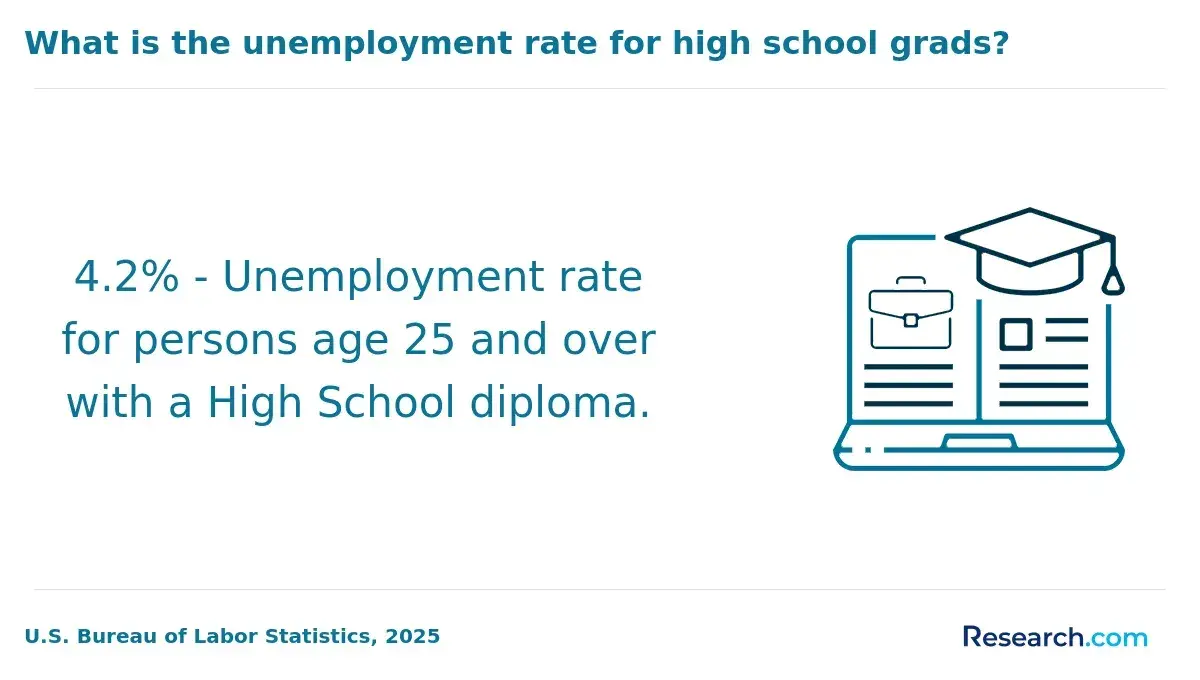
BLS reported that the overall unemployment rate averaged 4.0% in 2024. That national benchmark matters because education and healthcare roles are often evaluated against the broader labor market: if general unemployment rises, roles tied to mandated services may still face pressure, but they are less directly exposed to consumer spending than retail, hospitality, or many corporate roles.
To compare layoff risk realistically, separate the role from the setting. A school-based SLP employed directly by a district may have a different risk profile than an SLP contractor paid through a vendor. A teacher with multiple endorsements may have more placement options than a teacher certified in only one narrow category. A behavior specialist whose services are reimbursable or IEP-driven may be more secure than a consultant paid through short-term grants.
Red flags deserve close attention during a job search. If an employer cannot explain funding, relies heavily on temporary contracts, has unusually high turnover, or offers a role that disappears when a grant ends, the position may be more vulnerable in a downturn. Low layoff risk is rarely about one statistic; it is usually the result of stable funding, required services, and strong demand for a credentialed worker.
The best recession-resistant career is not always the highest-paying one. A role with slightly lower pay but stronger benefits, predictable raises, pension eligibility, and lower layoff risk may be a better long-term choice than a higher hourly role with unstable demand.
| Path | Salary stability | Job security | Trade-off | Who may prefer it |
| District special education teacher | Strong | Strong | Pay may be capped by salary schedules, but benefits and job protections can be valuable. | People who prioritize predictable income and public-sector stability. |
| School-based SLP | Strong | Strong | Requires graduate education and licensure; caseloads can be demanding. | Students willing to invest in advanced clinical training for mobility. |
| Occupational therapist in schools or healthcare | Strong | Strong | Higher education costs and clinical requirements may increase upfront financial risk. | People seeking a clinical role with cross-industry options. |
| Behavior analyst | Moderate to strong | Moderate to strong | Pay can be attractive, but funding source and employer model matter heavily. | Professionals comfortable with data, behavior plans, and autism services. |
| Special education administrator or coordinator | Strong | Moderate to strong | Administrative roles may be fewer and more politically exposed during restructuring. | Experienced educators who want higher pay and leadership responsibility. |
| Private learning specialist | Variable | Lower to moderate | Income may rise with reputation but can fall when families cut discretionary spending. | Entrepreneurial professionals with savings and referral networks. |
Salary stability is strongest when compensation is tied to a formal pay scale, long-term contract, or reimbursable service. It is weakest when income depends on hourly appointments, private clients, seasonal demand, or short-term projects. During a recession, the best mix often comes from a stable primary job plus optional side work, not from relying entirely on private-pay services.
Cost also affects resilience. Graduate degrees in speech-language pathology, occupational therapy, counseling, or administration may open more stable and higher-paying roles, but tuition and lost work time can increase financial pressure. Before enrolling, compare total program cost, accreditation, licensure outcomes, field placement support, employer tuition assistance, and whether the credential is portable across states.
Entry-level graduates often have less seniority, which can increase layoff exposure in some employers. The best entry-level choices are roles that build direct service experience, lead to licensure, and create a pathway into higher-demand positions.
These entry-level options can provide a more stable starting point when the economy is uncertain:
- Special education paraprofessional or teacher assistant: This role can be a practical first step into schools, especially for students completing teacher preparation, but pay is typically lower and hours may follow the school calendar.
- Registered behavior technician: This role builds experience with behavior intervention and autism services, though stability depends on supervision quality, reimbursement, and client attendance.
- Substitute special education teacher: Long-term substitute roles can lead to district hiring, especially in shortage areas, but benefits and income may be limited.
- Early intervention assistant: This path helps graduates gain experience with developmental services, family coaching, and interdisciplinary teams.
- Inclusive classroom aide: Working in general education classrooms with students who receive accommodations can build experience with inclusion, universal design, and collaboration.
BLS reported a May 2024 median wage of $35,240 for teacher assistants. That figure highlights the main entry-level trade-off: these jobs may be relatively available, but they may not provide enough income or benefits unless paired with a clear advancement plan.
Some graduates use entry-level special education work while exploring adjacent essential-care credentials. For example, someone comparing school support roles with direct patient-care work may evaluate an LPN 6 month program, but should confirm state approval, clinical-hour requirements, licensure eligibility, and realistic completion timelines before changing paths.
The safest entry-level strategy is to choose a role that gives you supervised experience, strong references, and a path to a credential. Avoid staying too long in low-paid support roles without a plan for licensure, graduate study, or advancement.
Location can strongly influence recession resilience because special education staffing depends on local enrollment, state funding formulas, teacher shortages, cost of living, union protections, and healthcare access. A role that is highly stable in one state may be more competitive or budget-sensitive in another.
Rural and high-need districts may offer stronger hiring demand, signing incentives, or faster placement because they have persistent shortages. Urban districts may offer more specialized programs and advancement options but can also face budget complexity. Suburban districts may offer stable employment, yet enrollment declines or local tax constraints can create hiring freezes. The best location is not always the one with the highest salary; it is the one where pay, cost of living, caseloads, benefits, and long-term demand align.
Remote work adds flexibility but does not eliminate risk. Teletherapy, virtual tutoring, online case management, assistive technology training, and remote IEP support can widen your job market, especially for SLPs, consultants, and specialists. However, remote roles may depend on state licensure, district contracts, privacy rules, technology access, and payer reimbursement. During a downturn, remote contractor roles can be cut more quickly than permanent district positions.
Before relocating or accepting remote work, ask practical questions: Is the role employee-based or contract-based? Which state license is required? Who provides equipment and software? How stable is the contract? Are caseload expectations realistic? What happens if enrollment or referrals decline? These details often matter more than whether the job is labeled remote, hybrid, or in-person.
Transferable skills are one of the strongest forms of recession protection because they let you move across job titles, industries, and employer types. Special education graduates often underestimate how valuable their skills are outside a traditional classroom.
The most useful transferable skills are those employers need even when hiring slows:
- Assessment and progress monitoring: The ability to collect data, interpret learning patterns, and adjust interventions is valuable in schools, clinics, nonprofits, and edtech roles.
- Behavior support: Skills in de-escalation, functional behavior assessment, positive behavior supports, and crisis prevention can transfer to disability services, residential programs, and behavioral health settings.
- Compliance and documentation: IEP writing, accommodation tracking, service logs, and family communication create a foundation for case management and program coordination.
- Assistive technology: Knowledge of communication tools, accessible materials, adaptive devices, and digital learning platforms can support school, therapy, and training roles.
- Family and team collaboration: Coordinating with parents, teachers, therapists, administrators, and outside providers is valuable in any human services role.
- Instructional design: Adapting content for different learning needs can transfer to corporate training, curriculum development, accessibility review, and online education.
Technology is strengthening the value of these skills rather than replacing them. AI can help organize materials or summarize information, but employers still need professionals who understand disability law, learner variability, ethical documentation, and sensitive family communication.
Some special education professionals also build interdisciplinary options around health, movement, data, or accessibility. For example, an online degree in exercise science may interest educators who want to work with adaptive physical activity, wellness programming, rehabilitation-adjacent services, or inclusive recreation, although licensure and scope of practice rules still matter.
The main mistake to avoid is becoming so specialized that you cannot explain your value outside one classroom or one program model. Keep a portfolio of measurable interventions, behavior plans, accessibility projects, family training materials, and data reports so you can demonstrate results to multiple employer types.
A recession-resilient career plan should combine stable credentials, flexible skills, realistic finances, and early warning systems. The goal is not to avoid all risk; it is to reduce avoidable risk and keep options open when hiring conditions change.
Use this step-by-step plan to compare options and protect your career:
- Start with required credentials: Confirm the state licensure, endorsement, certification, supervised practice, or graduate degree required for each target role before enrolling in a program.
- Compare funding stability: Favor roles tied to IEP services, public budgets, healthcare reimbursement, state disability programs, or long-term contracts over roles dependent on discretionary spending.
- Check local demand: Review district vacancies, state shortage lists, special education caseload trends, and healthcare provider postings in your target region.
- Evaluate total compensation: Compare salary, benefits, retirement, health insurance, paid time off, tuition assistance, and summer income options rather than base pay alone.
- Build a portable skill stack: Add behavior support, assistive technology, data tracking, documentation, family coaching, and inclusive instruction skills.
- Keep a recession file: Maintain updated references, credentials, evaluation summaries, professional development records, sample intervention plans, and measurable outcomes.
- Watch employer warning signs: Pay attention to grant expiration, leadership turnover, delayed hiring, rising caseloads, budget shortfalls, and sudden contractor reductions.
- Plan a pivot before you need one: Identify two adjacent roles you could pursue within six months if your current employer freezes hiring or cuts positions.
Several common mistakes can weaken an otherwise stable path. Do not assume all school jobs are equally secure, all private clinical roles are risky, or all high-paying roles have strong long-term value. Do not rely only on national job-growth projections when your local district is losing enrollment. Do not choose an expensive graduate program without checking accreditation, licensure pass rates, field placements, and debt burden.
If you are considering a broader pivot into data-intensive health, education technology, or research roles, compare the skill requirements carefully. Resources on bioinformatics degree jobs can be useful for understanding how technical credentials, data analysis, and healthcare demand interact, but moving from special education into a technical field usually requires additional coursework and portfolio development.
The strongest plan is usually layered: one stable credential, one high-demand setting, one transferable specialty, and one backup pathway. That combination gives special education degree holders a better chance of staying employed, negotiating from strength, and adapting when the economy changes.
Employer type affects job security because funding sources, union coverage, benefit structures, caseload rules, and contract terms differ. Two people with the same special education degree can have very different risk profiles depending on whether they work for a school district, charter network, hospital, nonprofit, staffing agency, or private practice.
In general, public-sector employers tend to offer stronger stability because they operate on recurring budgets and must meet service obligations. They may not always offer the highest salary, and hiring can slow during budget uncertainty, but layoffs are often less sudden than in revenue-dependent businesses. Large healthcare systems can also be stable, especially for therapists and specialists whose services are tied to reimbursable care.
When comparing employers, look beyond the advertised salary. These factors often reveal the real level of recession resilience:
- Funding source: Roles supported by district budgets, Medicaid, state agencies, or long-term contracts usually have more predictable demand than roles dependent on one-time grants or discretionary family payments.
- Credential dependence: Jobs that require state licensure, clinical certification, or specialized endorsements may be harder to cut or replace.
- Caseload structure: Extremely high caseloads can signal staffing shortages, but they can also indicate burnout risk and weak employer planning.
- Contract status: Full-time employee roles generally provide more protection than per-diem, seasonal, temporary, or independent contractor arrangements.
- Collective bargaining and due process: In some districts, union contracts and tenure systems may provide more predictable layoff procedures, though rules vary by state and employer.
A common mistake is assuming that a large employer is automatically safer. Large districts and hospitals can still freeze hiring, reorganize departments, or leave vacancies unfilled. A better approach is to ask how long the position has existed, whether it is funded beyond the current year, how caseloads are assigned, and what happened during the employer's last budget shortfall.
Other Things You Should Know About Special Education
It can be, especially if it leads to state licensure or a role tied to required services. The value depends on program cost, local hiring demand, certification rules, salary schedules, and whether you are willing to work in high-need settings.
Yes. Special education teachers can be laid off during budget cuts, enrollment declines, school closures, or restructuring. Their risk is often lower than roles tied to optional programs, but seniority rules, endorsements, funding, and local policy matter.
There is no single best credential for everyone. State special education licensure is the core credential for teaching roles, while SLP, occupational therapy, school psychology, behavior analysis, and administrative credentials can add mobility if they match your goals and budget.
Public schools usually offer more predictable pay, benefits, and service-based demand. Private practice may offer higher income potential or flexibility, but it can be more sensitive to referrals, insurance reimbursement, and family spending during downturns.
- Workers with low levels of education still haven’t recovered from the recession - The Hamilton Project https://www.hamiltonproject.org/publication/post/workers-with-low-levels-of-education-still-havent-recovered-from-the-recession/
- Special Education Teacher Salary & Requirements by State - NASET https://www.naset.com/professional-resources/special-education-teacher-requirements-salaries-and-resources-complete-state-by-state-guide/
- Recession-Proof Jobs That Thrive During Downturns https://create.fit/recession-proof-jobs/
- How the Special Education Teacher Shortage Affects Students with LD, and What to Do About it https://ldaamerica.org/how-the-special-education-teacher-shortage-affects-students-with-ld-and-what-to-do-about-it/
- A Special Education Certification Can Prepare You for Much More Than Teaching https://www.ucumberlands.edu/blog/how-a-special-education-certification-prepares-you
- Top Skills for Special Education Teachers (and Why They Matter) | ACE Blog https://ace.edu/blog/top-skills-for-special-education-teachers/
- 5 Best Recession Proof Jobs https://www.straighterline.com/blog/recession-proof-jobs
- The Impact of the COVID-19 Recession on Teaching Positions https://learningpolicyinstitute.org/blog/impact-covid-19-recession-teaching-positions
- Special Education Teacher Skills | University of Phoenix https://www.phoenix.edu/articles/education/essential-special-education-teacher-skills.html
- Degrees of Separation: Education, Employment and the Great Recession in Metropolitan America | Brookings https://www.brookings.edu/articles/degrees-of-separation-education-employment-and-the-great-recession-in-metropolitan-america/