
2027 Best Psychology Degree Programs Ranking in Columbus

Co-Founder and Chief Data Scientist
Choosing the right psychology degree program in Columbus can feel overwhelming. That's why this article shares the 2027 Best Psychology Degree Programs Ranking in Columbus, thoughtfully created by the Research.com team of data scientists.
By exploring this ranking, you'll gain clear, reliable insights to help you find programs that suit your goals and passions. Earning a psychology degree offers rewarding opportunities to understand human behavior and make a positive impact.
Whether you're starting your journey or seeking the best fit, this guide is here to support your next steps with confidence.
Key benefits of getting psychology degree in Columbus
- Psychology degree graduates in Columbus can expect rewarding salaries, such as Marketing Research Analysts earning around $83,190 annually and Human Resources Specialists making about $76,060 per year.
- Career paths are diverse, ranging from clinical roles like Clinical Research Associates earning $62,370 yearly to opportunities in research and childcare fields, offering a fulfilling variety for graduates from local universities.
- Completing a psychology degree online from a Columbus-based institution offers flexibility and accessibility, allowing graduates to balance life while gaining skills that open doors to well-paying roles without sacrificing quality education.
- 2027 Best Psychology Degree Programs Ranking in Columbus
- What can I expect from psychology degree in Columbus?
- Where can I work with psychology degree in Columbus?
What can I expect from psychology degree in Columbus?
The average cost of earning a psychology degree in Columbus typically dances around the mid-$20,000s per year for tuition at major institutions like Ohio State University, a figure that echoes the balance between investment and opportunity. Graduates often reflect on how this cost unlocked doors to thriving research labs and hands-on internships within Columbus's vibrant clinical settings, making every dollar feel like a ticket to meaningful exploration.
Picture a student navigating the dynamic halls of Columbus colleges, shifting seamlessly from theory to real-world application-each credit feels like placing a stepping stone on the pathway to a fulfilling psychology career. Financial aid and scholarships frequently soften the financial landscape, conjuring relief amidst the excitement of discovery and professional growth.
This monetary journey is not just a fee but a bridge: it transforms curiosity into expertise, blending classroom insights with immersive experiences in community mental health centers scattered throughout Columbus.
Where can I work with psychology degree in Columbus?
Graduates from Columbus State Community College or Ohio State's psychology programs find themselves stepping into vibrant roles across the city's landscape. Imagine walking the halls of Nationwide Children's Hospital, where clinical psychology grads offer compassionate counseling, or engaging in mental health initiatives at OhioHealth facilities, responding to the city's growing needs. These workplaces transform theoretical knowledge into healing conversations and meaningful progress.
Others thrive in school districts, acting as counselors or academic advisors, turning psychology theories into real student success stories. Picture a graduate organizing mental health workshops at local schools, becoming a beacon for youth navigating challenges. Social service agencies like Columbus Urban League attract grads eager to apply their skills improving community wellbeing and tackling substance abuse with heart and strategy.
Business psychology graduates reveal their savvy in human resources or market research, decoding consumer behavior in Columbus's bustling corporate world. The connections forged through these roles underline how a psychology degree here opens doors-not just jobs-where passion and purpose intersect amid the city's dynamic pulse.
Graduates from Columbus' psychology programs often find their degrees opening doors to a variety of rewarding roles with notable earning potential. Picture a fresh graduate from Ohio State University stepping into a Human Resources Specialist position, taking home about $76,060 annually as they apply their understanding of human behavior to hiring and development.
Others might dive into the analytical depths as Marketing Research Analysts, earning around $83,190 a year. This role perfectly suits those who love blending psychology with business insights, common in Columbus' lively corporate scene.
For the graduates who cherish hands-on research, becoming a Clinical Research Associate or Survey Researcher offers opportunities around $62,370 annually. Imagine working alongside top professors in Columbus, contributing to groundbreaking studies that shape healthcare and social policies.
Even those with a passion for community and caregiving find pathways as Childcare Workers, earning approximately $32,070 yearly, turning their empathy into meaningful support for families.
The Columbus area blends urban energy and academic excellence, making these salaries not just numbers but achievable milestones for psychology graduates looking to build fulfilling careers.
- Undergraduate tuition at public universities in Columbus ranges from $11,000 to $12,000 per year for in-state students and over $35,000 for out-of-state students.
- Private colleges in Columbus may charge more than $30,000 annually, excluding additional costs like books and housing.
- The average entry-level salary for psychology graduates in Columbus is about $45,000 per year, with potential to exceed $75,000 for experienced professionals.
- Employment in psychology-related roles is strong, with a local unemployment rate below the national average.
- Columbus universities offer psychology programs that support state licensure requirements and provide opportunities for internships and research.
Imagine diving into the vibrant campus life at Ohio State University, where a typical psychology undergraduate sails through about four years of study-roughly 120 to 130 credit hours packed with everything from brain science to behavior analysis. Some ambitious graduates recount how turbocharging their semesters shaved off precious months, wrapping up in three years, while others, balancing work and life, stretched the journey out with part-time classes.
Step into the world of Franklin University's grad students, where master's seekers immerse themselves for about two years full-time, juggling 30 to 60 credit hours. Some go the flexible online route, savoring the stretch of time as an opportunity to digest complex theories and research. Doctoral candidates often weave a 5 to 7-year saga, mixing intense coursework, clinical practice, and the challenging grind of a dissertation-a timeline shaped heavily by each individual's research breakthroughs and internship chances.
These stories unfold against Columbus's steady academic backdrop, with local universities echoing national averages, making the psychology degree timeline here both familiar and uniquely adaptable to your pace and passion.
Graduates of psychology degree programs in Columbus, OH, must navigate state-specific licensure requirements to practice clinically or offer counseling services. In Ohio, candidates typically complete a doctoral or master’s degree from a regionally accredited institution, followed by 2,000–4,000 hours of supervised post-graduate experience under a licensed psychologist. After accruing these hours, aspiring psychologists register with the Ohio Board of Psychology and apply to sit for the Examination for Professional Practice in Psychology (EPPP), a standardized test assessing foundational and applied psychological knowledge. To prepare effectively, many students leverage accredited coursework and specialty training offered through online masters programs psychology, which often integrate preparatory seminars for the EPPP and ethics modules aligned with Ohio’s administrative rules. Upon passing the EPPP, candidates must submit proof of supervised hours and professional recommendations to receive their license. Those aiming for independent practice should also consider national certification through the American Board of Professional Psychology (ABPP), enhancing credibility and potential for higher reimbursement rates. Continuing education is mandatory in Ohio, requiring licensed psychologists to complete 30 hours of approved credits every two years, including ethics, cultural competence, and evidence-based interventions. Staying informed about legislative changes and specialty credential updates-such as in school psychology or neuropsychology-ensures compliance and supports long-term career growth within Columbus’s dynamic mental health landscape.
Think of the on-campus psychology degree in Columbus as a lively theater production where every scene unfolds in real-time. Graduates from places like Ohio State University often recall sitting in vibrant lecture halls, brainstorming with peers, and diving into hands-on experiments in psychology labs. The buzz of campus life, spontaneous conversations with professors, and local internships at counseling centers create an immersive journey that's hard to replicate.
In contrast, the online psychology path resembles a personalized canvas-students craft their own study rhythms from anywhere in Columbus or beyond. This flexibility is a lifeline for those juggling jobs or family, with interactive modules and video lectures acting as guideposts. Yet, these students still gather real-world clinical experience at local healthcare centers, grounding their virtual learning in tangible practice.
Whether it's the camaraderie of campus or the freedom of pixels and playlists, each route pulses with energy that shapes future psychologists uniquely in Columbus. The former sparks immediate connection, the latter sparks self-directed growth-all roads leading to the same goal.
. When considering a psychology degree in Columbus, OH, it's essential to weigh various factors, including program cost, accreditation, and career prospects. Prospective students can benefit from researching the cheapest psychology programs in Ohio, which can be found by visiting cheapest psychology programs in ohio. This information can help students make informed decisions about their educational investment. Additionally, understanding the local job market, including growth projections and average salaries, can provide valuable insights into potential career paths. By carefully evaluating these aspects, aspiring psychologists can set themselves up for success in this rewarding and dynamic field.
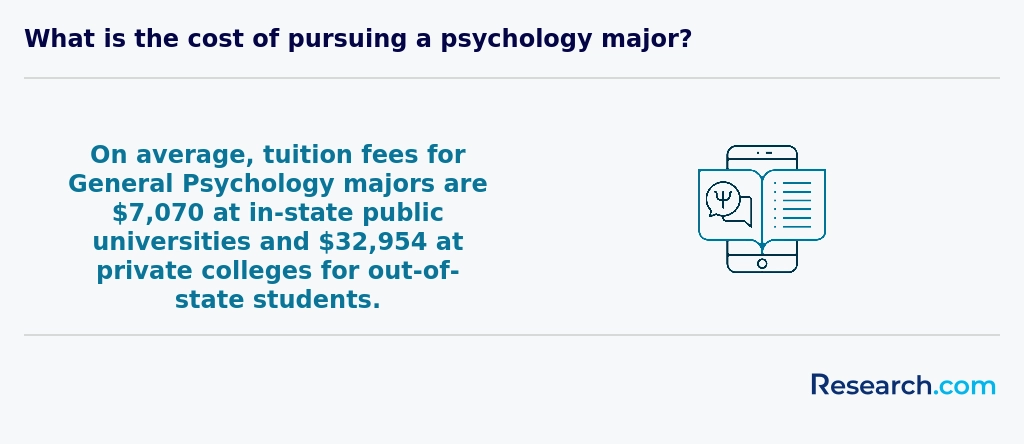
The average cost of a psychology degree in Columbus weaves a story of contrasts, shaped by where and how you choose to study. Picture a graduate from Ohio State University, a popular destination for many psychology hopefuls. They often find themselves navigating a median in-state total cost of about $13,244, a number that feels more manageable when paired with the vibrant campus life and extensive resources. Out-of-state students, however, face a steeper climb with costs closer to $54,866, a figure that adds weight but also reflects the premium of a world-class education with access to cutting-edge research and clinical experiences.
These numbers bring life to the phrase psychology degree tuition and fees Columbus, where each dollar invested opens doors to exploring the human mind through hands-on labs and community involvement. Graduates from smaller private colleges often share stories of intimate class discussions, sheltered by tuition costs that fall somewhere between state university pricing but still demanding careful financial planning.
Despite the financial spectrum, the journey is more than expenses. Many students find joy in discovering scholarships and merit aid, which sprinkle hope on the budgeting process. For those curious about the cheapest psychology programs in ohio, it's worth exploring options carefully, balancing cost against opportunity and campus culture to find the best fit for their passion and pocketbook.

Choosing an accredited psychology program in Columbus, OH is the first step toward ensuring your degree will be recognized by employers and licensing boards. At the bachelor’s level, look for regional accreditation from the Higher Learning Commission (HLC), which validates overall institutional quality. For graduate study-especially if you plan to pursue clinical or counseling licensure-you’ll want a program accredited by the American Psychological Association (APA). An APA-accredited master’s or doctoral program not only meets rigorous standards for curriculum and faculty expertise but also streamlines your eligibility for the Examination for Professional Practice in Psychology (EPPP) and state licensure. In Ohio, licensure as a psychologist requires: • A doctoral degree in psychology from an APA-accredited institution • Completion of at least 2,000 supervised post-doctoral hours • Passing scores on the EPPP and the Ohio jurisprudence exam • Submission of official transcripts and supervised-experience documentation to the Ohio Board of Psychology Meeting these criteria ensures you can legally practice and that your academic credentials translate into career opportunities across clinical, school, and industrial-organizational settings. To verify accreditation, always consult the APA’s official directory and your institution’s accreditation statements. If you’re balancing quality with affordability, you may also explore our Affordable Psychology Degree Programs Ranking in Michigan for comparative insights on cost-effective, accredited pathways. Prioritizing accreditation and licensure readiness today will safeguard your long-term professional growth and mobility.
Imagine walking through Ohio State University's bustling campus, clutching your FAFSA form like a golden ticket. That's where many psychology students in Columbus first tap into the lifeline of federal aid-grants, loans, and work-study gigs that morph financial stress into manageable steps. Pell Grants, for instance, often feel like a surprise paycheck, easing tuition burdens with a few thousand dollars handed over by the government's need-based generosity.
But it's not just about federal funds. Picture a psychology major at Columbus State Community College eagerly applying for scholarships from local champions like the Columbus Psychological Association, where community roots translate into dollars supporting your academic journey. These scholarships, ranging from modest to substantial, feel like cheers from your hometown, urging you forward.
Alongside, the Ohio College Opportunity Grant acts like a secret ally for Ohio residents, quietly slicing tuition fees for those attending Columbus's favorite institutions. Graduate students, facing steeper costs for advanced psychology niches, often lean on federal Direct Loans with friendlier interest rates, turning daunting debt into a balanced future investment.
Work-study programs here are more than paychecks; they're resume builders with on-campus or community roles, where psychology majors gain experience while funding their dreams. And savvy students know to scout institutional aid-merit scholarships and tailored packages hidden within local university offices-that transform potential financial hurdles into stepping stones towards success.
For many aspiring psychologists, the traditional four-year pathway might not align with their career timelines or financial goals. Accelerated programs offer an excellent alternative for those seeking to quickly enter the workforce while still gaining a comprehensive education. These programs are designed with flexible curricula and condensed course schedules that maintain academic rigor without extending your time in school. Students in accelerated formats often benefit from innovative online platforms and blended learning techniques, which allow them to study at their own pace and balance professional responsibilities with academic growth. Moreover, when exploring these options, it's important to consider program accreditation, internship opportunities, and alumni success rates. For a closer look at how these programs can provide a strategic advantage, you might want to learn more about an accelerated psychology degree online option that is tailored to help you fast-track your way to a successful career.
Imagine stepping onto a vibrant Columbus campus, where psychology students are already buzzing with curiosity and ambition. To join their ranks, you need more than just an eagerness to understand the human mind. Most popular Columbus universities expect you to have a high school diploma or GED in hand-your first stepping stone into this fascinating world.
Graduates often recall how maintaining a solid GPA around 2.5 to 3.0 became their ticket to acceptance, showing they could handle the academic rigors ahead. Some share how the variable test-optional policies meant checking each school's latest updates was a relief, especially when SAT or ACT scores weren't mandatory.
Picture yourself mastering foundational courses like English composition, algebra, biology, and social studies-building blocks treasured by Columbus colleges. For those dreaming beyond bachelor's degrees, the journey demands more focused preparation, including courses in statistics and research methods, plus letters of recommendation and real-world research experience.
Before practicing professionally, psychology graduates in Columbus, OH, must secure licensure through the Ohio Board of Psychology. This process begins with earning an APA-accredited doctoral degree (PhD or PsyD) and completing at least 1,500 supervised practicum hours during doctoral training. After graduation, candidates accumulate 2,000–4,000 post-doctoral supervised hours under a board-approved supervisor to demonstrate competence in clinical assessment, intervention, and ethical practice. Next, applicants sit for the Examination for Professional Practice in Psychology (EPPP), the standardized national exam administered by the Association of State and Provincial Psychology Boards. Ohio also requires a State Jurisprudence Examination to assess knowledge of state laws and ethical codes. Successful completion of both exams, submission of official transcripts, supervised-hour verifications, and payment of licensure fees culminate in the issuance of a license to practice as a psychologist in Ohio. Maintaining licensure involves completing 30 hours of continuing education every two years, with mandatory topics covering ethics, cultural competence, and evidence-based practices. Psychologists may further enhance their credentials by pursuing specialty certifications-such as school psychology or neuropsychology-through the American Board of Professional Psychology (ABPP). For those seeking cost-effective pathways that still meet rigorous licensure standards, explore our Affordable Psychology Degree Programs Ranking in Michigan. Ohio’s participation in the Psychology Interjurisdictional Compact (PSYPACT) also facilitates licensure portability, allowing licensed practitioners to offer telepsychology services across multiple states. Understanding these licensure and certification requirements ensures compliance with state regulations and positions graduates for a successful, sustainable career in psychology.
Imagine walking through the bustling halls of a Columbus university, like Ohio State, where psychology isn't just studied-it's lived. Graduates describe diving into Introduction to Psychology as stepping into a vibrant mosaic of human thoughts and emotions, unlocking the secrets behind everyday behaviors. The pulse quickens in Research Methods and Statistics, where students become detectives of the mind, mastering data that shapes groundbreaking discoveries.
In Columbus classrooms, Biopsychology feels like holding the key to the brain's hidden language-the dance of neurons and chemicals that sculpt who we are. A graduate fondly recalls making sense of childhood memories and growth through Developmental Psychology, a journey as personal as it is academic. The challenge of Cognitive Psychology ignites curiosity about how we remember a friend's smile or solve puzzles on a lazy afternoon.
Social gatherings become case studies during Social Psychology, revealing the invisible threads tying human interactions. An intimate look at struggle and healing in Abnormal Psychology leaves students not just knowledgeable but deeply empathetic. Hands-on practice in Psychological Assessment and Testing at Columbus colleges transforms theory into tangible skills, preparing future psychologists to change lives.
Imagine diving into Columbus's vibrant psychology landscape and finding yourself swept up in a clinical psychology specialization, where graduates from top local universities revel in mastering therapy and diagnostic wizardry. These students often describe their experiences as eye-opening journeys into the minds and hearts of people navigating mental health challenges. Others pulse with excitement over counseling psychology, engaging deeply with community projects at Columbus colleges, helping real folks overcome social hurdles or workplace stress with empathy and skill.
For those drawn to the brain's mysteries, neuropsychology at Columbus institutions feels like a thrilling fusion of science and psychology, exploring cognitive secrets alongside neuroscience labs buzzing with discovery-graduates often speak of a lightbulb moment understanding the brain's puzzles. Meanwhile, industrial-organizational psychology students thrive on practical courses aligned with corporate needs, preparing for dynamic careers in human resources or consulting. This wide array of psychology degree specializations Columbus offers imbues students with confidence and purpose.
Curious minds also venture into developmental or educational psychology, shaping futures at schools or youth programs within Columbus's academic hubs. For tailored ambitions, many explore an accelerated psychology degree online, blending flexibility and focus. Columbus psychology program concentration options truly empower students to create paths uniquely their own.
Choosing the best psychology degree programs in Columbus feels like assembling a personalized puzzle where each piece matters. Think about the graduates from Ohio State University who rave about how the program's accreditation wasn't just a fancy stamp-it was a key unlocking doors in clinical internships across Columbus. They found that diving into specializations like developmental or industrial-organizational psychology shaped their unique career path and kept their curiosity ignited.
Picture yourself walking through bustling campus halls, hearing stories from alumni who balanced costs smartly by tapping into scholarships and assistantships, beating the typical tuition numbers at affordable psychology schools Columbus Ohio offers. It's not just about dollars but those priceless moments working in counseling centers or psychology labs where theoretical knowledge turns vivid and real.
And if flexibility is your vibe, many Columbus programs now mix online and hybrid classes, a feature applauded by recent grads who juggled work and study seamlessly. For those exploring further, online masters programs psychology can be the next stepping stone, blending accessibility with excellence.
Imagine stepping into Columbus's vibrant psychological landscape, where a psychology degree opens doors not just to classic clinical roles but to an expansive web of career paths. Graduates from popular Columbus universities weave their knowledge through hospitals as behavioral health technicians or counseling assistants, contributing real change in community mental health settings. These roles resonate deeply with those drawn to helping others firsthand, fueled by a passion sparked during their college years. The reality of psychology degree career opportunities in Columbus also unfolds within bustling corporate offices, where organizational psychologists decode workplace dynamics and boost employee well-being.
Some graduates propel themselves further into advanced study, emerging as licensed therapists or school psychologists who leave indelible marks on local schools and clinics. Picture a familiar face from a Columbus university research lab, exploring neuroscience or behavioral studies, shaping future mental health trends. This city nurtures such breadth, inviting those curious about psychological research or academic careers to thrive. For students hungry to explore these paths without financial strain, the Affordable Psychology Degree Programs Ranking in Michigan offers insightful guidance and hope.
Embracing this spectrum of possibilities, those navigating Columbus psychology degree job prospects discover a landscape teeming with meaningful, impactful options that match both their aspirations and values.
The job market for psychology degree holders in Columbus brims with opportunity, especially for those who've immersed themselves in programs at local universities known for their strong psychology departments. Graduates often find themselves stepping confidently into roles like licensed therapists or school psychologists, meeting the rising demand fueled by Columbus's expanding healthcare and educational hubs. Those with a passion for mental health can see concrete career pathways unfold, supported by the city's embrace of mental wellness and workplace well-being initiatives.
Graduates share stories of landing positions in community health centers or school districts, where they channel their training to support emotional and behavioral development in real-world classrooms-confirming the psychology degree job outlook Columbus offers is vibrant and growing. Tuition costs mean students often consider financial planning carefully, and some explore options to get a bachelor's degree fast to jumpstart their careers.
With the mean annual wage hovering near $89,000 in Ohio, psychology career opportunities Columbus Ohio highlight a competitive yet accessible field, especially when paired with the right experience and credentials. The city's dynamic sectors warmly welcome these professionals eager to make a meaningful difference.
2027 Best Psychology Degree Programs Ranking in Columbus
Investing in your education is a significant decision that can shape your future, and the Research.com team understands the importance of making informed choices. To assist prospective students in Columbus, we have meticulously crafted the 2027 Best Psychology Degree Programs Ranking in Columbus. Our commitment to quality, credibility, and accuracy is reflected in the extensive research and analysis conducted to compile this ranking.
We utilized the following reputable data sources to ensure a comprehensive evaluation of psychology degree programs:
By exploring this ranking, readers will gain valuable insights into the best psychology degree programs available in Columbus, helping them make informed and confident decisions about their educational paths. For more details on our methodology, please visit our Research.com methodology page.


Frequently Asked Questions About psychology
Psychology degree students in Columbus can maximize their learning experience by actively engaging in both academic and practical opportunities available locally. Many Columbus institutions offer research projects and internships that provide hands-on experience, which is crucial for understanding psychological theories in real-life contexts. For example, Ohio State University regularly reports that over 60% of psychology undergraduates participate in research activities.
Students should also consider joining local psychology associations or clubs to network and attend workshops, enhancing both knowledge and professional connections. Leveraging Columbus's rich diversity allows exploration of various psychological perspectives, further deepening understanding.
Additionally, taking advantage of internships at Columbus-area hospitals and community centers offers exposure to clinical psychology practices. Seeking mentorship from experienced faculty members is another proven way to boost academic growth and career readiness. By combining coursework, experiential learning, and community involvement, students can build a strong foundation for future success in psychology.
The field of psychology is evolving rapidly, with several emerging niches gaining attention among students and professionals. In Columbus, growing interest centers on neuropsychology, which explores the relationship between brain function and behavior. This specialty is expanding thanks to advances in brain imaging technology.
Another promising area is forensic psychology, where experts apply psychological principles in legal settings. Columbus offers growing opportunities in this niche, supported by local courts and law enforcement agencies.
Additionally, health psychology is becoming vital, focusing on how psychological factors impact physical health. According to recent Bureau of Labor Statistics data, jobs in these specialties are expected to grow faster than average through 2030, reflecting nationwide trends relevant to the Columbus region.
Preparing for the job market after earning a psychology degree in Columbus involves a strategic mix of education, experience, and networking. Graduates should seek internships or volunteer opportunities in local clinics, schools, or social service agencies to gain practical skills valued by employers.
Columbus hosts various psychology-related organizations and events, such as the Ohio Psychological Association, which offer valuable networking connections. Building relationships with faculty and attending career fairs can also open doors to job placements.
According to the U.S. Bureau of Labor Statistics, the demand for psychologists in Ohio is projected to grow by 6% from 2022 to 2032, highlighting the importance of acquiring specialized credentials or certifications.
Continuing education through workshops or graduate programs in counseling or clinical psychology can increase employability in this competitive field.
Employers in Columbus increasingly value psychology graduates who demonstrate strong critical thinking and research skills. According to data from the American Psychological Association, the ability to analyze data and apply psychological theories to real-world problems ranks highly among desired competencies.
Communication skills are essential, as many psychology roles involve working directly with clients or collaborating in multidisciplinary teams. The Ohio State University's Center for Human Resource Research highlights that effective interpersonal skills boost employability within local mental health services.
Additionally, proficiency in ethical decision-making and cultural competence is crucial given Columbus's diverse population. Employers look for graduates who can adapt psychological practices to varied cultural contexts, promoting inclusivity in care and research.
Finding internships in Columbus relevant to a psychology degree involves exploring local universities and community resources. Ohio State University, located in Columbus, offers strong connections to area hospitals and research centers, which serve as common internship sites for psychology students.
Students should also utilize the university career services, which often have partnerships with employers looking for psychology interns. Additionally, local mental health clinics and nonprofit organizations provide practical experience through internship programs.
According to the Columbus Chamber of Commerce, about 20% of internships in health and social services in the area focus on psychology-related roles, highlighting opportunities for hands-on learning.
Networking through professional associations such as the Ohio Psychological Association can further enhance internship prospects in Columbus.
In Columbus, a psychology degree can significantly enhance career mobility and advancement opportunities. Graduates often find roles in healthcare, social services, education, and business sectors. According to the U.S. Bureau of Labor Statistics, Columbus has seen a 7% growth in jobs related to psychology and counseling from 2020 to 2030, reflecting strong local demand.
Holding a degree allows individuals to qualify for specialized positions such as clinical psychologists, counselors, or human resources managers. Advanced degrees further improve prospects, with master's or doctoral qualifications leading to higher salaries and leadership roles.
Local employers in Columbus value the analytical and interpersonal skills psychology graduates bring, supporting consistent career progression.
Studying for a psychology degree in Columbus prepares students for interdisciplinary roles by emphasizing collaboration across various fields such as healthcare, education, and business. Many programs integrate coursework in biology, sociology, and statistics, allowing students to apply psychological principles in diverse contexts.
Columbus is home to institutions like The Ohio State University, which offers research opportunities in cognitive neuroscience and behavioral health, fostering skills applicable to interdisciplinary teams. According to the National Center for Education Statistics, psychology graduates from Ohio institutions often pursue roles in social services, healthcare management, and educational counseling, highlighting the degree's versatility.
This broad academic foundation equips graduates to work effectively in areas including human resources, public health, and technology development, where understanding human behavior is critical. Employers in Columbus increasingly value psychology graduates' ability to analyze data and collaborate across disciplines, which reflects national workforce trends reported by the U.S. Bureau of Labor Statistics.
Choosing between a thesis and a non-thesis psychology degree program in Columbus depends largely on your career goals and learning preferences. Thesis programs focus on research, requiring students to complete an original study, which is essential if you plan to pursue a PhD or a career in academic research. According to the Ohio Higher Education Information (2023), about 40% of psychology graduates from Columbus institutions choose thesis options for this reason.
Non-thesis programs emphasize coursework and practical skills, making them ideal for students seeking careers in counseling, human services, or organizational psychology. These programs generally take less time to complete and may offer more flexibility for working professionals.
Review program curricula from local universities like Ohio State University Columbus or Capital University, and consider faculty expertise and available research resources to inform your decision.
Students based in Columbus who wish to study psychology abroad have several notable pathways through U.S. university partnerships and exchange programs. Ohio State University, the city's largest institution, maintains connections with international universities offering psychology courses, enabling students to spend a semester or year overseas while earning credit toward their degree. According to the National Center for Education Statistics, nearly 15% of psychology undergraduates nationwide engage in study abroad experiences, showing a growing trend that Columbus students mirror.
Many programs emphasize cross-cultural psychology and research opportunities in countries such as the United Kingdom, Canada, and Australia. These experiences provide insight into diverse psychological practices and global mental health issues. Additionally, some students pursue joint or dual degrees with foreign institutions through formal agreements, enhancing their credentials for a global career.
Students pursuing psychology degrees in Columbus have several part-time job options that effectively complement their academic education. Working as a behavioral health technician or psychiatric aide in local hospitals like OhioHealth or Nationwide Children's Hospital offers practical experience in patient care and mental health support. These roles enhance understanding of clinical environments and patient interaction.
Another opportunity includes research assistant positions at The Ohio State University, where students can engage in ongoing psychology studies, gaining valuable skills in data collection and analysis.
Additionally, tutoring peers in psychology courses or volunteering at community mental health centers in Columbus provides hands-on experience while building communication skills essential for future careers.
Psychology students in Columbus have access to a variety of networking opportunities that can enhance their educational and professional growth. Local universities, such as Ohio State University, host psychology clubs and honor societies where students can connect with peers and faculty. The Columbus Psychological Association offers events, workshops, and conferences tailored to psychology professionals and students alike, providing chances to meet practitioners in diverse fields.
Internship placements at nearby hospitals and counseling centers give students practical experience and networking possibilities with licensed psychologists. According to the Ohio Psychological Association, Columbus hosts over 50 psychology-related events annually, fostering strong community connections.
Alumni networks offer valuable benefits for psychology degree students in Columbus by providing strong professional connections. Graduates from local universities often stay engaged through events and mentoring programs, which can increase job placement rates. According to the National Association of Colleges and Employers (NACE), 85% of jobs are filled through networking, highlighting the importance of these connections.
In Columbus, psychology students can tap into alumni working in diverse settings like hospitals, schools, and counseling centers. This access allows for internships and job shadowing opportunities that improve practical skills.
Additionally, alumni networks often share job listings and graduate school advice, giving students an edge in competitive markets. By fostering these relationships, students enhance their career development and professional growth.
Customizing a psychology degree program in Columbus allows students to align their education with specific career goals. Many local institutions offer elective courses in areas such as clinical psychology, industrial-organizational psychology, or counseling. Choosing relevant electives helps build specialized knowledge important for competitive job markets.
Internships and research opportunities at Columbus-area hospitals, schools, and organizations provide practical experience. These hands-on options are valuable for career readiness and networking within Ohio's psychology community.
Graduate programs often enable students to focus on subfields like neuropsychology or social psychology, tailoring advanced study to fit professional ambitions. Columbus universities also support joint degrees or certificates in areas like business or education, broadening career pathways.
According to the National Center for Education Statistics, Columbus-area psychology programs have seen growing enrollment, reflecting increased local demand for mental health professionals.
Psychology students in Columbus often face several challenges typical to the field nationwide, but with local nuances. A primary difficulty is balancing demanding coursework with practical experience, especially as many programs require internships or research projects. According to the Ohio Department of Higher Education, approximately 40% of psychology undergraduates in Ohio report stress from managing these requirements alongside part-time jobs or family commitments.
Another common issue is the competitive nature of graduate programs, which affects students seeking advanced degrees for licensure. Columbus students often navigate limited local internship spots, making it harder to gain relevant clinical hours.
Financial constraints are also significant; while tuition varies, many students rely on financial aid, which can be uncertain. Mental health challenges themselves are a concern, as psychology students frequently report higher rates of anxiety and depression during studies, according to a 2023 survey by the American Psychological Association.
With a psychology degree earned in Columbus, graduates can pursue several professional certifications to enhance their career prospects. Common certifications include Licensed Professional Counselor (LPC) and Licensed Social Worker (LSW), which allow professionals to provide therapy services. These certifications typically require a master's degree and supervised clinical hours, according to the Ohio Counselor, Social Worker, and Marriage and Family Therapist Board.
Other options include Certified Addiction Counselor (CAC) and Board Certified Behavior Analyst (BCBA), popular in Ohio's healthcare system. Columbus also hosts training programs for these credentials, giving local students easier access to required coursework and exam preparation.
Certification programs often improve job opportunities in Columbus's growing mental health field, which is projected to expand by 12% through 2030, per U.S. Bureau of Labor Statistics data.
Writing a winning application for a psychology program in Columbus requires clear focus and preparation. Start with a well-crafted personal statement that highlights your passion for psychology and any relevant experiences, such as internships or volunteer work in mental health settings. Admissions committees in Columbus value applicants who demonstrate understanding of local community issues, especially since the city's universities often emphasize applied psychology in diverse urban populations.
Include strong letters of recommendation from professors or professionals familiar with your academic abilities and character. According to recent data from the Ohio Board of Regents, local programs have acceptance rates ranging from 40% to 60%, emphasizing the importance of solid references and genuine motivation.
Prepare for standardized tests required by some institutions, like the GRE, and ensure your academic transcripts reflect consistent performance in psychology and related sciences. Highlight any research projects or participation in Columbus-area psychology organizations to strengthen your application.
The global perspectives on a psychology career highlight growing demand across various fields, including clinical, counseling, and industrial-organizational psychology. In the United States, the Bureau of Labor Statistics projects a 8% growth in psychologists' employment from 2022 to 2032, faster than average for all occupations. Columbus, with its expanding healthcare sector, reflects this trend, offering increasing job opportunities in hospitals and private practices.
Internationally, psychology careers emphasize cultural competence and global mental health challenges. Many Columbus programs incorporate global perspectives to prepare students for diverse populations. According to the American Psychological Association, understanding these trends is vital for those pursuing psychology degrees in Columbus.
Gaining practical experience while studying for a psychology degree in Columbus is essential for building career-ready skills. Many local universities offer internship programs with nearby hospitals, schools, and community agencies. These internships often provide hands-on experience in counseling, research, or behavioral studies. According to the Ohio Department of Higher Education, over 60% of psychology students in Ohio participate in internships during their studies.
Additionally, students can engage in on-campus research projects under faculty supervision. Columbus houses several renowned institutions like Ohio State University that frequently seek undergraduate and graduate research assistants. Volunteering at local mental health clinics or nonprofit organizations also presents valuable real-world exposure.
Choosing the right concentration within a psychology degree program in Columbus requires careful consideration of your career goals and interests. Columbus offers various specializations such as clinical, counseling, industrial-organizational, and developmental psychology, each leading to different professional paths.
Research from the Ohio Board of Regents highlights that clinical psychology remains the most pursued concentration locally, with over 40% of psychology graduates entering related fields. Industrial-organizational psychology is growing in demand, reflecting Columbus's strong business sector.
Students should evaluate course offerings, faculty expertise, and internship opportunities. Visiting campus resources and seeking advice from academic advisors can clarify how each concentration aligns with job market trends in the Columbus area. Understanding licensure requirements and graduate education options can also guide your choice.
- 2027 Best Psychology Degree Programs Ranking in Dayton
- 2027 Best Psychology Degree Programs Ranking in Athens
- 2027 Best Psychology Degree Programs Ranking in Tiffin
- 2027 Best Psychology Degree Programs Ranking in Oxford
- 2027 Best Psychology Degree Programs Ranking in Cincinnati
- 2027 Best Psychology Degree Programs Ranking in Bowling Green
- 2027 Best Psychology Degree Programs Ranking in Akron
- 2027 Best Psychology Degree Programs Ranking in Kent
- 2027 Best Psychology Degree Programs Ranking in Toledo
- 2027 Best Psychology Degree Programs Ranking in Cleveland
See What Experts Have To Say About Studying Psychology
Read our interview with Psychology experts

Robin M. Kowalski. Ph.D.
Psychology Expert
Professor of Psychology
Clemson University

Joann Farrell Quinn, Ph.D., MBA
Psychology Expert
Director at the College of Medicine Department of Medical Education
Morsani College of Medicine

Elizabeth L. Jeglic Ph.D.
Psychology Expert
Professor of Psychology
City University of New York

- Alumni Perspectives - Meet Our FPN Alumni https://www.aanmelder.nl/alumni-perspectives-june-2023
- Society for the Teaching of Psychology https://teachpsych.org/page-1784686/8675326
- How to Change Your Career from Psychology to UX Design https://ixdf.org/literature/article/how-to-change-your-career-from-psychology-to-ux-design
- How To Find Psychology Internships https://www.psychology.org/resources/how-to-find-an-internship/
- Sample letters in psychology https://www.mystudies.com/en-in/human-and-social-sciences/psychology/letter-model/
- Community Psychology in Global Perspective http://siba-ese.unisalento.it/index.php/cpgp
- Study Psychology Abroad https://astarfuture.co.uk/study_psychology_abroad.html
- How to help students cope with mental health challenges https://www.eaie.org/resource/help-students-cope-mental-health-challenges.html
- Why Get a Psychology Degree Online? | University of Bridgeport https://www.bridgeport.edu/news/reasons-to-get-your-psychology-degree-online/
- Study Psychology Abroad | Go Overseas https://www.gooverseas.com/study-abroad/psychology





