2027 Most Affordable Engineering Degree Programs Ranking in College Park

Co-Founder and Chief Data Scientist
Choosing the right engineering degree program is an important step for your future, especially in College Park where options abound. This article introduces the 2027 Most Affordable Engineering Degree Programs Ranking in College Park, carefully compiled by the Research.com team of data scientists.
Our goal is to help you make an informed decision by highlighting programs that offer the best value without compromising quality. Pursuing an engineering degree can open doors to rewarding careers, and understanding affordability lets you focus on what matters most-your education and growth.
Explore the ranking to find programs worth considering and take confident steps toward your goals.
Key benefits of getting engineering degree in College Park
- Salary: Graduates with an engineering degree in College Park can expect impressive salaries, such as $117,680 annually for Electrical Engineers and $105,220 for Mechanical Engineers, reflecting strong financial rewards in these fields.
- Career Paths: Engineering graduates from local universities often pursue diverse roles, from designing infrastructure as Civil Engineers to improving manufacturing systems as Industrial Engineers, offering exciting and flexible job opportunities.
- Online Degrees: Earning an engineering degree online from a respected College Park institution allows for flexible scheduling and reduces commuting stress, making education more accessible while maintaining quality.
- 2027 Most Affordable Engineering Degree Programs Ranking in College Park
- What can I expect from engineering degree in College Park?
- Where can I work with engineering degree in College Park?
What can I expect from engineering degree in College Park?
The average cost of pursuing an engineering degree in College Park, primarily at the University of Maryland's A. James Clark School of Engineering, typically includes tuition, fees, and living expenses that together can range around $30,000 to $50,000 annually for in-state students. Many graduates recall balancing the challenge of these costs with the incredible value they received in return, emphasizing access to cutting-edge labs and federal research projects that prepared them for impactful careers.
Future students might imagine leveraging scholarships and work-study programs, which numerous engineering students in College Park have successfully utilized to reduce their financial burden. The proximity to government agencies like NASA offers paid internships that not only enhance learning but also contribute to managing expenses.
Looking ahead, the integration of emerging technologies such as AI-driven design tools and sustainable engineering practices promises to increase the program's appeal and justify its investment, as students expect this education to open doors to lucrative and fulfilling jobs in dynamic industries.
Where can I work with engineering degree in College Park?
Graduates from engineering programs in College Park often find themselves stepping directly into vibrant career paths thanks to the city's close connection with cutting-edge technology and government research. Many students from institutions like the University of Maryland report jumping into roles at nearby federal agencies such as NASA's Goddard Space Flight Center or NIST, working on projects that push the boundaries of aerospace and cybersecurity. Imagine joining a team developing next-generation satellites or enhancing national telecom infrastructure.
Others are drawn to the expanding private tech sector, finding positions in innovative startups focused on software and hardware development. Alumni frequently share how hands-on university projects and internships within the Baltimore-Washington corridor helped them secure jobs as systems engineers or project managers in renewable energy and environmental initiatives. The city's emphasis on sustainability creates exciting opportunities to contribute to smart city solutions, blending engineering skills with real-world impact.
Academic and research careers are also popular, with many graduates collaborating on advanced R&D projects at local universities and lab partnerships. The overall optimistic mood among students reflects growing demand and rising salaries, fueling ambitions for creative and meaningful work after graduation.
Graduates holding engineering degrees from universities in College Park can anticipate compelling salary prospects aligned with regional industry demands. For instance, a mechanical engineer typically earns a mean annual wage of about $105,220, while electrical engineers often see higher figures around $117,680, reflecting the tech-driven economy nearby.
Recent alumni from local programs share optimistic stories about starting salaries in the $65,000 to $75,000 range, with certain fields like electrical engineering commanding the upper end due to specialized federal and private sector roles. Such incomes enable young professionals to enjoy early financial independence and invest confidently in their futures.
Beyond entry-level positions, mid-career engineers in disciplines such as civil engineering-with average earnings near $101,160-experience substantial wage growth. These figures mirror the expanding opportunities in College Park's innovation hubs and government agencies.
With College Park's proximity to research centers and defense contractors, these salary trends signal a thriving landscape for engineers to advance professionally and personally, inspiring graduates to envision long-term careers with rewarding compensation.
- UMD's Clark School of Engineering is ranked among the top 25 public engineering schools in the U.S.
- In-state tuition for undergraduate engineering students is about $11,000 per year, while out-of-state tuition is around $37,000, with additional costs near $15,000 annually.
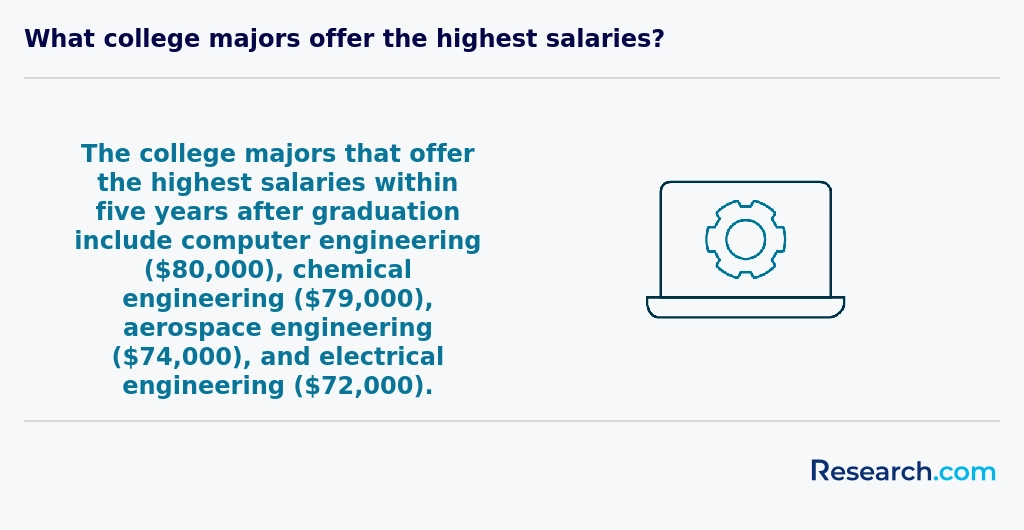
- Starting salaries for engineering graduates average $70,000 per year, increasing to $100,000-$120,000 after 5 to 10 years of experience.
- Major employers nearby include NASA, the Department of Defense, aerospace companies, and tech startups, providing strong job opportunities.
- Engineering students have access to internships, co-op programs, and federally funded research projects to gain practical experience.
Completing an engineering degree in College Park typically takes around four years, especially at the University of Maryland, College Park, which designs its curriculum for this timeline. Many graduates recall navigating a dense schedule of core courses, labs, and projects, often balancing internships or research that make their experience richer and more practical. While the official plan is four years, most students find themselves extending to 4.5 or 5 years, embracing additional opportunities like co-op programs or summer classes that deepen their skills.
Future trends hint at more flexible pathways, with accelerated programs and hybrid learning options emerging. These innovations could enable students to complete their degrees faster or tailor experiences to match their career goals in real time. Imagine finishing your degree while gaining hands-on industry experience simultaneously, reducing costs and boosting confidence as you enter the workforce.
Engineering in College Park is evolving to become not just a degree timeline but a personalized journey, where students shape their education around real-world challenges and future technologies.
For many students, the College Park experience extends well beyond the classroom, as vibrant campus life plays a pivotal role in shaping an engineering career. Students actively engage in engineering clubs, hackathons, and design competitions that foster creativity and collaboration, while also building strong networks with peers and industry professionals. This dynamic environment not only enhances technical skills but also cultivates leadership, teamwork, and problem-solving abilities, which are essential for career success. Furthermore, many institutions in the area host regular industry talks, workshops, and campus events that bridge the gap between academic learning and real-world application. Prospective students interested in exploring cost-effective options can also review insights from the most affordable engineering schools in maryland, which provide additional perspectives on balancing academic excellence with an enriching campus experience.
Online and on-campus engineering degrees in College Park each offer distinct experiences tailored to different lifestyles and goals. Graduates from the University of Maryland, College Park often recall the energizing buzz of working side-by-side in advanced labs, collaborating on projects that push boundaries in robotics or environmental systems. This hands-on engagement nurtures confidence and deep technical skills.
Conversely, online students appreciate the flexibility to balance coursework with full-time jobs or family life, accessing lectures and simulations anytime. Some have shared how virtual labs create immersive environments that mimic real experiments, making remote learning surprisingly tangible. However, they sometimes miss spontaneous hallway discussions or face-to-face networking during campus career fairs.
Looking ahead, hybrid models could merge these strengths-imagine starting with online theory and then attending short residencies at College Park to gain practical lab exposure. This blend may empower future engineers to master both convenience and rigorous hands-on training, expanding access without compromising quality.
Graduating with an engineering degree in College Park, MD, often represents a significant financial investment, but the strong earning potential can offset tuition costs and student debt. On average, engineering students in the region graduate with $28,000 in federal and private loans, compared to the national STEM average of $32,000. With starting salaries around $97,000 for mechanical engineers and $114,000 for electrical engineers, many graduates can expect a debt-to-earnings ratio under 0.3, indicating a favorable return on investment (ROI). • Average Debt Load: The median student debt for University of Maryland engineering graduates is $27,400, while community college transfer students carry about $15,600. • Salary-to-Debt Ratio: At a starting salary of $100,820, a mechanical engineer’s annual earnings are roughly 3.7 times the median debt, enabling most graduates to repay loans within 5–7 years under standard repayment plans. • Payback Period: Graduates who enroll in income-driven repayment (IDR) plans or pursue Public Service Loan Forgiveness can reduce their effective payback period to 3–5 years, especially when combined with employer tuition assistance programs offered by local tech firms and government agencies. • Maximizing ROI: To further enhance ROI, students should seek paid internships, cooperative education positions, and merit-based scholarships-such as the A. James Clark School awards-and consider accelerated master’s pathways that allow concurrent bachelor’s and master’s coursework. • Alternative STEM Paths: For those exploring other high-ROI STEM fields, our analysis of the best rated online geoscience and geology degree programs demonstrates that comparable salary prospects can be achieved with lower average debt loads and flexible online delivery. By understanding the interplay between tuition costs, expected earnings, and loan repayment strategies, prospective engineering students in College Park can make data-driven decisions to maximize their ROI and embark on a financially sustainable career in engineering.
The average cost of obtaining an engineering degree in College Park reflects a combination of tuition, fees, and living expenses specific to the area's educational landscape. Graduates from prominent institutions like the University of Maryland often recall balancing the total median cost of around $58,808 over the duration of their study, which includes both in-state and out-of-state expenses. These figures suggest that while out-of-state students face higher tuition, the comprehensive cost is a critical consideration for local and non-local students alike.
Many students emphasize how the average cost can seem manageable when strategically combining scholarships, financial aid, and part-time jobs. This approach highlights a forward-thinking way to absorb potential financial pressures while pursuing engineering. Students benefit from affordable engineering programs College Park tuition fees, paired with budgeting for housing, food, and transportation, commonly amounting to annual living costs between $14,000 and $16,000, which some graduates found surprisingly reasonable in relation to the quality of education and community support.
Personal accounts from graduates often focus on their experiences navigating College Park's academic environment while preparing for jobs in database management and other technical fields post-graduation. These experiences reinforce how the investment in education ties to career opportunities, especially when students actively engage with the financial realities during their studies.

Engineering students at the University of Maryland, College Park often find financial aid evolving alongside technological and educational trends. Graduates frequently share how federal aid, accessed via FAFSA, makes a tangible difference-transforming daunting tuition costs into manageable investments in their future. Pell Grants and low-interest federal loans remain foundational, ensuring students feel supported rather than overwhelmed.
Work-study programs provide hands-on experience while easing financial burdens, creating opportunities to contribute directly to campus projects or research labs. Many engineering students describe the pride and excitement of earning while learning in real time, a combination that fuels motivation and deepens their connection to their field.
Scholarships from engineering societies and corporate sponsors continue to expand, often targeting diversity and innovation initiatives. Maryland-based grants further bolster local students' ability to thrive within the College Park community, offering a strong sense of belonging and local pride.
Assistantships tied to cutting-edge research projects offer not just funding but invaluable mentorship and career-launching experience. This layered financial support network actively shapes an encouraging environment for aspiring engineers to flourish.
To enroll in an engineering degree in College Park, future students typically need a strong background in math and science, building a foundation that prepares them for complex problem-solving. Graduates often recall how their success in advanced math courses like calculus and physics made early coursework less daunting. Many programs emphasize four years of math including algebra and geometry, alongside science classes like chemistry and sometimes computer science, reflecting the evolving interdisciplinary nature of engineering.
Standardized tests remain influential, with competitive applicants usually presenting SAT math scores above 650 or ACT math scores near 28. These benchmarks help admissions officers predict a student's ability to handle rigorous engineering coursework. Personal statements and recommendation letters provide insight into an applicant's passion and resilience, often illustrating stories of overcoming challenges and an eagerness to innovate.
Students at premier College Park universities have noted the growing importance of coding skills and adaptability, hinting at future prerequisites that may include proficiency in programming languages or AI fundamentals, aligning with cutting-edge research trends in the area.
When evaluating affordability alongside quality, College Park stands out for its balance of low in-state tuition and strong graduate outcomes, but it’s helpful to benchmark against other markets. For example, Chicago offers competitive tuition rates and a diverse campus experience-explore our Affordable Engineering Degree Programs Ranking in Chicago, IL for a similar in-depth analysis. Key comparison points include: • Average Annual Tuition – College Park (in-state): ~$11,000 – Chicago (in-state): ~$13,500 • Median Starting Salary – College Park graduates: $97,000 – Chicago graduates: $95,200 • Cost-to-Salary Break-Even – College Park: ~3.5 years – Chicago: ~4.1 years • Internship & Co-op Opportunities – College Park benefits from proximity to federal agencies and national labs. – Chicago leverages a major corporate hub with internships across finance, manufacturing, and tech sectors. • Living Expense Index (100 = U.S. average) – College Park: 112 – Chicago: 118 By comparing these metrics, prospective students can better understand relative value. While College Park offers slightly lower tuition and faster ROI, Chicago’s broader industry network may justify a modestly higher cost for some. Ultimately, weighing tuition, living expenses, and local job markets ensures an informed choice for a cost-effective engineering education.
Engineering students in College Park typically dive into a mix of rigorous core courses that set the foundation for their specialized studies. Graduates from the University of Maryland at College Park, for example, often recall mastering essential subjects like Calculus I through III, alongside physics with lab sessions that transform theory into hands-on experiments. These classes are complemented by chemistry or materials science, which open doors to understanding the building blocks of engineering.
Programming and computer science basics are increasingly emphasized, reflecting the future of engineering's digital demands. Many students describe the excitement of early projects, like coding simple algorithms or designing basic circuits, which spark confidence and creativity.
As they progress, College Park programs guide students through focused classes aligned with their chosen fields-whether it's fluid mechanics for mechanical engineers or signal processing for electrical engineers. Capstone projects invite students to collaborate closely, tackling real-world challenges that simulate professional engineering work, often energizing them with a sense of purpose and accomplishment.
Looking ahead, these flexible curricula may integrate emerging fields such as AI-driven design and sustainable engineering, preparing students not just for today's jobs but tomorrow's innovations.

In College Park, engineering degree specializations are evolving to match future demands, with universities like the University of Maryland offering diverse paths. Graduates often highlight programs in Civil Engineering, where they engage in urban infrastructure projects that directly impact local communities. Electrical and Computer Engineering students embrace cutting-edge work in electronics and communications, blending hardware innovation with software advances. Mechanical Engineering continues to draw those passionate about design and energy systems, while Biomedical Engineering thrives amid breakthroughs in healthcare technology. Environmental Engineering is gaining momentum as students address real-world sustainability challenges in Maryland's urban and suburban settings.
Many students tailor their studies through interdisciplinary options, including materials science and systems engineering, combining technical skills with emerging fields like data analytics. This adaptability reflects the top best engineering majors in College Park, where practical, research-based experiences create excitement. For those curious about integrating computing with engineering, exploring computer programming careers pairs well with many specializations, expanding future opportunities.
Choosing the best engineering degree in College Park involves looking beyond just the curriculum. Graduates from the University of Maryland share how aligning personal passions with emerging fields, such as renewable energy or smart infrastructure, creates exciting career pathways. With program accreditation by ABET ensuring quality, students can confidently explore disciplines poised for future innovation. Considering engineering degree programs cost College Park students find options that balance affordability and quality, especially compared to pricier private institutions, helps ease financial concerns while accessing top-tier resources.
Many students highlight the practical value of research collaborations with federal agencies like NASA, which fuel both learning and internships, transforming theoretical knowledge into real-world skills. A forward thinker might also explore cross-disciplinary opportunities, combining engineering studies with data science trends by accessing data analytics courses online. This approach boosts competitiveness in a rapidly evolving job market fueled by technology and networking within College Park's strong alumni community.
Engineering graduates in College Park benefit from a variety of dynamic career paths that expand as technology and industries evolve. With access to renowned institutions like the University of Maryland, College Park, graduates often secure roles in mechanical, electrical, and civil engineering sectors, contributing to large-scale infrastructure projects or innovative manufacturing processes. Many find rewarding opportunities in software engineering and cybersecurity, reflecting the region's growing tech corridor near Washington, D.C. Others are drawn to aerospace and defense roles, leveraging proximity to government research labs and contractors to work on cutting-edge projects. Biomedical engineering also attracts graduates seeking to impact healthcare technology and medical research.
Those interested in advancing their careers can explore leadership positions, consulting, or academia, supported by practical experience gained at local research centers. One graduate described the excitement of contributing to projects at the National Institute of Standards and Technology, highlighting how College Park's environment fosters early career growth. For prospective students considering affordability alongside opportunity, programs at the University of Maryland remain among the most affordable engineering schools in maryland, making this region a compelling choice for jobs with engineering degree College Park.
Engineering degree job outlook College Park is exceptionally promising due to the area's unique blend of academic excellence and industry demand. Graduates from the University of Maryland, College Park, often share how internships with NASA or defense contractors provide invaluable real-world experience, directly leading to competitive positions in aerospace and cybersecurity fields. The region's proximity to government agencies and tech startups creates an ecosystem where fresh engineers can thrive professionally.
College Park engineering career opportunities are bolstered by ongoing research projects at the university, giving students the chance to engage in cutting-edge work in robotics and computer engineering. Many graduates express excitement about the hands-on exposure and networking events that open doors to roles in emerging fields like biotechnology and systems engineering.
For those weighing education costs and career prospects, the affordability of tuition combined with strong hiring trends makes this area appealing. Students interested in interdisciplinary growth might also explore the best rated online geoscience and geology degree programs as complementary options, enhancing their marketability in a diversified job market.
2027 Most Affordable Engineering Degree Programs Ranking in College Park
Investing in your education is a significant decision that can shape your future, and the Research.com team understands the importance of making informed choices. To assist prospective students in College Park, we have meticulously crafted the "2027 Most Affordable Engineering Degree Programs Ranking in College Park." Our commitment to quality, credibility, and accuracy is reflected in the extensive research and analysis conducted to compile this ranking.
We utilized the following reputable data sources to ensure a comprehensive evaluation of engineering programs:
By exploring this ranking, readers will gain valuable insights into affordable and high-quality engineering degree programs in College Park, empowering them to make well-informed educational decisions. For more details on our methodology, please visit our Research.com methodology page.

Frequently Asked Questions About engineering
Engineering students in College Park can enhance their learning by actively engaging in both classroom and extracurricular opportunities. The University of Maryland, College Park, offers access to cutting-edge labs and research centers supporting fields like aerospace, civil, and computer engineering. Participating in undergraduate research projects can improve practical skills and employability. According to the National Center for Education Statistics, students involved in research have a 15% higher chance of employment within six months post-graduation. Joining engineering societies, such as the American Society of Mechanical Engineers chapter, also builds professional networks and leadership abilities. Internships with local tech firms further complement academic knowledge through real-world experience.
Emerging niches in engineering attract growing interest among students in College Park. Areas like renewable energy engineering focus on developing sustainable power solutions, responding to climate change challenges. According to the U.S. Bureau of Labor Statistics, jobs in this sector are expected to grow 9% by 2031, outpacing many traditional engineering roles.
Another expanding field is biomedical engineering, which combines healthcare and technology to design medical devices and improve patient care. The University of Maryland, College Park, a leader in this domain, reports increased enrollment in such programs.
Data engineering and artificial intelligence also represent vital areas where expertise is in high demand. These fields support advancements in automation and smart systems across industries.
Graduates with engineering degrees from College Park should begin preparing for the job market by gaining practical experience through internships and cooperative education programs. The University of Maryland, located in College Park, offers robust connections to industries in the Washington, D.C. metropolitan area, increasing access to internships that improve employability.
Networking is critical; students should utilize career services and attend local engineering events held by professional organizations, such as the Maryland Society of Engineers. According to the National Association of Colleges and Employers, 65% of engineering jobs are secured through networking and direct contact.
Additionally, developing strong technical skills alongside soft skills like communication and teamwork enhances job prospects. Staying current with emerging technologies in fields such as cybersecurity and renewable energy, which are growing sectors in the region, further benefits job seekers.
Employers seeking engineering graduates in College Park prioritize strong technical skills such as proficiency in computer-aided design (CAD), programming languages like Python and MATLAB, and a solid understanding of core engineering principles. According to recent data from the National Association of Colleges and Employers (NACE), over 70% of engineering employers value hands-on experience and internships.
In addition, soft skills such as problem-solving, teamwork, and effective communication are crucial. A 2023 survey of employers in Maryland highlighted that 65% specifically look for candidates who can collaborate across multidisciplinary teams.
Finally, adaptability to new technologies and continuous learning are increasingly important in the rapidly evolving engineering sector in College Park.
Finding internships in College Park for engineering students involves leveraging both university and local industry resources. The University of Maryland, College Park, offers a robust Career Center that posts numerous engineering internship opportunities annually, many with companies like Northrop Grumman and Lockheed Martin, which have strong local presences.
Students should also explore online platforms such as Handshake, widely used by UMD students, and attend engineering career fairs held each semester. These fairs attract over 100 employers seeking engineering interns.
Additionally, networking through engineering student organizations and faculty can open doors to internships. According to the National Association of Colleges and Employers, nearly 60% of engineering students secure internships through personal or university connections.
In College Park, earning an engineering degree significantly enhances career mobility and advancement opportunities. The city's proximity to major technology firms and federal agencies increases demand for skilled engineers. According to the U.S. Bureau of Labor Statistics, engineers in the region enjoy a 7% higher employment growth rate compared to the national average. This growth translates into more job openings and potential promotions for degree holders.
Graduates with engineering degrees in College Park also benefit from strong professional networks and internship programs through local universities, which are recognized nationally. These connections often lead to diverse career paths in fields like aerospace, software development, and environmental engineering.
Moreover, engineers in College Park typically see higher starting salaries than those without degrees. Data from the National Association of Colleges and Employers shows an average starting salary of over $70,000 for engineering graduates, supporting faster financial and professional growth.
Studying for an engineering degree in College Park offers students strong interdisciplinary training crucial for today's complex job market. The University of Maryland's A. James Clark School of Engineering integrates coursework from fields like computer science, business, and environmental science, facilitating collaboration across disciplines. A 2023 report by the school highlights that over 35% of engineering courses involve cross-department projects promoting teamwork with students from varied backgrounds.
Students also gain practical skills through partnerships with federal agencies and tech companies nearby, ensuring exposure to real-world challenges that require broad expertise. These experiences prepare graduates to navigate roles that demand both technical and soft skills effectively.
Choosing between a thesis and a non-thesis engineering degree program in College Park depends on your academic and career goals. A thesis option typically involves conducting original research and writing a formal document, which can be advantageous for students aiming for a PhD or research-intensive careers. According to the University of Maryland's engineering department, which is based in College Park, about 40% of their master's students opt for the thesis track to deepen their expertise.
On the other hand, a non-thesis program focuses more on coursework and practical skills, making it suitable for professionals seeking to enter or advance in industry quickly. Non-thesis students often complete additional projects or exams instead of a formal thesis.
Consider factors like available research faculty, funding opportunities, and your long-term plans when deciding between the two paths in College Park engineering programs.
Students based in College Park interested in studying engineering abroad have several pathways through U.S. higher education programs. The University of Maryland, located in College Park, offers robust study abroad opportunities specifically tailored for engineering students. These programs often include partnerships with top universities in Europe and Asia, allowing students to earn credits while gaining international experience.
Exchange programs typically range from one semester to a full academic year. According to the University of Maryland's Office of Global Engineering, over 150 engineering students participate annually in such international experiences, enhancing their technical skills and cultural competence.
Additionally, many College Park students utilize third-party providers that collaborate with accredited foreign universities to study disciplines such as mechanical, electrical, or civil engineering. These options combine global exposure with accredited U.S. degree credits, supporting career readiness in a competitive market.
In College Park, part-time jobs that align well with engineering degrees often include research assistantships, lab technician roles, and internships with local tech companies. The University of Maryland, located in College Park, frequently offers paid positions supporting engineering research projects, providing practical experience in cutting-edge technologies.
Additionally, students find opportunities as tutors or teaching assistants for engineering courses, helping reinforce their own knowledge while earning income. The nearby technology sector, including companies in aerospace and cybersecurity, also offers part-time internships that complement academic learning.
According to the National Association of Colleges and Employers, 67% of engineering students who engage in relevant internships secure jobs faster after graduation.
Engineering students in College Park benefit from extensive networking opportunities due to the proximity of the University of Maryland (UMD), which hosts over 30 engineering-related student organizations. These groups often collaborate with local industries and government agencies, offering regular events and career fairs. The A. James Clark School of Engineering, part of UMD, connects students with more than 200 corporate partners, increasing internship and job prospects.
Additionally, College Park's location near Washington, D.C., provides access to professional engineering societies such as IEEE and ASME, which host local chapters and events. According to UMD's 2023 Career Services report, nearly 65% of engineering graduates reported securing employment through networking at university-sponsored events.
Alumni networks play a crucial role in supporting engineering degree students in College Park. These networks provide access to a broad community of graduates working in various engineering fields, creating valuable mentorship and internship opportunities. According to the University of Maryland Alumni Association, over 140,000 alumni contribute to professional connections that help current students secure jobs and research positions.
Networking events and career fairs hosted by alumni groups connect students with industry leaders, enhancing their chances of employment after graduation. Additionally, alumni donations often fund scholarships and advanced lab equipment, enriching the educational experience. Such benefits illustrate how alumni networks strengthen engineering education in College Park.
Students pursuing an engineering degree in College Park can tailor their programs by selecting specific majors and concentrations that align with their career goals. For example, common options include mechanical, electrical, civil, and computer engineering.
Many programs allow customization through electives, research projects, and internships. Taking advantage of cooperative education (co-op) opportunities helps gain practical experience directly related to targeted industries.
Additionally, students can pursue minors or certificates in complementary fields like business or data analytics to enhance their skill sets. Universities in College Park often provide advising services to help plan course schedules effectively.
According to the National Center for Education Statistics, engineering graduates from this region report higher employment rates within six months compared to the national average, emphasizing the benefits of focused program choices.
Engineering students in College Park commonly face a demanding workload due to the rigorous curriculum required by programs such as those at the University of Maryland. Balancing advanced mathematics, lab work, and design projects often leads to significant time management challenges. Additionally, students must navigate competitive environments, as engineering fields consistently attract high-achieving applicants.
Another challenge is the financial burden. According to the National Center for Education Statistics, the average in-state tuition for public universities like those in College Park has risen steadily, impacting students' ability to afford education and related expenses.
Finally, adapting to rapidly changing technology and industry standards requires continuous learning beyond classroom hours, making it essential for students to develop strong self-motivation and resilience to succeed.
With an engineering degree, you can pursue professional certifications that enhance your career prospects and validate your expertise. One of the most recognized is the Professional Engineer (PE) license, which allows engineers to officially sign off on projects and take legal responsibility. In Maryland, including College Park, obtaining a PE license requires passing the Fundamentals of Engineering (FE) exam, gaining relevant work experience, and then passing the PE exam.
Other valuable certifications include the Certified Manufacturing Engineer (CMfgE) and the Project Management Professional (PMP), relevant for engineers focusing on production and project leadership.
These certifications often lead to higher earning potential-PE-licensed engineers typically see salary increases of 10-15% nationally, according to the National Society of Professional Engineers. For College Park residents, local universities and professional organizations frequently offer preparatory courses and networking opportunities to support certification success.
To write a winning application for an engineering program in College Park, start by highlighting your strong foundation in math and science. Admissions committees at institutions like the University of Maryland emphasize academic rigor, so include high GPA scores and standardized test results if applicable.
Demonstrate your passion for engineering through extracurricular activities, internships, or relevant projects. According to the U.S. News & World Report, successful applicants often showcase leadership in STEM clubs or engineering competitions.
Craft a clear, focused personal statement explaining why you want to study engineering in College Park and how the program fits your career goals. Make sure to request strong recommendation letters from teachers familiar with your technical skills.
Engineering careers offer strong global opportunities, reflecting growing demand for skilled professionals worldwide. In the United States, including College Park, an engineering degree unlocks access to industries like technology, aerospace, and infrastructure, which continuously expand internationally. According to the U.S. Bureau of Labor Statistics, engineering jobs are projected to grow by 8% from 2020 to 2030, faster than average for all occupations.
Many engineering graduates from College Park also pursue work abroad, contributing to global projects and innovation. The University of Maryland, located in College Park, reports high employment rates for its engineering alumni, with 70% working in multinational firms or multinational collaborations. This trend underscores the career's global relevance and transferability.
Furthermore, global challenges such as climate change and digital transformation require engineers with versatile skills, fostering worldwide professional networks and cross-border careers. This international dimension appeals to students aiming for diverse and impactful engineering roles.
Engineering students in College Park can gain practical experience through a variety of opportunities. Many universities, including the University of Maryland, College Park, offer cooperative education (co-op) programs that allow students to alternate semesters of study with periods of full-time employment in engineering roles. According to the university's career services, over 60% of engineering students participate in internships or co-ops before graduation.
Local industry connections also provide engineering students with access to internships at major employers such as NASA's Goddard Space Flight Center and the National Institute of Standards and Technology. Hands-on learning is further supported by lab courses and senior design projects that simulate real-world engineering challenges.
Students may also join engineering societies and attend career fairs to network with professionals, enhancing their practical skills and job prospects.
Choosing the right concentration within an engineering degree program in College Park involves evaluating your interests, career goals, and job market trends. The University of Maryland, College Park, offers various engineering concentrations, including mechanical, civil, electrical, and computer engineering, each with unique career paths. According to the U.S. Bureau of Labor Statistics, computer and electrical engineering fields are among the fastest-growing, with expected job growth rates above 6% through 2032. It is important to consider internship opportunities and faculty expertise available locally at College Park to gain practical experience. Reviewing course offerings and speaking with academic advisors can also guide your decision effectively.
- 2027 Most Affordable Engineering Degree Programs Ranking in Washington
- 2027 Most Affordable Engineering Degree Programs Ranking in Baltimore
- 2027 Most Affordable Engineering Degree Programs Ranking in Philadelphia
- 2027 Most Affordable Engineering Degree Programs Ranking in Norfolk
- 2027 Most Affordable Engineering Degree Programs Ranking in Pittsburgh
- 2027 Most Affordable Engineering Degree Programs Ranking in New York
- 2027 Most Affordable Engineering Degree Programs Ranking in Syracuse
- 2027 Most Affordable Engineering Degree Programs Ranking in Rochester
- 2027 Most Affordable Engineering Degree Programs Ranking in Cleveland
- 2027 Most Affordable Engineering Degree Programs Ranking in Storrs
See What Experts Have To Say About Studying Engineering
Read our interview with Engineering experts


Jasna Jankovic
Engineering Expert
Associate Professor
University of Connecticut

Bohdan W. Oppenheim
Engineering Expert
Professor Emeritus of Healthcare Systems Engineering
Loyola Marymount University

- Top 5 Demanding Engineering Fields in 2025: Future-Proof Your Career - MEC https://mailamengg.ac.in/top-5-demanding-engineering-fields-2025/
- Graduate Engineering Schools That Award Financial Aid to International Students | WorldTrips Travel Insurance https://www.worldtrips.com/resources/graduate-engineering-financial-aid-to-international-students
- engineering degree - Tłumaczenie po polsku - Słownik angielsko-polski Diki https://www.diki.pl/slownik-angielskiego
- 4 Strategies for engineering students to gain quality, hands-on experience https://starfishmedical.com/resource/gain-quality-hands-on-experience/
- Study Engineering Abroad https://yocket.com/blog/study-engineering-abroad
- Guide to Engineering Internships https://www.internwise.co.uk/candidate-journey/industry-internships/guide-to-engineering-internships
- Careers in Engineering https://discover.alpenacc.edu/programs/degrees_and_programs/engineering_career_options.php
- How Do You Decide Which Engineering Career is Right for You? https://www.straighterline.com/blog/which-engineering-career-right-for-you
- Interdisciplinary Engineering Education: Difficult, but not Impossible https://engineeringedu.press/2020/02/16/interdisciplinary-engineering-education-difficult-but-not-impossible/
- New Ranking: The Best Alumni Networks https://poetsandquantsforundergrads.com/rankings/the-best-alumni-networks/