
2027 Most Valuable Online Bachelor's in Counseling Degree Programs Ranking in the USA

Co-Founder and Chief Data Scientist
Choosing the right online bachelor's degree in counseling can shape your future and open doors to meaningful careers. This article introduces the 2027 Most Valuable Online Bachelor's in Counseling Degree Programs Ranking in the USA, developed by the Research.com team of data scientists.
Designed to guide you through the best options available, this ranking helps you make informed decisions based on thorough analysis. Pursuing a counseling degree offers rewarding opportunities to support others while building a fulfilling career. Explore the ranking to find programs that align with your goals and values.
Key benefits of getting online counseling degree in America
- Graduates with counseling degrees can pursue rewarding careers such as Addiction Counselors earning around $60,080 annually or Community Outreach Coordinators with an average salary of $54,020, reflecting stable financial opportunities.
- A counseling degree opens diverse career paths, from Rehabilitation Specialists to Family Support Workers, offering meaningful work that positively impacts communities and individuals.
- Online counseling degrees from reputable universities provide flexibility and convenience, allowing students to balance life commitments while gaining a respected credential that boosts career prospects.
- Key benefits of getting online counseling degree in America
- What can I expect from online counseling degree in America?
- Where can I work with online counseling degree in America?
- How much can I make with online counseling degree in America?
- 2027 Most Valuable Online Bachelor's in Counseling Degree Programs Ranking in the USA
- Key Findings
- How long does it take to complete online counseling degree in America?
- Licensure and Graduate Pathways
- What's the difference between online and on-campus counseling degree?
- Licensure and Certification Requirements for Online Counseling Graduates
- What is the average cost of online counseling degree in America?
- Understanding the Importance of Affordability in Online Counseling Programs
- What financial aid is available to online counseling degree students in America?
- Licensure and Certification Requirements for Counseling Graduates
- What are the prerequisites for enrolling in online counseling degree program in America?
- Accreditation and Licensure Requirements
- What courses are typically in online counseling degree programs in America?
- What types of specializations are available in online counseling degree programs in America?
- How do you choose the best online counseling degree in America?
- What career paths are available for online counseling degree students in America?
- What is the job market for online counseling degree in America?
- Top Trending Counseling Rankings
- See What Experts Have To Say About Studying Counseling
What can I expect from online counseling degree in America?
The average cost of an online counseling degree in America typically ranges between $20,000 and $60,000, depending on the institution and program length. For many students enrolled at well-known universities offering CACREP-accredited programs, this investment reflects more than tuition-it embodies a pathway toward a meaningful career helping others. Graduates often share that, despite the financial commitment, the flexibility of online learning allows them to balance jobs or family responsibilities without sacrificing quality education.
Imagine a student at an established public university navigating full-time work while engaging in intensive coursework that includes immersive internships near home. Their experience underscores how costs extend beyond tuition to include resources like online platforms, mentorship, and practicum supervision, all designed to replicate in-person engagement. Positive emotions arise as these students realize they're gaining clinical skills and developing empathy in real-world settings, preparing for licensure and impactful roles.
Ultimately, the cost is an investment not just in education but in the ability to serve communities with resilience and compassion, a reality echoed by many graduates from reputable American colleges known for counseling excellence.
Where can I work with online counseling degree in America?
Graduates with an online counseling degree in America often find themselves immersed in diverse work environments that challenge their skills and passion. Many from well-known programs at universities like Liberty University or the University of Southern California swiftly transition into healthcare settings-hospitals or outpatient clinics-where they provide critical mental health support. Imagine starting your day assisting clients at a bustling substance abuse center, making a tangible difference while growing professionally.
Others choose the educational path, becoming school or guidance counselors who quietly transform students' lives daily. Graduates reflect on how their training prepared them to navigate complex emotional and social hurdles faced by young people, gaining trust and respect in public and private schools nationwide.
Private practice beckons many online graduates, where flexibility meets fulfillment through one-on-one therapy or career coaching. The journey to licensure, though demanding, becomes rewarding by the time they independently guide clients toward healing.
Community organizations and government agencies also offer roles rich with meaning. Counseling veterans or at-risk youth fosters a deep sense of purpose among those who pursued their degrees online, underscoring the expanding and empathetic landscape of mental health careers in America.
How much can I make with online counseling degree in America?
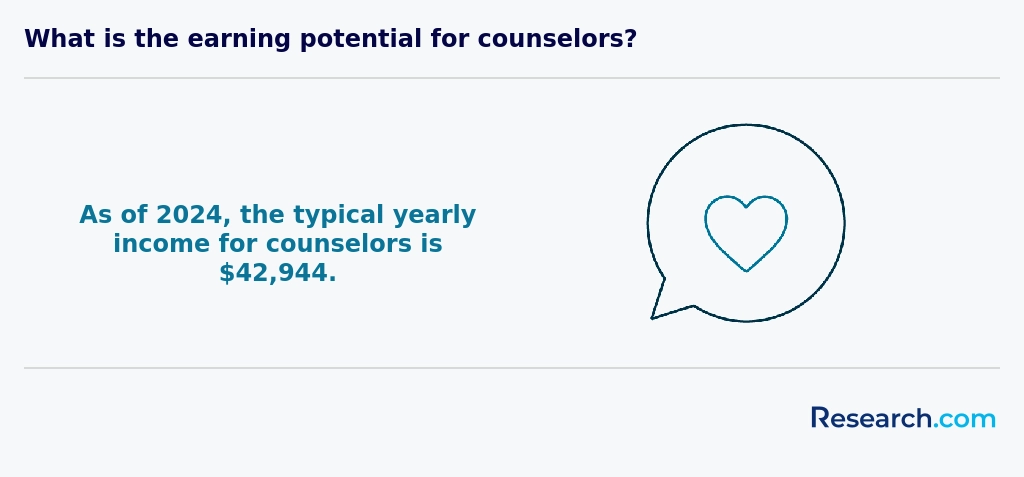
Graduates from online counseling programs in America often find their earnings shaped by the specific roles they pursue. For example, a Rehabilitation Specialist, a common job for counseling graduates, earns a mean annual wage of $48,430. This closely aligns with what many mental health counseling grads from reputable schools like the University of Southern California report in their early careers.
Others who focus on addiction counseling experience slightly higher earnings, with mean annual wages around $60,080. This boost can be seen in graduates from well-known institutions like Capella University, where specialized training prepares them for impactful roles combating substance abuse.
Graduates who become Community Outreach Coordinators or Family Support Workers typically earn about $54,020 per year, reflecting steady income opportunities in community-focused settings. These paths offer engaging careers where one can witness direct improvements in clients' lives, sparking a strong sense of fulfillment.
Some counseling graduates choose to become Intervention Specialists, reaching mean annual wages near $76,000, often reporting satisfaction with the meaningful difference their work makes. Choosing your path wisely within counseling degrees studied online can open doors to rewarding salaries paired with deeply rewarding work in diverse American communities.
2027 Most Valuable Online Bachelor's in Counseling Degree Programs Ranking in the USA
How do we rank schools?
Investing in your education is a significant decision that can shape your future, and the Research.com team understands the importance of making informed choices. To help prospective students across the USA, we have carefully developed the "2027 Most Valuable Online Bachelor's in Counseling Degree Programs Ranking." Our dedication to quality, credibility, and accuracy is demonstrated through thorough research and analysis behind this ranking.
We utilized the following reputable data sources to ensure a comprehensive evaluation of online counseling programs:
By exploring this ranking, readers will gain valuable insights into the most valuable online counseling degree programs nationwide, enabling them to make well-informed decisions about their educational paths. For more details on our methodology, please visit our Research.com methodology page.


# 3 position
Western Governors University
Bachelor of Psychology


Key Findings
- Online counseling degrees in the US range from bachelor's to master's levels and are offered fully online by many accredited universities.
- The average total tuition cost for a bachelor's degree in counseling is between $20,000 and $60,000, with public universities generally costing less for in-state students.
- Starting salaries for counseling graduates average between $40,000 and $50,000 per year, rising to $60,000 or more with experience and specialization.
- The counseling job market is expected to grow 16% from 2021 to 2031, faster than many other fields.
- Licensure usually requires completing supervised clinical hours and passing state exams, and many online programs help students meet these requirements.
How long does it take to complete online counseling degree in America?
Completing an online counseling degree in America typically takes around four years for a bachelor's and two to three years for a master's when pursued full-time. However, thinking strictly in terms of fixed timelines misses the dynamic reality many students face.
Consider graduates from well-known institutions like Arizona State University or the University of Southern California who balance work, family, and study. Many find that part-time options extend their programs beyond the standard timelines, sometimes to four or more years for master's degrees, but they cherish the flexibility to manage life's unpredictability alongside rigorous coursework.
Others accelerate their journey by transferring prior credits or enrolling in accelerated courses, completing a bachelor's degree in as little as three years. These varied paths highlight that, while the norm is a multi-year commitment, real progress often aligns with individual circumstances more than a preset clock.
Ultimately, the time it takes is less about rigid schedules and more about integrating learning with life, making each student's experience distinctly rewarding.
Licensure and Graduate Pathways
A bachelor’s in counseling equips you for support roles and builds a foundation for full licensure. To advance your career as a licensed counselor:
- Enroll in a CACREP-accredited master’s program-for affordable options, explore cheapest cacrep-accredited programs online
- Complete supervised practicum and internship hours as mandated by your state board
- Pass the National Counselor Examination (NCE) or state-specific licensure exam
- Apply for your state’s Licensed Professional Counselor (LPC) or equivalent credential, maintaining continuing education through approved workshops and courses
What's the difference between online and on-campus counseling degree?
Graduates from well-known American institutions often describe on-campus counseling programs as immersive experiences where face-to-face interactions create a strong sense of community and immediate support. Attending universities like the University of California or New York University, students engage directly in group discussions, practicum placements, and networking events that feel both challenging and rewarding. This environment fosters confidence through real-time mentorship and hands-on learning that many find invaluable for their future careers.
Conversely, online counseling students, such as those enrolled in programs at Liberty University or the University of Southern California, highlight the flexibility that allows them to balance work, family, and study without relocating. A common sentiment is the empowerment gained from managing their schedules independently while accessing coursework designed to meet CACREP standards. Their experience, though lacking in-person contact, is rich with virtual collaboration tools, live lectures, and required clinical hours arranged locally, proving that geographic barriers do not limit professional growth.
Both paths in America demand clinical hours and licensure preparation, but the choice rests on how students value flexibility versus immersive campus life. This nuanced difference challenges the notion that one format is strictly better, inviting deeper reflection on personal goals and lifestyle.
Licensure and Certification Requirements for Online Counseling Graduates
Obtaining state licensure is a pivotal step after earning your online counseling bachelor’s degree. Each U.S. state sets its own criteria for becoming a licensed professional counselor (LPC) or a similar credential, so understanding these requirements early can save you time and money. Whether you’re considering one of the easiest counseling programs to accelerate your education or evaluating more rigorous alternatives, you’ll need to plan for: 1. Accreditation Verification • Regionally accredited bachelor’s degree from a CACREP-accredited institution. • Programs meeting CCNE or CORE standards often streamline state approval. 2. Supervised Clinical Hours • Most states require 1,000–3,000 postgraduate supervised hours. • Internships and practicum placements count toward these hours; track them meticulously. 3. National and State Exams • Passing the National Counselor Examination (NCE) or the National Clinical Mental Health Counseling Examination (NCMHCE) is mandatory in many jurisdictions. • Some states administer their own jurisprudence or ethics exams. 4. Application and Background Checks • Complete your state licensing board’s application with all transcripts, supervised-hours logs, and exam scores. • Undergo fingerprinting and criminal background checks as required. 5. Continuing Education and Renewal • Licensed counselors must complete 20–40 hours of approved continuing education credits every 1–2 years. • Topics often include ethics, cultural competence, and emerging therapies. By familiarizing yourself with these steps and consulting your state board’s website early on, you’ll ensure a smoother transition from graduate to licensed counselor-and be ready to deliver ethical, evidence-based care in your chosen field.
What is the average cost of online counseling degree in America?
The average cost of an online counseling degree in America sits around $47,220, though this figure shifts notably based on residency and institution type. Graduates from popular colleges often reflect on balancing such expenses with real benefits; for example, those attending public universities in their home state tend to pay closer to $54,540, while out-of-state learners could face upwards of $58,260. This variation challenges the assumption that all online degrees are uniformly affordable.
Consider a student enrolled in a well-regarded public university who chose an online counseling degree for its flexibility and cost-efficiency. By leveraging scholarships and employer tuition assistance, they reduced their total expenses significantly, turning what could feel like a financial burden into an achievable investment. This perspective is echoed by graduates nationwide, who emphasize that understanding the average cost of online counseling degree USA means weighing tuition alongside potential financial support.
Such personal experiences reveal that total expenses for counseling degree programs in the USA are not just numbers on paper; they reflect a journey that students tailor to their circumstances. Institutions popular for their online counseling programs often share transparent cost breakdowns, empowering prospective learners to plan effectively. For those seeking practical guidance on minimizing costs, resources like affordable counseling programs offer invaluable starting points.
Understanding the Importance of Affordability in Online Counseling Programs
When considering an online counseling degree, affordability is a crucial factor that can significantly impact one's decision. The cost of tuition, along with other expenses such as technology and resources, can add up quickly. However, there are numerous online counseling programs that offer competitive pricing without compromising on the quality of education. For instance, exploring affordable counseling programs can be a viable option for those looking to pursue a career in counseling without breaking the bank. By doing so, prospective students can find programs that fit their budget and still provide them with the necessary skills and knowledge to succeed in the field. This approach enables individuals to make informed decisions about their educational investments, ultimately leading to a more fulfilling and financially stable career in counseling.
What financial aid is available to online counseling degree students in America?
Many students pursuing online counseling degrees at institutions like the University of Southern California or the University of Florida find financial aid is not just a possibility but a crucial lifeline. Federal Pell Grants, sometimes reaching $7,395 annually, often feel like a breath of fresh air-free money that doesn't need to be paid back. Graduates recall how filling out the FAFSA opened doors to subsidized and unsubsidized loans that maintained manageable interest rates, alleviating the anxiety of debt while focusing on their studies.
State-specific scholarships and loan forgiveness programs also transform dreams into realities, especially for residents of states prioritizing mental health professionals. For instance, students at Illinois State University have benefited from such targeted aid, helping reduce financial strain.
Institutional scholarships based on merit or need, plus professional association support from groups like the American Counseling Association, create a network of encouragement, reminding students they are not alone. Employer tuition assistance in education or healthcare sectors further amplifies hope, allowing working students to thrive without sacrificing income.
- Federal Pell Grants up to $7,395 annually
- Subsidized and unsubsidized federal student loans
- State scholarships and loan forgiveness programs
- Institutional scholarships and grants
- Professional organization scholarships (e.g., ACA)
- Employer tuition assistance programs
Licensure and Certification Requirements for Counseling Graduates
Earning an online counseling degree is only the first step toward becoming a licensed professional counselor (LPC), school counselor, or marriage and family therapist. Each state has its own licensing board with specific criteria, but most share common requirements: 1. Accredited Coursework and Degree • Complete a CACREP-accredited bachelor’s or master’s program to ensure your education meets state standards. • Verify that your institution’s online format covers required core competencies and practicum hours. 2. Supervised Clinical Experience • Accumulate 2,000–4,000 hours of supervised post-graduate counseling under a licensed supervisor-requirements vary by state. • Document practicum and internship hours during your degree and track post-degree supervision meticulously. 3. Licensing Examinations • Pass the National Counselor Examination (NCE) or the National Clinical Mental Health Counseling Examination (NCMHCE). • Some states require additional jurisprudence or ethics exams-check your state board’s handbook. 4. Application and Background Checks • Submit a formal application, official transcripts, exam scores, and verification of supervised hours. • Complete a criminal background check and pay the associated fees. 5. Continuing Education and Renewal • Maintain licensure with 20–40 hours of approved continuing education (CE) every 2–3 years. • Stay updated on changes in counseling ethics, multicultural competence, and evidence-based practices. If you’re exploring programs that balance quality, accreditation, and cost, consider our Most Affordable Counseling Degree Programs Ranking in Washington as a potential starting point. By understanding and planning for these licensure steps early-while selecting an accredited online program-you’ll pave a smoother path toward credentialing and practice.
What are the prerequisites for enrolling in online counseling degree program in America?
To enroll in an online counseling degree in America, you must first have a clear foundation, starting with a high school diploma or GED. Graduates from well-known programs at universities like Arizona State or the University of Southern California often recall how this basic requirement was just the beginning of a transformative journey. While some schools still request SAT or ACT scores, many now embrace test-optional policies, opening doors for students who excel beyond standardized exams.
Official transcripts reflecting at least a 2.5 GPA are typically essential, highlighting consistent effort in psychology or communication courses. Many students find that submitting personal statements-expressing their passion for mental health-and letters of recommendation adds a distinct, human dimension to their applications.
Internships and supervised clinical hours, often part of these programs, challenge students to apply skills in real-world contexts, fostering confidence and compassionate growth. This practical experience, combined with academic prerequisites, shapes students ready to meet the complex demands of America's counseling field.
Accreditation and Licensure Requirements
Choosing a program with proper accreditation and clear licensure pathways ensures your degree leads to professional practice.
- Select a CACREP-accredited curriculum: programs approved by the Council for Accreditation of Counseling and Related Educational Programs meet rigorous national standards. Explore the cheapest cacrep-accredited programs online to balance quality and cost.
- Meet state board criteria: licensure requirements vary by state, including minimum credit hours, supervised practicum/internship experiences, and application procedures.
- Pass required exams: most states require the National Counselor Examination (NCE) and may add a state jurisprudence or specialty exam to assess legal and ethical knowledge.
Understanding these accreditation and licensure frameworks upfront streamlines your journey to becoming a licensed counselor.
What courses are typically in online counseling degree programs in America?
Online counseling degree programs in America consistently immerse students in courses that build not only knowledge but practical empathy crucial for the profession. Graduates from programs at well-known public universities recall how courses like Counseling Techniques and Interventions transformed theoretical concepts into real-world skills, preparing them to confidently support clients facing diverse challenges.
When students at colleges with CACREP-accredited programs delve into Human Growth and Development, they don't just learn about lifespan changes-they connect these lessons to the stories of individuals they might encounter in a clinical setting, making the learning deeply personal and motivating.
Similarly, studying Counseling Ethics and Professional Practice at institutions with strong reputations instills a profound sense of responsibility. Graduates describe feeling empowered by understanding ethical dilemmas through simulated scenarios, which fuels their passion for advocacy and trust-building.
Other essential courses such as Multicultural Counseling and Group Counseling encourage students to embrace diversity and group dynamics, enriching their self-awareness and practical toolkit. These experiences-common at many respected universities-foster a powerful sense of purpose and readiness to enter the counseling field with confidence.
What types of specializations are available in online counseling degree programs in America?
Online counseling degree programs in America invite students to explore a range of specializations that reflect the complex realities of mental health care. Clinical Mental Health Counseling remains a cornerstone, where graduates from well-known institutions in California or New York describe the rewarding challenge of diagnosing and supporting individuals through crises. School Counseling addresses a pressing demand; graduates often reflect on the emotional fulfillment of guiding young students through academic and personal hurdles, especially in states where the student-to-school-counselor ratio exceeds 400 to 1.
Some students embrace Marriage and Family Therapy, drawn by the profound impact of helping families navigate conflict, a specialization that demands both empathy and state-specific licensure. The rise of Substance Abuse Counseling underscores the urgent need to combat addiction, with graduates expressing pride in contributing to communities hit hard by the opioid epidemic. Other paths include Rehabilitation and Career Counseling, each offering distinct ways to foster independence or vocational success. For those uncertain which path fits best, exploring easiest counseling programs online can clarify choices, making the journey more accessible. These specializations showcase how flexible and responsive American counseling education truly is in meeting diverse professional goals and societal needs.
How do you choose the best online counseling degree in America?
Choosing the best online counseling degree in America isn't just about picking a school with a big name or the lowest tuition. Graduates from well-regarded programs at public universities often share how crucial CACREP accreditation was in boosting their confidence during licensure exams and securing job offers. It's not just coursework-it's about practical experience, too. Imagine juggling your day job while attending asynchronous classes that fit your schedule, yet still gaining hands-on practicum opportunities through local partnerships your program sets up.
One graduate from a popular college in America found that programs with strong employer reputations opened doors to networking events that no textbook could provide. Students often overlook how important it is to understand your state's counseling licensure rules and choose a program tailored to those requirements. For those worrying about cost, exploring affordable online counseling degrees in America is wise-you might consider the Most Affordable Counseling Degree Programs Ranking in Washington for ideas.
What career paths are available for online counseling degree students in America?
Graduates with an online counseling degree in America find their career options richly varied, stretching beyond the traditional therapy room. Many embrace roles as licensed professional counselors (LPCs), where they guide individuals and families through personal challenges-a deeply rewarding endeavor shared by graduates from top programs at universities like the University of Southern California and Northwestern University. These graduates often describe the fulfillment of fostering real change in clients' lives.
Job opportunities with online counseling degree America include specialized positions such as substance abuse counselors, especially relevant given the ongoing national focus on addiction recovery. These roles, emphasized by organizations like SAMHSA, allow graduates to contribute to community health in meaningful ways. Others pursue school counseling, supporting student growth and resilience-an avenue popular among graduates from institutions such as the University of Florida and Boston College.
Furthermore, some graduates find their niche in career counseling, aiding clients to navigate the uncertainties of today's job market. This reflects the dynamic nature of career options for online counseling degree USA holders, who can also work in community organizations or private practice. For those exploring accessible entry paths, programs noted for offering the easiest aa degree can complement counseling studies and open additional doors.
What is the job market for online counseling degree in America?
The job outlook for online counseling degrees USA remains strong, defying the outdated notion that online education is less valued. Graduates from respected institutions like Arizona State University or the University of Florida share stories of quickly securing roles in schools, healthcare centers, and community organizations. Their accredited online degrees open doors that were once limited to traditional campus graduates. Such success reflects the increasing demand for qualified behavioral health professionals amid growing mental health awareness.
Employment opportunities for counseling graduates in America are particularly promising in states with clear licensure pathways. Graduates often highlight the advantage of continuing to work full-time while earning their online degree, which eases financial pressures. Many also stress the importance of researching state-specific requirements to navigate credentialing effectively. Exploring options at online schools fafsa approved can provide both affordability and quality, supporting long-term career stability.
Frequently Asked Questions About counseling
Students pursuing online counseling degrees in America can maximize their learning by actively engaging with course materials and instructors. The Council for Accreditation of Counseling and Related Educational Programs (CACREP) states that accredited programs provide rigorous curricula, so choosing a CACREP-accredited school ensures comprehensive training aligned with professional standards.
Participating in virtual study groups and discussion forums enhances understanding through peer interaction, which is crucial for developing interpersonal skills needed in counseling. According to the National Board for Certified Counselors (NBCC), supervised clinical experience is vital; students should seek programs offering quality practicum and internship placements.
Utilizing university resources such as writing centers and career services supports academic and professional growth. Finally, staying informed about state-specific licensing requirements, which vary across the 50 states, helps students prepare effectively for their counseling careers in America.
The counseling field in America is expanding into several emerging niches that reflect changing societal needs. One growing area is telehealth counseling, accelerated by the COVID-19 pandemic and supported by increased insurance reimbursement for remote mental health services, according to the American Counseling Association (ACA).
Another important niche is trauma-informed counseling, which focuses on treating clients affected by complex trauma and adverse childhood experiences. This approach is gaining traction due to rising awareness of mental health impacts from societal crises.
Substance use counseling remains critical, with the National Institute on Drug Abuse reporting a continued need for specialists amid the opioid epidemic. Additionally, multicultural and LGBTQ+ competent counseling is rising, addressing diverse client identities within a changing demographic landscape.
After completing an online counseling degree in America, preparing for the job market involves several strategic steps. First, obtaining state licensure is essential since counseling careers require certification; requirements vary by state, but generally include supervised clinical hours and passing exams such as the National Counselor Examination (NCE).
Networking is also crucial. Joining professional organizations like the American Counseling Association (ACA) provides access to job boards, mentorship, and continuing education opportunities. According to the U.S. Bureau of Labor Statistics, employment for counselors is projected to grow 22% from 2020 to 2030, demonstrating a strong job market.
Finally, gaining practical experience through internships or supervised practice enhances employability. Many employers prioritize candidates with diverse clinical experiences and strong communication skills.
Employers in the United States prioritize several key skills when hiring graduates with counseling degrees. Strong communication abilities, both verbal and written, are essential as counselors must clearly convey ideas and listen actively to clients. According to the Bureau of Labor Statistics, interpersonal skills rank among the top attributes for successful counseling professionals.
Additionally, critical thinking and problem-solving skills are vital for developing effective treatment plans. Employers also value cultural competence, reflecting the diverse population counselors serve nationally. Ethical judgment is another critical skill, given the sensitive nature of counseling work regulated by state boards.
Familiarity with evidence-based practices and proficiency in technology also enhance employability in modern counseling settings.
Finding internships relevant to a counseling degree in America involves a combination of research, networking, and utilizing university resources. Most accredited counseling programs require students to complete internships as part of their curriculum, often partnering with local mental health clinics, hospitals, and community organizations.
Students should begin by consulting their academic advisors or career services offices, which can provide lists of approved internship sites. According to the Council for Accreditation of Counseling and Related Educational Programs (CACREP), many counseling internships include 100 to 600 hours of supervised experience, essential for licensure eligibility in most states.
Additionally, organizations like the American Counseling Association (ACA) offer resources and professional networks that help students locate internship opportunities nationwide. Online job portals and state licensure boards' websites often list available internships tailored to counseling students.
Obtaining an online counseling degree in America significantly enhances career mobility and advancement opportunities. With the U.S. Bureau of Labor Statistics projecting a 22% growth in counseling jobs between 2020 and 2030, professionals with formal credentials are in high demand.
Online degrees offer flexibility, allowing students to continue working while earning a credential recognized by employers nationwide. Accredited online programs meet the same academic standards as traditional ones, ensuring eligibility for state licensure and certification, essential for career progression.
According to the American Counseling Association, counselors holding at least a bachelor's degree often qualify for entry-level positions, with advanced degrees opening doors to specialized roles and higher salaries. Online education thus provides a strategic pathway to enter or move up within the counseling field.
Studying for a counseling degree in America equips students with skills applicable across various professions. Accredited online programs emphasize interdisciplinary approaches, integrating psychology, social work, and health sciences. This broad foundation enhances collaboration with professionals in education, healthcare, and criminal justice. According to the American Counseling Association, 60% of counseling roles require teamwork with multiple disciplines to address complex client needs effectively. Coursework often includes training in ethics, communication, and cultural competency, essential for diverse settings. Additionally, practical experiences like supervised internships foster real-world interdisciplinary collaboration, preparing students for versatile career paths in counseling and related fields.
When choosing between a thesis and a non-thesis counseling degree program in America, consider your career goals and learning preferences. Thesis programs require original research, which may appeal to students aiming for clinical licensure or graduate study. The Council for Accreditation of Counseling and Related Educational Programs (CACREP) highlights that thesis experience can enhance critical thinking and research skills vital for evidence-based practice.
Non-thesis options often focus on applied skills and coursework, suitable for those pursuing immediate employment in counseling roles. Online programs may offer flexibility in both paths but check if your state licensing board favors one format over another.
Review program outcomes, faculty expertise, and how each path aligns with your professional plans.
American students seeking to study counseling abroad have several options, primarily through online international programs or partnerships between U.S. institutions and foreign universities. Many programs offer a blend of online coursework combined with short-term residencies overseas, allowing students to gain global perspectives while meeting U.S. accreditation standards.
It is essential to verify that the program's curriculum aligns with requirements from bodies such as the Council for Accreditation of Counseling and Related Educational Programs (CACREP). This ensures credits will transfer and degrees are recognized for licensure in the U.S.
Statistics from the National Board for Certified Counselors show that counseling remains a growing profession, making accredited options critical. Students can also explore exchange programs or dual degrees but should carefully review licensing implications after graduation.
Part-time jobs that complement counseling degree education in America often involve roles that build interpersonal and communication skills. Common opportunities include working as a mental health technician, peer support specialist, or crisis hotline counselor. These positions provide valuable hands-on experience in client interaction and crisis management.
According to the U.S. Bureau of Labor Statistics, employment of mental health counselors is expected to grow 23% from 2021 to 2031, indicating strong demand for related skills. Many students also find roles in social services or community outreach programs beneficial for developing case management proficiency.
Additionally, tutoring or academic coaching roles can enhance counseling students' abilities to support diverse populations. These jobs typically offer flexible hours compatible with online study schedules.
Online counseling students in America have multiple networking opportunities despite their remote study format. Many accredited programs partner with professional organizations such as the American Counseling Association (ACA), which offers student memberships, webinars, and conferences. These events enable students to connect with experienced counselors and peers nationwide.
Additionally, virtual career fairs and online alumni communities have grown as valuable platforms, allowing students to build professional relationships and explore internships or job openings. Some universities provide access to local practicum sites, fostering in-person connections within the community while satisfying licensing requirements.
According to the ACA, over 30,000 counseling professionals nationwide participate in networking activities, underscoring the importance of engaging in these avenues during education.
Alumni networks offer significant benefits to online counseling degree students in America by providing a valuable professional community. These networks enable current students to connect with graduates who understand the challenges of the counseling field.
Such connections often lead to mentorship opportunities, internships, and job placements, which are crucial since the American Counseling Association reports that 61% of professionals found employment through networking. Alumni also share insights about licensure requirements and continuing education specific to their states.
In addition, these networks support lifelong learning and professional growth, helping graduates stay updated on best practices and ethical standards in counseling.
Customizing an online counseling degree program in America begins with choosing specializations that align with your career goals. Many accredited programs allow students to focus on areas like mental health counseling, school counseling, or addiction counseling. According to the Bureau of Labor Statistics, demand for counselors in these specialties varies, so selecting a focus can improve job prospects.
Flexibility in electives and practicum placements enables students to gain relevant skills and experience. Accredited programs accredited by CACREP ensure clinical hours meet state licensure requirements, which is crucial if you plan to become a licensed professional counselor.
Additionally, some programs offer certificate options or double majors, allowing further customization. Reviewing curriculum details and state licensing board requirements helps students tailor their education effectively.
Online counseling students in America often face challenges related to balancing coursework with personal and professional responsibilities. According to the National Center for Education Statistics, many adult learners juggle jobs and family while pursuing degrees, which can lead to time management difficulties.
Another significant challenge is gaining practical experience. Counseling degrees require supervised clinical hours, and completing these virtually or near home can be complicated due to licensing and placement restrictions in different states.
Additionally, students may experience limited direct interaction with faculty and peers, impacting networking and collaborative learning opportunities important for counseling skills development.
Technological issues and maintaining motivation in a less structured environment also affect success rates in online counseling programs.
Graduates with an online counseling degree in the United States can pursue various professional certifications to enhance their careers. One common credential is the Licensed Professional Counselor (LPC) license, which requires additional supervised clinical experience and passing a state-recognized exam, according to the American Counseling Association (ACA).
Other certifications include the National Certified Counselor (NCC) credential, offered by the National Board for Certified Counselors (NBCC), which certifies competence in counseling and can improve employment opportunities nationwide.
Additionally, those interested in school counseling can aim for the Certified School Counselor (CSC) credential specific to their state's education department requirements.
Professional certification requirements vary by state, so it is crucial to review local licensing board standards early in the educational process.
When applying to an online counseling program in America, start by carefully reviewing the program's admission requirements on its official website. Most programs ask for transcripts showing a minimum GPA, often around 2.5 to 3.0. Highlight relevant coursework or experience in psychology or social services to strengthen your application.
Compose a clear and focused personal statement explaining your motivation for choosing counseling and how the program aligns with your career goals. The Council for Accreditation of Counseling and Related Educational Programs (CACREP) notes that applicants who articulate a strong understanding of counseling ethics tend to be favored.
Include letters of recommendation from professionals who can attest to your interpersonal skills and commitment to helping others. Finally, prepare for any required interviews by discussing specific challenges and experiences demonstrating your readiness for graduate study.
The counseling profession in the United States is viewed as part of a growing global trend toward mental health awareness and support. Internationally, many countries recognize the importance of trained counselors, but licensure requirements often vary significantly. In the U.S., counselors must typically obtain a state license, requiring at least a master's degree and supervised clinical hours, as reported by the American Counseling Association (ACA).
Globally, mental health initiatives by organizations like the World Health Organization highlight the increasing demand for counseling professionals. However, compared to the U.S., some regions have less formalized training or certification processes, affecting practice standards.
American counseling degrees, especially online programs, are highly regarded for their rigor and adherence to ethical standards, which supports graduates working internationally or with diverse populations at home. This alignment with global mental health priorities makes a counseling career both stable and impactful worldwide.
Gaining practical experience while studying for an online counseling degree in America is essential for licensure and career readiness. Many programs incorporate supervised clinical internships or practicum hours, which typically range from 600 to 1,000 hours depending on the state's licensing board requirements.
Students often partner with local counseling centers, schools, or healthcare facilities to complete these hours. According to the American Counseling Association, practical training helps students apply theoretical knowledge in real-world settings, enhancing their counseling skills.
Some universities also offer virtual simulations and telehealth training to adapt to online learning environments while ensuring hands-on experience.
Choosing the right concentration within an online counseling degree program in America depends on your career goals and interests. Popular specializations include school counseling, mental health counseling, and marriage and family therapy. Each has distinct licensure requirements established by state boards, so consider where you plan to practice. According to the U.S. Bureau of Labor Statistics, mental health counselors and marriage therapists are among the fastest-growing professions, expected to grow 23% from 2021 to 2031. Reviewing program accreditation, such as from CACREP, ensures your education meets national standards. Also, examine course content and internship opportunities aligned with your intended counseling focus.
Top Trending Counseling Rankings
See What Experts Have To Say About Studying Counseling
Read our interview with Counseling experts

Charles Figley
Counseling Expert
Kurzweg Distinguished Chair in Disaster Mental Health
Tulane University

References
- Clinical Mental Health Counseling Master’s Online https://www.baypath.edu/academics/graduate-programs/clinical-mental-health-counseling-ms/
- 2025 Most Affordable Online Master's Degrees in Counseling https://www.onlineu.com/most-affordable-colleges/counseling-masters-degrees
- Paid Clinical Internship https://www.pathwaysmhs.org/internship-program.html
- School Counsellor, Warsaw, Poland - Tes Jobs https://www.tes.com/jobs/vacancy/school-counsellor-warsaw-poland-2180996
- 6 Therapy Niches to Consider for Your Practice - Talkspace https://www.talkspace.com/blog/therapy-niches/
- Creating Your Niche In Counseling Private Practice https://practiceoftherapy.com/creating-niche-counseling-private-practice/
- Homepage https://onlinecounselingprograms.com/
- Alternative Careers for Counselors Who Are Burnt Out [2025 Update] - The Bad Therapist https://www.thebadtherapist.coach/blog/alternative-careers-for-counselors
- How to Find Therapist Jobs https://agentsofchangeprep.com/blog/how-to-find-therapist-jobs/
- Study Counseling Abroad - Top Universities for Masters, MBA, PhD Degree Programs https://studee.com/degree/abroad/counseling


