2027 Most Valuable Counseling Degree Programs Ranking in the USA
Choosing the right counseling degree program can shape your future and open doors to a rewarding career. This article introduces the 2027 Most Valuable Counseling Degree Programs Ranking in the USA, crafted by the Research.com team of data scientists to guide you toward the best options available.
Exploring this ranking will help you make an informed decision about programs that offer strong value and promising career outcomes. Pursuing a counseling degree is a meaningful step toward making a positive impact in people's lives while building a fulfilling profession.
Key benefits of getting counseling degree in America
- Counseling degree graduates can earn competitive salaries, such as Addiction Counselors making about $60,080 annually and Rehabilitation Specialists earning around $48,430 per year.
- Graduates from popular universities often explore diverse career paths, including roles like Family Support Workers, Community Outreach Coordinators, and Intervention Specialists, offering rewarding opportunities to make a positive impact.
- Completing a counseling degree online, like graduates from well-known online programs, provides flexibility and convenience, allowing students to balance life while advancing their career with the same credibility as traditional degrees.
What can I expect from counseling degree in America?
Students pursuing a counseling degree in America often face tuition costs that vary widely depending on the institution and degree level. For example, graduates from well-known universities like Boston University or the University of Southern California report paying anywhere from $20,000 to over $40,000 per year for their master's programs. Many find this investment worthwhile, as it includes access to quality supervised clinical experiences and personalized mentorship, creating a deeply supportive learning environment.
Community colleges offering associate degrees or bachelor's degrees in related fields typically have lower tuition, sometimes under $10,000 annually, allowing students to build a strong foundation before advancing to graduate studies. Several graduates share how scholarships or assistantships helped offset expenses, making their degree more affordable and boosting their confidence to continue.
With counseling degrees requiring extensive hands-on practice, some programs also incorporate fees for internship placements and exam preparation. Despite the costs, many feel empowered by the growing job market and eventual licensing opportunities, viewing the financial commitment as an investment in a meaningful career helping others.
Where can I work with counseling degree in America?
Graduates with a counseling degree in America often find themselves thriving in diverse settings, from mental health clinics and hospitals to schools and private practices. For example, many graduates from well-known programs like those at Boston College or the University of Southern California share how working in hospital counseling units has given them rewarding experiences helping patients recovering from trauma.
Others choose to work in educational institutions, supporting students through academic and social challenges. A graduate from the University of Florida described the fulfillment found in school counseling roles, witnessing firsthand the positive impact on youth development.
Private practice remains a popular path, with counselors offering specialized services like career coaching or addiction recovery. Community agencies, often staffed by alumni from state universities such as Ohio State, provide emotional support to underserved populations, which graduates say feels deeply meaningful.
Looking ahead, the expansion of telehealth and integrated healthcare systems in America suggests even greater opportunities for counselors, particularly those trained in emerging fields like substance abuse rehabilitation or crisis intervention.
How much can I make with counseling degree in America?
Graduates with counseling degrees in America can look forward to promising earnings that vary by specialization and job role. For instance, those working as Intervention Specialists earn a mean annual wage of around $76,000, offering a strong financial incentive for graduates from well-known programs at universities like the University of Southern California or New York University. Community Outreach Coordinators and Family Support Workers typically earn about $54,020 annually, roles often filled by graduates eager to impact local communities positively.
Addiction Counselors are also well-compensated, making approximately $60,080 per year, reflecting growing demand as awareness of substance abuse issues deepens nationwide. Rehabilitation Specialists earn about $48,430 annually, blending hands-on client support with promising career stability.
Graduates from popular counseling programs frequently share how gaining licensure and specialized certifications boosts their salaries and job satisfaction, turning their degrees into rewarding careers. Whether working in bustling metropolitan areas or smaller communities, the potential to earn well while making a difference creates exciting opportunities for counseling students across America.
- Key benefits of getting counseling degree in America
- What can I expect from counseling degree in America?
- Where can I work with counseling degree in America?
- How much can I make with counseling degree in America?
- How do we rank schools?
- 2027 Most Valuable Counseling Degree Programs Ranking in the USA
- What counseling degree graduates have to say
- Key Findings
- How long does it take to complete counseling degree in America?
- Accreditation and Licensure: Ensuring Program Quality and Career Readiness
- What's the difference between online and on-campus counseling degree?
- Licensure and Certification Requirements
- What is the average cost of counseling degree in America?
- Estimating Return on Investment (ROI) for Counseling Degrees
- What financial aid is available to counseling degree students in America?
- Continuing Education and Licensure Renewal
- What are the prerequisites for enrolling in counseling degree program in America?
- The Importance of Considering Affordability in Counseling Education
- What courses are typically in counseling degree programs in America?
- What types of specializations are available in counseling degree programs in America?
- How do you choose the best counseling degree in America?
- What career paths are available for counseling degree students in America?
- What is the job market for counseling degree in America?
- Frequently Asked Questions About counseling
- Top Trending Counseling Rankings
- See What Experts Have To Say About Studying Counseling
How do we rank schools?
Investing in your education is a significant decision that can shape your future, and the Research.com team understands the importance of making informed choices. To assist prospective students in the USA, we have meticulously crafted the "2027 Most Valuable Counseling Degree Programs Ranking in the USA." Our commitment to quality, credibility, and accuracy is reflected in the extensive research and analysis conducted to compile this ranking.
We utilized the following reputable data sources to ensure a comprehensive evaluation of counseling programs:
By exploring this ranking, readers will gain valuable insights into the most valuable counseling degree programs across the USA, enabling them to make well-informed decisions about their educational and professional futures. For more details on our methodology, please visit our Research.com methodology page.
2027 Most Valuable Counseling Degree Programs Ranking in the USA
# 1 position
University of Phoenix-Arizona
Master
The University of Phoenix-Arizona offers a Master's program focused on counseling with a total cost of $18,428. This program provides high levels of financial support, as 93% of students receive financial aid. The institution does not disclose data on acceptance rate or the number of applicants, but the available information highlights accessible funding options for prospective counseling graduate students.
# 2 position
Columbia Southern University
Bachelor
Columbia Southern University offers a bachelor's degree program focused on counseling with a total cost of $16,308. The program provides moderate financial aid, with 63% of students receiving support. Although acceptance rate data is not available, the program's affordability and financial aid options are key factors for prospective students interested in counseling at the undergraduate level.
# 3 position
Capella University
Master
Capella University offers a Master's degree program focused on counseling, with a total cost of $22,175. The program provides moderate financial aid opportunities, as 72% of students receive some form of assistance. While specific acceptance rate and applicant numbers are not available, the accessible information highlights an affordable counseling graduate program with supportive funding options for prospective students.
# 4 position
Grand Canyon University
Master
The Grand Canyon University Master's program in counseling has an open admission policy with a 79% acceptance rate. It attracts a large number of applicants, totaling 51,203. The total cost of completing this program is $32,494. Students benefit from high financial aid availability, with 98% receiving assistance to help manage expenses. This program offers accessible education for those pursuing advanced studies in counseling.
# 5 position
Walden University
Master
Walden University offers a Master's program focused on counseling, with a total cost of $31,482. The program provides high levels of financial support, as 100% of students receive financial aid. Other details such as acceptance rate and number of applicants are not available, but the accessible financial aid may be an important consideration for prospective students seeking affordability in their graduate education.
# 6 position

Southern New Hampshire University offers a master's program focused on counseling with an open admission policy, accepting all applicants. The program has a total cost of $32,952. It attracts a large number of applicants, with 44,306 candidates applying. About 79% of students enrolled receive moderate financial aid, helping to support their education expenses throughout the program.
# 7 position
New Mexico Highlands University
Master
New Mexico Highlands University offers a Master's program in counseling with a total cost of $24,778. The program provides high financial aid support, with 92% of students receiving assistance. Specific data on acceptance rate and number of applicants is not available, but prospective students can expect substantial aid opportunities to help manage the program cost.
# 8 position
Cambridge College
Master
Cambridge College offers a Master's degree program focused on counseling with a total cost of $31,578. Approximately 50% of students receive financial aid, indicating mid-level support for funding. Specific data on acceptance rate and number of applicants is not available for this program.
# 9 position
Texas Woman's University
Master
Texas Woman's University offers a Master's program focused on counseling, with an open admission acceptance rate of 96%, making it easily accessible for applicants. The program has a total cost of $32,650. It serves a large applicant pool of 8,353 candidates. Additionally, 94% of students enrolled receive financial aid, indicating a high level of support available for funding the degree.
# 10 position

The University of South Dakota offers a master's program focused on counseling, with a total cost of $24,812. The acceptance rate is 99%, indicating an open admission policy, which allows most applicants to enroll. Around 95% of students receive financial aid, reflecting high levels of support. The program attracts 5,965 applicants, demonstrating significant interest in this field of study.
# 11 position
Pacific Oaks College
Master
Pacific Oaks College offers a Master's program focused on counseling with a total cost of $53,804. The acceptance rate is moderately selective at 34%, based on 64 applicants. Financial aid data is not available for this program.
# 12 position
University of the Cumberlands
Bachelor
The University of the Cumberlands offers a Bachelor program focused on counseling with a total cost of $23,240. The program admits students with an open admission rate of 99%, reflecting an accessible entry process. Nearly all students, 99%, receive financial aid, indicating very high support for enrolled students. In 2025, the university received 3,037 applications, demonstrating substantial interest in this degree program.
# 13 position
Eastern New Mexico University
Bachelor
Eastern New Mexico University offers a Bachelor's degree focused on counseling with a total program cost of $17,966. The university maintains an open admission policy, accepting 92% of applicants. Each year, it receives 1,727 applications. This program supports students well financially, as 99% receive financial aid, indicating a high level of assistance available to enrolled students.
# 14 position
Thomas University
Master
Thomas University offers a Master's program focused on counseling with a total cost of $23,540. The program is moderately selective, admitting 38% of applicants from a pool of 517 candidates. Students benefit from high financial aid availability, with 100% receiving some form of assistance. These factors are important for prospective students considering affordability and admission chances in their graduate studies.
# 15 position
Mercy University
Master
Mercy University offers a Master's program focused on counseling with an open admission acceptance rate of 86%, welcoming a large pool of 8,642 applicants. The total cost for completing the program is $41,590. Nearly all students, 99%, receive financial aid, reflecting a high level of support available for those enrolling in this program.
# 16 position
Worcester State University
Bachelor
Worcester State University offers a Bachelor program focused on counseling. The program has an open admission acceptance rate of 88%, welcoming a wide range of applicants, with 5,156 applicants in total. The total cost of the program is $30,027. Notably, 90% of students receive financial aid, indicating a high level of support available to enrolled students.
# 17 position

The University of Wisconsin-Stout Polytechnic offers a Master's program focused on counseling with an open admission acceptance rate of 88%. The total cost for the program is $28,371. Approximately 78% of enrolled students receive moderate financial aid. The program attracts 5,547 applicants, reflecting strong interest and accessibility for prospective students seeking advanced counseling education.
# 18 position
Emporia State University
Master
Emporia State University offers a Master's program focused on counseling, providing an accessible option with an open admission acceptance rate of 98%. The program costs a total of $27,612. Nearly all students, 99%, receive financial aid, indicating a high level of support. Each year, the university receives 1,918 applicants, reflecting strong interest in this graduate counseling program.
# 19 position
Metro State University
Bachelor
Metro State University offers a bachelor's degree focused on counseling with a total cost of $27,204. The program has an open admission policy, accepting 99% of its 698 applicants. A significant majority of students, 86%, receive high levels of financial aid, which can greatly ease the cost of attendance. These factors make the program accessible and supportive for prospective students seeking counseling education.
# 20 position

The University of Central Arkansas offers a Master's program focused on counseling with a total cost of $27,936. The program has an open admission policy, accepting 89% of its 7,039 applicants. A high level of financial aid is available, with 97% of students receiving support. This makes the program accessible and financially manageable for a broad range of prospective students.
What counseling degree graduates have to say
- Jessica: Studying counseling at the University of Michigan was transformative. The curriculum combined theory and real-world practice, preparing me to handle diverse client needs. The supportive faculty and hands-on internships truly enhanced my confidence and skills. I'm grateful for the community and growth this program offered.
- Marcus: My experience at Boston College's counseling program was incredible. The emphasis on research and ethical practice gave me a solid foundation, while small class sizes created a close-knit learning environment. It felt inspiring to engage with passionate peers and professors who genuinely care about mental health.
- Lena: Earning my counseling degree from the University of Arizona empowered me personally and professionally. The vibrant campus life and innovative courses helped me embrace counseling as a healing art. I left ready to make an impact with empathy and evidence-based strategies in diverse settings.
Key Findings
- Counseling degrees usually require completing a master's program, such as a Master of Arts (MA) or Master of Science (MS), which takes about two to three years after a bachelor's degree.
- Graduate tuition for counseling programs ranges from $20,000 to $50,000, with public universities often offering lower costs and some states providing residency discounts.
- Graduates can expect starting salaries between $45,000 and $55,000 annually, with median wages around $49,950 as of 2022 and top professionals earning over $80,000.
- The job outlook is strong, with projected growth of about 23% for mental health counselors and marriage and family therapists from 2022 to 2032.
- Licensing requires completing 2,000 to 4,000 hours of supervised clinical experience and passing a nationally recognized exam like the National Counselor Examination.
How long does it take to complete counseling degree in America?
The journey to complete a counseling degree in America typically spans several years, shaped by the level of schooling and individual pace. Graduates from programs at well-known institutions like the University of North Carolina or Texas A&M often share how their master's degrees took around two to three years full-time, blending rigorous coursework with hands-on internships that built confidence and practical skills.
Many envision advancing faster thanks to growing trends in online and accelerated programs, allowing students at colleges such as Arizona State University to tailor schedules around work or family. Yet, the commitment to supervised clinical hours remains essential, often extending the timeline beyond graduation before full licensure.
Doctoral candidates at universities like Boston College embrace a profound multi-year process, combining research and practice over four to seven years. Graduates frequently describe a sense of fulfillment as they balance dissertations with clinical experiences, knowing their extended dedication equips them for leadership roles.
With evolving program formats and supportive resources, future students in America may find a counseling degree timeline becoming more personalized, balancing ambition with real-world responsibilities and opportunities.
Accreditation and Licensure: Ensuring Program Quality and Career Readiness
Accreditation serves as a quality assurance mechanism, signaling that a counseling program meets rigorous educational standards and prepares graduates for state licensure. The Council for Accreditation of Counseling and Related Educational Programs (CACREP) is widely recognized as the gold standard; graduates from CACREP-accredited programs enjoy streamlined paths to licensure exams and higher employer confidence. Prospective students should verify accreditation status on their institution’s website or through the Council’s online directory and compare program curricula against state board requirements. State licensure typically involves completing an accredited master’s degree, accruing supervised clinical hours, and passing a national exam such as the National Counselor Examination (NCE). While each state board sets specific criteria, attending a CACREP-accredited program often reduces additional coursework or supervised-practice requirements during licensure reciprocity. For those seeking flexible, quality-assured options, explore our list of cacrep-accredited programs online that balance affordability with comprehensive training. By prioritizing accredited curricula and understanding licensure prerequisites early, students can ensure their degree leads directly to professional practice.
What's the difference between online and on-campus counseling degree?
Graduates from universities like the University of Southern California and University of Florida often reflect on how their choice between online and on-campus counseling degrees shaped their educational journey. Online programs offer unmatched flexibility, allowing students juggling jobs or family-such as a working parent in Texas-to engage in video lectures and digital assignments on their own schedule. This format fosters a sense of empowerment through self-discipline and mastery of virtual tools, essential skills for future counselors in a tech-driven world.
Conversely, on-campus programs at institutions like New York University emphasize direct interpersonal experiences. Students cherish face-to-face practicum opportunities and immediate access to faculty mentorship, which can deepen clinical skills and build confidence. Imagine a student at the University of Michigan thriving in vibrant classroom discussions and real-time supervision during practicum sessions, cultivating essential human connection and professional readiness.
Looking ahead, the lines between these formats may blur as hybrid models emerge, blending digital flexibility with hands-on engagement. This evolution promises to cater to diverse learning styles, ensuring counseling education in America remains accessible, rigorous, and deeply connected to real-world practice.
Licensure and Certification Requirements
Becoming a Licensed Professional Counselor (LPC) involves meeting these core steps:
- Earn a CACREP-accredited master’s degree in counseling, either on-campus or through a quality counseling degree online program
- Complete 2,000–4,000 hours of supervised clinical experience as required by your state board
- Pass a national exam (NCMHCE or NCE) to demonstrate counseling competency
- Apply for licensure with your state board and fulfill any additional state-specific criteria
- Maintain licensure by completing continuing education credits (commonly 40–50 hours every two years)
What is the average cost of counseling degree in America?
The average cost of a counseling degree in America currently centers around a median total of approximately $41,689, reflecting typical expenses for out-of-state students or those attending private institutions. In contrast, in-state students benefit from significantly more affordable tuition, with median costs closer to $15,140. Graduates of well-known universities frequently share that while tuition forms the core expenditure, other costs such as books, licensing exams, and practicum fees add several thousand dollars over the course of their programs. This layered expense structure often requires students to adopt a strategic budget mindset throughout their studies.
Many counseling students recall balancing financial aid packages, federal loans, and scholarships tailored specifically for counseling degrees to alleviate the financial strain. Attending a public university with a solid reputation in counseling, for example, can substantially reduce overall debt compared to some private programs which may charge two to three times more. When exploring the average cost of counseling degree USA programs, it is useful to research schools that offer supportive loan repayment options especially in underserved areas, which several alumni found motivating in managing long-term finances.
For prospective students, evaluating total expenses for counseling degree programs in the USA involves looking beyond tuition. Many find success in choosing programs with transparent additional costs and robust financial aid resources. For those wishing to prioritize affordability without sacrificing quality, consulting resources like cheapest counseling programs opens pathways to sustainable educational investments.
Estimating Return on Investment (ROI) for Counseling Degrees
Understanding ROI helps you compare counseling programs beyond tuition and prestige. Calculate your payback period by weighing total costs against salary potential and licensure timelines.
- Total Education Cost: combine tuition, fees, and living expenses (median master’s cost ≈ $49,125).
- Salary Potential: use average graduate salaries (e.g., $50,000–60,000) to project earnings in the first 5 years.
- Payback Period: divide total debt by expected net annual income to estimate how many years to break even.
- Specialization Impact: note that roles like Intervention Specialist ($76,000) shorten your payback period.
- Flexible Formats: consider a budget-friendly counseling degree online to lower living costs and accelerate graduation.
By using these metrics, prospective students can identify programs that deliver the strongest financial returns while meeting educational and licensure requirements.
What financial aid is available to counseling degree students in America?
Many counseling students in America find relief through federal aid programs like the Free Application for Federal Student Aid (FAFSA), unlocking options such as subsidized federal loans that help ease the financial strain of programs at universities like the University of Michigan or UCLA. Graduates often share how these loans provided manageable repayment terms compared to private lending options, allowing them to focus more on their clinical training and less on debt anxiety.
Specialized grants highlight another hopeful avenue-programs like the National Health Service Corps Scholarship encourage counselors to serve critical shortage areas, often covering tuition and offering living stipends. Graduates from public universities in states like Ohio or Texas have expressed gratitude after receiving such aid, feeling motivated by the tangible support tied directly to their career purpose.
State-specific scholarships and loan forgiveness add another layer of possibility, with many students from states like California or New York noticing dedicated resources to serve underserved communities. University assistantships at institutions such as Boston College provide hands-on experience while easing costs through tuition remission and stipends, making the demanding hours of research and teaching feel rewarding both professionally and financially.
Continuing Education and Licensure Renewal
Maintaining your counseling license requires ongoing professional development through continuing education units (CEUs), ensuring you stay current with best practices, ethics, and emerging treatment modalities. Each state board sets specific CEU requirements—typically ranging from 20 to 40 hours every two years—and may mandate coursework in ethics, cultural competency, or telehealth. Planning ahead for these credits helps you avoid last‐minute rushes and potential lapses in licensure. Counselors can fulfill CEU requirements via workshops, conferences, webinars, and approved online courses. Many professionals opt for specialized providers that offer accredited programs in areas like trauma-informed care, addiction counseling, or school‐based interventions. For those seeking budget‐friendly options, the Inexpensive Online Counseling Degree Programs Ranking in the Midwest highlights affordable platforms where you can earn both degree credits and CEUs without sacrificing quality. Beyond fulfilling licensure mandates, continuing education advances your career by deepening clinical expertise and expanding your specialization. Attending annual conferences or joining professional associations like the American Counseling Association (ACA) also fosters valuable networking opportunities, opening doors to mentorship, research collaborations, and leadership roles. Keep a detailed record of all CEUs—certificate dates, providers, and credit hours—to streamline renewal applications and support potential audits. In summary, integrating a structured plan for CEUs and professional development into your career roadmap not only secures licensure compliance but also elevates your counseling practice. By strategically choosing accredited, cost-effective learning opportunities, you’ll enhance your skills, broaden your network, and stay at the forefront of the evolving field of counseling.
What are the prerequisites for enrolling in counseling degree program in America?
Enrolling in a counseling degree in America typically requires a solid academic foundation combined with personal dedication. Graduates from universities like Boston College or the University of Southern California recall needing a bachelor's degree in psychology, human services, or related fields before applying to master's programs. This prerequisite ensures applicants possess the essential understanding to thrive in counseling studies.
Many programs expect a minimum GPA around 3.0 and sometimes GRE scores, although this requirement is gradually easing. Applicants often submit letters of recommendation and personal statements describing their passion for counseling, reflecting their unique journeys and motivations. Some students find this process empowering, as it asks them to clarify their goals and commitment.
Practical experience is increasingly valued. Graduates mention how volunteering at local mental health clinics or internships boosted their confidence and empathy, giving them firsthand insight into client needs. Schools such as New York University encourage applicants to engage with communities early, fostering a strong, compassionate counselor identity even before formal training begins.
The Importance of Considering Affordability in Counseling Education
When exploring counseling degree programs in America, one crucial aspect that prospective students often overlook is the affordability of these programs. Understanding the cost implications of pursuing a counseling degree is essential, as it directly affects one's ability to complete the program without undue financial stress. For those seeking to minimize their expenses, exploring the cheapest counseling programs can provide valuable insights into affordable educational options. Many institutions now offer financial aid, scholarships, and even assistantships to help mitigate the costs. Furthermore, the evolution of online and hybrid programs has introduced more budget-friendly alternatives, allowing students to balance their educational pursuits with personal and professional responsibilities. By considering affordability as a key factor in their decision-making process, prospective counseling students can make more informed choices that align with their financial situation and career aspirations, ultimately paving the way for a successful and fulfilling career in counseling.
What courses are typically in counseling degree programs in America?
Human development and psychology classes explore emotional and social growth across the lifespan, helping students relate to clients' unique challenges. For example, students at the University of Michigan find these courses particularly illuminating when working with children or older adults during internships.
Courses on assessment and testing teach accurate interpretation of psychological tools-critical for effective diagnosis. Many counseling students at Columbia University share how mastering these methods transformed their confidence in clinical settings.
The curriculum also includes specialized classes such as group counseling, crisis intervention, multicultural counseling, addiction counseling, and career counseling, preparing students to address complex client needs. Hands-on practicum experiences, required by accreditation bodies like CACREP, provide supervised real-world training, making the learning process rewarding and deeply impactful.
What types of specializations are available in counseling degree programs in America?
Counseling degree specializations in USA continue to evolve, offering students a diverse array of paths tailored to emerging societal needs. Current popular focuses include Clinical Mental Health Counseling, where graduates find fulfillment working with individuals facing mental health and substance abuse challenges, and School Counseling, essential in supporting student development across the country. Students from well-known institutions like Boston College or University of Southern California often share how hands-on clinical hours helped them gain confidence in real educational and therapeutic settings.
Emerging trends point to greater integration of technology and culturally responsive approaches, expanding specializations such as Addiction Counseling and Marriage and Family Therapy. Many report a sense of pride when working within community-centered frameworks or collaborating across disciplines. For those curious about affordable options that meet rigorous credentials, exploring cacrep-accredited programs online can be particularly enlightening.
Types of counseling programs in America now frequently emphasize rehabilitation and career counseling, addressing workforce and disability-related needs. Graduates from universities handling robust practicum experiences often highlight their readiness to navigate complex client dynamics with empathy and professionalism.
How do you choose the best counseling degree in America?
Choosing the best counseling degree in America increasingly involves weighing flexible program formats alongside traditional criteria like accreditation and specialization. Graduates from well-known colleges often highlight the relief they felt balancing work and study through online or hybrid formats, especially when programs hold CACREP accreditation. This blend of accessibility and rigor is becoming a key factor as counseling evolves to meet diverse client needs.
Many students pursuing the best counseling degree programs in the USA find value in exploring degrees tailored to specific fields like school counseling or clinical mental health, which better align with their career ambitions. For example, future school counselors appreciate programs that incorporate state-specific certification paths, facilitating a smoother transition into licensure. Graduates from respected universities note how focused internships and close connections to local counseling centers enrich their practical skills and job readiness.
Cost remains a practical concern, but options for affordable counseling degrees in America are growing. Graduates often recommend researching financial aid and scholarships to ease tuition burdens. Those seeking budget-conscious choices might find insights in the Inexpensive Online Counseling Degree Programs Ranking in the Midwest, which spotlights value-driven options without sacrificing quality.
What career paths are available for counseling degree students in America?
Graduates with a counseling degree in America find a broad spectrum of career opportunities for counseling degree graduates in the USA, ranging from licensed professional counselors offering mental health support to school counselors guiding students through academic and emotional hurdles. Many counseling students from well-known institutions like the University of Southern California or Boston College share how their hands-on training with diverse populations has prepared them for roles in community agencies or private practice, cultivating a deep sense of fulfillment and purpose.
Future trends suggest growth in specialized roles such as marriage and family therapy or rehabilitation counseling, where graduates help clients navigate complex personal and professional challenges. For example, graduates from Columbia University have reported empowering clients overcoming trauma or disabilities, which enhances their job satisfaction substantially. The demand for such expertise aligns with promising counseling degree job prospects in America as awareness of mental health continues to rise.
Many students also benefit from flexible learning paths like a fast track bachelor degree online, accelerating their entry into these impactful careers while managing personal commitments. This evolving educational landscape expands access and encourages a new generation of compassionate counselors to meet today's mental health needs.
What is the job market for counseling degree in America?
The job market for counseling degree graduates in America is vibrant and expanding, driven by a growing national emphasis on mental health care. Graduates from well-known universities often find rewarding positions in schools, hospitals, or private practices, experiencing firsthand the positive impact they have on individuals and communities. With employment opportunities for counseling graduates America-wide expected to grow substantially, those entering the field frequently report a strong sense of fulfillment and professional stability.
Many graduates choose to specialize in emerging areas like telehealth counseling, which allows them to reach clients in remote or underserved regions. Popular colleges in urban centers prepare students with skills tailored to diverse settings, making career transitions smooth and opportunities more accessible. Additionally, students exploring affordable education paths might consider online colleges with open admission policies, which offer flexible options to balance work and study while entering the counseling workforce with competitive credentials.
Individuals pursuing a counseling degree in America benefit from dynamic job prospects fueled by evolving healthcare reforms and increased public awareness. The counseling degree job outlook USA is particularly promising for those willing to adapt their skills to integrated behavioral health or community-based programs, reflecting a future where counselors play a vital role in holistic care delivery.
Frequently Asked Questions About counseling
Counseling degree students in America can maximize their learning experience by actively engaging in both academic and practical opportunities. Participating in internships or supervised clinical experiences is critical, as the American Counseling Association highlights their importance for licensure readiness. Students should also seek diverse field placements to gain exposure to various populations and counseling techniques.
Further, joining professional organizations such as the American Mental Health Counselors Association provides networking and continuing education resources. Utilizing campus resources like counseling labs and workshops enhances skill development. According to the U.S. Bureau of Labor Statistics, hands-on experience greatly improves job placement rates after graduation.
The counseling field in America is expanding into several emerging niches, reflecting changing societal needs. One rapidly growing area is telehealth counseling, which surged during the COVID-19 pandemic, with the American Counseling Association reporting a 60% increase in demand for virtual therapy services.
Another niche gaining attention is trauma-informed counseling, aimed at treating individuals affected by complex trauma, such as veterans or survivors of abuse, supported by increased federal funding for mental health programs. Additionally, addiction counseling is evolving, especially regarding opioid use disorder, where specialized counselors are in high demand due to the ongoing public health crisis.
Career counseling focused on diversity and inclusion also shows growth, as workplaces prioritize mental health and equity. College counseling, particularly around student mental health, is another expanding sector, with the National College Health Assessment noting increased service utilization. These niches highlight the adaptability and relevance of counseling degrees in today's society.
Preparing for the job market after completing a counseling degree in America involves several strategic steps. First, it is essential to obtain licensure, as most states require counselors to be licensed before practicing. This often includes completing supervised clinical hours, passing a state-recognized exam, and fulfilling continuing education requirements.
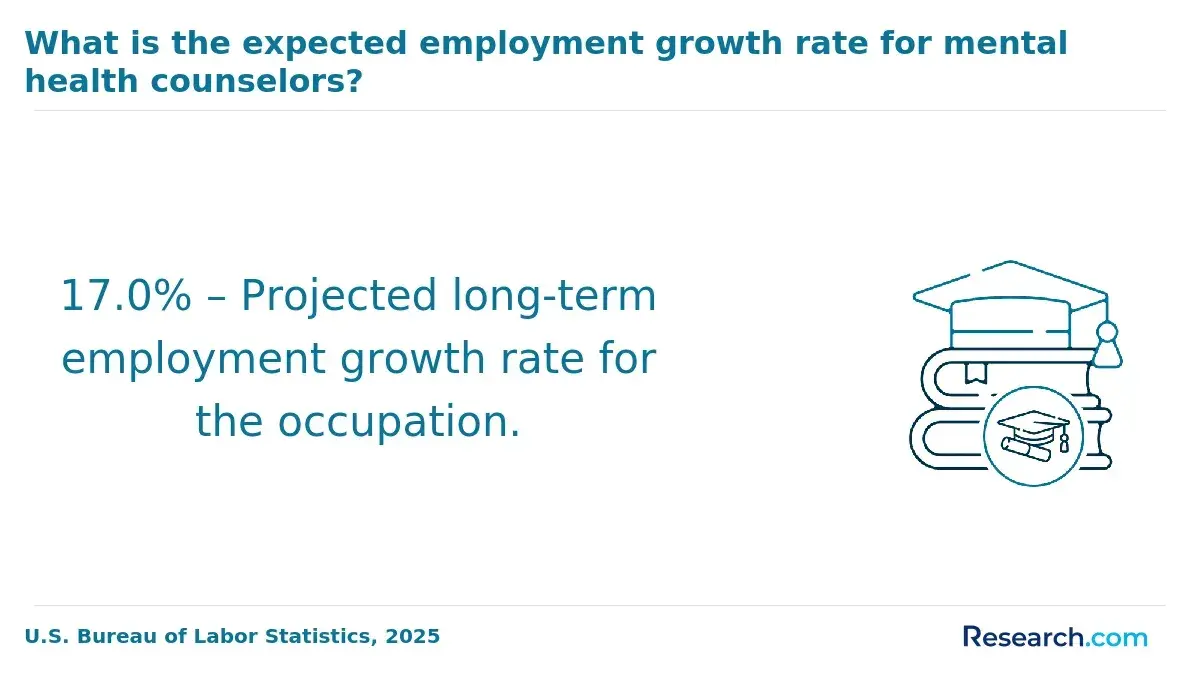
Networking plays a vital role as well. Joining professional organizations like the American Counseling Association can provide access to job boards, workshops, and mentorship. According to the U.S. Bureau of Labor Statistics, employment for mental health counselors is projected to grow 22% between 2020 and 2030, indicating strong demand.
Gaining experience through internships or volunteer work also enhances employability by building practical skills and professional connections.
Employers in the United States seeking counseling degree graduates highly value strong communication skills. According to the U.S. Bureau of Labor Statistics, effective verbal and written communication is essential for client interaction and collaboration with healthcare teams. Active listening and empathy are also critical, enabling counselors to build trust and understand clients' needs deeply.
Problem-solving and critical thinking skills rank prominently, supporting counselors in developing tailored treatment plans. Additionally, cultural competence is increasingly important, as America's diverse population requires sensitivity to varied backgrounds and experiences. Ethical judgment and adherence to state licensing board standards remain fundamental for professional practice and client safety. These skills collectively prepare graduates for success in counseling roles nationwide.
Finding internships relevant to a counseling degree in America begins with identifying accredited programs that emphasize practical experience. The Council for Accreditation of Counseling and Related Educational Programs (CACREP) is a key resource, as many employers prefer students from CACREP-accredited schools for internship roles.
Students should utilize their university's career services, which often maintain partnerships with local clinics, hospitals, and community organizations. According to the American Counseling Association, approximately 85% of counseling students secure internships through these institutional connections.
Additionally, online platforms like the National Board for Certified Counselors (NBCC) offer listings of internship opportunities tailored to counseling students. Networking at conferences and joining professional groups can also increase access to valuable internships.
A counseling degree in America significantly enhances career mobility and advancement opportunities. Graduates with a master's or doctoral degree often qualify for licensure, which is required to work as professional counselors in most states. According to the Bureau of Labor Statistics, employment for mental health counselors is projected to grow 23% from 2021 to 2031, much faster than the average for all occupations.
Holding these degrees not only opens doors to clinical and private practice roles but also to leadership positions in healthcare, education, and social services. Advanced degrees can lead to higher salaries; for example, the median annual wage for licensed counselors was $48,720 in 2022. Specialized degrees, such as clinical mental health counseling or school counseling, further increase prospects for career advancement and geographic flexibility within the US.
Studying for a counseling degree in America equips students with skills that extend beyond traditional therapeutic roles, fostering interdisciplinary collaboration. Programs often integrate coursework in psychology, social work, healthcare, and education, promoting a holistic understanding of client needs. According to the American Counseling Association, over 75% of counseling graduates engage with professionals from multiple disciplines during internships and fieldwork.
This interdisciplinary training prepares students to work effectively in settings such as hospitals, schools, and community agencies where teamwork is essential. Additionally, curricula typically emphasize communication, cultural competence, and ethical decision-making, vital for coordinating care across diverse professions.
Such comprehensive preparation enhances graduates' ability to address complex mental health challenges within varied organizational frameworks.
Choosing between a thesis and a non-thesis counseling degree program in America depends largely on your career goals and learning preferences. Thesis programs typically require original research, appealing to those interested in pursuing a PhD or a research-related career. According to the American Counseling Association, about 40% of counseling graduate programs offer thesis options, which can extend study time by six months to a year.
Non-thesis programs focus more on practical skills and coursework, suited for students aiming to become licensed counselors quickly. These programs often include internships or practicums, emphasizing hands-on experience over research. The U.S. Department of Education notes that non-thesis tracks often have higher enrollment due to this applied focus.
Students in America interested in studying counseling abroad have several practical options. Many U.S.-based universities offer study abroad programs or partnerships with institutions in countries like the United Kingdom, Australia, and Canada, providing opportunities to earn credits toward counseling degrees. According to the Council for Accreditation of Counseling and Related Educational Programs (CACREP), it is vital to ensure that foreign institutions meet American accreditation standards to facilitate licensure upon return.
International programs often focus on comparative counseling practices, enriching students' cultural competence-a key skill in U.S. counseling fields. Additionally, some students pursue entire counseling degrees abroad through online or blended formats offered by globally recognized schools. This approach broadens professional perspectives and may influence eligibility for U.S. certification, depending on state-specific licensure rules. Guidance from advisors familiar with cross-border education is recommended for navigating these complexities.
Students pursuing counseling degrees in America can benefit from various part-time jobs that complement their education and build practical skills. Common opportunities include working as mental health aides, peer counselors, or crisis hotline volunteers. These roles often provide exposure to client interaction and counseling techniques, enhancing academic learning with real-world experience.
According to the U.S. Bureau of Labor Statistics, employment in mental health support positions is expected to grow 23% from 2021 to 2031, reflecting rising demand. Additionally, internships or assistant roles in school counseling offices or social service agencies offer valuable insight into administrative and therapeutic aspects of counseling.
Such positions not only strengthen resumes but also help students understand ethical considerations and client confidentiality crucial to professional practice.
Counseling students in America have access to numerous networking opportunities through professional organizations such as the American Counseling Association (ACA), which boasts over 50,000 members nationwide. These groups offer conferences, workshops, and online forums where students can connect with experienced counselors and peers.
Many universities also partner with local clinics and agencies, providing internships and practicum placements that help students build professional relationships.
Additionally, regional counseling associations and university alumni networks serve as valuable platforms for mentorship and job referrals, helping graduates enter the workforce more effectively.
Alumni networks play a crucial role for counseling degree students in America by providing access to professional connections and career opportunities. Members often share job openings, internship possibilities, and licensure preparation tips, which can significantly enhance post-graduation employment rates. According to the American Counseling Association, networking is a top strategy for career advancement in counseling fields.
Additionally, alumni groups frequently organize mentorship programs where experienced counselors guide current students through academic challenges and professional development. This support is particularly valuable in navigating state licensure requirements, which can vary across the U.S.
Furthermore, active alumni networks foster continuing education and workshops, helping graduates stay updated with evolving counseling practices and ethical standards.
Customizing a counseling degree program in America allows students to align their education with specific career goals. Many universities offer specializations such as school counseling, mental health counseling, or marriage and family therapy. Selecting relevant electives enhances practical skills tailored to these fields.
Internships and practicum experiences can be chosen based on preferred work settings like hospitals, schools, or private practices. Additionally, accredited programs often provide options for research focus or policy studies, broadening career opportunities.
The Council for Accreditation of Counseling and Related Educational Programs (CACREP) reports over 350 accredited programs nationwide, ensuring quality and specialization options.
Counseling students in America often face several significant challenges during their education. One common difficulty is managing the demanding workload, which includes rigorous coursework, extensive reading, and clinical practice hours. Accredited counseling programs typically require 600 to 1,000 hours of supervised field experience, which can be stressful alongside academic responsibilities (CACREP, 2023).
Another challenge is financial pressure. According to the National Center for Education Statistics (NCES, 2022), graduate students in counseling incur an average debt of over $40,000, posing a barrier for many. Additionally, balancing personal life with internships and practicums often leads to emotional strain, as students must maintain professionalism while handling clients' sensitive issues.
Furthermore, counseling students must stay updated on evolving state licensure requirements, which vary widely and may impact their study focus and certification timing. These pressures demand time management skills, resilience, and support systems for success in counseling education programs.
With a counseling degree in the United States, graduates can pursue several professional certifications that enhance their career opportunities. The most common is the Licensed Professional Counselor (LPC) credential, which requires passing a state exam and completing supervised clinical hours. According to the American Counseling Association, over 50 states offer LPC licensure or an equivalent.
Other certifications include Licensed Clinical Mental Health Counselor (LCMHC) and Certified Rehabilitation Counselor (CRC), each catering to specialized fields within counseling. The National Board for Certified Counselors (NBCC) administers the National Certified Counselor (NCC) credential, a widely recognized certification adding professional credibility.
These certifications ensure counselors meet national standards, allowing them to work in schools, healthcare, and private practice settings.
Applying to a counseling program in America requires a clear and focused approach. Start by carefully researching the program's accreditation status, as recognized by the Council for Accreditation of Counseling and Related Educational Programs (CACREP). This ensures your degree meets professional standards. A strong personal statement is essential; clearly explain your motivation for pursuing counseling and highlight relevant experiences, such as volunteer work or internships.
Admissions committees also value academic preparation, especially in psychology or social sciences, reflected in your undergraduate GPA. Letters of recommendation should come from professionals familiar with your skills and commitment to counseling.
Standardized test scores like the GRE may be required, so preparing ahead is important. According to the American Counseling Association, applications that demonstrate self-awareness, ethical understanding, and a clear career plan tend to be more successful.
Globally, counseling is recognized as a vital profession addressing mental health and well-being. In the United States, counseling careers are guided by rigorous education and licensure standards, which often exceed those in many other countries. According to the Bureau of Labor Statistics (2023), the U.S. expects a 22% growth in counselor jobs by 2032, reflecting increasing demand.
Internationally, approaches to counseling vary. Some countries emphasize medical models, while the U.S. adopts holistic, client-centered methods. American counseling degrees typically require a master's level education, approved by the Council for Accreditation of Counseling and Related Educational Programs (CACREP), setting a global benchmark.
For U.S. students, understanding these global differences helps frame the value of their degree and the potential for international collaboration or practice.
Gaining practical experience during a counseling degree program in America is essential for professional development. Most accredited programs require supervised clinical internships or practicums. These hands-on experiences often take place in community agencies, schools, or healthcare facilities, allowing students to apply theory in real-world settings.
According to the Council for Accreditation of Counseling and Related Educational Programs (CACREP), students typically complete between 600 and 1,000 hours of supervised practice. This prepares graduates for licensure and employment. Additionally, volunteering or part-time work in mental health organizations can enhance skills and build professional networks while studying.
Choosing the right concentration within a counseling degree program in America depends on your career goals and interests. Common concentrations include mental health counseling, school counseling, and marriage and family therapy. Each area focuses on different client populations and settings. For example, school counselors work primarily within educational institutions, while mental health counselors may work in clinics or private practice.
The U.S. Bureau of Labor Statistics reports that employment of counselors is projected to grow 23% from 2021 to 2031, signaling strong demand across specialties. Research by the American Counseling Association emphasizes the importance of accreditation, recommending programs accredited by CACREP, which ensures rigorous training standards.
Consider your preferred work environment and client type. Informational interviews and program curriculum reviews can help clarify which concentration matches your strengths and goals.
Top Trending Counseling Rankings
See What Experts Have To Say About Studying Counseling
Read our interview with Counseling experts
Meredith A. Rausch
Counseling Expert
Associate Professor
University of Alabama
References
- Networking for Therapists: Building Connections for Career Success & Client Care https://www.mentalyc.com/blog/networking-for-therapists
- On-Campus vs. Online Master’s in Counseling | University of Bridgeport https://www.bridgeport.edu/news/on-campus-vs-online-counseling-degree/
- Becoming An International School Counselor https://iscainfo.com/becoming-an-international-school-counselor/
- Counselor Salary https://onlinecounselingprograms.com/become-a-counselor/salary/
- Mindful Career : Career Coaching https://mindful-career.com/student-career-guidance
- 6 Therapy Niches to Consider for Your Practice — Talkspace https://www.talkspace.com/blog/therapy-niches/
- Fastest Way To Become A Therapist Or Licensed Counselor https://www.psychology.org/careers/fastest-way-to-become-counselor/
- Utilize Your Alumni Networks https://www.keg.com/news/ways-to-use-your-alumni-networks-for-the-better
- The Challenges of Guidance Counselors in Supporting Students’ Mental Health https://theaspd.com/index.php/ijes/article/view/2406
- 9 Mental Health Careers You Can Pursue with a BA https://www.nec.edu/news/9-mental-health-careers-you-can-pursue-with-a-ba