2027 Most Popular Counseling Degree Programs Ranking in the USA
Exploring career options in counseling can be exciting and overwhelming. Choosing the right degree program is a crucial step toward a fulfilling future helping others.
This article features the 2027 Most Popular Counseling Degree Programs Ranking in the USA, created by the Research.com team of data scientists. It aims to guide you with reliable information to make an informed decision about your education.
Discover programs that align with your goals and open doors to meaningful opportunities. Pursuing a counseling degree can be a rewarding journey filled with growth and positive impact.
Key benefits of getting counseling degree in America
- Counseling degree graduates can earn competitive salaries, such as Addiction Counselors making around $60,080 annually and Community Outreach Coordinators earning about $54,020 per year, offering financial stability.
- Graduates from well-known universities often explore diverse careers including Rehabilitation Specialist or Family Support Worker positions, opening doors to meaningful work in various social and healthcare settings.
- Online counseling degrees, like those from popular universities, provide flexibility for students balancing work or family, allowing them to advance their education and career at their own pace without compromising quality.
What can I expect from counseling degree in America?
The average cost of obtaining a counseling degree in America varies significantly depending on the type of institution. Graduates from public universities such as the University of North Carolina or the University of Florida often report tuition fees ranging from $10,000 to $20,000 per year for their master's programs, making it a more feasible option for many. Conversely, private institutions like New York University may charge upwards of $40,000 annually, which can feel overwhelming but often come with increased networking opportunities and resources.
Many students describe the financial investment as challenging yet worthwhile, especially when they consider the intensive supervised clinical hours integral to CACREP-accredited programs. Experiences shared by recent graduates highlight a strong sense of accomplishment stemming from hands-on training, which justifies the cost despite economic concerns. Additionally, financial aid options, including scholarships aimed at counseling professionals, can soften the burden, making these degrees more accessible.
Ultimately, prospective students should carefully weigh tuition costs against program quality and licensure preparation to navigate the best educational path for their career goals.
Where can I work with counseling degree in America?
Graduates of counseling programs in America often find diverse employment opportunities across multiple settings, reflecting the flexibility of the degree. For example, those who studied counseling at well-known institutions like Boston College or the University of Texas have reported rewarding careers as school counselors, helping students navigate academic pressures and emotional challenges in real time.
Others pursuing mental health clinics or outpatient centers find themselves engaged in meaningful work addressing addiction, trauma, or depression. Alumni from programs at New York University express satisfaction in supporting clients through recovery pathways while gaining specialized skills recognized nationwide.
Private practice is another common path, offering graduates from schools such as Loyola University Chicago the freedom to tailor therapy approaches to individual client needs. This independence often leads to a fulfilling sense of personal impact and professional autonomy.
Employment also spans hospitals, rehabilitation centers, and government agencies, where counseling graduates contribute to social welfare programs, crisis intervention, or veteran support-roles exemplified by students from the University of Michigan who emphasize the value of such work in creating positive community outcomes.
How much can I make with counseling degree in America?
Graduates from counseling programs at well-known institutions such as the University of California or New York University often find that their degree opens doors to a range of career paths with varying salary expectations. For example, intervention specialists, who commonly hold counseling degrees, earn a mean annual wage of about $76,000, reflecting a strong income potential for those in this role.
Other graduates pursuing roles like addiction counselors typically earn around $60,080 per year, illustrating how specialization can impact earnings positively. Positions such as rehabilitation specialists and community outreach coordinators generally offer mean salaries near $48,430 and $54,020, respectively, showing moderate but stable income opportunities.
These figures align with reports from various states and metropolitan areas where salaries can fluctuate depending on local demand and licensing status. Graduates often share that attaining licensure and choosing workplaces like outpatient centers or hospital settings helps boost their wages.
Deciding where to study and work influences earnings; for example, counselors from prestigious universities report satisfaction when their education leads to competitive salaries and rewarding client relationships, underscoring the emotional fulfillment alongside financial rewards.
- Key benefits of getting counseling degree in America
- What can I expect from counseling degree in America?
- Where can I work with counseling degree in America?
- How much can I make with counseling degree in America?
- How do we rank schools?
- 2027 Most Popular Counseling Degree Programs Ranking in the USA
- What counseling degree graduates have to say
- Key Findings
- How long does it take to complete counseling degree in America?
- How to Obtain Your Counseling License: A Step-by-Step Guide
- What's the difference between online and on-campus counseling degree?
- Optimizing Educational Investments: Considering Affordability in Counseling Degree Programs
- What is the average cost of counseling degree in America?
- Accreditation and Licensure: Ensuring Program Quality and Career Eligibility
- What financial aid is available to counseling degree students in America?
- Licensure Requirements for Counselors in the USA
- What are the prerequisites for enrolling in counseling degree program in America?
- Licensure Requirements
- What courses are typically in counseling degree programs in America?
- What types of specializations are available in counseling degree programs in America?
- How do you choose the best counseling degree in America?
- What career paths are available for counseling degree students in America?
- What is the job market for counseling degree in America?
- Frequently Asked Questions About counseling
- Top Trending Counseling Rankings
- See What Experts Have To Say About Studying Counseling
How do we rank schools?
Investing in your education is a significant decision that can shape your career and personal growth, and the Research.com team recognizes the importance of providing trustworthy guidance. To support prospective students, we have carefully developed the "2027 Most Popular Counseling Degree Programs Ranking in the USA." Our dedication to quality, credibility, and accuracy is demonstrated through thorough research and detailed analysis behind this ranking.
We utilized the following reputable data sources to ensure a comprehensive evaluation of counseling programs:
By exploring this ranking, readers will receive valuable insights to identify the most suitable counseling degree programs, empowering them to make well-informed decisions about their educational journeys. For more detailed information on how this ranking was created, please visit our Research.com methodology page.
2027 Most Popular Counseling Degree Programs Ranking in the USA
# 1 position

The University of California-Los Angeles offers a highly competitive Master's program focused on counseling, admitting only 9% of its 146,272 applicants. The total cost of the program is $69,654. Financial aid is accessible to a significant portion of students, with 59% receiving mid-level aid. This program demands strong candidates due to its rigorous acceptance standards and substantial applicant pool.
# 2 position

The University of California-Irvine offers a master's program focused on counseling with a total cost of $70,525. The program is selective, with an acceptance rate of 29%, admitting less than one-third of applicants. It attracts a large pool of candidates, receiving 122,699 applications. Moderate levels of financial aid are available, with 61% of students receiving assistance to support their studies.
# 3 position
New York University
Master
The Master's program in counseling at New York University is highly competitive, with an acceptance rate of 9%. It attracts a large number of applicants, totaling 110,807. The total cost of the program is $87,768. Nearly half of the students enrolled, 46%, receive mid-level financial aid, which can help offset some expenses associated with this advanced degree.
# 4 position
Northeastern University
Master
Northeastern University offers a highly competitive Master's program in counseling, admitting only 5% of its 98,425 applicants. The total cost of the program is $86,742. Approximately 74% of students receive moderate financial aid, helping to offset expenses for many enrolled. This program is designed for students seeking advanced education in counseling within a rigorous and selective academic environment.
# 5 position

San Diego State University offers a Master's program focused on counseling with a total cost of $39,946. The program has a moderately selective acceptance rate of 36%, reflecting competitive admission standards. There are 89,972 applicants, highlighting its popularity. About 62% of students receive financial aid, indicating moderate aid levels to support enrolled candidates.
# 6 position
Pennsylvania State University-Main Campus
Master
Pennsylvania State University-Main Campus offers a Master's program focused on counseling with a total cost of $58,264. The program has a less selective acceptance rate of 61%, admitting many applicants as demonstrated by the high number of 88,478 applicants. Moderate financial aid is available, with 67% of enrolled students receiving support. This program is suitable for students seeking advanced education in counseling with access to financial assistance.
# 7 position
Pennsylvania State University-Main Campus
Doctor
Pennsylvania State University-Main Campus offers a Doctor-level program focused on counseling. The program has a less selective acceptance rate of 61%, with 88,478 applicants competing for admission. The total cost of the program is $58,264. Students benefit from moderate financial aid opportunities, as 67% of them receive some form of assistance.
# 8 position

The Master's program in counseling at California State University-Long Beach has a total cost of $43,598. It admits students at a moderately selective rate of 46%, with 83,967 applicants competing for places. The program offers high levels of financial aid, with 82% of students receiving support to help manage costs. These factors reflect the program's accessibility and support for prospective students pursuing advanced counseling education.
# 9 position

The University of Southern California offers a Master's degree program focused on counseling, with a total cost of $93,228. This program is highly competitive with an acceptance rate of 10% and receives 82,027 applications. Approximately 73% of students enrolled benefit from moderate financial aid, making it a supportive option for students seeking funding during their studies.
# 10 position
Boston University
Master
Boston University offers a highly competitive Master's program focused on counseling, with an acceptance rate of just 11%. The program attracts a large number of applicants, totaling 78,769. The total cost of the program amounts to $88,122. Mid-level financial aid is available, as 54% of enrolled students receive some form of support.
# 11 position
Florida State University
Master
Florida State University offers a Master's program focused on counseling with a total cost of $33,460. The acceptance rate is 24%, making it a selective program. Out of 78,272 applicants, 94% of students receive financial aid, indicating high aid levels. This program is well-suited for those seeking affordable education with strong financial support and a competitive admissions process.
# 12 position
Florida State University
Bachelor
Florida State University offers a bachelor's degree program focused on counseling with a total cost of $33,460. The program is selective, admitting 24% of the 78,272 applicants. It provides high levels of financial aid, with 94% of students receiving support. This combination of selectivity and extensive aid makes the program accessible yet competitive for prospective students.
# 13 position
Florida State University
Doctor
Florida State University offers a Doctor-level program focused on counseling with a selective acceptance rate of 24%, admitting less than one quarter of applicants. The program's total cost amounts to $33,460. A high level of financial aid is available, as 94% of students receive some form of assistance. The program attracts significant interest, with 78,272 applicants vying for admission.
# 14 position

The University of Illinois Urbana-Champaign offers a Master's program focused on counseling. The program has a moderately selective acceptance rate of 42%, indicating a balanced level of competitiveness for applicants. With 73,742 individuals applying, it attracts substantial interest from prospective students. Approximately 64% of enrolled students receive moderate levels of financial aid, providing considerable support to many in their educational pursuits.
# 15 position
University of Florida
Master
The University of Florida offers a Master's program focused on counseling with a total cost of $41,689. The program is selective, admitting 24% of its 73,557 applicants. A high percentage of students, 94%, receive financial aid, indicating strong support for enrolled candidates. This program provides a competitive educational opportunity in the counseling field with substantial financial assistance available.
# 16 position
University of Florida
Doctor
The University of Florida offers a Doctoral program focused on counseling with a total cost of $41,689. This program is selective, accepting 24% of its 73,557 applicants. A high percentage, 94% of students, receive financial aid, indicating strong financial support opportunities. Prospective students should consider the competitive admission and extensive financial aid availability when evaluating this program.
# 17 position
Ohio State University
Master
The Ohio State University offers a Master's program focused on counseling. It has a less selective acceptance rate of 61%, with 72,829 applicants competing each year. The total program cost is $54,866. Approximately 80% of students receive financial aid, indicating a high level of support available to help manage expenses. This program is suited for students seeking advanced education in counseling within a large applicant pool.
# 18 position

The Arizona State University Campus Immersion Master program in counseling offers an accessible path with an open admission acceptance rate of 90%. The program attracts a large pool of applicants, totaling 70,928. Students benefit from a high level of financial aid, with 93% receiving support. The total cost for completing this program is $49,298, providing a comprehensive on-campus learning experience focused on counseling.
# 19 position

The Arizona State University Campus Immersion Bachelor program focuses on counseling and offers open admission with a 90% acceptance rate. It attracts a large pool of applicants, with 70,928 candidates vying for enrollment. The total cost of the program is $49,298. Students benefit from high levels of financial aid, as 93% receive assistance, making this program accessible to many prospective students seeking counseling education.
# 20 position

The Arizona State University Campus Immersion Doctoral program focuses on counseling and has an open admission policy with a 90% acceptance rate. It attracts a large number of applicants, totaling 70,928, indicating wide interest. The program costs $49,298 in total. A high level of financial support is available, with 93% of enrolled students receiving some form of financial aid, making it accessible despite the cost.
What counseling degree graduates have to say
- Emily: Studying counseling at the University of Michigan was transformative. The supportive faculty and hands-on practicum experience prepared me to confidently help others. The diverse campus community enriched my learning and made me feel valued. This degree truly opened doors for a meaningful career in mental health.
- Javier: I chose Boston University for its excellent counseling program and was impressed by the research opportunities available. The curriculum balanced theory and practice, helping me develop crucial skills. The collaborative environment motivated me daily, making this journey both challenging and deeply rewarding.
- Olivia: At the University of Texas, the counseling program emphasized cultural competency and empathy. The real-world internships gave me essential insight and hands-on experience. The professors genuinely cared about our success, fostering a positive, nurturing atmosphere that empowered me to thrive personally and professionally.
Key Findings
- Counseling degrees typically require a bachelor's degree followed by a master's degree in counseling or a related field, with master's being the standard for licensure.
- Master's programs at public universities usually cost between $20,000 and $40,000, while private institutions may charge over $50,000.
- Licensure requires completing 2,000 to 4,000 supervised clinical hours and passing a national or state exam, with rules varying by state.
- Employment for mental health counselors is projected to grow 23% from 2022 to 2032, faster than the average for all jobs.
- Starting salaries range from $45,000 to $50,000, increasing to $60,000 to $70,000 or more with experience and specialization.
How long does it take to complete counseling degree in America?
Completing a counseling degree in America typically spans several years, but the timeline varies by education level and program type. For example, a bachelor's degree from universities like the University of California or New York University usually requires around four years of full-time study, providing essential knowledge in psychology and counseling fundamentals.
Many graduates pursuing licensure opt for a master's degree, which often takes two to three years at well-regarded institutions such as Boston College or the University of Texas. These programs incorporate supervised practicum hours-sometimes up to 1,000-adding practical experience that graduates find invaluable when entering the workforce.
Doctoral degrees at schools like Columbia University extend this commitment by four to six years beyond the master's, focusing more on research, teaching, or advanced clinical roles. Some students appreciate flexible or accelerated options offered by certain colleges, though these paths may demand careful time-management and may influence overall costs.
Ultimately, graduates often express satisfaction with their chosen pacing, feeling that the timetable balances rigorous training and meaningful career preparation.
How to Obtain Your Counseling License: A Step-by-Step Guide
Understanding the licensure process is critical for every aspiring mental health professional. Follow these steps to become a fully licensed counselor: 1. Complete an Accredited Counseling Program Enroll in a CACREP-accredited or regionally accredited master’s program in clinical mental health counseling, marriage and family therapy, or school counseling. Accreditation ensures your coursework meets state board requirements and lays the foundation for your supervised training. 2. Accumulate Supervised Clinical Hours Most states require between 2,000 and 4,000 hours of supervised practicum and internship experience. These hours often include direct client contact under a board-approved supervisor. Plan your schedule to meet both the quantity and quality standards set by your licensure board. 3. Pass the National Counseling Exam The National Counselor Examination (NCE) or the National Clinical Mental Health Counseling Examination (NCMHCE) is mandatory in many jurisdictions. Register early, study core counseling theories and ethics, and schedule your exam date at an official testing center. 4. Apply for State Licensure Submit your application, official transcripts, exam scores, and proof of supervised hours to your state board. Some states require a background check, fingerprinting, or an additional jurisprudence exam. Processing times vary, so apply at least six months before you intend to practice. 5. Maintain and Renew Your License Once approved, you must complete continuing education units (CEUs) every licensing cycle—typically every two years. Topics often cover ethics, multicultural counseling, and new evidence-based practices. Staying current safeguards your license and enhances your clinical skills. For a detailed roadmap on navigating these requirements and answering the question how can i become a therapist, explore our in-depth guide to licensing pathways.
What's the difference between online and on-campus counseling degree?
The primary difference between online and on-campus counseling degrees in America lies in the mode of instruction and student engagement. On-campus students at universities like Boston College often highlight the value of face-to-face interaction with professors and peers, which enhances their confidence in practicing counseling techniques in real time. These students appreciate access to campus resources, such as counseling labs and libraries, that foster a deeper hands-on learning experience.
Alternatively, graduates from online programs at schools such as the University of Southern California emphasize the flexibility to balance work, family, and studies, thanks to asynchronous classes. Many find this format empowering, especially when managing busy schedules, while still completing required supervised clinical hours locally. However, some online learners miss the spontaneous networking and emotional support available on campus.
Both paths prepare students for licensure, but choosing between them often depends on your learning style, lifestyle, and the type of community you envision yourself thriving in during your counseling career.
Optimizing Educational Investments: Considering Affordability in Counseling Degree Programs
When exploring counseling degree programs, prospective students often face the dilemma of balancing academic aspirations with financial constraints. To make informed decisions, it's essential to consider not only the program's academic reputation and specializations but also its affordability. For those seeking most affordable counseling colleges, understanding the cost structure and available financial aid options can significantly impact their educational journey. By carefully evaluating these factors, students can optimize their investments in higher education, ensuring they receive a high-quality counseling degree without undue financial burden. This thoughtful approach enables aspiring counselors to focus on their studies and future careers, ultimately leading to a more fulfilling and successful professional path.
What is the average cost of counseling degree in America?
The average counseling degree cost in the USA varies significantly depending on factors such as residency status, institution type, and program level. Median total costs for many graduate counseling programs are around $41,689, with in-state students typically paying much less-about $15,140-compared to out-of-state students. Graduates from public universities often relate to the relief of paying reduced in-state tuition, while others share stories of budgeting tightly to manage higher fees at private institutions. This range reflects the diversity seen across popular counseling programs in America, where some students at large state universities benefit from established financial aid, whereas others at private colleges may face steeper tuition but access specialized resources or clinical opportunities.
Beyond tuition, counseling students often encounter extra expenses such as textbooks, clinical placement fees, and liability insurance, making the total expenses for counseling degree USA a more complex figure. For example, graduates from universities known for their counseling programs frequently mention the challenge of balancing these additional costs with living expenses, highlighting the importance of budgeting early in the process. Some students find value in programs that offer scholarships or assistantships tailored to counseling, which can alleviate some financial pressure.
Those considering counseling programs may explore online or hybrid models, which sometimes offer lower tuition but might include technology fees. Information from the most affordable counseling colleges can help prospective students identify programs aligning with their budget and goals. It is essential to weigh these costs alongside the benefits of the degree, such as career satisfaction and opportunities to help others, making the investment feel more worthwhile to many graduates.
Accreditation and Licensure: Ensuring Program Quality and Career Eligibility
Accreditation is the cornerstone of any reputable counseling degree program, signaling that it meets rigorous standards set by professional bodies such as the Council for Accreditation of Counseling and Related Educational Programs (CACREP). Enrolling in a CACREP-accredited program not only assures comprehensive curriculum coverage—from ethics and multicultural competence to evidence-based counseling techniques—but also streamlines your path to state licensure. Most U.S. licensing boards require graduation from an accredited institution before you can sit for exams like the National Counselor Examination (NCE) or the National Clinical Mental Health Counseling Examination (NCMHCE). Key accreditation considerations:
- Institutional vs. Programmatic Accreditation: Regionally accredited universities lend broad academic credibility, while specialized bodies (e.g., CACREP) focus on the quality of counseling coursework and supervised clinical hours.
- State Licensure Alignment: Each state board defines specific credit, practicum, and internship requirements; verify that your program’s accreditation aligns with the licensure board in your intended practice state.
- Transferability and Advanced Study: Graduates from accredited programs often face fewer hurdles when transferring credits or pursuing doctoral degrees, ensuring long-term flexibility and career growth. To balance quality and affordability, many students explore online CACREP-accredited options that maintain the same academic rigor as on-campus programs. For instance, our Inexpensive Online Counseling Degree Programs Ranking in the Northeast highlights cost-effective, accredited offerings that deliver the supervised internship hours and faculty mentorship required for licensure. Before applying, consult your state’s counseling licensure board website and review program handbooks to confirm: 1. Required total credit hours and practicum breakdown 2. Supervision ratios and internship site approval processes 3. Exam eligibility timelines post-graduation By prioritizing accreditation and understanding licensure pathways from the outset, you’ll safeguard both your educational investment and your eligibility for roles such as Licensed Professional Counselor (LPC) or Licensed Mental Health Counselor (LMHC).
What financial aid is available to counseling degree students in America?
Students pursuing counseling degrees in America often find federal financial aid through FAFSA indispensable, despite some challenges. For instance, while Pell Grants are mainly for undergraduates and less accessible for graduate counseling students, many graduates at universities like the University of Michigan describe federal loans as vital, allowing them to borrow up to $20,500 annually to cover tuition gaps.
Beyond federal aid, university scholarships and assistantships can be a game changer. Graduates from large public institutions such as the University of California, Los Angeles report assistantships that cover up to full tuition while providing a stipend, easing both financial and academic pressures.
Professional organization scholarships, like those from the American Counseling Association, add another hopeful layer, particularly for students dedicated to mental health advocacy. Additionally, state-specific programs encouraging graduates to work in underserved communities bolster both career and financial prospects, a route appreciated by many alumni of state universities.
Employer tuition reimbursement provides an extra safety net for counseling students already working in fields like healthcare. This practical support makes advanced degrees more accessible without overwhelming debt.
Licensure Requirements for Counselors in the USA
Becoming a licensed counselor involves clear, state-mandated steps:
- Graduate from a CACREP-accredited counseling program (consider accredited online counseling programs).
- Complete 2,000–4,000 supervised clinical hours under an approved supervisor.
- Pass the National Counselor Examination (NCE) or your state’s equivalent licensure exam.
- Apply for licensure with your state counseling board, including all required transcripts, supervision logs, and fees.
- Fulfill continuing education requirements (typically 20–40 hours) every renewal cycle to maintain your LPC or equivalent credential.
Verify specific rules with your state board to ensure compliance and legal practice across clinical, school, and private settings.
What are the prerequisites for enrolling in counseling degree program in America?
Enrolling in a counseling degree program in America typically demands clear academic and personal preparation. For undergraduates, institutions like the University of Michigan or UCLA usually require a high school diploma with a solid GPA around 2.5 to 3.0 and sometimes SAT or ACT scores, although test-optional policies are growing. Many students share that demonstrating a genuine interest in psychology or social services through volunteering or relevant coursework often strengthens their application.
Graduate programs-such as those at Boston College or the University of North Carolina-commonly require a bachelor's degree, often in psychology or related fields, with a minimum GPA near 3.0. Applicants frequently need letters of recommendation and personal essays that convey clear motivation and career goals in counseling. Graduates often reflect that meeting these prerequisites felt challenging but rewarding, fostering early self-reflection valuable for their careers.
Additionally, many programs expect background checks and health clearances since students engage in clinical settings with vulnerable populations. This requirement, frequently discussed among peers, highlights the field's ethical responsibility, ensuring safety and professionalism from the start.
Licensure Requirements
To practice independently, counseling graduates must navigate state licensure steps:
- Graduate from a CACREP-accredited program; consider accredited online counseling programs for flexibility
- Complete 2,000–4,000 supervised clinical hours (requirements vary by state)
- Pass a national exam: National Counselor Examination (NCE) or National Clinical Mental Health Counseling Examination (NCMHCE)
- Apply to your state board with transcripts, exam scores, supervision documentation, and fee
- Fulfill continuing education (typically 30 hours every 2 years) and renew licensure according to state timelines
What courses are typically in counseling degree programs in America?
Counseling degree programs in America commonly include courses like Introduction to Counseling Theories and Techniques, where students explore approaches such as cognitive-behavioral and person-centered therapy. Graduates from well-known universities often share how this course helped them apply theory in real conversations during internships. Human Growth and Development courses deepen understanding of client experiences across the lifespan, which many find personally rewarding when working with diverse age groups in school or community centers.
Ethics and Professional Issues in Counseling is another staple class, emphasizing confidentiality and counselor responsibilities. This course often sparks thoughtful discussions, reflecting students' concerns about real ethical dilemmas they may face. Research Methods and Statistics develop critical thinking for evaluating counseling outcomes, a skill graduates appreciate when reviewing evidence-based practices from programs at universities like Boston College or University of Southern California.
Courses such as Crisis Intervention and Trauma Counseling prepare students emotionally and practically for high-stress client situations, which many describe as both challenging and fulfilling during their clinical hours. Multicultural Counseling highlights cultural sensitivity-vital in America's diverse society-and is often praised for enhancing empathy in real-world settings.
What types of specializations are available in counseling degree programs in America?
Counseling degree specialization options in America typically include Clinical Mental Health Counseling, School Counseling, Marriage and Family Therapy (MFT), Addiction Counseling, and Rehabilitation Counseling. Graduates from well-known programs at universities like the University of Southern California or Boston College often share how Clinical Mental Health Counseling helped them develop practical skills to support clients facing emotional challenges in real community settings. Meanwhile, those pursuing School Counseling frequently express the rewarding feeling of helping young students navigate academic and social pressures firsthand.
Popular counseling degree specializations in USA like Addiction Counseling attract students motivated by personal stories of recovery, finding meaning in aiding others through substance use disorders-a specialization with strong job growth projections. Conversely, Rehabilitation Counseling students highlight the unique joys of assisting individuals with disabilities, often gaining experience through vocational centers in major cities. Choosing a specialization also relates closely to real costs and program length, which students from campuses such as Loyola University Chicago carefully consider.
For potential students wondering how can i become a therapist, focusing on a specialization that aligns with licensure and regional requirements makes the journey clearer and more fulfilling.
How do you choose the best counseling degree in America?
Choosing the best counseling degree in America means weighing several nuanced factors rather than relying on general assumptions. Graduates from well-known counseling programs in universities like those in California or New York often emphasize the importance of accreditation, especially CACREP certification, which aligns their education with licensure requirements typical across many states. This ensures that time and resources invested don't become obstacles during the licensure process.
Another critical aspect is aligning your degree choice with your career ambition. For example, graduates from programs focusing on school counseling appreciate the clear practical pathways, while those pursuing research often opt for doctoral degrees. Such differentiation highlights why understanding your professional goals matters when selecting among the best counseling degree programs in the USA, rather than defaulting to the most prestigious name.
Cost and accessibility also shape decisions. Some graduates reflect on their relief discovering affordable options that don't compromise quality, such as those featured in the Inexpensive Online Counseling Degree Programs Ranking in the Northeast. Balancing tuition, financial aid, and program length is essential to avoid undue stress.
Program format-whether online, hybrid, or traditional-can greatly impact satisfaction and success. Students juggling work or family responsibilities have reported positive experiences with flexible schedules and strong faculty support seen in certain popular counseling colleges, which contributes to their overall training quality and well-being.
What career paths are available for counseling degree students in America?
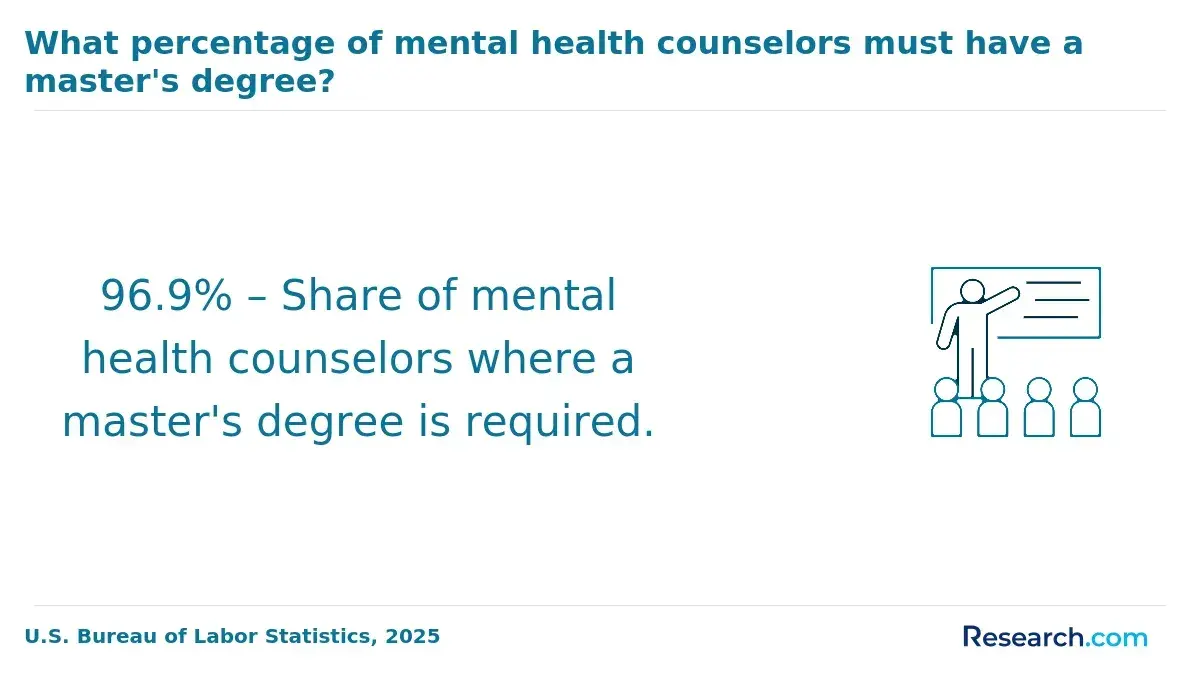
Graduates with a counseling degree in America find diverse career paths shaped by growing demand in mental health and education sectors. Many pursue licensure as Professional Counselors or Mental Health Counselors, roles that require a master's degree, supervised clinical hours, and passing state exams. Those from universities known for strong counseling programs often share how practical internships at local hospitals or community centers enriched their training, exposing them to real client challenges. Reflecting on jobs with counseling degree in America, a substantial number specialize in school counseling, supporting K-12 students' academic and emotional well-being, where collaborative work with teachers and families is key.
Other graduates enter fields such as marriage and family therapy or rehabilitation counseling, motivated by personal experiences of helping others navigate family dynamics or disabilities. Reports from counseling students at popular colleges in the U.S. highlight positive emotions tied to these fulfilling roles despite the demanding nature of the work. For those searching for career flexibility, substance abuse counseling offers critical opportunities amid the opioid crisis. Prospective students should also investigate accelerated programs to manage education costs and time efficiently while entering the workforce sooner.
What is the job market for counseling degree in America?
The job market for counseling degree graduates in America remains promising, reflecting a steady growth fueled by increased awareness of mental health needs. Graduates from well-known institutions such as the University of Southern California or Boston College often share positive experiences about finding roles in school counseling or mental health clinics shortly after completing their degrees. Demand continues across sectors like substance abuse treatment and rehabilitation, reinforcing the counseling degree job outlook USA as generally favorable.
While median salaries hover around $48,520 annually nationally, those working in metropolitan areas such as New York or Fresno report significantly higher wages, which is encouraging for graduates considering relocation. However, securing licensure requires both clinical hours and examinations, a hurdle some find challenging but ultimately rewarding as it increases career prospects.
Students at various universities consider the cost of education carefully against future benefits, with tuition varying widely. For those assessing career options, understanding what are some certifications that pay well can complement a counseling degree and enhance employability in this competitive market.
Career opportunities for counseling graduates in America expand as emotional well-being gains more focus, making the pursuit of this degree both relevant and personally fulfilling for many.
Frequently Asked Questions About counseling
Counseling degree students in America can maximize their learning experience by engaging in both coursework and practical training. Accredited programs by the Council for Accreditation of Counseling and Related Educational Programs (CACREP) offer a structured curriculum aligned with licensing requirements. Hands-on experiences such as internships and practicum placements are crucial; they provide exposure to diverse client populations and real-world scenarios.
Networking with professionals during conferences or workshops helps students stay updated on counseling trends and job market demands. According to the U.S. Bureau of Labor Statistics, employment for counselors is expected to grow 22% from 2020 to 2030, emphasizing the value of gaining specialized skills.
Additionally, joining campus counseling clubs and utilizing university career services supports career preparation and personal growth.
Emerging niches within the counseling field in America reflect evolving societal needs and offer unique career paths for students. One growing area is trauma counseling, responding to increased awareness of PTSD and adverse childhood experiences. The Bureau of Labor Statistics projects a 22% growth for mental health counselors through 2032, faster than average.
Another expanding niche is telehealth counseling, propelled by the COVID-19 pandemic, which increased demand for remote mental health services. Addiction counseling remains critical, addressing rising substance use disorders, especially opioids.
Moreover, career and rehabilitation counseling have gained prominence as workforce dynamics shift, with professionals helping diverse populations navigate unemployment and disability challenges.
After completing a counseling degree in America, preparing for the job market involves several key steps. First, obtaining state licensure is essential, as most counseling positions require credentials like the Licensed Professional Counselor (LPC) or Licensed Clinical Social Worker (LCSW). Requirements vary by state but typically include supervised clinical hours and passing a national exam, such as the National Counselor Examination (NCE).
Networking is also crucial. Joining professional organizations, like the American Counseling Association (ACA), connects graduates with job opportunities and mentorship. According to the U.S. Bureau of Labor Statistics, employment of counselors is projected to grow 23% from 2021 to 2031, indicating strong demand.
Additionally, gaining experience through internships or part-time roles during study can enhance resumes. Developing skills in specialized areas-such as substance abuse or career counseling-can further increase employability. Keeping up with continuing education remains vital for career advancement in this evolving field.
Employers in America highly value counseling degree graduates who demonstrate strong communication and interpersonal skills. According to the Bureau of Labor Statistics, effective listening and empathy are essential for building trust with clients. Additionally, critical thinking and problem-solving abilities help counselors tailor interventions to diverse individual needs.
Knowledge of ethical standards and cultural competence is also increasingly important, given the nation's diverse population. The American Counseling Association emphasizes the need for graduates to understand confidentiality laws and apply inclusive practices.
Finally, skills in assessment and research enable counselors to stay informed of evidence-based treatments, improving client outcomes in a competitive job market.
Finding internships in America relevant to a counseling degree typically begins with exploring university career centers, which often have partnerships with local counseling agencies and hospitals. According to the Council for Accreditation of Counseling and Related Educational Programs (CACREP), many accredited programs require practicum or internship placements, facilitating direct access to supervised experience.
Students should also utilize professional organizations like the American Counseling Association (ACA), which provides internship listings and networking events. Additionally, online job boards such as Handshake and Indeed often feature counseling internship opportunities, although competition can be high.
Networking with faculty and local mental health providers is crucial, as many internships are secured through referrals. The U.S. Bureau of Labor Statistics notes that practical experience gained through internships significantly improves employment prospects in counseling careers.
A counseling degree significantly enhances career mobility and advancement in America by providing specialized skills required across multiple sectors. According to the U.S. Bureau of Labor Statistics, employment of mental health counselors is projected to grow 23% from 2021 to 2031, much faster than average, creating diverse opportunities.
Graduates with counseling degrees can advance into roles such as licensed professional counselor, clinical supervisor, or program director, often earning higher salaries and leadership responsibilities. These degrees also open doors to work in schools, healthcare, private practice, and community agencies.
Moreover, acquiring state licensure, which typically mandates a master's degree in counseling, enables eligibility for more advanced positions and increased job security. Thus, a counseling degree is a valuable asset for upward career movement within the mental health and social services fields.
Studying for a counseling degree in America equips students with skills essential for working in interdisciplinary environments. Many programs emphasize collaboration with fields such as social work, education, and healthcare, reflecting real-world settings where counselors interact with diverse professionals.
American counseling degrees often include coursework in psychology, human development, and ethics, fostering a broad knowledge base. According to the Council for Accreditation of Counseling and Related Educational Programs (CACREP), accredited programs integrate training that prepares graduates to work alongside medical doctors, educators, and social workers.
This interdisciplinary preparation helps counselors address complex client needs by collaborating effectively within teams, a skill valued across mental health and community services.
Choosing between a thesis and a non-thesis counseling degree program in America depends on your academic and career goals. A thesis option typically involves conducting original research and writing a comprehensive paper, which can be beneficial if you plan to pursue a doctoral degree or work in research-focused roles.
Non-thesis programs often emphasize practical skills and may include a capstone project or additional coursework instead. According to the Council for Accreditation of Counseling and Related Educational Programs (CACREP), both paths meet licensure requirements, but thesis programs may take longer to complete.
Consider your learning style, career ambitions, and time commitment when deciding. Research also shows that thesis graduates often continue in academia, while non-thesis students enter clinical practice sooner (APA, 2023).
American students interested in counseling degrees have several options for studying abroad, often through partnerships between US universities and foreign institutions. These programs may include semester exchanges, dual degrees, or full degree enrollments in countries with strong counseling frameworks, such as the United Kingdom, Canada, and Australia. According to the American Counseling Association, studying abroad can expand cultural competence-an essential skill in counseling practice.
Many US programs that offer counseling accreditation through the Council for Accreditation of Counseling and Related Educational Programs (CACREP) encourage international experience. However, students should verify that foreign degrees meet US licensure requirements, which vary by state. Pursuing studies abroad can enhance language skills and global perspectives, valuable for future counselors.
Part-time job opportunities that complement counseling degree education in America often involve direct client interaction and administrative support roles. Positions such as mental health technician, case manager assistant, or peer support specialist provide valuable experience with client care and counseling techniques. According to the U.S. Bureau of Labor Statistics, mental health technician roles are projected to grow 14% from 2022 to 2032, emphasizing demand in this area.
Working as a crisis hotline worker or behavioral health aide also offers hands-on exposure to counseling challenges. These roles enhance communication skills and crisis management, which are essential for counseling professionals.
Additionally, internships or part-time work in social services agencies and community health organizations allow students to apply theoretical knowledge practically while networking within the field.
Counseling students in America have access to a wide range of networking opportunities crucial for their professional growth. Many universities partner with national organizations like the American Counseling Association (ACA), which boasts over 50,000 members. These groups hold annual conferences, workshops, and webinars where students can connect with licensed professionals and potential employers. Additionally, internships facilitated through university programs allow students to build local networks by working in schools, hospitals, or community centers.
Regional counseling associations also offer events and mentoring programs specifically designed for students, helping them navigate career paths. Engaging in these networks significantly enhances job prospects after graduation.
Alumni networks provide valuable support for counseling degree students across America. These networks often connect current students with graduates working in various counseling fields, including mental health, school, and rehabilitation counseling. According to the American Counseling Association, strong alumni ties can improve job placement rates by offering mentorship, internship opportunities, and professional recommendations.
Many universities host alumni events and online platforms, enabling students to build lasting relationships with experienced professionals. These connections help students navigate licensing requirements and continue professional development after graduation. The support from alumni networks contributes to higher career satisfaction and success in a competitive counseling job market.
In the United States, customizing your counseling degree program to fit your career goals begins with selecting the right specialization. Common tracks include clinical mental health, school counseling, marriage and family therapy, and substance abuse counseling. Accredited programs often allow students to choose electives tailored to specific populations or therapy methods.
Many universities offer flexible course options, including online classes and practicum placements in areas of interest. According to the Council for Accreditation of Counseling and Related Educational Programs (CACREP), specialized training improves readiness for licensure and work in niche settings.
Additionally, pursuing certifications alongside your degree, such as Certified Clinical Mental Health Counselor (CCMHC), can further align education with career objectives.
Counseling students in America often face significant challenges throughout their education. One major issue is balancing rigorous academic coursework with demanding clinical internships, which can require over 700 hours of supervised experience for licensure, according to the Council for Accreditation of Counseling and Related Educational Programs (CACREP).
Financial strain is another common difficulty; the average graduate tuition for counseling programs can range from $20,000 to $50,000 annually, depending on the institution and state.
Additionally, students frequently report emotional stress from engaging with clients' trauma, which requires strong resilience and support systems.
Time management and meeting licensure exam requirements also add pressure during and after the program.
With a counseling degree in America, graduates can pursue various professional certifications to advance their careers. The most common is the Licensed Professional Counselor (LPC) credential, which allows individuals to provide mental health services independently in most states. Requirements typically include a master's degree, supervised clinical hours, and passing a state exam.
Other certifications include the National Certified Counselor (NCC) credential, awarded by the National Board for Certified Counselors (NBCC), which enhances professional credibility and mobility across states. Additionally, specialized credentials such as Certified School Counselor or Substance Abuse Counselor certifications cater to niche fields within counseling. According to the U.S. Bureau of Labor Statistics, demand for counselors is projected to grow 22% from 2020 to 2030, highlighting the value of these certifications.
To write a winning application for a counseling program in America, begin by thoroughly researching accreditation. The Council for Accreditation of Counseling and Related Educational Programs (CACREP) is the leading accrediting body, and choosing such programs increases chances of licensure and employment.
Strong applications highlight relevant experience. Include volunteer or work in mental health, schools, or community services to demonstrate commitment and understanding of counseling roles. Quantify experiences where possible.
Personal statements should clearly explain motivation for counseling, career goals, and how the program aligns with these. According to the American Counseling Association, clarity and genuine insight are valued.
Letters of recommendation must preferably come from supervisors or professors who can attest to your strengths and potential in counseling.
Finally, meet all deadlines and proofread carefully; attention to detail shows professionalism and seriousness.
Globally, counseling is recognized as an essential profession that supports mental health and wellbeing. In the United States, the demand for qualified counselors is growing rapidly, with the Bureau of Labor Statistics projecting a 22% employment increase from 2020 to 2030. This growth reflects a wider international awareness of mental health needs.
Compared to many countries, American counseling degrees often emphasize practical training and licensure, such as the Licensed Professional Counselor (LPC) credential. This focus helps graduates meet both local and international professional standards.
While some nations prioritize psychology or psychiatry, the U.S. approach highlights counseling as a distinct, skill-based career. The global perspective increasingly values these specialized programs due to rising mental health challenges worldwide.
Gaining practical experience during a counseling degree in America is essential to develop the skills needed for professional practice. Many programs require students to complete supervised internships or practica, which place them in real counseling settings such as schools, clinics, or community agencies. According to the Council for Accreditation of Counseling and Related Educational Programs (CACREP), accredited programs typically mandate at least 700 hours of direct client contact during training.
Additionally, students can volunteer at mental health organizations or participate in research projects related to counseling. Some universities offer partnerships with local health providers, giving students diverse opportunities to work with different populations. Networking with professionals through conferences or counseling associations also supports hands-on learning.
Choosing the right concentration within a counseling degree program in America depends on your career goals and interests. Popular concentrations include clinical mental health, school counseling, marriage and family therapy, and substance abuse counseling. According to the Bureau of Labor Statistics, school counseling is one of the fastest-growing specialties, with a projected 8% job growth from 2021 to 2031.
Research the specific licensure requirements for your state, as these can vary and affect your career path. Consider programs accredited by the Council for Accreditation of Counseling & Related Educational Programs (CACREP), which is widely recognized and may improve job prospects.
Reflect on your preferred client population and setting. Some programs offer internships or practicum placements in diverse environments, providing valuable hands-on experience. Reviewing course content, faculty expertise, and alumni outcomes can also guide your choice. Utilizing resources such as the American Counseling Association's statistics can help further inform your decision.
Top Trending Counseling Rankings
See What Experts Have To Say About Studying Counseling
Read our interview with Counseling experts
Charles Figley
Counseling Expert
Kurzweg Distinguished Chair in Disaster Mental Health
Tulane University
References
- Know more about thesis vs non- thesis: what is the difference? https://studyfans.com/en/blogs/816
- Therapy Group of Charlotte How Career Counseling Boosts Professional Growth - Therapy Group of Charlotte https://therapistsincharlotte.com/therapists-charlotte-blog/how-career-counseling-boosts-professional-growth/
- How to Write a School Counselor Cover Letter | VocoVision https://www.vocovision.com/resources/uncategorized/how-to-write-a-strong-school-counselor-cover-letter/
- Interdisciplinary Training: Preparing Counselors for Collaborative Practice https://nexusipe.org/informing/resource-center/interdisciplinary-training-preparing-counselors-collaborative-practice
- Master’s in Counseling Program Duration| University of Bridgeport https://www.bridgeport.edu/news/how-long-to-complete-a-masters-in-counseling/
- Becoming An International School Counselor https://iscainfo.com/becoming-an-international-school-counselor/
- Home https://www.counselingdegreeguide.org/
- 9 Mental Health Careers You Can Pursue with a BA https://www.nec.edu/news/9-mental-health-careers-you-can-pursue-with-a-ba
- metrics https://ojed.org/jis/article/view/3444/1955
- Mental Health challenges that counselors and therapists experience - RESILIENCE PSYCHOLOGY COUNSELLING http://resonsindiyo.com/mental-health-challenges-that-counselors-and-therapists-experience-due-to-the-nature-of-their-profession/