2027 Most Valuable Online Biology Degree Programs Ranking in the USA

Co-Founder and Chief Data Scientist
Choosing the right online biology degree program can shape your future career and open exciting opportunities. Our article introduces the 2027 Most Valuable Online Biology Degree Programs Ranking in the USA, created by the Research.com team of data scientists to help you make an informed decision.
By exploring this ranking, you'll discover programs that balance quality education and value, setting you up for success in the growing field of biology. Whether starting or advancing your studies, this guide offers clarity and confidence as you pursue your passion.
Key benefits of getting online biology degree in America
- Biology degree graduates often pursue careers in healthcare, research, and environmental science, where median salaries generally range from $50,000 to $80,000 annually, offering rewarding financial opportunities.
- Graduates from popular universities like the University of California, Berkeley, find diverse career paths including lab research, conservation, biotechnology, and education, providing many options for fulfilling work.
- Online biology degrees, such as those from Arizona State University, provide flexible learning schedules and accessibility, allowing students to balance work and study while earning a reputable credential.
- 2027 Most Valuable Online Biology Degree Programs Ranking in the USA
- What can I expect from online biology degree in America?
- Where can I work with online biology degree in America?
What can I expect from online biology degree in America?
The average cost of an online biology degree in America typically ranges between $15,000 and $40,000 for a bachelor's program, depending on the institution and residency status. Public universities like those in the University of California system often offer competitive in-state tuition, making it more affordable for local students. Graduates from these programs frequently share how saving on commuting and housing allowed them to manage expenses without sacrificing quality education.
Private colleges or out-of-state public schools may charge higher tuition, sometimes exceeding $30,000, but they often provide extensive financial aid options. Many students find success by applying for scholarships targeted at STEM learners or leveraging federal financial aid, which most accredited programs accept. For example, graduates from universities known for biology, such as those in the University of Florida system, often mention the accessibility of online funding resources as a crucial factor in their educational journey.
When budgeting, consider extra costs like textbooks and any potential on-campus lab fees for hybrid courses. Planning ahead and contacting admissions counselors can help you find payment plans or assistantships, making a biology degree more attainable without overwhelming debt.
Where can I work with online biology degree in America?
Graduates with an online biology degree in America find diverse and rewarding career paths across healthcare, environmental agencies, biotechnology, education, and research. For example, many who studied at popular institutions like Arizona State University or the University of Florida have secured roles as clinical laboratory technologists or biomedical technicians in hospitals, where they contribute directly to patient care and medical advancements.
Others have transitioned into environmental science careers, working with organizations like the EPA or state conservation departments. They engage in real-world projects involving wildlife protection and pollution control-efforts that make a tangible impact on communities and ecosystems.
Biotechnology firms, especially those clustered near Boston or San Diego, offer exciting opportunities for graduates to innovate in genetics or pharmaceuticals. Alumni from well-known programs report thriving in these fast-paced environments, developing new solutions to health and agricultural challenges.
Additionally, many online biology graduates pursue teaching roles at community colleges or secondary schools, inspired by fulfilling exchanges with students. Others support scientific research in laboratories nationwide, leveraging their degree's strong theoretical foundation and hands-on experience.
Graduates with an online biology degree in America can typically expect starting salaries between $45,000 and $60,000 per year. For instance, biological technicians-common entry-level roles for biology graduates-earned a median annual wage of $49,480 in 2022. This aligns well with experiences shared by graduates from well-known programs like those at the University of Florida or Arizona State University, where many find opportunities in laboratories or research facilities immediately after completing their degree.
Those who continue their education or specialize often see a boost in earnings. Biochemists and biophysicists with advanced degrees earned around $102,270 per year in 2022. Graduates from institutions such as the University of California system frequently pursue these paths, combining online learning with local research opportunities to increase their market value.
Location plays a key role: biology graduates working in biotech hubs like California or Massachusetts often surpass $100,000 annually as they gain experience. Pursuing certifications or advanced degrees, focusing on specialized fields, and targeting jobs in these regions can significantly enhance earning potential and career satisfaction.
- Most accredited U.S. online biology programs follow the same curriculum and maintain standards as on-campus programs.
- Public universities typically charge between $10,000 and $30,000 per year for online biology tuition, while private schools may exceed $35,000 annually.
- The average total cost for a four-year biology degree is about $80,000, with potential savings on housing and transportation for online students.
- Entry-level biologists earn an average salary of around $53,000 per year, which can rise above $85,000 with experience or specialization.
- Employment for biological scientists is projected to grow by 5% from 2022 to 2032, driven by biotech, environmental, and healthcare sectors.
- Hands-on lab experience is usually required and often completed through local partnerships or short in-person residencies.
Completing an online biology degree in America typically takes about four years for full-time students, matching the pace of traditional programs. Many graduates from well-known schools like Arizona State University or Oregon State University share that maintaining a full-time course load while enjoying flexibility is achievable through structured scheduling. For those balancing jobs or family life, extending the timeline to five or six years by taking fewer courses per semester is common and often necessary.
Part-time learners often appreciate that universities offer virtual labs and occasional on-campus requirements, which can fit around busy schedules without overwhelming commitments. Graduate degrees require less time, with many master's students finishing in 1.5 to 3 years, while doctoral candidates may invest 4 to 6 years due to research demands. Understanding these expectations helps students plan realistically and keep motivated, turning challenges into manageable milestones.
Financial considerations also influence timing; spreading courses out helps some manage tuition costs averaging $300 to $800 per credit hour at public universities. This approach encourages persistence and success through steady progress rather than rushing.
Online and on-campus biology degrees in America differ mainly in how you experience hands-on learning and flexibility. On-campus programs at universities like UC Berkeley or the University of Michigan provide direct access to labs and face-to-face mentorship, which many graduates say enhances their confidence with complex techniques such as molecular analysis or ecological fieldwork.
In contrast, online biology programs from institutions such as Oregon State University use virtual labs and simulations to replicate practical work. Graduates often praise the convenience of studying at their own pace, juggling jobs or family commitments, which asynchronous classes make possible. However, some online learners note they miss the spontaneous peer discussions found on campus.
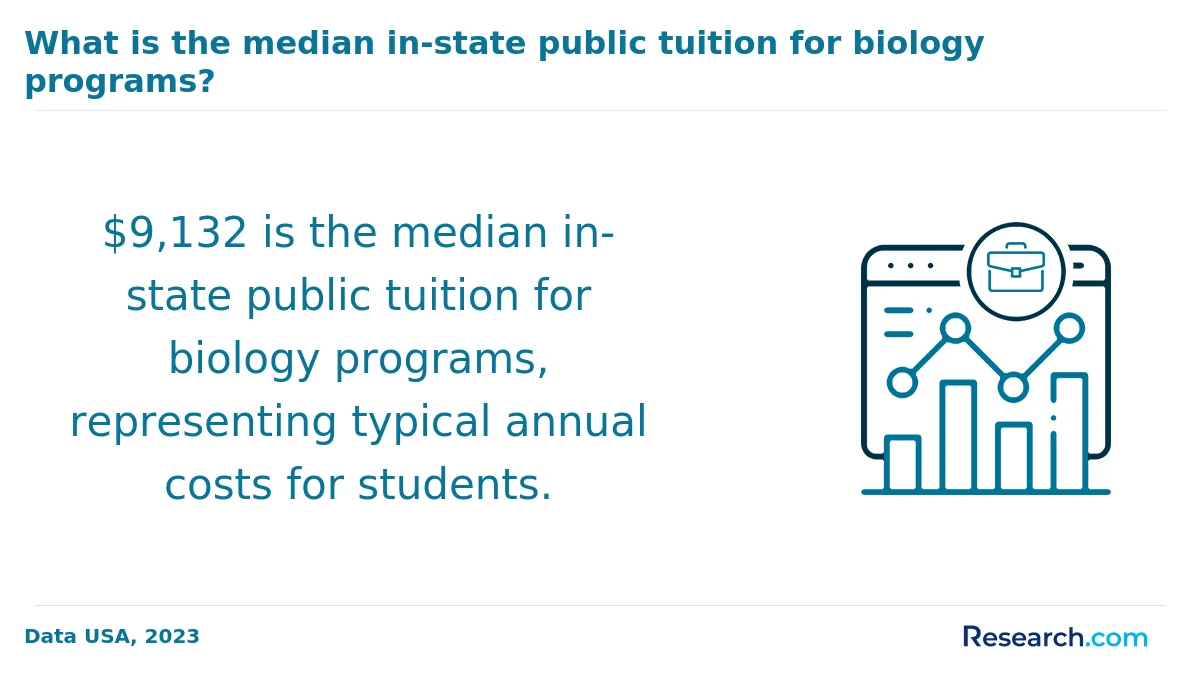
Cost also plays a role. On-campus biology degrees average $9,000 to $12,000 yearly for public in-state students, but online offerings can reduce expenses related to housing and commuting. Many students find this savings opportunity empowering, especially when pursuing careers in biology without compromising accreditation or quality.
The average cost of an online biology degree in America varies but generally falls near a median total cost of around $27,425. Many students pursuing affordable online biology degree programs United States-wide find that in-state options can cost significantly less - typically about $12,928 - while out-of-state programs average closer to $26,208. For example, graduates from well-known universities with strong online biology curricula often share how choosing an in-state public institution helped them manage tuition expenses effectively without sacrificing program quality.
Students should also consider the credit requirements, as biology degrees usually require about 120 credit hours. Each credit hour's cost might differ based on residency, but spreading classes over part-time semesters reduces financial pressure. Additionally, biology students often encounter program-specific fees such as lab materials or technology access. However, the flexibility of online learning can offset travel and housing costs, creating a more accessible pathway for many.
Accessing scholarships and financial aid designed for biology majors is a powerful strategy to lower costs. Many graduates report finding substantial support through organizations focused on biological sciences. Understanding these opportunities will maximize affordability and make pursuing biology more achievable.
Prospective students curious about what they can do with a degree in biology will find that a careful comparison of tuition, fees, and aid options plays a crucial role. Reviewing each university's offerings and getting insights from recent students often clears the way to a fulfilling educational journey at a manageable cost. Learn more about what can you do with a degree in biology to align your academic goals with future career paths.
- Flexible schedule lets you balance studies with work, family or research projects
- Significant cost savings by avoiding campus housing and commuting fees
- Access to virtual labs and interactive simulations for hands-on learning
- Broad career pathways in healthcare, environmental science and biotech
- Transferable credits through accredited programs enhance academic mobility
- Builds a foundation for advanced health science degrees, including online pharmd programs
Students pursuing an online biology degree in America can find significant financial relief through federal aid such as the Pell Grant, which offers up to $7,395 yearly based on financial need without requiring repayment. Many biology students at institutions like the University of Florida or Arizona State University report how completing the FAFSA unlocked this crucial support, enabling them to focus fully on their studies without overwhelming debt.
Federal Direct Loans are another common option, providing flexible repayment plans with low-interest rates. Graduates from well-known programs like those at Oregon State University often mention how subsidized loans eased their financial burden during their biology studies.
State scholarships and grants also support residents attending local colleges, especially those offering reputable online biology programs. For example, state-funded aid helped several students at the University of North Carolina Wilmington stay on track.
Additionally, many universities provide merit-based and need-based scholarships designed specifically for biology majors, rewarding academic achievement or supporting underrepresented groups in STEM. Private scholarships, such as those from the American Society for Biochemistry and Molecular Biology, give a further boost, often requiring essays and academic records.
Employer tuition reimbursement and military benefits serve as valuable resources for students balancing work or service with their biology education, reducing costs while pursuing their career goals.
To enroll in an online biology degree in America, you typically need a high school diploma or GED, with strong coursework in biology, chemistry, physics, and math-especially algebra and statistics. Graduates from popular universities often share how mastering these subjects early made their transition to college courses smoother and less stressful.
Many programs request a minimum GPA around 2.5 to 3.0, ensuring students can handle challenging science classes. Some universities, like large public state schools, also require SAT or ACT scores, though many have adopted test-optional policies to make admissions more accessible.
If you've attended community college or completed prior college credits, you'll need transcripts showcasing your grades. Some biology students recall how submitting detailed transcripts helped streamline their transfer process.
Additional prerequisites might include letters of recommendation or personal statements, especially for specialized programs focused on biotechnology or environmental science. Keeping these ready in advance can boost your confidence and showcase your enthusiasm for biology.
Online biology degree programs in America typically include core courses designed to build both foundational knowledge and practical skills. Graduates from popular universities often mention how General Biology I and II, with virtual labs or at-home kits, helped them grasp cell structures and genetics vividly, just like in a physical classroom.
Microbiology and Ecology courses bring real-world connections, such as understanding bacteria's role in local ecosystems or studying conservation efforts impacting nearby environments. Genetics classes dive deep into DNA and inheritance, which graduates aiming for biomedical careers found especially stimulating.
Human Anatomy and Physiology is a common course for students pursuing health sciences, offering detailed insight into body systems through interactive online tools. Biochemistry and Cell Biology courses complement this with molecular-level perspectives, crucial for research roles.
Courses in Research Methods and Statistics prepare students to design experiments and analyze data effectively - skills highly valued by those who have successfully completed internships or capstone projects at renowned American colleges.
Online biology degree specializations USA commonly include focused areas such as Molecular Biology, Ecology and Environmental Biology, Microbiology, Biotechnology, Bioinformatics, and Human Anatomy and Physiology. Graduates from institutions like Oregon State University and Arizona State University often highlight how these concentrations helped them develop specific skills directly applicable to their careers, whether in healthcare, environmental science, or research.
Molecular Biology explores genetic coding and cellular processes, ideal for students aiming for biotech or medical research roles. Ecology and Environmental Biology suits those passionate about conservation or wildlife management, while Microbiology focuses on bacteria and viruses, supporting public health careers. Biotechnology merges biological concepts with technology like genetic engineering, and Bioinformatics integrates computer science to analyze biological data, reflecting the rise of data-driven biology. Human Anatomy and Physiology prepares students for healthcare professions through an in-depth study of the human body structure and function.
Choosing the right biology degree concentration options America offers ensures your education aligns with workforce demands and personal interests, providing a fulfilling and practical learning experience. For a practical guide, explore online biology degree programs to find offerings tailored to your professional goals.
Start by verifying the program's accreditation to ensure your credits and federal aid eligibility are secure-many successful graduates from well-known American colleges emphasize this as a key factor. Explore the curriculum closely: programs with strong offerings in molecular biology, genetics, and ecology, combined with flexible online labs or occasional campus visits, reflect real-world biology practices.
Cost matters too; many choose affordable online biology degrees in America to balance quality and budget. One graduate shared how selecting a program with transparent tuition and available scholarships eased financial stress. Look for programs offering solid student support services such as academic advising and career counseling-graduates frequently credit these for their smooth transitions into biotechnology or healthcare careers.
Reputation and post-graduation outcomes are essential. Schools partnered with research institutions provide enriching internships, which many alumni find invaluable. For a practical start, consider checking out easy biology degree options that have helped others begin their biology careers successfully. These strategies can guide you toward the best online biology degree programs USA.
Graduates with an online biology degree in America often find rewarding career paths across various dynamic fields. Many secure roles as clinical laboratory technologists or genetic counselors, where foundational biology knowledge is essential for success. For example, individuals from well-known institutions like the University of Florida or Arizona State University share how their degrees prepared them for these healthcare roles with strong job prospects and competitive salaries.
Biology degree job opportunities in America extend to research and development, including positions as biological technicians or research assistants at government labs or biotech companies. Graduates appreciate the flexibility of online programs and often credit their practical skills for landing these roles. Environmental science is another promising area, with graduates working in conservation or environmental consulting, particularly in states with growing sustainability initiatives.
A common pathway includes teaching at STEM-focused schools, where many biology graduates become high school science teachers or lab instructors. Pursuing an online bachelor of biology degree provides versatility, opening doors to these diverse careers nationwide while balancing personal commitments.
The online biology degree job market USA is promising, with graduates from universities like Arizona State University and Oregon State University successfully securing roles in thriving sectors such as biotechnology and environmental science. These graduates often share their excitement about entering careers as biological technicians or environmental scientists, citing the flexibility of online programs paired with hands-on internships that boost job readiness.
Biology degree career opportunities America expand especially in healthcare and conservation, where employers seek candidates with practical skills and solid theoretical foundations. Graduates from popular colleges find that combining their studies with certifications or relevant experience enhances employability. For example, internships at research labs often lead to jobs in pharmaceuticals or diagnostic services, fields showing steady growth.
Many students enhance their prospects by developing the skills required to be an aquatic biologist, which open paths in niche areas of environmental consulting. The average starting salary hovers around $47,000, increasing with specialization and experience, making an online biology degree both a flexible and financially viable choice in America.
2027 Most Valuable Online Biology Degree Programs Ranking in the USA
Investing in your education is a significant decision that can shape your future, and the Research.com team understands the importance of making informed choices. To assist prospective students, we have meticulously created the "2027 Most Valuable Online Biology Degree Programs Ranking in the USA." Our dedication to quality, credibility, and accuracy is reflected in the thorough research and analysis undertaken to develop this ranking.
We utilized the following reputable data sources to ensure a comprehensive evaluation of online biology degree programs:
By exploring this ranking, readers will gain valuable insights into the most valuable online biology degree programs in the USA, enabling them to make informed decisions about their educational journeys. For more details on our methodology, please visit our Research.com methodology page.

# 2 position
University of Florida
Master of Microbiology and Cell Science: Medical Microbiology and Biochemistry

# 3 position
University of Maryland Global Campus
Master of Biotechnology: Bioinformatics





# 18 position
Northern Arizona University
Bachelor of Health Sciences, Allied Health, Diagnostic Medical Imaging and Therapy


Frequently Asked Questions About biology
Online biology degree students in America can enhance their learning by actively engaging with digital resources offered by accredited institutions. Utilizing interactive simulations, virtual labs, and scientific databases helps replicate hands-on experiences essential for biology studies.
Networking with peers and professors through discussion boards or video conferences fosters collaboration and deeper understanding. According to the National Center for Education Statistics, over 90% of online biology programs in the US encourage such interaction, boosting student success.
Furthermore, students should seek internships or research opportunities approved by their programs to gain practical skills critical in biology careers. Staying updated on recent advances by accessing journals like the Journal of Biological Education also supports continuous learning.
Emerging niches within the biology field reflect growing scientific and societal needs in America. One prominent area is synthetic biology, which combines biology and engineering to design new biological parts. According to the National Science Foundation, funding for synthetic biology research has increased annually, highlighting its potential for innovation.
Another expanding niche is bioinformatics, which applies computer science to analyze biological data. The U.S. Bureau of Labor Statistics (BLS) forecasts job growth of 15% in this field through 2031, driven by advances in genomics and personalized medicine.
Environmental biology focusing on climate change impact is also gaining importance, supported by government initiatives like the EPA's increased research grants. These niches offer promising pathways for online biology degree students aiming to enter cutting-edge sectors.
Preparing for the job market after completing an online biology degree in America requires strategic planning. First, gaining practical experience through internships or research projects is essential. The Bureau of Labor Statistics notes that hands-on experience significantly improves employment chances in biology-related fields.
Building a professional network by joining organizations such as the American Institute of Biological Sciences (AIBS) can open doors to job opportunities. Additionally, obtaining certifications relevant to specialties like biotechnology or environmental biology enhances credentials.
Strong communication skills are vital, as biology careers often involve teamwork and presenting findings. Finally, keeping up with advancements by attending conferences or workshops demonstrates commitment to the field and improves employability.
Employers in the United States highly value biology graduates who demonstrate strong analytical and research skills. According to the National Association of Colleges and Employers (NACE), 75% of biology-related job postings emphasize data analysis and laboratory proficiency as essential. Graduates must also be adept at using modern scientific software and technology, reflecting the increasing digitization of biology fields.
Communication skills are critical. Biology professionals often work in teams or need to explain complex concepts clearly, making verbal and written communication crucial. Additionally, problem-solving abilities and critical thinking rank among the top attributes, with employers seeking graduates who can independently design experiments and interpret biological data.
Finally, familiarity with ethical standards and regulatory compliance in American research institutions is expected, ensuring responsible scientific conduct in fields like biotechnology and environmental science.
Finding internships relevant to a biology degree in America requires strategic planning. Start by exploring resources offered by your online program's career services, as many schools partner with research institutions and biotech companies. According to the National Association of Colleges and Employers (NACE), over 60% of biology students secure internships through university connections.
Additionally, use online platforms such as Handshake or internships.com, focusing on opportunities at hospitals, research labs, or environmental agencies. The American Society for Biochemistry and Molecular Biology (ASBMB) also lists internship openings nationwide.
Networking through professional biology organizations and attending virtual career fairs can reveal hidden opportunities not widely advertised.
Obtaining an online biology degree in America can significantly enhance career mobility and advancement opportunities. The U.S. Bureau of Labor Statistics (BLS) projects a 7% growth in biological science occupations from 2021 to 2031, indicating steady demand for skilled professionals. An accredited online degree offers flexibility for working adults to gain essential knowledge without interrupting employment.
Employers increasingly recognize online degrees from reputable institutions, especially in fields like biotechnology, environmental science, and healthcare. Graduates often qualify for entry-level research, laboratory, and environmental consultant roles, with potential growth into management or specialized scientific positions.
Additionally, many online programs incorporate internships or collaborations with institutions, which aid networking and practical skill development. According to a 2023 report by the National Center for Education Statistics, biology graduates earn a median annual wage of approximately $83,000, with advanced degrees boosting earning potential and leadership roles.
Studying for a biology degree in America equips students with a strong foundation in scientific principles essential for interdisciplinary roles. Many accredited online programs integrate coursework in chemistry, physics, mathematics, and computer science, reflecting the interconnected nature of modern biology.
According to the National Science Foundation, about 30% of biology graduates engage in fields such as biotechnology, environmental science, and health informatics, which require cross-disciplinary knowledge. Online biology degrees often emphasize research methods and data analysis skills, preparing students for collaboration across multiple scientific domains.
Additionally, many programs encourage practical experiences through virtual labs and project-based learning, fostering critical thinking applicable in diverse careers.
Choosing between a thesis and a non-thesis biology degree program in America depends largely on career goals and learning preferences. Thesis programs require students to conduct original research, develop critical thinking, and contribute to scientific knowledge, making them ideal for those planning to pursue a PhD or research-intensive roles. According to the National Center for Education Statistics, about 60% of biology master's students opt for thesis tracks for this reason.
Non-thesis programs emphasize coursework and practical skills, appealing to students aiming for professional positions in industry, education, or government. These programs typically require internships or capstone projects. Understanding your professional plans and researching specific program requirements can help make the right choice.
Students based in America seeking to study biology abroad through online programs have several options, although these remain limited compared to domestic offerings. Many US universities partner with foreign institutions, enabling joint or dual degrees that blend online coursework with short-term international experiences. Organizations such as the Institute of International Education report that approximately 16% of American college students study abroad, but fully online biology degrees from foreign universities are less common.
These programs often emphasize biological research or global environmental studies, reflecting international scientific priorities. Accreditation and credit transfer remain critical factors to consider for US students to ensure their degrees are recognized domestically.
Biology students in America can enhance their education by engaging in part-time jobs that offer practical experience. Common roles include laboratory assistants, where students support research by preparing experiments and managing equipment. According to the U.S. Bureau of Labor Statistics, this position helps develop valuable technical skills relevant to many biology careers.
Another option is working as a research aide or field technician, assisting with data collection and wildlife monitoring. These roles often pair well with online biology programs since they provide hands-on learning without full-time commitment.
Additionally, tutoring underclassmen in biology or related subjects strengthens communication skills and reinforces academic knowledge.
Online biology students in America benefit from various networking opportunities despite the virtual format. Many accredited programs partner with professional organizations like the American Institute of Biological Sciences (AIBS), allowing students to access conferences and workshops. Such events foster connections with peers and experts nationwide.
University-sponsored virtual career fairs and discussion forums also enable interaction with alumni and industry professionals. According to the National Center for Education Statistics, more than 70% of U.S. biology graduates find value in these platforms for career development.
Additionally, research collaborations and internships arranged through schools help students gain hands-on experience while building professional networks important for future success.
Alumni networks play a crucial role in supporting online biology degree students in America by offering career guidance and professional connections. Graduates from accredited U.S. biology programs often join these networks, which provide access to job openings and internships in fields such as biotechnology and environmental science. According to the National Association of Colleges and Employers (NACE), 85% of jobs are filled through networking, highlighting the importance of alumni connections.
These networks also facilitate mentorship opportunities, allowing current students to learn from experienced professionals. This support can improve job readiness and career advancement in the competitive biology sector. Many universities host virtual events, enabling distance learners to engage without geographic barriers. Overall, alumni networks bridge the gap between education and employment for online biology students in America.
Customizing an online biology degree program in America allows students to align their education with specific career goals. Many universities offer electives in areas like molecular biology, environmental science, or biotechnology. Students can also choose certificates or minors that complement their major, such as bioinformatics or health sciences. Practical experience is key-selecting programs with virtual labs, research projects, or internships can enhance job readiness.
According to the National Center for Education Statistics, 65% of biology graduates in the U.S. pursue specialized fields post-degree. Online programs accredited by agencies like HLC or SACSCOC ensure quality education and better career prospects.
Online biology students in America often face several unique challenges. One major difficulty is accessing laboratory experience, which is crucial for hands-on learning in biology. Many programs try to offer virtual labs, but these cannot fully replace real-world practice. According to the National Science Foundation, practical experience improves learning outcomes significantly.
Another common challenge is staying motivated and managing time effectively. Online courses require strong self-discipline, as students juggle coursework with work or family commitments. The National Center for Education Statistics reports that about 40% of online students struggle with time management.
Technical issues and limited direct interaction with faculty can also hinder learning. Biology students may find it harder to ask questions or participate in discussions compared to in-person classes, affecting comprehension and retention of complex material.
With an online biology degree in America, you can pursue several professional certifications that enhance your career opportunities. Many graduates seek credentials such as the Certified Biological Safety Professional (CBSP), which focuses on lab safety and compliance. Another common option is the Certified Clinical Research Professional (CCRP) certification, valuable for those interested in clinical trials and medical research. Additionally, certifications in environmental biology and biotechnology, like the Registered Environmental Manager (REM), are popular among biology professionals.
These certifications often require a combination of education, professional experience, and passing an exam. According to the American Society for Clinical Pathology, the demand for certified professionals in biology-related fields is growing steadily, reflecting the increasing emphasis on specialized knowledge in scientific careers.
Applying to an online biology program in America requires a clear and well-organized application. Start by highlighting your academic achievements, especially in science-related courses like biology, chemistry, and math. Many programs look for a minimum GPA of 3.0, so emphasize any strong grades in these subjects.
Include a personal statement that explains your motivation for studying biology online and how the degree aligns with your career goals. Use specific examples to show your passion and readiness for online learning.
Request recommendation letters from teachers or professionals who can vouch for your skills and work ethic in scientific settings. According to the National Center for Education Statistics, nearly 30% of U.S. biology undergraduates pursue online degrees, reflecting growing acceptance of remote education.
The global perspectives on a biology career highlight a growing demand for expertise in areas like biotechnology, environmental science, and healthcare. In the United States, biology remains a vital field, with the Bureau of Labor Statistics projecting a 7% job growth from 2021 to 2031 for biological scientists. This trend reflects worldwide needs for solutions to climate change, disease control, and sustainable agriculture.
American biology graduates benefit from research collaborations with international institutions, expanding their career opportunities. According to the National Science Foundation, over 30% of US biology graduates pursue higher education or work abroad, emphasizing biology's global relevance.
Online biology degree programs in the US often incorporate global case studies and emerging technologies, preparing students for careers with an international dimension. These programs help students understand diverse ecological and health challenges worldwide, making their skills applicable beyond national borders.
Gaining practical experience during an online biology degree in America is essential for career readiness. Many programs offer virtual labs and simulations that develop skills equivalent to in-person experiments. According to the National Center for Education Statistics, about 60% of biology programs provide such interactive tools. Additionally, students can seek internships or research assistant roles at nearby universities, hospitals, or environmental organizations.
Volunteer opportunities in local science museums and conservation groups help build hands-on experience. Networking through professional societies, like the American Institute of Biological Sciences, can lead to mentorships and fieldwork. Combining these options enhances practical learning while completing an online degree.
Choosing the right concentration within an online biology degree program in America involves aligning your interests with career goals. Common concentrations include molecular biology, ecology, biotechnology, and health sciences. The U.S. Bureau of Labor Statistics reports that fields like biotechnology and healthcare biology are growing faster than average, with employment projected to increase by over 7% through 2031.
Investigate programs accredited by recognized agencies, as accreditation ensures curriculum quality and transferability. Consider whether the concentration offers hands-on virtual labs or research opportunities, which are vital for skills development.
Also, review faculty expertise and industry connections, as these can impact internships and job placements post-graduation.
- How a Strong Alumni Network Can Benefit Students https://www.pacificu.edu/blog/how-strong-alumni-network-can-benefit-students
- 5 Most Interesting Biology Research Topics You Should Follow https://www.peru.edu/blogs-room/all-blogs/2024/5-most-interesting-biology-research-topics-you-should-follow.php
- What Can You Do With a Biology Degree? https://willamette.edu/academics/college/biology/career-options
- write a letter of application for the position of teacher biology - Brainly.in https://brainly.in/question/57038693
- Biology/Biomedical Placements/Internships | Gradcracker - Careers for STEM Students https://www.gradcracker.com/search/science/biology-biomedical-work-placements-internships
- Top 30 Biology Scholarships to Apply to in December 2025 https://bold.org/scholarships/by-major/biology-scholarships/
- EVENTS https://thebiosa.org/events/
- Trainees and interns https://www.embl.org/careers/internships/
- Undergraduate Online Financial Aid | Bushnell University https://www.bushnell.edu/financial-aid/undergraduate-online/
- 4 Types of Biology Concentrations | University of Bridgeport https://www.bridgeport.edu/news/biology-concentrations/