2027 Best Online Biology Degree Programs Ranking in Massachusetts

Co-Founder and Chief Data Scientist
Choosing the right biology degree program is a big step toward a rewarding future. For students in Massachusetts, this article presents the 2027 Best Online Biology Degree Programs Ranking in Massachusetts, carefully developed by the Research.com team of data scientists.
Our ranking helps you discover quality programs that fit your goals and lifestyle. Reading this guide will simplify your search, saving time and effort while encouraging your passion for biology.
Explore opportunities that can open doors in science, research, healthcare, and beyond.
Key benefits of getting online biology degree in Massachusetts
- Biology degree graduates in Massachusetts can expect competitive salaries, with many positions in related fields offering average hourly wages that reflect the growing demand for skilled professionals.
- Career paths include roles in environmental science, healthcare, research, and education, with graduates from institutions like the University of Massachusetts often finding diverse and rewarding job opportunities.
- Online biology degrees offer flexibility and accessibility, allowing students to balance studies with life and work commitments, a benefit demonstrated by graduates from colleges such as Framingham State University who successfully launch their careers while studying remotely.
- 2027 Best Online Biology Degree Programs Ranking in Massachusetts
- What can I expect from online biology degree in Massachusetts?
- Where can I work with online biology degree in Massachusetts?
What can I expect from online biology degree in Massachusetts?
Students pursuing an online biology degree in Massachusetts can expect to pay between $15,000 and $40,000 for a full Bachelor of Science program, depending on the institution. For example, graduates from well-regarded schools like UMass Amherst or Northeastern report that their total tuition and fees reflect this range, with public universities often offering more affordable options than private colleges.
Many students find this investment worthwhile, as these programs are accredited by the New England Commission of Higher Education, ensuring quality and recognition by employers and graduate schools. Flexible payment plans and financial aid options are often available, helping students balance cost with work and life commitments.
Graduates frequently mention the value of hands-on virtual labs and regionally relevant coursework tied to Massachusetts' robust biotech sector, which more than justifies the price. Some also highlight access to internship opportunities connected to local companies, providing practical experience that enhances job prospects post-graduation.
Where can I work with online biology degree in Massachusetts?
Graduates with an online biology degree in Massachusetts often find rewarding roles in healthcare. Many from institutions like UMass Amherst or Northeastern University have landed positions as laboratory technicians or clinical research coordinators at top hospitals such as Massachusetts General or Boston Children's Hospital. These roles provide hands-on experience and open doors to advanced health degrees if desired.
Another common pathway is working in biotechnology and pharmaceuticals. Graduates frequently join companies like Biogen or Vertex Pharmaceuticals, located in the Greater Boston area, where biology skills are essential for research, quality control, or regulatory tasks. This sector's rapid growth means job seekers often feel confident about stable, well-paying positions.
Environmental roles also attract online biology degree holders. Agencies like the Massachusetts Department of Environmental Protection or organizations such as Mass Audubon regularly hire biology graduates to work on habitat restoration and ecosystem monitoring. Recent graduates appreciate contributing directly to local conservation efforts.
Lastly, those passionate about education find opportunities teaching biology at high schools across the state. Many take advantage of certification programs offered by the Massachusetts Department of Elementary and Secondary Education, motivated by a desire to inspire future scientists. Graduates often describe the satisfaction of shaping young minds in familiar Massachusetts communities.
Graduates holding an online biology degree in Massachusetts can typically expect starting salaries around $50,000 to $60,000 annually. This range reflects entry-level roles such as laboratory technicians or research assistants that many graduates from institutions like UMass Amherst and Boston University pursue initially.
With a few years of experience, alumni often move into specialized roles like biotechnologists or clinical research coordinators, where salaries climb closer to the $70,000 to $100,000 range. For example, graduates working in the Boston biotech industry benefit from the region's concentration of top firms, helping them secure higher pay than the national average.
Real-life graduates emphasize the value of supplementing online studies with hands-on internships or lab work-this practical experience often accelerates salary growth by demonstrating relevant skills to employers. Though an online degree holds the same weight as a traditional one in Massachusetts, showing real-world competencies remains key to unlocking these higher earnings.
The state's strong life sciences sector and steady job growth further boost confidence in these salary prospects for biology graduates entering the workforce.
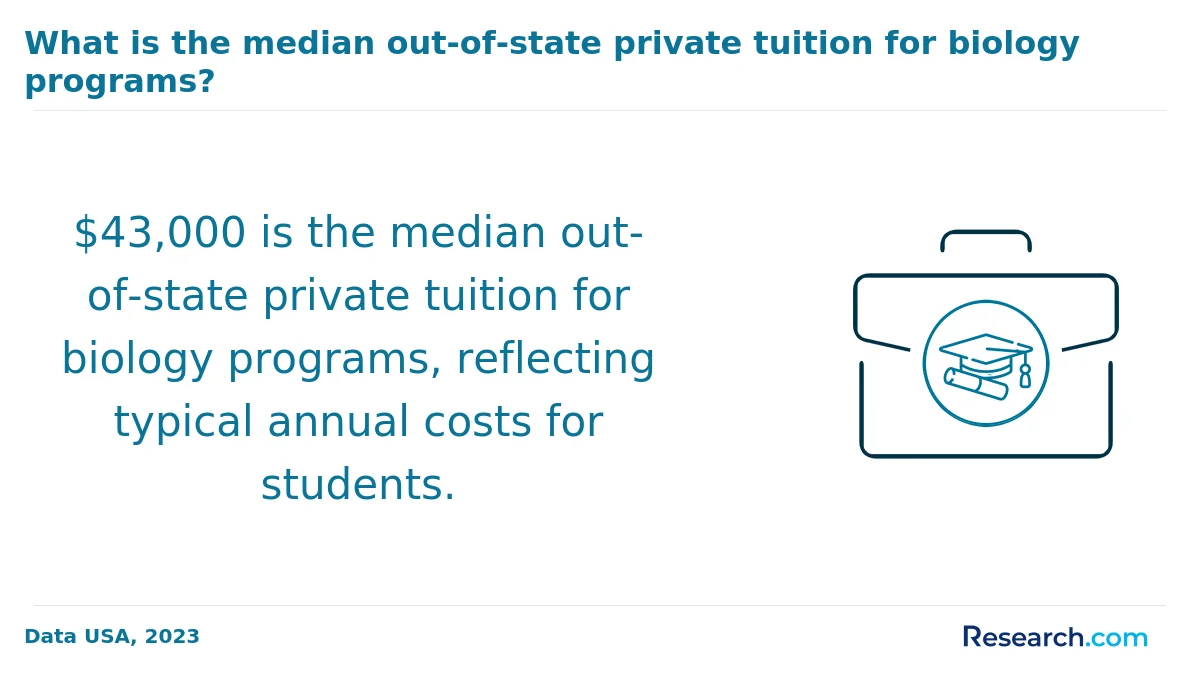
- In-state tuition for online biology degrees in Massachusetts ranges from $15,000 to $25,000 per year at public universities, while private schools can charge over $40,000 annually.
- Entry-level biology jobs in Massachusetts typically start at about $50,000 per year, with experienced professionals earning between $70,000 and $90,000 depending on their role and sector.
- The job market for biology graduates is strong in Massachusetts, with an expected growth rate of around 6% for biology-related occupations through 2030.
- Many online biology programs include virtual labs or internships to provide practical experience despite the remote format.
- Massachusetts hosts a large biotech industry and research cluster, including the Boston-Cambridge area, which offers networking and research opportunities for students.
Completing an online biology degree in Massachusetts generally takes about four years of full-time study, aligning with the standard 120 to 130 credit hours required at universities like UMass Amherst or Northeastern. Many graduates share how balancing work and family made part-time enrollment a necessity, stretching their timeline to five or six years while still feeling in control of their progress.
Transfer students often find this timeline shortened. For example, those coming from community colleges in Massachusetts appreciated that schools such as UMass accept prior credits, allowing them to dive deeper into biology courses sooner and finish faster.
Some graduates embraced summer courses or accelerated paths offered by their institutions. While challenging, these options enabled motivated students to finish in as little as three years, though careful planning was essential to handle lab requirements and science prerequisites without burnout.
Those pursuing a Master's degree online typically spend 1.5 to 3 years, depending on their schedule, with fewer programs available fully online but still manageable for dedicated learners.
Online biology degrees in Massachusetts offer the flexibility that many working adults or busy parents appreciate. Imagine a student at UMass Amherst balancing a part-time job and family while completing coursework remotely on their own schedule. This convenience contrasts sharply with on-campus programs at colleges like Boston University, where attending daily lectures and lab sessions requires consistent presence and time management.
Hands-on experience is a standout difference. On-campus students benefit from direct access to well-equipped labs, critical for mastering biological techniques. Graduates from schools such as Harvard can recall the value of face-to-face lab work, which fosters deeper understanding. Online learners often rely on virtual labs or periodic in-person residencies to gain practical skills, which can be more challenging but still effective with commitment.
In terms of cost, both online and on-campus options at Massachusetts public universities hover around $13,000 annually, though private schools like Northeastern University can be pricier. Online students save on commuting and housing but should verify tuition carefully since fees may be similar. Many appreciate the support services available online but note that networking tends to be richer on campus, where clubs and research groups offer more personal connections.
The average cost of an online biology degree in Massachusetts typically centers around a median total of about $61,375. This figure reflects a realistic estimate rather than a range, helping prospective students budget effectively. Public universities like those in the University of Massachusetts system offer more affordable tuition per credit hour, around $400 to $500. Graduates from these programs often mention feeling relieved that, despite paying for a rigorous science curriculum, the tuition costs remain manageable compared to many private institutions.
Massachusetts online biology degree tuition fees at private institutions, such as Northeastern University or Worcester Polytechnic Institute, tend to push total costs upwards toward $70,000 or beyond for the entire program. Many students recall balancing costs with financial aid options, appreciating the availability of scholarships geared specifically toward STEM fields, which eases the financial pressure significantly.
For biology students in fully remote settings, additional expenses like lab kits or virtual lab fees-sometimes totaling between $500 and $1,000-should be factored into the budget. These fees cover essential hands-on components, ensuring students gain practical experience despite not attending campus labs. Those considering online study will also benefit from exploring what is a biology degree good for to align educational investment with career goals.
When pursuing an online biology degree in Massachusetts, start by completing the FAFSA to unlock federal aid such as Pell Grants, which can cover up to $7,395 annually based on your financial need. Graduates from the University of Massachusetts system often credit Pell Grants for making their early semesters manageable while balancing part-time work.
Massachusetts residents benefit from the State Grant program, offering need-based funding for students enrolled in state-approved online programs. For example, Amherst College biology students pursuing online courses found this grant invaluable for bridging gaps not covered by federal aid.
Your school's financial aid office can connect you with merit scholarships or specific awards targeting science majors. Many online biology students at institutions like Boston University mention how these scholarships eased tuition pressure without extra debt.
Also explore private scholarships from organizations focused on life sciences, which require applications but can substantially offset costs. Federal work-study programs offer part-time jobs aligned with your studies, helping you gain experience while earning.
Online biology degrees in Massachusetts must solve a key challenge: biology requires practical scientific training, not just reading and exams. Programs typically address this through virtual simulations, at-home lab kits, fieldwork, local partnerships, or optional in-person components.
- Virtual lab platforms: Tools such as BioDigital and Labster can mimic experiments in genetics, microbiology and ecology, helping students practice procedures and interpret results in a controlled digital environment.
- Home lab kits: Some programs ship microscopes, reagents and safety gear to students, allowing them to complete approved experiments under detailed instructions.
- Minimum technology setup: Students may need stable 25 Mbps internet, a webcam-enabled computer and an up-to-date browser to participate in lectures, labs, exams, and online discussions.
- Fieldwork and local partnerships: Some programs use on-site research or internship options near Boston and Cambridge, which can be valuable for students seeking hands-on experience and employer connections.
Before enrolling, ask each school how labs are delivered, whether any campus visits are required, what lab fees cover, and whether the program's lab experience is sufficient for your career or graduate school goals. Comparing lab fees across science programs, including the cheapest online pharmacy school, can help you budget and plan effectively.
To enroll in an online biology degree program in Massachusetts, you'll first need a high school diploma or GED. Graduates from local universities often mention how mastering core subjects like biology, chemistry, and algebra before applying made their transition smoother. For example, students at well-known schools such as UMass Amherst or Northeastern University commonly take these courses seriously, as they form the foundation for more advanced studies.
Schools usually require official transcripts reflecting your academic history. Many programs ask for a minimum GPA around 2.5 to 3.0, ensuring you're prepared for the program's rigor. If you've taken classes elsewhere, submitting transfer credits can shorten your degree plan-something several students appreciate for saving both time and tuition costs.
Additionally, applicants often complete an online application, sometimes including letters of recommendation and a personal statement. Graduates recall that sharing their passion for biology and career goals in essays helped admissions staff see their commitment clearly.
Online biology degree programs in Massachusetts typically include essential courses like cell biology, genetics, and ecology, giving students a strong grasp of foundational concepts. Graduates from popular schools such as UMass Amherst often recall how mastering these basics helped them confidently understand more complex topics in later semesters.
Programs also focus on microbiology and molecular biology, which are especially relevant given Massachusetts's thriving biotech industry. Many students appreciate seeing how lessons on pathogens and molecular processes connect directly to real-world applications, like developing medical treatments or researching diseases.
Courses in anatomy and physiology prepare students for healthcare roles, with several online programs offering virtual labs or local lab partnerships to practice hands-on skills. At colleges like Worcester State, students find this practical experience boosts their confidence and readiness for careers or graduate study.
Electives such as biotechnology, bioinformatics, and marine biology allow personalization, reflecting diverse interests tied to Massachusetts's environmental focus and innovation landscape. These tailored choices inspire students to engage deeply with topics that excite them professionally and personally.
In Massachusetts, students pursuing an online biology degree have access to several practical specializations that align with local industry strengths. Popular options include molecular and cellular biology, ideal for those aiming to work in the state's thriving biotech sector. Graduates from schools like UMass Amherst often highlight how focusing on genetics and biochemistry helped them secure positions at firms such as Biogen.
Ecology and environmental biology is another specialization that fits well with Massachusetts' commitment to conservation and sustainability. Many students find the hands-on approach to studying coastal ecosystems rewarding at colleges like Boston University. For those drawn to technology, bioinformatics and computational biology combine biology with data analysis, a skill highly valued in research hubs around Cambridge.
Marine biology benefits from the state's Atlantic proximity, offering real-world learning experiences. Additionally, biotechnology programs prepare students for roles that merge biology with industrial applications. Exploring these paths helps guide choices when selecting an online biology program tailored to career goals. These practical specializations offer a clear route to employment in Massachusetts' fast-growing bio science sector.
Start by confirming that the online biology programs you're considering in Massachusetts have proper accreditation, such as from the New England Commission of Higher Education (NECHE). Graduates from well-known institutions like UMass Amherst often highlight how this recognition helped them confidently apply for jobs and graduate school. Next, focus on the curriculum by choosing programs that offer specializations matching your interests-biotechnology or molecular biology are especially relevant in Massachusetts' thriving biotech industry.
Cost matters, so explore affordable biology degrees online Massachusetts offers; public universities typically provide solid education for significantly less tuition than private schools. Many online learners appreciate programs with asynchronous classes, which let you study around your work or family commitments. Positive feedback from graduates at Boston University shows that flexible scheduling makes balancing life and studies easier.
Don't forget to consider support services like academic advising and virtual labs, which can boost your learning experience. For practical growth, look for programs connected to local research institutions or internships. Some students even find helpful options among easy online biology degree programs that fit both budget and schedule without sacrificing quality.
Graduates with an online biology degree in Massachusetts find diverse career paths tailored to local industry strengths. Healthcare and clinical research roles remain popular, with graduates often securing positions in hospitals or pharmaceutical labs in Boston and Cambridge, leveraging the state's expanding healthcare sector. Biotechnology firms like Biogen and Moderna frequently hire biology degree holders for drug development and genetic research, making the region ideal for those aiming to work in cutting-edge science.
For those interested in environmental fields, biology graduates find rewarding work with the Massachusetts Department of Environmental Protection or in conservation roles that tackle local ecological challenges. Additionally, many graduates pursue education careers, becoming science teachers or curriculum developers in state schools where demand for life sciences educators is steady.
Students from local universities often share how an online bachelor of science degree in biology helped them balance careers while gaining skills necessary for roles in laboratory analysis, environmental consulting, and biotech companies. This practical approach aligns perfectly with the growing biology degree job opportunities in Massachusetts.
The job market for those with an online biology degree in Massachusetts remains promising due to the state's concentration of biotech firms, hospitals, and research institutions. Graduates from well-known programs at universities across Massachusetts find roles in sectors like healthcare, molecular research, and environmental agencies. Many students share experiences of securing positions as lab technicians or research assistants, particularly in Boston and Cambridge, where demand for biology expertise stays strong.
Biology degree career opportunities Massachusetts offer both entry-level and specialized roles, making it possible for recent graduates to quickly build relevant experience. For example, working part-time or as a clinical research coordinator while completing an online degree provides a practical pathway. Graduates appreciate the flexibility and cost savings of online study combined with local job prospects.
Massachusetts' competitive salaries, with a median biological scientist wage around $85,000, motivate many to pursue this path. Those exploring career choices can learn more about what degree do you need to become an aquatic biologist, illustrating the range of biology-based professions available.
2027 Best Online Biology Degree Programs Ranking in Massachusetts
Investing in your education is a significant decision that can shape your future, and the Research.com team understands the importance of making informed choices. To assist prospective students in Massachusetts, we have meticulously crafted the "2027 Best Online Biology Degree Programs Ranking in Massachusetts." Our commitment to quality, credibility, and accuracy is reflected in the extensive research and analysis conducted to compile this ranking.
We utilized the following reputable data sources to ensure a comprehensive evaluation of biology programs:
By exploring this ranking, readers will gain valuable insights into the best online biology degree programs available in Massachusetts, helping them make informed decisions about their educational paths. For more details on our methodology, please visit our Research.com methodology page.


Frequently Asked Questions About biology
Online biology degree students in Massachusetts can maximize their learning experience by actively engaging with local scientific communities and resources. Massachusetts hosts numerous research institutions, like the Broad Institute, which often provide virtual seminars and webinars accessible to remote students. Participating in these can deepen understanding of current biological research trends.
Students should also consider internships or lab work partnerships with nearby universities or biotech firms, as hands-on experience complements theoretical knowledge. According to the Massachusetts Biotechnology Council, the state employs over 80,000 workers in life sciences, offering ample networking opportunities.
Utilizing state library systems and digital archives for biology research also supports academic success.
The biology field is growing with several emerging niches offering new career opportunities. In Massachusetts, areas like bioinformatics and computational biology are expanding due to the state's strong biotech industry. These fields combine biology with data analysis to interpret complex genetic information.
Environmental biology and conservation remain important as climate change impacts local ecosystems. Research from Massachusetts institutes highlights the need for specialists in habitat restoration and sustainability.
Additionally, synthetic biology is gaining attention, involving the design of new biological parts and systems. This innovation aligns well with Massachusetts' position as a leader in biotechnology investment, which topped $2 billion in 2022 according to the Massachusetts Biotechnology Council.
These niches reflect the evolving nature of biology and show promising paths for online biology degree students in Massachusetts.
Preparing for the job market after completing an online biology degree in Massachusetts involves strategic steps. Graduates should focus on gaining practical experience through internships or volunteering in local research institutions or healthcare facilities. Massachusetts hosts many biotechnology companies and research labs, offering valuable opportunities.
Networking is essential; joining professional organizations like the Massachusetts Biotechnology Council can help connect with industry professionals. Additionally, enhancing skills in data analysis and laboratory techniques improves employability.
The Massachusetts Department of Labor reports growing biology-related job openings, especially in biotech, healthcare, and environmental sectors. Staying informed about local job trends is crucial for effective preparation.
Employers in Massachusetts prioritizing biology degree graduates often seek a blend of technical knowledge and practical skills. Key competencies include proficiency in laboratory techniques, data analysis, and experimental design. According to the Massachusetts Biotechnology Council, familiarity with biotechnological tools and software is increasingly important in local industries.
Critical thinking and problem-solving abilities are essential, as graduates frequently engage in research and development roles. Communication skills, both written and verbal, are also highly valued for collaborating across multidisciplinary teams.
Additionally, understanding regulatory standards and ethical considerations in biological research is crucial. These skills prepare graduates to meet the demands of Massachusetts's growing life sciences sector, which contributes over $20 billion annually to the state economy, per state economic reports.
Finding internships in Massachusetts related to a biology degree involves targeting institutions with strong life sciences sectors. The state hosts numerous biotech companies and research centers, especially around Boston and Cambridge. Students should explore internships at places like the Massachusetts Biotechnology Council, which lists opportunities in over 1,000 local firms. Additionally, universities such as Harvard and MIT often offer internships or partnerships with nearby labs.
Another key resource is the Massachusetts Life Sciences Center, which supports internship programs and provides grant-funded opportunities for students. Career services at online biology degree programs often have connections to local employers and can assist in securing internships through job boards or networking events.
Internships can be found through state-run platforms like MassHire, which features listings tailored to Massachusetts residents. It's recommended to start early, prepare a strong resume, and leverage professional organizations such as the American Institute of Biological Sciences for additional leads.
An online biology degree in Massachusetts can significantly enhance career mobility and advancement opportunities. The state is home to a robust life sciences industry, employing over 86,000 people as of recent data from MassBio, making biology graduates highly sought after. Completing a degree online allows flexibility, enabling students to maintain employment while advancing their education.
Employers in Massachusetts often value degrees from regionally accredited institutions, and an online program from such schools can provide the same foundational knowledge as traditional ones. Graduates can pursue roles in research, healthcare, environmental science, and biotechnology, with many reporting salary increases after degree completion according to the Massachusetts Department of Labor.
In particular, advancing from entry-level positions to specialized roles often requires a bachelor's degree in biology or related fields. An online degree also supports continuing education and networking through virtual labs and internships, essential to career progression in Massachusetts's competitive market.
Studying for an online biology degree in Massachusetts offers strong preparation for interdisciplinary roles by combining biological sciences with complementary fields such as technology, chemistry, and environmental science. Massachusetts is home to a robust biotechnology sector, employing over 80,000 workers, which encourages curricula that emphasize practical and interdisciplinary skills.
Universities often integrate data analysis, bioinformatics, and communication courses to equip students for collaborative work. This approach aligns with the state's emphasis on innovation in healthcare and environmental solutions.
The Massachusetts Department of Higher Education supports programs that connect biology to policy and business, preparing graduates for diverse career paths.
When choosing between a thesis and a non-thesis online biology degree program in Massachusetts, consider your career goals and learning preferences. Thesis programs require original research and a written dissertation, ideal for students aiming for research roles or doctoral studies. Non-thesis options focus on coursework and practical skills, appealing to those seeking immediate employment in biology-related fields.
Massachusetts hosts several top universities offering online biology degrees, with thesis paths often linked to institutions emphasizing research, such as UMass Amherst. According to the National Center for Education Statistics, over 40% of biology graduates in Massachusetts pursue research or academic roles, highlighting the value of thesis experience.
Evaluate program flexibility, faculty expertise, and available resources before deciding. Both formats align with US higher education accreditation standards, ensuring quality education.
Students based in Massachusetts interested in studying biology abroad have limited options when focusing on fully online international degree programs. Most U.S. institutions offering online biology degrees do not extend formal partnerships for foreign qualifications in biology. However, some Massachusetts universities have exchange programs and study abroad options, though these typically require partial on-campus presence.
Alternatively, students may consider accredited online biology programs from well-established U.S. schools, ensuring transferability and recognition. The Massachusetts Department of Higher Education provides resources on credit transfer agreements, which can support students seeking international study experiences integrated with local programs.
In terms of biology careers, Massachusetts holds a top position nationally for biotech employment, with over 71,000 employees in the sector as of 2023 from the Massachusetts Biotechnology Council, making local study relevant for practical opportunities.
Students pursuing online biology degrees in Massachusetts can benefit from several part-time job opportunities aligned with their studies. Laboratory assistant positions at research institutions such as those in Cambridge's biotech hub provide hands-on experience in molecular biology and genetics. According to MassBio, the state's biotech industry employs over 25,000 professionals, indicating strong demand for entry-level roles. Additionally, internships or part-time work at local hospitals and public health organizations offer exposure to clinical applications of biology. Environmental agencies and conservation groups also hire interns to assist with field research and data collection, complementing academic knowledge with practical skills relevant to biology careers.
Online biology students in Massachusetts have several networking opportunities despite the virtual format. Many programs partner with local research institutions, like Harvard University and MIT, enabling students to connect with experts in fields such as molecular biology and environmental science. Additionally, Massachusetts hosts numerous biology-focused professional organizations, including the Massachusetts Chapter of the American Society for Microbiology, offering virtual events and conferences accessible to online learners.
Students can also engage in internships and research projects with local biotech firms located in hubs like Cambridge and Boston, enriching their practical experience.
According to data from the Massachusetts Biotechnology Council, the state employs over 23,000 life sciences workers, facilitating strong industry connections for students.
Alumni networks provide valuable support to online biology degree students in Massachusetts by connecting them with professionals and graduates in related fields. These networks often offer mentorship, career advice, and exclusive job opportunities, which can enhance students' prospects after graduation.
In Massachusetts, a hub for biotechnology and life sciences, strong alumni connections can help students tap into a competitive job market, especially with employers like Biogen and Moderna.
The Massachusetts Biotechnology Council reports that the state employs over 100,000 life sciences workers, highlighting the importance of professional networks for fresh graduates.
For online students, alumni groups help overcome geographic isolation by fostering community and collaboration through virtual events and forums.
Customizing an online biology degree in Massachusetts involves selecting suitable electives and concentration areas that align with your career ambitions. Programs often offer tracks such as molecular biology, environmental science, or biotechnology, allowing students to specialize.
Internships and research projects, sometimes available through partnerships with local institutions like the Museum of Science or Harvard University, provide practical experience. Massachusetts employers value hands-on skills and scientific literacy, so participating in these opportunities can boost employability.
Advisors also help tailor course loads and certificates to fit goals, whether in healthcare, academia, or industry.
According to the Massachusetts Department of Higher Education, nearly 60% of biology students pursue specialization to enhance job readiness, reflecting the importance of customization in degree programs.
Online biology students in Massachusetts often face challenges related to hands-on laboratory experience. Biology typically requires practical skills, which can be difficult to replicate virtually. Many programs try to address this by partnering with local labs, but access remains limited for some students due to geographic or scheduling constraints.
Another common issue is the technical demand of online platforms. Students must navigate various software for simulations and virtual labs, which can be frustrating without proper support. According to the Massachusetts Department of Higher Education, nearly 30% of online learners report technical difficulties affecting their studies.
Additionally, maintaining motivation and engagement in remote learning environments is a frequent challenge. Biology content is complex and often benefits from direct interaction with instructors and peers, which can be sparse online.
With an online biology degree, graduates in Massachusetts can pursue several professional certifications that enhance career opportunities. One common certification is the Certified Biological Safety Professional (CBSP), which prepares individuals for roles in laboratories and research institutions. This credential is valuable given Massachusetts' strong biotechnology sector, particularly in the Boston area, which employs a significant number of biology-related professionals (MassBio reports over 75,000 biotech employees statewide).
Another option is the Certified Clinical Research Professional (CCRP), ideal for those interested in clinical trials and pharmaceutical research. Additionally, Massachusetts offers teaching certifications for biology educators, including the Initial License for Secondary Science Teachers, accessible after passing the Massachusetts Tests for Educator Licensure (MTEL).
Professional certifications increase employability in sectors including healthcare, education, and environmental science, aligning with Massachusetts' emphasis on STEM education and innovation.
Writing a winning application for an online biology program in Massachusetts requires clear communication of your academic interests and career goals. Start by demonstrating a strong foundational knowledge in biology and related sciences, supported by your transcripts and any relevant coursework. Massachusetts hosts several reputable institutions offering biology degrees online, so tailor your application to highlight experiences or skills that align with their curriculum.
Include a well-crafted personal statement explaining why an online biology degree fits your educational needs and how you plan to use it professionally. According to the Massachusetts Department of Higher Education, emphasizing hands-on lab experience or volunteering in local research projects can strengthen your profile.
Letters of recommendation from science instructors or employers familiar with your work ethic further validate your commitment. Lastly, ensure all application materials meet deadlines and application requirements to maximize your chances.
Biology careers hold significant value worldwide due to the growing need for expertise in health, environment, and biotechnology. In the United States, and specifically in Massachusetts, the demand for biology professionals continues to rise, supported by leading research institutions and biotech companies. According to the U.S. Bureau of Labor Statistics, biological scientists in Massachusetts earned an average annual wage of over $84,000 in 2023, reflecting strong local opportunities.
Massachusetts serves as a hub for global scientific collaboration, attracting students aspiring to work on issues such as climate change, genetics, and pharmaceuticals. Online biology degree programs in the state often emphasize these international challenges, preparing graduates to contribute effectively on a global scale.
Globally, biology careers are increasingly interdisciplinary, combining technology and data analysis skills. For Massachusetts students, an online degree offers access to this evolving landscape while connecting them to global research trends through virtual resources and partnerships.
Gaining practical experience while studying for an online biology degree in Massachusetts is essential to strengthen your skills and improve job prospects. Many programs offer virtual lab simulations and interactive modules to provide hands-on learning remotely.
Additionally, students can seek internships or research assistant positions at Massachusetts-based institutions such as the Broad Institute or the Massachusetts Department of Public Health. According to the Massachusetts Biotechnology Council, over 300 biotech companies operate in the state, offering ample opportunities for practical experience.
Volunteering in local hospitals or environmental organizations can also provide valuable real-world exposure in biology fields.
Choosing the right concentration within an online biology degree program in Massachusetts depends on your career goals and interests. Popular concentrations include molecular biology, environmental science, and biotechnology, all areas with strong industry presence in the state.
Massachusetts has a robust biotech sector, employing over 70,000 people as of 2023 according to the Massachusetts Biotechnology Council. If you aim to work in this field, a concentration in biotechnology or molecular biology might be ideal.
Alternatively, if you're passionate about conservation or natural resources, environmental biology reflects Massachusetts' focus on sustainability and ecosystem management.
Review each program's course offerings and faculty expertise to ensure they align with your goals and the state's job market. Also consider internship opportunities or partnerships with local research institutions.
- 2027 Best Online Biology Degree Programs Ranking in Pennsylvania
- 2027 Best Online Biology Degree Programs Ranking in Maryland
- 2027 Best Online Biology Degree Programs Ranking in Indiana
- 2027 Best Online Biology Degree Programs Ranking in Florida
- 2027 Best Online Biology Degree Programs Ranking in Wisconsin
- 2027 Best Online Biology Degree Programs Ranking in Texas
- Careers in Biological Sciences: Opportunities, Skills, and the Future of Work https://www.hyperec.com/blog/careers-in-biological-sciences-opportunities-skills-and-the-future-of-work/
- PROBLEMS AND CHALLENGES IN 21ST CENTURY ... https://journal.lppmunindra.ac.id/index.php/RDJE/article/download/26534/7915
- 4-Year Bachelor of Science in Biology (B.S.) https://mcla.edu/academics/academic-departments/biology/
- Careers Guidance https://www.rsb.org.uk/career-guidance.html
- How a Strong Alumni Network Can Benefit Students https://www.pacificu.edu/blog/how-strong-alumni-network-can-benefit-students
- Biology https://www.emmanuel.edu/academics/academic-study/schools/school-science-health/undergraduate-programs/biology
- Study Biology Abroad | Go Overseas https://www.gooverseas.com/study-abroad/biology
- Bachelor of Science in Biology https://www.gordon.edu/science/programs/biology
- write a letter of application for the position of teacher biology - Brainly.in https://brainly.in/question/57038693
- Home Page | UMassOnline https://online.massachusetts.edu/