2027 Are Online Biology Degrees Respected by Employers?

Co-Founder and Chief Data Scientist
The real question for many prospective biology students is not whether an online degree is convenient; it is whether employers, graduate schools, laboratories, and science-adjacent organizations will take the credential seriously. In biology, that answer depends less on the word “online” and more on accreditation, school reputation, lab preparation, research experience, and whether graduates can show job-ready scientific skills.
Online biology degrees have become more common as colleges expand digital learning, virtual labs, remote research tools, and hybrid field experiences. Recent data shows that over 75% of employers now consider online degrees comparable to traditional ones when evaluating candidates. Still, biology is a hands-on field, so students must look carefully at how a program teaches lab methods, data analysis, scientific writing, and applied problem-solving.
This guide explains how employers evaluate online biology degrees, which accreditation signals matter, when university reputation helps, what skills hiring managers value, and how graduates can strengthen the credibility of an online credential. It is designed for students comparing online and on-campus biology programs, working adults returning to school, and career changers who want a practical path into biology-related work.
Key Benefits of Online Biology Degrees Respected by Employers
- Employers increasingly recognize online biology degrees from accredited institutions as equivalent to traditional degrees, with 72% expressing confidence in the skills of online graduates according to a 2023 industry survey.
- Graduates develop practical research, data analysis, and laboratory skills through virtual labs and hybrid learning models that align with current workforce demands in biotechnology and healthcare sectors.
- Online biology degree holders report a 15% higher rate of employment within six months post-graduation compared to non-degree holders, reflecting improved career opportunities and earning potential.
Which Accrediting Bodies Make an Online Biology Degree Legitimate?
An online biology degree is legitimate when it comes from an institution accredited by a recognized accrediting agency and when the program provides academically sound science coursework, appropriate lab learning, and credible assessment. For employers and graduate schools, accreditation is often the first filter. Without it, a degree may be harder to use for employment, transfer credit, financial aid eligibility, or admission to advanced study.
Students should verify accreditation before applying, not after enrolling. The most important distinction is usually whether the institution is regionally accredited, nationally accredited, or supported by a relevant program-level credential.
- Regional Accreditation: Regional accreditation is generally the most widely accepted form of institutional accreditation in the United States. Agencies such as the Southern Association of Colleges and Schools Commission on Colleges or the Northwest Commission on Colleges and Universities evaluate colleges and universities against broad academic and administrative standards. Degrees from regionally accredited institutions, including schools like the University of Florida or Washington State University, are typically better recognized by employers, graduate programs, and other colleges for transfer credit.
- National Accreditation: National accreditation is more common among vocational, career-focused, or some for-profit institutions recognized by the U.S. Department of Education. It can be valid, but it may not carry the same transferability or academic recognition as regional accreditation for traditional biology degrees. Students considering a nationally accredited biology program should ask whether credits will transfer, whether graduate schools accept the degree, and whether employers in their target field recognize the credential.
- Programmatic Accreditation: Programmatic accreditation or recognition applies to specific academic programs rather than the whole institution. In biology-related fields, organizations such as the American Society for Biochemistry and Molecular Biology may evaluate whether a curriculum meets discipline-specific expectations. Programmatic accreditation is not always required for a general biology degree, but it can strengthen credibility in specialized areas and may matter for certain certification, laboratory, teaching, or health-related pathways.
How to check accreditation before you enroll
- Confirm the school’s institutional accreditation through official sources rather than relying only on marketing pages.
- Ask whether the online biology degree appears on the same transcript as the campus program or is clearly labeled as online.
- Check whether credits transfer to regionally accredited colleges if you plan to pursue a bachelor’s, master’s, medical, dental, veterinary, or allied health pathway later.
- Ask how required labs are delivered, assessed, and documented, especially if you need prerequisites for graduate or professional school.
- Review whether the program supports federal financial aid, because accreditation status can affect eligibility.
Some students compare accelerated options, including an online associate's degree in 6 months, but speed should never outweigh accreditation, science rigor, and transfer value. In biology, a fast credential is useful only if it is accepted by the employers or schools that matter for your next step.
Does University Reputation Affect Employer Views of Online Biology Degrees?
Yes. University reputation can influence how employers initially view an online biology degree, especially when candidates have limited work experience. A degree from a well-known, properly accredited university may reduce concerns about academic quality because employers often assume the online program follows the same standards, faculty oversight, and assessment expectations as the institution’s campus offerings.
Reputation is not a substitute for skill, however. In biology hiring, employers still look for evidence that a candidate can interpret data, follow scientific protocols, communicate findings, use relevant software, and work responsibly in lab or field settings. A respected university can help you get noticed; demonstrated competence helps you get hired.
- Institutional Prestige: A recognizable university name can reassure employers that the degree was earned through a structured, academically credible program. This matters most in competitive entry-level hiring, graduate admissions, and roles where employers screen many applicants quickly.
- Alumni Success: Employers may trust programs more when graduates have moved into research, healthcare, environmental, biotechnology, education, or data-focused roles. Strong alumni outcomes suggest that the curriculum translates into usable workplace skills.
- Accreditation Status: Accreditation remains more important than name recognition alone. A famous-sounding school without appropriate accreditation is a risk; a less famous regionally accredited institution with strong labs, advising, and outcomes may be the better choice.
- Industry and Research Partnerships: Programs connected to employers, research centers, hospitals, conservation organizations, or biotech firms can help students gain projects, internships, references, and practical experience that strengthen the degree.
When reputation matters most
- When applying to competitive internships, research assistant roles, or graduate programs.
- When your resume has limited biology-related work experience.
- When the employer is unfamiliar with online science education and uses institutional credibility as a quality signal.
- When the online degree is offered by the same university that runs a respected campus-based biology department.
Students should compare reputation alongside cost, transfer policies, lab requirements, faculty access, research opportunities, and advising. For some learners, an accessible pathway such as the easiest associates degree that pays well may be part of a broader plan, but anyone aiming for biology careers should make sure the program supports the science prerequisites and career outcomes they need.
Do Employers Treat Online and On-campus Biology Degrees Equally?
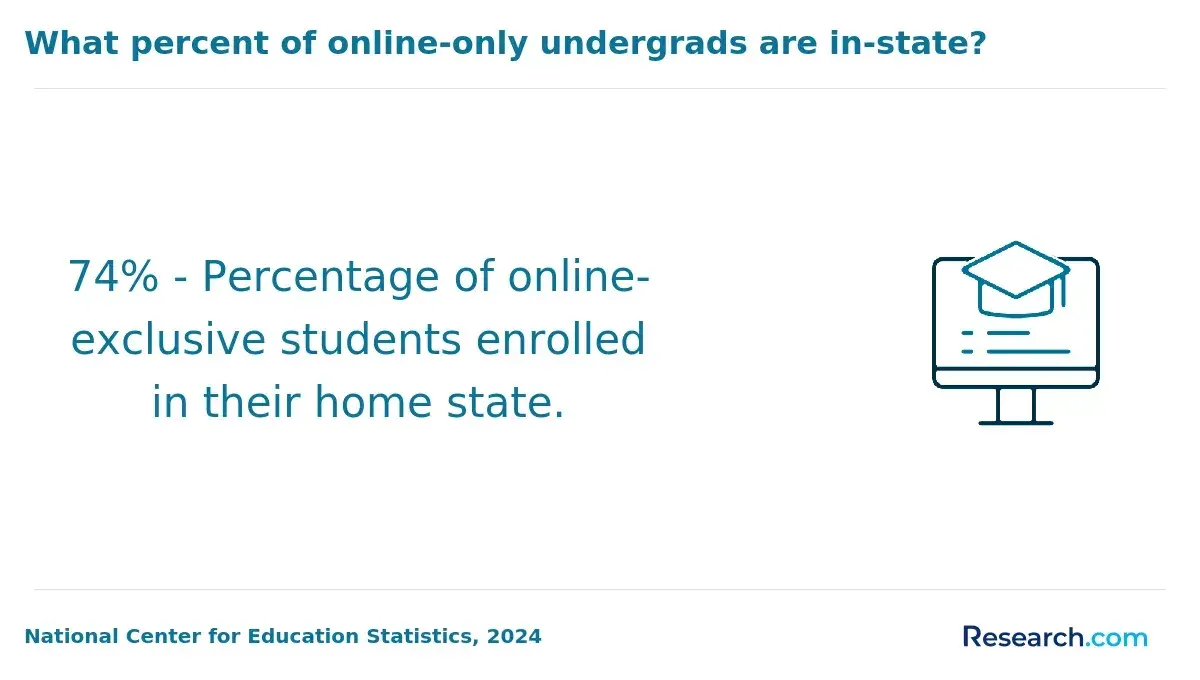
Many employers now treat online and on-campus biology degrees similarly when the degree comes from an accredited, reputable institution and the graduate can show relevant experience. The delivery format matters less than the quality of the curriculum, the credibility of the school, and the candidate’s ability to perform biology-related work.
That said, biology is not a purely theoretical discipline. Employers may ask more questions about online graduates’ laboratory exposure, research experience, fieldwork, or applied projects. This does not mean online degrees are automatically viewed as weaker. It means online students need to be ready to explain how they completed practical requirements and what skills they gained.
- Employers are more likely to view the degrees equally when: the institution is regionally accredited, the university has an established academic reputation, the transcript does not raise concerns, the curriculum matches campus standards, and the student completed labs, internships, research, or applied projects.
- Employers may be more cautious when: the school is unknown, accreditation is unclear, lab work appears limited, the program is heavily self-paced without faculty interaction, or the graduate cannot describe hands-on scientific training.
- Hiring decisions often come down to evidence: resumes, portfolios, lab reports, research posters, references, internships, certifications, and interview performance can matter as much as the degree format.
Recent data indicates that a majority of employers have hired graduates with online degrees and report starting salaries equal to those of in-person graduates. This supports the broader trend toward acceptance, but students should still choose carefully. A strong online biology program should make it easy to document academic rigor, lab learning, and measurable competencies.
How online biology graduates can reduce employer skepticism
- List lab techniques, software tools, field methods, and research projects directly on the resume.
- Use interview answers to explain how online labs, in-person lab intensives, local placements, or supervised projects were completed.
- Build experience through internships, volunteer research, environmental monitoring, clinical support roles, tutoring, or data projects.
- Ask faculty or supervisors for references that speak to scientific accuracy, reliability, and problem-solving.
- Avoid presenting the online format defensively; focus on outcomes, skills, and evidence of preparation.
In practice, an online biology degree from a credible school can compete well with an on-campus degree. The strongest candidates are those who pair the credential with experience that proves they can work in real scientific, healthcare, environmental, or technical settings.
Do Employers Trust Online Biology Degrees from AI-powered Virtual Classrooms?
Employers may trust online biology degrees that use AI-powered virtual classrooms when the technology supports a rigorous, accredited program. AI tools alone do not make a degree credible. Accreditation, faculty oversight, valid assessments, academic integrity, and meaningful lab or applied learning still matter most.
AI can strengthen online biology education when it is used to personalize review, simulate experiments, provide immediate feedback, support data analysis, and help students practice scientific reasoning. Virtual labs, adaptive quizzes, AI-supported tutoring, and simulation-based exercises can make online learning more interactive and measurable than older correspondence-style formats.
- Adaptive learning systems: These tools can identify weak areas and adjust practice activities so students spend more time on concepts they have not mastered.
- Virtual simulations: Simulated lab environments can help students practice experimental design, observe biological processes, test hypotheses, and learn from mistakes without safety or equipment constraints.
- AI tutors and feedback tools: These systems can provide quick explanations and formative feedback, though they should not replace qualified faculty, graded assessments, or supervised instruction.
- Digital skill development: Students who learn through AI-enhanced environments may gain comfort with remote collaboration tools, data platforms, and emerging technologies used in modern science workplaces.
Employer trust depends on whether graduates can show that AI-enhanced learning produced real competence. A hiring manager is unlikely to be impressed by “AI-powered” branding by itself. They are more likely to value a candidate who can describe a virtual lab project, explain a dataset, write clearly about results, and connect coursework to workplace tasks.
Questions students should ask about AI-powered biology programs
- Who designs and supervises the AI-supported coursework: faculty, vendors, or both?
- How does the program verify that students completed their own work?
- Are virtual labs supplemented with in-person labs, local placements, lab kits, research projects, or field experiences where needed?
- Can students export or document projects for a portfolio?
- Do employers, graduate schools, or certification bodies recognize the program’s lab preparation?
AI-powered classrooms can improve online biology education, but they should be evaluated as part of the overall program. The safest choice is an accredited program that uses technology to strengthen learning rather than to cut corners.
What Skills Do employers Value from Online Biology Graduates?
Employers value online biology graduates who can combine scientific knowledge with proof of practical ability. A degree may open the door, but hiring decisions usually depend on whether the candidate can analyze information, communicate accurately, use scientific tools, and work independently without constant supervision.
Online learners can be especially competitive when they turn the structure of online education into a strength. Completing a biology program remotely often requires discipline, digital communication, time management, and comfort with technology—all useful traits in research, healthcare support, environmental work, biotechnology, education, and science communication.
- Critical Thinking and Problem-Solving: Biology employers want candidates who can interpret results, identify patterns, question assumptions, and troubleshoot unexpected outcomes. Online students can demonstrate this through research papers, experimental design projects, case studies, and data-based assignments.
- Data Analysis and Technical Proficiency: Modern biology is data-heavy. Employers value graduates who can work with spreadsheets, databases, statistical tools, visualization platforms, and discipline-specific software. This is especially important in bioinformatics, biotechnology, public health support, ecology, and laboratory operations.
- Communication and Scientific Writing: Clear writing is essential for lab reports, protocols, grant materials, regulatory notes, educational content, and team communication. Online programs often require discussion posts, virtual presentations, and written analysis, which can help students practice explaining complex biological concepts to different audiences.
- Collaboration and Emotional Intelligence: Remote group work can build the ability to communicate across schedules, resolve disagreements, and contribute reliably to shared deliverables. Employers value candidates who can work with researchers, clinicians, technicians, educators, and non-scientific stakeholders.
- Time Management and Self-Directed Learning: Online biology students often balance coursework with work or family responsibilities. Graduates who can show consistent performance in that environment signal reliability, planning ability, and follow-through.
- Adaptability and Tech-Savviness: Virtual labs, learning platforms, remote meetings, AI tools, and collaborative software can prepare students for workplaces that use hybrid teams and digital scientific workflows.
- Lab and Field Readiness: Even when coursework is online, employers want evidence of safe, careful, and accurate work. Students should seek lab intensives, local lab placements, internships, field projects, or supervised applied experiences whenever possible.
How to make these skills visible to employers
- Add a skills section to your resume that includes specific lab methods, software, and analysis tools.
- Create a portfolio with research summaries, lab reports, posters, data projects, or writing samples when appropriate.
- Use project descriptions that show your role, methods used, results, and what you learned.
- Ask instructors or supervisors to verify strengths such as accuracy, independence, communication, and teamwork.
Students comparing long-term earning potential may also review resources on what bachelor's degree makes the most money, but biology salaries vary widely by role, education level, location, industry, and experience. The strongest return usually comes from pairing the degree with marketable technical skills and relevant experience.
Do Professional Certifications Help Validate Online Biology Degrees?
Professional certifications can help validate an online biology degree because they give employers an additional, skill-specific signal. A certification does not replace an accredited degree, but it can show that a graduate has met defined standards in a specialty area, passed an external assessment, or prepared for a regulated role.
Certifications are most useful when they match the job target. A general certification with little connection to your career goal may add less value than an internship, research project, or software skill. Students should choose credentials based on employer expectations in their intended field.
- Specialized Certifications: Certifications in areas such as biotechnology or environmental science can strengthen a resume by showing focused preparation beyond the general biology curriculum. They may help candidates compete for applied science, research support, conservation, compliance, or technical roles.
- Professional Licenses: Some careers connected to biology, including teaching, certain laboratory roles, or other regulated professions, may require a license. Licensing requirements vary by occupation and location, so students should confirm requirements before choosing a program or certification path.
- Industry Recognition: Credentials from respected professional organizations can reassure employers that a candidate understands current standards, terminology, safety expectations, or technical practices in a defined area.
When a certification is worth pursuing
- It is commonly listed in job postings for roles you want.
- It is issued by a credible organization recognized by employers in the field.
- It requires meaningful assessment rather than only a fee.
- It complements your degree by proving a specific technical, laboratory, teaching, or compliance skill.
- It helps address a gap in your resume, such as limited hands-on experience or a career change into biology.
A professional who completed an online biology program described how a certification in clinical laboratory science helped him address early employer hesitation. He said, “At first, I sensed some hesitation because my degree was online, but once I earned the certification, it opened doors that would have otherwise stayed closed.”
The certification required substantial preparation while he continued working, but it gave him a measurable credential that supported his degree. “It wasn't just about the letters after my name, but about proving I had the knowledge and skills to perform at a high level,” he said. He later secured a position in a reputable laboratory where the added credential helped establish professional trust.
Do Online Biology Graduates Earn the Same Salaries as On-campus Graduates?
Online biology graduates can earn salaries comparable to on-campus graduates when their degrees come from accredited, reputable institutions and when they have similar experience, skills, and job targets. Employers generally pay for role requirements, demonstrated ability, education level, location, and industry need—not simply for whether a course was completed online or in person.
Salary comparisons can be misleading if they ignore career path. A biology graduate working in a research support role, healthcare-adjacent position, environmental organization, biotech firm, education setting, or data-focused role may see different compensation patterns. Graduate education, certifications, lab experience, and geographic market can also affect pay.
- Accreditation and Institutional Reputation: Regionally accredited schools are more likely to be viewed as credible regardless of delivery format. A respected institution can help online graduates compete for the same roles as campus graduates.
- Program Quality and Curriculum: Rigorous coursework, qualified faculty, meaningful lab experiences, and strong assessment practices help graduates build skills that employers are willing to pay for.
- Employer Perception: Skepticism toward online degrees has declined, especially when programs mirror on-campus academic standards. As more online graduates succeed professionally, the format itself becomes less important in salary decisions.
- Field Experience and Networking: Internships, research projects, fieldwork, lab placements, and professional relationships can influence salary outcomes. Online students who actively build experience often compete more effectively.
- Geographic Location and Job Market: Regional demand, cost of living, and access to research hubs, healthcare systems, environmental agencies, or biotech employers affect salaries for both online and on-campus graduates.
How to improve salary potential with an online biology degree
- Target roles that value specific biology skills, such as data analysis, scientific writing, lab methods, quality control, environmental monitoring, or bioinformatics support.
- Gain experience before graduation through internships, volunteering, research assistance, tutoring, or project-based work.
- Document technical skills clearly on your resume instead of listing only course titles.
- Consider certifications or graduate study when they are required or strongly preferred for your target role.
- Choose an affordable accredited program to reduce debt and improve return on investment.
Students focused on cost should compare accredited options carefully. Reviewing low tuition colleges online that accept financial aid can help identify programs that may support a stronger financial outcome, especially when paired with practical experience and a realistic career plan.
The key takeaway is that online vs on-campus biology graduate earnings depend more on program credibility, skills, experience, and job market than on the learning format alone.
How Do Online Biology Degrees Impact Career Growth and Promotions?
An online biology degree can support career growth when it helps a professional qualify for roles that require a degree, move into a science-related specialty, or combine existing work experience with formal academic training. For working adults, the online format can be especially useful because it allows them to continue gaining experience while completing the credential.
Promotions are not automatic. Employers typically look for performance, leadership potential, technical competence, communication, and readiness for greater responsibility. The degree can strengthen a promotion case when it fills a credential gap or adds knowledge that directly improves job performance.
- Career Flexibility: Biology knowledge can support movement across healthcare, environmental science, research support, education, biotechnology, scientific communication, and data-related work. Graduates may explore paths connected to roles like biostatisticians, genetic counsellors, and medical scientists, though some of these careers require additional graduate education, licensure, or specialized training.
- Enhanced Job Prospects: Demand for careers related to biology and life sciences is growing faster than the average for all occupations, with a projected 7% increase between 2022 and 2032. This broader demand can create opportunities for graduates who combine the degree with relevant technical and workplace skills.
- Opportunities for Further Education: An online biology degree can provide the academic foundation for advanced study in areas such as biotechnology, environmental science, or medicine. Graduate or professional education can expand eligibility for higher-level roles, but admission requirements vary and may include specific prerequisites, lab coursework, exams, or experience.
Where an online biology degree can help advancement
- Moving from technician-level work into project coordination, quality assurance, compliance, or supervisory responsibilities.
- Qualifying for positions that require a bachelor’s degree for consideration.
- Building the science background needed for graduate or professional study.
- Shifting from general administrative or support work into science-adjacent roles.
- Strengthening credibility when applying for internal promotions or cross-functional teams.
A professional who pursued an online biology program described feeling stalled in a lab technician role before enrolling. The program’s flexibility allowed her to keep working while completing coursework. After graduation, she advanced to a project coordinator position and said, “The specialized knowledge I gained helped me take on leadership responsibilities and communicate effectively with research teams.”
Her experience reflects a common advantage of online study: students can build education and work experience at the same time. For promotion-focused learners, the best strategy is to connect assignments, projects, and research topics to the responsibilities they want next.
What Companies Actively Hire Graduates from Online Biology Programs?
Companies and organizations in several sectors hire graduates from online biology programs, especially when the degree is accredited and the candidate has relevant skills. Many employers do not hire “online biology graduates” as a separate category; they hire biology graduates who can perform the work. The stronger the candidate’s experience, portfolio, and technical preparation, the less the delivery format matters.
Online biology graduates may find opportunities in science communication, education technology, biotechnology support, environmental work, data-related biology roles, research administration, and healthcare-adjacent organizations. Some jobs require only a bachelor’s degree, while others require certifications, graduate education, licensure, or specialized experience.
- Scientific Writing and Editing Services: These employers value graduates who can explain biological concepts clearly and accurately. Online biology graduates may support educational materials, technical summaries, journal-related content, blogs, or science communication projects when they can demonstrate strong writing and subject knowledge.
- Online Education Platforms: Virtual learning companies may hire biology graduates for tutoring, course support, curriculum development, assessment writing, or instructional content roles. Graduates who have succeeded in online learning environments may understand how to make remote biology instruction clearer and more engaging.
- Bioinformatics and Biotech Firms: Employers in these areas often value digital skills, biological knowledge, and comfort with data. Candidates may compete for roles involving genomics support, computational biology assistance, laboratory operations, quality control, documentation, or data interpretation depending on their training and experience.
- Research Institutions and AI Training Companies: Some remote biology jobs in the United States involve literature review, data annotation, scientific classification, model evaluation, research support, or quality review for biological datasets. A strong biology foundation helps graduates assess accuracy and context in these roles.
How to identify employers open to online biology graduates
- Look for job postings that emphasize skills, projects, software, writing ability, or lab experience rather than a specific campus format.
- Search for employers that already use remote, hybrid, or distributed scientific teams.
- Prioritize organizations that value portfolios, certifications, research experience, or technical assessments.
- Use internships, faculty contacts, alumni networks, and professional associations to find employers familiar with your program.
Students seeking affordable routes into biology-related careers may compare cheapest fastest bachelor's degree options, but they should also confirm that the program offers credible science coursework, lab preparation, and support for the roles they want.
What Future Trends Will Shape Online Biology Degrees' Credibility?
The credibility of online biology degrees will continue to depend on quality control, employer familiarity, and the ability of programs to prove that students can perform scientific work. Technology may improve delivery, but the most important trend is accountability: employers and graduate schools want clearer evidence of skills, not just course completion.
Several developments are likely to shape how online biology degrees are judged in the coming years.
- AI-driven learning validation: Artificial Intelligence can personalize instruction, track progress, and support adaptive assessments. Its credibility will depend on whether programs use it to measure real competency and maintain academic integrity.
- Augmented and Virtual Reality (AR/VR) Labs: AR and VR tools can create more realistic lab simulations and help students practice procedures, observation, and experimental reasoning. As these tools improve, they may reduce concerns about limited hands-on exposure, especially when paired with supervised experiences where needed.
- Global accreditation collaboration: International accrediting bodies are working together to create more consistent quality expectations for online programs. Clear standards can help employers compare credentials across institutions and delivery formats.
- Skill-based hiring practices: Employers are increasingly interested in demonstrable skills such as data analysis, scientific writing, technical documentation, and digital tool proficiency. Online biology programs that build portfolios and competency-based assessments may gain credibility faster.
- Increased employer partnerships: Partnerships between programs and employers can provide internships, applied projects, research opportunities, and clearer hiring pipelines. These relationships help students gain experience and give employers confidence in the curriculum.
- Expanded access and inclusivity: Online biology degrees can create pathways for women, first-generation students, low-income students, working adults, parents, and learners who cannot relocate. As more diverse graduates enter science-related roles, employers may become more familiar with online pathways as part of the talent pipeline.
What this means for students choosing a program
- Choose programs that document outcomes, not just convenience.
- Look for lab models that match your career or graduate school goals.
- Favor programs with employer connections, research opportunities, or applied projects.
- Build a portfolio that proves your skills before graduation.
- Stay alert to certification, licensure, or prerequisite requirements in your target field.
The future of online biology degrees is likely to be stronger for programs that are transparent, accredited, skill-focused, and connected to real scientific work. Programs that rely only on flexibility or technology without rigorous assessment may face more skepticism.
Here's What Graduates of Respected Online Biology Programs Have to Say About Their Degree
- : "Completing my online biology degree was a game changer for my career. The flexibility to study while working allowed me to gain real-world experience simultaneously, which employers truly valued. Soon after graduating, I secured a position at a biotech startup where I am involved in cutting-edge research. This degree opened doors that I didn't think were accessible through an online program. The self-discipline and knowledge I gained have been invaluable for my professional growth. — Jasmin"
- : "Finishing my biology degree online gave me the confidence to pursue a career in environmental conservation, a field that deeply aligns with my passion for protecting natural resources. The program's focus on applied sciences helped me land a role with a nonprofit organization dedicated to preserving local ecosystems. I feel proud knowing my work contributes positively to the community, and the degree has positioned me well for future leadership opportunities. Reflecting on my journey, the flexibility and comprehensive curriculum truly stood out. — Marco"
- : "As a working parent, earning my online biology degree was both challenging and rewarding. The program's structure allowed me to balance family commitments while advancing my education. After graduating, I was promoted to a senior lab technician role where I mentor junior staff and lead projects. This degree not only enhanced my technical skills but also gave me the professional credibility needed to thrive in a competitive industry. It's empowering to see how far I've come and how this education continues to shape my career path. — Priti"
Other Things You Should Know About Respectable Online Biology Degree Programs
Employers most often expect regional accreditation from the degree-granting university, such as recognition by the Higher Learning Commission, SACSCOC, or WSCUC. For biology programs, some employers also value programmatic approval from ABET or ACS-affiliated standards when the role involves laboratory training or technical research support.
In 2027, many employers cannot easily differentiate between online and traditional biology degrees, as online education has become more integrated and respected. Employers focus more on the reputation of the institution and the accreditation status of the degree, rather than whether it was earned online or in-person.
References
- 20 Online degrees that pay well - Degreechoices.com https://www.degreechoices.com/blog/online-degrees-that-pay-well/
- Accredited Biology Classes Online: Here Are Your Top Options https://scholarshub.net/accredited-biology-classes-online-here-are-your-top-options/
- Online Biology Undergraduate Tutors Spires | What Jobs Can I Get With A Degree In Biology? https://spires.co/online-biology-tutors/undergraduate/what-jobs-can-i-get-with-a-degree-in-biology
- Degrees & Certificates | UGA Online | Online Degrees, Certificates and Courses https://online.uga.edu/degrees-certificates/
- Best Online Biology Degrees 2025 https://www.onlineu.com/degrees/biology
- 20 Biology Jobs - the Best Careers for Biology Graduates https://www.immerse.education/career-exploration/biology/jobs-with-biology-degree/
- Future of Online Education: Trends to Watch in 2025 https://unitedcorrespondencecollege.in/future-of-online-education/
- What are the Career Benefits of Online Learning? - Employer Survey https://www.futurelearn.com/info/do-employers-value-online-learning
- Full article: Employees’ perceptions of the fairness of AI-based performance prediction features https://www.tandfonline.com/doi/full/10.1080/23311975.2025.2456111
- Online Masters in Biology | Is Your Education Worth the Money You Spent? https://biologywise.com/online-masters-in-biology