2027 Fastest Online Master's in Biology Degree Programs Ranking in Maryland

Co-Founder and Chief Data Scientist
Choosing the right online master's program in biology can be overwhelming, especially when balancing work and life in Maryland. This article presents the 2027 Fastest Online Master's in Biology Degree Programs Ranking in Maryland, carefully compiled by the Research.com team of data scientists to guide you toward the best options available.
Exploring this ranking will help you discover efficient programs that fit your schedule and career goals. Pursuing a biology degree opens doors to exciting fields and meaningful opportunities. Let this guide support your journey toward a rewarding academic experience.
Key benefits of getting online biology degree in Maryland
- Biology degree graduates in Maryland can pursue diverse career paths such as environmental science, healthcare, and research, offering rewarding opportunities to make a real difference in the community, as seen with graduates from the University of Maryland.
- Online biology degrees from institutions like Towson University provide flexibility for busy students, allowing them to balance work and study while gaining the same quality education as traditional programs.
- Although specific salary data is unavailable for Maryland biology graduates, biology-related careers in the US typically offer competitive pay, with median salaries often ranging from $50,000 to $70,000 annually, providing a promising financial future.
- 2027 Fastest Online Master's in Biology Degree Programs Ranking in Maryland
- What can I expect from online biology degree in Maryland?
- Where can I work with online biology degree in Maryland?
What can I expect from online biology degree in Maryland?
The average cost of an online biology degree in Maryland varies widely but generally falls between $10,000 and $30,000 per year, depending on the institution and program level. Many students from popular Maryland universities report that financial aid and state-specific scholarships significantly ease this burden, making the investment feel more attainable and less intimidating. For example, graduates from schools like the University of Maryland or Towson University often share that their tuition expenses were offset by grants targeted specifically at online learners, preserving their motivation to complete the degree without overwhelming debt.
These costs, while notable, reflect the value of a program that integrates rigorous coursework-covering genetics, cellular biology, and ecology-with flexible online formats. Students feel empowered balancing studies alongside work or family life, knowing their tuition pays not just for lectures but for access to virtual labs and partnerships with leading research facilities in Maryland.
Ultimately, understanding the tangible cost within this range helps future students envision the pathway ahead, embracing biology as a dynamic field grounded in real-world experience without needing to uproot their lives or finances abruptly.
Where can I work with online biology degree in Maryland?
Graduates with an online biology degree in Maryland often find themselves stepping into dynamic roles within the state's thriving biomedical and biotechnical sectors. Imagine joining a research team near the NIH or the FDA, where innovation pulses through every project. Those who studied biology online through well-known Maryland universities report a sense of pride working as clinical trial coordinators or lab managers, contributing directly to breakthroughs in healthcare.
Others discover excitement in environmental conservation, safeguarding the Chesapeake Bay's delicate ecosystems. Online biology graduates frequently secure positions with the Maryland Department of Natural Resources, applying classroom concepts to real-world ecological challenges like wildlife management and habitat preservation-work that feels both urgent and rewarding.
Many graduates also embrace healthcare roles in Baltimore's urban centers, translating their knowledge of genetics or laboratory science into patient-centered care. Meanwhile, education remains a fulfilling path; teaching biology at local schools allows graduates to spark curiosity and inspire the next generation, often reflecting on how their own online courses prepared them for engaging, impactful careers.
Graduates with an online biology degree in Maryland often find rewarding salary opportunities that reflect the state's vibrant biotech and research industries. For example, many who earned their degree through well-regarded programs like those at the University of Maryland or Towson University report starting salaries between $50,000 and $60,000. This entry-level range aligns with local biotech firms and environmental agencies eager to hire fresh talent.
With experience, it's common for those working in research and development or government roles near NIH to see salaries rise to $90,000 or even exceed $100,000 annually. One graduate shared how landing a position at a major federal research lab translated into a steady income between $70,000 and $110,000, complete with benefits that supported long-term growth.
Teaching biology at community colleges or local high schools is another path with typical salaries between $50,000 and $70,000, a solid choice for those passionate about education. These figures illustrate that an online degree, when earned from respected Maryland institutions, can open doors to meaningful and financially viable careers across multiple sectors.
- Maryland offers accredited online biology programs with courses in core biological sciences and electives like biotechnology and molecular biology.
- Tuition ranges from $10,000 to $25,000 per year, with public universities costing less for in-state students compared to private institutions.
- Biology graduates have job opportunities in government research, biotech firms, and healthcare organizations across Maryland's strong science sectors.
- Starting salaries for biology degree holders average $50,000 to $60,000 annually, increasing to $70,000-$90,000 with experience and advanced degrees.
- The state ranks high in life sciences jobs, supporting careers in pharmaceuticals, public health, environmental consulting, and related fields.
Completing an online biology degree in Maryland typically takes about four years, mirroring the traditional timeline at universities like the University of Maryland or Towson University. However, this isn't a fixed rule. Graduates often recount balancing work and study by extending their time to five or six years, enjoying the flexibility of part-time enrollment without sacrificing their passion for biology.
On the other hand, some motivated students leverage transfer credits or heavier course loads to finish in as little as three years, often feeling a real sense of accomplishment as they accelerate through their programs at institutions such as Johns Hopkins University's online biology track.
The experience in Maryland is unique: occasional lab requirements might mean brief campus visits, while state residency can ease credit transfers. This blend of challenges and advantages shapes individual timelines, making the journey both personal and adaptable.
It's not just about time spent but the opportunity to engage deeply with biology while fitting education naturally into life's rhythm, as many online learners from Maryland universities gladly attest.
Choosing between online and on-campus biology degrees in Maryland often feels like choosing two very different journeys, each with unique rewards. Graduates from traditional programs at institutions like the University of Maryland College Park often describe the vibrant energy of in-person labs, where hands-on experiments and real-time discussions with professors ignite a deeper passion for molecular biology or ecology. This tactile engagement brings clarity that some say only physical presence can offer.
On the flip side, Maryland students pursuing online biology degrees through the University of Maryland Global Campus celebrate flexibility that lets them balance family, work, and studies without sacrificing quality. Virtual labs and simulations replicate experiments in surprisingly vivid ways, allowing learners to engage with complex concepts despite geographic constraints. Occasional campus visits for specialized labs, when possible, enhance this experience and ground their learning in reality.
Online learners often share a sense of community formed through digital platforms that, while different from face-to-face connections, provide valuable peer support and expert advising. This evolving dynamic challenges the assumption that online study lacks engagement, proving that with Maryland's accredited programs, passion and rigor thrive beyond the classroom walls.
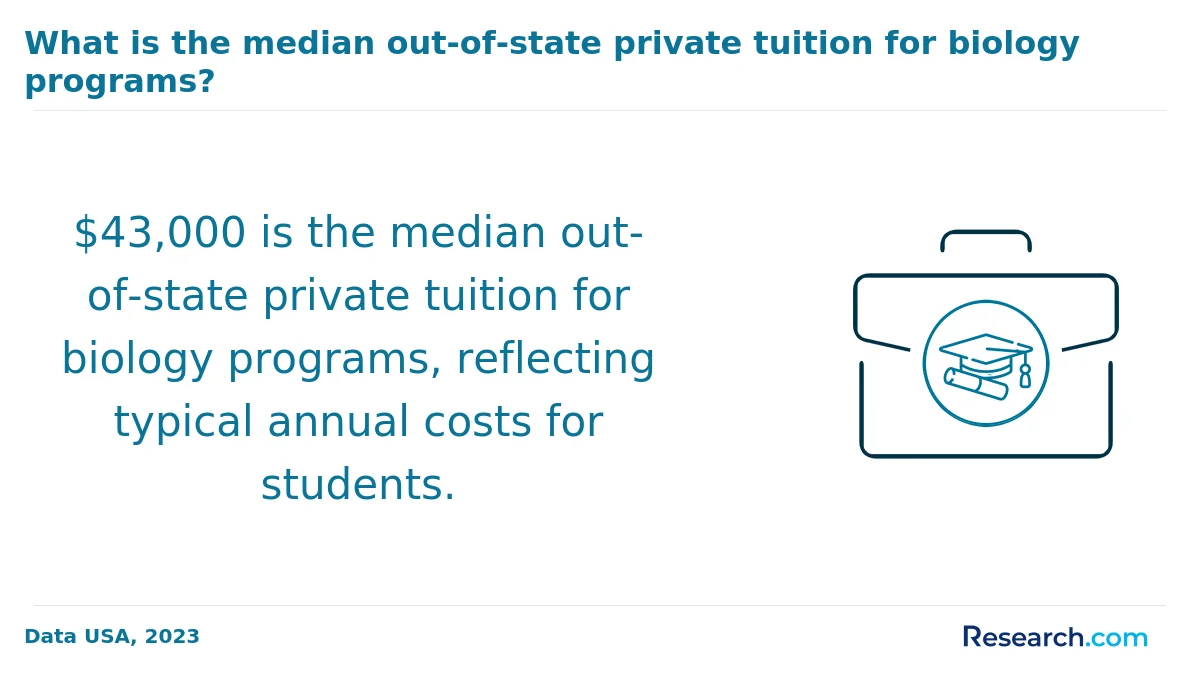
Understanding the average cost of an online biology degree in Maryland reveals striking realities that often challenge assumptions about affordability in higher education. Graduates from popular Maryland institutions like the University of Maryland and Towson University frequently reflect on tuition totals near $18,504 for in-state students, a figure aligned with the median in-state total cost. This cost, while substantial, remains an investment in their future, as they frequently recall balancing coursework with flexible schedules that online biology programs afford.
Out-of-state students, however, face median totals around $23,724, pushing budgets much higher and inviting deeper contemplation about residency status and long-term financial planning. These costs compel many to seek creative funding options and scholarships that some Maryland schools actively offer, helping to offset expenses. Such financial navigation is common among those pursuing an online master's degree in biology, where tuition can exceed $24,500, underscoring the practical importance of understanding Maryland online master's in biology tuition fees early in the decision process.
Beyond just tuition, graduates often highlight additional costs ranging from technology fees to specialized lab materials, expenses that can quietly escalate the overall price. Yet many express satisfaction in the value they received-access to advanced digital resources and networking opportunities that fostered professional growth. Some even point to informed career moves inspired by exploring the highest paying biology degree jobs, rewarding them with a strong return on investment and personal fulfillment.
Financial aid for online biology students in Maryland is often more accessible than many expect, especially at institutions like Towson University or University of Maryland Global Campus. Graduates frequently share how Pell Grants, which don't require repayment, became a lifeline during their undergraduate studies, significantly lightening their financial burden. These grants hinge on demonstrated need, making the Free Application for Federal Student Aid (FAFSA) a critical first step.
Beyond federal aid, Maryland's own programs, such as the Senatorial and Delegate Scholarships administered by the Maryland Higher Education Commission, shine as powerful yet competitive resources. Many biology students recount the relief of securing such scholarships, which honor both merit and need, reflecting their dedication to science.
Institutional scholarships and work-study options also prove vital. Imagine balancing online courses from University of Maryland Baltimore County with a departmental scholarship aimed directly at STEM majors-this practical support often bridges the gap between ambition and affordability.
Moreover, employed students benefit profoundly from tuition assistance programs offered by Maryland employers, turning professional growth and academic advancement into a unified journey rather than competing priorities. External scholarships from organizations like the American Society for Cell Biology further affirm that Maryland biology students are part of a larger, supportive scientific community.
Completing your degree faster means combining smart course selection with proactive planning:
- Transfer eligible graduate-level credits or professional certifications to reduce required coursework
- Enroll full-time and take advantage of summer or winter sessions to maintain momentum
- Choose programs offering competency-based or accelerated course formats for quicker progression
- Prioritize core requirements early, then add electives once foundational courses are complete
- Work closely with academic advisors to create an optimized course sequence and avoid delays
- Balance lab-based modules with asynchronous lectures to fit a heavier course load without overcommitting
For students exploring other accelerated health science options, check out pharmacy school online.
To enroll in an online biology degree program in Maryland, students must meet specific prerequisites that reflect both academic readiness and a genuine passion for the field. Many graduates from the University of Maryland and Towson University recall that a high school diploma with strong grades in biology, chemistry, and math laid the essential groundwork. This preparation not only boosted their confidence but also eased their transition into rigorous college-level science courses.
For master's degree seekers, the expectation tightens: a completed bachelor's degree, often in biology or a related discipline, paired with a solid GPA around 3.0 or higher. Graduates describe how prior coursework in genetics, organic chemistry, and statistics was invaluable, sharpening their analytical thinking and scientific curiosity early on. Applying to programs in Maryland also often means submitting official transcripts and letters of recommendation, tasks that students find rewarding as they reflect on their growth and ambitions.
Many recall that crafting a personal statement about their passion for biology and career goals became a turning point-transforming their application into a meaningful story rather than a mere formality. Navigating these requirements within Maryland's thriving biological sciences community reminded them that these prerequisites are not barriers but gateways, connecting education to meaningful local opportunities.
Online biology degree programs in Maryland typically immerse students in a rigorous blend of foundational and specialized courses that challenge conventional learning. Graduates from well-regarded institutions like the University of Maryland note how starting with core classes such as cell biology, genetics, and general biology principles felt like stepping into a living laboratory-each topic directly tied to real-world biological puzzles. This early exposure grounds students deeply in molecular and cellular concepts, essential for understanding life's complexity.
As students progress, courses like microbiology and ecology invite them to explore ecosystems not just as distant subjects, but as environments they can impact, even from their own backyards in Maryland. Biochemistry and evolutionary biology deepen that understanding, allowing learners to connect chemical processes and historical biological changes to health and environmental challenges they see locally.
More than theory, graduates from Salisbury University and Towson University highlight the value of integrating bioinformatics and research methodologies, which develop skills in analyzing biological data and designing experiments-skills that online learners surprisingly experience vividly through virtual labs and local partnerships. These courses transform abstract concepts into tangible skills applicable for a future in Maryland's biotech and healthcare sectors.
Maryland's online biology degree programs shatter conventional views by offering specializations that go beyond textbook biology. For instance, graduates from the University of Maryland who pursued cell and molecular biology often describe the thrill of decoding genetic mysteries, blending theory with hands-on virtual lab simulations that feel surprisingly tangible. These programs encourage reflection on how tiny cellular processes underpin vast biological systems.
Environmental biology and ecology students, especially those from popular Maryland colleges, share moments of awe when studying local ecosystems online-mapping Chesapeake Bay's wetlands remotely, feeling deeply connected to regional conservation efforts. These experiences embody why the fastest online biology degree specializations Maryland can offer are not mere academic tracks but vibrant pathways aligned with real ecological challenges.
The appeal of an online biology master's programs specializations Maryland truly shines in areas like bioinformatics. Graduates highlight how mastering computational biology tools felt like holding a key to the future of medicine, inspiring a blend of excitement and purpose. For those seeking further insight into their options, consider exploring biological science degree programs online that cater to diverse scientific passions.
Choosing the best online biology degree in Maryland goes beyond looking at program rankings or convenient schedules. Graduates from popular institutions like the University of Maryland often emphasize the value of accreditation-not just as a formality but as a guarantee their degree holds weight across industries and states. For many, programs accredited by the Middle States Commission on Higher Education set a standard recognized nationwide. This is a key first step, especially when seeking one of the best online biology master's programs Maryland offers.
Imagine a student navigating the course options at Towson University, balancing a full-time job while craving flexibility and real-world application. Their satisfaction comes from programs that combine rigorous curriculum with opportunities for virtual labs or local internships, bridging theory with practice. Such experiences embody the affordable online biology degrees Maryland students look for, where cost meets true educational value.
For those uncertain, exploring accelerated online degrees in biology can reveal surprising pathways to fast-track careers without sacrificing depth or connections to Maryland's thriving biotech sector. This kind of insight fundamentally changes how you assess program worth.
Maryland's online biology degree programs open doors to far more than traditional lab work. Graduates often find themselves thriving as biological technicians or stepping into medical laboratory science roles, supported by the state's robust healthcare industry. Some choose to become genetic counselors, a path requiring further certification but offering deeply rewarding interactions with patients. Students from institutions like the University of Maryland Global Campus share how this flexibility allows them to balance life while preparing for meaningful careers - a reminder that success isn't one-size-fits-all in biology. Exploring environmental biology taps into Maryland's unique ecosystems; graduates are making tangible impacts as consultants or conservation scientists around Chesapeake Bay, proving the degree's real-world relevance. Teaching at high schools or community colleges remains a fulfilling option for those driven by curiosity and mentorship.
Consider the diverse landscape of biology master's degree jobs Maryland offers: from healthcare labs to government environmental agencies, career paths invite graduates to apply their knowledge in varied, impactful ways. Investing in an online biology degree here is not just about learning-it's about stepping confidently into multifaceted opportunities shaped by the state's needs and your ambitions. For those seeking an accessible path, exploring the affordable online bachelor of biology degree options in Maryland universities provides a strategic start.
The job market for online biology degree graduates in Maryland defies outdated assumptions that remote programs limit career prospects. Graduates from universities such as the University of Maryland and Towson University share stories of quickly securing roles as research assistants and environmental consultants, often citing the state's biotech and pharmaceutical hubs as key factors. Maryland's emphasis on integrating online students into local internships highlights a unique advantage, proving that employers value the skills needed to become a biologist are well cultivated regardless of delivery mode.
For those exploring the job outlook for online biology graduates in Maryland, salary data supports optimism. With an average annual wage nearing $75,000, Maryland surpasses the national medians, emphasizing robust demand fueled by agencies like NIH and the FDA. Graduates often describe their Maryland education as a launchpad into fulfilling careers in health-related and environmental sectors.
Maryland online biology degree employment opportunities extend beyond traditional lab roles. Graduates find increasing possibilities in burgeoning environmental consulting firms and biotech startups, where interdisciplinary and innovative approaches thrive. This evolution invites students to rethink how an online degree can be a strategic step into Maryland's expanding biology job market.
2027 Fastest Online Master's in Biology Degree Programs Ranking in Maryland
Investing in your education is a significant decision that can shape your future, and the Research.com team understands the importance of making informed choices. To assist prospective students in Maryland, we have meticulously crafted the "2027 Fastest Online Master's in Biology Degree Programs Ranking in Maryland." Our commitment to quality, credibility, and accuracy is reflected in the extensive research and analysis conducted to compile this ranking. We utilized the following reputable data sources to ensure a comprehensive evaluation of biology programs:
By exploring this ranking, readers will gain valuable insights into the fastest and most efficient online biology master's degree options available in Maryland, helping them make confident and informed decisions about their educational journeys. For more details on our methodology, please visit our Research.com methodology page.


# 3 position
University of Maryland Global Campus
Master of Biotechnology: Bioinformatics

Frequently Asked Questions About biology
Online biology degree students in Maryland can maximize their learning by actively engaging with available resources. Universities often provide access to virtual labs, interactive simulations, and research databases that enhance practical understanding of biological concepts. Maryland hosts significant research institutions like the National Institutes of Health, offering unique opportunities for collaboration or internships, which students should pursue when possible.
Networking with professors and peers through online discussion boards and virtual study groups is essential. These interactions support deeper comprehension and exposure to current biological research trends in Maryland's diverse ecosystems. Additionally, students should take advantage of Maryland's public resources, such as the Maryland Biodiversity Project website, to connect theory with local environmental biology.
Consistently managing time and setting clear academic goals also improves success. According to the Maryland Higher Education Commission, students who balance coursework with active practical experience report higher retention and job placement rates in biology fields.
The biology field is rapidly expanding, with several emerging niches gaining prominence. In Maryland, areas such as biotechnology, bioinformatics, and environmental biology are attracting substantial research and job growth. According to the Maryland Department of Labor, biotechnology employment in the state is projected to grow by nearly 12% over the next decade, reflecting strong demand for expertise in genetic engineering and molecular biology.
Bioinformatics combines biology with data science, supporting advances in personalized medicine and genomics. Environmental biology focuses on conservation and sustainability, addressing local Chesapeake Bay ecosystem challenges. Maryland's vibrant research institutions and biotech firms provide online biology students with expanded career opportunities in these dynamic specialties.
Preparing for the job market after earning an online biology degree in Maryland involves strategic planning and skill development. Graduates should focus on gaining practical experience through internships or research opportunities, many of which Maryland's biotech hubs, such as Baltimore and Rockville, offer. According to the Maryland Department of Labor, the life sciences sector has grown by 12% over recent years, creating numerous job openings.
Networking is crucial; joining local professional organizations like the Maryland Bioscience Network can provide connections and insights. Additionally, Maryland boasts top research institutions that often recruit biology graduates. Enhancing skills in data analysis and laboratory techniques improves employability. Finally, pursuing relevant certifications can distinguish job candidates in the competitive Maryland market.
Employers in Maryland highly value biology graduates who demonstrate strong analytical and laboratory skills. Proficiency in data analysis and familiarity with modern scientific software are essential, as Maryland's biotech sector continues to grow rapidly. According to the Maryland Department of Labor, demand for workers with expertise in molecular biology and genetics is increasing by nearly 10% annually.
Communication skills are also critical. Biology professionals must effectively convey complex scientific information to both specialists and non-experts, particularly in collaborative research environments common in Maryland's academic and healthcare institutions.
Additionally, employers seek graduates with solid problem-solving abilities and experience in experimental design, which are important for roles in research and development.
Finding internships in Maryland relevant to a biology degree involves tapping into local research institutions, government agencies, and private companies active in the life sciences sector. Maryland hosts major employers like the National Institutes of Health (NIH) and the U.S. Food and Drug Administration (FDA), offering numerous internship opportunities for biology students.
University career centers and online portals such as Maryland's WorkSource provide listings tailored to science internships. Networking through professional groups like the Maryland Biological Laboratory or attending virtual career fairs can also connect students to openings.
Students should apply early, as competitive programs often fill quickly, and gain experience in lab techniques or fieldwork to improve chances.
An online biology degree in Maryland can significantly enhance career mobility and advancement by providing access to diverse job opportunities in a state with a strong life sciences presence. Maryland hosts numerous federal agencies, such as the National Institutes of Health and the Food and Drug Administration, which require skilled professionals with biology backgrounds. According to the U.S. Bureau of Labor Statistics, biological scientists in Maryland earn a median annual wage of approximately $83,000, higher than the national average.
Completing an online degree from an accredited Maryland institution allows working professionals to improve their qualifications without relocating. This flexibility helps students balance education and employment, promoting steady career growth.
In addition, many employers in Maryland value the combination of practical experience and formal education that online biology programs offer, often leading to promotions or roles in research, healthcare, and environmental sectors. The state's strong biotechnology and pharmaceutical industries further support upward mobility for graduates in biology-related fields.
Studying for a biology degree online in Maryland offers students a strong foundation in the natural sciences while emphasizing interdisciplinary skills. Maryland's institutions often integrate coursework in chemistry, environmental science, and data analysis, reflecting the state's leadership in biotech and healthcare industries. This broad approach equips graduates to collaborate across fields such as public health, pharmaceuticals, and environmental management.
According to the Maryland Higher Education Commission, the state hosts more than a dozen accredited institutions offering biology degrees with interdisciplinary opportunities. These programs prepare students for diverse roles, including research, policy advising, and technical writing. The curriculum often incorporates project-based learning, fostering problem-solving skills applicable in multiple sectors.
When choosing between a thesis and a non-thesis online biology degree in Maryland, consider your career goals first. A thesis program typically involves original research and is ideal for students aiming for doctoral studies or research-intensive roles. It demands significant commitment to a research project under faculty supervision. Conversely, a non-thesis option focuses more on coursework and practical skills, suited for professionals pursuing careers in industry, education, or government agencies.
Maryland, with its strong biotech sector, offers many research opportunities that may benefit thesis students. According to the Maryland Department of Commerce, the state's life sciences industry employs over 44,000 workers, highlighting the importance of practical skills for the job market.
Additionally, thesis programs may take longer to complete due to research time-often 2 to 3 years-while non-thesis degrees tend to be faster. Tuition and funding options can also differ, so review each program carefully.
Students based in Maryland looking to study biology abroad through online programs face limited direct options due to the specialized nature of international online degrees in biology. Most U.S. institutions offering fully online biology master's degrees, including those in Maryland, focus on domestic accreditation and curricula designed for local licensure or research standards.
However, students can explore partnerships between Maryland universities and foreign institutions that offer exchange or dual-degree options, although these often require some on-site presence abroad. According to the Institute of International Education, Maryland ranks well in study abroad participation, but biology remains a less common major for direct overseas study.
For strictly online study abroad degrees, students typically pursue programs housed in U.S.-accredited schools with international collaborations, rather than enrolling directly in foreign universities. This ensures compliance with Maryland's professional standards and graduate credit transferability.
Maryland offers diverse part-time job opportunities that complement biology degree education, especially for students enrolled in online programs. Positions such as lab assistants or research aides at local universities and biotech firms provide hands-on experience with scientific equipment and methodologies. Maryland's thriving biotechnology sector, centered around the I-270 corridor, employs thousands, creating strong demand for biology students.
Additionally, roles in environmental consulting firms or non-profits focused on conservation allow students to apply ecological knowledge practically. According to the Maryland Department of Labor, job growth for biological technicians in the state is projected at 7% through 2030, reflecting steady opportunities.
Hospitals and healthcare facilities also offer part-time jobs, such as phlebotomy technicians or medical lab clerks, which align well with biology studies.
Online biology students in Maryland benefit from various networking opportunities designed to connect them with professionals and peers in the field. Many Maryland universities offering online biology degrees promote virtual student organizations and biology-specific forums, enabling collaboration and knowledge sharing.
Additionally, the state hosts events through established groups like the Maryland Chapter of the American Society for Microbiology, which offers webinars and local meetups accessible to online learners.
Maryland's proximity to major research institutions, including the National Institutes of Health and Johns Hopkins University, provides students opportunities to participate in internships and workshops affiliated with these organizations, enhancing professional connections.
According to the Maryland Higher Education Commission, online students often have access to alumni networks, fostering mentorship and career guidance in biology-related fields.
Alumni networks play a crucial role in supporting online biology degree students in Maryland by offering valuable professional connections. These networks connect current students with graduates working in various biology fields such as biotechnology, environmental science, and healthcare, which are prominent industries in Maryland. According to the Maryland Department of Labor, the life sciences sector employs over 40,000 workers statewide, highlighting the importance of such connections.
Through alumni events and online platforms, students can access mentorship, internships, and job opportunities tailored to Maryland's growing biology job market. Alumni success stories often guide students in navigating career paths and challenges unique to the local scientific community.
Moreover, strong alumni ties contribute to collaborative research and networking, essential for advancing in biology careers in the region.
Customizing an online biology degree in Maryland allows students to align their education with specific career goals. Many Maryland institutions offer elective courses, letting students focus on areas like molecular biology, ecology, or bioinformatics. For example, universities may provide specialized tracks or certificates within the biology program, supporting skills relevant to fields such as healthcare, environmental science, or biotechnology.
Internships and research opportunities, often available even in online formats, can also enhance practical experience and job readiness. According to the Maryland Higher Education Commission, over 40% of biology graduates pursue advanced certifications or specialized roles, emphasizing customization's importance. Advisors commonly assist students in creating individualized study plans that meet both academic and professional needs.
Online biology students in Maryland often face challenges related to laboratory experience, which is crucial in biology education. Many programs require in-person labs, making it difficult for fully remote students to gain hands-on skills. Additionally, students may struggle with limited access to specialized equipment and local internships that are important for practical learning and career advancement.
Time management is another common hurdle, as balancing online coursework with work or family commitments demands strong self-discipline. Technical issues such as unstable internet connections can also disrupt learning, especially in rural areas of Maryland.
According to the Maryland Higher Education Commission, student support services tailored for online biology learners remain uneven across institutions, impacting academic success.
With an online biology degree in Maryland, graduates can pursue several professional certifications to enhance their careers. One popular option is the Certified Biological Safety Professional (CBSP), which validates expertise in handling biological risks. Another route is obtaining certification as a Clinical Laboratory Scientist, allowing work in medical labs under Maryland's state regulations.
Environmental professionals might consider the Certified Ecologist (CE) credential, boosting prospects in conservation roles. Maryland's thriving biotechnology industry also values certifications such as the Regulatory Affairs Certification (RAC) for specialists managing compliance in life sciences.
These certifications often require related experience and passing standardized exams. They can open doors to roles in healthcare, research, and environmental management across Maryland. Sources like the Maryland Higher Education Commission and the U.S. Bureau of Labor Statistics provide further guidance on relevant certifications and employment outlooks.
When applying to an online biology program in Maryland, it is essential to clearly demonstrate your academic readiness and passion for the subject. Begin by highlighting your previous coursework in biology or related sciences, emphasizing any research experience or lab work you have completed. Many Maryland programs prioritize candidates with strong science backgrounds, so detail your GPA and any honors received.
Additionally, Maryland's biotechnology sector is growing rapidly, supporting over 20,000 jobs according to BioMaryland Foundation. Mentioning your career goals related to this local industry can strengthen your application.
Letters of recommendation should come from professors or professionals familiar with your scientific skills. Also, write a compelling personal statement conveying your motivation to succeed in this online format and contribute to the field.
The global perspective on a biology career emphasizes its critical role in addressing challenges like health, environment, and agriculture. In Maryland, online biology degrees prepare students for these diverse fields, reflecting broader trends in the US. According to the Bureau of Labor Statistics, biological scientists are expected to grow by 8% nationally from 2022 to 2032, supporting worldwide demand.
Maryland's strong biotech industry, including hubs like the National Institutes of Health, offers graduates opportunities connected to global research efforts. Online programs in Maryland often highlight biotechnology, conservation, and public health, aligning with international priorities and innovations.
Students pursuing biology in Maryland benefit from a curriculum that integrates US standards with global scientific developments, making them competitive in the global job market. Research reports from Maryland higher education institutions confirm growing enrollment in life sciences as part of this trend.
Gaining practical experience while pursuing an online biology degree in Maryland is essential for building relevant skills and enhancing employability. Many Maryland institutions encourage students to participate in internships or research projects with local organizations, such as the National Institutes of Health or Johns Hopkins University, both leaders in biological research. Additionally, Maryland offers opportunities for virtual lab simulations and at-home experiments that align with coursework, helping students apply theory to real-world scenarios.
Students can also seek volunteer roles at research centers or environmental agencies, gaining hands-on experience in various biology fields. According to the Maryland Higher Education Commission, 45% of biology graduates in the state complete internships before graduation, highlighting the importance of practical learning.
Choosing the right concentration within an online biology degree program in Maryland depends on your career goals and interests. Maryland's growing biotechnology and healthcare industries create diverse opportunities in fields like molecular biology, environmental biology, and bioinformatics.
Research local job market trends through resources like the Maryland Department of Labor, which reports steady growth in biological science occupations, particularly in medical and environmental sectors. Consider concentrations aligned with this demand to improve employment prospects.
Additionally, evaluate programs for faculty expertise and research facilities that support your focus area. Many Maryland schools offer specialized tracks reflecting regional industry strengths, which can enhance networking and internships opportunities.
Finally, review curriculum flexibility and online learning support to ensure your chosen concentration fits both your academic and professional needs.
- 2027 Fastest Online Master's in Biology Degree Programs Ranking in Pennsylvania
- 2027 Fastest Online Master's in Biology Degree Programs Ranking in Massachusetts
- 2027 Fastest Online Master's in Biology Degree Programs Ranking in Indiana
- 2027 Fastest Online Master's in Biology Degree Programs Ranking in Texas
- Course Information | UMGC https://www.umgc.edu/online-degrees/course-information.biol
- Alumni Network https://ssp.org/alumni-network/
- Bachelor's in Biology - Degrees - Online Colleges https://www.onlinecolleges.net/degrees/biology/
- 2026 Best Online Biology Degrees https://www.onlineu.com/degrees/biology
- Biology https://www.harford.edu/academics/credit-programs/programs/biology.php
- Biology Degree at McDaniel College https://www.mcdaniel.edu/academics/departments/biology/biology
- Associate Degree in Biology | Carroll ... https://www.carrollcc.edu/programs/degrees-credit-certificates/biology-a-s/
- How to Create a Biology Course Plan for Accelerated ... https://www.straighterline.com/blog/how-to-create-an-efficient-biology-course-plan-for-accelerated-degree-completion
- What Can You Do With a Biology Degree? https://willamette.edu/academics/college/biology/career-options
- Biology Major Jobs & Career Resources https://www.towson.edu/careercenter/planning-resources/major/biology.html