2027 Biology Degree Underemployment Report: Which Graduates Are Most Likely to Work Below Their Education Level

Co-Founder and Chief Data Scientist
Many biology graduates discover that a bachelor's degree alone does not always lead directly to laboratory, clinical, environmental, or biotech roles. Federal Reserve Bank of New York labor market data published in 2024 places recent college graduate underemployment near 40%, with biology among majors where educational mismatch is a serious risk.
This guide is for biology students, recent graduates, and career changers who want to avoid low-credential work. You will learn where underemployment happens, which skills employers expect, what salary gaps look like, and how to position a biology degree for better-fit roles.
Key Things to Know About Underemployment in Biology Industry
- Biology is a higher-risk major for early-career underemployment because many degree-level roles require laboratory experience, regulated-industry documentation skills, data analysis, licensure, or graduate training beyond general coursework.
- The strongest bachelor's-level outcomes tend to come from targeted pathways such as biotechnology quality control, clinical laboratory science, environmental compliance, bioinformatics support, research operations, and regulated manufacturing rather than broad "biology" job searches.
- BLS 2024 wage data show why job fit matters: biological technicians had a median wage near $51,430, while medical scientists had a median wage near $100,590, meaning graduate school, specialization, and credentialing can materially change long-term earning power.
- How likely is it for Biology graduates to become underemployed?
- Is the college curricula for Biology keeping up with employer expectations?
How likely is it for Biology graduates to become underemployed?
Biology graduates have a meaningful underemployment risk, especially in the first job after college. Underemployment means working in a role that typically does not require a bachelor's degree, while educational mismatch means the worker's education level or field does not match the job's requirements.
For biology majors, this often looks like taking retail, administrative, patient intake, general lab aide, animal care, sales support, or nontechnical healthcare jobs while searching for degree-level work.
Federal Reserve Bank of New York data published in 2024 show that recent college graduates overall continue to face elevated underemployment, and biology sits in the group of majors where roughly half of recent graduates may work below degree level early in their careers.
The key takeaway is not that biology is a poor major; it is that biology is a broad major with uneven access to degree-level jobs unless students build a specific employment path before graduation.
The risk is highest for graduates who leave college with mostly lecture-based coursework, no internship, no wet-lab or computational project evidence, and no clear target role.
It is lower for students who can name the role they want, show experience with the tools used in that role, and apply in regions with biotech, clinical diagnostics, environmental consulting, pharmaceutical manufacturing, public health, or university research activity.
The table below shows common first-job outcomes and how well they typically use a biology degree. It helps separate legitimate career-entry roles from fallback jobs that may create longer-term mismatch if there is no exit plan:
| Early-career job type | Typical degree fit | Why it matters for underemployment risk |
| Research assistant or biological technician | Moderate to strong | Uses laboratory methods, documentation, sample handling, and scientific problem-solving. |
| Quality control associate in biotech or pharmaceuticals | Strong | Connects biology knowledge with regulated testing, GMP documentation, and manufacturing workflows. |
| Clinical laboratory technologist or technician | Strong when licensure or certification requirements are met | Can be a degree-level role, but requirements vary by state, employer, and laboratory setting. |
| Environmental field technician | Moderate | Uses ecology, sampling, compliance, and reporting skills, though some jobs are physically intensive and seasonal. |
| Medical assistant, pharmacy clerk, or patient services representative | Weak to moderate | May provide healthcare exposure but often does not require a biology degree or build technical biology credentials. |
| Retail, hospitality, general office, or unrelated sales role | Weak | Usually does not build the technical experience employers expect for degree-level biology work. |
The best way to interpret this risk is practical: biology graduates should not wait until senior spring to "see what is available." They should choose a job family early, map required skills, and graduate with evidence that matches employer postings.
Is the college curricula for Biology keeping up with employer expectations?
Biology curricula often provide a strong scientific foundation, but many programs still emphasize broad conceptual knowledge more than the job-ready skills employers screen for in entry-level postings.
Employers in biotech, clinical laboratories, environmental consulting, pharmaceuticals, food safety, and public health frequently want evidence of applied methods, documentation discipline, data tools, compliance awareness, and experience working in teams under deadlines.
This does not mean the traditional biology curriculum is obsolete. Courses in genetics, microbiology, physiology, ecology, biochemistry, and cell biology remain valuable. The problem is that a transcript alone may not prove that a graduate can run assays, maintain lab notebooks, analyze data, follow standard operating procedures, or document deviations in a regulated environment.
The table below compares common curriculum strengths with employer expectations. Use it to audit whether a biology program is preparing students for degree-level work or mainly for graduate school admissions:
| Area | What many biology programs teach well | What employers often expect in entry-level roles |
| Laboratory technique | Introductory wet-lab exposure and controlled course experiments | Pipetting accuracy, aseptic technique, PCR, ELISA, chromatography exposure, sample tracking, and troubleshooting |
| Data analysis | Basic statistics or research methods | Excel proficiency, R or Python exposure, data cleaning, visualization, and reproducible analysis habits |
| Documentation | Lab reports and academic writing | Good Documentation Practice, SOP compliance, chain of custody, audit readiness, and clear technical records |
| Industry context | Scientific theory and research literature | GMP, GLP, quality systems, regulatory awareness, biosafety, and product or patient impact |
| Career preparation | Faculty advising and pre-health guidance | Internships, co-ops, employer projects, alumni referrals, mock technical interviews, and role-specific resumes |
Students can close these gaps by treating the degree as the foundation rather than the full credential. A biology major who adds a year of undergraduate research, a summer internship, a data portfolio, or certification-aligned training is easier for employers to evaluate than a graduate with only a high GPA and broad coursework.
One common mistake is choosing electives only by interest without checking job postings. A student interested in biotechnology quality control, for example, may benefit more from microbiology, biochemistry, statistics, and regulatory documentation exposure than from an unrelated set of upper-division electives.
Students considering alternative healthcare pathways should also compare degree fit carefully; for example, some biology graduates interested in communication disorders research or clinical allied health may explore cheapest online SLP programs, but that pathway serves a different labor market than laboratory biology.
Biology underemployment tends to be higher than in majors with clearer bachelor's-to-occupation pipelines, such as nursing, accounting, engineering, computer science, or education. It is often closer to other broad academic majors where employers need additional proof of applied skill, work experience, or graduate-level specialization.
The reason is structural. Biology is both a science major and a gateway major. Many students use it for medical, dental, veterinary, physician assistant, pharmacy, research, public health, or graduate science pathways. Graduates who do not continue into those pathways may enter the labor market competing for a limited set of bachelor's-level science jobs, many of which require hands-on experience that coursework alone may not provide.
The table below provides a practical comparison of underemployment risk by major type. The categories are based on observed U.S. labor market patterns reported in major-level underemployment data and occupational hiring structures, not on a guarantee for any individual graduate:
| Major category | Typical early-career underemployment risk | Why outcomes differ |
| Nursing and allied clinical programs | Lower | Licensure and clinical placements create a direct connection between degree and job. |
| Engineering | Lower to moderate | Employers hire directly for technical roles tied to specific accredited curricula and project skills. |
| Accounting and finance | Lower to moderate | Entry-level analyst and associate roles are clearly defined, though internships still matter. |
| Computer science and data fields | Moderate | Skill-based hiring is strong, but competition and portfolio expectations have increased. |
| Biology | Moderate to high | The major is broad, and many degree-level roles require lab experience, certifications, licensure, or graduate education. |
| General humanities and broad social sciences | Moderate to high | Career outcomes depend heavily on internships, writing samples, technical add-ons, and networking. |
Biology students should use this comparison to make a planning decision. If they want a job immediately after the bachelor's degree, they should build a technical employment profile. If they are using biology as a pre-professional major, they should understand that the return on the degree may depend on admission to a later credential program.
Yes, it can affect career growth, but the impact depends on the role and the graduate's exit strategy. A short-term low-credential job that provides relevant exposure may help a graduate enter a better role later. A long-term unrelated job can make the biology degree look stale because the resume stops showing technical practice, scientific problem-solving, or recent laboratory experience.
Biology employers often hire cautiously because laboratory, clinical, environmental, and manufacturing errors can affect safety, compliance, product quality, or patient outcomes. When two applicants have similar degrees, the one with recent role-relevant experience is usually easier to place. This is why underemployment can become self-reinforcing: the longer a graduate works outside the field, the harder it may be to prove current technical readiness.
Low-credential work can also delay access to promotions that compound over time. Degree-level biology careers often progress through ladders such as technician, associate scientist, senior associate, quality specialist, regulatory affairs associate, clinical laboratory scientist, environmental scientist, project coordinator, or research operations manager. Time spent in unrelated work may postpone the first step on that ladder.
That said, not all detours are harmful. Customer service can support clinical research coordinator roles if paired with medical terminology and documentation training. Sales experience can support life science sales or customer success if paired with product knowledge.
Administrative experience can support research operations if paired with grants, IRB, biosafety, or compliance exposure. The issue is not whether the first job is perfect; it is whether the next employer can see a credible connection.
For biology professionals who later move into leadership, business training may help after technical credibility has been established. Some experienced scientists, quality managers, or biotech operations professionals eventually compare executive MBA programs when they are targeting management roles, but that route typically works best after a person has already built domain experience.
The salary gap can be substantial because low-credential roles often pay closer to general service, clerical, or support wages, while degree-level biology roles pay for technical skills, regulated responsibility, analytical judgment, and experience.
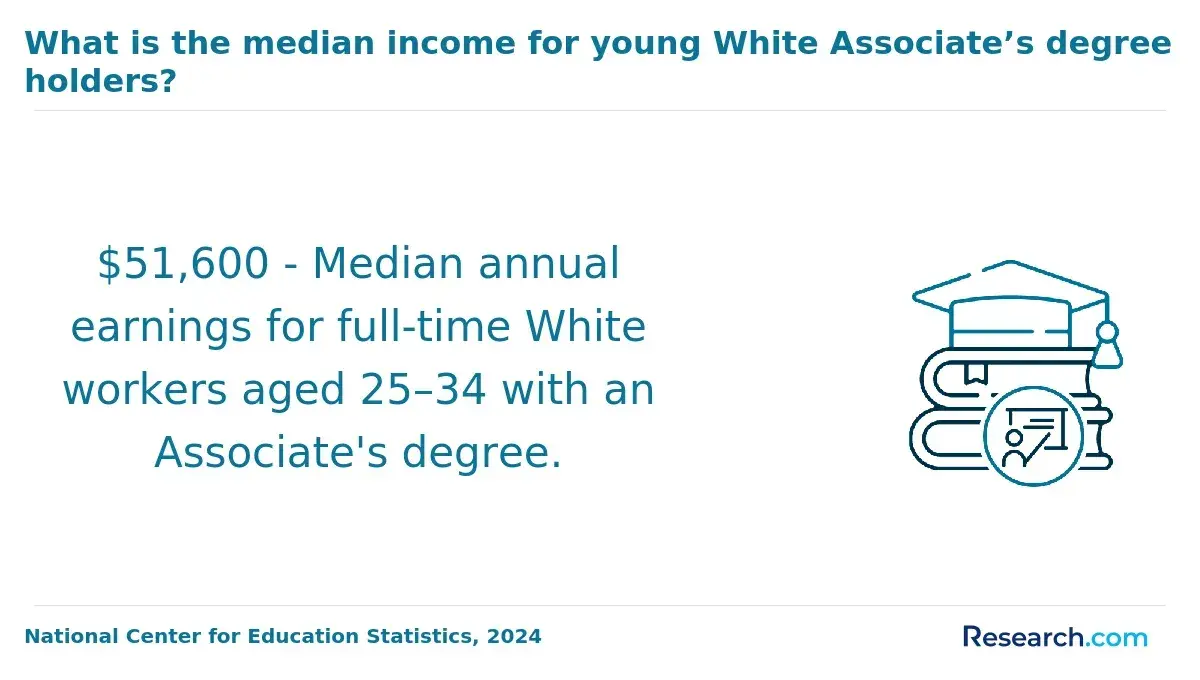
BLS May 2024 wage data show the difference clearly: biological technicians had a median wage near $51,430, while many unrelated service or retail roles had median wages far below that level. At the higher end, medical scientists had a median wage near $100,590, although that occupation commonly requires graduate education.
The table below compares common low-credential fallback roles with biology-aligned roles. These are national medians or typical wage benchmarks, so local pay can vary by state, metro area, employer type, union status, shift differential, licensure, and experience:
| Role type | Example roles | Degree utilization | Approximate U.S. wage context from recent BLS data |
| Unrelated fallback work | Retail salesperson, food service worker, general office clerk | Low | Often below the median for bachelor's-level science roles |
| Healthcare support without biology-level duties | Medical assistant, patient service representative, pharmacy clerk | Low to moderate | Can provide exposure but may not compensate for a bachelor's-level science skill set |
| Entry-level biology technician work | Biological technician, lab technician, research assistant | Moderate to strong | Biological technicians had a median wage near $51,430 in BLS 2024 data |
| Clinical laboratory pathway | Clinical laboratory technologist or technician | Strong when credential requirements are met | Often pays more than general support roles, especially with certification, licensure, or hospital experience |
| Advanced science pathway | Medical scientist, senior research scientist, principal scientist | Strong | Medical scientists had a median wage near $100,590 in BLS 2024 data, but graduate training is often required |
The most important financial lesson is that underemployment affects more than the first paycheck. It can slow retirement saving, make student loan repayment harder, delay relocation to stronger labor markets, and reduce the time available to build technical credentials. Graduates should evaluate a fallback job by asking whether it helps them qualify for a better-paying degree-level role within a defined timeline.
Biology underemployment is rarely caused by one factor. It usually comes from a combination of broad curricula, limited lab openings, weak career targeting, geographic mismatch, and employer expectations for prior experience. The labor market is especially challenging for graduates who apply broadly to "biology jobs" without translating their coursework into employer language.
The following barriers are the most common reasons biology graduates end up in low-credential roles. Understanding them early helps students choose the right internships, electives, certifications, and locations before graduation:
- Limited hands-on experience: Employers may hesitate if a graduate has completed labs only in class and cannot show independent research, internship, co-op, or workplace laboratory experience.
- Generalist positioning: A resume that says "biology major" but does not specify microbiology, molecular biology, environmental sampling, quality control, clinical diagnostics, data analysis, or regulatory interests can look unfocused.
- Licensure and certification barriers: Clinical laboratory roles may require specific coursework, supervised training, state licensure, or national certification depending on the state and employer.
- Geographic mismatch: Biotech and pharmaceutical hiring is concentrated in certain metro areas, while environmental, agricultural, and clinical jobs vary widely by region.
- Weak documentation skills: Regulated employers need candidates who can follow SOPs, maintain accurate records, and understand why documentation errors matter.
- Competition from graduate-degree holders: Research and scientist-track roles may attract master's and PhD applicants, raising expectations even for entry-level openings.
- AI and automation pressure: Routine screening, image analysis, data processing, and repetitive documentation tasks are increasingly supported by software, which raises the value of interpretation, quality judgment, and tool fluency.
One red flag is a program that gives little structured support for internships, employer projects, or career-specific advising. Another is a student plan built entirely around graduate school "later" without a backup path if admission, funding, or timing changes. Biology students do not need to abandon the major, but they do need to narrow it into a marketable skill cluster.
Some graduates decide that their strongest employment route is not bench science but people operations, healthcare recruiting, or talent development in life science organizations. In that case, a specialized business pivot such as a 1 year online master's in human resources may be more relevant than a generic biology master's, especially for students who want to work with scientific teams rather than in the lab.
A biology resume should not read like a course catalog. It should show that the graduate can perform the tasks listed in the job description. Applicant tracking systems and hiring managers look for specific methods, instruments, software, regulations, specimen types, documentation practices, and outcomes.
Start by choosing one target job family before rewriting the resume. A resume for a quality control analyst should look different from a resume for an environmental technician, clinical research coordinator, lab assistant, or bioinformatics support role.
Use this sequence to reposition a biology resume for degree-level jobs. It turns academic experience into employer-readable evidence without exaggerating qualifications:
- Collect ten current job postings for one target role and highlight repeated skills, tools, regulations, and credentials.
- Create a skills section that mirrors verified experience, such as PCR, gel electrophoresis, aseptic technique, R, Excel, ELISA, microscopy, field sampling, SOPs, GLP, GMP, or data visualization.
- Rewrite lab, research, internship, and capstone bullets around actions and evidence, such as prepared samples, maintained records, analyzed datasets, calibrated equipment, or presented findings.
- Move relevant projects above unrelated work experience when the projects better prove job fit.
- Quantify scope only when accurate, such as number of samples processed, weeks of fieldwork, size of dataset, or number of protocols followed.
- Add a short target headline, such as "Biology graduate with microbiology lab and quality documentation experience," rather than a vague objective statement.
- Customize the top third of the resume for each application so the most relevant techniques and keywords appear quickly.
Common resume mistakes include listing every biology course, using phrases such as "hard worker" instead of technical evidence, hiding research experience below unrelated jobs, and applying to scientist roles that require graduate training without also applying to technician or associate roles. A strong resume is honest, specific, and aligned with the level of responsibility the employer is actually filling.
Certifications can help biology graduates when they are tied to a target role. They are not magic fixes, and they do not replace experience, but they can reduce employer uncertainty by proving familiarity with safety, quality, clinical, data, or regulatory expectations.
The best certification depends on whether the graduate is targeting clinical labs, biotech manufacturing, environmental work, research support, public health, or data-heavy roles.
The table below summarizes certification areas that may improve degree-level positioning. Requirements vary by state, certifying body, employer, and prior coursework, so students should verify eligibility before paying for an exam or training program:
| Certification or credential area | Best fit for biology graduates targeting | How it may reduce underemployment risk |
| ASCP-related clinical laboratory credentials | Clinical laboratory technologist, medical laboratory scientist, or technician pathways | Signals readiness for regulated clinical lab work when eligibility and state rules are met. |
| Good Manufacturing Practice or Good Laboratory Practice training | Biotech, pharmaceutical, quality control, and manufacturing roles | Shows awareness of documentation, compliance, and regulated production environments. |
| OSHA or biosafety training | Laboratory, environmental, field, and industrial science roles | Supports safety readiness for jobs involving specimens, chemicals, field hazards, or lab protocols. |
| Clinical research coordination training | Clinical research assistant or coordinator roles | Builds vocabulary around protocols, informed consent, IRB processes, data capture, and trial documentation. |
| GIS certificate or coursework | Environmental biology, ecology, conservation, and public-sector roles | Adds a technical mapping and spatial analysis skill that many environmental employers value. |
| Data analytics, R, Python, or bioinformatics certificates | Research data, genomics support, public health analytics, and lab informatics | Helps biology graduates compete for roles that combine science knowledge with data handling. |
Certifications make the most sense when a graduate is close to qualifying for a role but lacks one recognizable signal. They make less sense when the real gap is lack of experience, unclear career targeting, or applying in a weak local labor market. Before enrolling, compare the certification against actual job postings and ask whether employers name it as required, preferred, or merely nice to have.
The strongest strategy is to treat career preparation as a four-year project, not a post-graduation scramble. Biology students who graduate with a role target, technical proof, employer contacts, and application materials tailored to real postings are much less likely to drift into low-credential work.
Use the following action plan to reduce underemployment risk while still in school. It is designed for students who want a bachelor's-level job as well as those considering graduate or professional programs:
- Pick a primary employment lane by sophomore or junior year: Choose from areas such as clinical laboratory science, biotech quality control, research support, environmental consulting, public health, bioinformatics support, science communication, or regulatory affairs.
- Audit job postings every semester: Save postings and track repeated requirements, including techniques, software, certifications, shift expectations, and years of experience.
- Prioritize applied electives: Choose courses that build marketable skills, such as microbiology, molecular biology, biostatistics, bioinformatics, toxicology, ecology field methods, immunology, or analytical chemistry.
- Secure experience before senior year: Pursue undergraduate research, internships, co-ops, hospital lab exposure, environmental fieldwork, biotech manufacturing work, or paid lab assistant roles.
- Build a small evidence portfolio: Keep nonconfidential examples of data analysis, field reports, lab presentations, protocol summaries, coding notebooks, or research posters.
- Network where biology jobs actually exist: Contact alumni in hospitals, diagnostic labs, biotech firms, environmental agencies, contract research organizations, and university research centers.
- Apply with a tiered strategy: Include reach roles, realistic degree-level roles, bridge roles, and temporary roles with clear technical upside rather than only applying to "scientist" titles.
- Evaluate offers for mobility: Ask whether the job provides training, internal transfer pathways, supervisor references, technical duties, and exposure to the roles you want next.
Students should also be honest about whether their goal requires graduate education. A biology master's may be useful for research specialization, biotechnology, ecology, public health, or teaching in some contexts, but it is not automatically the fastest return on investment. Sometimes a targeted certificate, clinical credential, internship, relocation, or role-specific portfolio provides a quicker route to degree-level work.
For students who decide they are better suited to management, recruiting, operations, or healthcare administration than laboratory science, business-oriented graduate pathways can be valid alternatives. The key is to connect the next credential to a specific role instead of enrolling because the first job search felt discouraging.
Some biology graduates move out of low-credential roles within a year or two, especially when the job is adjacent to a target field. Others remain underemployed longer because their first role does not build the experience employers require for degree-level science jobs. The difference is usually whether the first job functions as a bridge or a trap.
A bridge role may not be ideal, but it provides relevant exposure, terminology, supervisors, internal job postings, or technical experience. A trap role consumes time without producing biology-relevant skills, references, or credentials.
This matters because employers reviewing early-career resumes often look for progression: lab assistant to research associate, specimen processor to clinical lab trainee, environmental field technician to compliance specialist, or manufacturing associate to quality control analyst.
Use the following checklist to judge whether a low-credential role is worth taking temporarily. It is especially important for graduates who need income immediately but do not want to lose momentum toward degree-level work:
- Take the role only if it gives access to a laboratory, clinic, manufacturing site, environmental field team, research group, or regulated documentation process.
- Ask before accepting whether internal transfers into technician, analyst, quality, research, or compliance roles are common.
- Set a time limit, such as six to twelve months, and identify the skills, certifications, or references you must gain before leaving.
- Continue applying to degree-level roles while employed, rather than pausing the search because the fallback job feels stable.
- Avoid roles that advertise "science background preferred" but assign only retail, scheduling, billing, or general clerical tasks.
Graduates who decide they want to leave laboratory science altogether should make that decision strategically. For example, a biology graduate who discovers an interest in operations, healthcare administration, or biotech business may eventually compare management-focused options such as easiest MBA to get into, but that is a pivot decision, not a substitute for building an initial biology career plan.
Other Things You Should Know About Biology
Yes, biology can still be worth it, but the plan needs to be more specific. Students who are not pre-med should identify an employment lane early, such as biotech quality, clinical labs, environmental science, research operations, public health, or data-focused biology.
A high GPA helps, especially for graduate school and competitive internships, but it does not replace applied experience. Employers usually want proof that you can use techniques, tools, documentation practices, and data skills in real work settings.
Not always. A temporary lab job can be useful if it builds relevant skills, provides references, and leads to stronger roles. It is risky when the duties are repetitive, nontechnical, and disconnected from your target career path.
Relocation can help if the local market has few laboratories, biotech employers, hospitals, environmental firms, or research institutions. Before moving, compare job postings, salary ranges, cost of living, licensure rules, and whether employers hire entry-level candidates.
- STEM vs Non-STEM Outcomes (2026 stats) https://www.edsmartdata.com/deep-dive/stem-vs-non-stem-outcomes/
- Study Finds Socioeconomic Conditions – Not Genetics Or Lifestyle Choices – Account For Racial Life Expectancy Gap » NCRC https://ncrc.org/study-finds-socioeconomic-conditions-not-genetics-or-lifestyle-choices-account-for-racial-life-expectancy-gap/
- How the Geography of Jobs Affects Unemployment https://www.richmondfed.org/publications/research/econ_focus/2014/q3/feature2
- Biologist Salary - How Much Can You Really Earn? https://www.superprof.ca/blog/salary-for-biology-jobs/
- Careers Guidance https://www.rsb.org.uk/career-guidance.html