2027 Biology Degree Licensure Outcomes Report: Pass Rates, Barriers, and Career Impact

Co-Founder and Chief Data Scientist
A biology degree can lead to licensed work, but the license usually depends on the career path-not the biology major itself. Clinical laboratory, teaching, environmental health, and some healthcare routes each have different exams, supervised experience rules, and state requirements. The U. S. Bureau of Labor Statistics projects 5% growth for clinical laboratory technologists and technicians, making licensure-relevant planning especially important. This guide helps students, career changers, and parents compare pass rates, barriers, costs, timelines, and earnings so they can judge whether a biology degree supports the license and career outcome they want.
Key Things You Should Know
- There is no single national "biology license"; licensure outcomes must be evaluated by target occupation, such as medical laboratory scientist, biology teacher, environmental health specialist, physician assistant, physician, or genetic counselor.
- First-time exam pass rates are usually the cleanest program-quality signal; overall pass rates can look stronger because they may include repeat attempts, remediation, or delayed candidates.
- Licensure can materially change career access: clinical laboratory technologists and technicians had a median U.S. wage of $60,780 in recent federal data, while many non-licensed biology technician roles pay less and offer narrower advancement pathways.
- Is Professional Licensure Required for Biology Degree Careers?
- How Do Biology Degree Graduates Qualify for Professional Licensure?
Is Professional Licensure Required for Biology Degree Careers?
Professional licensure is not required for every biology degree career. A biology graduate can work in research support, quality control, environmental sampling, sales, science communication, regulatory support, or biotechnology operations without a state license. Licensure becomes important when the role affects public health, patient care, K-12 instruction, regulated laboratory testing, or legally protected professional practice.
The practical question is not "Does biology require a license?" but "Does my intended job require a license, certification, board approval, or supervised practice?" The table below separates common biology-related paths by how strongly licensure controls entry into the occupation.
| Career path | Typical biology degree connection | Is licensure usually required? | What the outcome means for students |
| Medical laboratory scientist or clinical laboratory scientist | Biology major plus an accredited MLS/CLS pathway or equivalent coursework and clinical training | Often required or strongly preferred, depending on state and employer | Students should verify exam eligibility and clinical placement access before enrolling. |
| Biology teacher | Biology degree plus teacher preparation, student teaching, and state exams | Required for public school teaching | A biology degree alone is usually not enough for a public teaching license. |
| Environmental health specialist or sanitarian | Biology, environmental science, or public health coursework | Varies by state and employer | State rules may require specific science credits, experience, and a registration exam. |
| Healthcare professional programs | Biology is a common pre-professional major | Required after completing the professional degree | The biology degree supports prerequisites but does not itself qualify graduates for medical, PA, PT, or dental licensure. |
| Biotechnology, research, and lab support | Direct entry with bachelor's-level lab skills | Usually not required | Employers may value experience, technical skills, and certifications more than a license. |
Students comparing biology against other regulated graduate paths should note that licensure planning is similar in speech-language pathology, counseling, and nursing: program accreditation, clinical hours, and state eligibility matter as much as the degree name. For example, readers comparing health-related graduate options may also review cheapest online SLP programs to see how licensure-focused programs disclose clinical and accreditation requirements.
How Do Biology Degree Graduates Qualify for Professional Licensure?
Biology graduates qualify for licensure by matching their education, supervised experience, exams, and state application materials to a specific profession. Graduation is only one checkpoint. For many regulated roles, the licensing board looks beyond the diploma to course titles, credit hours, clinical rotations, background checks, and exam results.
Most biology-related licensure pathways follow a sequence like this. The steps matter because a missed prerequisite can delay eligibility even when the student has already completed the degree.
- Choose the target licensed occupation before selecting upper-division electives, because a general biology curriculum may not include every required course.
- Confirm that the program, concentration, or post-baccalaureate track is accepted by the relevant state board, certification agency, or employer group.
- Complete required coursework, labs, fieldwork, clinical rotations, student teaching, or supervised experience under approved conditions.
- Apply for the licensing, certification, or registration exam using official transcripts and any required verification forms.
- Pass the exam and submit state-specific materials, which may include fees, background checks, jurisprudence exams, continuing education plans, or proof of supervised hours.
The most common mistake is assuming that a bachelor's in biology automatically creates license eligibility. It usually does not. A student who wants to become a clinical laboratory scientist, for instance, may need a NAACLS-accredited MLS program, a hospital-based clinical year, or a post-baccalaureate certificate depending on the state and exam route.
Online biology coursework can be useful for prerequisites, degree completion, or career pivots, but students should be cautious when the licensed role requires hands-on labs, clinical placements, or supervised teaching. If the program is online, ask where labs occur, who arranges placements, whether out-of-state students are eligible, and whether graduates have recently qualified for the intended licensing exam.
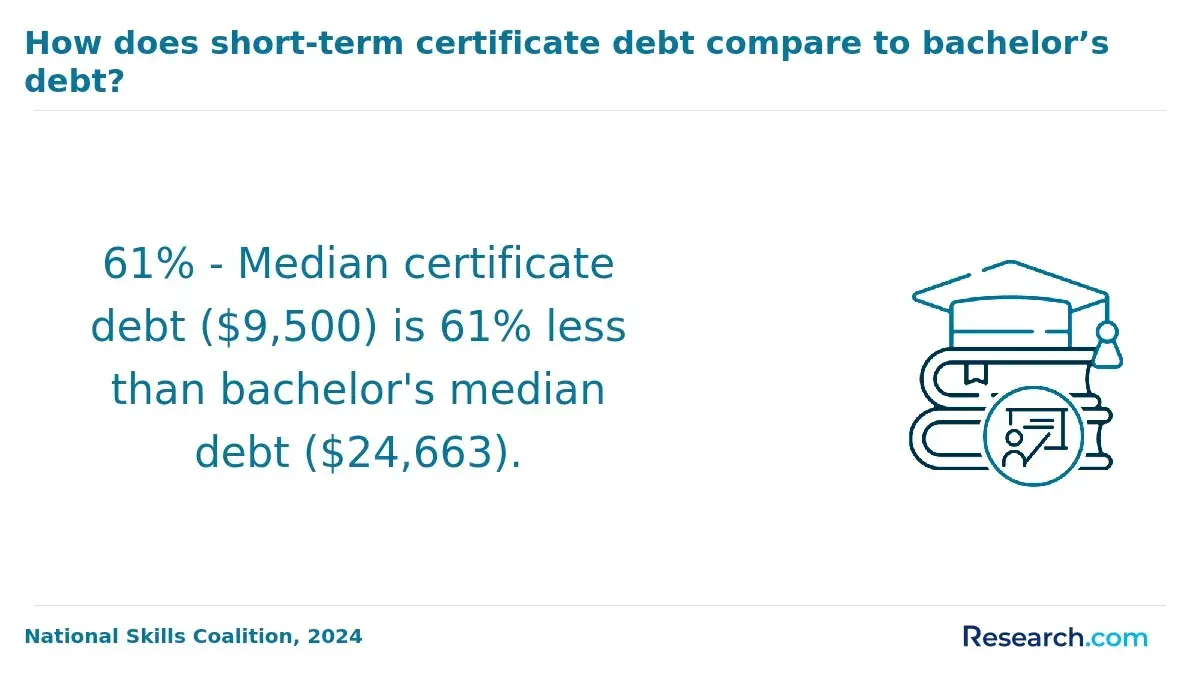
Biology licensure pass rates reveal how well a program prepares eligible students for a specific credential, but they are easy to misread. A strong pass rate can indicate effective advising, aligned coursework, clinical preparation, and exam support. A weak or undisclosed rate may point to curriculum gaps, poor candidate screening, inadequate remediation, or small cohorts that make outcomes volatile.
Because biology does not have one national licensing exam, pass-rate reporting should be interpreted by profession and candidate type. The table below explains the main pass-rate terms schools and certification bodies may use.
| Pass-rate measure | What it means | Why it matters | Limitations |
| First-time pass rate | The share of eligible candidates who pass on their first exam attempt | Best single indicator of initial preparation and curriculum alignment | May exclude students who never reached exam eligibility or delayed testing |
| Overall pass rate | The share of candidates who pass after one or more attempts within a reporting window | Shows eventual success after retesting and remediation | Can hide weak first-attempt performance |
| Repeat-attempt pass rate | The share of retesters who pass after a failed attempt | Helps evaluate remediation support | Often based on smaller groups and may not be published |
| Exam eligibility rate | The share of graduates who qualify to sit for the exam | Shows whether the degree actually leads to the licensing checkpoint | Not always reported with pass rates |
| Licensure completion rate | The share of graduates who finish the full licensing process | Most useful for career outcome evaluation | May depend on state processing times, jobs, and graduate follow-up data |
A useful pass-rate review should compare the program's first-time rate with its overall rate, cohort size, reporting year, and national or state benchmark when available. A 100% rate from a cohort of five test-takers is not as informative as a consistently strong rate across several graduating classes.
Students should also separate "graduates" from "exam candidates." If 40 students enter a biology-related licensure track, 25 graduate, 20 sit for the exam, and 18 pass, the published pass rate may look high while the full pathway completion rate tells a more cautious story. That distinction is central to judging risk, cost, and return on investment.
The barriers that prevent biology graduates from becoming licensed usually appear after enrollment, not before. Students may complete a biology degree successfully and still face missing prerequisites, unavailable clinical placements, exam failure, state-board delays, or extra supervised-hour requirements.
The table below identifies the most common barriers and how they affect time, cost, and career access. Use it to spot risks before committing to a program or licensure pathway.
| Barrier | How it affects licensure | Typical consequence | How to reduce the risk |
| Missing required courses | The graduate cannot apply for the exam or state license | Extra semesters, post-baccalaureate courses, or delayed employment | Match every required course to the board's written rules before enrolling |
| Non-approved labs or online science credits | Boards or programs may reject coursework that lacks required hands-on components | Repeated lab courses and added tuition | Get written confirmation from the receiving program or board |
| Limited clinical or field placements | Students cannot complete supervised experience on schedule | Delayed graduation or exam eligibility | Ask who arranges placements and how many students are placed each cycle |
| Exam failure | The candidate must retest before becoming licensed | Additional fees, study time, and delayed hiring | Review first-time pass rates and remediation policies |
| State-specific rules | A graduate eligible in one state may not qualify immediately in another | Extra paperwork, exams, or supervised hours | Check the state where you plan to work, not just the state where the school is located |
| Background check or documentation issues | Applications can be delayed or denied | Uncertain start dates and conditional employment | Review board disclosure rules early if there are potential concerns |
A common red flag is a program that highlights job demand but does not publish licensure eligibility, exam outcomes, or placement support. Demand in the labor market does not remove licensing rules. If a state requires a license to perform regulated testing or teach in public schools, the employer cannot simply waive that requirement because the candidate has a biology degree.
Another mistake is focusing only on tuition. A lower-cost program can become expensive if students must later repeat labs, pay for exam retakes, relocate for supervised experience, or complete an extra certificate. The right comparison is total pathway cost, not just degree price.
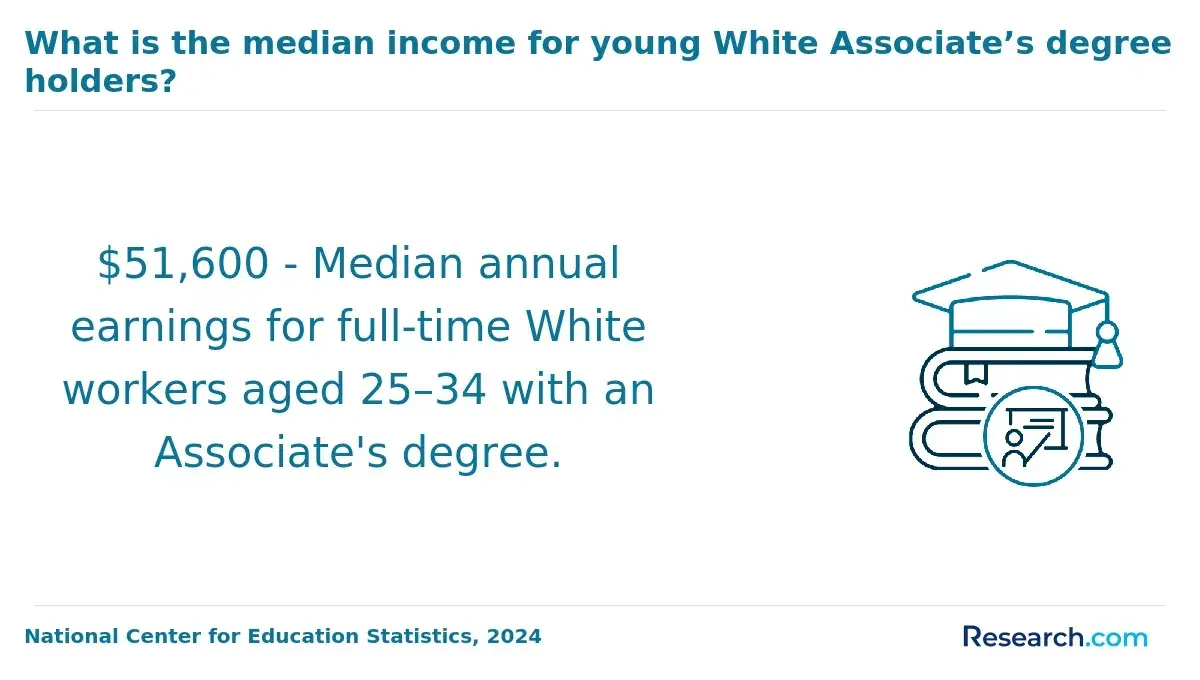
Licensing exam preparation should begin long before the application deadline. Biology students who wait until after graduation may discover that they lack required coursework, cannot document supervised experience, or do not know whether the exam emphasizes clinical practice, pedagogy, public health law, or laboratory methods.
Students can reduce exam and retake risk by building a preparation plan around eligibility, content alignment, and remediation. The following steps are especially useful for licensure-linked biology pathways.
- Download the current exam handbook or candidate bulletin and compare its content areas with completed courses and lab experiences.
- Ask the program for first-time pass rates, overall pass rates, cohort sizes, and the number of graduates who did not sit for the exam.
- Use practice exams or diagnostic assessments early enough to adjust study plans before the official test window.
- Schedule high-risk prerequisites, clinical rotations, or student teaching experiences with enough time to correct documentation problems.
- Find out the retake waiting period, retake fee, attempt limit, and remediation requirements before the first attempt.
- Keep copies of syllabi, lab descriptions, clinical evaluations, field logs, and supervisor verification forms because boards may request details years later.
Retakes should be treated as a planning risk rather than a personal failure. A good remediation plan identifies weak domains, uses official score reports, adds supervised practice when needed, and avoids simply repeating the same study method. Students should also budget for retesting and the possibility that employment may be delayed until the license is issued.
For students considering a pivot away from lab or teaching licensure, structured graduate business or workforce programs may offer a clearer non-licensed route. Someone comparing regulated science careers with management roles could review a 1 year online master's in human resources as an example of a career path where advancement depends more on employer needs, experience, and professional credentials than state licensure.
State requirements can change the value of a biology degree because licensure is often issued by state boards, not universities. A graduate may be academically prepared but still need state-specific exams, supervised hours, background checks, or documentation before practicing in a regulated role.
Reciprocity means one state may recognize a license from another state, but it rarely means automatic transfer with no conditions. Many boards use terms such as endorsement, comity, portability, or substantial equivalence, and each term can involve different paperwork or additional requirements.
Before enrolling, students should verify state rules in the state where they plan to work. This process is especially important for online students, military families, and applicants who may move after graduation.
- Identify the exact license title for the target role, such as clinical laboratory scientist, registered environmental health specialist, or secondary biology teacher.
- Find the official state board or education agency requirements and save the current eligibility language.
- Ask the school to confirm in writing whether its biology degree, concentration, or licensure track meets that state's requirements.
- Check whether the state accepts online labs, out-of-state student teaching, alternative clinical placements, or national certification exams.
- Review reciprocity rules if you may relocate, paying close attention to additional exams, experience requirements, and processing time.
State portability is a major decision factor for students who want mobility. A biology graduate entering a non-licensed biotechnology role may move more freely between states than a graduate pursuing public school teaching or regulated clinical laboratory practice. That does not make non-licensed work better; it simply means the return on investment depends on where the student intends to work.
The cost of biology licensure depends on the pathway. Students may pay for the biology degree, prerequisite courses, lab fees, clinical or field placement expenses, exam fees, application fees, background checks, travel, retakes, and continuing education. Time can range from immediate post-graduation exam eligibility to several additional years of professional school or supervised experience.
The table below summarizes common cost and timeline categories rather than promising a fixed price. Students should use it to build a pathway budget for their own state and occupation.
| Licensure-related cost or time factor | Where it appears | Why it matters for ROI |
| Additional prerequisite courses | MLS/CLS, healthcare programs, teaching tracks, environmental health roles | Missing courses can add tuition and delay exam eligibility. |
| Clinical, field, or student teaching placement | Laboratory science, education, public health, and healthcare pathways | Unpaid or distant placements can reduce earnings while increasing travel costs. |
| Exam and retake fees | Most licensed or certified pathways | Repeat attempts increase direct costs and may delay employment start dates. |
| State application and background checks | Teaching, laboratory, environmental health, and healthcare licenses | Processing time can affect when a graduate can begin regulated work. |
| Professional school after biology | Medicine, dentistry, physician assistant, physical therapy, genetic counseling, pharmacy | The biology degree is only the first stage, so ROI must include graduate tuition and opportunity cost. |
| Continuing education and renewal | Many licensed professions | Licensure is an ongoing cost, not a one-time expense. |
A practical timeline for a biology student pursuing licensure is to map backward from the license, not forward from the major. For example, a student who wants public school biology teaching should account for teacher-preparation admission, student teaching, content exams, pedagogy exams, and state application processing. A student who wants regulated lab work should account for clinical training slots and exam eligibility rules.
Students should also compare opportunity cost. If a biology graduate can begin a non-licensed lab role immediately, the licensed pathway must justify any added tuition, unpaid experience, and delayed earnings through stronger access, pay, mobility, or advancement. If the license opens jobs that would otherwise be closed, the added cost may be reasonable; if the target role does not require licensure, extra credentialing may not pay off.
Licensure can improve career access when employers are legally required to hire licensed personnel or when certification is the standard for higher-responsibility work. It can also support advancement into supervisory, specialized, or public-facing roles. However, licensure does not guarantee employment, higher pay, or geographic mobility.
Federal wage data provides useful context. Clinical laboratory technologists and technicians had a median U.S. wage of $60,780 in recent BLS data, while biological technicians had a lower median wage in the low-$50,000 range. The difference does not prove that licensure alone causes higher pay, but it shows why students should compare regulated laboratory roles with general biology roles before choosing a pathway.
The table below compares licensed and non-licensed outcomes in practical terms. It is designed to help students decide whether the extra steps of licensure match their career goals.
| Outcome factor | Licensed biology-related pathway | Non-licensed biology pathway | Decision takeaway |
| Job eligibility | May be required for regulated testing, public teaching, or clinical practice | Available in research support, biotech operations, quality assurance, sales, and environmental roles | Licensure matters most when the desired job legally requires it. |
| Earnings potential | Can support access to higher-responsibility regulated roles | Depends heavily on employer, region, technical skills, and experience | Compare occupation-level wage data, not just degree-level claims. |
| Advancement | May lead to senior, supervisory, or specialized credentials | May require graduate education, management experience, or technical specialization | Both paths can advance, but through different credential systems. |
| Mobility | May be limited by state rules and reciprocity requirements | Often more flexible across employers and states | Students expecting to move should check portability early. |
| Risk | Exam failure, placement shortages, and state delays can slow entry | Competition may be higher for bachelor's-level roles | The best path depends on tolerance for licensing risk versus labor-market competition. |
Licensure is usually most valuable when it changes what a graduate is legally allowed to do. It is less valuable when used as a vague résumé booster for roles that do not require it. Students should ask employers, alumni, and licensing boards whether the credential is required, preferred, or unnecessary for the specific job title they want.
Some biology graduates ultimately choose management, operations, analytics, or healthcare administration instead of regulated science practice. In that case, comparing science licensure with accessible business graduate options such as the easiest MBA to get into can help clarify whether the next credential should support licensure, leadership, or a broader career transition.
Biology graduates without a professional license still have meaningful career options, especially if they build technical skills, internship experience, data literacy, and industry knowledge. The strongest non-licensed outcomes often come from combining biology with lab instrumentation, quality systems, coding, regulatory documentation, manufacturing, or communication skills.
The table below outlines common non-licensed options and what makes candidates competitive. These roles may not require state licensure, but they still reward preparation and evidence of hands-on ability.
| Career option | Typical responsibilities | What strengthens employability |
| Biological technician | Prepare samples, run experiments, maintain lab records, support scientists | Research experience, lab methods, data handling, and safety training |
| Biotechnology manufacturing associate | Support production of biologics, reagents, or diagnostic products | GMP awareness, documentation accuracy, aseptic technique, and shift flexibility |
| Quality control or quality assurance assistant | Review procedures, test samples, track deviations, support audits | Attention to detail, statistics basics, regulatory familiarity, and lab experience |
| Environmental science technician | Collect samples, monitor sites, document findings, support compliance work | Field methods, GIS basics, safety training, and environmental regulations |
| Clinical research coordinator assistant | Support study documentation, participant scheduling, and data entry | Human-subjects training, medical terminology, organization, and communication |
| Scientific sales or customer support | Explain products, support clients, troubleshoot technical questions | Communication skills, product knowledge, and comfort with client-facing work |
Students who do not want licensure should avoid drifting through a general biology curriculum without a career plan. Instead, they should choose electives, internships, and projects that match a hiring market. For example, a student interested in biotech operations should prioritize cell culture, molecular techniques, quality documentation, and internships over unrelated electives.
The best non-licensed path may also involve later graduate study, but only when it solves a clear career problem. A master's degree can be useful for research, bioinformatics, public health, education, or management, but it should not be used to postpone career decisions without improving job access.
Accreditation and program quality can directly affect whether a biology graduate becomes eligible for a license or certification exam. In licensure-linked fields, accreditation is not just a reputation signal. It may determine whether coursework, labs, clinical placements, or supervised experiences are recognized by boards and employers.
The table below summarizes quality signals that matter most when biology students are evaluating licensure outcomes. These indicators should be reviewed together rather than treated as a single ranking factor.
| Quality factor | What to check | Licensure impact | Red flag |
| Specialized accreditation | Whether the track is accredited or approved by the profession-specific body | Can determine exam eligibility for MLS, teaching, counseling-adjacent, or health-related routes | The school advertises "biology preparation" but cannot name the accepted licensure pathway |
| State authorization | Whether the program meets requirements where the student plans to work | Prevents out-of-state eligibility problems | The program says students are responsible for checking state rules but provides no eligibility map |
| Clinical or field placement support | Who secures approved placements and how far students may need to travel | Controls whether students can complete required experience on time | Students must independently find scarce placements after enrollment |
| Published outcomes | First-time pass rates, graduation rates, placement rates, and cohort sizes | Shows whether students reach the licensing exam and pass it | Only marketing-level employment claims are disclosed |
| Advising and remediation | Exam preparation, progress reviews, retake support, and course sequencing | Reduces preventable delays and repeat-attempt costs | Students discover missing requirements near graduation |
Program quality also includes how honestly a school explains limits. A strong program will tell students when a biology degree is not enough, when a post-baccalaureate clinical year is needed, or when a state board may reject certain online labs. That transparency is more useful than broad claims about "preparing students for many careers."
Students weighing biology against business or management paths should recognize that accreditation plays different roles by field. For example, executive MBA programs may use accreditation to signal academic quality and employer recognition, while biology-related licensure tracks may need profession-specific approval to unlock exam eligibility.
Other Things You Should Know About Biology
No. A biology degree does not automatically include a professional license. Licensure depends on the career path, state rules, exam eligibility, and any required supervised experience or clinical training.
Public school biology teaching, regulated clinical laboratory work, environmental health roles in some states, and healthcare professions commonly involve licensure or certification. Research, biotech, quality assurance, and many environmental roles often do not require a state license.
Start with first-time pass rates because they show how well a program prepares students for the initial exam attempt. Overall pass rates are still useful, but they may include retakes and remediation, so they can make outcomes look stronger.
It can be worth it if the license is required for the job you want or opens better advancement options. It may not be worth the added cost if your target role does not require licensure and values experience, technical skills, or graduate training more.
- Best AI research assistant | AnswerThis https://app.answerthis.io/shared/how-does-socio-economic-status-affect-educational-
- USMLE Pass Rate by Country - Right Path Overseas https://rightpathoverseas.com/usmle/usmle-pass-rate-by-country/
- The Effect of Academic Major and Occupation on Lifetime Earnings - Data Science https://www.tamus.edu/data-science/2023/10/01/the-effect-of-academic-major-and-occupation-on-lifetime-earnings/
- USMLE Pass Rate by Country 2026 https://worldpopulationreview.com/country-rankings/usmle-pass-rate-by-country
- Educational attainment by country https://www.worlddata.info/education.php
- Surgery Board Pass Rates Associated With Race/Ethnicity, Gender, Family Status https://www.gastroenterologyadvisor.com/news/surgery-board-pass-rates-associated-with-race-ethnicity-gender-family-status/
- FMGE pass percentage country wise 2025 https://medicine.careers360.com/articles/country-wise-fmge-success-rates-and-exam-structure-exam