2027 Biology Degree Time-to-Completion Report: How Long Students Actually Take to Finish

Co-Founder and Chief Data Scientist
A biology degree can be a four-year plan on paper and a five- or six-year reality in practice. National Student Clearinghouse's 2024 completion report found that only about 61.1% of students who started college completed a credential within six years, showing why timeline planning matters. This guide is for prospective biology majors, transfer students, working adults, and parents comparing programs. You'll learn realistic completion ranges, what causes delays, and how to choose a pathway that balances speed, cost, workload, and career goals.
Key Things You Should Know
- A full-time bachelor's in biology is designed for about four years, but many students take closer to four to six years because of course sequencing, lab availability, transfer-credit issues, work schedules, and changes in major or career plans.
- Time to completion depends more on enrollment intensity and degree requirements than on format alone; online biology programs may improve scheduling flexibility, but lab, internship, research, or capstone requirements can still control the timeline.
- College Board's 2024 pricing data lists average published tuition and fees at $11,610 for in-state public four-year colleges and $43,350 for private nonprofit four-year colleges, so every extra term can meaningfully change total cost and ROI.
- What Is the Actual Time to Complete a Biology Degree?
- Which Factors Have the Greatest Impact on Biology Degree Completion Time?
What Is the Actual Time to Complete a Biology Degree?
The actual time to complete a biology degree is the amount of calendar time students realistically need to finish all credits, prerequisites, labs, general education courses, electives, and graduation requirements. It can differ from the advertised program length because biology is a sequence-heavy major: students often must complete chemistry before upper-division biology, statistics before research methods, and lab courses in a specific order.
There is no single federal statistic that reports the national average time-to-degree specifically for biology majors across every institution. A practical estimate must combine the official program design with known completion patterns and the way biology curricula are structured.
The table below summarizes realistic completion ranges by degree level. Use it as a planning baseline, not as a guarantee, because institutional calendars, transfer policies, and required lab access can change the timeline.
| Biology degree pathway | Typical published length | Realistic completion range | Why timing varies |
| Associate degree in biology or life science | 2 years full time | 2 to 3 years | Placement into college math, chemistry readiness, part-time enrollment, and transfer planning |
| Bachelor's degree in biology | 4 years full time | 4 to 6 years | Lab sequencing, prerequisite chains, major changes, repeated science courses, and limited course availability |
| Bachelor's completion program | 1.5 to 3 years after transfer | 2 to 4 years | Number of accepted credits, missing prerequisites, residency rules, and upper-division lab requirements |
| Master's degree in biology | 1 to 2 years full time | 1.5 to 3 years | Thesis versus non-thesis format, research progress, assistantship workload, and course rotation |
| PhD in biology or related life science | 5 to 6 years full time | 5 to 7 or more years | Research progress, dissertation scope, funding continuity, publication expectations, and advisor fit |
The most important takeaway is that biology is not just a credit-count degree. A student may have enough total credits to graduate but still be delayed if a required lab, field course, research sequence, or capstone is only offered once per year.
Which Factors Have the Greatest Impact on Biology Degree Completion Time?
The biggest timeline drivers are course sequencing, enrollment intensity, transfer-credit fit, and personal capacity. Biology majors are especially sensitive to sequencing because required courses often build on one another across multiple semesters.
The table below shows the most common factors that extend or shorten a biology degree timeline. It is useful when comparing programs because a school with the same advertised length may have very different bottlenecks.
| Factor | How it can extend completion time | What faster-completion programs usually do better |
| Prerequisite chains | Missing chemistry, calculus, or statistics can delay advanced biology courses | Publish clear four-year maps and offer prerequisite courses every term |
| Lab availability | Limited lab seats can force students to wait a semester | Offer multiple lab sections, evening labs, or summer lab options |
| Transfer-credit evaluation | Credits may count as electives instead of major requirements | Evaluate transcripts before enrollment and provide course-by-course equivalencies |
| Part-time enrollment | Lower credit loads stretch a four-year plan into five or more years | Build part-time maps that preserve prerequisite order |
| Advising quality | Students may take unnecessary electives or miss required milestones | Require regular advising before registration |
| Research, internship, or capstone requirements | Experiential requirements may depend on placement availability or faculty supervision | Start placement planning early and provide multiple approved options |
A common mistake is treating all science credits as interchangeable. For example, introductory biology for non-majors may not satisfy a biology major requirement, and a general chemistry course without a lab may not unlock the next course in the sequence.
Students comparing time-to-completion across fields should also notice how different disciplines handle flexibility. Some graduate programs, such as 1 year online master's in human resources options, can compress coursework more easily because they do not usually require in-person wet labs, while biology timelines are often constrained by lab and research access.
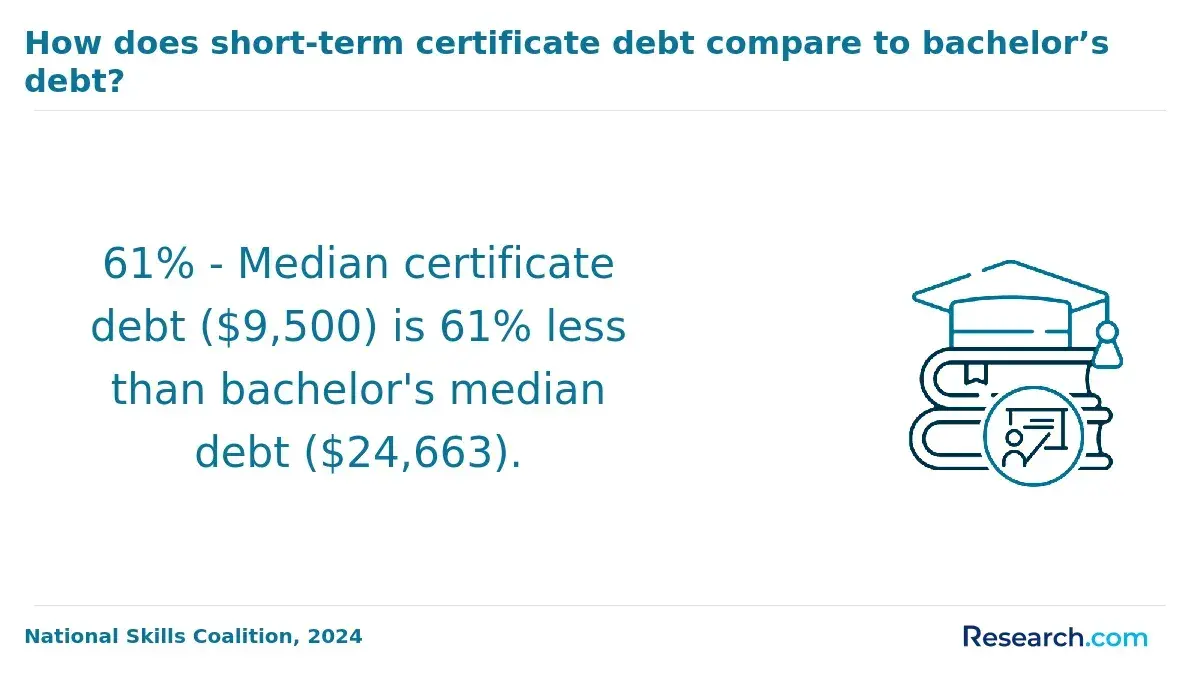
Enrollment status usually affects completion time more than whether a program is online or on campus. A full-time student taking 15 credits per semester can move through a bachelor's curriculum much faster than a part-time student taking six to nine credits, but full-time enrollment may not be realistic for students who work or provide family care.
The table below compares common enrollment and format choices. It helps clarify when a shorter timeline is realistic and when flexibility may be more valuable than speed.
| Pathway | Realistic timeline for bachelor's completion | Best fit | Main timing risk |
| Full-time campus program | 4 to 5 years | Students who can prioritize school and attend scheduled labs | Course conflicts, lab bottlenecks, and changing majors |
| Part-time campus program | 5 to 7 or more years | Working students who need predictable in-person access | Missing once-a-year course sequences |
| Online or hybrid program | 4 to 6 years for first-time students; 2 to 4 years for many transfers | Students who need flexible lectures and local or intensive lab options | Lab residency requirements, transfer limits, and self-paced delays |
| Accelerated calendar | 3 to 4 years for highly prepared full-time students | Students with strong science preparation and year-round availability | Heavy workload and fewer recovery points after a failed or withdrawn course |
Online biology programs can help students avoid commuting and fit lectures around work, but they do not automatically shorten the degree. The fastest online or hybrid options usually have frequent start dates, well-planned lab intensives, generous transfer policies, and advisors who understand science sequencing.
Program format should be matched to the student's weekly capacity. In business education, cohort-based executive MBA programs are often designed around experienced working adults; biology programs can be less forgiving because lab sections, research supervision, and prerequisite timing may be fixed.
Accelerated biology programs can shorten graduation timelines, but they are most effective for students who enter with strong preparation, few outside obligations, and a clear academic goal. Acceleration usually comes from summer terms, shorter sessions, heavier credit loads, dual-credit accumulation, or combined bachelor's-to-master's pathways.
The table below compares traditional and accelerated biology pathways. It shows why speed should be evaluated alongside workload and academic risk.
| Program model | How it shortens time | Best fit | Potential drawback |
| Traditional four-year biology major | Uses standard fall and spring sequencing | Students who want balanced pacing and research opportunities | May take longer if required courses are missed or repeated |
| Year-round bachelor's plan | Adds summer or winter coursework | Students who can study continuously | Less time for paid work, internships, or recovery after demanding lab terms |
| Three-year bachelor's pathway | Requires high credit loads and careful planning | Students with AP, dual-enrollment, or transfer credits | Heavy STEM workload can affect grades and graduate-school readiness |
| Combined bachelor's/master's pathway | Allows selected graduate courses to count toward both degrees | Students planning research, biotech, teaching, or advanced study | Usually requires early admission, minimum GPA, and faculty approval |
Acceleration is not always the best value. If a faster schedule lowers grades in organic chemistry, genetics, physiology, or research methods, it may weaken applications for graduate school, medical school, physician assistant programs, or competitive lab roles.
A better question than "What is the fastest biology degree?" is "What is the fastest realistic plan I can complete well?" Students comparing admissions flexibility across disciplines may encounter resources such as the easiest MBA to get into, but biology acceleration depends less on admissions convenience and more on whether science prerequisites, labs, and upper-division courses can be completed in order.
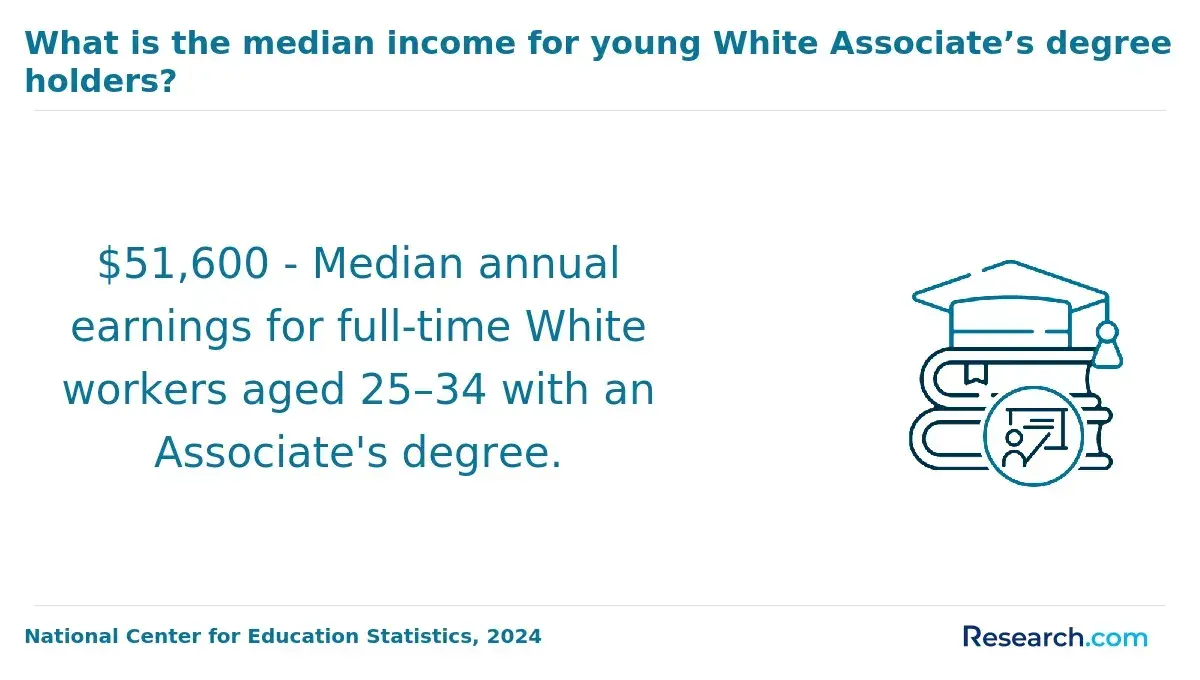
Work, family, caregiving, health needs, and commuting distance can significantly affect biology degree completion because science programs often require fixed lab blocks, group projects, fieldwork, or daytime research hours. A student who can complete asynchronous lectures at night may still need to attend a three-hour lab on campus.
The most realistic timeline is the one that matches your weekly capacity. For many adult learners, taking fewer credits while staying continuously enrolled may be more successful than attempting a full-time load and stopping out after one or two terms.
Students with major outside responsibilities should evaluate the following before choosing a pace:
- Whether required labs are offered during evenings, weekends, summer sessions, or short residencies.
- Whether the program has a true part-time course map that preserves prerequisite order.
- Whether online lectures still require synchronous attendance at fixed times.
- Whether internships, research experiences, or capstones can be completed near the student's location.
- Whether financial aid rules require a minimum credit load each term.
A common mistake is reducing course load without updating the graduation plan. Dropping from 15 credits to nine credits may be necessary and wise, but it should trigger a revised term-by-term schedule so the student does not miss a once-a-year course or delay a prerequisite sequence.
Completion time affects ROI in two ways: direct education cost and delayed earnings. Every additional semester can add tuition, fees, books, transportation, housing, and opportunity cost. However, rushing can also be costly if it leads to failed courses, withdrawals, repeated labs, or a weaker academic record.
College Board's 2024 Trends in College Pricing reports average published tuition and fees of $11,610 at public four-year in-state institutions, $30,780 for public four-year out-of-state students, and $43,350 at private nonprofit four-year institutions. That means a single extra year can have very different financial consequences depending on the school type.
The table below shows how timeline decisions can affect cost exposure. It focuses on tuition and fees because housing, transportation, and lost wages vary widely by student.
| Institution type | Average published tuition and fees | Why completion time matters |
| Public four-year, in-state | $11,610 | An extra year may be manageable for some students but can still increase borrowing or delay earnings |
| Public four-year, out-of-state | $30,780 | Timeline delays can be financially significant unless scholarships or reciprocity agreements reduce cost |
| Private nonprofit four-year | $43,350 | Extra terms can sharply increase total price unless institutional aid remains available |
ROI also depends on the career path. The U.S. Bureau of Labor Statistics' 2024 outlook projects employment for biological technicians to grow 5% from 2023 to 2033, which suggests steady but not unlimited demand for entry-level life science roles. Students aiming for research, healthcare, biotechnology, environmental science, or graduate study should evaluate whether finishing faster supports their next step or whether a slower plan with stronger grades and experience has better long-term value.
Biology students comparing educational value should look beyond their own major and benchmark cost structures across related health and graduate pathways. For example, students exploring clinical graduate options may compare biology preparation with the cost of cheapest online SLP programs to understand how undergraduate timing can affect later professional-school affordability.
Graduation timing can influence career outcomes, but not always in a simple "faster is better" way. Finishing sooner may allow students to enter the labor market, apply to graduate school, or begin professional training earlier. Taking longer may be worthwhile if the extra time produces stronger grades, research experience, internships, certifications, or a clearer career direction.
Biology graduates commonly pursue roles in laboratories, healthcare preparation, environmental science, quality control, public health, education, biotechnology, and graduate or professional school. Many entry-level roles value lab technique, data analysis, documentation, safety compliance, and communication skills as much as the credential itself.
Students should think about graduation timing in relation to their target outcome:
- For entry-level lab roles, completing efficiently matters, but hands-on lab skills, internships, and familiarity with instruments or protocols can improve readiness.
- For medical, dental, veterinary, physician assistant, or pharmacy pathways, grades and prerequisite performance may matter more than shaving off one semester.
- For research careers, a slower plan that includes undergraduate research, faculty mentorship, or a thesis may be a better investment.
- For environmental or field biology roles, seasonal fieldwork and internships may be worth planning around even if they slightly extend the degree.
The practical goal is to graduate at the earliest point when the degree, transcript, experience, and career plan are aligned. A fast degree with weak preparation may not deliver the outcome a student wants, while an unnecessarily slow degree can increase debt and delay earnings.
Biology completion timelines are being shaped by several current trends: more hybrid learning, greater pressure to control college costs, expanded transfer pathways, increased use of degree audits, and stronger student interest in healthcare and biotechnology careers. These trends can help students finish sooner, but only when programs redesign advising, labs, and course availability around real student schedules.
AI and data tools are also beginning to affect biology education. Students may use AI-supported tutoring, adaptive homework, and degree-planning tools, while programs may use analytics to identify students at risk of missing prerequisites. These tools can support completion, but they do not replace lab competency, ethical research training, or faculty guidance.
Another trend is the growth of compressed and career-aligned online graduate programs in non-lab fields. Biology students should understand that the scheduling models used in flexible fields may not translate directly to lab sciences, even when online delivery is available.
For example, a student browsing a 1 year online master's in human resources may see a highly compressed graduate timeline, but a biology program often has laboratory, field, research, or thesis components that make the calendar less flexible.
The best programs are responding by offering clearer degree maps, more summer science courses, earlier transfer evaluations, hybrid lecture options, and proactive advising. Students should ask whether those supports are actually available in the biology department, not just across the institution as a whole.
Students should choose a biology program based on the shortest realistic timeline that still supports academic success, affordability, and career readiness. When comparing FAFSA approved online colleges, the best choice is not always the fastest advertised option; it is the program with the fewest hidden bottlenecks for your situation.
Use this step-by-step process to compare biology programs before enrolling:
- Ask for the official degree map for your intended concentration, such as general biology, molecular biology, ecology, pre-health, or biotechnology.
- Confirm how often each required biology, chemistry, physics, statistics, and lab course is offered.
- Request actual graduation-planning support, including a personalized term-by-term plan if you are transferring credits.
- Ask whether labs are online, campus-based, hybrid, evening, weekend, summer, or short-residency.
- Check whether internships, fieldwork, research, or capstone experiences are required and when students must apply for them.
- Review tuition, fees, scholarship renewal rules, financial aid credit minimums, and the cost of extra terms.
- Ask how often students meet with academic advisors and whether registration holds prevent students from skipping required advising.
- Compare the timeline with your work schedule, family responsibilities, transportation, and realistic weekly study hours.
Strong programs are transparent about course sequencing, transfer rules, lab access, and average student pacing. Weak programs may advertise "finish fast" without explaining lab requirements, science prerequisites, or how many students actually complete on that timeline.
As a final test, ask the school to show you what happens if you fail, withdraw from, or cannot access one key prerequisite. If one missed course delays graduation by a full year, you need to know that before enrolling.
Transfer credits can save substantial time, but only when they apply to the right parts of the biology curriculum. Credits that satisfy general education, math, chemistry, physics, statistics, or lower-division biology requirements are usually more valuable than credits that transfer only as electives.
The table below gives a practical estimate of how transfer credits may affect a bachelor's completion timeline. The key issue is not just how many credits transfer, but whether they satisfy sequenced major requirements.
| Credits accepted toward degree | Likely remaining timeline | Important limitation |
| 0 to 15 credits | About 4 to 5 years | Student is still close to a first-time freshman pathway |
| 30 credits | About 3 to 4 years | May still need first-year chemistry or biology if prior courses do not match |
| 60 credits | About 2 to 3 years | Works best when an associate degree aligns with the biology major |
| 75 to 90 credits | About 1.5 to 2.5 years | Upper-division residency rules and lab requirements may limit further acceleration |
Before enrolling, students should request a written transfer evaluation and degree audit. A verbal estimate such as "most credits should transfer" is not enough for timeline planning.
Use this sequence to estimate transfer-credit savings before committing to a school:
- Ask whether the institution evaluates transfer credits before deposit or enrollment.
- Request course-by-course equivalencies for biology, chemistry, math, statistics, and physics.
- Confirm which credits satisfy major requirements, not just free electives.
- Check whether upper-division biology labs must be completed at the new institution.
- Ask for a term-by-term graduation plan based on the accepted credits.
The red flag to avoid is transferring late without checking prerequisite alignment. A student can arrive with junior standing by credit count but still need sophomore-level science courses, which can add a year or more to the expected timeline.
Other Things You Should Know About Biology
Yes, but it usually requires AP, dual-enrollment, or transfer credits plus summer coursework and a heavy credit load. It is most realistic for students with strong science preparation and few outside obligations.
Not automatically. Online lectures may improve flexibility, but labs, fieldwork, research, and capstones can still determine the timeline. Hybrid programs with frequent course starts and well-planned lab options are usually faster than poorly sequenced online programs.
The most common delays are missed prerequisites, limited lab seats, repeated science courses, late transfer-credit evaluations, part-time enrollment without a degree map, and required courses offered only once per year.
It depends on your goal. Faster completion may reduce cost and speed entry into the workforce, but research, internships, and stronger grades may be more valuable for graduate school, healthcare programs, or competitive science roles.
- Best Biology Courses, Universities | Craydel https://www.craydel.com/courses/biology
- Does full-time vs. part-time enrollment affect FAFSA aid amounts? - Claimyr https://claimyr.com/financial-services/fafsa/Does-full-time-vs-part-time-enrollment-affect-FAFSA-aid-amounts/2025-03-28
- Duration of Bachelors of Science http://www.u-eeni.edu.es/en/Degree-Duration-Countries.shtml
- How to Create a Biology Course Plan for Accelerated Degree Completion https://www.straighterline.com/blog/how-to-create-an-efficient-biology-course-plan-for-accelerated-degree-completion
- Inequality in early career research in the UK life sciences https://www.ukri.org/publications/inequality-in-early-career-research-in-the-uk-life-sciences/inequality-in-early-career-research-in-the-uk-life-sciences/
- How Long Does It Take to Complete a Bachelor's in Biological Sciences in the USA https://www.imperial-overseas.com/blog/how-long-does-it-take-to-complete-a-bachelors-in-biological-sciences-in-the-usa/
- Degrees of difference: Male college enrollment and completion https://aibm.org/research/male-college-enrollment-and-completion/