2027 Online Geosciences Degrees With Hydrology Coursework

Co-Founder and Chief Data Scientist
Hydrologists and environmental scientists increasingly face urgent demands to assess water resources amid shifting climate patterns and escalating infrastructure pressures, yet many find traditional degree programs too inflexible to balance careers and research needs. Recent data from the National Center for Education Statistics reveals a 25% surge in online enrollment for science disciplines since 2022, signaling a clear shift toward remote, adaptable study formats. This trend reflects a workforce eager to upskill without pausing professional obligations, especially in geographically dispersed fields like hydrology.
This article evaluates online geosciences degrees with hydrology coursework, helping applicants identify programs that align with their career timing, specialization, and advancement goals.
Key Things You Should Know
- Online geosciences degrees with hydrology coursework cost 12-18% less on average but require 15-25% more self-directed study hours, intensifying tradeoffs between affordability and time investment per the National Center for Education Statistics.
- Employers prioritize graduates with field-based hydrology internships or lab experience; 62% of US water resource firms report online-only degrees undervalued without practical components, per the American Water Works Association.
- Hydrology specialization via online geosciences degrees often delays entry into workforce by 6-9 months due to prerequisite field modules; this timing affects salary growth trajectories tracked by the Bureau of Labor Statistics.
What is an online geosciences degree with hydrology coursework, and who is it best for?
Online geosciences degree programs with hydrology specialization in the United States offer a pragmatic pathway for professionals balancing career and personal commitments. These programs blend core geoscience theory with applied training in groundwater modeling and watershed analysis, essential for roles in environmental compliance and water resource management. For example, urban planners engaged in flood mitigation projects can leverage these degrees to improve cross-disciplinary coordination and infrastructure design.
The best online geosciences degrees for hydrology careers in North America emphasize technical proficiencies such as Geographic Information Systems (GIS), climate impact assessment, and hydrological data interpretation. Such skills are critical as employers increasingly seek candidates who can translate remote sensing data into actionable sustainability practices. However, prospective students should anticipate demanding quantitative coursework and logistical challenges related to remote fieldwork, which some programs offset through partnerships with local facilities.
The labor market outlook is stable but specialized: the U.S. Bureau of Labor Statistics predicts 3% growth for hydrologists between 2023 and 2033, translating to roughly 500 new annual openings concentrated in regions facing water scarcity or regulatory pressures. This forecast suggests measured but consistent demand, favoring individuals with demonstrable practical experience obtained through internships or virtual labs.
Before enrolling, candidates must critically evaluate program accreditation, online delivery quality, and resource accessibility. Supplementing formal coursework with hands-on experiences is essential to meet employer expectations. For those exploring a career pivot, resources like how to become a speech pathologist can offer insight into the practical steps required for a professional transition within specialized fields.
How do online geosciences programs with hydrology compare to on-campus options?
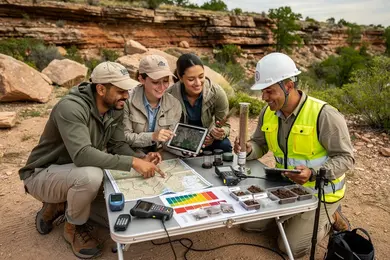
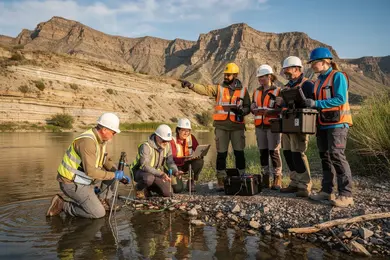
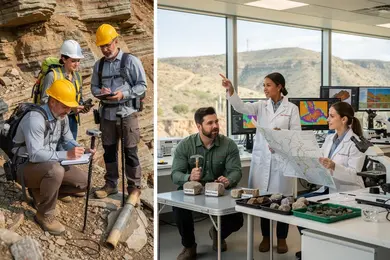
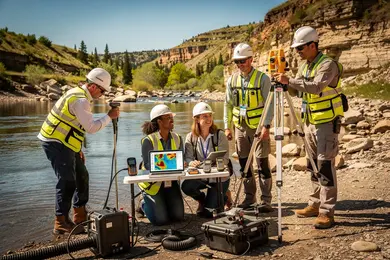
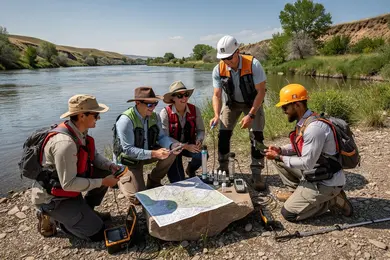
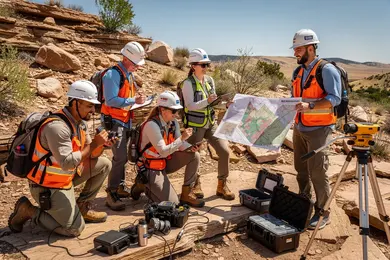
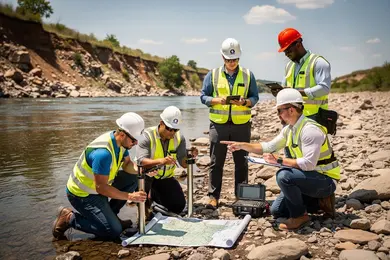
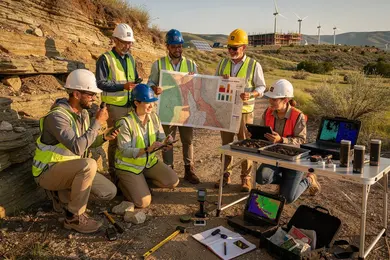
In evaluating online geosciences degree programs with hydrology coursework, a key distinction lies in the hands-on field experience missing from most remote offerings. Employers in water resource management or environmental consulting often prioritize practical skills such as on-site data interpretation and operation of field equipment-competencies that on-campus programs cultivate through direct lab and fieldwork. Graduates from online programs frequently enter the workforce needing employer-led training to bridge these gaps.
Online pathways do offer important flexibility for professionals balancing work or relocation constraints but come with tradeoffs in networking and mentorship, factors tied to competitive job placement. For example, hydrogeology firms prefer candidates demonstrating polished field techniques developed through immersive campus environments.
The labor market rewards hydrologists accordingly: the University of Texas at Austin reports a median annual wage of $85,990, exceeding that of environmental scientists. This financial premium aligns with the value placed on combined theoretical knowledge and demonstrable field proficiency.
Prospective students should consider immediate career demands-those targeting rapid roles requiring field skills benefit from on-campus education, while those prioritizing flexibility may find online programs viable if supplementing with independent field exposure. Comparisons between online and on-campus geosciences hydrology studies show real-world efficacy hinges less on coursework rigor than on experiential learning.
For those exploring advanced degrees across STEM fields, a useful resource on the best data science master's programs can offer perspective on navigating program selection amid evolving workforce needs.
Which types of geoscience degrees include hydrology coursework, and what levels are available?
Geosciences degrees with hydrology coursework require careful consideration of program depth and career objectives, especially given the intensive credit demands exemplified by programs like the University of New Hampshire's 128-credit bachelor's degree. Candidates aiming to enter water resource management or environmental consulting must weigh the practical tradeoff of committing to a full undergraduate geosciences degree with embedded hydrology options versus seeking specialized certificates that offer less comprehensive preparation but faster completion.
Undergraduate geosciences degrees with hydrology courses typically integrate foundational geology and GIS skills with hydrology principles such as surface water and groundwater analysis. Students pursuing these paths must expect rigorous coursework and field components aligned with industry-standard hydrologic modeling tools. In contrast, graduate level geosciences programs featuring hydrology coursework emphasize quantitative modeling, environmental policy, and advanced field techniques critical for technical specialist roles in consulting or regulatory agencies.
Employers prioritize candidates who demonstrate both broad geosciences competence and specific hydrology expertise. Bachelor's degrees with full hydrology coursework suffice for many entry-level roles, but advanced positions increasingly require graduate-level specialization. Students should evaluate programs based on alignment with real-world tools, regulatory frameworks, and field experience availability to optimize employability.
For those balancing career pivots or that require flexibility, exploring exercise science degrees online reveals alternative approaches to degree completion timelines and course delivery, though distinct from hydrology-focused geosciences.
What hydrology and water-resources courses can you expect in an online geosciences curriculum?
Online geosciences degrees with hydrology coursework demand technical rigor, especially in quantitative hydrology and water resources analysis. Core hydrology curriculum for online geosciences degrees includes advanced topics such as surface and groundwater hydrology, watershed management, hydrogeology, and hydrologic data collection-all foundational for modeling water cycles and aquifer dynamics using platforms like MODFLOW and ArcGIS. This technical foundation supports roles in environmental consulting and regulatory compliance, where practical proficiency in GIS-based watershed analysis and water quality assessment is essential.
Students should weigh the intensive math, statistics, and computer science requirements inherent in hydrology and water resources courses in online geosciences programs. Employers in engineering and government agencies prefer graduates skilled in geospatial analysis and hydrologic modeling to evaluate infrastructure impacts and contamination risks.
Example workforce implications include urban planners relying on stormwater management and flood risk assessment training to develop climate-resilient municipal water strategies. The University of Georgia reports that 90% of graduates from the past five years are employed in the earth sciences, emphasizing high demand for hydrology-trained professionals.
Flexibility in online program delivery and access to virtual internships can significantly affect practical readiness. Prospective students should also consider program content in geostatistics and hydrometeorology to expand opportunities in climate resilience and hazard mitigation sectors. For comparative cost considerations in related fields, see MLIS degree cost.
How can you verify accreditation and program quality for online geosciences degrees?
Accreditation and curriculum relevance directly affect employability and licensure prospects in online geosciences degrees with a hydrology focus. Regional accreditation recognized by the U.S. Department of Education is often non-negotiable for federal aid eligibility and industry acceptance, whereas national accreditation alone can limit opportunities, particularly in technical fields requiring specialized knowledge.
Consider a candidate whose program lacks integrated lab work or GIS training: such gaps may hinder eligibility for advanced certifications or roles within environmental consulting or government agencies. Employment outcomes vary sharply with program rigor and applied content-OU Online's M.E.S. in Hydrology and Water Security, for example, imposes a significant financial burden at $1,015 per credit hour, totaling $30,450. Students should weigh this against demonstrable career benefits tied to hands-on skills.
Evaluating faculty expertise with published research, access to synchronous simulations or local fieldwork partnerships, and transparent metrics like retention and licensure pass rates provides critical insight into program quality. Also, state authorization and reciprocity affect professional mobility; degrees lacking these features might restrict where graduates can obtain licensure.
Additional considerations include curriculum adaptability to emergent areas such as climate risk modeling and water security policy. Students seeking a strategic career pivot must prioritize programs that balance cost with clear alignment to evolving industry demands and verified workforce readiness.
What are the typical admission requirements and prerequisites for these online programs?
Admission for online geosciences degrees with hydrology coursework requires more than holding a bachelor's degree in a STEM field; it demands demonstrated proficiency in key quantitative subjects and a strategic approach to prerequisite gaps. Candidates without prior coursework in calculus, chemistry, physics, or introductory hydrology typically face mandatory bridge classes, impacting time and cost. For working professionals balancing roles in environmental consulting or civil engineering, this can complicate scheduling and financial planning.
Graduate record exams (GRE) scores are optional at many institutions but remain a barrier in selective programs aiming to gauge quantitative and analytical readiness. Employers in sectors like public policy or environmental law expect technical fluency supported by formal recommendations from STEM instructors or supervisors. Clear alignment of a candidate's stated career objectives with practical applications-such as public health risk assessments or regulatory compliance-is essential in the admissions statement of purpose.
Applicants transitioning from unrelated backgrounds must often earn foundation credits or professional certificates prior to admission, adding layers of preparation. The University of Texas at Austin points to geosciences roles spanning environmental consulting, government, law, civil engineering, and public health, illustrating the need for interdisciplinary admission criteria that reflect multifaceted job demands.
How long do online geosciences degrees take, and what do they cost?
Choosing an online geosciences degree with hydrology coursework requires balancing program length against evolving workforce demands. Full-time bachelor's degrees typically take four years, with master's programs adding two more; part-time formats can extend this to nearly double the duration, risking skill obsolescence in a field where contaminant profiles and regulations shift rapidly.
Employers in environmental consulting, water resource management, and regulatory agencies prioritize candidates with applied skills in groundwater, surface water, chemistry, and contaminant fate and transport-the four core competencies the Colorado School of Mines identifies as workforce essentials. Accelerated master's tracks may enable faster entry into specialized roles but often demand intense study schedules incompatible with full-time employment.
Cost considerations vary widely: public institutions average $10,000 to $30,000 annually for in-state students, while private or out-of-state tuition frequently surpasses $40,000, excluding fees and living expenses that can raise total costs by 15-25%.
Students must also factor in ongoing financial commitments such as certification exams and continuing education, essential for maintaining licensure in hydrology-related careers. The practical implication is clear: the balance between expediency, affordability, and maintaining current skills directly influences not only employability but long-term career resilience in water-focused geoscience roles.
What careers can you pursue with a geosciences degree focused on hydrology?
A degree in geosciences focused on hydrology offers targeted preparation for roles involving water resource management and environmental risk analysis, but practical employability hinges on both technical expertise and real-world adaptability. Federal agencies such as the U.S. Geological Survey and the Environmental Protection Agency look for candidates proficient in groundwater modeling and watershed analysis, critical for mitigating flood hazards and managing sustainable water supply systems.
In private sectors like agriculture and urban planning, hydrologists translate hydrologic data into actionable infrastructure designs, such as irrigation schedules or stormwater management. For example, an agricultural hydrologist often integrates soil moisture measurements with GIS software to optimize crop irrigation, illustrating the intersection of field knowledge and technology. Expect ongoing professional development, given the rapid evolution of hydrologic modeling tools.
The employment outlook suggests moderate growth (6% over a decade) for environmental specialists, emphasizing that a bachelor's degree alone may not suffice; hands-on fieldwork and technical skill mastery are increasingly decisive. Online programs-such as the one offered by UGA charging $422 per semester in fees for online students-represent cost-effective options but require candidates to balance remote learning with the necessity of gaining applied experience.
Key workforce realities include variable field schedules and travel demands that affect work-life balance. Employers prioritize analytic rigor and communication skills to translate complex hydrologic data into policy or engineering solutions. Integrating internships or cooperative education with academic credentials significantly improves job market readiness.
What salary ranges and job outlook can hydrology-focused geoscience graduates expect?
Hydrology-focused geoscience graduates face distinct tradeoffs between location, sector, and skill specialization that shape earnings and job prospects. Entry-level salaries typically range from $55,000 to $85,000 across environmental consulting, water resource analysis, or regulatory roles, but advancing into mid-career positions with expertise in hydrological modeling or GIS can push salaries to $90,000-$130,000. For example, professionals in arid western states often encounter stronger demand and higher pay due to pressing water issues, but must meet competitive entry requirements and navigate localized job markets.
The evolving emphasis on water sustainability and climate adaptation drives a projected 5% growth rate for hydrologists through 2031, outpacing many other occupations. Federal agencies like the USGS and specialized private firms prioritize candidates with advanced technical skills and regulatory experience. Graduates aiming for supervisory roles may see salaries align with the University of Texas at Austin's reported median wage of $144,440 for natural sciences managers, reflecting leadership premium.
Optimizing employability demands strategic choices:
- Pursue internships demonstrating measurable project impact and technical rigor
- Develop capabilities in data analytics, remote sensing, and compliance regulations
- Consider geographic flexibility, as urban academia or nonprofits offer stability but generally lower salary ceilings
This calibrated approach helps navigate the realities of geosciences careers focused on hydrology, where technical credentials and market context jointly determine long-term advancement.
How do licensing, certification, and professional credentials work in hydrology careers?
Licensing and certification in hydrology intersect with practical experience requirements that often dictate career trajectory more than academic qualifications alone. Most U.S. states mandate a Professional Engineer (PE) or Professional Geologist (PG) license for hydrologists engaging in public consulting or engineering tasks, involving passing the Fundamentals of Engineering exam and four years of supervised work. This license unlocks responsibilities such as signing official reports, which is essential in environmental consulting and government roles.
Certification like the American Institute of Hydrology's Registered Hydrologist credential offers specialized recognition but is less critical unless targeting federal or advanced research positions. It requires at least five years documenting hydrology-specific experience and passing a professional exam, representing a meaningful investment that suits candidates seeking technical specialization beyond general geosciences degrees.
In private industry, employers may prioritize demonstrated project experience over licenses when state law does not require one. For example, hydrologists analyzing groundwater contamination typically rely on proven data interpretation skills more than PE licensure. However, career advancement frequently depends on blending credentials with relevant degrees.
- PE/PG licensure expands job scope, credentials shape specialization.
- Certification demands significant documented experience beyond degrees.
- Hands-on experience can outweigh formal licensure where legally permitted.
The University of Oklahoma's projection of 3% employment growth by 2033 suggests steady demand in water resource management and environmental sectors for credentialed professionals.
Other Things You Should Know About Geosciences
Most accredited online geosciences programs integrate fieldwork components, but these are often limited or designed as short, intensive residencies. Students should expect to travel occasionally for practical labs or field exercises, which can impact scheduling flexibility. If regular in-person field experience is a priority, online formats may fall short, so prioritizing hybrid or on-campus options might better align with career readiness.
Programs offering specialized hydrology software training in online geosciences degrees, such as using GIS or modeling tools, are highly beneficial. They equip students with practical skills that are valuable in the job market, potentially enhancing career opportunities and advancement in hydrology-related fields.
Many online geosciences degrees with hydrology coursework require 6 to 12 credit hours of field or lab work, often completed in summer intensives or approved local placements. Programs that lead to licensure or applied hydrology roles may require documented contact hours and a faculty-supervised field report.
Yes, prioritizing programs that include training in industry-standard hydrology and GIS software significantly enhances employability and practical competency. Employers expect graduates to be proficient in tools used for watershed modeling, groundwater analysis, and spatial data interpretation. Programs lacking this focus might delay job readiness, requiring additional training post-graduation.
References
- 500+ Water Jobs (Updated Today) â Free to Apply https://jobs.watertechintel.com/blog/geology-major-jobs
- Are Online Prerequisite Courses Accepted by Colleges? https://www.straighterline.com/blog/are-online-prerequisite-courses-accepted-by-colleges
- Choosing Your Degree https://www.geolsoc.org.uk/Geology-Career-Pathways/University/Choosing%20your%20degree.html
- Required application documents https://www.vu.lt/en/required-attachments
- What Does the Future Demand Look Like for Applied Geoscientists? https://www.aegweb.org/index.php
- Hydrologist Career Profile: Required Skills, Training, and Guides | https://www.qwyse.com/hub/careerpath/hydrologist/
- Understanding the Prerequisite Requirements for 6 Popular Graduate Programs - Prereqcourses https://www.prereqcourses.com/prerequisite-requirements-for-6-programs/
- Best Online Geoscience Courses and Programs | edX https://www.edx.org/learn/geosciences
- Bachelor's Degree Hydrology https://www.bircham.edu/bachelor-s-degree-hydrology.html
- Undergraduate MajorHydrology and Water Resources Engineering-CUGB https://en.cugb.edu.cn/SWRE/40986.jhtml