2027 Best Online Geosciences Degrees for Environmental Agency Careers

Co-Founder and Chief Data Scientist
Environmental agencies increasingly demand geoscience professionals who balance advanced field expertise with flexible work arrangements. Yet, many potential students struggle to find accredited programs that align with full-time jobs or geographic constraints.
The National Center for Education Statistics reported a 15% growth in adult enrollment in online STEM programs over the past two years, signaling a shift toward accessible, career-compatible learning. This trend reflects rising workforce mobility and the urgent need for environmental specialists to upskill without interrupting their career trajectory.
This article evaluates the best online geosciences degrees tailored for those targeting environmental agency roles, focusing on program rigor, flexibility, and career outcomes.
Key Things You Should Know
- Geosciences bachelor's graduates face a 15% credential gap for EPA roles requiring hydrogeology specialization, forcing costly post-degree certification delaying employment by 6-12 months per U.S. Geological Survey data.
- Environmental agencies prioritize candidates with integrated GIS and remote sensing skills, with 72% of 2024 job listings specifically demanding these, making interdisciplinary programs more employable but resource-intensive.
- Online geosciences programs reduce relocation costs yet exhibit 20% lower internship placement rates versus campus-based counterparts, affecting real-world experience accumulation critical for federal environmental positions.
What is an online geosciences degree and how does it prepare you for environmental agency work?
Entry into environmental agencies increasingly demands more than theoretical knowledge; an online geosciences degree offers practical skills such as data analysis, geographic information systems (GIS) expertise, and regulatory framework application essential for environmental roles. For instance, a graduate working in a state environmental quality department may analyze groundwater contamination patterns using remote sensing and field data, actively addressing compliance issues. This example reflects how online geosciences degree benefits for environmental careers hinge on acquiring real-world analytical competencies.
Online programs typically emphasize applied fields like hydrogeology and environmental chemistry through project-based tasks mirroring agency challenges. A critical factor for prospective students is program structure: remote labs and software-heavy coursework replace in-person experiences, requiring strong self-discipline and time management. Courses incorporating virtual labs or internships are vital, as environmental employers prioritize hands-on field experience alongside academic credentials to validate readiness.
The competitiveness within agencies also relates to candidates' quantitative reasoning and understanding of environmental policy impacts. Despite the median salary for geoscientists around $99,240 and steady job growth forecasts, missing practical certifications like GIS or field experience can restrict opportunities. Students evaluating their options should consider pairing education with credentialing and relevant internships to bridge that gap effectively.
For those comparing offerings, the best GIS programs in the US provide a nuanced look at how specialization complements general geosciences training, enhancing employability and practical skill application in environmental agencies.
Which accredited online geosciences degrees best align with careers in environmental agencies?
Employers hiring for environmental agencies prioritize candidates from accredited online geosciences degrees for environmental agency jobs that balance scientific rigor with applied policy and data skills. Programs emphasizing hydrogeology, GIS mapping, environmental impact assessment, and regulatory frameworks align closely with agency mandates, enabling graduates to navigate real-world challenges such as groundwater contamination management under the Clean Water Act. Without such tailored training, candidates risk extended onboarding and limited job readiness.
Degrees vetted by bodies like ABET or regional accreditors ensure curricula meet professional standards, incorporating project-based learning and proficiency in environmental modeling software-skills critical for quick integration into technical roles. This practical grounding is a key factor distinguishing top programs, especially for working professionals seeking to pivot careers into government or regulatory sectors.
Demand projections reinforce this focus, as environmental scientists and specialists held around 80,500 jobs in 2022, with a 6% growth forecast through 2034 driven by heightened regulatory scrutiny and climate policy initiatives. The best online geosciences programs for environmental careers integrate current EPA protocols and state compliance knowledge to prepare students for evolving workforce needs.
However, remote learners often struggle to acquire necessary field experience. Thus, programs offering flexible, fully online curricula coupled with verified practicum or internships in environmental agencies provide a critical advantage, addressing a persistent barrier to entry for graduates without in-person experience.
For those evaluating cost efficiency alongside program content, exploring environmental engineering degrees online can offer comparative insights into affordable pathways that combine relevant technical skills with environmental agency applicability.
How do online geosciences degrees compare with on-campus programs for field and lab experience?
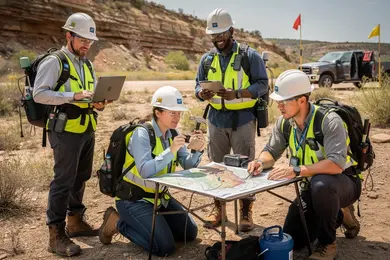
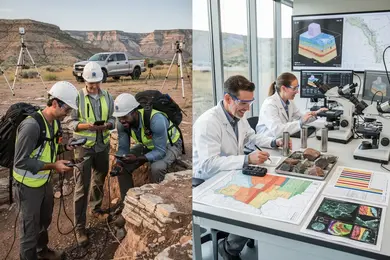
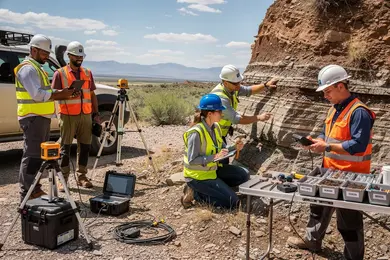
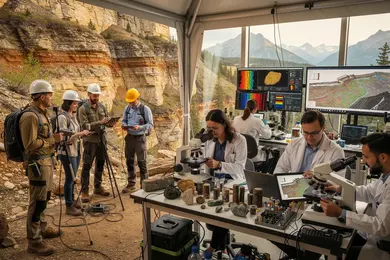
Online geosciences degrees compel students to secure practical field experience through partnerships with local organizations or intensive residencies, as direct engagement with geological samples and environments remains indispensable. Employers prioritize hands-on competence in field instrument use, sample collection, and environmental data interpretation, making such experience a critical hiring factor. Unlike traditional on-campus curricula that integrate frequent lab access and supervised fieldwork, online programs generally rely on regional placements or brief on-site sessions ranging from days to weeks to fulfill these requirements.
These arrangements introduce timing and coordination complexities, often forcing online students to independently arrange internships or cooperative education opportunities. For instance, environmental consulting roles demand verifiable field experience, which online programs attempt to support via documented internships but cannot replicate in the breadth and immediacy typical of campus-based training. This difference affects readiness and may impact early career outcomes.
The comparison of lab training in online and on-campus geosciences programs reveals a tradeoff between accessibility and immersive skill development. Students should evaluate how thoroughly programs facilitate access to practical components without requiring relocation. Prospective learners must also weigh this against labor market data: the U.S. Bureau of Labor Statistics reports a median salary of $78,980 for environmental scientists with a 6% job growth projected through 2034, underscoring sustained demand for graduates with robust applied skills.
Those investigating further educational options might consider allied fields; for example, a masters in library science offers alternative specialization routes with distinct experiential frameworks.
What concentrations in online geosciences programs are most valuable for environmental agency roles?
Online geosciences environmental science concentrations that focus on practical, agency-relevant skills offer clearer pathways into environmental roles than purely theoretical studies. Specialties such as environmental geology, hydrogeology, and geospatial analysis directly align with regulatory and remediation tasks typical in state and EPA work. For instance, hydrogeology's groundwater flow expertise is critical for drinking water protection and contamination cleanup, while geospatial analysis provides essential spatial data management used in monitoring environmental changes.
Students benefit most when their concentrations combine field sampling, environmental impact assessment, and adept data interpretation. These competencies are often prerequisites for environmental agency roles, as employers seek candidates who translate technical knowledge into actionable regulatory reports or remediation strategies. Programs that add environmental policy or toxicology provide a potential edge when integrated with these applied skills.
Cost considerations are significant, with total tuition varying widely-from about $24,000-$30,000 at American Public University up to $48,000-$55,000 at Arizona State University Online-without assurance that all curricula match agency demand. Prospective students should focus on program offerings that include training in ArcGIS and environmental modeling software, along with project-based learning or internships, to meet employer expectations for regulation-ready graduates.
When evaluating options, consider broader comparisons like those found in a library science degree cost analysis, which similarly balances affordability with specialized focus. Realistic assessment of concentration relevance is essential to avoid investing heavily in narrower or less applied specializations that limit career mobility in environmental agencies.
What core courses and skills will you gain in an online geosciences curriculum for this career path?
Online geosciences degrees for careers in environmental agencies demand rigorous quantitative and technical competencies that align closely with real-world job functions. Employers expect graduates to manage complex datasets through geostatistics and environmental modeling, crucial for pollution control and risk assessment. For instance, water quality managers integrating chemical and geological data to meet EPA standards illustrate the professional application of these skills.
Programs include practical training in Geographic Information Systems (GIS) and remote sensing to support tasks like contamination tracking and land use analysis, yet the absence of fieldwork requires students to seek supplementary hands-on experiences to compete effectively with traditionally trained peers.
Online curricula embed environmental policy, mineralogy, and climatology with a focus on operational relevance-emphasizing communication skills for environmental reporting and collaboration within multidisciplinary teams. This approach targets employability in agency roles that prioritize validated proficiencies over purely academic knowledge.
Cost remains a significant consideration; some accredited programs offer tuition under $300 per credit hour, presenting accessible options for working professionals aiming for career pivots or upskilling without substantial debt. However, prospective students must weigh cost savings against potential limitations in practical exposure inherent to online delivery formats.
What are the typical admission requirements and prerequisites for online bachelor's and master's geosciences programs?
Admission demands for online bachelor's programs in geosciences prioritize quantitative readiness and credit flexibility, which directly impact time and cost efficiency. Applicants typically need foundational coursework in algebra, geometry, and related sciences, although many programs increasingly waive standardized test requirements for working adults or transfer students. Programs that accept up to 90 transfer credits offer significant acceleration-sometimes completing the degree with just 25% of the usual course load-enabling professionals to re-enter or advance in the workforce faster.
At the master's level, admission criteria become more stringent, favoring candidates with a bachelor's in geosciences or a closely related STEM field and a GPA around 3.0. Applicants are expected to demonstrate advanced quantitative skills through prior courses or test scores, with some schools requiring GRE results unless waived. Relevant professional experience, including internships or work with environmental agencies, enhances admission prospects by aligning academic readiness with workforce expectations.
Employers in regulatory and research sectors look for graduates who possess technical proficiency and analytical acumen. For students, this means gaps in foundational math or science often necessitate remedial coursework, lengthening both study duration and expenses. Those with transferable credits and STEM backgrounds can navigate admission and completion more efficiently, ultimately positioning themselves better for specialized roles in agencies managing environmental and geological resources.
How long do online geosciences degrees take and what do they cost for aspiring environmental professionals?
Geosciences degrees typically require 2 to 4 years depending on credential level and enrollment status, but students must weigh time investment against workforce re-entry. Associate degrees take roughly 2 years, while bachelor's degrees generally span 4 years full-time. Part-time options extend this beyond 5 years, relevant for working professionals balancing employment. Accelerated routes exist but demand rigorous course loads that could strain those managing external responsibilities.
Tuition costs vary widely based on institution and residency status. Public in-state rates range from about $120 to $350 per credit hour, amounting to $15,000 to $45,000 for a bachelor's degree. Out-of-state or private tuition can nearly double those figures, sometimes nearing $90,000, exclusive of fees and materials. Financial aid is limited and competitive, often targeted toward STEM or environmental fields.
Employers in environmental agencies increasingly expect practical skills with geographic information systems (GIS) and applied hydrology, meaning access to specialized software during study is critical but often costly. For career changers, leveraging prior credits through articulation agreements can shorten time and reduce expense, crucial for managing financial strain while minimizing postponed income.
Projected job growth in geosciences integrating GIS and hydrology runs at or above 3% annually through 2034, indicating stable demand but also reinforcing the premium on technical proficiency aligned with evolving workforce requirements.
What geoscience careers are available in government environmental agencies and related organizations?
Environmental agencies prioritize geoscientists who combine technical specialization with policy fluency to address complex natural resource challenges. Positions like hydrologists at the Bureau of Land Management require proficiency in GIS and regulatory frameworks to interpret watershed data that inform land-use decisions. This integration often forces candidates to master not only field and lab skills but also interdisciplinary communication and compliance knowledge.
Demand projections from the U.S. Department of Labor indicate that geoscience-related roles will grow around 5%, with environmental science roles expanding slightly faster, reflecting steady governmental investment in climate impact analysis, contamination assessment, and sustainable land management. Yet, entry typically depends on demonstrated practical experience such as internships within federal programs, which accelerate placement more effectively than theoretical credentials alone.
Tradeoffs include choosing programs that provide relevant hands-on training and data analytics over purely academic tracks, essential for sectors like emergency management where hazard modeling and operational risk assessment are increasingly prioritized. Students who neglect these applied competencies risk slower integration into agencies that balance site remediation and regulatory enforcement.
Prospective geoscience students should critically assess whether their education aligns with documented agency hiring criteria-favoring practical skills and interdisciplinary adaptability over institutional prestige or general academic breadth.
What salary ranges and job outlook can geoscience graduates expect in environmental agency positions?
Environmental agency roles for geoscience graduates typically span a wide salary range influenced by experience and jurisdiction, with entry-level positions starting near $56,000 and senior roles exceeding $90,000 annually. This reflects a clear progression tied to responsibility levels within state environmental quality departments and regional EPA offices. Professionals holding advanced qualifications, such as an M.S. in Environmental Geology, often find steady demand due to growing regulatory requirements and climate resilience efforts.
Prospective students must weigh program costs and timelines against realistic salary outcomes. For instance, the University of Georgia offers a fully online M.S. program in Environmental Geology with tuition around $20,220 for 2024-25, which is comparatively affordable among advanced environmental degrees. Graduates often secure government positions aligned with standardized pay grades, enabling predictable career and salary advancement.
The projected 5% job growth for environmental scientists and specialists through 2032 emphasizes the sector's stability, driven by expanding natural resource assessments and enforcement roles. Employers favor candidates with applied technical proficiency and practical experience, making online master's programs in geosciences strategically relevant for mid-career pivots.
When evaluating programs, consider these factors:
How can you evaluate and choose a high-quality, accredited online geosciences program in the U.S.?
Choosing an online geosciences program requires assessing more than accreditation-it demands examining alignment with applied skills sought by environmental agencies. Accreditation by recognized bodies like the Higher Learning Commission confirms baseline quality, but credible programs also embed practical components such as virtual labs, GIS training, and coursework in climate science and pollution control. These elements directly affect readiness for roles where hands-on expertise influences job performance.
Consider a mid-career professional shifting from general environmental science to geosciences: programs emphasizing hydrogeology and remote sensing deliver targeted skills meeting labor market demand tracked by the U.S. Bureau of Labor Statistics, which forecasts 6% growth through 2034 in environmental science roles. Integrating industry-standard software and data analysis tools is essential for workforce relevance.
Flexibility in scheduling frequently differentiates successful students balancing work commitments, with asynchronous formats providing necessary adaptability. Beyond curriculum, robust tech support, access to research databases, and partnerships with federal or state environmental agencies accelerate entry into employment. Students should scrutinize transparency around graduation rates and employer feedback to avoid programs with stagnant or unverified outcomes.
- Verify accreditation for transferability and employer recognition.
- Prioritize programs offering applied geoscience skills including GIS and fieldwork.
- Evaluate job placement connections and internship opportunities with environmental bodies.
- Assess schedule flexibility and technological support to reduce dropout risk.
Other Things You Should Know About Geosciences
Online geosciences degrees often balance theory with virtual labs, but many fall short on providing hands-on fieldwork that employers expect. Programs that integrate mandatory in-person field components or partnerships with local agencies offer better preparation for real-world technical tasks. When choosing a program, prioritize those with verified field experience options or internships connected to environmental agencies to avoid skill gaps on hire.
Environmental agencies increasingly accept online geosciences degrees, but not all programs carry equal weight. Employers critically evaluate institution accreditation, curriculum rigor, and opportunities for applied experience rather than format alone. Graduates from regionally accredited programs with demonstrated practical skills and internship experience rank higher in hiring pools, so applicants should emphasize tangible outcomes over the degree's delivery mode.
Environmental agencies often expect graduates to use GIS software, interpret satellite imagery, and manage spatial data. Common tools include ArcGIS or QGIS, plus remote sensing platforms used for watershed, land-use, and hazard analysis. A strong program should include map projection, geostatistics, and field-data integration.
References
- Geoscience Jobs in Government https://www.grow-geocareers.com/governmentjobs
- Careers in Geoscience: Environment https://www.aig.org.au/education/careers-in-geoscience/careers-in-geoscience-environment/
- Environmental Geoscience Major | SUNY Plattsburgh https://www.plattsburgh.edu/programs/environmental-geoscience-major.html
- Government Organisations & Research Councils https://www.geolsoc.org.uk/Geology-Career-Pathways/Careers/Job-Sectors/Research-Teaching-and-Communication/Government-and-Research.html
- Information about Geoscience Related Careers https://careerexplorer.americangeosciences.org/careersinfo/
- WaterJobsIntel | 500+ Water Engineering Jobs Daily https://jobs.watertechintel.com/blog/environmental-science-job-outlook
- UNIGEAPPLY International Admissions SELECTION A.Y. 2026/27 – Students with a foreign qualification, access to Master’s degree taught in English | UniGe | University of Genoa https://unige.it/en/internazionale/procedura-prevalutazione-lauree-magistrali-inglese-solo-studenti-non-eu-residenti-all
- Geology and Environmental Studies Careers https://www.uwec.edu/geology-and-environmental-science-department/geology-and-environmental-studies-careers
- Geosciences https://www.studium.uni-mainz.de/en/choosing-your-degree-program/courses-offered/geosciences_msc/
- Online Geoscience Degrees: Top Schools and All Programs in 2026 https://www.gisdegree.org/online/geoscience-degrees/