2027 Best Online Geosciences Degrees for Graduate Earth Science Preparation

Co-Founder and Chief Data Scientist
Many aspiring earth science professionals face a critical bottleneck: balancing full-time work with the need to access rigorous graduate training in an evolving, interdisciplinary field. With the U. S. Department of Education reporting a 21% surge in adult enrollment in online master's programs since 2023, demand for flexible, accredited geosciences degrees has shifted decisively toward remote learning. This trend reveals not just convenience preferences but a structural shift in workforce readiness strategies, where learners prioritize programs enabling timely skill acquisition without sacrificing current career momentum. This article evaluates the best online geosciences degrees designed to optimize graduate preparation, career flexibility, and applied expertise for working professionals and full-time students alike.
Key Things You Should Know
- Online geosciences graduate programs typically cost 15-30% less per credit than in-person, but extended time-to-completion averages 25% longer, increasing overall opportunity costs according to 2024 NCES data.
- Employers prioritize remote graduates with strong technical software proficiencies (ArcGIS, Petrel); however, 42% express concerns over online students' limited fieldwork exposure, impacting entry-level hiring rates.
- State licensure growth (+8% projected through 2030 by BLS) pressures students to select programs with accredited and fieldwork-integrated curricula, as unaccredited online degrees hinder professional geoscientist certification eligibility.
What is an online geosciences degree and how does it prepare you for graduate earth science study?
An online geosciences degree benefits for graduate earth science students primarily by providing essential theoretical knowledge and applied capabilities in areas such as geology, geophysics, mineralogy, and environmental science. These programs stress quantitative analysis, GIS proficiency, and data interpretation, which align with employer expectations and graduate research requirements. However, prospective students must carefully weigh the challenge of completing required hands-on fieldwork and lab experiences independently, as online formats limit direct access to physical resources.
For working professionals seeking roles in disciplines like mineral exploration, environmental consulting, or disaster risk assessment, online programs offer flexible scheduling but necessitate proactive arrangements for local internships or project partnerships. This tradeoff can impact preparedness for highly field-oriented graduate study, underscoring the need to coordinate closely with program faculty and employers. Employers and graduate admissions committees prioritize candidates who demonstrate competency with remote sensing technologies and can apply geospatial tools to real datasets, competencies emphasized by rigorous online curricula.
Students evaluating how an online geosciences program prepares students for advanced earth science study should confirm program accreditation and assess the availability of mentorship and support for collaborative research. These factors affect the degree's acceptance as a foundation for doctoral or master's research. For those analyzing career options, resources outlining what can you do with an environmental science major provide practical insight into workforce outcomes and sectoral opportunities.
How do online geosciences programs compare with on-campus options for lab work and field experience?
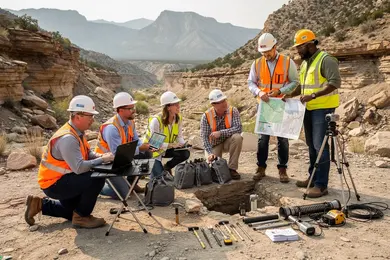
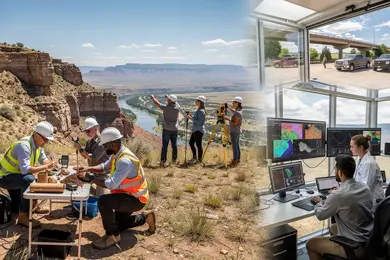
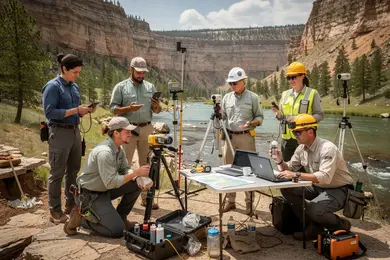
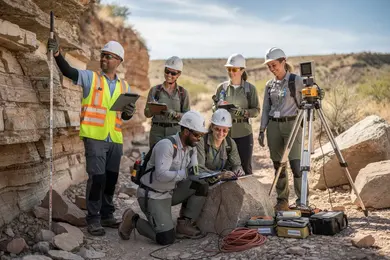
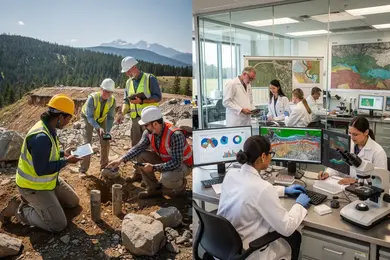
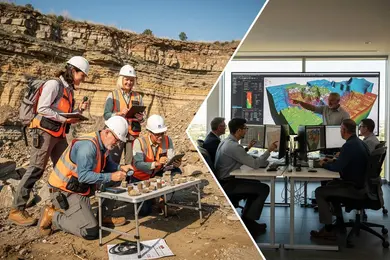
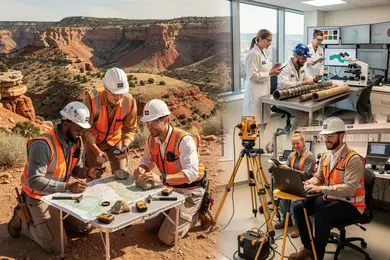
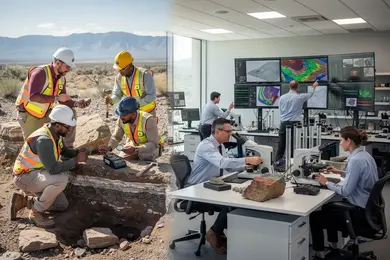
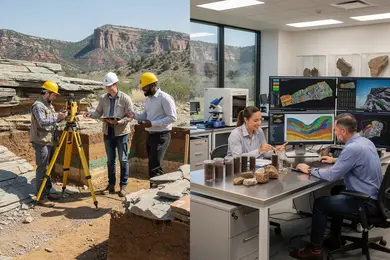
Online geosciences programs provide comparable theoretical instruction to on-campus options but consistently fall short in delivering extensive hands-on lab and field experience vital for occupational readiness. The inevitable tradeoff involves abbreviated field exposures-often under 10 days per semester during intensive residencies-that cannot substitute for the multi-week immersion typical of on-campus fieldwork. This reality shapes the practical value of online credentials, particularly when evaluating online geosciences programs lab and field experience comparison.
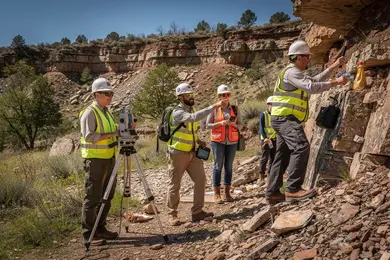
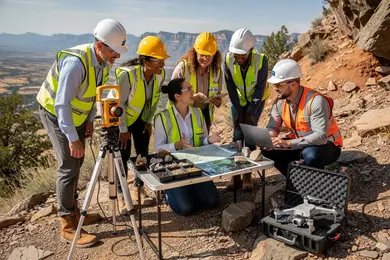
Employers in sectors like environmental consulting, oil and gas exploration, and government agencies place substantial weight on direct field competencies. They prioritize candidates skilled in surveying, geophysical instrumentation, and stratigraphic sampling under real-world conditions. Consequently, graduates from virtual programs often face initial challenges in job acquisition and career progression compared to those with robust fieldwork backgrounds. The difference in practical expertise contributes to nuanced distinctions in employment outcomes amid a projected 7% growth for geoscientists from 2022 to 2032.
Prospective students must factor in logistical demands such as local lab access and required travel for short residencies, weighing these against intended career trajectories. For example, working professionals shifting toward environmental geology may tolerate shorter fieldwork segments supplemented by on-the-job training, whereas those pursuing research-focused roles benefit from programs with embedded, extended field components. Additionally, comparisons of virtual versus on-campus geosciences fieldwork opportunities highlight these contrasts clearly.
Transparent disclosure of fieldwork quality and intensity is essential when selecting an online program. Individuals interested in an online master data science may find parallels in evaluating practical versus theoretical balance, underscoring the importance of aligning study formats with marketable skills and employer expectations.
Which types of online geosciences degrees best prepare students for graduate school pathways?
Strong preparation for graduate earth science programs hinges on an online geosciences degree that integrates quantitative analysis, GIS, and simulation-based fieldwork. Programs emphasizing interdisciplinary earth system science meet direct research demands in climate science or hydrology, while petroleum geology tracks focus more on geophysics and industry modeling tools. These curricular differences affect readiness for specific master's programs and long-term technical proficiency.
Insufficient exposure to lab work or computational skills often leaves students ill-equipped for rigorous graduate-level research. For example, applicants to M.S. hydrogeology programs lacking hands-on experience with hydrological modeling or statistical software face significant challenges completing coursework and theses. Selecting online geosciences degrees for graduate earth science programs should therefore prioritize data-intensive training and methodological rigor.
Natural sciences management roles, an attainable goal for experienced geoscientists, command median annual wages of $137,900, reflecting a premium on advanced analytical and leadership capabilities. This labor market reality informs the decision to pursue programs that balance theoretical grounding with applied project work and synchronous engagement opportunities.
Key factors in evaluating programs include
- Program accreditation and demonstrated faculty research output
- Virtual labs and access to field data
- Curriculum coverage spanning physical geology, geochemistry, and environmental applications
- Options for real-time interaction approximating field experience
For those pursuing the best online geosciences majors for master's preparation, understanding these nuances supports aligned educational investments. Professionals weighing these options might also refer to offerings such as the online exercise science degree programs as benchmarks for methodological rigor and applied learning approaches.
How can you verify accreditation and program quality for online geosciences degrees in the U.S.?
Accreditation for online geosciences programs directly affects access to federal aid, credit transfer, and employer recognition, making regional accreditation from one of the seven recognized U.S. bodies indispensable. Equally important is verifying whether the program holds endorsements from specialized STEM or geoscience organizations like the American Geosciences Institute, as this reflects adherence to industry and research standards rather than just institutional prestige.
Employers prioritize graduates from accredited programs with tangible fieldwork and lab experience, not solely theoretical knowledge. For example, geologists targeting environmental consulting or energy sectors need programs offering practical components or partnerships enabling applied training. Without this, online degrees can limit opportunities in roles that demand hands-on expertise, reflecting a common tradeoff in program formats.
Cost considerations tie closely to accreditation and outcomes. With tuition at top schools like Cornell University reaching $62,456 per year, candidates must assess if the expense aligns with their career goals and program value. Ignoring accreditation risks wasted time and finances due to credentials that may not qualify for licensing or advanced study.
Prospective students should consult reliable resources such as the U.S. Department of Education's Database of Accredited Postsecondary Institutions and Programs and review employer feedback to gauge real-world program effectiveness. Those exploring alternatives might also compare the cheapest online mechanical engineering degree options, as a benchmark for balancing cost and accreditation quality in STEM fields.
How to check accreditation for online geosciences programs in the U.S. often involves cross-referencing institutional and programmatic credentials, ensuring alignment with workforce expectations. Identifying quality indicators for U.S. online geosciences degrees goes beyond listings, focusing on the intersection of program rigor, applied learning, and measurable graduate outcomes.
What courses and specializations are typically included in an online geosciences curriculum?
An online environmental geoscience degree often requires balancing technical depth with cost, where the $66,000 average tuition reflects a mid-range investment for students targeting specialized roles rather than broad earth science positions. Employers consistently prioritize proficiency in geographic information systems (GIS), making spatial modeling skills essential for natural resource management, urban planning, and environmental consulting.
Practical skills remain a critical hurdle: while virtual labs and regional field experiences attempt to address hands-on training, remote learners must consider how effectively a program replicates in-person fieldwork, essential for hazard assessment or environmental data collection roles that rely heavily on real-world interpretation.
Quantitative coursework in statistics and geostatistics underpins data-driven decision-making, a necessity for positions involving environmental policy or regulatory compliance. Students must understand how scientific findings translate within legal and economic frameworks to influence sector outcomes effectively.
- Core areas: earth materials, physical geology, sedimentology, structural geology, paleontology
- Specializations: environmental geoscience, hydrogeology, geophysics, GIS with emphasis on spatial data analysis
- Technical competence in spatial modeling tools is a pervasive employer expectation
- Field methods converted for online delivery-critical for roles requiring field data
- Quantitative methods support environmental compliance and resource management decisions
Prospective students should critically assess programs for meaningful GIS integration and practical methodologies. The challenge lies in securing a curriculum that aligns with specific employment niches requiring actionable technical skills while justifying the financial and time investment inherent in an online degree path.
What are the usual admission requirements and prerequisites for online geosciences programs?
Entering online geosciences graduate programs without the necessary STEM foundation delays progress due to required bridging courses, which add time and cost before career-relevant skills are attained. Applicants must hold a bachelor's degree in earth science, environmental science, geology, or closely related fields and demonstrate competencies in chemistry, physics, calculus, and introductory geology. Admissions committees emphasize quantitative analysis and laboratory experience crucial for programs where practical engagement is often self-directed.
Standardized test requirements vary; many programs request GRE scores, although increasingly some waive this contingent on professional experience. However, most research-focused institutions prefer traditional academic metrics, limiting alternatives for candidates with work experience but weaker academic records.
International candidates face additional hurdles, including English proficiency tests like TOEFL or IELTS, alongside standard prerequisites. Career-focused statements explaining alignment with sectors such as energy exploration or natural hazard assessment are commonly requested.
The University of Georgia data shows 90% employment among graduates from its online M.S. in Environmental Geology, highlighting the real workforce impact of completing programs with solid academic and practical preparation.
- Non-STEM backgrounds require strategic planning to fulfill prerequisites timely and avoid prolonged enrollment.
- Employers prioritize graduates with both theoretical knowledge and applied skills, making rigorous admission adherence critical.
- Remote or hybrid formats demand high self-discipline in independent lab or fieldwork engagement.
How long do online geosciences degrees take, and what do they cost to complete?
Online geosciences master's programs vary significantly in duration and cost, reflecting distinct tradeoffs for working students and career-focused professionals. Part-time tracks often extend close to three years, accommodating employment demands but potentially delaying job market entry. In contrast, accelerated full-time options allow completion in 12 to 18 months but require intense time commitment and available resources.
Many programs require 30 to 36 credit hours, frequently culminating in a capstone or thesis, where the latter adds complexity and prolongs studies. This is particularly important for students aiming at research-heavy roles or academia, as thesis demands can delay workforce transition yet deepen expertise. Conversely, those targeting applied consulting or environmental remediation roles benefit more from project-based programs emphasizing GIS and field data analysis, with some adding field components beyond the online curriculum.
Cost ranges broadly from $15,000 to over $50,000, influenced by public or private institutions and residency status. Additional expenses such as specialized software, digital lab materials, and access to geospatial data can add hundreds to thousands beyond tuition.
Employers in energy and environmental sectors prioritize practical skills and relevant experience gained during coursework, which can outweigh program length or price. With 124 earth science master's offerings reported by Educations.com for 2025, prospective students face complex decisions balancing time, cost, and alignment with employer expectations.
What careers can an online geosciences degree lead to in earth and environmental sciences?
An online geosciences degree often leads to roles where the ability to integrate technical skills with regulatory insight is essential, but candidates must carefully weigh costs versus realistic starting salaries. For example, environmental consultants frequently handle pollution risk assessments, relying on real-time GIS data to navigate evolving EPA regulations. This practical demand reveals a gap between academic costs-around $85,000 for nonresidents at programs like Florida Atlantic University as noted by GISDegrees.org-and entry-level wages that can be below $50,000, extending time needed to recoup educational investments.
Key employability areas include:
- Environmental consultant managing pollution risk and remediation projects.
- GIS analyst designing spatial models for land use and environmental impact assessments.
- Natural resource manager overseeing sustainable extraction and conservation efforts.
- Research scientist conducting climate change or geohazard studies for federal or academic institutions.
- Regulatory compliance specialist ensuring adherence to state and federal environmental laws.
Graduates lacking internships or applied experience may find their theoretical knowledge insufficient to meet employer expectations. Practical field and lab exposure are often non-negotiable for competitive candidacy, especially in federal or specialized consulting positions. Moreover, postgraduate credentials in niche areas such as hydrogeology or atmospheric sciences frequently become necessary to differentiate oneself amid tightening environmental policies and complex data integration demands.
What salary ranges and job outlook can geosciences graduates expect in different U.S. sectors?
Starting salaries and long-term prospects in geosciences vary sharply depending on sector and skill specialization, creating a landscape where strategic choices shape financial and professional stability. Federal roles, like those at the U.S. Geological Survey, offer consistent growth, from about $60,000 to above $95,000 within a decade, reflecting stable public sector pay scales. In contrast, energy and oil & gas sectors pay higher median salaries, often between $90,000 and $110,000, but these fluctuate with market cycles, exposing graduates to volatility in job security and earnings.
Environmental consulting appears as a middle ground with entry salaries of $55,000 to $70,000 that increase with technical expertise and managerial duties amid modest sector growth driven by regulatory demand. Academia and research typically start lower, near $60,000, but may provide non-monetary benefits such as funding opportunities and position stability.
Key decision factors for emerging professionals include balancing salary against sector volatility and the cost-efficiency of retraining programs. For example, Mississippi State University's Environmental Geosciences online degree charges a competitive $581 per credit hour plus a $25 instructional support fee, representing a manageable investment with flexible entry to diverse career pathways. Technical skills in GIS, data analytics, and remote sensing are increasingly rewarded across sectors. Additionally, job openings in renewable energy and environmental protection agencies are growing by approximately 5% annually, signaling alternative avenues beyond traditional oil and gas careers.
Are there licenses, certifications, or professional memberships geosciences students should plan for?
Licensure and certifications fundamentally shape geosciences career trajectories, especially where professional independence is a benchmark. For roles in environmental consulting or petroleum exploration, state-level Professional Geologist (PG) licensure is often indispensable, requiring passage of the ASBOG Fundamentals and Practice of Geology exams plus 3-5 years of supervised experience. Without licensure, graduates typically remain constrained to roles with limited decision-making power and suppressed earning potential, a significant factor in regulatory jobs.
Certifications from bodies like the American Institute of Professional Geologists (AIPG) or ASBOG add measurable credibility that can expedite promotions. Specialists focusing on applied geophysics or GIS benefit from credentials through the Geospatial Information & Technology Association (GITA) or the American Society for Photogrammetry and Remote Sensing (ASPRS), which translate to competitive advantages in niche sectors.
Professional memberships-such as in the Geological Society of America (GSA) or the Society of Exploration Geophysicists (SEG)-go beyond networking; they provide access to exclusive job boards and technical resources critical for securing contracts and research opportunities.
Prospective candidates must realistically budget time and money for licensure steps, including exam fees totaling $300-$600, detailed experience documentation, and varying state-specific demands. Integrating these activities during graduate coursework, such as through online master's programs ranked among the top globally by Mastersportal, can streamline the path to full professional status without geographic constraint.
Other Things You Should Know About Geosciences
In 2027, online geosciences programs often integrate advanced simulations, virtual labs, and fieldwork components, which help students develop practical skills like data analysis and remote sensing. However, students may still need real-world lab experiences to fully meet some employers' expectations.
While online programs offer schedule flexibility, the workload in geosciences graduate prep remains demanding, especially in quantitative and analytical courses. Flexibility often comes with less immediate instructor feedback, requiring strong self-discipline. Candidates balancing full-time jobs should evaluate programs that offer asynchronous options with clear milestones to avoid falling behind. Prioritize programs with robust student support systems that accommodate your professional commitments without diluting academic rigor.
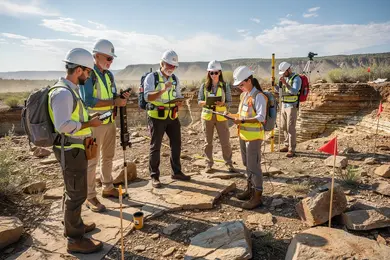
Most accredited online geosciences programs still require a field component, often one short residency, weekend field exercises, or a summer mapping lab. Some capstone projects also use local data collection. Check whether the program specifies required in-person days and who supervises the fieldwork.
Specializing in subfields like hydrogeology or climatology can align better with your graduate school goals and future research opportunities. However, overly narrow programs may limit exposure to foundational knowledge crucial for comprehensive earth science understanding. For graduate readiness, choose programs that balance breadth and depth with core courses in geology, geophysics, and data analysis, alongside your chosen specialization. This approach ensures adaptability in graduate research and emerging job markets.
References
- Why is it Important to be Licensed to Practice Applied Geology? https://www.aegweb.org/index.php
- Choosing Your Degree https://www.geolsoc.org.uk/Geology-Career-Pathways/University/Choosing%20your%20degree.html
- ABET Accreditation a Clear Pathway to Professional Geologist and Geologist in Training Licensure Under New California Regulations - ABET https://www.abet.org/abet-accreditation-a-clear-pathway-to-professional-geologist-and-geologist-in-training-licensure-under-new-california-regulations/
- What qualifications should geological service providers have? - Palsatech https://palsatech.fi/what-qualifications-should-geological-service-providers-have/
- Careers in Geoscience: Environment https://www.aig.org.au/education/careers-in-geoscience/careers-in-geoscience-environment/
- How do recent geoscience graduates experience the job market? - GeoExpro https://geoexpro.com/how-do-recent-geoscience-graduates-experience-the-job-market/
- Are Online Degrees Accredited? How to Identify Quality Distance Learning Programs https://www.umassglobal.edu/blog-news/online-degrees-accredited-identify-quality-distance-learning-programs
- European Geologist title- Certification of geosciences professionals - EuroGeoSurveys https://eurogeosurveys.org/european-geologist-title-certification-of-geosciences-professionals/
- 5. Best Practices for Instruction of Geoscience Undergraduates https://www.americangeosciences.org/change/sections/instructional_best_practices/
- Membership Categories and Requirements - American Institute of Professional Geologists https://aipg.org/page/MembershipCategoriesandRequirements