2027 Online Geosciences Degrees With General Geosciences Concentrations

Co-Founder and Chief Data Scientist
Professionals seeking to transition into geosciences often confront the dilemma of balancing advanced education with ongoing work or personal commitments, especially as many traditional programs require full-time, on-campus attendance. With over 50% growth in online degree attainment reported by the National Center for Education Statistics, online geosciences programs now represent viable pathways for adults pursuing flexibility without sacrificing academic rigor. This shift reduces barriers linked to geographic location and scheduling, yet demands careful scrutiny of program structure and industry recognition to ensure meaningful career mobility. This article presents a detailed comparison of online geosciences degrees offering general geosciences concentrations, tailored to help prospective students navigate these trade-offs effectively.
Key Things You Should Know
- Only 35% of online geosciences bachelor's degree holders with general concentrations secure jobs directly related to their major within two years, per National Science Foundation 2024 data, signaling a notable employment tradeoff.
- Employers increasingly favor candidates with integrated fieldwork credentials alongside online degrees, impacting hiring where pure virtual general geosciences credentials show employment market disadvantages, according to US Bureau of Labor Statistics 2024.
- Median program costs for fully online geosciences degrees exceed $35,000 nationwide, with slower program completion rates causing extended debt duration, underscoring significant timing and financial burdens for midcareer students, per NCES 2024.
What is an online geosciences degree with a general geosciences concentration and who is it for?
An online geosciences degree with general concentration offers broad-based scientific literacy but often lacks the depth required for specialized technical roles. This generalist approach suits students seeking diverse entry or mid-level positions across government agencies, environmental consulting, and resource management, where flexibility to address multiple geoscientific challenges is vital. For example, professionals transitioning from STEM fields can leverage this degree's wide scope to adapt into earth science sectors without committing to narrowly defined specialties.
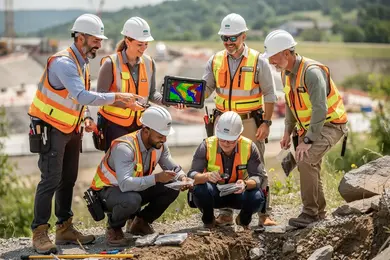
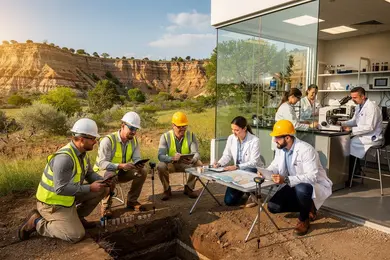
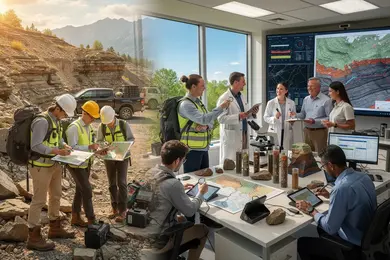
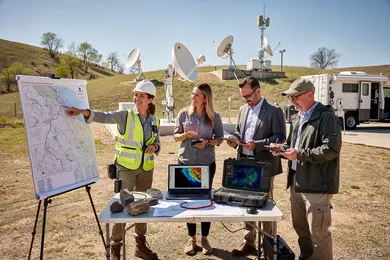
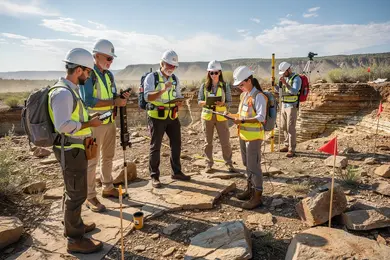
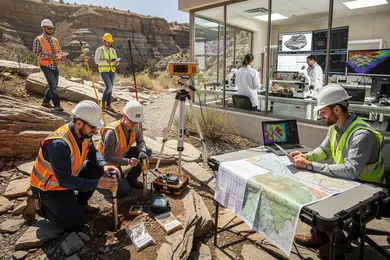
The online format demands disciplined time management and may limit direct experience with practical fieldwork or lab activities, which are critical in meeting employer expectations for competencies such as mineralogy, GIS, and data interpretation. Many graduates find themselves needing supplementary certifications or hands-on internships to bridge these gaps. Choosing a bachelor's degree in geosciences general focus means balancing foundational knowledge with the practical skills employers prioritize.
Employment projections indicate steady 3% growth from 2024 to 2034, with a median wage around $99,240 (Bureau of Labor Statistics). However, advancing to highly technical roles often requires eventual specialization beyond the general curriculum.
This pathway proves most effective when combined with targeted workplace experience or internships that build applied skills. Those considering a strategic career pivot should examine how the curriculum and format line up with their professional goals and the realities of job market demands.
For a nuanced comparison from a different field's career transition, see guidance on becoming a speech language pathologist.
How do online geosciences degrees compare to on-campus programs for quality and learning experience?
Online geosciences degrees provide theoretical knowledge comparable to on-campus programs but present significant tradeoffs in hands-on experience and networking-critical factors for employability and skill acquisition in this field. For instance, natural sciences managers with a median annual salary of $137,900 and geoscientists earning $83,680 (Bureau of Labor Statistics, 2024 data summarized by MyDegreeGuide) depend on verified technical competencies gained through direct interaction with field and lab practices.
While online programs enhance accessibility and flexibility-beneficial for working professionals-they typically lack sufficient in-person fieldwork and live collaboration opportunities that foster essential soft skills and professional relationships. Students must therefore seek local internships or employer-sponsored cooperative education to supplement their education and meet industry expectations.
Evaluating the quality comparison of online and on-campus geosciences degrees involves acknowledging these operational realities: on-campus options guarantee structured applied learning and networking; online formats require strategic external engagement. Employer demand favors graduates skilled in geospatial tools, rock and soil sampling, and GIS software-areas not easily replicated in remote settings. Prospective students should weigh these factors against convenience and personal circumstances.
Those considering an online general geosciences program should plan proactively to integrate field experiences and align outcomes with labor market standards. Related workforce considerations include salary benchmarks listed in resources like online animal science degree salary research, which illustrate the critical link between practical proficiency and compensation.
What types of online geosciences degrees and credentials can you earn?
Online geosciences degree programs in the United States offer distinct pathways that balance foundational knowledge with practical application, but each comes with tradeoffs related to career goals and workforce expectations. Bachelor's degrees generally provide core training in Earth system science, geology, environmental processes, and GIS, preparing graduates for entry-level roles such as environmental technicians or field specialists. These roles often demand a mix of technical skill and local fieldwork, making program accreditation and hands-on components essential criteria for evaluation.
Master's degrees extend this base with advanced analytical methods, specialized fields like hydrogeology or petrology, and research capabilities that appeal to employers in sectors such as oil and gas or environmental consulting. Importantly, the median salary of $99,240 for geoscientists reflects a sizable premium over typical bachelor's-level wages, emphasizing the economic benefit of this additional credential.
Certificate programs serve professionals aiming for targeted skill enhancements without the commitment of a full degree. They focus on applied competencies like environmental data analysis and remote sensing, which are critical for roles in regulation or consultancy. However, these programs often require local arrangements for practical lab or field experience, posing a logistical consideration for full-time employees. Choosing accredited general geosciences online credentials with clear alignment to industry certification standards, such as those from the American Institute of Professional Geologists, helps ensure relevance and employability.
For working students balancing education with career demands, options that facilitate skill transitions without geographic or full-time enrollment constraints are especially valuable. For comparison, professionals exploring rapid program completion might consider an accelerated exercise science degree online as a model of flexible pacing and format. Such frameworks can inform decisions about pacing and delivery when assessing geosciences credentials.
How can you verify accreditation and program quality for online geosciences schools?
Effective online geosciences program accreditation verification starts with confirming recognition by the U.S. Department of Education or the Council for Higher Education Accreditation (CHEA). Without this, degrees risk being undervalued by employers, financial aid becomes inaccessible, and credits may not transfer. Program-specific endorsements from professional bodies like the Geological Society of America align curricula with industry standards, ensuring graduates possess applied fieldwork and data analysis skills essential for sectors such as environmental consulting or energy. For working professionals, such accreditation is a key marker that online technical competencies match those required on-site.
Evaluating quality of online geosciences degrees involves scrutinizing graduate outcomes-programs reporting under 70% employment in geoscience roles within a year post-graduation signal weak industry connections or outdated content. Practical components such as simulation labs or access to research projects matter more than purely didactic courses, which tend to fall short of employer expectations. Employer demand, supported by the Bureau of Labor Statistics' 7% growth projection for geoscientists through 2034, reinforces the value of vetted, applied training.
Avoid programs broadly labeled natural sciences that lack clear geosciences specialization, as employers favor expertise in geology, hydrology, or geospatial analysis. Consider faculty qualifications carefully-terminal degrees and active research involvement often correlate with better networking and career progression opportunities. For comparison or alternative pathways in STEM fields, prospective students might review affordability data on a mechanical engineer degree to weigh tradeoffs in online technical education options.
What courses and specializations are typically included in general geosciences curricula?
General geosciences curricula demand a rigorous grasp of core earth science concepts coupled with practical skills in data interpretation and environmental assessment. Graduates are expected to navigate complex subjects like mineralogy, petrology, sedimentology, and structural geology while applying quantitative tools such as GIS and geostatistics to real-world problems.
Employers in environmental consulting and government agencies prioritize candidates who can integrate fieldwork proficiency with spatial data analysis. For instance, the ability to conduct groundwater assessments or landform mapping directly influences job readiness and project impact in sectors ranging from urban planning to natural hazard evaluation.
Specializing in environmental geoscience or climate science introduces added layers of responsibility, such as remediation strategy design or climate pattern modeling, which align with regulatory frameworks and sustainability goals. Yet, students must weigh the tradeoff between a broad skill set and focused expertise based on targeted job markets.
Budgetary constraints often influence program choices. Online options like Southern New Hampshire University offer tuition at $320 per credit hour, totaling around $38,400 for a 120-credit bachelor's degree. This rate represents a competitive entry point for STEM education accessible to working professionals aiming to advance without incurring excessive debt.
What are the usual admission requirements for online geosciences degree programs?
Admission into online geosciences degree programs demands more than a basic diploma; it reflects a balance between academic fundamentals and practical hurdles often overlooked by candidates. Core subjects like mathematics, chemistry, and physics establish essential groundwork, yet the minimum GPA requirement-commonly between 2.5 and 3.0-serves as a gatekeeper reflecting real-world job market rigor. Applicants should anticipate that standardized tests may still influence acceptance or scholarship eligibility despite their declining ubiquity.
For professionals pivoting careers, prior STEM coursework or an associate degree can streamline entry by substituting formal standardized results, though they must weigh the value of such flexibility against the credibility these scores offer employers. Letters of recommendation and personal statements have limited sway but can differentiate candidates in tightly contested cohorts.
Fieldwork obligations present a notable logistical challenge for fully online students, requiring access to approved labs or geological sites. This requirement often disadvantages remote students unless proactively managed, underscoring the necessity of early coordination with program advisors to align practical experiences with academic milestones.
According to BachelorsPortal's 2025 data, there are 14 fully online bachelor's degrees in geology worldwide, a figure highlighting the limited availability of accredited, distance-learning geosciences programs relative to workforce demand and regional geological industry needs.
How long do online geosciences degrees take and what do they cost overall?
Choosing an online geosciences degree entails balancing study duration, cost, and employability within a competitive environmental science labor market. Accelerated paths are uncommon, typically requiring full-time enrollment and prior science coursework, while part-time study-often extending from four to six years-can ease immediate financial pressure but delays workforce entry and salary progression by up to two years.
Tuition varies significantly, with public institutions averaging $40,000 to $80,000 and private universities exceeding $100,000, excluding ancillary costs like textbooks and technology fees. These figures directly affect return on investment, as median annual earnings for roles such as environmental scientists hover around $76,530.
Prospective students should assess programs based on accredited status, faculty expertise, and availability of hands-on fieldwork or lab components-elements that influence employer confidence in scientific and technical competence. Additionally, the presence of career services and internships can materially affect job placement outcomes.
What careers can you pursue with a general geosciences degree and what do they involve?
A general geosciences degree directs graduates toward sectors like environmental consulting, mining, petroleum, and government geological agencies, each with distinct workforce demands and practical considerations. Mining and geological engineers, with a median annual wage near $97,090 (2025 BLS data), perform technically complex tasks such as mine design, extraction optimization, and risk mitigation, where safety and environmental concerns are non-negotiable. Environmental consulting roles emphasize extensive field sampling and regulatory compliance, requiring mobility and adaptability to varied sites.
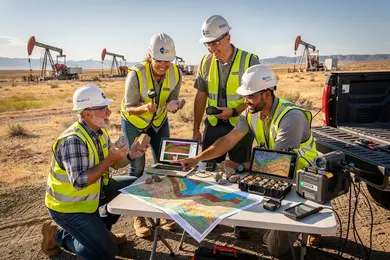
In contrast, petroleum geoscientists focus on subsurface mapping and reservoir estimation to guide drilling decisions-work that directly influences profitability but often involves navigating volatile market conditions. Government positions prioritize natural hazard assessment and policy-informed resource management, demanding high proficiency in data interpretation and clear technical reporting.
Graduates face a strategic tradeoff: broad generalist knowledge may limit competitiveness against candidates with specialized training in hydrogeology or geophysics, often requiring supplementary certifications or experience. Geographical and economic cycles further shape salary prospects and job availability, especially in extractive industries sensitive to commodity fluctuations.
Operational realities include frequent fieldwork, irregular schedules, and mastering evolving technologies such as GIS and remote sensing. Securing internships or co-op roles during studies remains critical to demonstrating applied skills and overcoming entry barriers in this technical and cyclical labor market.
What salary ranges and job outlook can geosciences graduates expect in the United States?
Geosciences graduates face a salary landscape heavily influenced by specialization and sector volatility. Entry-level environmental consulting roles start near $50,000 to $65,000, but advanced positions in energy or mining can push salaries beyond $90,000. Private industry pay fluctuates with commodity prices, whereas government roles offer steadier but generally lower wages, around $70,000 to $85,000. These distinctions underscore the importance of strategic sector choice based on risk tolerance and geographic flexibility.
Combining geosciences expertise with data analytics significantly improves earning potential. A geoscientist using machine learning for subsurface modeling in oil, gas, or renewables can command salaries 20-30% above traditional peers, aligning with reported median salaries of $100,910 for science-related data scientists according to 2025 MyDegreeGuide data. This reflects an actionable premium for technical versatility, especially proficiency in Python, GIS, or remote sensing.
Growth projections by the U.S. Bureau of Labor Statistics indicate a 5% increase for geoscientists through 2032, paralleling average job market growth but with sharp regional and economic fluctuations. Professionals must weigh research-focused academic paths, which may limit industry mobility, against applied analytics careers that offer more market flexibility and resilience in volatile conditions.
How can you choose the best-fit online geosciences program for your goals and lifestyle?
Choosing an online geosciences program requires weighing curriculum depth against practical skill acquisition and employer expectations. Programs that include fieldwork or virtual labs address a critical gap in technical proficiency, as many employers expect hands-on experience despite the remote format.
The credibility of your degree hinges on recognized accreditation and faculty expertise, given the steady 4% employment growth projected for geoscientists alongside median salaries ranging from $80,060 to $99,240, according to EnvironmentalScience.org's 2025 analysis of BLS data. These figures suggest demand persists but hiring is competitive, making practical skills and industry networking important differentiators.
Flexibility is a key factor: fully asynchronous courses cater to professionals juggling work and family, while synchronous formats offer richer engagement but introduce scheduling challenges. Support services-career counseling and internship placement-are essential to offset the isolation of online study and improve job-readiness.
Students must balance program length and intensity. Accelerated paths facilitate faster workforce entry but may sacrifice depth and professional networking opportunities vital in sectors like mineral exploration or environmental regulation. Conversely, part-time study reduces immediate pressure but delays income growth and professional advancement.
Other Things You Should Know About Geosciences
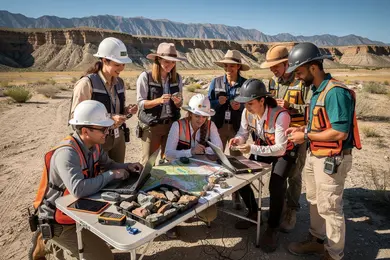
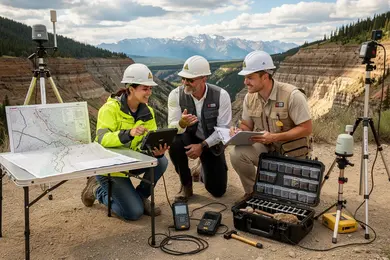
Online geosciences programs typically use virtual labs, simulations, or on-campus residencies to deliver hands-on learning. While virtual labs can effectively build conceptual understanding and data analysis skills, they cannot fully substitute for direct interaction with physical samples and equipment. Prioritize programs that offer hybrid models or intensive short-term field sessions to secure critical practical exposure necessary for employment in geosciences sectors that require laboratory proficiency.
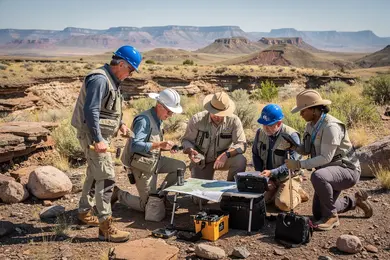
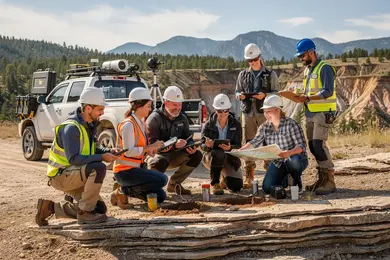
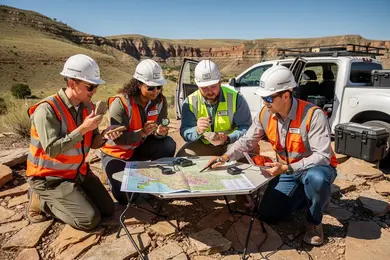
Most programs require a short in-person field camp or field methods course to satisfy geology and Earth science skills. These experiences usually last 1 to 2 weeks and may be taken during summer. Some schools let students complete equivalent fieldwork through approved local projects or transfer credit.
Working professionals aiming for career advancement or transition should prefer programs with clear applied skills components such as GIS, remote sensing, and environmental data analysis. While theoretical grounding is necessary, programs emphasizing practical skills align better with employer expectations for immediately applicable competencies. Prioritize offerings that include portfolio-building projects or certifications integrated into the curriculum to enhance job market competitiveness over purely theoretical degrees.
References
- The Geological Society - Degree Accreditation https://www.geolsoc.org.uk/education-and-resources/universities/university-degree-accreditation/
- What Jobs Can I Get with a Geoscience Degree? https://thinkonward.com/resources/content-hub/what-jobs-can-i-get-with-a-geoscience-degree
- Understanding Academic Accreditation for Online Universities https://www.qahe.org/article/understanding-academic-accreditation-for-online-universities/
- Geosciences Curriculum https://www.dickinson.edu/homepage/413/geosciences_curriculum
- Parents: How to Verify College Accreditation Online for Your Child's Future https://matchtocollege.com/blog/verify-college-accreditation-online-parents-guide
- Online Classes or On Campus: Which is Right for You? - Graduate Programs for Educators https://www.graduateprogram.org/blog/online-classes-or-on-campus-which-is-right-for-you/
- Geosciences Bachelors Degree (BS) https://www.nextstudent.com/accelerated-degrees/geosciences-bachelors-degree/
- Best Online Geoscience Courses and Programs | edX https://www.edx.org/learn/geosciences
- Mydegreeguide https://mydegreeguide.com
- Education Requirements https://www.americangeosciences.org/licensure/education/