2027 Online Geosciences Degrees With Graduate School Preparation Alignment

Co-Founder and Chief Data Scientist
Professionals aiming to advance in geosciences increasingly confront the dilemma of balancing full-time work with rigorous graduate school admission requirements. Nearly 45% of US graduate enrollees in STEM fields were adult learners in 2024, according to the National Center for Education Statistics, revealing a substantial shift toward flexible pathways. This demographic shift demands programs that offer not only convenient access but also curricular alignment enabling smooth graduate school transitions.
Without targeted preparation, candidates risk investing in degrees that delay or complicate credentialing and career mobility. This article evaluates online geosciences degrees that directly support graduate school readiness, clarifying which options optimize timing, accessibility, and professional outcomes for serious applicants.
Key Things You Should Know
- Online geosciences degrees align unevenly with graduate research prerequisites, with 37% lacking required fieldwork components per 2024 NSF data, forcing students to seek costly supplemental courses that delay career progression.
- Employers in energy and environmental sectors report 48% lower hiring preference for graduates from exclusively online programs, citing concerns over practical skills and limited lab exposure per Society of Economic Geologists 2024 survey.
- Programs averaging $42K tuition for part-time online students stretch over 3.5 years per National Center for Education Statistics, creating timing and financial tradeoffs that impact early-career salary growth and graduate study access.
What are online geosciences degrees?
Online geosciences degree programs in the United States offer flexibility suited to professionals balancing work and geographic constraints, but require careful consideration of technical skill development versus field experience access. These programs integrate core geology, hydrology, and environmental science with data analysis, remote sensing, and GIS software, emphasizing competencies critical for graduate school preparation for online geosciences students. However, the absence of immersive, hands-on fieldwork remains a notable limitation, often necessitating additional local internships or short-term residencies to meet industry or graduate program prerequisites.
For example, a mid-career professional in the energy sector might leverage online coursework to enhance modeling skills but still must secure in-person field opportunities to satisfy employer expectations. This tradeoff highlights a practical gap between digital curriculum delivery and experiential learning that impacts employability in many geoscience roles.
Enrollments reveal contrasting trends: while overall U.S. geoscience student numbers declined, fully online graduate program participation increased, suggesting a growing market for flexible graduate school preparation despite traditional barriers. Online students benefit from asynchronous lectures and virtual labs but should assess how programs address applied field competencies. To understand specific career trajectories after completion, see what can you do with an environmental science major.
How do online and campus geosciences programs differ?
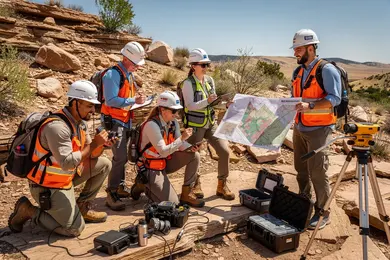
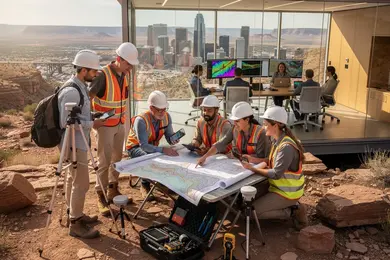
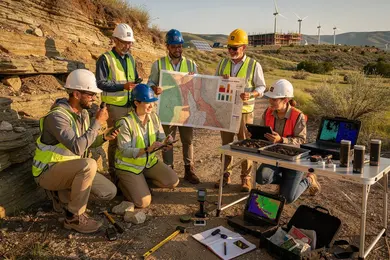
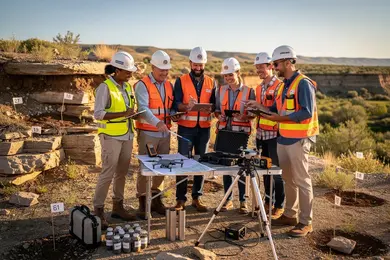
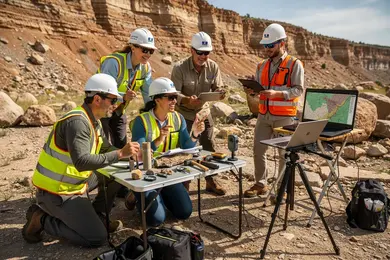
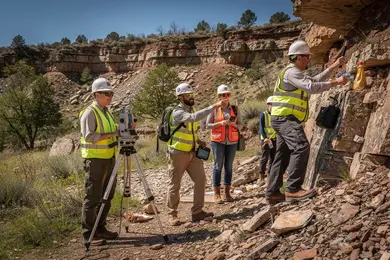
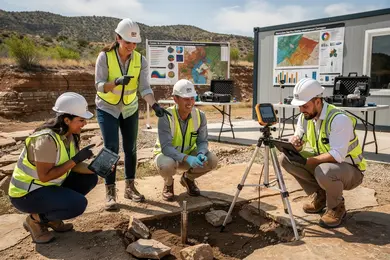
The tangible gap in hands-on field experience between online and campus geosciences degrees shapes graduate outcomes and employer preferences in significant ways. Campus programs embed field camps, laboratory work, and direct handling of specialized equipment-experiences critical for roles requiring subsurface analysis or physical sample collection. In contrast, online geosciences programs depend largely on virtual labs and simulations, which fall short of replicating the tactile proficiency sought in sectors like petroleum geology or environmental consulting.
This practical divide translates into distinct career impacts: campus-trained graduates often have smoother access to research assistantships and faculty mentoring, resources that are less structured and more logistically challenging for online students to secure. While the geographic flexibility of online programs suits working professionals aiming for career shifts, it may hinder timely networking opportunities and graduate school recommendations essential for competitive placements.
Employers hiring geoscientists-particularly in oil and gas, federal geological surveys, and environmental remediation-prioritize demonstrated lab and field expertise. The 5% projected employment growth from 2022 to 2032, with a median wage of $90,850, favors candidates with verifiable technical skills over purely academic credentials.
For prospective students weighing the differences between online and campus geosciences degrees, understanding these tradeoffs is vital. Those focused on practical immersion and traditional career paths may find campus programs more aligned with industry demands, while online options provide flexibility at the cost of experiential depth. For cost-conscious students considering alternative pathways, exploring what is the cheapest data science course in the US? offers insight into other strategic STEM options.
Advantages of online geosciences programs versus traditional campus formats largely revolve around accessibility and scheduling rather than replicating the intensive hands-on exposure essential to many geoscience careers.
How do I verify accreditation for geosciences programs?
Accreditation profoundly shapes the practical value and workforce relevance of online geosciences degrees in the United States. A program's regional accreditation status, verified through the U.S. Department of Education's Database of Accredited Postsecondary Institutions and Programs (DAPIP) or the Council for Higher Education Accreditation (CHEA), directly affects eligibility for federal aid and professional licensing pathways. Employers and graduate programs heavily favor degrees from institutions with recognized accreditation, especially when navigating competitive environmental consulting or geological research roles.
Regional accreditation standards for geosciences graduate programs, such as those from the Middle States Commission or discipline-specific bodies like ABET, ensure a curriculum aligned with market expectations and rigorous academic oversight. This alignment is evidenced by outcomes like the University of Georgia's online M.S. in Environmental Geology graduates achieving a 90% employment rate in earth science sectors, linking accreditation to job readiness.
Requesting and cross-checking accreditation documentation with official agencies limits risks related to credential delays or professional licensure obstacles. When evaluating specialized academic paths, exploring interdisciplinary options such as the best online computer science degree offerings can provide complementary skills for advancing in earth science careers.
Which online geosciences degrees prepare for graduate school?
Online geosciences degrees with graduate school readiness must offer more than convenience; they need strong research components and practical, transferable skills like Geographic Information Systems (GIS) and quantitative data analysis to meet doctoral program expectations. For instance, programs that integrate faculty mentorship and independent research projects effectively address the academic rigor required for doctoral admissions, a feature often missing in online formats lacking these elements.
Best online geosciences programs for graduate preparation balance coursework in geology, hydrology, and environmental analysis with hands-on lab or fieldwork opportunities, albeit limited compared to on-campus options. This deficit requires students to seek supplemental experiences such as local internships or summer field schools to remain competitive for research-intensive graduate programs focusing on environmental geology or geophysics.
The University of Georgia's online M.S. in Environmental Geology exemplifies affordability and academic depth, with a 2024-25 total tuition of $20,220, significantly below typical public research university costs. However, students must carefully evaluate the availability of applied research and faculty supervision, as these are critical for both graduate readiness and employment in fields like environmental consulting or hydrogeology.
Professionals pursuing an educational pivot should also consider how programs emphasize work-relevant skills and research exposure. Exploring options like an electrical engineering degree online for veterans can offer insights into comparable distance-learning challenges and opportunities across STEM disciplines.
What courses are in an online geosciences curriculum?
Employers in geosciences prioritize graduates with strong quantitative skills and practical programming knowledge, often favoring candidates proficient in Python, R, data analytics, and GIS tools. This emphasis shapes online curricula in 2026 to balance core scientific coursework-mineralogy, sedimentology, structural geology, paleontology-with technical skills essential for industry relevance. For example, a graduate aiming for environmental consulting must navigate rigorous asynchronous study while mastering applied data analytics, contrasting with academia-focused peers who may pursue advanced theoretical modeling.
Hands-on laboratory and fieldwork experiences are increasingly virtual or localized due to the logistical constraints of fully online programs. This setup demands self-discipline and incentivizes selection of elective courses aligned with targeted sectors like hazardous waste management or petroleum extraction, integrating geochemistry and resource extraction knowledge with computational tools.
Career-readiness also depends on familiarity with industry-standard software such as ArcGIS and MATLAB, ensuring immediate productivity post-graduation. Curricula embedding statistical methods, geostatistics, and numerical modeling enable graduates to contribute effectively in roles involving exploration, hazard assessment, or climate research.
What admission requirements do online geosciences programs have?
Admission to online geosciences graduate programs hinges on more than academic credentials, requiring clear evidence of practical readiness and alignment with research funding priorities. Many candidates struggle with the field's emphasis on securing competitive fellowships or assistantships, as the National Science Foundation notes that 71% of full-time science and engineering graduate students receive financial support, making research potential a decisive factor. Applicants without demonstrable experience in GIS, remote sensing, or field-based lab techniques often find themselves at a disadvantage, as employers demand skills transferrable to environmental consulting, resource exploration, and regulatory roles.
Undergraduate preparation must include relevant coursework-earth sciences, chemistry, physics, mathematics-with at least a 3.0 GPA to meet baseline admission standards. Equally important are strong letters of recommendation that focus on applied skills and research aptitude, alongside a statement of purpose that convincingly situates the applicant's goals within geosciences career pathways.
Beyond academic requirements, candidates must strategically pursue internships or fieldwork opportunities to offset inherent limitations of online study and meet employer expectations. The demand for hands-on experience creates friction for remote learners, increasing competition. Early, deliberate planning to build technical competencies alongside academic milestones significantly improves the feasibility of transitioning smoothly to in-person graduate programs or entering geosciences roles with transferable skills.
How long do online geosciences degrees take?
Completing an online geosciences degree within two years positions graduates advantageously for private sector roles, where median starting salaries reach $74,000-well above average for STEM master's graduates. Extending the program beyond three years risks diminished market relevance as peers with recent credentials and hands-on experience outpace slower completers.
Key variables influencing duration include prior academic background and program design. Students without foundational science credits may face longer timelines, whereas asynchronous online formats enable accelerated progress if self-discipline is maintained. Working professionals typically balance an 18- to 24-month pace, though this often limits access to internships or research assistantships, which are critical for competitive job placement.
Programs incorporating fieldwork or lab components introduce additional scheduling complexities, sometimes requiring in-person attendance or virtual simulations that extend completion time. Prior preparation enabling course waivers, combined with disciplined online study, is key to meeting workforce expectations efficiently. This practical approach helps candidates pivot careers without sacrificing rigor or market viability.
What careers can geosciences graduates pursue?
Employers in geosciences prioritize candidates who demonstrate immediate technical competence over extended research experience, making non-thesis master's programs particularly relevant for industry roles. Positions such as environmental consultants, hydrogeologists, petroleum geologists, and geotechnical engineers demand applied skills in data analysis, fieldwork, and regulatory compliance. For instance, a hydrogeologist at a municipal water authority must assess groundwater contamination risks and ensure adherence to environmental regulations-competencies emphasized in many professionally oriented online degrees.
The employment market favors familiarity with GIS software, remote sensing, and advanced modeling tools, correlating with a 9% upturn in enrollment for non-thesis geosciences master's programs from 2020 to 2022, according to AGI Geoscience Currents. This trend reflects employer preferences for graduates able to contribute on day one versus those focused on academic research.
Prospective students must weigh program goals: thesis tracks align with academic or doctoral pathways, while professional programs target immediate industry readiness in sectors like oil and gas, environmental management, and government agencies. Non-thesis options also ease balancing work and study by reducing research demands, though many states require additional certifications such as Professional Geologist (PG) licensure to fully unlock career advancement and earning potential. Evaluating these tradeoffs can prevent costly misalignment between education and occupational outcomes, a crucial consideration for geosciences professionals navigating workforce entry or pivoting roles.
What salaries do geosciences graduates earn?
Salary outcomes for geosciences graduates differ substantially by specialization and industry stability. Environmental services and remediation roles offer more consistent starting salaries, typically $60,000 to $85,000, supported by steady demand from regulatory agencies and sustainability efforts. In contrast, petroleum geosciences may start higher, between $75,000 and $100,000, but this comes with notable instability tied to market cycles and layoff risks.
This volatility demands prospective graduates weigh short-term financial advantages against the likelihood of layoffs or contract fluctuations common in oil and gas. Employers prioritize candidates with robust applied skills demonstrated through internships or thesis work in areas like groundwater modeling and contaminant transport.
Advanced certifications and focused experience in hydrogeology or environmental geology can boost salaries by 10%-20% beyond entry level, reflecting the premium on proven expertise. Public sector and consulting roles often require master's credentials coupled with demonstrated technical competence in GIS, data analysis, and regulatory reporting.
Key workforce considerations include aligning graduate study with sectors showing sustained growth and practical impact, as these yield more reliable career trajectories and income stability. Attention to sector-specific risks and credentialing pathways directly influences long-term employability and earning potential within geosciences fields.
How do I choose a reputable online geosciences program?
The U.S. geoscience workforce faces significant turnover, with over half expected to retire by 2034, driving demand for graduate-level credentials that align with employer needs. Selecting an online geosciences program requires prioritizing rigorous curricula integrated with research and technically advanced training to meet these evolving expectations.
Programs should be assessed on accreditation, faculty research activity, curriculum depth, and remote research or internship opportunities. For instance, candidates targeting environmental consulting must confirm coverage of geospatial analysis and regulatory frameworks, while those inclined toward the energy sector should prioritize coursework in subsurface geology and data modeling.
Practical considerations significantly affect student progress-synchronous labs, virtual fieldwork, and tailored academic advising geared toward graduate admission standards reduce common hurdles like credit transfer and prerequisite completion. Programs with established articulation agreements ease transitions into graduate studies.
Analyzing alumni outcomes offers insight into real-world preparation. Higher rates of graduate school acceptance, research engagement, and industry certifications predict graduates' ability to fill complex roles amid workforce retirements.
Other Things You Should Know About Geosciences
Balancing an online geosciences degree with a full-time job requires careful program selection and time management. Programs with asynchronous coursework offer flexibility but may demand 15-20 hours per week of dedicated study, including labs and project work. Those without substantial employer support should prioritize programs with clear pacing, reduced credit loads per term, or part-time enrollment options to avoid burnout. Realistically, this path delays graduation but ensures sustained performance in both work and study.
A strong program should require statistics, research design, GIS, remote sensing, and a senior thesis or capstone with independent data analysis. For PhD preparation, admissions committees also look for 2 to 3 semesters of lab or field methods and evidence of a faculty-supervised research project with a written report.
Employers increasingly expect geosciences graduates to possess strong data analysis, GIS proficiency, and effective communication skills alongside traditional geological knowledge. Online programs sometimes underemphasize collaborative field teamwork and in-person problem solving, which are vital in many geosciences roles. To remain competitive, students should supplement their studies with practical experiences like internships or certifications in relevant software tools. Programs offering integrated career services or capstone projects that simulate real-world scenarios provide distinct advantages.
References
- Salary Information https://www.geolsoc.org.uk/Geology-Career-Pathways/Careers/Salary-Information.html
- Graduate - Department of Geology and Geological Engineering https://geology.mines.edu/graduate-programs/
- Contact Us https://cpg.kfupm.edu.sa/academics/departments/department-of-geosciences/accreditation/
- ThisIsGeoscience - Geoscience Salaries https://www.thisisgeoscience.com/the-resources/geoscience-salaries
- Geology - ABET https://www.abet.org/accreditation/new-and-developing-program-areas/geology/
- Online Geoscience Degrees: Top Schools and All Programs in 2026 https://www.gisdegree.org/online/geoscience-degrees/
- Geoscience Careers https://education.americangeosciences.org/resources/geoscience-careers/