2027 Online Geosciences Degrees With Environmental Monitoring Concentrations

Co-Founder and Chief Data Scientist
Professionals aiming to transition into geosciences with environmental monitoring concentrations face significant obstacles balancing career demands and advancing specialized expertise amid a shifting job market. The U. S. Department of Education's recent data showing a 45% increase in enrollments for online science degrees since 2023 reflects growing demand for flexible, accessible programs that accommodate working adults and nontraditional students. This trend signals a broader realignment toward modular, remote learning structures that can expedite skill acquisition without geographic constraints. Navigating these program options with respect to curriculum relevance, employer recognition, and career outcomes is critical. This article evaluates current online geosciences degrees focusing on environmental monitoring to guide informed educational investments and career strategies.
Key Things You Should Know
- Approximately 28% of online geosciences degree holders with environmental monitoring concentrations enter roles requiring EPA-mandated certifications, intensifying tradeoffs between program rigor and required field experience, per 2024 EPA workforce data.
- Employers prioritize candidates with integrated remote-sensing and data analytics skills, with 65% of U.S. environmental consulting firms in a 2024 industry survey rating these as critical for immediate hire readiness.
- Median program costs rose 11% since 2022, with a 24-month average completion stretching the timing-to-job market entry, impacting professionals balancing reskilling urgency against financial and labor market pressures.
What is an online geosciences degree with an environmental monitoring concentration and who is it for?
Choosing an online geosciences degree program with an environmental monitoring concentration demands a clear-eyed view of how technical skills translate into workforce realities. Such programs appeal primarily to those focused on regulatory compliance, environmental consulting, or resource management, where proficiency in analyzing soil, water, and atmospheric data is critical for pollution control and sustainability. The concentration equips graduates with competencies in remote sensing, GIS applications, and data interpretation-areas increasingly prioritized by employers seeking candidates who can navigate complex environmental regulations and use specialized software efficiently.
However, students should be aware of practical limitations inherent to these online formats. Limited hands-on fieldwork can restrict experiential learning unless students secure local practicum opportunities. This is a significant factor for decision-making, especially for those transitioning careers or lacking prior field exposure. Job growth for geoscientists is modest (around 3% projected growth through 2034), with federal and state environmental monitoring roles often highly competitive due to limited vacancies. Private sector consulting offers broader scope but requires geographic mobility and negotiation skills.
Students evaluating online geosciences degree programs with environmental monitoring should carefully assess curriculum relevance and accreditation to ensure alignment with employer expectations. Professionals currently working in environmental science or resource management sectors will find this concentration valuable for upskilling without career disruption. Further insights into program selections and technical specialties can be explored in the best GIS programs.
How do online geosciences programs compare to on-campus options for environmental monitoring?
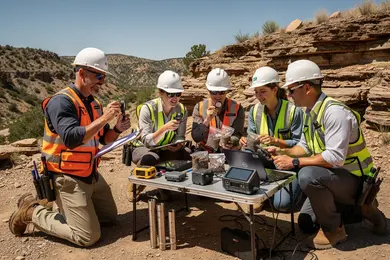
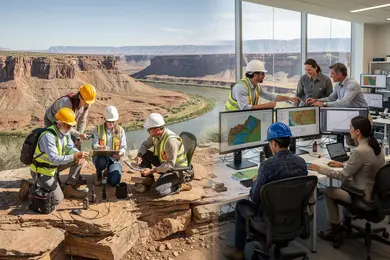
Online geosciences programs versus on-campus environmental monitoring degrees reveal a critical divide in field experience delivery. While online curricula often match on-campus theoretical instruction, they typically fall short in providing the hands-on fieldwork employers expect, especially in skills like soil sampling, water quality testing, and remote sensing. For students targeting environmental consulting or government roles, this gap can pose significant challenges. These sectors demand precise site-specific pollutant evaluations that on-campus courses facilitate through supervised labs and excursions.
The U.S. Bureau of Labor Statistics projects 6% employment growth for environmental scientists and specialists from 2022 to 2032, intensifying employer preference for candidates with direct, verifiable practical experience. Online students must proactively seek local internships or partnerships to acquire this experience, which can delay credential completion if not managed carefully.
Conversely, roles emphasizing geographic information systems (GIS) analysis or environmental data modeling align well with online formats, where software proficiency and analytical skills can be effectively developed. Deciding between online geosciences programs and on-campus environmental monitoring options hinges on career goals:
- Field-intensive positions require formal, supervised field training often inaccessible online.
- Data-driven or regulatory jobs favor flexible online study emphasizing analytical competencies.
Given these tradeoffs, students eyeing a practical career pivot should assess how to integrate verified field experience. Tools like the environmental engineering degree online resources can support informed decision-making within this complex educational landscape.
Which U.S. schools offer accredited online geosciences degrees focused on environmental monitoring?
Programs offering online accredited geosciences degree programs in the US focused on environmental monitoring must be evaluated beyond cost and convenience; the crucial factor lies in how well curricula translate into applied workplace competencies. Texas State University's online B.S. in Geography and Environmental Studies, charging $405 per credit in 2024, integrates environmental monitoring with spatial data skills, positioning graduates for roles involving GIS and field data analysis. This cost aligns competitively within typical ranges but should be weighed against course rigor and hands-on learning demands.
Top US universities offering online geosciences degrees with environmental monitoring concentrations, like the University of Arizona and Oregon State University, emphasize practical skill development in remote sensing, pollution tracking, and compliance monitoring. These programs maintain regional or national accreditation (e.g., ABET, Higher Learning Commission), which correlates strongly with employer trust and graduate employability.
Employers increasingly seek candidates proficient in digital data acquisition and environmental risk assessment tools. Graduates aiming for regulatory or analyst positions must consider programs requiring limited in-person fieldwork or regional lab partnerships, as these can extend completion timelines and add logistical complexity. Selection should balance curriculum depth with real-world exposure to environmental monitoring technologies and software.
For those considering shifts into geosciences, understanding the nuances of course applicability and practical training intensity is vital. Additionally, some students might explore related credentials or complementary paths such as a librarian degree online to enhance data management skills relevant in environmental data sectors.
What accreditation and program quality standards should these online geosciences degrees meet?
Regional accreditation recognized by the U.S. Department of Education remains the essential baseline for online geosciences degrees with environmental monitoring concentrations. Yet, programs conforming only to baseline standards risk leaving students underprepared for practical field demands seen in government and industry roles. Employers expect graduates to have completed 40-50 core geoscience credits-roughly one-third to nearly half of a 120-credit bachelor's program-covering hydrology, geophysics, environmental science, and environmental monitoring tools. Programs lacking these core requirements typically result in candidates who require significant retraining.
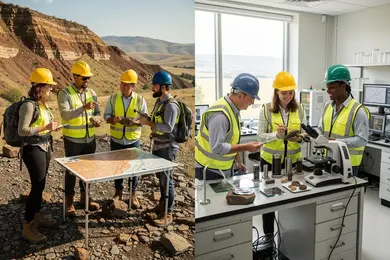
Quality criteria for environmental monitoring programs in online geosciences degrees emphasize not just theoretical knowledge but hands-on, technology-rich labs that simulate real-world scenarios such as watershed management and pollution tracking. These experiences directly influence workforce readiness in consulting firms and regulatory agencies. Graduates from programs without such practical components often encounter steep learning curves post-hire, reducing early-career effectiveness.
Continuous curriculum review informed by advisory boards and updated competencies from authoritative sources like the U.S. Geological Survey and the National Environmental Satellite, Data, and Information Service is crucial. It ensures skills in GIS, remote sensing, and statistical analysis stay aligned with evolving environmental challenges and technologies.
Students exploring pathways to specialize in environmental monitoring should also consider affordability and program flexibility. Evaluating options beyond core curricula, including factors influencing accreditation standards for online geosciences degrees in the United States, can impact long-term career trajectories. For insight on affordable online options in another specialized field, the library science degree online offers a comparative perspective on balancing cost with practical competency.
What courses and specializations are typically included in the environmental monitoring curriculum?
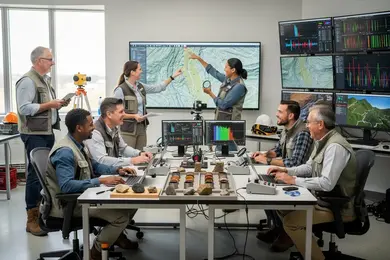
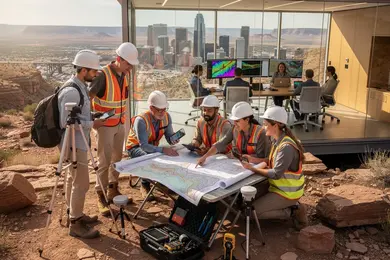
Online geosciences degrees focused on environmental monitoring demand proficiency in remote sensing, GIS, and environmental data analytics, calibrated toward employer expectations for technical precision and real-world application. A graduate's ability to analyze satellite and drone imagery to quantify pollution or land use change is essential within industries prioritizing data accuracy under shifting environmental conditions.
Core coursework typically concentrates on:
- Multispectral and hyperspectral image processing for remote sensing applications
- GIS system design emphasizing spatial analysis and cartographic outputs tailored to environmental issues
- Environmental chemistry and hydrology relevant to pollution tracking and ecosystem assessments
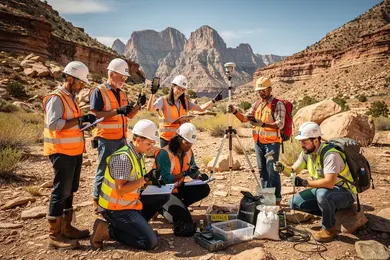
- Field sampling methodologies for monitoring water, soil, and air quality
- Incorporation of data science techniques, including machine learning models, for predictive environmental analysis
Students must reconcile software proficiency and rigorous field data validation, which can be a barrier without access to hands-on experiences. Those pursuing roles in regulatory compliance or resource management benefit from integrated policy and risk coursework that bridges geospatial data with actionable decision-making.
With U.S. geospatial and GIS roles yielding a median wage near $92,280, understanding these skill sets' operational context is critical. Programs that balance technical depth with applied field skills better position graduates for diverse sectors such as agriculture, urban planning, and conservation, where adaptable, interdisciplinary expertise is non-negotiable.

What are the admission requirements and prerequisite background for online environmental monitoring majors?
Admission to online environmental monitoring graduate programs demands more than academic credentials-it requires a clear baseline of technical knowledge and practical experience to succeed in geosciences roles that blend field operations with data analysis. Candidates typically need a bachelor's degree in geosciences, environmental science, biology, chemistry, engineering, or related STEM disciplines, alongside prerequisite coursework in calculus, physics, and statistics. Without this foundation, bridging gaps via supplemental courses is often mandatory, especially for professionals shifting from fields like ecology or chemical engineering.
Employers expect graduates to demonstrate direct familiarity with environmental monitoring technologies such as remote sensing, sensor networks, and modeling platforms. These skills are critical for applied environmental data collection and quality control rather than theoretical proficiency alone. Graduate programs increasingly de-emphasize standardized tests, but admissions remain competitive, favoring applicants who can provide strong analytical references and evidence of relevant fieldwork.
The University of Georgia's online M.S. in Environmental Geology, with tuition near $20,220 for the full program, illustrates a cost-effective option balancing accessibility and specialized training. However, candidates must weigh this affordability against rigorous expectations for quantitative competence and hands-on readiness, given employer demands for operational efficiency and data accuracy in environmental monitoring careers.
How long do online geosciences degrees take and what do they cost overall?
Completing an online geosciences degree with an environmental monitoring focus demands strategic planning around time and cost, especially for working professionals. Full-time students typically finish in 3 to 4 years, but part-time learners balancing jobs often extend this to 5 or 6 years, a practical tradeoff that helps maintain academic rigor without overwhelming commitments.
Costs fluctuate significantly, generally ranging from $15,000 to $35,000 for the full program. Mississippi State University's model provides a noteworthy example by charging $581 per credit hour plus a $25 support fee-online students benefit from in-state tuition regardless of residence, which narrows traditional out-of-state cost gaps prevalent in geosciences education.
Beyond tuition, students must budget for specialized software and equipment essential for field simulations and data analysis, a necessary investment as employers prioritize hands-on technical competency. Programs that support efficient credit transfers and offer asynchronous coursework reduce time-to-degree and expenses, crucial for professionals seeking minimal disruption.
Employers in environmental consulting, for example, favor graduates who bring practical experience and flexible schedules, meaning programs must balance affordability with completion speed and applied learning. Delays due to limited course availability or required in-person labs can undermine return on investment by extending study time and increasing costs.
What careers can you pursue with an online geosciences degree in environmental monitoring?
An online geosciences degree focused on environmental monitoring equips graduates for roles demanding precise data analysis and fieldwork in environmental science, hydrology, and geoscience sectors where median wages typically range from $80,060 to $99,240. Graduates often face a tradeoff between office-based data interpretation using GIS and remote sensing tools and physically demanding fieldwork that requires flexible schedules and adaptability to varied terrain conditions.
Common roles include environmental scientists who develop and implement programs to assess ecological health and regulatory compliance, hydrologists responsible for water quality monitoring and contamination forecasting, and geoscientists applying geospatial analysis to evaluate hazards and resource impacts. Employers-spanning environmental consulting, energy, and government-expect proficiency in technical software and interpretation skills, emphasizing hands-on experience acquired through internships or contract positions as critical for breaking into competitive fields.
Progression in this workforce often demands specialized certifications and knowledge of federal and industrial regulations, underscoring a gap between academic curricula and on-the-ground compliance requirements. Students must critically assess whether programs provide practical exposure to these technical proficiencies and sampling methodologies that influence employability and long-term career mobility.
What salary ranges and job outlook can graduates in environmental monitoring expect?
Environmental monitoring graduates from online geosciences programs face a nuanced salary landscape shaped by sector and geographic factors. Entry-level salaries range from $55,000 to $75,000, yet federal or consulting positions often require advanced degrees or certifications to surpass $120,000 in senior roles. Government roles offer steadier income and benefits but typically pay less than project-driven energy or consulting jobs, where compensation can fluctuate with contract cycles.
Employment growth stands at a moderate 3% over the coming decade, directed by regulatory agencies, renewable energy development, and environmental consulting demands. These sectors prioritize candidates with specialized technical skills, such as regulatory compliance knowledge or proficiency in environmental data analysis tools.
Graduates should consider:
- Targeting government roles by focusing on accredited programs and internships connected to regulatory bodies.
- Acquiring hands-on field experience and technical software training to improve consulting sector employability.
- Recognizing that energy sector jobs may require curriculum alignment with renewable or fossil fuel remediation expertise.
These practical considerations highlight the importance of aligning educational choices with market realities and hiring requirements. Navigating tradeoffs between stable but lower-paying government roles and potentially higher-compensated but volatile private-sector positions demands clear prioritization of career goals and adaptable skill sets.
How can prospective students choose the best-fit online geosciences program for their goals?
Employer demand for accredited geosciences credentials directly influences graduate outcomes, making accreditation a critical filter. Graduates from unaccredited programs often face reduced eligibility for federal aid and diminished recognition by top-tier employers, restricting post-degree employment options. Faculty expertise paired with active research portfolios signals program strength and real-world applicability, which employers expect to translate into immediate workplace competencies.
Cost considerations often reveal stark disparities: public universities typically offer online environmental geosciences master's programs for roughly $20,000-$21,000 total, significantly undercutting private, on-campus STEM master's tuition exceeding $40,000 annually. This gap critically impacts return on investment, especially for mid-career professionals managing work alongside study.
Students aiming for environmental consulting roles should seek programs emphasizing applied coursework and formal collaborations with government agencies to gain relevant field experience. Conversely, those pursuing academia or research careers benefit from programs with robust faculty-led projects facilitating publication and grant participation.
Additional factors that affect degree viability include flexible scheduling and asynchronous course formats-important for working learners-and the presence of career services to bridge education and job markets. Without these, student completion rates and professional networking opportunities diminish.
Other Things You Should Know About Geosciences
The workload often mirrors traditional programs but requires stronger self-discipline and time management since online courses demand more independent learning. Students may spend additional time navigating software simulations and remote data collection tools, which can be technically challenging. Prospective students should assess their ability to balance these demands without direct daily supervision before committing.
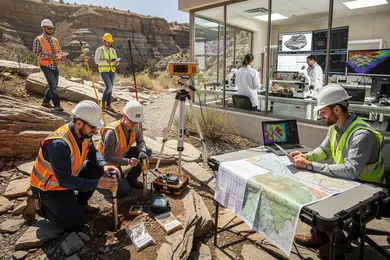
Field experience is critical in environmental monitoring roles, yet online programs can offer limited direct access to hands-on fieldwork. This gap may affect the practical skills employers expect, potentially requiring graduates to seek supplemental internships or entry-level field jobs post-graduation. Selecting programs with strong industry connections or hybrid options that include in-person field components can mitigate this risk and improve job readiness.
Students should learn ArcGIS Pro, QGIS, and Python for environmental monitoring work. Many 2027 online geosciences programs also expect basic remote sensing and spreadsheet skills, plus familiarity with EPA or USGS data portals. These tools are used for mapping, sensor-data review, and reporting.
References
- ISEP - Institute of Sustainability and Environmental Professionals https://www.isepglobal.org/learn/courses/certificate-in-sustainability-and-environmental-management/
- Salary Insights for Environment Consultants https://theenvironmentconsultant.com/2025/02/04/salary-insights-for-environment-consultants/
- WaterJobsIntel | 500+ Water Engineering Jobs Daily https://jobs.watertechintel.com/blog/environmental-science-job-outlook
- The Geological Society - Degree Accreditation https://www.geolsoc.org.uk/education-and-resources/universities/university-degree-accreditation/
- Geosciences Bachelors Degree (BS) https://www.nextstudent.com/accelerated-degrees/geosciences-bachelors-degree/
- Environmental Monitoring Officer - Green Careers Hub https://www.greencareershub.com/find-your-green-role/job-profiles/environmental-monitoring-officer/
- Are Online Degrees Accredited? How to Identify Quality Distance Learning Programs https://www.umassglobal.edu/blog-news/online-degrees-accredited-identify-quality-distance-learning-programs
- Environmental Monitoring Training Course | DNV https://www.dnv.com/training/environmental-monitoring-225420/
- Geology - ABET https://www.abet.org/accreditation/new-and-developing-program-areas/geology/
- Choosing the Right Degree: How to Find the Path That Fits Your Goals - CIS University https://www.cis-spain.com/en/blog/choosing-the-right-degree-how-to-find-the-path-that-fits-your-goals/