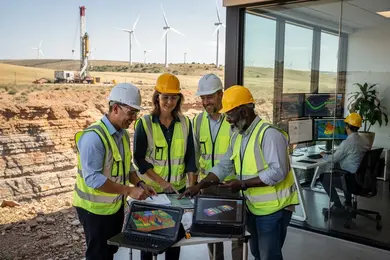
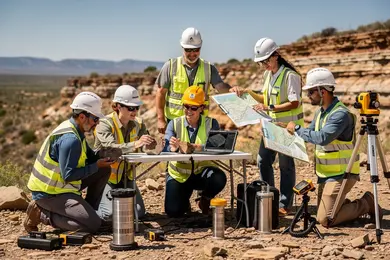
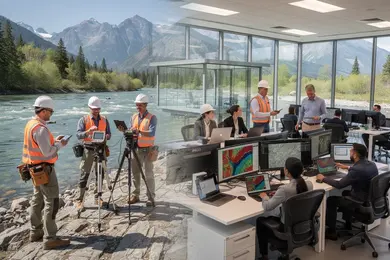
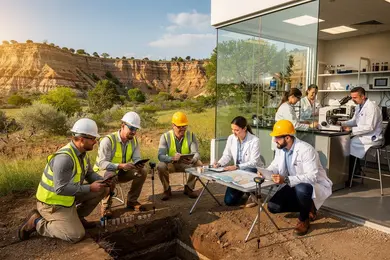
2027 Best Online Bachelor's in Geosciences With Research-Ready Earth Science Curricula

Co-Founder and Chief Data Scientist
Professionals seeking a bachelor's degree in geosciences increasingly confront the challenge of balancing rigorous field-based training with inflexible traditional campus schedules. As the U.S. Department of Education reports a 35% surge in online degree enrollment since 2022, many adult learners demand programs that integrate research-ready earth science curricula without sacrificing accessibility or career continuity.
This trend signals a broader shift towards modular, application-focused education models capable of adapting to workforce mobility and evolving employer expectations. This article evaluates the best fully online bachelor's programs designed to equip students with practical geosciences expertise and flexible learning pathways tailored for immediate workplace relevance.
Key Things You Should Know
- 54% of geoscience bachelor's grads enter energy or environmental firms where 2024 US Bureau of Labor Statistics data shows demand favors candidates with integrated GIS and remote sensing skills-tradeoff between curriculum breadth and technical depth.
- Employers increasingly seek graduates with documented fieldwork and research analytics experience; NCES-reported programs embedding capstone field projects boost job placement rates by 22%, shaping hiring biases.
- Average online program costs range from $15K to $35K; programs front-loading research-readiness accelerate graduation by 20% but may limit access for working professionals balancing income, per National Center for Education Statistics.
What is an online bachelor's in geosciences?
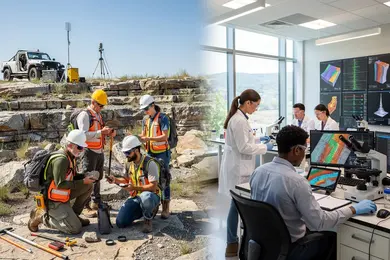
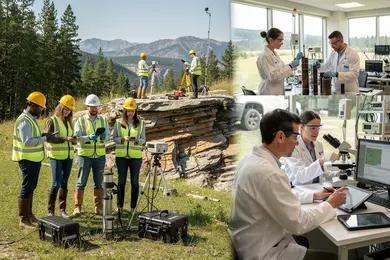
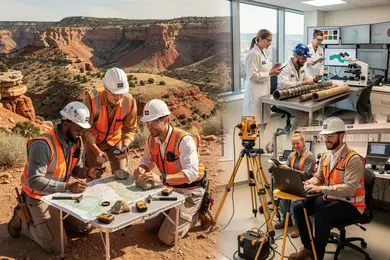
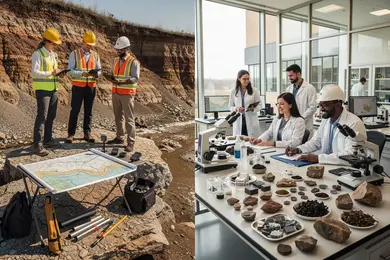
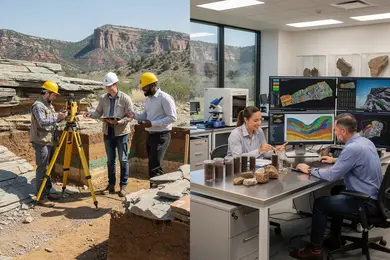
Online bachelor's degrees in geosciences with earth science research focus require balancing digital coursework with essential hands-on experience-often through local fieldwork or intensive residencies. This balancing act directly impacts employability, as employers demand familiarity with both foundational theories and applied geospatial technologies. For example, a graduate might analyze soil sample data remotely before coordinating field investigations, illustrating how practical skills complement theoretical learning.
This format primarily suits individuals able to self-manage and schedule field components independently, such as working professionals transitioning into roles centered on resource management or environmental risk analysis. Yet, prospective students must critically assess program accreditation and the extent of practical, local engagement promised, since programs lacking substantive field experience may limit access to jobs that emphasize on-site competency.
The labor market outlook for geoscientist positions projects steady growth, tied to infrastructure needs and regulatory pressures. Graduates are expected to operate with research-ready capabilities and adapt to data-driven decision-making environments. Those without a prior STEM background should anticipate a steep learning curve in quantitative and earth science fundamentals, necessitating supplementary preparation.
Decision-making should weigh fieldwork logistics versus online convenience and seek accredited online programs for geosciences and earth science studies offering clear pathways to certifications or internships. For a detailed comparison of program options, see the best online geology degree listings, which provide insight into curricula that effectively integrate digital and experiential learning components.
Which schools offer accredited online geosciences degrees?
Program accreditation significantly impacts graduates' employability in geosciences, particularly in fields requiring hands-on skills like environmental consulting and energy sector roles. Schools offering accredited online bachelor's degrees in geosciences in the United States-such as Oregon State University and the University of North Dakota-ensure curricula meet industry benchmarks through regional bodies like the Higher Learning Commission. This validation is crucial because employers prioritize candidates trained in geological methods including GIS, remote sensing, and structural geology.
Fully online programs often struggle to provide essential field experience, which can delay workforce readiness in roles demanding physical rock sampling or hazard analysis. Graduates from non-accredited or purely theoretical programs risk longer ramp-up times and limited recognition by professional certifying agencies, impeding advancement in public or private sector positions. Prospective students evaluating top U.S. schools offering online geosciences degree programs should assess how each program integrates practical training and supports research components.
The median annual wage for geoscientists was $99,240 as of May 2024 per the U.S. Bureau of Labor Statistics, emphasizing the importance of selecting a research-ready curriculum aligned with employer expectations. Students should request detailed syllabi and graduate employment data to confirm program alignment with their career objectives. Those considering a strategic pivot toward data-intensive roles might also explore data science masters online as a complementary pathway.
Is an online geosciences degree respected by employers?
Employer recognition of an online geosciences degree hinges on demonstrable technical skills and applied experience rather than the mode of study alone. The value of online geosciences degrees in job market settings increasingly depends on how well programs integrate data analysis, geospatial technology, and field-related tasks through virtual labs, capstone projects, or local partnerships. For instance, environmental consulting roles demand portfolio evidence of GIS mapping abilities and remote sensing interpretation, which purely theoretical degrees often lack, reducing competitiveness.
Moreover, industries like oil and gas expect practical subsurface or drilling data experience; those online programs facilitating internships or collaboration with research centers align more closely with these demands. Graduates without such experiential components may face hiring skepticism, reflecting a tradeoff between accessibility and tangible field skills.
Practical limitations inherent to online learning, such as restricted access to fieldwork and in-person networking, underscore the need for students to carefully select programs that offer research collaborations or industry-aligned projects. Institutional accreditation and linkage to respected geosciences organizations also enhance employer trust in candidates.
Students assessing educational pathways in geosciences should weigh how curricula replicate workplace realities and incorporate employer feedback, balancing convenience with reputational and experiential strength. Those aiming for competitive placement in agencies or energy firms might also consider related options like an exercise science online degree for alternative entry points into applied science careers.
What courses are included in geosciences curricula?
Effective geosciences curricula prioritize applied expertise over purely theoretical knowledge, reflecting employer demand for graduates ready to address real-world environmental and engineering challenges. Core courses such as mineralogy, petrology, and sedimentology focus on skills needed to assess natural resources and contamination risks, while structural geology and tectonics equip students to evaluate geological hazards-skills essential in sectors like urban planning and civil engineering. Stratigraphy and paleontology enable interpretation of Earth's history, informing climate modeling and impact assessments.
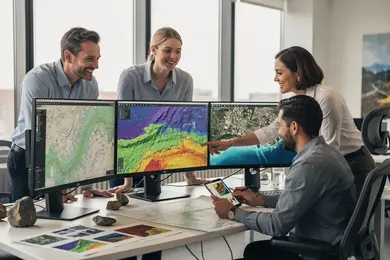
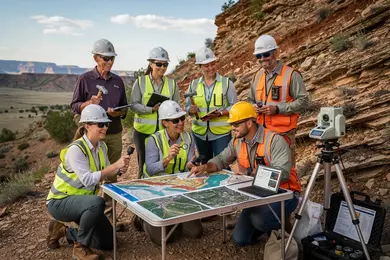
Applied geophysics trains students in remote sensing and subsurface imaging techniques, vital in industries such as oil and gas exploration or groundwater management. GIS and data analytics competencies are emphasized due to their central role in managing spatial data, making them especially relevant to environmental consulting and government agencies. Fieldwork is a non-negotiable element, as employers often require demonstrated proficiency in data collection and sample processing.
Supplemental courses in environmental chemistry and hydrology link geosciences to ecosystem management and pollution mitigation, reflecting labor market realities where environmental scientists earn a median salary of $76,530. Students evaluating online geosciences degree courses in the United States should consider how well programs balance foundational knowledge with technical and field-based skills.
Tradeoffs arise when curricula overweight theoretical subjects without sufficient applied training, undermining employability in consulting and regulatory roles. Navigating this balance is key for students targeting positions that demand immediate technical proficiency and interdisciplinary fluency. For those exploring related education pathways, options such as a masters of library science online illustrate alternative routes to build research skills applicable across domains.
How do online geosciences programs handle labs and fieldwork?
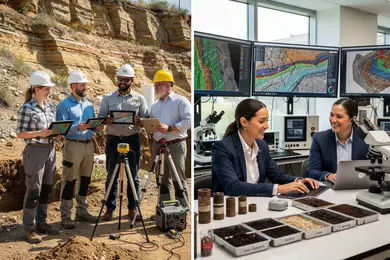
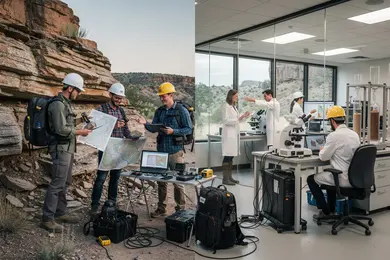
Online geosciences programs confront a core challenge: delivering valid hands-on training in labs and fieldwork remotely. The substitution of virtual labs, at-home experiment kits, and geographically tailored local field trips aims to bridge critical experience gaps, but these approaches vary significantly in efficacy and employer acceptance.
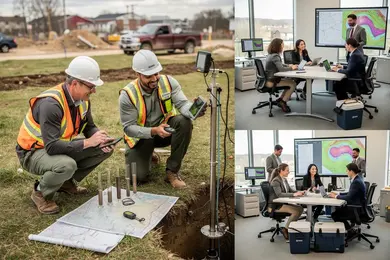
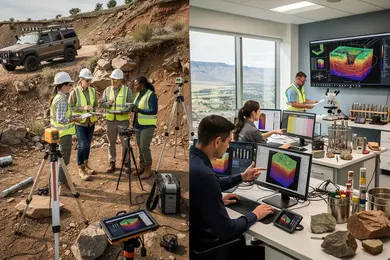
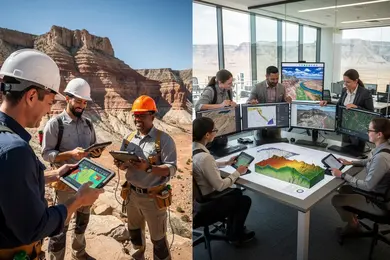
Virtual simulations grant access to interactive datasets-such as seismic readings and digitized core samples-enabling analysis without physical presence. At-home kits allow some tactile practice with sediment or rock specimens, supported by instructional media. Still, local fieldwork compliance remains an institutional mandate, often requiring submission of geo-tagged photos, detailed notes, and sample analyses to verify authentic experience.
This hybrid format addresses geographic constraints yet can introduce delays or limitations, especially where intensive, in-person modules are deferred until residencies or internships. The practical consequence is a potential mismatch between graduates' documented skills and employer expectations, notably in sectors like environmental consulting or natural resource exploration where mastery of GIS software and physical core logging are non-negotiable.
For instance, environmental firms expect new hires to translate remote training into efficient on-site performance, while inadequate field exposure creates onboarding friction. Programs without robust field components risk impairing graduate employability in hands-on roles essential to regulatory compliance and resource management. According to Bureau of Labor Statistics data cited by MyDegreeGuide, compliance officers earn a median annual income near $71,650, underscoring the financial importance of thorough practical preparation.
What are the admission requirements for online geosciences programs?
Admission to online geosciences programs demands more than a standard high school diploma; it requires demonstrated proficiency in foundational sciences and math, including algebra, biology, chemistry, and physics. Some programs expect candidates to have completed trigonometry or calculus, with gaps often addressed via remedial courses or conditional entry. This selective threshold reflects the intensity of geoscience curricula and the necessity for students to engage immediately with research-level material.
Applicants submit official transcripts, relevant test scores if mandated, and personal statements outlining their alignment with geosciences careers. Transfer students face additional scrutiny to verify completion of science-related credits. Digital literacy and access to technology are increasingly emphasized, ensuring students can effectively participate in online labs and field simulations.
Employers prioritize graduates who can apply spatial analysis and geospatial data skills without extensive retraining. For example, cartographers and photogrammetrists earn median salaries around $68,900, reinforcing why employers expect readiness in GIS applications upon hiring. Prospective students should weigh admission criteria and program rigor against career expectations, understanding that documentation and residency requirements may affect financial aid and tuition status.
The balance of academic preparedness and workforce realities means students must consider how these admission requirements translate to actual job demands and market viability in geosciences fields.
How long does an online geosciences bachelor's take to complete?
Bachelor's degrees in geosciences delivered online largely mirror traditional timelines due to the field's practical and research-heavy curriculum. A full-time student typically needs about four years to complete core courses in earth science, research methodologies, and applied fieldwork, which virtual formats replicate through local lab partnerships or field assignments. Part-time study can extend to six years or more, depending on individual circumstances and course availability.
Accelerated programs compress this to around three years by offering continuous enrollment, but this demands rapid assimilation of complex topics like mineralogy, structural geology, and soil management. This faster pace risks sacrificing depth and hands-on experience, which employers consistently prioritize in environmental and resource management sectors.
Practical realities increasingly influence program duration: for example, working professionals pursuing soil and land management must integrate academic concepts with on-the-job applications. According to the Bureau of Labor Statistics data, the median salary for soil and plant scientists stands at $66,750, reflecting moderate market demand that rewards both theoretical knowledge and practical capability.
- Comprehensive project experience remains a critical hiring factor in specialized geoscience roles.
- Students pivoting careers should expect prerequisite courses or certificates to extend total completion time.
- Verification of internships and alignment with professional certification standards is essential for workforce readiness.
How much does an online geosciences degree cost?
Cost variability in online geosciences bachelor's degrees directly shapes return on investment, presenting a critical decision point for students and professionals pivoting into this field. Public universities with in-state tuition often charge between $300 and $500 per credit, leading to total program costs near $15,000, while private institutions may require $600 to $900 per credit, pushing expenses toward $40,000. This discrepancy intensifies considering that a conservation scientist's median salary is around $63,750, underscoring the need to balance tuition against realistic salary expectations in environmental sectors.
Fieldwork requirements create additional financial and logistical barriers beyond tuition, as many online programs offer limited hands-on opportunities that necessitate local lab access or travel. For working adults, accelerated or competency-based geosciences degrees offer cost and time efficiencies but demand self-discipline and prior related skills.
Key factors to evaluate include program accreditation, research focus, and the extent of practical preparation, which directly impact employability and the ability to meet employer demands in conservation and natural resources industries. Financial aid options like federal loans, scholarships targeting earth sciences, and employer tuition reimbursement can offset upfront costs but don't eliminate the strategic necessity of aligning program investment with mid-career earnings and job stability.
What jobs can you get with a geosciences bachelor's?
A bachelor's degree in geosciences positions graduates for technically demanding roles that require rigorous analytical and field skills. Employers in federal agencies like the U.S. Geological Survey and the Environmental Protection Agency prioritize candidates who can combine data analysis, GIS mapping, and resource assessment within environmental monitoring frameworks. Graduates often enter roles such as environmental consultant, hydrologist, or geological technician, where applied knowledge in hazard mitigation and regulatory compliance directly impacts project outcomes.
Industry demand is driven by natural resource exploration and environmental regulation. For instance, petroleum and mining sectors seek geosciences graduates capable of interpreting seismic data and geological formations-foundational competencies crucial for advancing to project management, which typically requires further credentials beyond a bachelor's degree. State and local agencies also rely on these graduates for environmental impact assessments and enforcing legal compliance, emphasizing the necessity of a grounded understanding of practical and regulatory processes.
Geographic and technical flexibility are important tradeoffs; proficiency in GIS and remote sensing enhances employability in diverse regions. Salary data from the U.S. Bureau of Labor Statistics range from $50,000 to upwards of $80,000 for analytical positions, underscoring a moderate return on educational investment tied to the energy sector and climate-related regulation trends.
Cost considerations are significant-Fort Hays State University's online Bachelor of Science in Geosciences, at around $3,975.75 per semester, offers a relatively affordable path that balances accessible pricing with curricula designed to meet workforce entry standards.
What salary and job outlook do geosciences graduates have?
Geosciences graduates entering the U.S. workforce face distinct salary variations tied closely to industry choice and technical proficiency. Median starting salaries hover around $63,000, but those targeting oil, gas, and mining sectors can exceed $85,000 due to higher specialization and demand, while government and environmental consulting roles typically range from $55,000 to $70,000. This disparity demands that candidates carefully assess employer expectations beyond degree completion.
Employers emphasize expertise in remote sensing, GIS, and data analysis, making these skills essential for wage growth and competitiveness. Graduates relying solely on online programs must proactively seek internships or cooperative education to compensate for minimal fieldwork experience routinely required in hands-on roles.
Consider the difference between a geoscientist entering a federal environmental agency versus a private petroleum firm. The former often accepts initial salaries near $58,000 with slow progression and faces security clearance hurdles; the latter can command $90,000+ upfront but encounters cyclical market instability. Prioritizing geographic flexibility and adaptable technical skills often translates into better long-term career resilience.
- Job growth in geosciences is projected at 6% over the next decade, concentrated in energy, environmental remediation, and urban planning.
- Practical training beyond coursework is critical to overcoming remote learning limitations.
- Strategic skill acquisition aligns closely with industry segments offering higher compensation.
Other Things You Should Know About Geosciences
Top online bachelor's programs in geosciences ensure students are research-ready by integrating virtual labs, interactive simulations, and collaborations with research institutions for fieldwork experiences. They emphasize critical areas such as data analysis, GIS, and remote sensing to prepare students effectively for real-world challenges in 2027.
Many employers in geosciences expect proficiency in GIS, remote sensing, and modeling software, which are often introduced in on-campus labs. Online programs vary widely in how effectively they integrate hands-on software training. Students should prioritize programs offering virtual labs with industry-standard tools or partnerships that provide remote software access, as proficiency gaps can limit job readiness.
Choosing between research-oriented and applied track programs hinges on your career goals. Research-heavy curricula better serve those targeting graduate school or scientific roles, but can be less practical for immediate workforce entry. Applied tracks often prioritize field skills and industry-relevant training, making them preferable for students seeking direct employment in sectors like environmental consulting or resource management.
Most online geosciences bachelor's programs include 8 to 12 semester hours of laboratory science and one or more field-based or virtual mapping components. Students may need local lab access, weekend field experiences, or remote data-collection assignments to meet degree and accreditation standards.
References
- How do recent geoscience graduates experience the job market? - GeoExpro https://geoexpro.com/how-do-recent-geoscience-graduates-experience-the-job-market/
- Curriculum https://earthsciences.dartmouth.edu/undergraduate/curriculum
- 3. What Undergraduate Geoscience Education Should Accomplish https://www.americangeosciences.org/change/sections/concepts/
- What Does the Future Demand Look Like for Applied Geoscientists? https://www.aegweb.org/index.php
- Online Geoscience Degrees: Top Schools and All Programs in 2026 https://www.gisdegree.org/online/geoscience-degrees/
- Geologists: Salary, career path, job outlook, education and more - RaiseMe https://www.raise.me/careers/life-physical-and-social-science/geoscientists/geologists/
- Best Online Earth Sciences Courses and Programs | edX https://www.edx.org/learn/earth-sciences
- Rocks from field to lab: a practical course - Aurora https://aurora-universities.eu/course/rocks-from-field-to-lab-a-practical-course/
- Mydegreeguide https://mydegreeguide.com
- Earth Science Course Details - Fees, Subjects, Syllabus, Duration, Eligibility, Career Scope https://www.careers360.com/courses/earth-science-course