2027 Geosciences Skills Most Commonly Mentioned in Job Postings

Co-Founder and Chief Data Scientist
Geosciences professionals often confront sharply shifting skill demands amid rapid environmental data growth and evolving energy markets. As employers increasingly require proficiency in advanced geospatial analysis and machine learning integration, candidates must prioritize these abilities to avoid obsolescence. Meanwhile, the National Center for Education Statistics reports a 30% surge in adult learners enrolling in online STEM courses, reflecting greater demand for flexible, specialized upskilling opportunities.
This trend signals a shifting landscape where educational accessibility and timing directly influence career mobility and competitiveness within geosciences roles. This article identifies the most commonly listed geosciences skills in job postings, offering targeted insights to align education choices with employer expectations and enhance practical career outcomes.
Key Things You Should Know
- Machine learning proficiency appears in 38% of 2026 geosciences job postings, yet mastering these algorithms demands intensive upskilling that delays entry-level hiring by six months on average according to the U.S. Bureau of Labor Statistics.
- Employers increasingly prioritize cross-disciplinary hydrogeology and geospatial analysis skills, with 52% of surveyed firms linking these capabilities directly to project leadership roles, signaling a narrowing skill set for career advancement.
- Certification in advanced 3D seismic interpretation, while costly (averaging $4,200), correlates with a 22% higher salary offer, reflecting a tradeoff between upfront costs and medium-term income potential documented by the American Geosciences Institute's 2024 workforce report.
What core geoscience skills are most in demand in current U.S. job postings?
In a competitive U.S. geoscience job market, communication skills are pivotal to career viability, appearing in over half of employer listings. Written communication, cited in 67% of positions, and oral communication at 44%, reflect a workforce expectation that geoscientists translate complex technical data into clear, actionable messages. For instance, a hydrogeologist must effectively communicate groundwater contamination risks to both regulators and affected communities, balancing scientific precision with accessibility. This emphasis on communication complements essential technical skills in Geographic Information Systems (GIS), Python or R programming, and remote sensing, particularly in fields such as energy extraction and environmental consulting that demand integration of field data with computational analysis. These geoscience technical skills in the United States job market serve as a gatekeeper for project efficiency and client satisfaction.
Employers also prioritize problem-solving and critical thinking, expecting candidates to confidently handle uncertain or incomplete datasets to guide resource management decisions. This analytical rigor affects project timelines and budgets, underscoring a practical need beyond theoretical knowledge. Fieldwork capabilities remain important but insufficient alone; hybrid skill sets combining hands-on experience with advanced data interpretation and communication are increasingly the norm. Students and professionals must navigate these complexities, often balancing field training with coursework in data science and strategic communication.
Those considering how to become a speech pathologist might note parallels in adapting skill sets to meet evolving employer demands in technically intensive fields. Understanding these workforce realities helps prospective geoscientists make informed decisions about the tradeoffs involved in educational pathways and the practical challenges of career pivots.
Which technical tools and software do employers expect geoscience graduates to know?
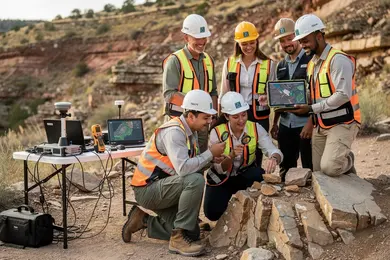
Proficiency in software directly influences employability in geosciences, where technical tools underpin critical field data acquisition and spatial analysis. Employers commonly require skills in Geographic Information Systems (GIS) like ArcGIS or QGIS, with over 60% of job postings emphasizing these platforms for spatial data interpretation applied to mineral exploration, environmental assessment, or urban planning. The practical need to handle site-specific location data shapes workforce expectations.
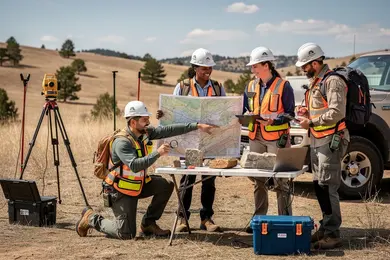
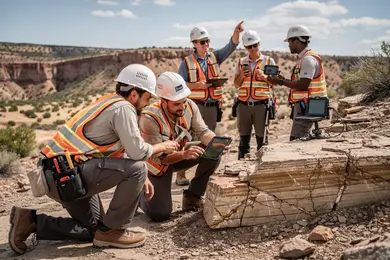
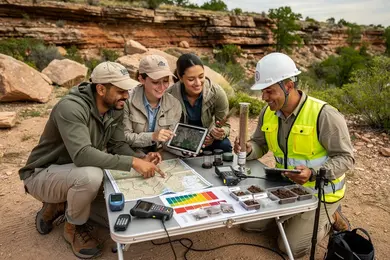
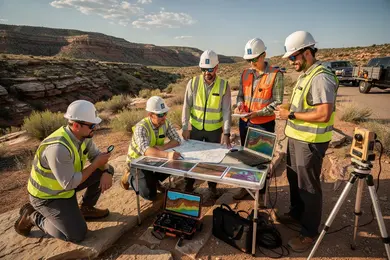
Fieldwork demands raise the bar further, as 63% of listings prioritize software like StraboSpot and digital mapping apps, while 48% expect strong data collection abilities. This split highlights a practical workforce challenge: graduates lacking experience in these field-geospatial integration tools often endure steep learning curves. These realities are essential for those weighing choices around technical training or specialized degrees focused on geoscience software and technical tools.
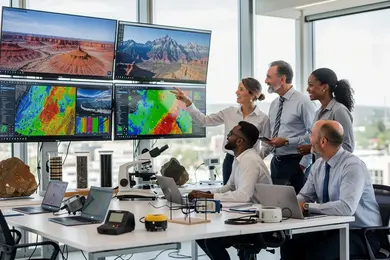
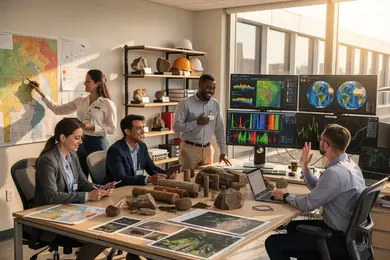
Analytical roles, particularly in energy or environmental consulting, increasingly require familiarity with data analysis programs such as MATLAB, Python with geospatial libraries, and Petrel. These common geosciences data analysis programs support subsurface modeling and more complex quantitative tasks that general GIS skills alone do not address.
Employer preferences vary by sector, influencing skill portfolio decisions-mining companies lean toward geological modeling software, while environmental agencies stress GIS and field data integration. For candidates balancing broad versus specialized skills, practical versatility often outweighs narrow expertise in entry-level scenarios.
Professionals considering a pivot into geosciences should also explore relevant educational pathways, including MS data science online programs, which can complement geospatial and data analysis capabilities when aligned with field demands. Resources like MS data science online options provide a strategic perspective on accessible advanced training.
How do geoscience employers value fieldwork, lab skills, and data analysis experience?
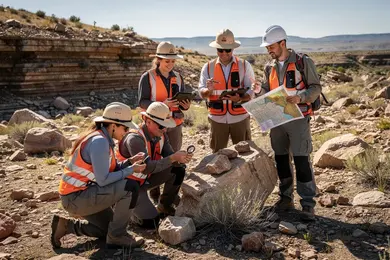
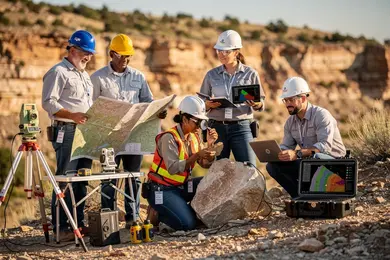
Geoscience employers increasingly prioritize data analysis skills, particularly expertise with GIS and remote sensing software, over traditional fieldwork or laboratory experience for entry-level roles. Employers focusing on sectors such as environmental consulting or mineral exploration still value fieldwork, but often as a secondary qualification supporting spatial data projects rather than as a primary skill. For example, direct sampling in these fields validates models generated from GIS data but extensive field campaigns are less emphasized due to cost and time constraints.
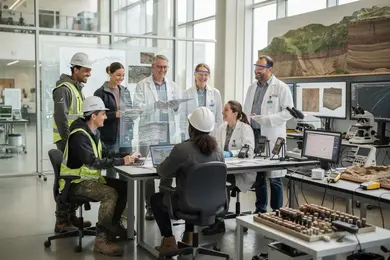
Laboratory experience holds variable weight depending on the employer's specialty. Firms engaged in hydrogeology or geochemistry often require concrete laboratory skills, whereas others lean heavily toward computational proficiency, underscoring the need to tailor training to industry demands. Candidates balancing geoscience fieldwork and data analysis skills improve their market position by acquiring advanced spatial analysis and data visualization techniques while selectively pursuing applied field or laboratory exposure.
For professionals aiming to enhance job readiness, this means prioritizing software competencies alongside targeted practical experience. Those seeking relevant credentials might consider hybrid educational paths, including programs related to an online exercise physiology degree model emphasizing applied skills and flexible learning structures. Such strategic preparation aligns with the evolving technical demands seen in geoscience employer job ads as firms shift toward automated data integration and interpretation.
What geoscience degree levels and specializations align best with current job requirements?
Job market data for 2026 reveals that geosciences degree specializations for job market readiness must extend beyond traditional field skills to include strong quantitative and computational emphases. About 23% of relevant job ads emphasize advanced math, statistics, and programming capabilities, often tied to geographic information systems (GIS) and data modeling tasks vital in sectors like environmental consulting and energy. This demand reshapes the best geosciences education paths for employment, prioritizing candidates who integrate earth science expertise with data science competencies.
For example, professionals aiming for environmental risk assessment roles must develop proficiency in programming languages such as Python or R to handle complex spatial datasets and statistical modeling, which often exceed standard geology curricula. Those with bachelor's degrees focused primarily on manual field techniques confront limits, commonly restricted to entry-level technician positions without data analytical responsibilities.
Master's programs that emphasize multidisciplinary data science integration raise employability and salary prospects by training graduates to independently develop or validate predictive geological models. However, this comes with tradeoffs including additional schooling time and deeper specialization. Certifications or continuing education in GIS and programming are increasingly critical supplements at all degree levels; lacking these skills risks exclusion through resume filters driven by keyword algorithms.
Students and professionals evaluating these paths should weigh practical workforce requirements against educational investments. For a strategic pivot incorporating quantitative expertise alongside geosciences fundamentals, exploring accredited and affordable graduate options, including the MLIS, can offer comparative frameworks for balancing cost, outcomes, and specialization.
How do online geoscience programs help students build the skills employers mention most?
Online geoscience programs shape skills critical to employer needs by embedding planning and project management directly into their curricula. Analysis of 1,214 job postings shows planning and project-management skills feature in 53% and 37% of listings, respectively, revealing clear workforce priorities. These programs blend synchronous and asynchronous methods, utilizing real-world simulations, progress tracking, and collaborative tools to mirror industry conditions.
Students face challenges such as coordinating multidisciplinary field data collection or managing logistics, reflecting scenarios common in environmental consulting, energy exploration, and government research. Such exercises build practical competencies in prioritizing tasks, allocating resources, and adapting timelines-skills insufficiently developed by purely theoretical instruction.
Structured capstone projects typically demand milestone oversight, budget management, and stakeholder communication, encouraging application of established project management frameworks. The online format's flexibility allows students to work concurrently, embedding new skills through immediate workplace application, which enhances retention and contextual relevance.
However, virtual delivery limits spontaneous team interaction, requiring intentional design of peer collaboration to foster interpersonal and leadership abilities. Programs adopting industry-standard project management software and iterative deliverable cycles better approximate workplace pressures, improving graduate readiness.
Employers prioritize candidates demonstrating both technical expertise and applied project leadership. By aligning instruction with documented labor market demands, these programs prepare students to navigate the dual task of complex problem-solving and managing projects effectively across diverse applied geosciences domains.
What courses and projects develop the geospatial, GIS, and remote sensing skills employers need?
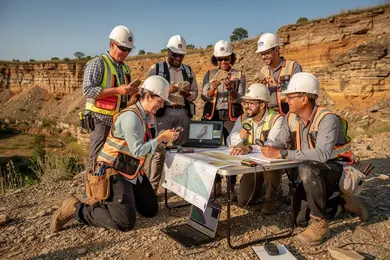
Mastering geospatial, GIS, and remote sensing skills requires more than technical know-how; it demands an integrated approach that aligns with employer expectations for data synthesis and collaboration. Practical experience with software like ArcGIS, QGIS, and ENVI, supplemented by programming in Python or R, forms the foundation, but the real workforce value emerges when students tackle projects involving multi-source datasets-such as combining satellite remote sensing with ground measurements. This skill is indispensable in roles like environmental consulting, where nuanced interpretation of spatial and temporal data drives decisions.
Beyond foundational theory, remote sensing curricula must embed rigorous exercises in image classification, spectral analysis, and change detection across sensor types to match the precision required in resource management and disaster response. GIS training should extend into database management and web GIS applications, equipping geoscientists to develop interactive platforms for government and energy sectors.
Teamwork capabilities strongly affect employability; nearly 40% of geoscience positions prioritize collaboration skills, reflecting the industry's demand for professionals who operate effectively in multidisciplinary environments. Educational programs that integrate group projects and client-driven assignments help close this gap.
Students face a strategic choice between specializing deeply in technical areas or pursuing broader applied projects tied to internships and fieldwork. Programs that balance software proficiency, analytical rigor, and interpersonal skills offer the most reliable pathway to roles requiring complex problem-solving and communication in the geosciences workforce.
How important are programming, modeling, and quantitative skills in geoscience careers today?
Geoscience careers in 2026 demand a dual competency: advanced computational skills and practical field readiness. Programming languages like Python and GIS modeling refine data analysis and simulation, essential in roles such as environmental consulting and petroleum geology. Yet, over half of geoscience job postings from 2023 explicitly require the ability to drive, highlighting how field logistics and mobility remain indispensable for many positions, especially in remote or resource-extraction contexts.
This dynamic imposes tradeoffs for students and professionals weighing educational investments. Prioritizing coding and quantitative modeling without equal emphasis on physical logistics and field protocols risks narrowing employability, especially in mineral exploration or environmental fieldwork where vehicle operation and physical stamina are non-negotiable.
Real-world workforce implications include:
- Employers expect candidates who balance technical proficiency with operational autonomy in challenging terrains.
- Training programs that pair hands-on programming workshops with certified driving and field safety courses better align with labor market needs.
- Industry segments vary: academia and research focus heavily on data skills, whereas industry roles often demand blended expertise with field experience.
Assessing career paths must involve this complexity-advanced modeling capabilities enhance analytical depth, but practical, physical competencies critically enable sustained job performance and access to field sites.
What entry-level geoscience roles are available and which skills do they typically require?
Entry-level geoscience positions demand more than foundational technical skills; they require adaptive reasoning to manage complexity and uncertainty. Unlike traditional roles focused on direct data collection, employers now prioritize systems thinking for integrating multidisciplinary datasets such as seismic, hydrological, and geochemical information. For instance, junior hydrogeologists investigating groundwater contamination must predict pollutant spread amid uncertain subsurface conditions, applying probabilistic models rather than relying solely on precise measurements.
Key practical capabilities expected include proficiency with tools like ArcGIS, MATLAB, and Python scripting, coupled with flexibility to interpret incomplete data and navigate evolving project demands. This shift places a premium on candidates who can troubleshoot real-world ambiguities and operate effectively within ambiguous regulatory frameworks.
For early-career geoscientists, prioritizing internships or projects that emphasize managing complex systems over isolated technical tasks reduces steep learning curves and better prepares them for sustained roles across government, industry, and research sectors. Without this skillset, specialized pathways often stall due to insufficient problem-solving experience under uncertainty.
What salaries and job outlook can geoscience graduates expect for different skill profiles?
Starting salaries for geoscience graduates vary significantly based on technical skills and professional attributes, with entry-level GIS, remote sensing, and data analysis expertise typically yielding $55,000 to $70,000. Adding programming capabilities such as Python or R often raises offers by 10% to 20%, particularly in sectors like environmental consulting or mineral exploration.
However, salaries alone do not capture the impact of non-technical traits. Nearly one-third of job postings emphasize professionalism, eagerness to learn, and meticulousness-skills that can influence hiring and wage growth beyond raw technical ability. Without these dispositions, advancement opportunities may narrow despite strong domain knowledge.
Specialized roles in hydrogeology, petroleum geology, or climate modeling command median salaries over $90,000 but typically require graduate credentials and niche certifications. For example, environmental impact consulting rewards knowledge of regulations coupled with client communication, pushing total compensation 15% higher.
Contract and fieldwork-heavy positions offer hourly rates above $30; however, irregular schedules and geographic mobility demands often challenge net income stability and long-term career security. Employers seek adaptability and team problem-solving to retain talent.
Graduates should aim skill-building strategically-energy sectors value subsurface modeling, while government jobs prioritize GIS mastery and regulatory expertise-to navigate complex market demands and optimize career progression within the geosciences labor market.
How can students choose accredited geoscience programs that match their target skill set?
Accreditation by recognized bodies such as ABET remains a baseline requirement, but students must also scrutinize program content to ensure alignment with targeted industry skills. For instance, candidates pursuing roles in energy geology should prioritize courses with emphases on petroleum geology and geophysics, while those aiming for environmental consulting need robust training in hydrogeology and regulatory processes. This specificity influences employability in a field where the median annual wage is $99,240 and job growth is projected at 3% through 2034 according to U.S. Bureau of Labor Statistics data.
Practical experience distinguishes candidates in the geosciences labor market. Programs embedded with internships or collaborative fieldwork foster competencies that employers prioritize, such as applied problem-solving and familiarity with real-world datasets. Partnerships with industry or government agencies often enhance these opportunities, expanding professional networks and access to relevant projects.
The tradeoff between regulatory expertise and direct industry engagement reflects in career trajectories. Students oriented toward environmental or government roles may accept weaker industry ties to gain regulatory proficiency, while those targeting resource extraction careers should prioritize applied technical training and corporate connections. Evaluating alumni outcomes for consistent job placement can uncover how well a program mitigates skill mismatches that impede initial employment or salary progression.
Other Things You Should Know About Geosciences
In 2027, a master's degree in geosciences is crucial for career advancement as it often provides specialized knowledge and skills highly valued by employers. It enhances research opportunities and network connections, which are essential for roles in academia, consulting, and industry leadership positions.
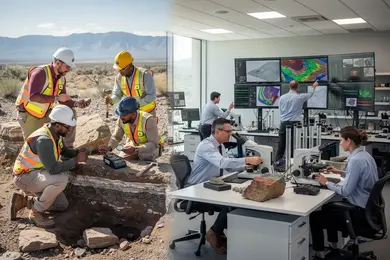
Field experience remains essential for entry- to mid-level geoscience roles, especially in environmental and exploration sectors, but employers increasingly expect strong technical skills alongside it. Fieldwork builds contextual understanding, while proficiency in GIS, remote sensing, and data modeling enables efficient analysis. Candidates who balance both stand out; lacking one often limits job opportunities or advancement options.
Employers most often ask for ArcGIS, QGIS, and remote sensing software such as ENVI or ERDAS Imagine. Job ads also frequently mention Python, SQL, and GPS data handling. These tools are common in environmental consulting, mineral exploration, hydrology, and GIS analyst roles.
Certifications provide formal validation of specific geoscience skills and can accelerate hiring in regulated or technical fields but often lack the practical judgment gained on the job. Work experience develops problem-solving ability and familiarity with real-world constraints that certifications can't replicate. When possible, combine both; if forced to choose early on, prioritize meaningful work experience to build a proven track record employers value more strongly.
References
- GIS and Remote Sensing Training Course https://upskilldevelopment.com/gis-and-remote-sensing-training-course
- ThisIsGeoscience - Geoscience Salaries https://www.thisisgeoscience.com/the-resources/geoscience-salaries
- Major to Career: Geosciences https://www.dickinson.edu/info/20107/geosciences/3969/major_to_career_geosciences
- 10 Skills To Help You Succeed in the Geospatial Industry https://www.t-kartor.com/blogs/10-skills-to-help-you-succeed-in-the-geospatial-industry
- How do recent geoscience graduates experience the job market? - GeoExpro https://geoexpro.com/how-do-recent-geoscience-graduates-experience-the-job-market/
- Section 4. Skills Framework https://graduate.americangeosciences.org/report/section-4/
- Other useful skills https://www.geolsoc.org.uk/Geology-Career-Pathways/University/During-your-degree/Useful-Skills-During-your-Degree.html
- The Essential GIS Skills Every Professional Must Have https://orionterrametrics.co.ke/blog/essential-gis-skills-every-professional-must-have/
- What GIS skills are required for spatial analysis projects? https://spatial-eye.com/blog/spatial-analysis/what-gis-skills-are-required-for-spatial-analysis-projects/
- Supporting Geoscience Students https://www.grow-geocareers.com/forgeodepartments