2027 Online Geosciences Degrees for Government and Agency Roles

Co-Founder and Chief Data Scientist
Professionals aiming to transition into government or agency roles in geosciences often confront the challenge of balancing rigorous work schedules with the time-intensive demands of traditional degree programs. The U. S. Department of Education reported in 2024 that online enrollments among working adults surged by 12%, signaling growing acceptance of remote learning modalities that accommodate irregular hours and geographic constraints. This shift reflects the necessity for flexible education pathways capable of delivering up-to-date technical competencies while allowing continuous employment and real-world experience accumulation.
The article evaluates accessible online geosciences degree options that align with federal and agency hiring prerequisites, empowering candidates to optimize timing, costs, and career trajectories amid evolving workforce demands.
Key Things You Should Know
- Fully online geosciences degrees in 2026 often omit essential field methods training, compelling candidates to seek costly in-person internships, which can delay government hiring timelines by 6-12 months per U.S. Geological Survey data.
- Government employers increasingly favor candidates with advanced GIS and remote sensing certifications alongside degrees; programs lacking these integrations risk reduced employability in 2024 federal workforce analyses.
- While average program costs for accredited online geosciences degrees rose 8% in 2025, federal tuition assistance covers less than 60%, pressuring mid-career professionals to balance debt against salary growth in constrained agency budgets.
What is an online geosciences degree and how does it prepare you for government and agency work?
Online geosciences degree programs aimed at government careers prioritize applied technical skills over theoretical breadth, a necessary tradeoff given sector demands. Coursework in geology, hydrology, GIS, and environmental policy is structured to meet federal agency criteria, including alternatives to traditional fieldwork through local partnerships or virtual labs. This approach equips graduates for roles requiring precise geospatial data analysis to inform land management and policy decisions, a critical asset for agencies focusing on environmental compliance and infrastructure risk assessment.
For example, professionals collaborating with the U.S. Geological Survey often rely on competencies in seismic hazard modeling or groundwater analysis directly acquired through accredited online programs. However, securing verified field experience and navigating federal security clearances remain practical hurdles that advisors in these programs actively help to mitigate.
Demand for candidates with geosciences training for agency and government roles is forecast to grow by over 16,000 positions by 2034, notably in environmental and regulatory sectors, aligning well with the skills developed via online curricula. Students must also achieve proficiency in specialized software and data interpretation to pass rigorous federal hiring standards.
Those investigating options for a career pivot can benefit from exploring detailed labor market perspectives on jobs with elementary education and environmental science degree, which often overlap with geosciences-based government opportunities.
Which types of federal, state, and local government roles can you qualify for with an online geosciences degree?
Government jobs for graduates with an online geosciences degree require more than just theoretical knowledge; they demand real-world application, regulatory savvy, and cross-disciplinary coordination. Federal roles typically include positions at agencies like the U.S. Geological Survey, where professionals analyze groundwater or mineral resources. State and local governments employ geoscientists for environmental compliance, land use planning, and hazard mapping-tasks that involve navigating bureaucratic frameworks and writing clear, compliant reports.
The 3% projected job growth between 2024 and 2034 reflects steady demand but also competition, with about 2,000 annual openings mainly in government sectors. Applicants should be prepared for practical fieldwork combined with data interpretation and reporting. Online geosciences careers in federal state and local government particularly benefit from programs offering strong laboratory simulations or in-person practicums to develop these skills.
Specialized training in GIS, remote sensing, and environmental policy enhances prospects for technical analyst roles, especially within the Environmental Protection Agency or state natural resource departments. Entry-level jobs emphasize data collection and regulatory paperwork, while mid-career positions require project management and interagency collaboration. For example, a state geoscientist performing flood risk analysis must integrate geologic data with engineering standards while coordinating with municipal officials, illustrating the interdisciplinary nature of government positions.
Students considering this pathway should prioritize programs accredited and capable of delivering practical experience essential for effective contribution and advancement in government roles. More information on affordable options can be found by exploring the online environmental engineering degree as a potentially complementary or alternative pathway.
How do online geosciences degrees compare to campus programs for lab, fieldwork, and research experience?
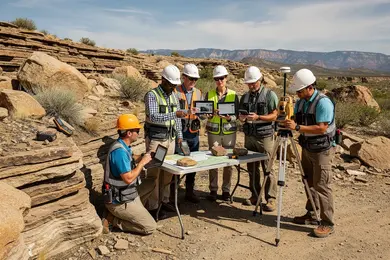
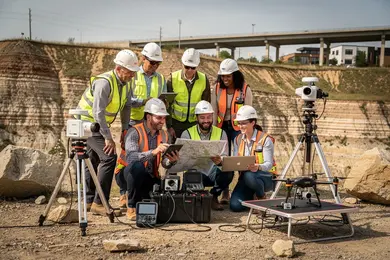
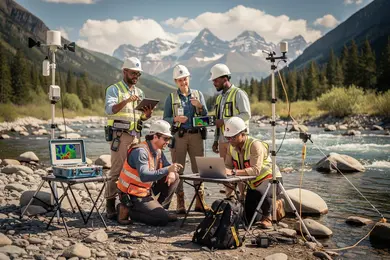
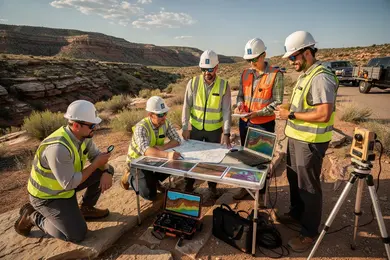
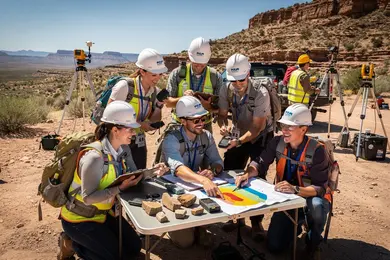
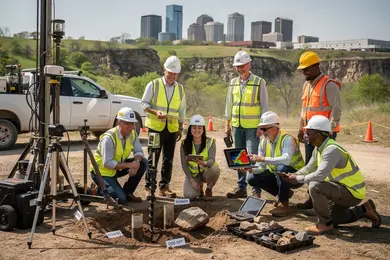
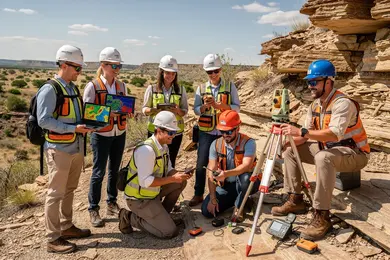
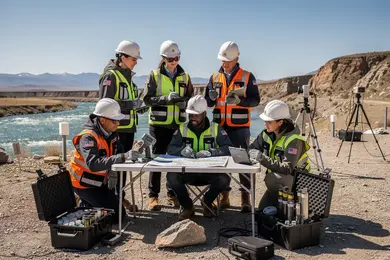
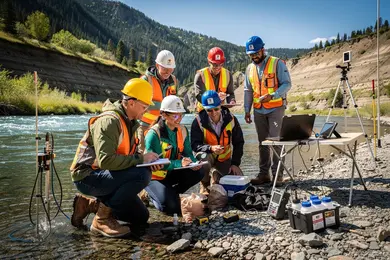
Online geosciences degrees present inherent challenges in replicating critical hands-on lab and fieldwork experience that campus programs provide. This deficit requires students to proactively secure local internships or participate in mandatory residencies, often coordinated by institutions, to meet the practical skill expectations of government and agency employers. For instance, candidates applying for environmental assessment roles risk disqualification if their experience lacks verified field sampling or operational competency with remote sensing equipment.
Unlike virtual labs focusing on data interpretation, essential tactile skills like equipment troubleshooting and sample processing remain difficult to acquire remotely. As a result, employers prioritize applicants with documented portfolios reflecting real-world geospatial data collection and environmental monitoring experience. Without these, graduates' competitiveness diminishes notably in public-sector settings where regulatory compliance and accuracy are paramount.
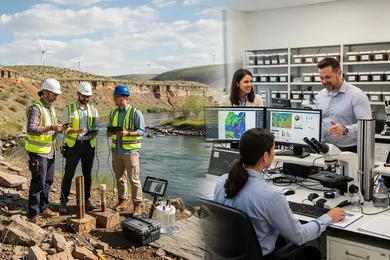
The comparison of online and campus geosciences research opportunities highlights a key tradeoff: while theoretical content translates well online, the absence of immersive fieldwork can limit career readiness. Online students must evaluate how their programs integrate hands-on components, considering how gaps may impact employability in agency positions requiring direct instrument use and site-based GIS analysis.
Public-sector geoscientists command median salaries near $99,240, signaling that employers effectively monetize practical expertise to reduce training costs and operational risks. Prospective students should also explore cross-disciplinary options, such as a library degree, which may complement geosciences skills and broaden career avenues.
What accreditation and departmental standards should online geosciences programs meet for government agency careers?
Accreditation for online geosciences programs is not simply a checklist item; it significantly affects eligibility for government careers, where hiring agencies demand documented proficiency in both theoretical knowledge and hands-on skills. Effective programs must meet regional accreditation standards recognized by the U.S. Department of Education and adhere to departmental requirements reflecting the Geological Sciences Accreditation Board or equivalent. This alignment ensures candidates are trained in competencies crucial for federal roles, such as geological mapping, hydrology, environmental impact analysis, and GIS applications, addressing the core functions employed by agencies like the USGS or EPA.
Departmental standards for geosciences degrees in federal agency employment also emphasize practical experience. Agencies expect graduates to have completed rigorous laboratory work or equivalent field experiences, even in online formats. For example, a hydrologist position requires validated experience with data collection technologies and modeling software, which must be incorporated through in-person residencies or high-quality virtual simulations. Programs lacking such integration risk producing graduates less competitive for these specialized roles.
Employers further evaluate curricula for compliance with the National Association of Geoscience Teachers' standards and inclusion of current government reporting protocols, as these factors directly influence job readiness. Given the 4.5% median salary increase across geoscience occupations, investing in programs that meet these practical and accreditation criteria can improve long-term return on investment.
Prospective students should rigorously verify online geosciences program accreditation requirements for government careers and departmental standards before enrollment to avoid jeopardizing their eligibility in federal hiring processes. Those seeking cost-conscious options might explore resources such as the cheapest online computer science degree listings, though cost alone must be weighed against accreditation and skill development.
What courses and specializations in online geosciences best align with environmental and natural resources agencies?
Geosciences programs that align well with environmental and natural resources agencies focus on technical proficiencies critical for applied fieldwork and regulatory compliance. Specializations such as hydrogeology, GIS and remote sensing, environmental policy analysis, and environmental science provide a foundation tailored to agency needs like pollution control, habitat restoration, and resource management.
For example, consider a state natural resources professional tasked with mapping contamination in groundwater aquifers. Their expertise in hydrogeology and GIS technologies directly enables accurate delineation of affected zones, supporting targeted remediation and regulatory reporting. This scenario illustrates how practical skills integration is non-negotiable for agency employment.
Key course emphases include:
- Data analysis and environmental modeling to interpret complex datasets informing risk and resource allocation
- Environmental law and regulations to navigate compliance and policy enforcement
- Technical skills like GIS for spatial resource management critical to entities such as the EPA or US Fish and Wildlife Service
Graduates neglecting these applied competencies face challenges entering an increasingly interdisciplinary, data-driven workforce focused on sustainability and climate resilience. Government environmental scientists earn a median wage of $80,060 with steady job growth, underscoring the value of programs that balance scientific knowledge with regulatory and technical acumen.
What are the typical admission requirements, program length, and total costs for accredited online geosciences degrees?
Opting for an accredited online geosciences degree entails navigating specific admission criteria and a range of practical considerations that directly impact academic progress and professional viability. Typically, applicants must hold a high school diploma or equivalent, with prerequisite coursework in algebra, chemistry, and physics forming the baseline for readiness. Some programs demand prior college credits or an associate degree for advanced entry, adding another layer of complexity for career switchers or working adults.
The standard degree timeline varies: associate degrees often require about 60 credits, usually completed in two years, while bachelor's degrees require around 120 credits, generally spread over four years. Online flexibility allows some students to accelerate or decelerate studies, but part-time enrollment can extend time-to-completion, affecting cost and workforce re-entry. This tradeoff necessitates planning around personal circumstances and employer expectations.
Cost remains a critical factor. Public institutions offer lower in-state tuition, but online fees and related expenses-such as software for GIS or remote sensing-can raise overall outlays to $30,000-$60,000 or more for bachelor's degrees. Private institutions typically charge higher flat rates. Students must budget not only for tuition but also for technology and materials essential for competence in spatial data skills.
From a labor market perspective, candidates possessing strong analytical and technical expertise in GIS and remote sensing are increasingly preferred, as reflected by roles like cartographers and photogrammetrists with median pay around $78,380 and steady projected growth. Graduates should carefully weigh program rigor and skill alignment with these practical demands to maximize return on investment.
What are the salary ranges and earning potential for geoscientists and related roles in government and public agencies?
Government and public agency positions in geosciences offer stable salaries ranging from $60,000 to $120,000, heavily influenced by specialization and jurisdiction. For instance, hydrologists working in water resources or infrastructure maintenance earn a median around $92,060 due to sustained demand in managing flood control and water quality-areas with limited outsourcing risks.
Pay progresses predictably within the General Schedule (GS) system, where entry-level roles (GS-7 to GS-9) start between $50,000 and $60,000, and experienced staff or managers (GS-12 to GS-14) can reach $100,000 to $130,000. Transitioning to federal agencies often brings not just a pay increase but expanded benefits and job security, making agency fit a critical consideration for candidates.
Career growth aligns less with rapid expansion and more with steady replacement demand, placing emphasis on professional credentials and agency-specific certifications. Educational programs that integrate practical training aligned with these requirements improve employability in a sector shaped by federal and state budget cycles and infrastructure funding priorities.
Prospective students should weigh the tradeoff between specialization and geographic mobility, as salary variation across regions and agencies may impact long-term earning potential and career stability.
What is the job outlook for geoscience professionals in government, NGOs, and interagency partnerships?
Advanced degrees strongly influence access to high-impact geosciences roles within government, NGOs, and interagency partnerships. While over two-thirds of geoscience PhDs begin their careers in academia, the remaining third find positions in government agencies or industry sectors that demand specialized expertise. For example, at agencies like the US Geological Survey, PhD holders often steer research projects or shape environmental policy, whereas master's degree holders generally occupy technical support roles, such as in the Environmental Protection Agency. This division illustrates a critical tradeoff: pursuing doctoral studies can unlock leadership and research opportunities less accessible to those with only graduate-level training.
Employers prioritize candidates who combine formal education with demonstrated experience managing federally funded projects or applying advanced geospatial technologies. In NGO or cross-agency contexts, professionals must integrate scientific analysis with program implementation, making interdisciplinary skills and advanced degrees advantageous.
The timing of entry into government service also matters. Early entry with a bachelor's or master's degree may provide valuable field and technical experience but can limit long-term advancement if higher-level analysis or policy roles are the goal. Federal hiring cycles tied to budget cycles add unpredictability to position availability, emphasizing the value of strategic planning.
Are professional licenses or certifications required for geoscience roles in government, and how do online degrees qualify you?
Licensing in government geoscience roles often separates routine technician positions from those with regulatory authority or public safety responsibilities. While a Professional Geologist (PG) certification is not universally mandatory, agencies like the U.S. Geological Survey require it to approve critical documents such as environmental impact statements. Online geosciences degrees can qualify candidates educationally, provided the curriculum meets state board criteria and is properly accredited. Still, licensing demands passing rigorous exams and accumulating relevant experience, which vary widely by jurisdiction.
In practice, many entry- to mid-level government roles-such as Geological Technician or Environmental Analyst-do not require licensure but rely on competencies gained through online lab work and field modules. However, absence of a license limits progression to positions involving independent professional judgment or project sign-off.
The U.S. Bureau of Labor Statistics projects a 6.2% growth in geoscientist employment over the next decade, translating to roughly 20,000 new roles. This growth is driven in part by expanding regulatory expectations within government, making licensing increasingly advantageous despite additional study and experience demands.
Prospective students should verify that online degrees align precisely with state requirements to avoid certification delays and recognize that federal positions may occasionally waive licensing but prioritize clear credentials. Balancing immediate employability against future capacity for professional responsibility requires informed planning around licensing alongside degree completion.
How can you evaluate and choose a reputable online geosciences program specifically for government and agency careers?
Choosing an online geosciences program for federal or agency employment demands more than accreditation-it requires alignment with agency-specific skills and operational realities. Candidates targeting government roles must prioritize programs with applied coursework in areas like environmental compliance, GIS, or natural hazard assessment, as these practical skills directly influence policy development and fieldwork effectiveness. For example, a professional aiming for a U.S. Geological Survey position should verify if the curriculum matches USGS technical standards and supports security clearance procedures.
Program flexibility and completion speed affect readiness; expedited or hybrid formats offer quicker integration into agency work than purely asynchronous models, which may delay employment in roles requiring immediate operational knowledge. Faculty credentials tied to active government research or consulting can indicate stronger connections to current agency challenges and expectations.
Job prospects reflect a measured 5% growth for geoscientists over a decade, with roughly 1,400 new government roles. Applicants gain an edge by selecting programs embedding data analytics, climate modeling, or regulatory strategy relevant to evolving federal demands. Confirm opportunities for internships or research partnerships within government entities, as hands-on experience and networking substantially enhance employability.
Other Things You Should Know About Geosciences
Yes, many online geosciences degrees in 2027 are designed to accommodate full-time work. They offer flexible scheduling, allowing students to complete coursework in their own time. However, balancing both commitments requires strong time management skills.
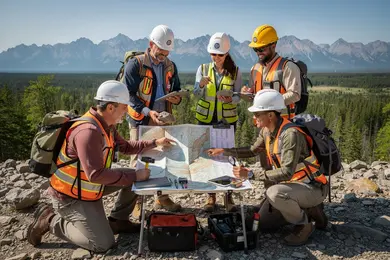
Fieldwork experience remains critical despite the online format. Many government agencies expect candidates to have direct exposure to environmental sampling, geological surveys, or remote sensing techniques. Students should prioritize online programs that either require local field assignments or partner with regional labs. Without this practical element, employers may view a candidate's technical abilities as insufficient for applied government roles.
Online degrees do not inherently limit advancement, but they require validation through recognized accreditation and experiential learning. Federal agencies weigh a candidate's demonstrated competencies and often prefer graduates from programs with strong applied curricula and internship options. To maximize career growth, students should choose programs that facilitate agency connections and provide certifications in specialized skills valued by government employers.
Many federal agencies accept accredited online geosciences degrees for analyst and technician roles, including the U.S. Geological Survey, NOAA, EPA, and Bureau of Land Management. Applicants usually need a regionally accredited bachelor’s degree, and some vacancies also require 15 to 30 semester hours in geology, GIS, hydrology, or related sciences.
References
- Geoscience Jobs in Government https://www.grow-geocareers.com/governmentjobs
- Salary Information https://www.geolsoc.org.uk/Geology-Career-Pathways/Careers/Salary-Information.html
- P.G. Licensing FAQs https://tbpg.state.tx.us/p-g-licensing-faqs/
- Earth and Environmental Science — Geology - School of Science and Engineering - Undergraduate - Program Finder | University of Missouri-Kansas City https://programs.umkc.edu/undergraduate/school-of-science-and-engineering/earth-and-environmental-science-geology
- ThisIsGeoscience - Geoscience Salaries https://www.thisisgeoscience.com/the-resources/geoscience-salaries
- AGI Geoscience Currents: Geoscience Employment Begins to Rebound in 2021 - American Institute of Professional Geologists https://aipg.org/news/579137/AGI-Geoscience-Currents-Geoscience-Employment-Begins-to-Rebound-in-2021.htm
- What Does the Future Demand Look Like for Applied Geoscientists? https://www.aegweb.org/index.php
- Online Geoscience Degrees: Top Schools and All Programs in 2026 https://www.gisdegree.org/online/geoscience-degrees/
- Becoming a P.Geo. https://www.geoscientistscanada.ca/becoming-a-p-geo.php/1000
- Graduate program https://www.ga.gov.au/about/careers/graduate-program