2027 Online Geosciences Degrees With Strong Water Resource Assessment Training

Co-Founder and Chief Data Scientist
Professionals tasked with evaluating water resource risks increasingly confront site-specific challenges requiring both advanced hydrological modeling and regional geological expertise. Yet, balancing full-time employment with acquiring specialized credentials remains difficult. The Department of Education reports a 25% rise in adult enrollment in online STEM programs since 2023, reflecting a shift toward flexible, competency-based pathways that accommodate working geoscientists. This trend matters because accessible, targeted training in water resource assessment directly influences career progression opportunities in fields where onsite fieldwork and remote data analysis converge. This article outlines key online geosciences degrees emphasizing water resource assessment training to guide strategic educational and career decisions.
Key Things You Should Know
- Online geosciences degrees with water resource assessment training typically reduce time-to-completion by 15%-20% compared to traditional programs, but limited access to in-field internships can hinder practical experience development critical for hydrology roles, per 2024 Bureau of Labor Statistics data.
- Employers prioritize candidates with advanced GIS and remote sensing skills embedded in curricula; graduates lacking these face a 22% lower initial salary offer in the U.S. water resource sector, according to updated 2024 recruitment analytics.
- Cost premiums averaging 12%-18% over other online STEM degrees arise from specialized software licensing and data access fees, impacting affordability for mid-career professionals aiming to pivot without employer tuition reimbursement support.
What is an online geosciences degree with a focus on water resources assessment?
Online geosciences degree programs with water resource assessment specialization must deliver training that matches or exceeds traditional programs in technical rigor and practical emphasis. Graduates emerge capable of managing complex datasets from geographic information systems, remote sensing, and hydrological models-skills that are increasingly non-negotiable in sectors like environmental consulting, urban planning, and agriculture. For instance, urban planners depend on these specialists to analyze flood risks and design infrastructure resilient to climate variability, while regulatory compliance in energy extraction demands detailed water use assessments.
Enrolling in accredited water resource assessment training in online geoscience degree programs requires careful scrutiny of curriculum depth, especially in numerical modeling and GIS applications, to avoid superficial coursework that limits workforce readiness. Hydrologists in the U.S. have a median annual income of $92,060 in 2024, with a stable 3% growth projected through 2033 and approximately 500 job openings yearly, indicating consistent but specialized demand.
Practical workforce implications include the need for disciplined self-study and proactive engagement with virtual labs and internships to build competitive experience remotely. Career options often align with federal agencies, municipal water authorities, and environmental firms that prioritize hands-on water data analysis and regulatory knowledge. Prospective students should also consider programs with connections to strong applied GIS platforms; colleges with GIS programs can significantly enhance employability in this field via specialized mapping and spatial analysis skills, an essential complement to water resource expertise.
How do online geosciences programs compare with on-campus options for water resource training?
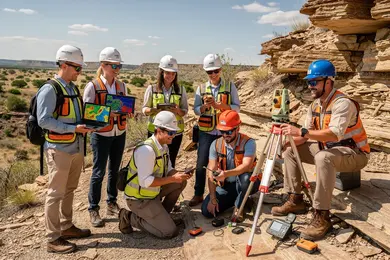
Online geosciences programs for water resource training match on-campus degrees in theoretical knowledge but fall short in practical, hands-on fieldwork crucial for work-ready skills. Employers emphasize proficiency in site assessments, groundwater modeling, and specialized equipment use-capabilities that on-campus students develop through direct lab access and local projects. For instance, a water resource professional engaged in municipal planning must adeptly combine field data collection with software simulation, a synergy better supported by on-campus training.
That said, online programs address some gaps by offering virtual labs, remote sensing analysis, and regional practicum placements. These features cater well to working adults or those in remote areas, yet they remain less immersive than in-person experiences. Anyone considering online geosciences programs for water resource training should factor in their need to secure local internships or hands-on opportunities since these are seldom included by default in online curricula.
Practical field experience is a decisive factor as global water-related disasters accounted for over 70% of all natural disaster events and affected 90% of people worldwide between 2000 and 2023. Students pursuing on-campus degrees benefit from established partnerships with agencies and research centers, which are invaluable for workforce entry. Employers look for documented applied skills, making the choice between on-campus and online geosciences degrees in water resources a question of intended career focus and learning context.
For professionals balancing employment with education or seeking supplemental credentials, online pathways provide flexibility. However, for field-intensive roles demanding applied expertise, on-campus remains the more reliable preparation. The cost and structure of these options can be further compared with resources like the best online animal science degree programs.
Which accredited schools offer online geosciences degrees emphasizing water resources in the U.S.?
Online geosciences degrees with water resource focus in the U.S. increasingly serve students who must balance rigorous scientific training with real-world field or lab requirements. While programs like Oregon State University's Bachelor of Science in Geology offer hydrologic modeling and watershed management crucial for water resource roles, prospective students face tradeoffs such as travel needs for limited field components or access to specialized software. The University of Arizona's online Master's in Hydrology and Water Resources sharpens practical skills in water quality analysis and hydrogeology, aligning closely with employer demands in government and consulting sectors.
Texas A&M University's Environmental Geosciences bachelor program brings groundwater hydrology and water policy into focus, tailoring graduates for conservation science roles with regulatory impact. These accredited U.S. schools offering water resource assessment in geosciences address an evolving market where validated practical experience and certifications influence hiring decisions, especially for federal and state agency positions.
Salary data reflect this hierarchy: hydrologists earn median wages of $85,990, environmental scientists $76,480, and conservation scientists $64,420. However, students must weigh program demands alongside career goals, particularly where experiential components affect work-study balance.
For related interdisciplinary health pathways, consider exploring online exercise science degrees as complementary options in environmental health fields.
What courses and skills are included in water resource assessment-focused geoscience curricula?
Water resource assessment courses in geosciences programs emphasize technical mastery in hydrology, hydrogeology, watershed management, and environmental fluid mechanics, paired with quantitative methods in statistics and numerical modeling. These competencies enable graduates to critically evaluate water resource sustainability amid diverse climatic and land-use pressures. Fluency in tools like MODFLOW for groundwater and HEC-HMS or SWAT for watershed hydrology aligns training directly with government and consulting employer demands, which increasingly prioritize practical experience over theoretical knowledge.
Key skills for water resource analysis in geosciences degrees include interpreting complex datasets, designing field sampling strategies, and communicating findings within interdisciplinary teams. For instance, professionals assessing drought impacts must integrate climate models with hydrogeologic processes to inform municipal water planning effectively. Regulatory literacy-such as familiarity with the Clean Water Act and Safe Drinking Water Act-is non-negotiable for roles involving compliance monitoring and policy advisement. Additionally, training in water chemistry analysis for contaminant tracking prepares students to tackle pollution from industrial and agricultural sources.
Program cost-effectiveness varies significantly; Oregon State University's online Water Resources Engineering graduate certificate at $680 per credit, without nonresident fees, exemplifies the higher midrange for online offerings. Prospective students must weigh such pricing against workforce alignment and the specific technical proficiencies required.
For veterans considering a technical pivot, consulting resources on military friendly online electrical engineering degree programs may provide complementary pathways to enhance employability in STEM-related sectors.
What admission requirements and academic background are needed for these online degrees?
Securing proficiency in water resource assessment through an online geosciences degree demands more than basic enrollment; it requires a firm STEM foundation, notably in calculus, chemistry, physics, and biology. Students without these prerequisites face additional burdens, such as remedial coursework, which may extend time-to-degree and increase costs. For career changers or transfer students, demonstrated completion of 24-30 credits in physical or earth sciences alongside quantitative subjects is essential for accessing advanced geosciences courses.
Admissions criteria continue to emphasize sustained academic performance in quantitative fields rather than relying heavily on standardized testing, which some programs have relaxed. This focus is crucial since applied skills in modeling and environmental data analysis form core competencies sought by prospective employers in hydrology or natural resource management.
However, a significant practical limitation of online formats is the reduced opportunity for hands-on experiences. Virtual labs or alternative fieldwork options vary and can influence employment readiness, especially in technical roles requiring groundwater sampling or watershed analysis. Prospective students must weigh program offerings against these experiential gaps.
Financially, the average full cost for an online bachelor's in geosciences hovers near $66,000, with some premium programs nearing $85,000, posing a substantial investment. Balancing tuition against anticipated workforce demand and salary trajectories in environmental consulting or water resource sectors is critical for informed decision-making.
How long do online geosciences programs take, and what do they cost?
Pursuing an online master's in geosciences focused on water resource assessment demands a careful balance between program length and depth of expertise. Accelerated 18-to-24-month tracks appeal to those seeking rapid qualification but may limit mastery of complex hydrological modeling necessary for nuanced environmental consulting or regulatory work. Part-time options extend to around three years, providing scheduling flexibility critical for professionals managing ongoing employment or family responsibilities.
Such programs typically require 30+ credit hours, encompassing hydrology, resource management, and data analysis. For example, the University of Oklahoma's online Master of Environmental Science in Hydrology and Water Security charges $30,450 total tuition, or $1,015 per credit hour. This reflects a premium level consistent with advanced technical training rather than broader earth sciences, justifying the investment for roles demanding expertise with hydrological software and water security policy.
Decision-making must account for additional costs like specialized software licenses, data fees, and potential travel for practical field experience. Financial aid or employer tuition assistance can partially offset expenses but require proactive management. The Department of Labor projects steady demand for hydrology specialists through 2030, emphasizing that strategic planning on timing, cost, and content depth is essential for realistic workforce entry and long-term career resilience.
What careers can you pursue with an online geosciences degree in water resources?
Graduates of an online geosciences degree focused on water resources enter a labor market demanding strong applied skills in GIS mapping, groundwater modeling, and water quality analysis. Positions such as hydrologist or watershed manager require more than theoretical knowledge; employers expect proficiency with tools like MODFLOW or ArcGIS and readiness to navigate complex regulatory environments. For example, municipal hydrologists routinely apply modeling skills to optimize water distribution and forecast drought impact, directly shaping infrastructure investment.
The field's interdisciplinary demands and regulatory complexity often necessitate advanced degrees, especially for federal roles at agencies such as the U.S. Geological Survey or Environmental Protection Agency. International master's programs, including those highlighted by the University of Copenhagen and GEUS, reflect a shift toward addressing global water challenges, enhancing employability in multinational consultancies and NGOs.
Practical experience remains essential but can be challenging for remote learners needing to secure internships or cooperative education. Salary trajectories vary, with entry-level hydrologists starting near $65,000 and senior or specialized roles exceeding $100,000 annually per U.S. Bureau of Labor Statistics 2024 data. Selecting a program with strong applied training, internship facilitation, and credential pathways like Registered Professional Geologist optimizes career outcomes in this specialized geosciences niche.
What are the salary ranges and job outlook for water resource geoscientists and related roles?
Water resource geoscientists who combine technical proficiency in hydrologic modeling with management skills have a significant salary advantage over those focused solely on technical roles. Median wages for hydrologists typically reach about $85,990, whereas natural sciences managers overseeing water-related projects command nearly $144,440, reflecting how leadership roles drive earning potential beyond baseline expertise.
Employers seek candidates fluent in advanced data analysis, GIS, and regulatory frameworks, as these competencies directly influence critical decisions in water quality and infrastructure. Graduates from programs with strong quantitative elements, such as the University of Texas at Austin's B.S. in Hydrology and Water Resources, tend to have smoother transitions into interdisciplinary or supervisory positions that broaden career paths.
Without expanding beyond pure technical skills, entry-level hydrologists often face stagnant wage growth and limited promotion prospects. Candidates unable to demonstrate proficiency in environmental regulations or remote sensing risk underemployment, despite academic credentials.
Job openings in environmental consulting, municipal water systems, or regulatory agencies prioritize multifaceted expertise, meaning education and certifications must target both analytics and leadership development to remain competitive.
Are professional certifications or licenses needed for water resource assessment careers?
Licensing and certifications decisively shape career trajectories in water resource assessment, especially for roles bound by regulatory mandates and contract eligibility. Without credentials such as the Professional Engineer (PE) license or Certified Professional in Erosion and Sediment Control (CPESC), professionals often encounter restricted responsibilities, ineligibility for certain projects, and stalled advancement. For example, federal agencies and consulting firms require licensed professionals to validate water impact analyses, a non-negotiable for legal compliance and project approval.
In contrast, technician and research roles in water resources may rely more heavily on hands-on experience and formal education rather than licensure. Still, progression into senior or supervisory positions typically necessitates certification to meet evolving state regulations and employer expectations. This creates a clear tradeoff: obtaining certification demands time, financial investment, and ongoing education but remains essential to unlocking higher-level opportunities.
Educational pathways, such as Georgia Military College's fully online Environmental Science & Water Resources Technology program, offer accessible degrees averaging $8,415 annually, including textbooks. Yet, prospective candidates must budget separately for certification exam fees and continuing professional development, a parallel spend critical for competitive employability within regulated sectors.
Practical career planning requires balancing the efficiency of degree completion with the imperative of obtaining required certifications. Neglecting licensure can confine professionals to entry-level roles without influence on policy or project outcomes, limiting both income potential and professional impact.
How can you evaluate and choose a reputable online geosciences program in this specialty?
Employers increasingly privilege specialized certificates in hydrogeology and water resources over general degrees, shifting the value calculus for prospective students in geosciences programs focused on water resource assessment. For instance, Western Michigan University's online Hydrogeology Certificate targets core groundwater and water monitoring skills aligned to workforce demands, a strategic fit given the 22% projected job growth for water resource geologists through 2030.
Evaluating program quality requires scrutiny beyond accreditation: faculty must have recent field or applied research expertise incorporating EPA and US Geological Survey practices rather than solely academic credentials. Programs offering virtual labs and remote access to geospatial data repositories better simulate real-world monitoring environments than those relying purely on lectures.
Curricula that integrate aquifer modeling, GIS applications, and relevant regulatory frameworks directly respond to employer expectations and industry standards. However, students should carefully weigh credit transfer policies and part-time options to avoid duplicative coursework that prolongs time to credential.
Absent strong industry connections or alumni employment data, credentials risk falling short in proving applied proficiency, limiting career mobility in a specialized labor market. Selecting a program with embedded employer linkages mitigates this risk and aids in navigating a competitive job landscape.
Other Things You Should Know About Geosciences
Most programs require 1 to 2 field or lab-intensive courses, plus a capstone or practicum using GIS, groundwater monitoring, or hydrologic sampling data. Some accredited programs also expect a short in-person residency or weekend field session to verify equipment handling and data collection skills.
Students should prioritize proficiency in geographic information systems (GIS), quantitative data analysis, and remote sensing technologies, as these are most in demand. Integrating knowledge of environmental regulations and water management policies improves versatility. Developing clear communication skills to interpret and present technical information to stakeholders is critical for leadership roles. Practical experience through internships or applied projects is essential to translate theoretical skills into workplace impact.
Many online programs vary significantly in how they allocate credit hours between core geoscience theory and specialized water resource courses. Programs favoring more applied training often employ project-based learning and case studies, which improve job readiness but may offer less depth in broader geoscience disciplines. Conversely, programs with stronger theoretical emphasis provide a robust scientific foundation but might require supplementary practical experience to be competitive. Applicants should choose based on their current skill gaps and career objectives.
References
- Online PhD in Water Resource Management @EUCLID https://m.euclid.int/programs/online-phd-water-resource-management/
- Occhipinti: Rethinking Geoscience Education: Integrating SDGs for Next-Generation Learning - Eurogeologists https://eurogeologists.eu/occhipinti-rethinking-geoscience-education-integrating-sdgs-for-next-generation-learning/
- DISTANCE LEARNING EDUCATION IN POLAND | ONLINE EDUCATION IN EUROPE | STUDY MEDICINE / MBBS / BUSINESS / ENGINEERING / IT | ONLINE IN EUROPE https://ieu.com.pl/online-classes/
- Online Geoscience Degrees: Top Schools and All Programs in 2026 https://www.gisdegree.org/online/geoscience-degrees/
- Careers in the Environmental and Water Resources Management https://www.knowyourh2o.com/water-blog/careers-in-the-environmental-and-water-resources-management
- Courses and education in water resources https://eng.geus.dk/products-services-facilities/training-courses-and-excursions/courses-and-education-in-water-resources
- Master's degree in Geoscienze per lo Sviluppo Sostenibile - Curricu... https://apply.unipv.eu/en_GB/courses/course/205-geo-emw-masters-degree-geoscienze-per-lo-sviluppo-sostenibile---curriculum-geosciences-energy-mineral-and-water-resources
- Geoscience Careers https://education.americangeosciences.org/resources/geoscience-careers/
- Admission Requirements at your Online University | INU https://inu.de/en/admission-requirements/
- 2,000+ Water Jobs (Updated Today) – Free to Apply https://jobs.watertechintel.com/blog/jobs-in-water-resource-management