2027 Best Online Geosciences Programs for Career Changers Seeking Environmental Careers

Co-Founder and Chief Data Scientist
Professionals switching to environmental careers face a distinct challenge: balancing current job responsibilities with gaining specialized knowledge essential for geosciences roles. Traditional programs often require rigid schedules and on-campus attendance, creating barriers for adult learners who must juggle family and work commitments. A 2024 National Center for Education Statistics report notes a 15% rise in part-time enrollments among adult STEM students, reflecting increased demand for flexible, online options that accommodate these constraints.
Since employer preferences increasingly favor candidates with relevant credentials earned alongside professional experience, timing and format of education critically influence career mobility. This article evaluates top online geosciences programs designed to overcome these hurdles and facilitate effective career transitions in environmental fields.
Key Things You Should Know
- Programs focusing exclusively on environmental geoscience reduce total completion time by 30% but limit exposure to broader subfields, restricting flexibility in evolving workforce demands (National Science Foundation, 2024).
- Employers prioritize candidates with hands-on remote sensing and GIS skills, linking a 22% higher hiring rate to programs incorporating industry-verified software training, underscoring practical skill gaps in standard curricula (U.S. Bureau of Labor Statistics, 2024).
- Online geosciences education costs average 40% less than in-person degrees but require self-directed time investment 25% above traditional formats, impacting career changers balancing work and study (National Center for Education Statistics, 2024).
What are online geosciences programs and how can they support a career change into environmental fields?
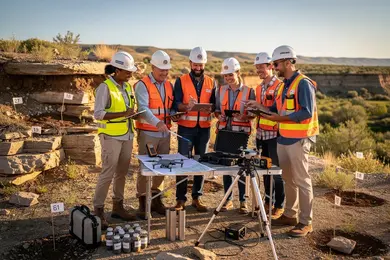
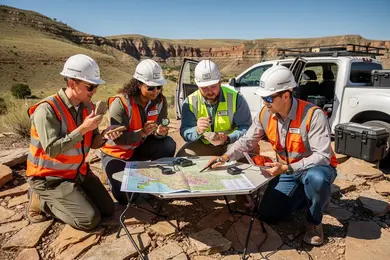
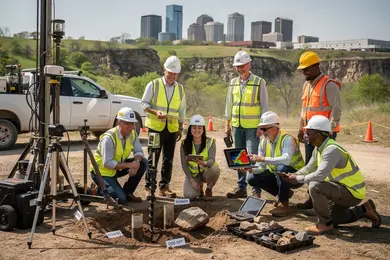
Transitioning to environmental careers through online geosciences degree programs demands an evaluation of how effectively these offerings bridge technical theory and applied practices. Unlike purely traditional tracks, these programs focus on data analysis, GIS, remote sensing, and environmental regulations-skills directly tied to roles in natural resource management, environmental consulting, and renewable energy. For example, a professional pivoting from general science to environmental site assessment must acquire hands-on competencies like soil and groundwater sampling, often simulated or offered through hybrid formats to offset the limited fieldwork typical of online study.
The U.S. Bureau of Labor Statistics projects 7% employment growth for geoscientists from 2023 to 2033, creating a timely entry point for those selecting best online geosciences courses to transition into environmental jobs. However, the tradeoff lies in the absence of field experience that some employers require, making program features like lab simulation tools or industry partnerships critical for improving post-graduation job placement and salary outcomes.
Career changers should also prioritize programs aligning with recognized certifications such as professional geologist licensure or environmental professional credentials, as these credentials are often prerequisites for consulting or regulatory roles. Mastery of key software platforms like ArcGIS and MATLAB serves as a baseline expectation.
Prospective students looking for comprehensive options can explore geology online degree listings to identify programs that balance curriculum depth with practical training, facilitating a strategic and realistic career pivot in environmental fields.
How do online geosciences degrees compare with on-campus programs for environmental career preparation?
A critical tradeoff in pursuing an online geosciences degree for environmental careers lies in balancing flexibility against the substantial practical training valued by employers. On-campus programs offer immersive hands-on experiences, including direct fieldwork, access to specialized lab equipment, and cohort-based collaboration, which significantly enhance employer visibility and readiness for roles involving geological surveys or field sampling. In contrast, online programs typically focus on theoretical knowledge and data analysis, useful primarily for GIS or environmental consulting roles.
This difference matters because the median pay for geoscientists is $99,240 annually, substantially higher than the $78,980 median for environmental scientists and specialists, highlighting the premium placed on experiential skills. Students pursuing a comparison of online versus on-campus geosciences programs for environmental jobs must recognize the need for supplementary, intentional practical exposure when studying remotely. Without local internships or self-arranged fieldwork, online learners risk slower skill development and weaker professional networks.
Employers expect demonstrated problem-solving with real-world data and collaborative workflows, skills cultivated more naturally in on-campus settings. For those relying on an online pathway, supplementing education with industry certifications, attending targeted conferences, and pursuing applied projects locally can help offset gaps in mentoring and employer engagement.
Additionally, prospective students analyzing the benefits of an online geosciences degree should examine costs and tuition arrays through resources like the accredited online animal science degree data, which often parallels expenses in related online science fields.
What accreditation and quality standards should online geosciences programs meet for environmental careers?
Programs offering online geosciences program accreditation for environmental careers must prioritize recognized regional accreditation to guarantee credit transferability and legitimate credentialing. The difference between accredited and non-accredited degrees substantially affects employability, especially in OSHA-regulated roles or those requiring EPA compliance. Many quality standards for geosciences degrees in North America focus on skillsets like environmental regulation navigation, geospatial technology, and applied data analysis rather than purely academic research.
Choosing non-thesis master's tracks, such as those emphasized by Ohio University's M.S. in Geological Sciences, benefits career changers seeking immediate workplace relevance without the burden of original research. However, specialized career paths in environmental geology may necessitate thesis experience, which can constrain later opportunities in certain regulatory or consulting sectors. Employers expect graduates to have experience or substitutes for hands-on exposure; programs that collaborate with local agencies or provide EPA-aligned virtual labs mitigate common deficits in online formats.
Prospective students should verify how clearly course outcomes align with Environmental Protection Specialist competencies (SOC 19-2041) and confirm published graduate employment statistics. The tradeoff between flexible, applied training and comprehensive academic research influences both short-term job market access and longer-term career development. For students assessing interdisciplinary pathways, reviewing related online degrees-for instance, a librarian degree online-may offer insight into structuring purposeful program selection across environmental and information fields.
Which types of online geosciences degrees best fit career changers seeking environmental roles?
Online geosciences degrees for environmental career changers must balance technical relevance with scheduling flexibility. Programs emphasizing Geographic Information Systems (GIS) offer critical skills in mapping and spatial analysis that align directly with environmental consulting and resource management roles. For instance, cartographers and photogrammetrists earn a median wage near $68,900, demonstrating the market viability of GIS expertise. Meanwhile, environmental science tracks provide interdisciplinary foundations in soil science, hydrology, and climate studies needed for work in government or nonprofit sectors focused on remediation and compliance.
Students should consider tradeoffs between fieldwork demands and virtual accessibility. Applied geology programs offer strong preparation for hands-on roles in resource extraction and environmental impact assessments but often require in-person field experiences that may challenge working professionals. Accredited online programs with asynchronous formats and virtual labs offer alternatives but may necessitate supplementary local internships or specialized certificates to cover regulatory practicalities.
For those pursuing the best online geosciences programs for environmental job transitions, aligning curriculum components with career goals is essential. A planner moving into environmental consulting benefits from GIS and policy coursework to support spatial analysis in impact reviews. In contrast, professionals targeting water resource management should seek programs with a solid hydrology and geochemistry focus that meets federal standards.
For further comparative guidance on cost-effective advanced degrees, explore masters in library science, which exemplify structured online learning pathways adaptable to career changers.
What core courses and specializations do online geosciences programs typically include for environmental work?
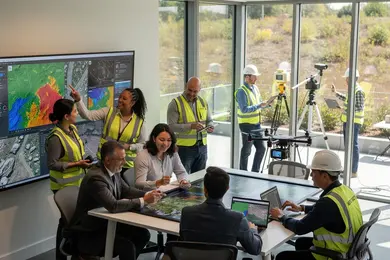
Online geosciences programs geared toward environmental careers must balance foundational theory with applied skills to meet employer demands effectively. Core coursework in environmental geology, hydrology, soil science, and GIS equips students to analyze earth systems and spatial data essential for environmental assessments. However, proficiency with data modeling software and remote sensing technologies-often integrated via labs and case studies-is what distinguishes graduates in hiring processes.
For example, a professional monitoring groundwater contamination needs both hydrogeology knowledge and practical GIS mapping expertise to generate actionable environmental reports. This integration of theory and technical tools substantially influences workforce readiness in public agencies and consulting firms.
Students should weigh the limitations of online formats, particularly restricted access to on-site internships and fieldwork critical for environmental site assessments. Supplementing virtual learning with local field experience or simulated exercises can be pivotal in overcoming this gap.
The job outlook projects a 6% growth rate for environmental scientists, reinforcing the strategic value of these programs for career pivoters who require schedule flexibility. Selecting curricula providing pathways to certifications like Certified Environmental Professional (CEP) or HAZWOPER training enhances market competitiveness by aligning academic credentials with employer expectations.
Such programs also tend to include specializations in environmental geochemistry, climate impacts, hazard analysis, and sustainable resource management, all reflecting real-world applications and varied employer needs.
What are typical admission requirements for online geosciences programs aimed at adult learners and career changers?
Admission criteria for online geosciences programs aimed at adult learners reflect the tension between academic preparation and practical workforce readiness. While a bachelor's degree is typically required, it need not be in geosciences or a closely related STEM area; degrees in biological sciences, environmental studies, engineering, or physical sciences frequently satisfy foundational expectations. Some schools prioritize relevant professional experience over formal credentials, allowing career changers without a traditional degree pathway.
Prerequisite knowledge in math, chemistry, physics, and introductory geology forms the technical baseline. Applicants without these foundations often face the added burden of bridging courses, which can extend time-to-degree and increase workload challenges for working adults.
Unlike traditional routes, standardized tests such as the GRE are increasingly uncommon for adult-focused programs, shifting evaluation toward professional experience and prior academic achievements. Admission committees often require reflective statements of purpose that clearly connect candidates' environmental aspirations with realistic job market realities, such as hydrology's median annual wage of $88,490, a key consideration for students assessing return on investment.
Supporting documents include official transcripts and letters verifying quantitative skills and project experience, which directly correlate to employer demands in public agencies and consulting firms. Some programs add interviews or portfolio reviews to evaluate adaptability and practical skills, essential for candidates transitioning from unrelated fields.
How long do online geosciences programs take, and what tuition, fees, and funding options exist?
Choosing an online geosciences program involves balancing program length, cost, and format flexibility against professional and personal responsibilities. Completion times vary widely: accelerated certificates and bachelor's completion often take under 18 months, while master's programs typically require 2 to 3 years. Part-time or modular schedules can extend durations but may improve sustainability for working students.
Tuition ranges substantially-$15,000 to $60,000-driven by factors such as institution type, degree level, and residency status. Public universities usually offer lower in-state rates, but fully remote students often encounter out-of-state tuition, adding to expenses. Additional fees for technology and lab materials may inflate total costs by up to 15%.
Funding avenues include federal aid, employer tuition reimbursement, and targeted scholarships, especially for environmental and STEM mid-career changers. However, employer support policies vary, and remote learners should verify eligibility closely to avoid surprises.
Career-wise, candidates must weigh benefits of rapid certificate programs that facilitate quick employment shifts against master's degrees that unlock advanced roles yet demand more time and resources. For example, a professional switching from an unrelated sector might prioritize a certificate for immediate re-employment, while those seeking roles in environmental consulting or government agencies may find a master's degree better aligns with hiring patterns and salary potentials. The Bureau of Labor Statistics reports median annual earnings near $100,910 for data scientists within geospatial fields, illustrating financial viability connected to advanced credentials.
What environmental careers can graduates of online geosciences programs pursue, and what skills are in demand?
Success in environmental careers following online geosciences programs depends heavily on technical proficiency with tools like GIS and Python, alongside regulatory knowledge essential for roles such as environmental consulting or natural resource management. For instance, shifting from construction project management to environmental consulting demands acquiring skills in environmental permitting and risk assessment, areas not covered by generalist training.
The U.S. Bureau of Labor Statistics projects about 5% job growth for environmental scientists and specialists through 2032, indicating moderate but stable demand. Candidates who combine quantitative analysis with geospatial data interpretation have a distinct advantage across sectors like urban planning and oil and gas remediation. Proficiency in large datasets and environmental sensor technology increasingly influences employability in climate risk analysis and sustainable resource development.
Tuition costs are a critical factor affecting return on investment for mid-career professionals. For example, Texas A&M's online geosciences master's tuition is $750 per credit hour for 2025-2026, creating a significant upfront expense to weigh against geographic flexibility and potential faster access to specialized roles. Employers now expect practical experience paired with modeling and automation skills.
What are salary ranges and long-term job outlooks for geoscience and environmental professionals in the United States?
Salary outcomes in geosciences and environmental professions vary notably based on experience, specialization, and geographic location. Entry-level roles like environmental technicians or field geologists generally start between $50,000 and $70,000 annually, but mid-career specialists in hydrogeology or GIS can command $70,000 to $95,000. Management positions, including natural sciences managers, show median pay near $137,900, reflecting considerable financial upside for those advancing beyond technical work.
The field's roughly 5% job growth by 2032 masks significant sectoral shifts. Demand centers on climate resilience, renewable energy, and regulatory compliance amid increasing environmental scrutiny. Candidates must weigh tradeoffs such as regional market saturation, particularly stronger in energy-heavy states and sustainable urban areas, against necessary investments in up-to-date technical skills like remote sensing and data modeling.
- Internships and contract roles during study are critical for practical experience and hiring marketability.
- Professional certifications enhance access to specialized and better-compensated positions not readily available with a degree alone.
- Management roles require at least five years of experience, demanding early strategic planning for those targeting leadership.
For career changers, the cost and time of education must be balanced with regional and sector growth realities and the prospective salary trajectory to avoid misaligned expectations or underemployment.
How can prospective students evaluate and choose the best online geosciences program for their goals?
Selecting an online geosciences program requires aligning course content and institutional support with your intended career trajectory, not just convenience or cost. For example, professionals moving into environmental consulting should verify that the curriculum emphasizes advanced GIS, environmental impact analysis, and project management-skills directly applicable to field and client interactions. In contrast, those targeting research or regulatory roles benefit more from programs focused on data interpretation, policy frameworks, and sustainability technologies. The University of Aberdeen's distance learning model provides a useful benchmark for program flexibility and student support, essential factors for those balancing employment and study.
Among over 100 online geoscience courses available, rigorous screening criteria are necessary:
- Accreditation status and institutional reputation, validated through alumni employment rates in relevant sectors.
- Course relevance to current environmental challenges such as climate adaptation, renewable energy, and contamination cleanup.
- Availability of internships, practical labs, or virtual fieldwork options to develop applied competencies beyond theory.
- Flexible pacing and duration options to reduce dropout risk for career changers managing multiple responsibilities.
- Cost effectiveness judged by alumni salary increments and placement outcomes.
Understanding employer demand is critical. For instance, environmental remediation employers prioritize candidates with soil and water analysis skills, so verifying those competencies in curricula is necessary. Also, examine career services tailored to geosciences to ensure robust networking and job placement assistance. Prioritize programs with demonstrable outcomes supported by labor market data over unsubstantiated marketing claims.
Other Things You Should Know About Geosciences
Employers prioritize skills and demonstrated competencies over the mode of education, but skepticism persists around online degrees lacking hands-on experiences. Graduates who can validate field experience, internships, or capstone projects alongside their online degree have stronger prospects. Career changers should seek programs with strong industry connections and experiential learning requirements to enhance credibility with employers.
Choosing a specialized geosciences program offers deeper expertise valuable in technical roles like hydrogeology or environmental consulting, but may limit flexibility if career goals shift. A broader environmental science program can provide adaptable knowledge but may lack the technical rigor preferred for certain geosciences positions. For career changers targeting specific sectors, prioritizing specialization aligned with target jobs is advisable; those uncertain about their niche benefit from broader curricula.
Yes. Many accredited online geosciences programs require 1 to 2 weeks of field camp and some in-person lab components, even when lectures are fully online. Programs tied to licensure or applied environmental work often also require field mapping, sample collection, or supervised laboratory training.
References
- Best Geography and Earth Science Programs for High School Students https://riseglobaleducation.com/blogs/top-geography-and-earth-science-programs-for-curious-teens
- Best Online Geoscience Courses and Programs | edX https://www.edx.org/learn/geosciences
- Careers in Geoscience: Environment https://www.aig.org.au/education/careers-in-geoscience/careers-in-geoscience-environment/
- Earth and Environmental Science https://ees.acadiau.ca/faqs.html
- Online Geoscience Degrees: Top Schools and All Programs in 2026 https://www.gisdegree.org/online/geoscience-degrees/
- Environmental Geoscience Major | SUNY Plattsburgh https://www.plattsburgh.edu/programs/environmental-geoscience-major.html
- Median Annual Salaries of U.S. Geoscience Occupations https://profession.americangeosciences.org/research/data/median-salaries/
- Student Opportunities | NAU Earth Sciences & Sustainability Programs https://ses-nau.org/student-opportunities/
- The Geological Society - Degree Accreditation https://www.geolsoc.org.uk/education-and-resources/universities/university-degree-accreditation/
- Careers in the Earth Sciences https://earthsciences.dartmouth.edu/undergraduate/careers-earth-sciences