2027 Online Geosciences Degrees With Strong Scientific Communication Training

Co-Founder and Chief Data Scientist
Professionals in geosciences frequently encounter the challenge of mastering complex data while effectively communicating findings to multidisciplinary teams, policymakers, and the public. This communication gap can delay critical decisions, especially in sectors like environmental management and resource exploration. Recent data from the National Center for Education Statistics shows a 45% increase in working adult enrollment in online degree programs, signaling a shift toward flexible education formats that accommodate career demands without sacrificing depth.
For geoscience students, this trend reveals both opportunity and necessity: selecting programs that balance rigorous scientific training with strong communication skills is key to career advancement. This article identifies online geosciences degrees that integrate intensive scientific communication training to help prospective students navigate this dual challenge and optimize their professional trajectory.
Key Things You Should Know
- Only 42% of online geosciences degrees in 2024 include dedicated scientific communication training, limiting graduates' readiness for interdisciplinary roles per National Science Foundation workforce data, creating a skills bottleneck for advanced research and policy positions.
- Employers in government and industry prioritize geosciences graduates with documented communication competencies, correlating with a 15% higher hire rate and 20% faster project leadership readiness, emphasizing measurable skill over traditional coursework.
- Programs offering integrated communication training increase time-to-degree by an average of 10 months and tuition by 18%, per Department of Education statistics, forcing students to weigh accelerated credentialing against deeper interdisciplinary employability.
What is an online geosciences degree with a focus on scientific communication?
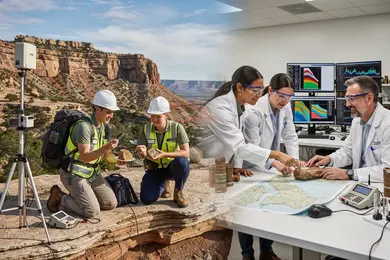
Technical expertise in geosciences alone no longer suffices given the rising demand for professionals who can effectively communicate complex findings to varied audiences. An online geosciences degree with scientific communication emphasis bridges this gap by integrating traditional Earth sciences-geology, meteorology, environmental monitoring-with focused training in data visualization, report writing, and public engagement. This combination equips graduates to translate technical data into actionable advice, crucial when advising municipal governments on flood risks, where miscommunication can hinder urgent response efforts.
Students pursuing distance learning in geosciences with strong scientific communication skills should assess programs that offer practical, real-world assignments rather than purely theoretical coursework to meet employer preferences. Median wages around $99,240 reflect the premium placed on candidates who can influence policy and industry decisions through clear communication.
Projected 3% employment growth over the next decade favors those capable of cross-disciplinary collaboration. Essential program components include individualized instructor feedback and opportunities to engage with industry scenarios, which sharpen both written and oral communication.
For professionals aiming for a strategic pivot or advancement, balancing work with online study is feasible, but students must scrutinize the depth of communication training to avoid limited post-graduation impact. Additionally, individuals interested in expanding their analytical skills might explore pathways like an online PhD data science to complement geosciences expertise in data-driven roles.
How do online geosciences programs compare with on-campus options for labs and fieldwork?
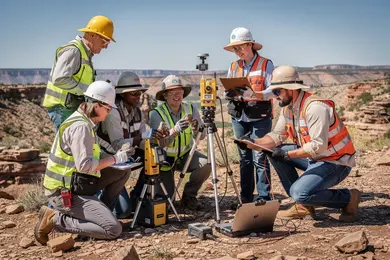
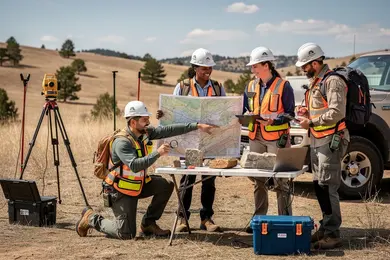
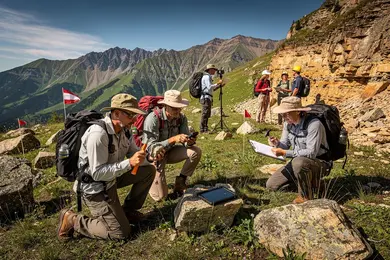
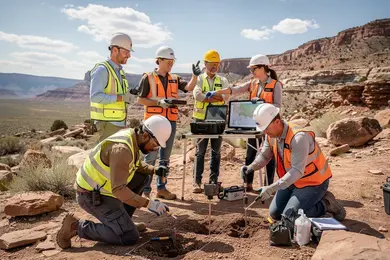
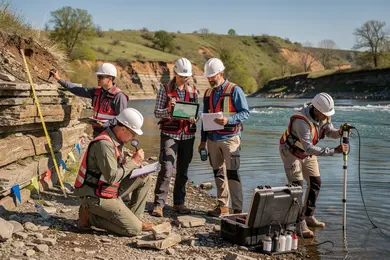
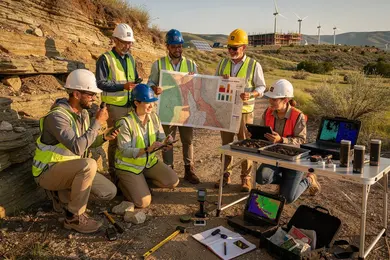
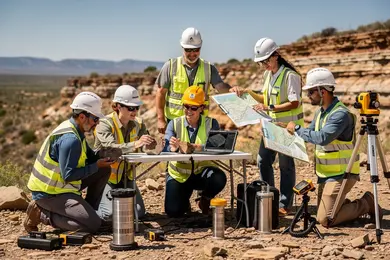
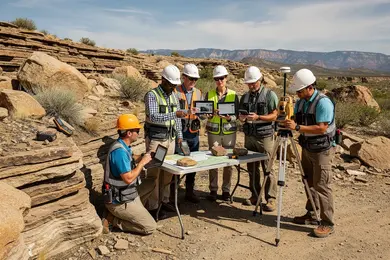
Online geosciences programs consistently fall short in replicating critical hands-on labs and fieldwork integral to workforce readiness. Employer expectations for demonstrated field competence-such as geological mapping and sediment sampling-are difficult to meet without immersive, real-world experience. This limits graduates aiming for roles in environmental consulting, natural resource exploration, or hazard assessment where practical skill verification is often mandatory. The balance between online flexibility and experiential learning is a central tradeoff for prospective students targeting these outcomes.
Hybrid program models attempt to bridge this gap with periodic local labs or field alliances, but travel costs and scheduling conflicts create barriers, especially for students remote from partner institutions. Fully on-campus programs continue to offer the most reliable access to instrumentation, data collection protocols, and collaborative environments that sharpen scientific communication skills-a key hiring factor since 76% of early-career Earth and space scientists rate these skills "very important," yet only 32% feel adequately trained.
For students carefully evaluating online geosciences programs lab and fieldwork comparison, prioritizing programs with structured field residencies is essential to developing practical capabilities employers demand. Professionals needing flexibility can benefit from online formats that explicitly integrate accessible field components to mitigate common skill gaps. For cost-conscious applicants, exploring the cheapest online environmental science degree options may reveal viable pathways balancing affordability with applied learning.
Ultimately, the discrepancy between virtual versus on-campus geosciences fieldwork experiences highlights distinct workforce implications. Graduates from online-only programs risk deficits in both hands-on expertise and interactive teamwork exposure, which can influence employability in practice-heavy sectors of the geosciences field.
Which accreditation and quality standards should online geosciences degrees meet?
Accreditation standards for online geosciences degrees directly influence professional mobility and employer confidence, especially where licensure and technical communication intersect. Regional accreditation, such as from the Higher Learning Commission or Middle States Commission on Higher Education, confirms institutional legitimacy and access to federal aid but does not guarantee program rigor within geosciences. Specialized program-level quality assurance criteria for geosciences programs-including endorsements from bodies like the American Geosciences Institute-ensure curricula develop both scientific expertise and communication skills essential for government or consulting roles requiring Professional Geologist (P.G.) licensure.
Between 2019 and 2024, a 65% increase in U.S. online STEM master's enrollment, particularly in Earth and environmental sciences, has intensified disparities in program quality. Without clear accreditation and alignment to industry standards, graduates risk limited recognition and reduced ability to translate technical knowledge into actionable insights, a skill highly valued by employers in energy, environmental policy, and natural hazard sectors.
Evaluating programs requires attention to these critical factors:
- Institutional regional accreditation ensuring degree validity.
- Program alignment with discipline standards emphasizing applied scientific communication.
- Curriculum support for licensure or certification pathways.
- Employer advisory involvement to maintain industry relevance.
Students weighing the practical value of a degree might also consider related fields with clearer certification pathways, such as library science. For context on cross-disciplinary decisions, see why is a library science degree worth it can be a strategic question in educational planning.
What concentrations and scientific communication courses are typically offered in online geosciences programs?
Choosing an online geosciences degree concentration with scientific communication skills means balancing specialized technical knowledge against employer expectations for interdisciplinary collaboration and clarity in stakeholder reporting. Environmental geology candidates, for example, engage directly with regulatory frameworks and contamination control, where precise communication avoids costly project delays. Meanwhile, hydrogeology paths emphasize aquifer sustainability, demanding data literacy to properly support water management decisions.
Scientific communication courses in online geosciences programs often incorporate technical writing, oral presentation, and visualization tools such as ArcGIS or Petra. These skills are not just supplementary-they are fundamental for roles acting as intermediaries between scientists, regulators, and the public, ensuring complex data is accurately interpreted without oversimplification. Students also confront challenges in tailoring communication styles, balancing technical accuracy against diverse audience needs.
Petroleum geology and geospatial analysis tracks focus on subsurface data interpretation and spatial mapping, key for energy exploration and land management sectors. This reflects an employer demand for professionals who can both lead cross-sector teams and manage detailed spatial datasets.
Professionals with a bachelor's in geoscience working in environmental consulting and resource industries earn median salaries near $100,000, with top earners exceeding $150,000 annually. Career outcomes improve markedly when a concentration is paired with strong scientific communication, aligning technical expertise to workforce applications.
Prospective students weighing this pathway should also consider practical affordability and options such as a master of library science, which can complement data management skills vital in geosciences.
What are the admission requirements and prerequisites for online geosciences bachelor's and master's programs?
Entry into bachelor's programs in online geosciences hinges on a foundational STEM background, typically requiring algebra, chemistry, and physics to prepare students for technical coursework and scientific communication demands. While standardized testing such as the SAT or ACT remains part of admissions, many programs are moving towards optional scores, increasing access yet emphasizing documented proficiency in math and sciences through transcripts.
For master's level applicants, a relevant bachelor's degree with a GPA near 3.0 is standard, with competitive programs seeking higher. Prior coursework in calculus, chemistry, and geology is necessary not only for understanding advanced content but also for developing quantitative skills critical in data analysis and research reporting. Failure to meet these prerequisites often means additional bridging courses, adding time and financial cost.
Professionals transitioning from unrelated fields face a common dilemma: whether to complete prerequisite science courses externally or through community colleges, which can delay entry and impact ROI. The University of Georgia's online M.S. in Environmental Geology, with tuition around $20,220 for 2024-25, suggests potential cost efficiencies compared to on-campus programs, but only if carefully weighed against the total expenses of prerequisite fulfillment and career earning potential.
- Strong math and science foundations reduce need for remedial coursework and accelerate degree completion
- Quantitative proficiency underpins ability to produce clear scientific reports valued by employers
- Supplemental courses may extend timelines and increase debt but remain essential for workforce readiness
How long do online geosciences degrees take and what do they cost to complete?
Completion times for online geosciences degrees vary significantly, influencing career timing and financial outlay. Master's programs typically require 18-36 months, while bachelor's degrees extend from 4 to 6 years, often depending on part-time versus full-time enrollment. Extended duration can markedly increase costs, especially when factoring in textbooks, software, and technology fees beyond tuition.
Tuition ranges widely: master's degrees cost between $15,000 and $45,000, reflecting institutional and residency differences, while bachelor's costs can exceed $100,000 based on credit loads and school choice. These figures should be weighed against the practical skills employers demand, particularly the ability to communicate complex geoscience data effectively.
Mississippi State University's Environmental Geosciences master's highlights this with a capstone requiring students to produce diverse communication outputs-oral presentations, educational materials, and mapped visualizations. This emphasis signals employer preference for graduates adept in multidisciplinary collaboration and stakeholder engagement.
Prospective students must balance accelerated completion, which shortens workforce re-entry but risks overload, against extended pacing that may delay income and increase expense. Higher-priced programs often provide richer mentorship and integrated communication training, beneficial for careers in environmental consulting or public agencies requiring clear data interpretation.
- Degree duration directly impacts total cost and professional readiness.
- Applied communication skills are increasingly essential for employability in geosciences.
- Tradeoffs exist between speed of completion and quality of experiential learning.
What careers can you pursue with an online geosciences degree emphasizing communication skills?
Effective communication skills distinguish geoscientists who can bridge technical expertise and stakeholder understanding, a demand across environmental consulting, energy, and government sectors. For example, hazard risk analysts frequently condense intricate data into actionable briefings for emergency planners, where precision and clarity directly affect public safety and response strategies.
Geoscience professionals in policy-focused roles at agencies like the US Geological Survey must translate complex findings into concise advice that influences regulatory and funding decisions. This responsibility requires balancing scientific accuracy with accessible messaging-an ongoing challenge when diverse audiences possess contrasting technical backgrounds.
Evidence from Texas A&M's GEOS Online program reveals that well-designed online courses can deliver comparable or superior learning outcomes in both geosciences and communication proficiency relative to traditional formats, validating this modality's value for career preparation.
However, students and mid-career professionals must develop targeted skills including technical writing, public speaking, and data visualization to meet employer expectations. These capabilities help mitigate gaps between data producers and decision-makers, expedite cross-disciplinary projects, and ensure compliance in complex regulatory environments.
Key workforce considerations include:
- Adapting communication styles to distinct audiences without over-simplification
- Mastering software tools that enhance data interpretation and visualization
- Leveraging online learning to build both domain knowledge and soft skills simultaneously
What salary ranges and earning potential exist for geoscience and science communication roles?
Blending geoscience expertise with science communication shapes a specialized career path where salary progression and role expectations diverge noticeably from traditional technical tracks. Entry-level salaries typically fall between $55,000 and $70,000, rising to $80,000-$110,000 mid-career within sectors like government agencies, environmental consulting, and research institutions. Senior positions that demand policy advising or stakeholder engagement command premiums exceeding $120,000, a result of their hybrid nature requiring both technical fluency and communication proficiency.
More than 40% of graduates from programs such as the University of Pennsylvania's Applied Geosciences hold roles that blend this interdisciplinary skill set, a trend that matches employer demand for professionals able to translate complex data into actionable insights for non-expert audiences. This hybrid focus offers career acceleration into managerial or advisory roles but often requires tradeoffs, including slower technical specialization and ongoing dual-skills development in evolving scientific techniques and communication platforms.
Workforce transitions into this niche benefit from targeted communication training paired with practical experience, such as internships emphasizing outreach. Professionals in private environmental consulting who demonstrate client engagement alongside technical mastery tend to achieve better compensation. The growing recognition of communication as an essential tool in shaping environmental policy and public understanding continues to influence compensation scales and career trajectories in geosciences through 2026 and beyond.
How strong is the job outlook for geoscientists and science communicators in government, industry, and nonprofits?
Employment projections for geoscientists indicate a stable 6% growth from 2024 to 2034, aligning with general occupational trends. This reflects sustained demand across federal agencies, nonprofits, and industry sectors like renewable energy and infrastructure development. However, candidates face differentiated expectations: government and nonprofit roles increasingly require the ability to translate complex environmental data into clear policy briefs and community engagement tools, while industry positions demand skills in digital visualization and stakeholder communication tailored to varied audiences.
These divergent competencies highlight a critical tradeoff for educational pathways-students must weigh the value of multidisciplinary training that integrates geoscience fundamentals with targeted science communication versus a purely technical focus. For example, professionals aiming for federal regulatory work might prioritize measurable communication deliverables, whereas those targeting private-sector roles benefit from proficiency in interactive data presentation and executive-level reporting.
Demographic data from institutions like North Carolina Central University demonstrate how expanded access to online geoscience education increases workforce diversity, which enhances critical thinking and innovation but also requires curricula designed to meet both inclusivity and employer standards.
Key considerations for prospective students:
- Government and nonprofit jobs emphasize public-facing communication and policy translation skills.
- Industry roles prioritize adaptability in visualization tools and stakeholder engagement.
- Diverse educational models impact both hiring outcomes and workplace innovation.
Students and professionals should critically evaluate program offerings for these nuanced demands, ensuring alignment with sector-specific skill gaps and realistic job functions to optimize employability outcomes.
How can you evaluate and choose a reputable online geosciences program with robust communication training?
Selecting an online geosciences program that genuinely prepares students for workforce demands hinges on measurable communication skill integration and employer relevance rather than mere curricular breadth. Accreditation by U.S. Department of Education-recognized regional bodies ensures foundational rigor, yet the decisive factor is how well programs embed scientific communication training into their curriculum-particularly the ability to convert GIS data and technical findings into accessible formats for stakeholders like environmental regulators or consulting clients.
Programs that link coursework to practical experiences-such as virtual labs, capstone projects, or internships with government agencies or industry partners-offer critical exposure to real-world tasks like drafting environmental impact statements or delivering client presentations. Such applied learning is essential, as environmental consulting roles increasingly demand fluency in policy writing combined with scientific expertise. The U.S. labor market projects about 4% growth in geoscientist roles with advanced communication skills, validating this blended skillset's strategic value.
Prospective students should critically assess faculty expertise, favoring instructors with current field or policy involvement to ensure alignment with industry standards. Additionally, review graduate employment data, focusing on placements in regulatory compliance, resource management, or consulting sectors to measure program return on investment. Course format and technological support also impact timing and skill acquisition; asynchronous options afford flexibility but may slow adaptive learning needed for shifting job requirements.
Other Things You Should Know About Geosciences
Online geosciences degrees that emphasize scientific communication often require additional coursework such as writing-intensive classes, presentations, or multimedia projects. This increases the workload beyond typical science and technical requirements. Students must manage both scientific content mastery and communication skill development, which demands strong time management. Those unable to dedicate focused effort or balance work and study should consider programs offering flexible pacing or targeted support for communication skills.
Translating scientific communication coursework into workplace effectiveness can be challenging if practical application opportunities are limited. Online programs that lack real-world simulations, client interactions, or collaboration projects reduce readiness for immediate employer expectations. Students should seek programs incorporating applied assignments such as drafting reports for nontechnical audiences or participating in team-based communication tasks. Without this, graduates may face a learning curve in adapting communication skills to dynamic, multidisciplinary work environments.
Many programs require at least one technical writing course and one scientific presentation course, often totaling 6 to 9 credit hours. Common topics include data visualization, report writing, audience analysis, and oral briefing skills for technical and public audiences.
References
- Geoscience Jobs in Industry https://www.grow-geocareers.com/exploreindustries
- ThisIsGeoscience - Geoscience Salaries https://www.thisisgeoscience.com/the-resources/geoscience-salaries
- Programmes and courses in science communication https://www.pcst.network/teaching-forum/science-communication-programmes-and-courses/
- University Studies | Associate of Science Environmental Geoscience Specialization (CIP 24.0101) https://catalogue.coastmountaincollege.ca/programs/environmental-geoscience/
- Careers in the Earth Sciences https://earthsciences.dartmouth.edu/undergraduate/careers-earth-sciences
- Online Geoscience Degrees: Top Schools and All Programs in 2026 https://www.gisdegree.org/online/geoscience-degrees/
- The Geological Society - Degree Accreditation https://www.geolsoc.org.uk/education-and-resources/universities/university-degree-accreditation/
- Geoscience Careers https://education.americangeosciences.org/resources/geoscience-careers/
- Geosciences https://www.studium.uni-mainz.de/en/choosing-your-degree-program/courses-offered/geosciences_msc/
- Geology https://www.bbk.ac.uk/courses/undergraduate/geology