2027 Online Geosciences Degrees With Sustainability Consulting Career Alignment

Co-Founder and Chief Data Scientist
Geosciences professionals often confront a critical challenge: pursuing advanced education while balancing full-time work and urgent demands for sustainability expertise in consulting roles. The Bureau of Labor Statistics projects a 7% growth in environmental science-related jobs through 2032, intensifying the need for flexible, credible credentials that align with evolving employer expectations. Meanwhile, nearly 40% of adult learners prefer online programs for their adaptability, influencing enrollment strategies for those seeking both skill enhancement and career mobility.
This dynamic compels practitioners and students to weigh program delivery, content relevance, and timing carefully. This article evaluates online geosciences degrees designed to support sustainability consulting career trajectories, focusing on practical decision factors that maximize workforce readiness and long-term advancement.
Key Things You Should Know
- Average tuition for online geosciences degrees rose 6.8% from 2023 to 2024 per NCES, forcing many candidates to weigh shortened programs against lifetime earning potential in sustainability consulting roles.
- Employer demand for hybrid skill sets in geosciences plus sustainability consultancy grew 17% year-over-year according to the US Bureau of Labor Statistics, pressuring learners to invest in applied data modeling over purely theoretical credentials.
- Programs lacking industry-validated practicum experience report 22% lower job placement rates, highlighting a critical friction point when aligning online learning with sustainability consulting career pathways in 2026.
What is an online geosciences degree and how can it prepare you for sustainability consulting?
Graduates of online geosciences degree programs for sustainability consulting face a labor market that demands not only theoretical knowledge but also practical application in environmental risk assessment and natural resource management. For example, professionals frequently analyze groundwater contamination risks for industries like mining, developing mitigation strategies that align with evolving regulatory standards and corporate sustainability objectives.
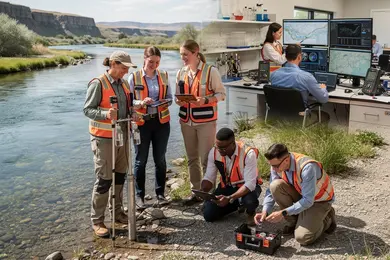
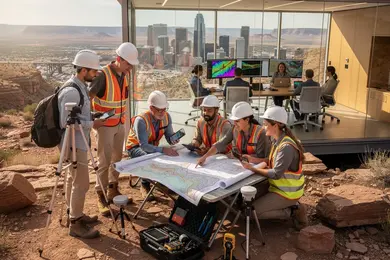
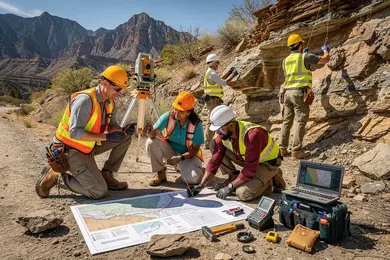
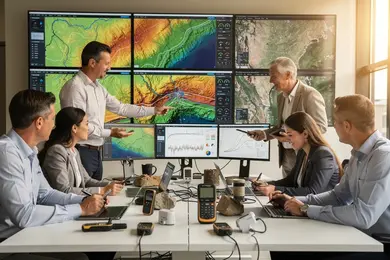
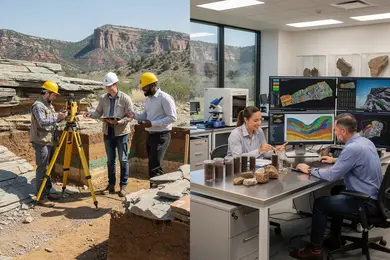
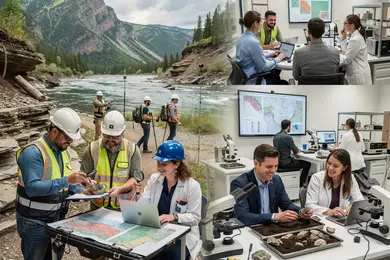
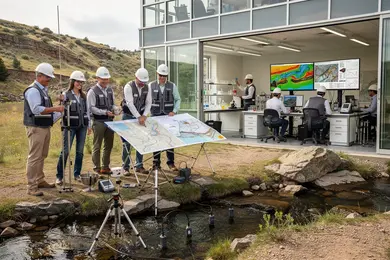
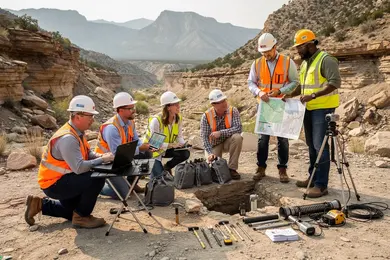
These programs typically emphasize technical competencies-GIS mapping, remote sensing, and statistical analysis-that are essential for interpreting environmental data quantitatively. Employers expect consultants to deliver evidence-based insights that reduce ecological footprints and optimize resource utilization. However, candidates should plan to supplement virtual coursework with local internships or field experiences, as many employers prioritize hands-on familiarity alongside academic credentials.
The geosciences field projects steady job growth at about 3% through 2034, with a median annual wage of $99,240 in 2024, supporting stable career prospects in sectors like energy, urban development, and environmental remediation. Deciding how an online geosciences degree prepares you for sustainability careers should factor in curriculum depth, faculty expertise, and access to applied learning opportunities to navigate this competitive environment effectively.
Prospective students must also consider the logistical challenge of securing fieldwork experiences that complement remote instruction-a critical determinant of employability. For those exploring career pivots, understanding role-specific salary expectations-similar to other specialized fields such as the speech pathologist salary can inform well-rounded decisions about educational investment and career outcomes.
Which types of online geosciences degrees best align with sustainability consulting careers?
Online degrees in environmental geology, hydrogeology, and geospatial science most directly support sustainability consulting careers in 2026 by blending technical skills with applied environmental problem-solving. For instance, hydrogeology graduates frequently engage in groundwater contamination studies-a critical practical task addressing water quality and regulatory compliance that sustainability consultants face. Those pursuing online geosciences degrees for sustainability consulting careers should look for programs emphasizing data interpretation, environmental impact modeling, and regulatory frameworks, as these domains align with current market needs.
Projected growth rates between 2024 and 2034 signal that environmental science jobs (6% growth) and geoscience roles (5% growth) will outpace the overall U.S. occupational increase of 3%, according to data summarized by University of Illinois Chicago Earth and Environmental Sciences based on U.S. Bureau of Labor Statistics. Employers seek graduates capable of navigating both technical GIS technologies and environmental policy. Pure geology paths without integrated sustainability elements may restrict consulting roles, especially in sectors requiring carbon footprint analysis and sustainability reporting.
Key tradeoffs in best geosciences programs supporting sustainability consulting include balancing technical depth against broader interdisciplinary knowledge. Programs offering electives in environmental law, communications, or business improve workforce readiness but may increase degree duration and tuition costs. Students must assess whether to prioritize accelerated geoscience training or a more expansive sustainability education based on their target employers and career aspirations.
For professionals comparing cost-effective options, reviewing the cheapest online data science masters can provide insights into affordability strategies applicable across related advanced technical degrees.
How do online geosciences programs compare with campus programs for sustainability-focused students?
Online geosciences degree programs for sustainability students provide essential theoretical frameworks but often lack the robust hands-on training critical for environmental consulting roles. Employers targeting candidates for sustainability-oriented positions expect demonstrated field and lab skills alongside academic knowledge. Campus programs typically embed fieldwork, sample analysis, and direct mentorship, which are vital for mastering data collection and environmental impact assessments. This creates a significant divide in immediate job readiness between online learners and those in traditional settings.
For instance, a professional transitioning remotely into renewable energy evaluation must independently obtain site assessment experience, whereas campus students benefit from structured partnerships offering direct exposure. This gap also affects capacity to engage with emerging geospatial technologies and regulatory frameworks, areas more frequently integrated within campus curricula. Online students must therefore seek certifications and local internships to bridge these deficits.
Cost accessibility of online programs broadens participation but may delay acquisition of applied competencies that command higher salaries. Environmental scientists and specialists earned a median salary of $99,240 in 2024, with the top tier reaching $178,880, underscoring a premium for advanced practical skills. Those evaluating educational options should consider the balance between flexibility and workforce expectations, particularly in the context of a comparison of campus and online geosciences education for environmental careers.
Prospective students looking beyond geosciences might explore complementary pathways; for example, many find value in robust exercise science degrees to diversify skill sets applicable in environmental health fields.
What courses and specializations in geosciences are most relevant for sustainability consulting?
Specializations in sustainability-focused geosciences courses emphasize applied environmental analysis, resource management, and risk evaluation-skills that are critical to informed sustainability consulting. Core areas such as hydrogeology, environmental geochemistry, and soil science are foundational for assessing contamination pathways and designing effective remediation strategies. By integrating climate science and remote sensing, professionals can more accurately quantify environmental impacts, which are essential for sectors like energy, agriculture, and urban planning where data-driven decisions drive sustainability outcomes.
Success in environmental consulting hinges not only on scientific expertise but also on understanding regulatory frameworks and Geographic Information Systems (GIS). For instance, a consultant advising a manufacturing client must reconcile hydrogeologic data with state environmental regulations to reduce groundwater contamination risks while optimizing resource use-a real-world scenario demanding both technical proficiency and policy awareness.
Practical experience through fieldwork and internships remains indispensable, offering candidates exposure to actual data collection and environmental assessment challenges. Appalachian State University data shows that 94% of its geology and environmental science graduates secure roles in related fields, with 35% in environmental sectors, reflecting the tangible workforce relevance of these programs. When evaluating sustainability-focused geosciences courses, students should weigh the tradeoff between broad theoretical knowledge and targeted technical skills, particularly in environmental impact modeling and geospatial data interpretation.
Those aiming for quick career shifts into sustainability audits or renewable energy assessments must prioritize hands-on expertise aligned with market demand to improve employability. For prospective students balancing affordability and quality within STEM fields, reviewing computer science degrees can offer insight into cost-effective, technically rigorous program structures that may complement geosciences specializations for environmental consulting.
What admission requirements and prior background are needed for online geosciences degrees?
Admission to online geosciences degrees demands more than basic STEM proficiency; institutions favor candidates with robust mathematics, chemistry, and earth science foundations, often evidenced through advanced courses like calculus and physics. While some bachelor's programs still require SAT or ACT scores, the trend toward test-optional policies helps widen access. Transfer credits from related college coursework can accelerate degree completion but are unevenly accepted. Graduate programs are more selective, typically requiring a bachelor's in a related field and a minimum GPA near 3.0, with prior exposure to geology, mineralogy, or GIS advantageous. Professional experience in environmental consulting strengthens applications, reflecting employer preference for practical skills over theoretical knowledge alone.
The global sustainability consulting sector's projected 12% CAGR compels programs to integrate prerequisites in environmental policy and data analysis. Applicants without direct geosciences backgrounds must often complete foundational courses to meet technical demands. Employers favor graduates with validated experience in field methods, data modeling, or sustainability frameworks, making mentorship and internships critical for career entry. Remote students must verify availability of compliant virtual labs or fieldwork substitutes, as gaps here can delay licensure for technical consulting roles requiring EPA or state certification.
Prospective students should prepare portfolios or detailed statements to evidence relevant research or work, crucial given the competitive job market. Balancing academic requirements with practical experience remains vital for meaningful entry into sustainability consulting roles.
How long do online geosciences programs take and what do they typically cost?
Choosing an online geosciences bachelor's program requires carefully weighing duration, cost, and the practical demands of the field. Standard full-time tracks last about four years, though motivated students with prior credits may accelerate completion to roughly three years. Part-time formats extend beyond five years to accommodate employed learners but may slow workforce entry.
Costs differ substantially: in-state public tuition typically ranges from $8,000 to $15,000 annually, whereas out-of-state and private programs can vary from $20,000 to $40,000 per year, leading to total expenses between $32,000 and over $120,000. Essential lab components and fieldwork often necessitate residencies or travel, limiting fully online options or adding extra costs for equipment and site visits.
The national workforce data collected by Weber State University underline these practical tradeoffs. Approximately half of earth and environmental science graduates join oil & gas or mining sectors that prioritize full-time study and hands-on experience. Around 20% enter environmental consulting, where interdisciplinary skills and field expertise best position candidates. Government roles, comprising about 10%, frequently require certifications gained via internships or hybrid programs.
Students targeting sustainability-focused consulting should balance expedited timelines against acquiring substantive internships and field exposure, which are highly valued by employers. Cost calculations must include not only tuition but expenditures for specialized software licenses and travel to remote field sites. Engaging programs with robust alumni networks in environmental consulting may enhance career prospects despite higher upfront investment.
How can you verify accreditation and program quality for online geosciences degrees in the U.S.?
Choosing an online geosciences degree without verifying proper accreditation risks investing time in credentials that lack employer recognition or transferability. Regional accreditation by agencies acknowledged by the U.S. Department of Education or the Council for Higher Education Accreditation is a minimum standard. Equally important is specialized accreditation in geosciences or environmental sciences, which signals curriculum relevance aligned with industry needs.
Prospective students focusing on roles such as cartographers or photogrammetrists-whose median pay was $78,380 with a projected 6% job growth-should prioritize programs emphasizing hands-on, project-based coursework tied to GIS applications and sustainability consulting. Programs lacking faculty with relevant expertise or without ties to active research and consulting projects may offer theoretical knowledge insufficient for complex, data-driven roles.
Graduation rates and alumni employment outcomes are critical indicators of a program's effectiveness in preparing graduates for competitive labor markets. Career services specializing in geosciences and industry networking markedly improve job placement, especially for individuals shifting from non-technical backgrounds aiming for GIS-centered careers.
Online programs must provide robust technical support and virtual lab access; without these, graduates may struggle to meet employer expectations in spatial analysis and environmental consulting. Certifications or dual credentials in GIS technologies often enhance employability for career pivots.
What sustainability consulting roles can geosciences graduates pursue and in which industries?
Graduates in geosciences aiming for sustainability consulting must balance technical expertise with nuanced interdisciplinary communication, as their roles integrate complex environmental, economic, and regulatory data. For instance, in environmental remediation, professionals develop mitigation strategies compliant with EPA standards, managing contamination risks while maintaining viability. This practical blend of skills is crucial across sectors including energy-where geoscientists assess subsurface conditions for renewable projects like geothermal farms-and urban planning, which requires applying geoscience to water resource management and sustainable land use.
Employment realities favor candidates with graduate-level education, as roughly 21% of Appalachian State University's geosciences and environmental science graduates pursue advanced degrees to deepen modeling and reporting competence-a response to increasingly stringent sustainability regulations. Immediate industry entry suits fieldwork-heavy roles, but consulting and policy-oriented positions often demand this advanced training to navigate multifaceted datasets combining geological, hydrological, and atmospheric inputs.
Key challenges include reconciling environmental imperatives with economic outcomes, such as in mining consulting, where professionals devise reclamation plans that reduce ecosystem disruption. Acquiring GIS proficiency and relevant certifications enhances market competitiveness and aligns with employer expectations for robust analytics.
Students must weigh whether their career focus justifies graduate study or if direct industry experience better matches their professional timeline and role complexity. This decision significantly affects labor market fit, especially amid evolving sustainability standards shaping geosciences careers through 2026.
What are typical salary ranges and job outlook for geoscience-trained sustainability consultants?
Transitioning into sustainability consulting from geosciences demands more than technical expertise; it requires a blend of scientific knowledge with communication and business skills tailored to complex regulatory and corporate environments. Salaries vary widely-from entry-level government roles near $60,000 to senior private-sector positions exceeding $100,000-reflecting both sector differences and geographic variation. Industries with heavy ESG investments, such as energy or urban development, typically offer top compensation and expect proficiency in climate risk modeling and ESG reporting.
The job market growth for environmental scientists and specialists stands at about 4% over the next decade, slower than many fields, intensifying competition and favoring candidates who couple geoscience fundamentals with data analysis and regulatory fluency. Prospective students must weigh stability against earning potential: government positions offer steadiness but cap upward mobility, while private firms provide higher pay and dynamic projects but less security.
Those focused solely on traditional geoscience may face limited advancement unless they pursue cross-disciplinary skills in sustainability strategy and climate resilience. Educational programs blending applied sustainability training with geoscience frameworks best position students for these hybrid roles. Ultimately, success requires strategic investment in broad competencies that align with employer demand for multi-dimensional expertise in climate and environmental risk.
How can students build practical experience and professional certifications alongside online geosciences study?
Securing employment in geosciences increasingly demands a blend of applied experience and recognized certifications alongside academic achievement. With forecasts projecting over 33,800 new jobs in geoscience and environmental science fields combined, students must strategically seek out internships or cooperative education with environmental consulting firms, energy companies, or government agencies. These placements provide essential access to field data collection, geospatial analysis, and sustainability projects-skills that cannot be fully replicated in online coursework.
Certifications such as Certified Environmental Professional (CEP), Geographic Information Systems Professional (GISP), or Project Management Professional (PMP) strengthen marketability but require documented practical experience and deliberate exam preparation. Working professionals often balance certification prep with job responsibilities by leveraging flexible, online study tools.
Developing proficiency in cloud-based geospatial software like ArcGIS or QGIS is no longer optional; vendor-sponsored training aligned with online programs can prevent costly licensing issues and meet employer standards for remote work readiness.
Students must navigate scheduling conflicts between synchronous classes, time-intensive internships, and certification study, often while managing family or work commitments. Documenting experiential learning through portfolios or supervisor evaluations is critical to satisfying credentialing requirements and convincing hiring managers of capability.
Without deliberate integration of hands-on experience and certifications, candidates risk exclusion despite academic credentials, given workforce demands tied to sustainability and practical skill sets.
Other Things You Should Know About Geosciences
Fieldwork experience, while beneficial, is not strictly necessary for online geosciences degrees in 2027. Many programs incorporate virtual simulations or projects to develop relevant skills for sustainability consulting roles. However, internships or fieldwork can enhance practical understanding and employability.
Online programs often vary in how much emphasis they place on core geoscience technical skills like geochemistry or GIS versus sustainability-driven topics. For a meaningful career pivot to sustainability consulting, select curricula that integrate applied environmental management, regulatory frameworks, and ecosystem impact assessments alongside solid scientific training. Insufficient technical depth limits your ability to analyze complex-site data, while a weak sustainability focus can reduce your consulting relevance.
Geosciences programs online require significant time commitments for data analysis, lab simulations, and project reports, which can conflict with full-time work schedules. Expect a rigorous workload that often exceeds that of many other science disciplines due to field and lab data synthesis demands. Prioritize programs with flexible but clearly structured timelines and strong academic support to avoid extended program durations or burnout.
Choose electives in environmental geochemistry, remote sensing, GIS, climate risk, and environmental impact assessment. These courses align with consulting work that uses spatial data, site characterization, and compliance reporting. A strong plan typically includes 9 to 15 elective credits plus a capstone tied to a real-world sustainability problem.
References
- What coursework should I take to become a successful Applied Geoscientist? https://www.aegweb.org/index.php
- Practical activities to help geoscience students develop the skills they need to succeed - Futurum https://futurumcareers.com/practical-activities-to-help-geoscience-students-develop-the-skills-they-need-to-succeed
- 500+ Water Jobs (Updated Today) â Free to Apply https://jobs.watertechintel.com/blog/geology-major-jobs
- ABET Accreditation a Clear Pathway to Professional Geologist and Geologist in Training Licensure Under New California Regulations - ABET https://www.abet.org/abet-accreditation-a-clear-pathway-to-professional-geologist-and-geologist-in-training-licensure-under-new-california-regulations/
- How to Become a Sustainability Consultant https://teach.com/online-ed/short-courses/online-sustainability-courses/become-sustainability-consultant/
- Are Online Degrees Accredited? How to Identify Quality Distance Learning Programs https://www.umassglobal.edu/blog-news/online-degrees-accredited-identify-quality-distance-learning-programs
- Is Your Online Degree Legitimate? How to Verify Private University Approval https://matchtocollege.com/blog/verify-private-university-online-degree-approval
- Major to Career: Geosciences https://www.dickinson.edu/info/20107/geosciences/3969/major_to_career_geosciences
- In-Demand Sustainability Consultant - Role Description https://enable.green/esg-roles/sustainability-and-esg-careers/sustainability-consultant-job-description/
- Serc - Workforce https://serc.carleton.edu/workforce/