2027 Online Geosciences Degrees With Sustainability and Earth Systems Concentrations

Co-Founder and Chief Data Scientist
Professionals in geosciences aiming to integrate sustainability and earth systems knowledge confront a dual challenge: adapting to evolving environmental regulations while accessing flexible education amid demanding careers. The National Center for Education Statistics reports that over 40% of postbaccalaureate enrollments in STEM fields are adult learners, reflecting a growing need for online programs that accommodate nontraditional schedules without compromising rigor.
This trend signals a shift in how geoscientists pursue advanced qualifications amid workforce demands for cross-disciplinary expertise in climate resilience and resource management. This article examines online geosciences degrees featuring sustainability and earth systems concentrations to guide informed choices based on flexibility, curriculum depth, and career relevance.
Key Things You Should Know
- Geosciences degrees with sustainability focus increasingly require interdisciplinary skill sets; National Science Foundation data from 2024 shows 40% longer completion times when adding Earth systems coursework, impacting time-to-employment tradeoffs.
- Employers in renewable energy and environmental consulting prioritize candidates with combined sustainability and Earth systems training, reflected by a 25% wage premium reported by the Bureau of Labor Statistics in 2025.
- Program availability remains uneven, with 60% fewer accredited online options for Earth systems concentrations versus broader geosciences, limiting access for working professionals and driving regional talent shortages in critical sectors.
What is an online geosciences degree with sustainability or earth systems concentration?
An online geosciences degree programs with sustainability focus demand graduates who combine foundational earth science knowledge with practical sustainability skills. This intersection is essential for roles addressing climate change impacts, resource management, and evolving environmental regulations. For example, urban planners use earth systems and sustainability concentration in online geosciences degrees to develop infrastructure resilient to natural hazards while maintaining ecological balance, whereas professionals in energy sectors optimize extraction processes to reduce environmental footprints.
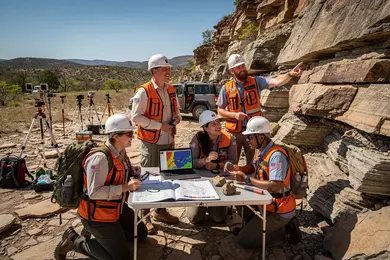
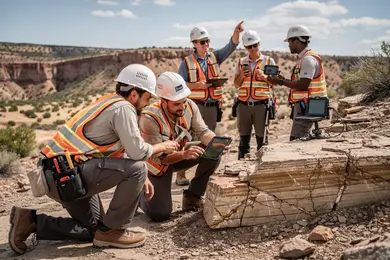
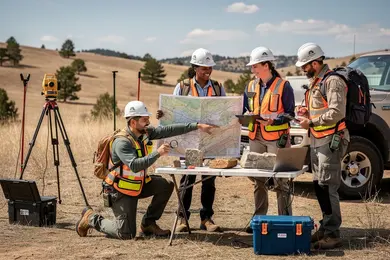
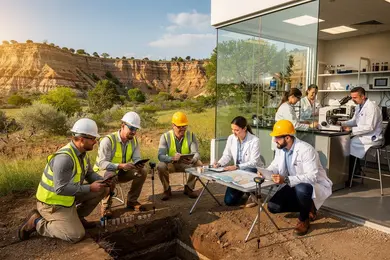
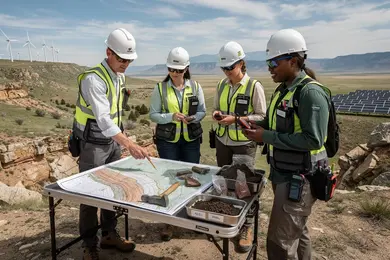
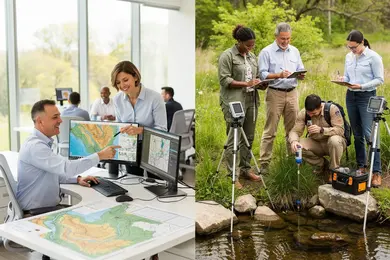
Evaluation of these programs should prioritize curriculum elements that blend theoretical knowledge with applied competencies such as geographic information systems (GIS), data modeling, and regulatory navigation. Robust lab simulations and experiential learning opportunities, including fieldwork alternatives or industry partnerships, are critical for workforce readiness in this niche.
Employment projections indicate a 6% growth for geoscientists through 2032, reflecting demand for candidates adept in integrated earth systems approaches. However, lacking specialized sustainability skills can limit competitiveness in sectors prioritizing climate adaptation and resource conservation. Decision-makers must weigh accreditation, curriculum relevance, and employer connections to ensure their investment leads to tangible career pivots or advancement.
For those assessing career options in this field, a detailed understanding of what can you do with an environmental studies degree informs realistic expectations and strategic planning.
How do online geosciences programs compare to on-campus options for quality and outcomes?
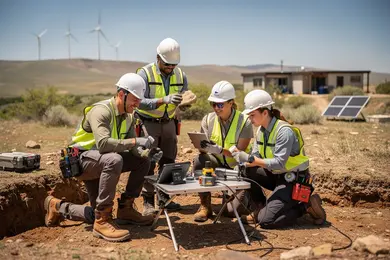
Choosing between online and on-campus formats for geosciences degrees requires weighing academic parity against practical experience and professional networking. While online geosciences program quality and outcomes show comparable theoretical rigor and coursework alignment with on-site programs, they often lack immediate access to fieldwork and lab resources valued by employers in environmental and resource sectors. Graduates from online tracks must intentionally pursue internships or local collaborations to gain similar hands-on experience.
For example, a recent graduate targeting an energy firm analyst role benefits from on-campus access to employer networking and career fairs, accelerating readiness through direct engagement. Conversely, a mid-career professional moving into sustainability consulting can capitalize on the flexibility of online degrees to acquire green skills, a sector growing 22% annually, despite limited physical access to technical equipment. These programs remain competitive if they incorporate tools like GIS, remote sensing, and analytics.
Prospective students should note that online delivery suits working professionals needing flexibility but trades off peer and faculty collaboration central to on-campus environments. The decision hinges on balancing flexible access with strategic efforts to supplement real-world practice. Employer hiring increasingly checks for verifiable credentials coupled with practical experience and program reputation, influencing outcomes in sustainability-focused earth systems roles.
Those evaluating educational pathways for strategic career pivots should also consider affordability and data-driven program rankings available through data science degrees, which can inform selections aligned with long-term workforce relevance and localized training opportunities.
What accreditation should online geosciences and earth systems programs have in the United States?
Regional accreditation is a nonnegotiable factor for online geosciences degrees in the United States to carry professional weight. Degrees from accreditors such as the Middle States Commission on Higher Education or the Western Association of Schools and Colleges are essential for employer recognition and eligibility in licensure processes. Without this, graduates confront barriers in specialized fields like petroleum geoscience or hydrogeology, where credential verification from accredited programs is mandatory.
Employers in sectors including energy, environmental consulting, and government explicitly seek candidates with accredited credentials, as these verify training aligned with industry standards and critical technical competencies. For instance, federal agencies like the US Geological Survey require a bachelor's degree from an accredited institution to access civil service exams and advancement opportunities. This accreditation demand directly intersects with salary potential, considering median annual wages for geoscientists hover near $92,580, with top-tier professionals earning significantly more.
Online programs focused on earth systems must navigate recognized accreditation bodies for earth systems programs in the US, though specific programmatic accreditation remains uncommon. Prospective students should confirm accreditation upfront to ensure smooth credit transfer and avoid undervaluation of their qualifications during employer background checks, which are standard in hiring.
Students exploring interdisciplinary avenues might also consider related pathways; for example, a library science masters may complement environmental data management roles within geosciences fields.
What courses and specializations are typical in geosciences degrees focused on sustainability?
Students pursuing geosciences degrees with an emphasis on environmental sustainability courses in geosciences degrees face distinct practical demands, including the need to balance lab-intensive learning with significant fieldwork. These programs blend foundational earth systems, environmental chemistry, and climatology with applied skills in resource management and policy. Core specializations often cover hydrogeology, renewable energy geology, and climate change, directly aligning with workforce sectors like natural resource conservation and infrastructure planning.
Employers seek graduates well-versed in interdisciplinary contexts such as economics and public policy, vital for navigating regulatory landscapes alongside geological data. For instance, urban planners must integrate geological constraints with incentives for sustainable development. Mastery of tools like GIS, remote sensing, and programming languages (R or Python) is often expected, adding a technical layer that many students underestimate during program selection.
Worth noting is the financial impact: analysis from Georgetown University's Center on Education and the Workforce reports a median lifetime earnings premium exceeding $765,000 for physical sciences bachelor's degree holders compared to high school diplomas. This gap reflects sector-specific expertise in environmental consulting, energy, and government sustainability roles. Students evaluating advanced degrees should consider practical factors such as time demands, technical skill acquisition, and employer expectations.
Programs that incorporate earth systems and climate change specializations position graduates for roles requiring nuanced data interpretation and policy integration. Those interested in expanding beyond geosciences might explore a master of library science to strengthen interdisciplinary research competencies applicable across sectors.
What admission requirements do online geosciences bachelor's and master's programs usually have?
Admission into online bachelor's and master's geosciences programs demands more than minimal academic credentials; it reflects a calculated assessment of candidates' quantitative expertise and professional readiness. Undergraduate entry commonly requires a minimum 2.5 to 3.0 GPA from accredited institutions while submitting transcripts and sometimes standardized test scores, though many programs no longer insist on the SAT/ACT. Master's applicants need relevant bachelor's degrees-usually in geosciences or related fields-often with a GPA above 3.0, and while GRE scores are still requested by some, professional experience frequently replaces this requirement, especially for mid-career professionals.
Employers in environmental consulting and resource management emphasize practical skills, so applicants should demonstrate proficiency in calculus, chemistry, physics, or statistics. Internships or research projects can critically compensate for gaps in traditional lab access common in online formats, directly influencing employability. For career changers, employer sponsorship or documented STEM-related work helps substantiate the applicant's suitability and aligns with workforce expectations.
Since over half of U.S. undergraduates now take at least one online course, competition intensifies. Online programs' limited hands-on lab work means students must actively seek supplemental opportunities, such as local internships or virtual labs, to develop applied skills employers value. Admission committees weigh personal statements and letters of recommendation heavily, prioritizing clear career focus and technical competence.
How long do online geosciences degrees take and what do they typically cost?
Completing an online geosciences degree with a sustainability or earth systems focus involves balancing time, cost, and professional demands with shifting labor market realities. Bachelor's programs generally require 2 to 4 years, while master's degrees take 1 to 2 years, though accelerated tracks demand full-time dedication that may conflict with ongoing employment. For working professionals, this tradeoff-between compressed timelines and sustainable workload-is critical when weighing opportunity costs.
Annual tuition varies markedly by institution type and residency status: public in-state rates typically fall between $7,500 and $15,000 for undergraduates, whereas private or out-of-state students can encounter fees from $20,000 up to $40,000. Graduate tuition frequently ranges from $15,000 to $30,000 per year, excluding additional fees and materials that add 10-20% to expenses. Evaluating financial aid options, transfer credits, or employer tuition assistance is essential for refining net costs and avoiding unforeseen financial burden.
The International Renewable Energy Agency's 2024 report projects the renewable energy sector will surpass 38 million jobs globally by 2030, amplifying demand for individuals with earth systems and sustainability expertise. Despite promising labor growth, flexible online programs that allow part-time pacing and asynchronous coursework better support those balancing steady employment. Intensive schedules risk burnout and income disruption, underscoring the practical need to align program structure with workforce realities.
- Typical durations: 2-4 years for bachelor's, 1-2 for master's degrees online
- Tuition range: $7,500-$40,000 annually, depending on institution and student status
- Accelerated paths require high weekly commitment, impacting work-life balance
- Robust job growth in renewable energy increases demand for sustainability-focused graduates
What careers can you pursue with a geosciences degree in sustainability and earth systems?
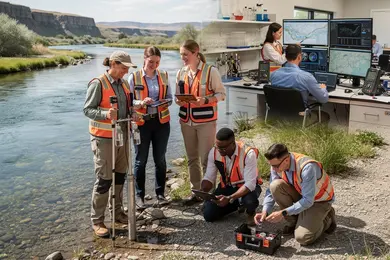
Graduates with a geosciences degree focused on sustainability and earth systems navigate roles demanding technical expertise and regulatory savvy, such as environmental consulting and natural resource management. For example, when addressing groundwater contamination, a geoscientist must balance cost-effective remediation with compliance constraints, integrating geographic information systems (GIS) and environmental law. These specialized skills reflect employers' preference for professionals capable of data modeling and sustainability-driven decision-making within federal agencies, private firms, and conservation nonprofits.
Urban planning fields increasingly seek candidates who can evaluate soil stability and ecosystem impacts to design climate-resilient infrastructure. This practical application of earth system science aligns closely with sustainability objectives, and positions with cross-disciplinary expertise can yield salaries approximately 15% above the median $79,100 reported by the Bureau of Labor Statistics for environmental scientists.
For working professionals attempting to pivot via online degrees, affordability and hands-on experience are decisive factors. Programs like Southern New Hampshire University's online BS in Geosciences offer significant tuition savings against private nonprofit averages, but candidates must still pursue internships or project-based work to meet employer expectations in environmental impact assessments and climate policy implementation.
Complementary certifications in environmental project management and data analytics increasingly bridge gaps between academic credentials and practical competencies, helping graduates adapt to evolving environmental workforce demands.
What salary ranges and earning potential exist for geoscientists in sustainability-focused roles?
Salary trajectories in sustainability-centered geosciences roles vary considerably by sector, experience, and location. Federal agencies typically offer $65,000 to $95,000 for early to mid-career professionals, while private energy and environmental consulting firms often start salaries near $70,000, with senior roles exceeding $110,000. The median salary according to the U.S. Bureau of Labor Statistics is approximately $93,000, but professionals who integrate policy expertise, data analytics, or environmental impact assessment skills tend to access higher pay tiers.
Workforce diversity remains an ongoing challenge; Hispanic/Latino, Black, and Native American graduates represent only 16% of geoscience bachelor's degrees despite constituting over 40% of the college-age population. This demographic gap influences hiring practices and sustainability sector outreach efforts. Employers expect candidates to combine robust geoscience fundamentals with cross-disciplinary abilities such as GIS proficiency, knowledge of environmental law, and effective public communication to remain competitive.
A pertinent example is an urban water resource specialist who may start near $65,000 but, by managing compliance projects that mitigate municipal liability, can surpass $100,000 within five years. While non-profit roles sometimes offer slower salary growth due to tighter margins, energy sector positions present substantial earning potential but demand specialist credentials and project management experience.
Geographic demand disparities persist: high-paying openings cluster in urban and energy corridor areas, whereas rural or research-focused positions generally pay less but can provide valuable project exposure. Strategic networking and internships materially improve professional prospects in this niche.
What is the job outlook and demand for geoscientists and earth systems professionals?
Employment growth for geoscientists in the U.S. is uneven and heavily dependent on technical specialization, notably in geographic information systems (GIS). Between 2022 and 2032, GIS technologists and technicians are expected to experience a 9% job increase, surpassing average occupational growth. These roles demand advanced skills in spatial data analysis applied to climate resilience, disaster risk mitigation, and renewable energy site optimization.
Professionals combining GIS capabilities with earth systems expertise offer measurable value to employers, for example by enabling urban planners to reduce environmental footprints or assisting energy firms in identifying optimal locations for wind and solar infrastructure. Employers prioritize candidates who demonstrate proficiency in digital mapping, remote sensing, and sustainability analytics, typically verified through internship experience or relevant project work.
Certifications and training in emerging technologies like LiDAR and satellite imagery analysis are often required for career progression. Tradeoffs exist between broad earth systems degrees, which provide foundational knowledge but may slow initial job placement, and focused technical training programs linked more directly to immediate labor market demand and higher starting salaries.
Students should critically assess programs for their balance of theoretical earth science curricula and hands-on geospatial technology application to meet employer expectations. This balance influences employability and long-term adaptability within government, environmental consultancy, and private resource sectors.
How can you choose a reputable online geosciences program aligned with your career goals?
Choosing an online geosciences program demands more than accreditation status; it requires assessing curriculum depth and alignment with evolving labor market needs. Programs focused on sustainability and earth systems should integrate practical skills in climate modeling, remote sensing, and environmental policy-areas directly linked to emerging job roles in the green economy, which the International Labour Organization projects will add 24 million jobs worldwide by 2030.
Prospective students targeting environmental consulting must prioritize coursework in GIS and regulatory frameworks, while those seeking research or government roles benefit from strong training in field methods and quantitative modeling. Employment outcomes and partnerships with employers offer a transparent measure of a program's real-world alignment. Students should confirm the availability of career services such as internships or capstone projects that provide essential hands-on experience bridging academic theory and workplace demands.
Flexibility is a practical hurdle for professionals balancing work and study. Programs offering asynchronous classes and robust virtual labs accommodate this, minimizing conflicts without compromising rigor. Evaluating faculty expertise and their recent contributions ensures the curriculum stays current with scientific and policy developments.
Ultimately, selecting a geosciences degree involves balancing immediate employability, practical skill acquisition, and adaptability to long-term shifts in sustainability challenges and workforce expectations.
Other Things You Should Know About Geosciences
Employers in field-intensive geosciences roles often prioritize hands-on experience and practical skills alongside academic credentials. Online degrees can provide theory and data analysis competencies but may fall short on direct field experience unless the program requires on-site labs or internships. Prospective students should verify whether the online program integrates mandatory field components or partners with local organizations to ensure marketable skills that match employer expectations.
Online geosciences programs with earth systems concentrations typically have rigorous scientific coursework including quantitative analysis, modeling, and environmental policy studies. This workload can be intense when balanced with a full-time job, especially if paced over fewer semesters. Working professionals should prioritize programs offering flexible deadlines and asynchronous learning to manage workload without sacrificing depth or program quality.
Most programs require a field camp, research project, or supervised lab component, usually totaling 1 to 6 credit hours. Students may complete these requirements during summer sessions or local approved placements. Programs also expect safe conduct training and documented participation in field methods or data collection.
References
- Online Vs On-Campus Learning: Which Mode Of Study Suits You Better? https://www.unicaf.org/online-university-vs-on-campus/
- ESG jobs and salaries | [the ultimate guide] https://www.thecorporategovernanceinstitute.com/insights/guides/esg-jobs-salaries-pay/
- How to Choose the Best Online Degree for Your Career Goals https://astoriacompany.com/how-to-choose-the-best-online-degree-for-your-career-goals/
- ThisIsGeoscience - Geoscience Salaries https://www.thisisgeoscience.com/the-resources/geoscience-salaries
- Careers in Geoscience: Environment https://www.aig.org.au/education/careers-in-geoscience/careers-in-geoscience-environment/
- Geosciences https://www.studium.uni-mainz.de/en/choosing-your-degree-program/courses-offered/geosciences_msc/
- Choose the Right Data Science Program for Career | Learnbay https://www.learnbay.co/blogs/how-to-choose-the-right-data-science-program-for-your-career-goals
- Studying Online vs On-Campus: Which Is Better for You? | UNF https://www.unfc.ca/blog/studying-online-vs-on-campus-which-is-better-for-you
- Environmental Earth Sciences BSc (Honours) 2026 entry https://www.st-andrews.ac.uk/subjects/earth-environmental-sciences/environmental-earth-sciences-bsc/
- Geoscience Careers https://education.americangeosciences.org/resources/geoscience-careers/