2027 Online Geosciences Degrees With Climate Science Career Alignment

Co-Founder and Chief Data Scientist
Professionals transitioning into climate science face significant barriers when seeking relevant geosciences degrees that align with evolving workforce demands. Many must reconcile rigid program schedules with ongoing career responsibilities, a challenge intensified as the National Center for Education Statistics recently reported a 12% surge in adult enrollment in fully online STEM programs between 2022 and 2024. This trend reflects shifting priorities toward flexible, accessible education tailored to real-time labor market needs. Understanding which online geosciences degrees integrate climate science effectively-and how program structures accommodate working professionals-is critical for timely, strategic career moves.
This article examines current online geosciences degree options with a direct focus on climate science career alignment to aid informed educational decisions.
Key Things You Should Know
- Online geosciences degrees in 2026 average 2.7 years to completion with costs 15-25% below traditional programs, but limited fieldwork opportunities can reduce hands-on skill acquisition crucial for climate modeling roles.
- Employers increasingly demand advanced data analytics and climate risk assessment expertise; graduates without integrated climate science specialization face 18% lower placement rates in top-tier environmental consultancies, per recent EPA workforce surveys.
- Rising climate policy complexity means early career pivots into geosciences require degrees with interdisciplinary modules; programs lacking this show slower salary growth trajectories over five years, according to BLS labor market projections.
What are online geosciences degrees with climate science focus?
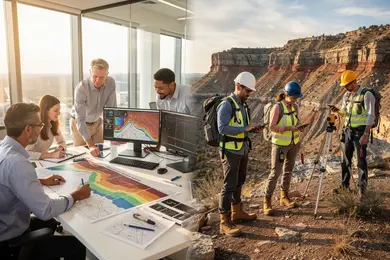
Online geosciences degrees with climate science specialization demand a careful balance between technical rigor and flexibility, as students navigate advanced quantitative coursework essential for climate systems analysis. Professionals transitioning into climate risk assessment illustrate this well: they need integrated skills in geospatial technology and climate trend evaluation to measure environmental impacts and regulatory compliance effectively. While these climate science focused geosciences degree programs online prepare graduates for fields like environmental consulting and policy, the self-direction required to master remote sensing, GIS, and statistical modeling can be a limiting factor for some learners.
Workforce realities emphasize that employers favor candidates adept at managing extensive climate datasets and interpreting earth system dynamics due to increasing climate-related regulations. Labor market data shows U.S. geoscientists command a median annual wage of $99,240, with top specialists earning upwards of $178,880, reflecting demand for combined geosciences and climate expertise. Students should prioritize programs with embedded climate data analytics and remote internships, which strengthen practical readiness for roles in renewable energy or federal climate resilience agencies.
Because proficiency in GIS tools is a common requirement, prospective learners are advised to review curricula through resources highlighting colleges with GIS programs. Evaluating how well a program supports recognized certifications further sharpens employability in climate science careers. Graduates' opportunities frequently hinge on navigating this intersection between climate specialization and core geosciences, where demand-driven skills and sustained self-motivation drive competitive advantage.
How do online and campus geosciences programs compare?
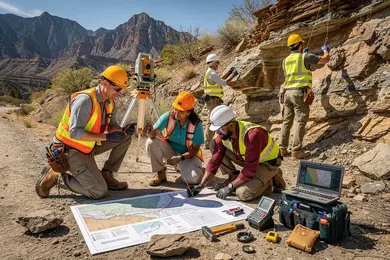
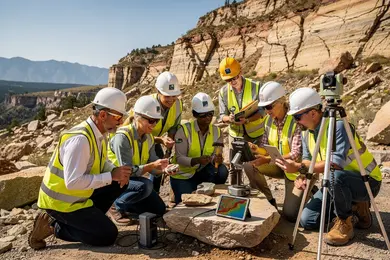
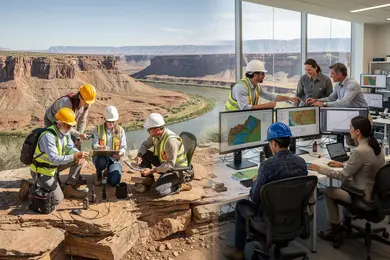
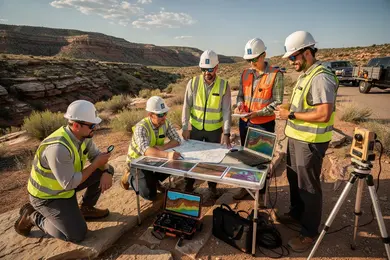
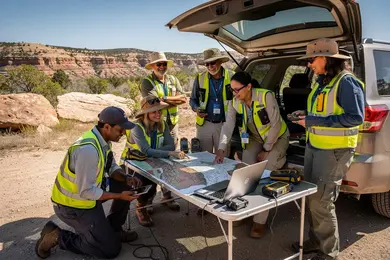
Deciding between online geosciences programs versus campus degrees involves weighing practical training and networking opportunities critical for climate science roles. Campus degrees offer direct access to fieldwork, lab equipment, and face-to-face mentorship essential for mastering geospatial analysis and environmental sampling-skills employers prioritize in sectors like environmental consulting and energy analysis. In contrast, online programs provide flexibility but place the onus on students to independently secure local internships or field placements, often delaying hands-on experience vital for job readiness.
Comparing on-campus and online geosciences education reveals distinct tradeoffs:
- Campus programs facilitate richer peer and faculty networks that often translate into stronger job placement connections within the industry.
- Online students must leverage virtual labs and simulations and actively curate external project portfolios, which do not fully replicate immersive, in-person training.
- The necessity to independently organize practical experience can impact preparedness for roles requiring precise data collection and instrumentation skills.
With the U.S. Bureau of Labor Statistics projecting roughly 2,000 new geoscientist openings annually through 2034, increasingly tied to environmental and climate demands, demonstrating hands-on, collaborative experience remains critical. Online candidates aiming to pivot or advance strategically must target employers accustomed to remote work cultures and supplement their studies accordingly.
For those balancing professional obligations, exploring related fields such as an online masters in data science could provide alternative pathways leveraging technical skill sets highly valued alongside traditional geosciences expertise.
What accreditation should an online geosciences program have?
Opting for accredited online geosciences degrees in the United States means navigating a landscape where regional accreditation recognized by the U.S. Department of Education or the Council for Higher Education Accreditation is non-negotiable for credit transfer and employer validation. Specialized accreditation, such as that from the Commission on Accreditation of Programs in the Earth Sciences (CAPES) or the American Geosciences Institute, often determines eligibility for key climate science roles and federal projects.
Graduating from a program lacking CAPES accreditation, for instance, can bar entry to environmental consulting or renewable energy employers who demand proven technical competencies aligned with industry standards. Beyond employment, state licensing boards frequently require degrees from accredited programs to qualify for professional geologist or environmental certification exams. This narrows advancement options for graduates of unaccredited programs.
The Bureau of Labor Statistics forecasts a 3-4% growth in geosciences job openings linked to resource management and alternative energy sectors from 2024 to 2034. This sustained demand highlights how selecting a program with recognized regional accreditation for online geosciences programs safeguards workforce relevance and licensure pathways.
Prospective students balancing flexibility and rigor may also explore comparative fields such as exercise science; for a practical reference point, see the best exercise science degree online rankings to understand how program credibility influences career trajectories in specialized sciences.
What courses are in a climate science geosciences degree?
Climate science courses embedded within geosciences degrees equip students with essential expertise in atmospheric sciences, meteorology, and remote sensing, supporting roles that depend on precise climate data analysis. Practical skills such as GIS and field research techniques are integral, enabling graduates to engage directly with urban climate resilience planning or disaster risk assessment-fields that increasingly demand actionable environmental intelligence.
Specialized coursework in geochemistry and hydrology deepens understanding of carbon cycles and water resource management under evolving climate conditions, crucial for addressing complex environmental challenges. Foundational earth science studies, including plate tectonics and soil science, provide context for interdisciplinary problem-solving, while electives in environmental policy prepare students for navigating regulatory frameworks.
Given the rise of online geosciences programs with climate change focus, individuals seeking a strategic transition may weigh program accessibility against curriculum rigor, especially when aligning education with workforce demands in sectors like agriculture and energy.
Employment data shows environmental scientists focusing on climate-related positions earn a median of about $80,000, but geoscientists with deeper analytic skills earn closer to $99,000, reflecting the pay premium for advanced quantitative capability. This tradeoff underscores how curricula emphasizing modeling and statistical methods enhance employability for roles requiring integrated earth system analysis.
For those balancing military service transitions, pursuing an online electrical engineering degree for military veterans or related technical fields alongside climate science courses in geosciences degrees can broaden career pathways, integrating diverse skillsets demanded by employers.
What admissions requirements do online geosciences programs require?
Admission to online geosciences programs in 2026 reflects a balance between academic benchmarks and practical preparedness, with most requiring a high school diploma or its equivalent and a minimum GPA near 2.5 to 3.0. Selective public universities increasingly treat SAT or ACT scores as optional but beneficial, particularly to differentiate candidates amid growing competition. Those pursuing climate science specialties must demonstrate prior coursework in math and sciences to handle the quantitative emphasis and field methodologies typical in these curricula.
Applicants transferring with relevant college credits or associate degrees often gain expedited access to advanced courses in earth systems or climate modeling. Career changers without recent STEM experience face the challenge of bridging gaps through prerequisite or remedial online classes to meet foundational expectations. Admissions officers also evaluate motivation statements carefully to assess genuine commitment given the interdisciplinary rigor and workforce relevancy.
Technical readiness is non-negotiable; students need stable internet and familiarity with GIS software and virtual lab environments. Veterans and non-traditional students benefit from programs receptive to military transcripts and prior learning assessments, aligning with industry demand in environmental monitoring and natural resource sectors.
With over 50 fully online bachelor's options nationwide documented by GISDegree.org, applicants must weigh the competitiveness, academic demands, and career alignment carefully to optimize both employability and educational investment.
How long does an online geosciences degree take?
Completing an online geosciences degree typically mirrors on-campus durations, with full-time bachelor's programs requiring about 4 years and part-time schedules extending to 5-6 years. Accelerated tracks exist but demand sustained intensity that may conflict with employment or family duties. This duration tradeoff significantly affects students balancing practical experience with program pacing.
Employers in climate-sensitive sectors increasingly expect candidates to have not only solid technical knowledge but also hands-on experience through internships or cooperative education. These requirements can extend time to degree completion but critically enhance job prospects, especially in environmental analysis roles where expertise in earth systems, GIS, and modeling is indispensable. About 34% of geoscientists work within such environmental niches, shaping curricula toward applied competencies tied to climate and sustainability initiatives.
Programs incorporating virtual labs and remote projects offer flexibility but may alter pacing or necessitate specific fieldwork, influencing overall length. Students must evaluate whether online formats reduce geographic barriers without compromising essential in-person components.
Those considering program length should weigh:
- Workload balance versus delayed workforce entry affecting salary trajectories
- Depth of technical skill acquisition versus accelerated completion risks
- Financial resources and personal schedules impacting realistic timelines
Informed decisions require acknowledging how pace, practical requirements, and employer expectations converge, directly influencing long-term career readiness in geosciences fields focused on climate science and environmental sectors.
How much do online geosciences degrees cost?
Tuition for online geosciences degrees varies widely, typically between $15,000 and $45,000 for bachelor's programs and $30,000 to $60,000 for graduate degrees. State institutions often provide substantial cost advantages for in-state students, sometimes charging as little as $300 per credit, whereas private universities can exceed $1,000 per credit hour. Such disparities significantly affect the return on investment, especially in a competitive climate-related job market where about 1,500 graduate-level entrants annually vie for positions.
Working professionals should weigh tuition costs against employer tuition assistance programs and program duration. For example, a mid-career pivot to a federal climate role might find a public university's lower cost and flexible online master's more financially viable than a costly private alternative with limited subsidies but stronger networking opportunities. Accelerated programs may pose higher per-credit costs but can reduce overall expenses by shortening time to completion, facilitating quicker workforce re-entry.
Additional financial considerations include technology fees, textbooks, and possible research costs. Prospective students must therefore assess:
- Credit load and per-credit price variations
- Availability of employer support
- Long-term career outcomes aligned with degree investment
Budgeting decisions should balance these factors to navigate the financial realities inherent in the pathway to climate and sustainability roles.
What jobs can you get with a climate science geosciences degree?
Graduates with a climate science geosciences degree are increasingly expected to possess specialized skills beyond traditional geoscience knowledge. Employers now prioritize expertise in climate modeling, data interpretation, and environmental risk assessment, reflecting a labor market shift toward climate-focused competencies. For example, federal agencies require proficiency in GIS and climate data programming, while renewable energy companies look for geotechnical analysts who understand carbon reduction impacts. Without these specific capabilities, graduates risk slow career growth despite relevant degrees.
Tradeoffs exist between traditional geosciences pathways and climate-centric programs. Students focused solely on geology or mineral resources may need costly certifications or practical experience to enter climate-relevant roles. Nonprofits and international organizations value communication and interdisciplinary collaboration skills to implement climate adaptation strategies, emphasizing that soft skills are as critical as technical know-how. Strategic educational choices should therefore integrate climate-focused electives, internships in environmental agencies, and mastery of data analytics platforms tailored to climate science.
Job prospects align closely with how well graduates' skillsets match government and industry climate priorities. A 2025 recruiting study shows students who recognize geosciences' connection to climate change are more likely to major in the field, confirming employer demand for explicit climate-related expertise. Without aligning their curricula intentionally, graduates face competitive disadvantages in green economy sectors, highlighting the necessity for ongoing professional development within climate science geosciences careers.
What salaries do geosciences graduates earn in climate science roles?
Geosciences graduates with 7 to 15 years of experience in climate science typically earn between $80,060 and $103,730 annually, reflecting the sector's demand for professionals who combine scientific expertise with project management capabilities. Roles at this stage often include managing climate-related assessments or integrating environmental data into regulatory frameworks.
Advancing into leadership, such as senior researcher or program manager positions within government or environmental consulting, can push salaries above $134,830. These roles require advanced data modeling skills, regulatory knowledge, and stakeholder coordination, which justify higher compensation. For example, a geoscientist moving from field data collection to directing a climate resilience strategy at a utility company experiences a significant pay increase tied to strategic and interdisciplinary responsibilities.
Prospective students must balance these salary expectations against upfront costs and career trajectory realities. The premium pay seen in senior climate science roles demands specialized training in climate data analysis and policy that goes beyond general geosciences curricula. Regional wage variation and employer size should also factor into salary assumptions.
What certifications help geosciences graduates in climate careers?
Professional certifications signal more than technical proficiency for geosciences graduates aiming at climate science roles-they mark a candidate's ability to meet industry standards validated through rigorous exams and verified experience. For instance, the Geographic Information Systems Professional (GISP) credential is particularly relevant for environmental consulting positions focused on climate data precision and spatial analysis. Meanwhile, the Certified Consulting Meteorologist (CCM) designation aligns with roles requiring advanced atmospheric research and policy advice, demonstrating a higher threshold of meteorological expertise.
The decision to pursue certification involves balancing time, cost, and career path considerations. While entry-level roles may emphasize internships and hands-on fieldwork, project leadership in consulting firms, government agencies, or nonprofits often mandates credentialing. Maintaining these certifications demands ongoing education, adding layers to long-term career planning and financial commitment.
Employers differentiate candidates in a job market growing around 3-4% annually, with projections estimating over 33,000 combined new roles in geoscience and environmental science sectors over the next decade. Holding certifications provides a competitive edge in this expanding landscape, but graduates should assess whether the credential aligns with their immediate employment goals versus delayed entry benefits.
Other Things You Should Know About Geosciences
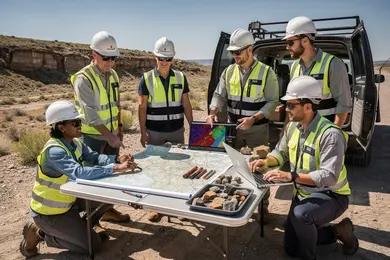
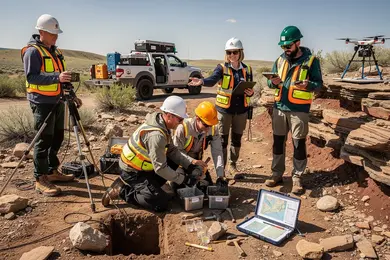
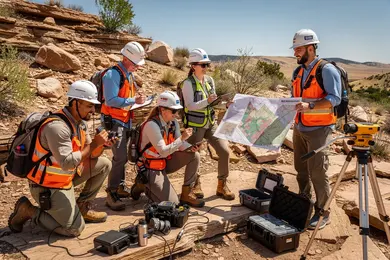
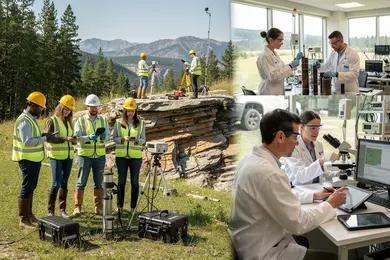
Most online geosciences programs limit direct fieldwork, which is essential for developing practical skills in terrain analysis and sampling. While some programs incorporate virtual labs or optional regional field trips, this does not fully replace the immersive experience of traditional field courses. Students prioritizing employer-valued, applied geosciences skills should seek hybrid programs or supplement their studies with internships offering real-world field exposure.
Employers in geosciences often expect graduates to have demonstrated hands-on technical skills alongside theoretical knowledge. Online degrees without applied components may raise concerns about practical readiness, especially for climate science roles involving environmental monitoring or data collection. Candidates should strategically highlight any field experience and technical proficiencies to counterbalance any bias against online study formats.
Most online geosciences programs accept up to 60 transfer credits from accredited two- or four-year schools, and some cap major-specific transfers at 30 credits. Course approval usually depends on grades of C or better and matching lab or field methods requirements.
References
- A Degree in Earth and Climate Sciences: Jobs, Salaries and Projected Job Growth https://www.bates.edu/earth-climate-sciences/about/eacs-jobs/
- ThisIsGeoscience - Geoscience Salaries https://www.thisisgeoscience.com/the-resources/geoscience-salaries
- Salary Information https://www.geolsoc.org.uk/Geology-Career-Pathways/Careers/Salary-Information.html
- Best Online Geoscience Courses and Programs | edX https://www.edx.org/learn/geosciences
- Are geologists climate scientists? - EuroGeoSurveys https://eurogeosurveys.org/are-geologists-climate-scientists/
- Geoscience Careers https://education.americangeosciences.org/resources/geoscience-careers/
- Online Geoscience Degrees: Top Schools and All Programs in 2026 https://www.gisdegree.org/online/geoscience-degrees/
- Applications to the Master's Degree Program in Geology https://www.en.geologie.geowissenschaften.uni-muenchen.de/academics/degree_programs/master/applications.html
- Admission procedure https://www.geo.ruhr-uni-bochum.de/en/node/877
- Educational Pathways for Climate Careers: Degrees and Certifications | EuroClimateJobs https://www.euroclimatejobs.com/article/764/educational-pathways-for-climate-careers-degrees-and-certifications