2027 Best Online Geosciences Degrees for Field-and-Analysis Career Paths

Co-Founder and Chief Data Scientist
Balancing demanding fieldwork schedules with the need for comprehensive data analysis challenges many geosciences professionals seeking career advancement or transition. Traditional in-person degree programs often lack the flexibility required by working adults or those stationed remotely, risking skill gaps precisely when industry demand for hybrid analytical-field expertise rises. A 2024 report from the National Center for Education Statistics reveals a 35% enrollment increase in online geoscience-related programs among adult learners, signaling a shift toward accessible yet rigorous education models.
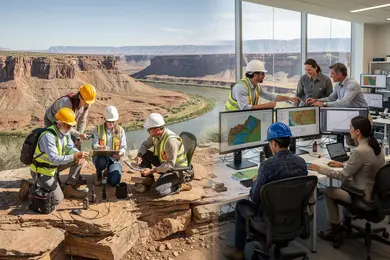
This trend highlights how program structure critically influences timely upskilling and employer alignment. This article examines the best online geosciences degrees tailored to both field and analysis career paths, emphasizing practical outcomes and accessibility to guide strategic educational choices.
Key Things You Should Know
- Field-intensive geosciences degrees average 25% higher tuition due to mandatory fieldwork, impacting affordability for midcareer pivots; federal labor data shows 38% of hires favor candidates with field experience over purely analytical skills.
- Employers in energy and environmental sectors prioritize integrated field-and-analysis skill sets, with 67% reporting difficulties sourcing graduates proficient in GIS alongside core geologic surveying, affecting hiring timelines.
- Programs emphasizing remote sensing and data analytics offer faster credentialing by 20% but risk limiting immediate field deployment readiness, creating a critical tradeoff between time-to-workforce and practical competence per recent Council of Geoscience Education findings.
What is an online geosciences degree and how does it prepare you for field and analysis work?
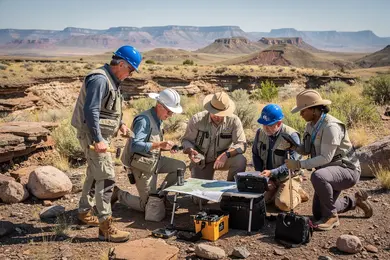
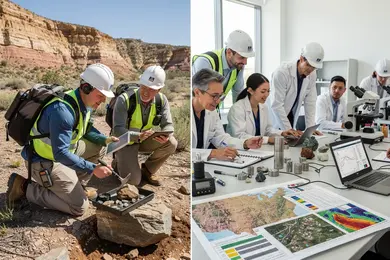
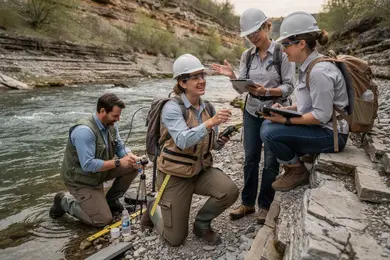
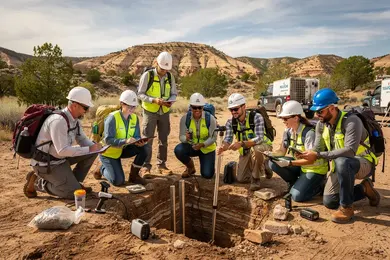
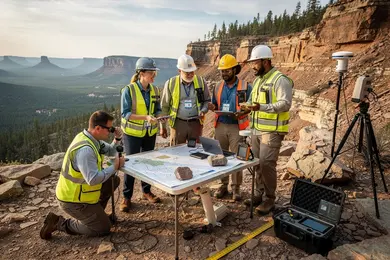
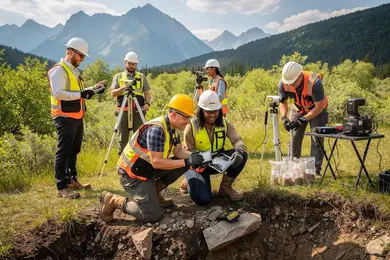
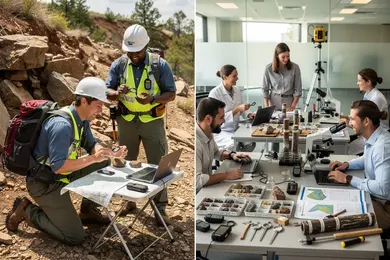
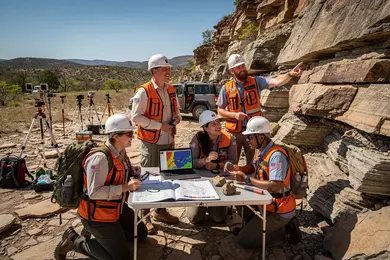
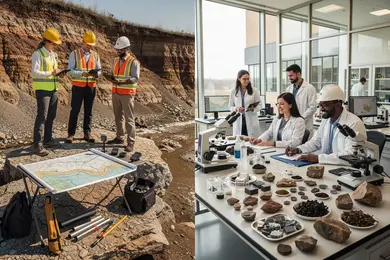
An online geosciences degree for practical field training must balance theoretical foundations with experiential components to meet employer standards. Purely remote coursework often falls short in preparing students for the interpretive and hands-on demands that define most roles, particularly in environmental consulting and energy sectors. Incorporating mandatory residencies or localized fieldwork enables learners to develop essential skills such as geological mapping and sample collection, which remain non-negotiable in job settings requiring physical site assessments.
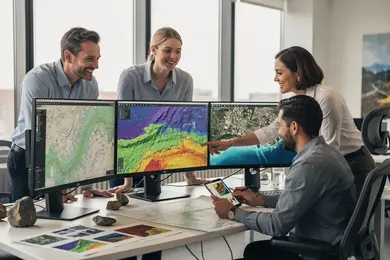
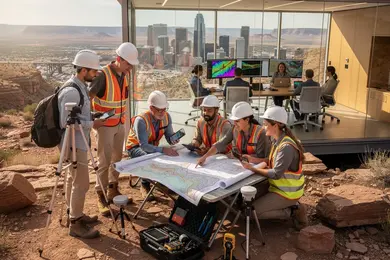
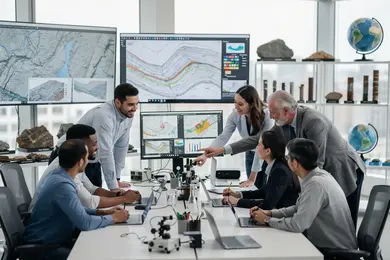
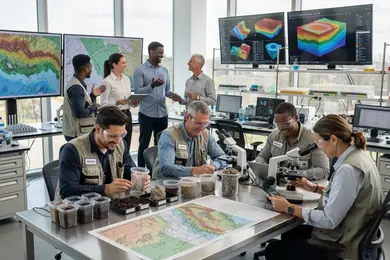
Programs emphasizing geosciences online programs for fieldwork and data analysis typically integrate GIS mapping, geostatistics, and remote sensing software into their curriculum. These skills support strategic infrastructure planning and natural resource evaluation but require practical application to fully translate into workplace competence. Students should critically assess field training availability, as reliance on virtual labs alone can limit employability in roles where onsite environmental data interpretation is crucial.
Employment projections for geoscientists remain steady with a modest growth rate of 3% from 2023 to 2034 and a median wage near $99,240. Graduates working in infrastructure might conduct soil analysis and risk evaluation firsthand, while those in energy sectors often apply geospatial software for subsurface analysis. Strong partnerships between academic institutions and regional employers often provide internships that mitigate some online learners' limited field exposure. For those contemplating this pathway, reviewing outcomes linked to experiential opportunities is vital. For more nuanced career insights, see what can i do with an environmental science degree.
How do online geosciences degrees compare with on-campus programs for labs, fieldwork, and research?
Online geosciences degrees inherently restrict direct access to laboratory equipment and fieldwork, crucial for mastering practical skills that employers prioritize. The differences between online and on-campus geosciences research opportunities are stark; on-campus programs offer immersive field experiences like soil sampling and geological mapping, whereas online programs rely heavily on virtual labs and simulations that cannot substitute for hands-on environmental assessments.
Many accredited online programs attempt to fill this gap with mandatory in-person field sessions or partnerships with local labs, but these requirements often challenge working professionals by complicating scheduling and increasing costs. For example, a student pursuing environmental consulting must secure documented field hours consistent with industry standards-an expectation rarely met through purely remote study without coordinated residency components.
Despite these limitations, online formats excel in delivering analytical skills relevant to GIS modeling, remote sensing, and policy research. According to EnvironmentalScience.org, senior geoscience professionals with seven to fifteen years of experience earn between $80,060 and $103,730 annually, with leadership roles surpassing $134,830. This compensation structure underlines the need for comprehensive training blending both field and analytical competencies to progress beyond entry-level roles. Prospective students weighing an environmental engineering bachelor's degree online should carefully consider these tradeoffs, particularly how fieldwork constraints may affect long-term employability and job readiness in the geosciences sector.
Which types of online geosciences degrees (associate, bachelor's, master's) best fit different career goals?
Associate degrees in geosciences primarily target entry-level field jobs, offering a fast track into technician or assistant roles within environmental monitoring or mineral exploration. These credentials emphasize applied skills but rarely qualify graduates for independent positions, limiting salary potential and long-term growth. Employers typically expect hands-on experience, with wages often falling below $50,000, which reflects scope restrictions tied to limited responsibilities.
A bachelor's degree in geosciences opens pathways to analytical careers requiring project leadership, data interpretation, and advanced field analysis. EnvironmentalScience.org data place entry-level salaries between $50,130 and $62,090, indicating competitive compensation relative to many STEM fields. Bachelor's curricula blend theory with practical skillsets-including GIS, remote sensing, and technical writing-necessary for roles in environmental consulting, government agencies, and resource management.
Master's programs suit professionals targeting research, supervisory roles, or niche domains such as hydrogeology or petroleum geology. While unlocking higher salary ceilings and leadership opportunities, these degrees require significant academic investment through thesis work and quantitative rigor. For many mid-career positions, a bachelor's suffices, so weighing the additional time and cost against tangible advancement is critical.
Decisions about geosciences education should align with job market realities, employer expectations, and personal career objectives. For individuals interested in tailored educational pathways, exploring options to study exercise science online can offer insights into comparable STEM degree pacing and delivery. Ultimately, balancing practical skills against credential level helps clarify the tradeoffs implicit in associate, bachelor's, and master's geosciences programs.
How can you verify accreditation and program quality for online geosciences degrees in the United States?
Selecting an online geosciences degree demands rigorous scrutiny of accreditation beyond national recognition; regional accreditation from agencies like the Higher Learning Commission or Southern Association of Colleges and Schools is essential to meet employer and licensure board standards. Specialized endorsements from professional bodies, such as the Geological Society of America, can signify curriculum alignment with industry needs but do not substitute for foundational accreditation.
Employer preferences increasingly emphasize demonstrated competencies in fieldwork and data analysis, making it critical to obtain specific program outcomes like graduate employment rates and internship opportunities. Such transparency helps mitigate the risk of investing time and tuition in programs lacking practical skill development necessary for analytic or field-based geoscience roles.
Tuition costs for online geosciences programs vary widely-ranging from roughly $129.18 per credit at the University of Florida to about $1,254 for non-residents in Texas A&M's program-highlighting the importance of balancing expense against access to applied field experiences, laboratory resources, and analytical software training. Higher price points do not guarantee superior job placement but may reflect deeper resource availability or networking capability.
Verification steps include checking state licensing requirements, reviewing faculty research activity, and assessing support services tailored to remote learners, such as virtual labs or field equipment access. Considering these operational factors is key when researching online geosciences degree accreditation in the United States to ensure alignment with realistic career trajectories. For comparative context on degree costs in related fields, prospective students might explore online MLIS programs, which provide insights into tuition variation and program structure in an adjacent academic area.
What core courses and specializations are offered in online geosciences programs focused on field and data analysis?
Online geosciences programs prioritize foundational expertise in sedimentology, stratigraphy, structural geology, and geospatial analysis, forming a skill set centered on interpreting geological formations and managing field data efficiently. Employers increasingly expect graduates to demonstrate proficiency in quantitative techniques such as GIS, remote sensing, and statistical modeling for evidence-based decision-making across environmental consulting, energy, and resource sectors.
Specialized tracks like hydrogeology and petroleum geology respond directly to sector-specific technical demands. Hydrogeology concentrations deepen groundwater modeling and contaminant transport expertise, aligning with regulatory and engineering roles, while petroleum geology focuses on basin analysis and reservoir characterization critical to oil and gas exploration teams.
Ohio University's online non-thesis Master of Science in Geological Sciences illustrates a notable trend: mid-career professionals and educators seek program flexibility that enables immediate skill application without thesis-related delays. However, students face practical trade-offs. Limited physical fieldwork exposure is offset by virtual labs and regional assignments, which means hands-on proficiency depends heavily on program partnerships or brief residencies.
Employer preference increasingly favors candidates with integrated digital and field competencies. Prioritizing programs with robust GIS and sensor technology modules improves job market viability, yet students must weigh logistical constraints and practical relevance carefully when selecting online offerings.
What are the typical admission requirements, prerequisites, and application materials for online geosciences degrees?
The practical demands of online geosciences degree programs reflect the quantitative and field-intensive nature of the discipline, requiring applicants to demonstrate strong foundations in STEM subjects such as mathematics (through pre-calculus), chemistry, and physics. For advanced entry, relevant undergraduate credentials in geosciences or closely related fields are essential, reflecting employer expectations for applied technical skills and familiarity with spatial data systems. Graduate applicants must provide academic transcripts, a statement of purpose, and letters of recommendation focused on their analytical and fieldwork potential; test scores are increasingly optional as many programs adopt test-optional policies post-2024.
Specialized tracks like hydrology or geotechnical analysis demand additional prerequisites such as GIS experience or documented fieldwork, which applicants substantiate through portfolios or resumes. From a workforce perspective, proficiency in environmental regulations and spatial tools is non-negotiable, influencing admissions committees to prioritize candidates prepared for immediate practical readiness. International candidates face further hurdles, including language proficiency tests and credential evaluations, adding time and expense to their admission process.
The University of Illinois' online environmental geology program charges a consistent tuition rate of $775 per credit hour for 2025-2026 irrespective of residency, which positions the cost as a significant factor for working professionals weighing employer tuition support, financial aid availability, and the opportunity cost of balancing full-time employment with demanding STEM coursework and applied field training.
How long do online geosciences degrees take to complete and what do they typically cost?
Choosing an online geosciences degree requires balancing time, cost, and workforce relevance-especially for professionals pivoting mid-career. Bachelor's programs generally span four years full-time, while master's degrees take about two, with part-time formats extending completion by one to two years. Undergraduates can enter without prior experience, focusing on foundational competencies like mapping and environmental analysis, aligning with employer expectations for entry-level roles. In contrast, master's curricula demand background knowledge and specialize in niches such as hydrogeology or petroleum geology, often targeting advancement within technical or research domains.
Costs fluctuate substantially based on institution type and program design. Public universities typically charge $15,000 to $35,000 for bachelor's degrees, whereas private schools may exceed $50,000; master's costs range widely from $12,000 to above $40,000. These tuition estimates exclude extra expenses like mandatory fieldwork or specialized equipment, which can materially increase overall investment. Professionals must weigh these financial commitments against benefits like certification preparation and employer-valued practical modules.
Market saturation heightens the need for applicants to differentiate through accelerated credit options, prior learning assessments, or internships integrated into programs. Working students must also consider hidden fees and evaluate total costs-factoring in income loss during study periods. Choosing programs with strong industry partnerships can shorten time to workforce entry and improve practical readiness for sectors such as environmental consulting and energy exploration. Strategic evaluation goes beyond sticker prices: comparing tuition per credit hour relative to expected salary growth and job demand refines investment decisions in geosciences education.
What geoscience careers can you pursue with an online degree, and what do those jobs involve day to day?
Online geoscience degrees equip students with relevant technical skills but require deliberate efforts to secure complementary hands-on experience. Graduates face a labor market that prioritizes practical competence alongside theoretical knowledge, especially in fields where onsite sample collection and field validation remain indispensable. For example, environmental consultants depend not only on analyzing soil and water data with GIS software but also on coordinating geographically dispersed teams-a task demanding proficiency in digital platforms and remote collaboration tools.
Ohio University's integration of remote sensing, GIS, and modeling technologies into their curriculum mirrors industry practices, ensuring learners engage with data-driven tools like ArcGIS commonly used by geospatial analysts. However, these programs often expect students to independently arrange internships or cooperative projects to fulfill fieldwork requirements that online courses cannot replicate.
Graduates must adapt to limited direct supervision and navigate evolving software platforms, demanding strong communication skills to overcome remote work challenges. While online degrees convey foundational knowledge, securing local practical training remains essential to meet employer expectations and transition successfully into geoscience roles that hinge on both data interpretation and field application.
What are the salary ranges and job outlook for geoscientists and related roles requiring geoscience training?
Salary outcomes in geosciences hinge markedly on the interplay of education depth, practical skill sets, and sector-specific demand. Entry-level roles such as geological technicians typically start near $60,000, but professionals with specialized expertise in petroleum geology, environmental consulting, or mining-paired with a master's or higher-can earn over $120,000 annually. Candidates who integrate multidisciplinary skills like GIS, data analysis, or environmental policy tend to access superior compensation and broader job opportunities.
For mid-career professionals transitioning into fields such as hydrogeology, employers prioritize demonstrable fieldwork experience alongside academic credentials. Online master's programs, now offered by 24 U.S. universities, increase accessibility but may not substitute for hands-on competencies valued in industry-heavy regions. Typical salary ranges for these candidates fall between $80,000 and $110,000, reflecting this blend of practical and theoretical proficiency.
The U.S. Bureau of Labor Statistics projects a 7% growth rate for geoscientist roles through 2032, matching overall occupational trends driven largely by energy, environmental remediation, and resource management sectors. However, candidates targeting $100,000+ positions should carefully assess programs for accreditation and tangible skill development to meet evolving employer expectations. Purely academic or research-focused careers usually require doctorates and often lead to lower-paying federal or nonprofit roles compared to applied industry paths.
Are licenses, certifications, or professional society memberships required or recommended in geoscience careers?
Licenses and certifications in geoscience shape career trajectories far more than academic credentials alone. For example, private-sector professionals conducting geotechnical assessments or issuing official geological reports must obtain state Professional Geologist (PG) licensure, which demands an accredited degree, documented experience, and passing rigorous exams. Without this licensure, roles that entail legal responsibility or project leadership remain inaccessible.
Conversely, roles in environmental regulation or energy firms often rely on certifications like the Certified Professional Geologist (CPG) from the American Institute of Professional Geologists. While not legally compulsory, such credentials bolster credibility and marketability, especially where formal licensure is not strictly enforced.
Professional society memberships with organizations like the Geological Society of America provide indispensable networking and ongoing education opportunities valued by employers as signals of professionalism and sustained engagement. These affiliations can subtly influence hiring and promotion, especially in competitive sectors.
Evaluating online geology degree programs requires scrutiny beyond tuition costs-ranging from $129.18 per credit at the University of Florida to $683 at the University of North Dakota-focusing on whether the curriculum meets licensing education criteria and aligns with career ambitions.
Other Things You Should Know About Geosciences
Online geosciences programs often emphasize theoretical knowledge and data analysis skills, but regulatory roles require familiarity with real-world reporting standards and local environmental laws that may not be covered in detail. Prospective students should prioritize programs that include case studies, policy-focused coursework, or partnerships with agencies. Without this practical regulatory experience, graduates may face a steep learning curve when adapting to compliance-driven jobs.
Online degrees tend to focus more heavily on data interpretation and GIS skills because field access is limited, which can position graduates well for analysis-heavy roles but less so for strictly field-based positions. Students targeting roles requiring frequent field deployment should seek hybrid models or programs with mandatory short-term residencies to build hands-on skills. Prioritizing programs that integrate field practicums improves versatility and employer confidence in practical readiness.
Yes. Many online geosciences degrees require GIS, remote sensing, and cartography courses, often totaling 9 to 15 credit hours within the major. These classes train students to analyze spatial data, interpret satellite imagery, and use tools such as ArcGIS or QGIS for field and laboratory work.
General geosciences degrees offer broad knowledge but may lack the targeted skills that employers often demand for specialized roles in areas like petroleum geology or environmental consulting. Specializations can increase job market competitiveness but might narrow future options if market conditions shift. For career pivots, students should weigh their long-term goals and labor market trends before committing; starting with a general degree and adding certificates later can provide flexibility.
References
- Membership Categories and Requirements - American Institute of Professional Geologists https://aipg.org/page/MembershipCategoriesandRequirements
- Geologists: Salary, career path, job outlook, education and more - RaiseMe https://www.raise.me/careers/life-physical-and-social-science/geoscientists/geologists/
- Geology https://www.aims.edu/degrees-certificates/geology
- Accreditation Explained: Guidelines for Global Verification https://www.motaword.com/blog/understanding-accreditation-how-to-verify-institutions-globally
- How to Verify a US Partner School's Accreditation Before Committing https://www.amerigoeducation.com/news/how-to-verify-a-us-partner-schools-accreditation-before-committing
- Frequently Asked Questions https://www.americangeosciences.org/licensure/faq/
- P.G. Licensing FAQs https://tbpg.state.tx.us/p-g-licensing-faqs/
- The Geological Society - Degree Accreditation https://www.geolsoc.org.uk/education-and-resources/universities/university-degree-accreditation/
- Online Geoscience Degrees: Top Schools and All Programs in 2026 https://www.gisdegree.org/online/geoscience-degrees/
- Professional Geologist Licensure https://www.grow-geocareers.com/licensure