2027 Online Geosciences Degrees for Broad Earth Systems Preparation

Co-Founder and Chief Data Scientist
Professionals aiming to shift into or advance within earth systems analysis often confront incompatible schedules and geographic barriers that limit access to specialized degree programs. According to the National Center for Education Statistics, enrollment in fully online bachelor's degrees increased by 13% in 2023 alone, signaling a shift toward programs that accommodate working adults and nontraditional students without pausing career momentum. Yet, not all online offerings deliver comprehensive, interdisciplinary training essential for broad geosciences competencies valued by employers, creating a critical selection challenge.
This article evaluates current online geosciences degrees designed to equip students for diverse earth systems roles and guides targeted decisions to optimize career outcomes.
Key Things You Should Know
- Online geosciences degrees in 2026 frequently omit advanced fieldwork components, which according to a 2024 USGS workforce study reduces immediate employability in exploration sectors relying on hands-on site skills.
- Employers in energy and environmental consulting increasingly prioritize candidates with hybrid experience, per a 2024 Bureau of Labor Statistics report showing 15% higher retention rates for graduates with combined online and in-person geosciences training.
- Online programs often accelerate degree completion and reduce geographic barriers, but NCES data from 2024 reveals average tuition savings offset by extended job placement times averaging 6 months longer than traditional cohorts.
What is an online geosciences degree and how does it prepare you for earth systems careers?
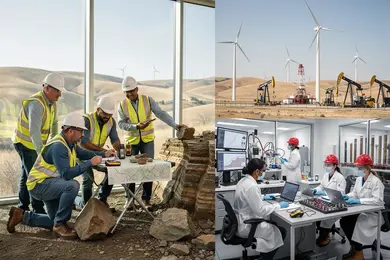
Online geosciences degree programs focused on earth systems must be evaluated against tangible workforce requirements and student realities rather than promotional appeals. These programs blend geology, climatology, hydrology, and environmental science to prepare students for fields like natural resource management or hazard mitigation, but hands-on components often require local fieldwork that adds logistical complexity and cost. Employers expect graduates to be adept with GIS, remote sensing, and data analysis tools, reflecting a shift toward digitally driven roles in oil and gas, urban planning, and renewable energy sectors.
Graduates face a competitive landscape shaped by an estimated 17,000 job openings in U.S. geosciences by 2034, with increasing demand for professionals who combine scientific frameworks with advanced technical proficiency. Programs that integrate asynchronous lectures with synchronous labs or simulations offer valuable flexibility for working professionals, although self-motivation and reliable technology access remain critical barriers for some.
Those preparing for careers in earth systems through geosciences education must scrutinize program accreditation and research opportunities, particularly when targeting federal or state environmental agencies where hiring standards are stringent. Reduced tuition and relocation expenses characteristic of online degrees can lower barriers but require acceptance of limited in-person interaction.
Prospective learners looking into a geology degree online should weigh program delivery methods and employer alignment carefully to optimize long-term career outcomes.
Are online geosciences degrees respected and accredited like on-campus geology and earth science programs?
Online geosciences degrees from regionally accredited institutions carry the same formal recognition as on-campus geology and earth science programs, but the practical implications for career entry vary. Employers and licensing boards prioritize accreditation status-commonly from bodies such as the Council for Higher Education Accreditation or industry-specific agencies-when evaluating candidates. For licensing paths like Professional Geologist (PG), a degree's delivery method is irrelevant if accreditation is verified. However, students often face obstacles obtaining the necessary hands-on field or lab experience solely through online curricula, which can delay licensure or require supplemental training. Programs offering hybrid formats or partnerships with local laboratories mitigate these challenges.
In specialized sectors like environmental consulting or petroleum geoscience, the quality of field-based training and data analysis skills significantly influences employability. Employers may reject candidates from fully online programs that lack demonstrable practical components despite legit accreditation. Federal agencies and research organizations are gradually more open to online credentials if graduates can substantiate their skills with portfolios or internships, echoing shifts highlighted in the American Geosciences Institute's data showing rising geoscience salaries and workforce demand.
Prospective students evaluating online geosciences degrees accreditation in the United States should carefully assess whether programs provide documented access to crucial field methods or remote sensing labs. They should also consider workforce standards early to avoid costly delays or additional education. For those exploring cost-efficient pathways, comparing the cheapest masters in data science can offer a relevant benchmark for investment in technical skill development aligned with geoscience data analysis needs.
Recognition of online geology and earth science programs depends on this balance of accredited rigor and practical training integration, shaping long-term career viability.
How do online geosciences programs compare with campus-based options for labs, fieldwork, and research?
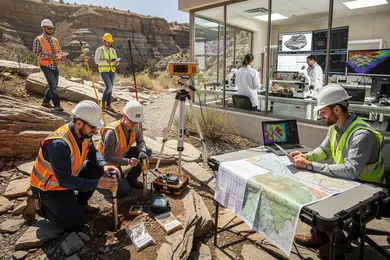
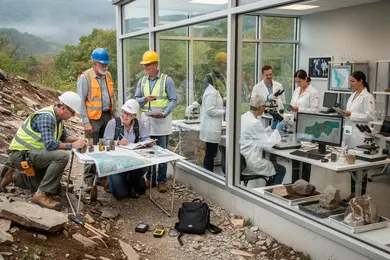
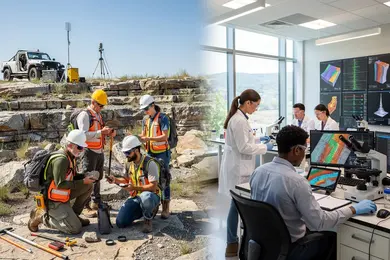
Choosing between campus-based and online geosciences programs requires careful consideration of how each handles lab and fieldwork components, which critically affect employability. Campus-based programs embed intensive field camps, hands-on labs, and direct research engagement that employers in environmental consulting, oil and gas, and academia often require. Graduates from these programs typically demonstrate proficiency in geological sampling and seismic data interpretation due to this immersive training.
Online geosciences programs lab and fieldwork comparison reveals that digital formats use virtual labs and localized field experiences, which suit working professionals unable to commit to full-time, on-campus immersion. However, this adaptation comes with tradeoffs: reduced opportunity for real-time peer collaboration and limited access to faculty-led research projects. An online student might perform soil sampling locally under remote guidance but cannot replicate the depth of campus-based multi-week intensive fieldwork.
The cost difference is notable-online students generally spend less, with recent surveys showing approximately $66,000 tuition versus $85,000 for on-campus non-resident public programs. Still, those targeting roles demanding rigorous hands-on research should weigh these financial savings against potential employer preferences for in-depth, campus-acquired practical skills.
Networking and experiential research opportunities remain a critical challenge for online students. Active pursuit of local internships or partnerships is essential to bridge gaps in physical skills and faculty engagement for geology or hydrology jobs. Prospective students evaluating options can also explore the best exercise science degree online resources for insights into structuring effective online practical training pathways aligned with workforce needs.
Ultimately, campus-based versus online geosciences research opportunities represent distinct strategic choices that affect career trajectory, practical competence, and access to professional networks.
What types of geosciences degrees can you earn online, from associate to master's level?
Deciding among online geosciences degree programs from associate to master's level requires weighing immediate job entry against long-term growth potential under current labor dynamics. Associate degrees, common entry points, emphasize practical skills in earth science, GIS, and environmental monitoring, often preparing students for technician roles in environmental consulting or government agencies but limiting advancement without further education.
Bachelor's programs balance foundational science with specialization options in areas like environmental geoscience and climate science, aligning graduates with positions in resource management or hazard assessment. Employers increasingly expect applied analytics proficiency and relevant hands-on experience, so many students must pursue internships or local fieldwork alongside coursework.
Online master's degrees cater to professionals transitioning into policy advising, research, or leadership roles requiring advanced geospatial analysis and climate modeling expertise. These programs demand strong quantitative backgrounds and prior geosciences training. The projected 4-5% labor market growth in environmental and geoscience roles through 2034 supports the value of specialized graduate education in meeting rising employer demands.
For prospective students targeting earth systems careers, selecting an accredited online geosciences degree means evaluating tradeoffs between credential recognition, practical experience availability, and sector-specific growth. In this context, decision-makers might also compare pathways to other technical fields, like choosing an online computer science degree, balancing interdisciplinary skills and employability in evolving job markets.
What core courses and specializations are typically offered in online geosciences and earth systems programs?
Online geosciences programs must balance foundational knowledge with technical skillsets demanded by employers, but students often confront tradeoffs between depth in core disciplines and growing expectations for data literacy. Traditional geology, hydrology, mineralogy, and environmental science remain essential; however, practical workforce readiness increasingly hinges on proficiency in remote sensing, GIS, and climate data analysis.
For example, industry roles in hydrocarbon exploration prioritize seismic data interpretation and petrophysics, while environmental monitoring jobs focus more on soil chemistry and regulatory compliance. Programs lacking hands-on capstone projects or virtual labs may limit students' ability to navigate real-world data challenges, a critical gap since remote or field-based experience is frequently required.
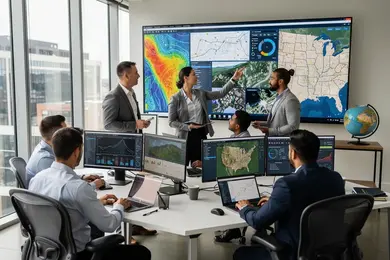
Technical fluency with Python, R, or MATLAB is no longer optional but necessary for geoscience professionals adapting to data-centric workflows. Students pivoting into applied geosciences should seek curricula integrating data science components aligned with sector demands, as the rise of interdisciplinary degrees, such as the B.S. in Data Science from The University of Texas at Arlington, demonstrates a robust labor market preference for hybrid knowledge.
Institutional collaborations offering internships or research placements can significantly enhance employability by bridging theoretical and applied learning. Prospective learners must critically evaluate whether programs provide this integration, as practical exposure influences both immediate job prospects and adaptability to evolving geosciences roles.
What are the typical admission requirements and application materials for online geosciences degrees?
Online geosciences degree admission routines practically gatekeep by assessing academic readiness, science foundation, and the ability for self-directed study. Essential baseline criteria include a high school diploma with transcripts showing a GPA near 2.5 to 3.0 and often standardized test scores, although waivers are common for transfer students or those with prior college credits. The technical nature of these programs means applicants typically must demonstrate proficiency in math and science subjects such as chemistry, physics, and calculus, which directly impacts their capacity to engage with quantitative coursework without remedial delay.
Application portfolios emphasize evidence of analytical skill and professional seriousness through a personal statement and letters of recommendation from academic or workplace supervisors. Candidates from unrelated fields usually need a résumé presenting work experience supportive of the earth sciences sector. A practical example: a mid-career environmental consultant aspirant must verify quantitative and fieldwork competence to avoid foundational courses and accelerate credential completion.
Credit transfer policies substantially affect affordability and time to degree. For instance, some institutions limit tuition exposure by accepting community college credits at $354 per credit, saving students upwards of $10,000 after 30 transferred credits. This credit flexibility reduces financial and temporal barriers but requires careful evaluation of transfer acceptance policies by the applicant.
Technical readiness-reliable internet, functional hardware, and digital literacy-is mandatory. Additionally, virtual interviews or orientations serve to filter candidates prepared for rigorous, self-paced online learning environments, directly influencing program completion rates and post-graduation employability in workforce-relevant roles.
How long do online geosciences degrees take to complete, and what do they typically cost?
Completing an online geosciences degree requires balancing program design with career timing, especially for working adults. Bachelor's programs typically span four years full-time, while master's degrees take about two, though part-time enrollment often adds one to two years. Programs involving significant fieldwork or labs demand extra in-person commitments, limiting scheduling flexibility and potentially prolonging completion.
Cost is a critical factor; public universities generally charge $12,000 to $25,000 annually for in-state online students, whereas private institutions often exceed $40,000. Total bachelor's program expenses range from $40,000 to over $80,000, factoring in tuition, fees, and materials. Graduate programs cost between $25,000 and $60,000 depending on credit load and prestige, which influences decisions around financing and employer tuition assistance.
Workforce data from the Energy, Environment, and Hazards AGI 2025 report shows a steady 5% growth in U.S. geosciences employment, adding over 16,000 jobs to reach 342,002 monthly employed professionals by April 2026. This reinforces the advantage of completing degrees within expected timelines to remain competitive.
Prospective students should carefully consider tradeoffs:
- Accelerating completion to enter the labor market quickly versus extending studies for specialized research.
- Planning course sequencing and transfer credits to minimize delays.
- Assessing eligibility for tuition reimbursement to reduce out-of-pocket costs.
These decisions directly affect long-term employability in geosciences roles where practical skills and up-to-date credentials are increasingly prioritized.
What careers can you pursue with an online geosciences degree, and what do they involve day to day?
Online geosciences degrees prepare students for careers that blend fieldwork, data analysis, and technical reporting, but these programs necessitate deliberate engagement with practical tools and industry realities. For example, petroleum geologists interpret seismic data in complex extraction projects, requiring not just theoretical knowledge but strong computational skills and the ability to integrate diverse datasets. Similarly, hydrologists must combine field measurements with predictive modeling to guide water resource policies, often navigating interdisciplinary communication challenges.
The disconnect between remote education and hands-on experience is a critical tradeoff. Hiring managers prioritize candidates proficient in geographic information systems (GIS) and geological modeling software, alongside real-world project case studies-expectations that online students must actively meet through internships or field opportunities. Job functions vary significantly:
- Environmental consultants focus on regulatory compliance and contamination risk assessment.
- Mining engineers balance site safety protocols with sustainability planning.
- Geospatial analysts develop detailed GIS-based maps for disaster response and urban planning.
Workforce diversity remains uneven: women earn only about 40% of graduate degrees in geosciences despite representing half the population, indicating ongoing inclusivity challenges. Online programs can lower geographic and scheduling barriers but do not eliminate the need for hands-on experience and multi-disciplinary teamwork. Ultimately, pursuing an online geosciences degree requires strategic planning to align coursework with tangible field exposure to remain competitive in the labor market.
What salary ranges and job outlook can geosciences graduates expect in different earth science roles?
Choosing geosciences as a pathway requires balancing sector volatility against long-term job stability. Entry salaries reflect this: energy-sector roles like petroleum geologists often start between $80,000 and $110,000 but come with exposure to market swings and potential layoffs tied to commodity prices. In contrast, environmental consultant positions usually offer $60,000 to $75,000 annually with steadier demand but roughly 10-20% lower pay. Government jobs, such as geological survey technicians, begin near $50,000 and offer gradual increases contingent on experience and credentials.
Employers increasingly seek candidates adept in GIS, data analytics, and regulatory frameworks. Recent bachelor's graduates in geological and earth sciences have a slightly better unemployment rate-2 to 3 percentage points below average-indicating reasonably strong initial absorption. Yet, graduates without relevant technical skills or advanced qualifications may face slower placement or limited salary growth, especially within federal agencies or competitive consulting roles that often require a master's degree or certifications.
For students weighing options, practical considerations include:
- Energy industry jobs offer higher entry pay but greater risk from economic cycles.
- Environmental science jobs provide steadier demand with more modest salaries.
- Specialized skills in GIS and data analysis materially improve employability.
- Advanced credentials may be essential for upward mobility in federal or consulting sectors.
These dynamics underscore the importance of matching educational investments with career objectives, especially when navigating geosciences' diverse occupational landscape.
How can prospective students evaluate and choose a high-quality, reputable online geosciences program?
Choosing an online geosciences program hinges on accreditation and tangible workforce outcomes rather than institutional reputation alone. Regionally accredited programs offer reliable academic rigor recognized by employers, but alignment with real-world skills like data analysis, GIS, environmental monitoring, and hands-on components-even if virtual-is decisive for employability. A program lacking practical elements such as internships or capstone projects risks producing graduates unprepared for industry demands.
Faculty engagement with current government or industry projects enhances curriculum relevance and networking potential, directly affecting job readiness. Prospective students should scrutinize graduate outcomes-employment rates, employer types, and median salaries from credible data-since programs omitting this transparency may conceal underperformance.
Specialization matters: energy, environmental consulting, or hazard mitigation tracks often lead to distinct sector opportunities and different hiring landscapes. Flexible delivery platforms that support synchronous and asynchronous learning accommodate professionals juggling work and study, a frequent necessity in career pivots.
Other Things You Should Know About Geosciences
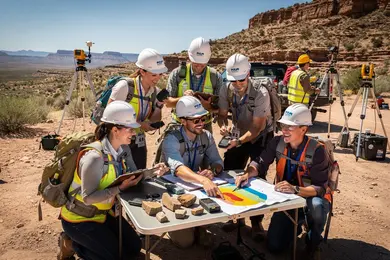
Online geosciences programs often substitute traditional fieldwork with virtual labs and simulations, which provide foundational knowledge but cannot fully replicate hands-on experience. Employers in applied geosciences roles still value direct field experience, so students should prioritize programs that offer optional short-term residencies or field camps. Without a practical component, graduates may need to seek external internships or entry-level positions to gain essential field skills after graduation.
Many online geosciences students juggle full-time jobs while studying, which can stretch the workload and reduce time for complex topics like data analysis or remote sensing. Programs with asynchronous classes offer scheduling flexibility but demand strong self-discipline and time management to maintain rigorous engagement. Prospective students should weigh their current work commitments carefully; insufficient study time may dilute mastery of technical skills critical for professional advancement.
Employers increasingly recognize accredited online geosciences degrees, especially those from established institutions with strong reputations. However, skepticism remains for programs lacking clear indications of hands-on learning and research involvement, which are vital for roles requiring practical problem-solving. Graduates from online programs should highlight relevant projects, internships, or field experiences on their resumes to bridge perceived gaps and demonstrate competence.
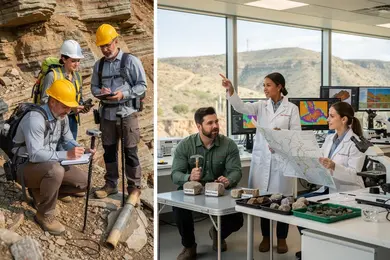
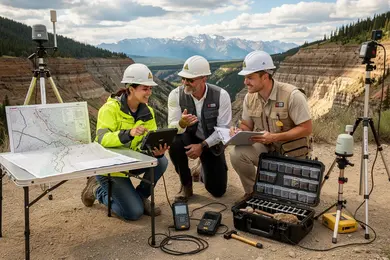
Fully online geoscience degrees usually require at least one field methods component, such as a local mapping project, soil or rock sample analysis, or a short summer field course. Many programs also set a minimum of 3 to 6 credit hours for supervised fieldwork or a capstone tied to real Earth systems data.
References
- Geology https://www.aims.edu/degrees-certificates/geology
- What Does the Future Demand Look Like for Applied Geoscientists? https://www.aegweb.org/index.php
- ThisIsGeoscience - Geoscience Salaries https://www.thisisgeoscience.com/the-resources/geoscience-salaries
- Earth System Science - School of Interdisciplinary Arts & Sciences https://www.uwb.edu/ias/undergraduate/majors/earth-system-science
- Careers in the Earth Sciences https://earthsciences.dartmouth.edu/undergraduate/careers-earth-sciences
- Best Earth Science Research Programs for High Schoolers https://riseglobaleducation.com/blogs/best-earth-science-research-programs-for-high-schoolers
- Online Geoscience Degrees: Top Schools and All Programs in 2026 https://www.gisdegree.org/online/geoscience-degrees/
- The Rock Garden: a preliminary assessment of how campus-based field skills training impacts student confidence in real-world fieldwork https://gc.copernicus.org/articles/7/17/2024/
- 5. Best Practices for Instruction of Geoscience Undergraduates https://www.americangeosciences.org/change/sections/instructional_best_practices/
- Earth Sciences https://www.yukonu.ca/programs/earth-sciences