2027 Online Geosciences Degrees With Environmental Monitoring Career Alignment

Co-Founder and Chief Data Scientist
Professionals seeking to transition into environmental monitoring within geosciences face a critical challenge: securing relevant qualifications without sacrificing current employment or family commitments. The demand for remote, flexible education is rising sharply, with the National Center for Education Statistics reporting a 15% increase in online graduate enrollment since 2022. This shift reflects a growing need among adult learners for programs that accommodate diverse schedules while providing industry-aligned skills. However, program rigor and employer recognition vary widely, complicating decisions about which online degrees genuinely enhance career prospects.
This article examines current online geosciences degree options aligned with environmental monitoring careers, evaluating their practical fit for working professionals navigating this complex landscape.
Key Things You Should Know
- Online geosciences degrees emphasizing environmental monitoring incur a $15K-$30K premium over in-person equivalents per NCES 2024 data, trading cost-efficiency for immediate fieldwork exposure critical in employer hiring.
- Employers increasingly require demonstrated proficiency in GIS and remote sensing; 65% of 2025 job postings demand integrated tech skills, limiting traditional curriculum graduates' initial employability.
- Accelerated online programs reduce completion times by 25% but compress field practicum hours below OSHA recommended thresholds, posing credentialing challenges in states with stringent environmental compliance roles.
What is an online geosciences degree with an environmental monitoring focus, and who is it for?
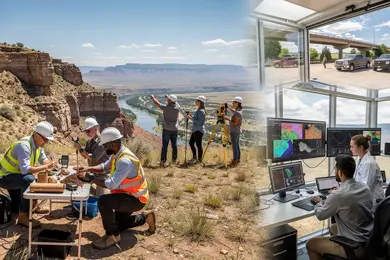
Online geosciences degrees with environmental monitoring specialization demand careful evaluation of practical tradeoffs before enrollment. These programs cater to professionals balancing work and study, especially in regions without ready access to field sites. However, reduced hands-on lab opportunities mean students must seek virtual labs, internships, or hybrid formats to develop applicable skills beyond theoretical knowledge.
Career paths in environmental monitoring with geosciences online often center on proficiency with Geographic Information Systems (GIS), environmental data software, and remote sensing technologies. Employers prioritize candidates who can reliably analyze remote environmental data to support regulation compliance, pollution control, and resource management-roles increasingly prevalent as agencies and corporations integrate clean energy and sustainability mandates.
The labor market reflects growing competitiveness: environmental and clean energy jobs grew approximately 11-12% recently, while the pool of qualified applicants expanded only half as rapidly. Graduates who combine geosciences expertise with applied environmental monitoring skills are thus better positioned to fill critical gaps and navigate specialized job niches.
This pathway's strategic value depends on bridging gaps in field experience through targeted internships or partnerships. Those able to do so gain a strong advantage, but prospective students should weigh the reduced in-person exposure against convenience and technical updates. For a broader perspective on related fields, see what can you do with an environmental studies degree.
How do online geosciences programs compare to on-campus options for environmental monitoring careers?
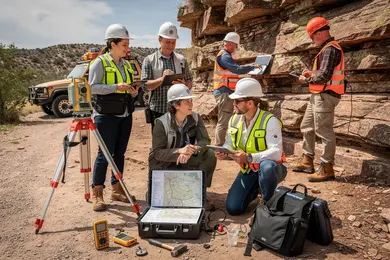
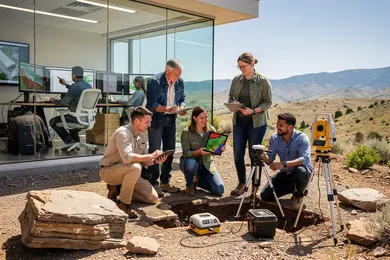
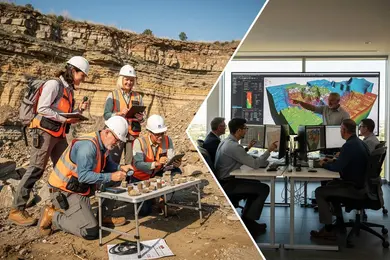
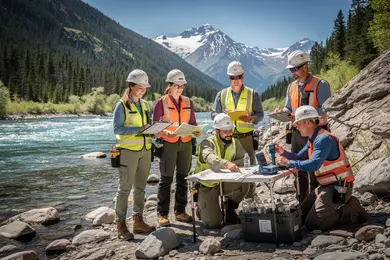
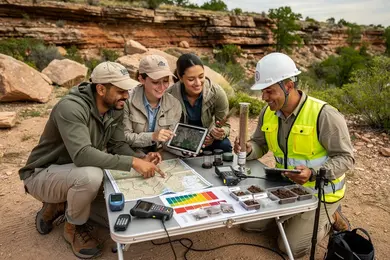
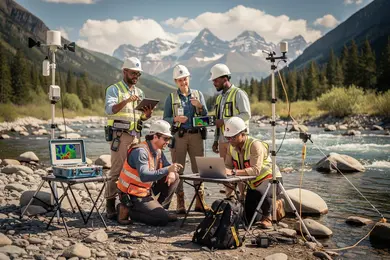
The primary limitation of online geosciences degrees compared to on-campus programs lies in the absence of integrated fieldwork, a factor critical for environmental monitoring careers. Employers who prioritize demonstrated technical proficiency-such as site assessments, sample collection, and equipment calibration-typically favor graduates with structured, supervised field experiences. Students pursuing distance learning geosciences programs with environmental science career outcomes must proactively secure local internships or industry experience, as most online curricula lack embedded practical placements.
Workforce data from the U.S. Bureau of Labor Statistics forecasts a stable 3% employment growth for geoscientists from 2024 to 2034, generating about 2,000 annual openings across the United States. This market reality demands candidates showcase applied skills alongside academic knowledge. Graduates from purely virtual programs often encounter longer job searches or require supplemental training after hire, contrasting with on-campus peers who generally fulfill fieldwork prerequisites prior to graduation.
For professionals balancing career pivots or geographic constraints, online geosciences degrees vs on-campus programs require a trade-off: flexibility at the expense of direct field exposure. Those without access to environmental sites must pursue certifications or boot camps to remain competitive. Evaluating employer partnerships and local mentorship tied to online options is essential to mitigate practical skill gaps that influence hiring and salary potential.
Students also benefit from exploring complementary disciplines or opportunities, such as data science, to enhance their technical profile, including considering programs listed as the cheapest data science degree options that may dovetail with geosciences expertise.
What types of geoscience degrees best support careers in environmental monitoring?
Bachelor's degrees that integrate environmental science, geosciences bachelor programs for environmental careers, or earth science provide practical foundations directly aligned with environmental monitoring roles across regulatory agencies, consulting, and industry. The optimal programs combine core geology, hydrology, and atmospheric science with applied environmental assessment, data analysis, and specialized tracks like GIS or environmental chemistry. This blend addresses specific employer demands for monitoring pollution, water quality, and ecosystem health.
Environmental monitoring geosciences degrees online bring distinct benefits in flexibility but require candidates to verify access to robust fieldwork and internship components. Real-world competency in sediment sampling, geochemical analysis, and GIS mapping differentiates graduates in contamination assessment or habitat monitoring projects. Degrees narrowly centered on pure geology often necessitate supplementary certifications or practical experience to meet regulatory compliance and reporting standards.
Employers prioritize graduates who understand environmental legislation and enforcement frameworks. This favors interdisciplinary programs that embed environmental policy coursework alongside geoscience fundamentals. The U.S. Bureau of Labor Statistics reports a median annual wage of $99,240 for geoscientists in May 2024, with top-tier professionals earning up to $178,880-a premium reflecting advanced technical expertise and field experience.
Prospective students should balance theoretical depth with hands-on experience and certification opportunities like HAZWOPER or GIS. Exploring options such as online exercise science programs can provide models for achieving flexible study frameworks without sacrificing applied skill development.
What courses and specializations are typically included in geosciences programs for environmental monitoring?
Environmental monitoring geosciences courses and specializations in North America are designed with distinct emphases that significantly impact employability and career trajectory. Basic curricula cover geology, hydrology, soil science, and atmospheric science, but specialization in environmental chemistry, remote sensing, GIS, and data analysis defines readiness for sectors such as pollution tracking or ecosystem management. Students aiming to align with specific employers must weigh expertise in hydrological modeling typical of water resource firms against geostatistics or land reclamation knowledge favored by mining operations.
Technical proficiency with field sampling, sensor tools, and modeling software is non-negotiable, as hands-on capability is a consistent employer expectation. Programs frequently embed internships or fieldwork, connecting academic theory with job-ready skills. The U.S. Bureau of Labor Statistics projects a 7% growth for environmental science and protection technicians through 2033, with a median salary of $49,490 in 2024, reflecting stable demand for applied-monitoring specialists.
Decision-makers evaluating geosciences degree concentrations for environmental data analysis and monitoring must balance curriculum breadth against niche skills. Broader programs enhance adaptability but may necessitate later certification, while specialized tracks tighten focus but reduce flexibility across subfields. Access to affordable program options matters, as cost can be a barrier; prospective students might consider factors like mechanical engineering degree online cost parallels when budgeting for their geosciences education.
How can you verify accreditation and program quality for online geosciences degrees?
Choosing an online geosciences degree demands rigorous scrutiny of accreditation, as unaccredited institutions frequently render graduates ineligible for many employer and graduate program opportunities. Prioritize programs with regional or national accreditation recognized by the U.S. Department of Education or CHEA, supplemented by specialized endorsements from bodies like the Geological Society of America to ensure alignment with professional standards.
Employment prospects hinge on tangible skills acquisition and measured outcomes. Prospective students should evaluate graduate employment data available from sources such as the College Scorecard or IPEDS, particularly for roles in environmental monitoring and geospatial analysis. Programs that integrate practical experience-through internships, fieldwork, or partnerships with industry-better position graduates amidst rapidly expanding markets, where geospatial analytics are projected to triple by 2030-2035 driven by AI and smart city technologies.
Consider the program's flexibility and faculty industry engagement, especially for working professionals balancing technical training with career demands. Beware degrees emphasizing theory without technical depth, as these can hinder employability in technical roles. Transparency in outcome metrics is non-negotiable for assessing real-world value.
Investing effort upfront in verifying these dimensions can prevent costly misalignment between education and job market requirements, a frequent hurdle faced by career pivoters in geosciences.
What are the typical admission requirements and prerequisites for online geosciences programs?
Admission criteria for online geosciences programs often navigate a tension between inclusivity and technical rigor, directly affecting student outcomes and workforce readiness. Bachelor's applicants typically need a high school diploma with demonstrable skills in biology, chemistry, physics, and math, while master's candidates must hold relevant undergraduate degrees with quantitative proficiency. Programs that impose bridging courses for students lacking geosciences prerequisites increase both completion time and financial burden, which disproportionately impacts career changers.
Professionals targeting roles such as environmental consulting face a practical challenge: many online programs must substitute traditional fieldwork with virtual labs or other experiential alternatives. The lack of hands-on exposure can limit immediate employability in roles demanding field competence.
A survey found that over 60% of geoscience students prioritize flexible scheduling and asynchronous course delivery, underscoring the imperative for programs to accommodate working adults. This flexibility, however, often requires reliable internet and advanced software skills, adding logistical hurdles.
Applicants should assess how programs align curricular rigor with their career goals, especially when pivoting from non-science backgrounds. Practical admission strategies include verifying if the program offers tailored pathways for skill gaps and opportunities for applied learning, which directly influence postgraduation employability in regulatory compliance, natural resource management, and environmental monitoring sectors.
How long do online geosciences degrees take, and what do they cost?
A bachelor's degree in geosciences typically requires around four years full-time, averaging 120 to 130 credit hours, though working professionals often extend this timeline to six years due to course loads and personal commitments. Master's programs generally demand 30 to 36 credits, sometimes including a thesis, with part-time study pushing completion beyond two years.
Cost varies significantly: public in-state online programs charge roughly $7,000 to $15,000 annually, while private schools range from $20,000 to $40,000. Accelerated or competency-based formats can shorten time and reduce tuition but require intense pacing that may not suit those balancing work or family. Deciding between a bachelor's or master's program involves weighing tuition costs against the time horizon for entering or advancing in the workforce.
Employers, particularly in environmental and government sectors, prioritize candidates who complete degrees within standard timelines, valuing current skills and recent education over extended part-time progress. The U.S. Department of Labor projects a 5% job growth in geoscience roles and 6% in environmental science by 2034, slightly above average occupational growth, underscoring the benefit of efficiently completed credentials.
For example, a mid-career professional aiming to transition into environmental consulting must evaluate the faster but costlier master's path against a longer, potentially subsidized bachelor's. Both routes impact how soon qualifications translate into competitive advantage.
What jobs can you get with a geosciences degree specializing in environmental monitoring?
Environmental monitoring roles within the geosciences sector demand a blend of field expertise and analytical precision, often requiring candidates to balance entry-level hands-on data collection against more advanced positions emphasizing data modeling and regulatory compliance. For example, government jobs prioritize accurate environmental reporting and adherence to public standards, while private energy companies focus on monitoring emissions and land impacts. Geographic information systems (GIS), remote sensing, and statistical analysis skills are frequently non-negotiable, and lacking certifications such as Certified Environmental Professional can restrict upward mobility.
The labor market outlook projects robust growth with an expected increase of roughly 17,100 geoscience jobs focused on environmental monitoring in the next decade, reflecting tightening environmental regulations and technological advances. However, candidates need to consider regional industry demands and ecological challenges, as local factors heavily influence job availability and role specialization. Additionally, mobility remains a practical consideration when targeting senior or specialized positions.
Trade-offs also surface in skill development priorities: junior roles might emphasize fieldwork and data gathering, while senior roles require stronger competencies in modeling regulatory impacts and interpreting complex datasets. Industries such as consulting necessitate rapid, precise assessment for environmental impact reports, placing a premium on timely and accurate communication.
What salary ranges and job outlook can environmental monitoring geoscientists expect?
Starting salaries for environmental monitoring geoscientists in 2026 range between $55,000 and $75,000, with mid-career professionals earning $85,000 to $110,000 depending on sector and location. The field is dominated by federal agencies and environmental services firms, marking a shift from oil and gas toward sustainable environmental roles. This trend, supported by data from the American Geosciences Institute, signals steady demand particularly in agencies and contractors focused on compliance, resource management, and remediation.
Employment growth is projected at about 6% over the next decade, driven by regulatory expansion and climate-related initiatives. However, job advancement often requires skills beyond geosciences basics, including GIS proficiency, environmental policy knowledge, and data analytics. For instance, federal roles like those at the Environmental Protection Agency frequently necessitate clearances and navigating complex regulatory environments-barriers for many entry-level candidates.
Work conditions differ substantially: fieldwork-oriented jobs demand irregular hours and remote travel, whereas government roles lean towards data management and reporting. Candidates prioritizing higher salaries may opt for local government or consulting positions, though these often trade off some job stability. Geographic concentration near urban centers with strong internship pipelines can notably improve employability by easing entry into competitive markets.
Are certifications, licenses, or professional memberships required in environmental monitoring careers?
Licenses and certifications are not mandatory across all environmental monitoring roles, yet their absence can significantly restrict entry into positions that demand strict regulatory compliance, such as water quality testing or hazardous materials management. For example, certain government jobs may require candidates to hold Certified Environmental Scientist (CES) credentials or state-level professional engineer (PE) licenses, without which disqualification is a common outcome. This reflects a broader workforce reality where specialization in legal and safety standards influences employability.
Professional memberships, while not legally required, offer strategic advantages by connecting practitioners to curated job listings, sector developments, and continuing education. Organizations like the National Association of Environmental Professionals (NAEP) and the American Geophysical Union (AGU) facilitate access to emerging technologies, including GeoAI and advanced climate analytics - areas where GIS specialist roles are expanding at a projected 9% annual rate through 2028.
Candidates face a tradeoff: investing time upfront for certifications can delay workforce entry but enhances credibility with employers who increasingly expect proficiency in remote sensing software and AI-driven tools beyond academic qualifications alone. A pragmatic approach is to:
- Identify specific licensing demands by sector and state jurisdiction.
- Seek credentials focused on relevant geospatial and AI skillsets.
- Engage with professional associations to maintain currency and validate expertise.
Other Things You Should Know About Geosciences
Focusing narrowly on one specialization-such as hydrogeology or remote sensing-can limit job opportunities if market demand shifts or if geographic relocation is necessary. Broader programs or double specializations provide adaptability but may extend degree duration or workload. Students aiming for long-term career resilience should weigh the tradeoff between deep expertise and versatile skill sets.
Employer recognition depends heavily on program accreditation and the institution's industry reputation rather than delivery mode alone. Some employers remain skeptical of less-known online programs, especially for roles requiring field qualifications and regulatory compliance. Choosing a program affiliated with established research institutions or professional bodies can improve employment prospects.
An online geosciences degree should come from a regionally accredited institution, and programs in geology should also align with standards from the American Geosciences Institute or similar discipline reviews. For environmental monitoring roles, employers often prefer coursework in GIS, remote sensing, hydrology, and field methods.
References
- WaterJobsIntel | 500+ Water Engineering Jobs Daily https://jobs.watertechintel.com/blog/environmental-science-job-outlook
- Careers in Geoscience: Environment https://www.aig.org.au/education/careers-in-geoscience/careers-in-geoscience-environment/
- Online Geoscience Degrees: Top Schools and All Programs in 2026 https://www.gisdegree.org/online/geoscience-degrees/
- Certification Guide for Young Professionals - Board for Global EHS Credentialing https://gobgc.org/professional-environmental-certifications-professionals/
- The Geological Society - Degree Accreditation https://www.geolsoc.org.uk/education-and-resources/universities/university-degree-accreditation/
- Earth and Environmental Science https://ees.acadiau.ca/faqs.html
- Top Certifications for Remote Environmental Jobs 2025 https://redrockconsultinggroup.com/top-certifications-that-help-you/
- Environmental Geoscience, BSc (Hons) https://www.swansea.ac.uk/undergraduate/courses/biosciences-geography-physics/geography/bsc-environmental-geoscience/
- Is Your Online Degree Legitimate? How to Verify Private University Approval https://matchtocollege.com/blog/verify-private-university-online-degree-approval
- Are Online Degrees Accredited? How to Identify Quality Distance Learning Programs https://www.umassglobal.edu/blog-news/online-degrees-accredited-identify-quality-distance-learning-programs