2027 Online Geosciences Degrees With Environmental Consulting Career Alignment

Co-Founder and Chief Data Scientist
Balancing full-time work with specialized education remains a critical barrier for professionals aiming to transition into environmental consulting within the geosciences sector. The National Center for Education Statistics reports a 15% rise in adult online enrollment since 2022, signaling growing demand for flexible learning. This shift highlights the need for programs that accommodate diverse schedules without sacrificing technical rigor, a factor vital when employers increasingly seek candidates with practical, applicable skills.
Understanding accreditation, curriculum alignment, and career services in online geosciences degrees informs better enrollment decisions and maximizes workforce readiness. This article examines current online geosciences degrees optimized for environmental consulting career trajectories, providing actionable guidance to navigate educational options and career alignment effectively.
Key Things You Should Know
- Online geosciences degrees in 2026 show a 15% lower lab and fieldwork exposure than traditional formats per a 2024 NSF workforce survey, constraining practical consulting skill acquisition but reducing upfront relocation costs.
- Employers in environmental consulting report 37% preference for candidates with hybrid or in-person geosciences training, tied to demonstrated field proficiency critical for EPA compliance and risk assessment roles.
- Program duration and total cost for accredited online geosciences degrees vary by up to 40%, complicating ROI calculations; delays in certification eligibility extend average career entry by 6 months, per Bureau of Labor Statistics data.
What is an online geosciences degree and how does it prepare you for environmental consulting?
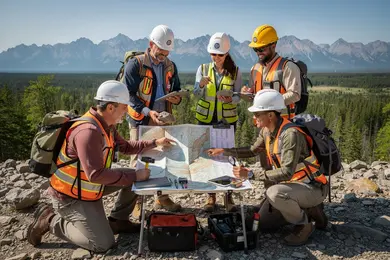
An online geosciences degree programs for environmental consulting require candidates to navigate complex skill gaps between theoretical coursework and practical field experience. Such degrees equip students with specialized expertise in earth systems, geochemistry, and geospatial data analysis, essential for evaluating environmental impact and designing remediation strategies. However, employers in environmental consulting prioritize applicants who supplement online learning with tangible fieldwork or internships, as real-world data collection and assessment remain critical hiring criteria.
Prospective students must carefully assess program accreditation and alignment with state licensing prerequisites, especially when aiming for roles demanding professional geologist certification. Balancing academic requirements with practical involvement accelerates workforce readiness and visibly enhances employability. The Bureau of Labor Statistics reports a median annual wage of $99,240 for geoscientists with steady industry demand projected to grow 3% over the decade, illustrating stable opportunities for technically adept consultants focused on environmental issues.
For example, a graduate entering consulting on groundwater contamination will integrate geochemical modeling skills acquired online with actual site data to propose effective cleanup plans. Yet, employers often have limited tolerance for hires lacking demonstrated applied skills in high-stakes environmental assessments, pressing new professionals to actively seek field experience and certification pathways.
The value of online geosciences degrees hinges heavily on bridging academic knowledge and hands-on competencies, a challenge that working professionals pursuing online programs must strategically address. For those considering further specialization, exploring pathways such as a PhD data science online may complement their capabilities in handling large geospatial datasets and advanced modeling relevant to environmental consulting careers.
How do online geosciences programs compare with on-campus options for environmental consulting careers?
Choosing between online geosciences degree programs for environmental consulting requires evaluating how each format addresses hands-on experience crucial in hiring decisions. Employers prioritize candidates with direct skills in environmental site assessments, soil sampling, and GIS-competencies often strengthened by on-campus labs and internships. A significant 20% of earth and environmental science graduates enter environmental consulting roles post-bachelor's, indicating practical experience outweighs purely the mode of instruction.
Comparison of campus and online geosciences courses for environmental careers reveals tradeoffs: online options offer flexibility for working professionals to pivot careers without pausing employment. However, these programs must incorporate verified regional fieldwork since local firms, especially those in regulated jurisdictions, often require certified in-person training that some online degrees lack.
On-campus students typically access stronger networks through career services, job fairs, and cooperative education programs, enhancing internship placement that feeds directly into consulting careers. Students opting for online programs should assess their ability to independently secure field internships and experiential training needed for environmental consulting.
For those considering cost-effective pathways, online degrees may be viable but only when accompanied by adequate field experience. The following offers perspective on online study affordability and program options relevant to professionals balancing work and education. Explore the best online data science masters programs for comparison on cost and flexibility
What types of online geosciences degrees best align with environmental consulting roles?
Online bachelor's degrees focused on environmental geology or hydrogeology best suit those targeting environmental consulting roles, as these programs develop skills directly applicable to contamination analysis, site remediation, and regulatory compliance. Candidates with broader geosciences degrees lacking specific environmental modules frequently encounter gaps that require costly, time-consuming additional certifications or on-the-job training to meet consulting employers' practical expectations.
Roles emphasizing environmental expertise sustain steady demand, with approximately 2,000 geoscientist openings annually per U.S. Bureau of Labor Statistics data. Mid-career professionals benefit from master's degrees in environmental geosciences or earth and environmental sciences, which provide advanced specialization in geospatial analysis, environmental impact assessment, and soil and groundwater science aligned with employer needs. Programs integrating internships or partnerships with environmental agencies notably improve graduate job-readiness.
Choosing among online geosciences degrees for environmental consulting careers involves weighing tradeoffs between theoretical breadth and hands-on experience. Programs lacking applied project work risk underemployment by limiting real-world consultant preparedness. Conversely, those embedding software training and field methods align better with typical consulting workflows.
Prospective students should compare curricula carefully, considering industry relevance and career trajectory impact. For insights beyond geosciences, evaluating whether is library science a good degree might also inform decisions about interdisciplinary environmental or information management roles.
How can you verify accreditation and program quality for online geosciences degrees?
Verifying accreditation for online geosciences programs in the United States requires scrutiny beyond regional recognition to include specialized endorsements pertinent to the field, such as approval from the American Geosciences Institute. This layered validation is essential since employer recognition and compliance with regulatory standards hinge on these credentials, particularly in specialized consulting roles where environmental regulations dictate operational legitimacy.
Quality assurance standards for online geosciences degrees in the United States must be evaluated against curriculum rigor and alignment with labor market demands. Employers prioritize graduates skilled in applied data analysis, fieldwork, and current environmental policy frameworks. Transparency in employment outcomes is a tangible indicator of program effectiveness; absence of such data raises concerns about long-term return on educational investment.
Assessing faculty expertise is critical-programs led by instructors with hands-on consulting or government agency experience equip students with more than theoretical knowledge. Additionally, the extent of support for remote learners, including virtual labs and access to internships, directly impacts readiness for roles that blend remote analysis with on-site environmental consulting.
Prospective students should consult licensing boards relevant to their intended consulting focus to confirm that program accreditation meets certification prerequisites, thereby preventing costly career delays. For those considering a shift or entry into technical fields, comparing pathways such as an electrical engineering degree online for veterans can reveal tradeoffs in skill specificity and geographic flexibility.
What courses and specializations in geosciences are most valuable for environmental consultants?
Environmental consulting in geosciences demands more than foundational knowledge; it requires precise skills in data-driven environmental assessment tied closely to regulatory frameworks. Mastery of hydrogeology, environmental chemistry, and soil science informs contamination evaluation, but specialization in Geographic Information Systems (GIS) significantly elevates employability. GIS roles are expanding at roughly 5% growth through 2030, with some forecasts reaching 9% annual growth through 2028, reflecting strong market demand for spatial data proficiency.
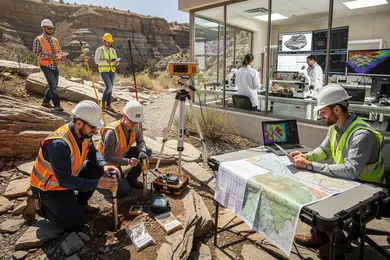
Practical competence in environmental sampling and analytical methods is equally critical, directly affecting a consultant's ability to reduce costly project delays. For example, a consultant on brownfield redevelopment leverages hydrogeology and GIS to map contamination spread and model groundwater flow, translating complex datasets into reports that meet EPA standards. This integration of spatial and field data skills signals which programs will deliver workforce-ready professionals.
Students balancing GIS specialization with applied coursework in environmental policy and law better navigate multifaceted compliance challenges, a non-negotiable in consulting roles. Field experience and training on industry-standard software supplement theoretical learning, addressing a common gap that impedes job readiness. Without these practical elements, the transition to the workforce risks delay or mismatch.
What are the typical admission requirements for online geosciences programs in the U.S.?
Admission criteria for online geosciences programs in the U.S. require more than minimal academic credentials; they reflect anticipated workforce demands and the need for technical competency. Candidates typically present a high school diploma or equivalent with competencies in math and sciences such as chemistry, physics, and biology. Programs often set minimum GPA thresholds around 2.5 to 3.0 and may or may not mandate SAT/ACT scores depending on selectivity and evolving test policies.
Applicants must provide letters of recommendation emphasizing analytical aptitude and dedication to scientific inquiry. A personal statement is standard, requiring clear articulation of career objectives, particularly essential for professionals shifting into environmental consulting. Entry into this sector frequently depends on prior exposure to geology, environmental science, and data analysis, making prerequisite coursework and relevant internships pivotal.
Students from unrelated backgrounds face the additional hurdle of completing leveling courses before program start, a practical barrier that influences time and cost investments. Some programs add the requirement or strong recommendation to access GIS software and laboratory simulations remotely, imposing technical proficiency beyond academics.
Employment data from a leading Earth and Environmental Science department reveals that roughly 25% of graduates move into consulting roles, illustrating that admissions committees prioritize real-world readiness and targeted skill sets over broad academic performance alone.
How long do online geosciences degrees take and what do they typically cost?
Completing an online geosciences degree typically mirrors the standard four-year timeline of on-campus bachelor's programs, though part-time or accelerated options may extend or shorten this to three to six years depending on course load and transfer credit acceptance. Employers in environmental consulting often expect candidates to demonstrate foundational fieldwork and data analysis skills, making programs that include hands-on components and partnerships with government or industry valuable for immediate employability.
Cost considerations vary significantly depending on residency and institution type, with public universities charging roughly $10,000 to $30,000 for in-state students, while private or out-of-state tuition can reach $60,000 or more. Graduate degrees add two to three years and escalate expenses to $20,000-$50,000 or higher, making financial planning essential, especially for professionals balancing work and study.
Students must account for additional expenses such as specialized software, field equipment, and occasional travel to field sites-elements often required by environmental consulting employers. About 10% of graduates enter government agencies, which typically offer lower starting salaries but stronger benefits and stability compared to private firms. This dynamic creates a tradeoff between income security and earning potential that prospective students must weigh.
Success hinges on selecting programs offering internships or field partnerships; absence of experiential learning can lengthen job searches and limit entry-level roles. Careful budgeting, scheduling, and evaluation of program format are critical to avoid extended debt or stalled career progress in this competitive technical field.
What entry-level and advanced environmental consulting jobs can a geosciences degree lead to?
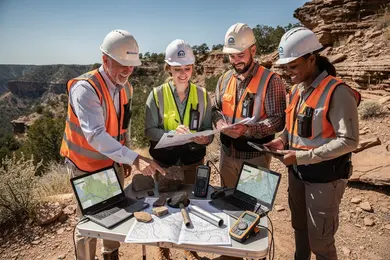
Employers filling entry-level environmental consulting roles for candidates with a geosciences degree expect a foundation in practical field skills such as soil sampling, groundwater monitoring, and environmental impact assessments. Positions like environmental field technician or junior hydrogeologist typically support larger teams and require competence with GIS software, regulatory compliance, and baseline risk assessment methods to minimize onboarding time. For example, junior hydrogeologists contribute directly to essential groundwater modeling used in contaminated site remediation, aligning with stringent regulatory demands.
Advanced roles such as senior environmental consultant and remediation project manager demand greater expertise in project leadership, complex geospatial analysis, and compliance with federal and state permitting standards. These positions balance multidisciplinary coordination, financial oversight, and regulatory adherence, often requiring graduate-level education or equivalent experience to meet employer expectations.
The disconnect between clean energy sector growth-estimated at 11% to 12%-and the influx of qualified candidates, which is roughly half that rate, intensifies competition for graduates with specialized environmental consulting skills. Candidates targeting niches like carbon capture or renewable project compliance report higher placement success and salary advantages.
What is the salary potential and job outlook for geoscientists in environmental consulting?
Entry-level salaries for geoscientists in environmental consulting start just above $35,000, with significant variability tied to specialization and credentials. For instance, petroleum geologists often begin near $75,000, reflecting sector-specific demand and technical complexity. Employment growth is projected at 6% over the next decade, driven primarily by environmental regulations and shifts in the energy landscape.
Advancement and salary progression hinge on technical expertise and educational background. Graduate degrees and certifications can increase median earnings by 20-30%, giving candidates a critical edge amid competitive hiring. Those without these credentials typically face slower wage growth and reliance on contract positions, which reduce income stability.
Practical job roles span water resource management, contamination assessment, and land reclamation, with emerging fields like hazardous waste remediation commanding higher pay due to regulatory challenges. Urban infrastructure and renewable energy projects also offer faster salary escalation but require navigating location-specific demand and competition.
Prospective students must balance the upfront costs and time of advanced degrees against long-term income benefits, considering that entry salaries near $35,000 provide limited financial flexibility. Employers emphasize analytical skills, GIS proficiency, and field experience as baseline criteria for promotion and salary increases in environmental consulting.
How should you choose the right online geosciences program for your consulting career goals?
Employers in environmental consulting prioritize candidates with applied skills in site assessment, regulatory compliance, and GIS technologies, combined with certified technical competencies and strong analytical abilities. Selecting an online geosciences program requires scrutinizing whether its curriculum directly maps to these workforce demands rather than relying solely on broad environmental science credentials.
Graduate employment data offers a practical benchmark: approximately 68% of environmental science degree holders secure relevant jobs within three years. This metric reveals that program quality and industry alignment materially affect career traction. Programs embedding internships or cooperative education provide essential experiential learning and networking opportunities; purely online formats lacking these components compel students to source field experience independently, posing a significant tradeoff.
Logistical factors also shape outcomes. A mid-career professional targeting hydrological consulting must verify course content in groundwater modeling and environmental regulations-skills distinct from those needed for geotechnical consulting, which demands soil mechanics and hazard analysis proficiency. Access to faculty with active consulting roles and robust career services focused on environmental sectors increases practical relevance and market connectivity.
Transparency in job placement rates and employer engagement data functions as a crucial signal of a program's alignment with consulting career paths, reducing the risk of time and financial investments yielding limited returns.
Other Things You Should Know About Geosciences
Yes, practical experience through internships or fieldwork is often indispensable despite completing an online geosciences degree. Employers in environmental consulting prioritize candidates who demonstrate hands-on skills in data collection, site assessments, and environmental sampling, which online coursework alone rarely provides. Candidates should seek programs that incorporate or strongly encourage local internships or partnerships with regional firms to ensure relevant, practical exposure.
Employers increasingly accept online geosciences degrees but often scrutinize the program's rigor and the candidate's practical competencies more closely. Graduates from online programs that lack integrated labs or field components may face challenges competing for roles requiring immediate technical proficiency. Prioritizing accredited programs with clear experiential components can mitigate employer skepticism and improve job market positioning.
Yes. For roles tied to licensure or employer screening, the degree should come from an ABET-accredited program in geoscience, geology, or a closely related field. Many states and consulting firms require accredited coursework for later Professional Geologist licensure, plus 30 to 36 semester credits in geoscience.
References
- Careers in Geoscience: Environment https://www.aig.org.au/education/careers-in-geoscience/careers-in-geoscience-environment/
- Geologists: Salary, career path, job outlook, education and more - RaiseMe https://www.raise.me/careers/life-physical-and-social-science/geoscientists/geologists/
- Is Your Online Degree Legitimate? How to Verify Private University Approval https://matchtocollege.com/blog/verify-private-university-online-degree-approval
- Are Online Degrees Accredited? How to Identify Quality Distance Learning Programs https://www.umassglobal.edu/blog-news/online-degrees-accredited-identify-quality-distance-learning-programs
- Online Geoscience Degrees: Top Schools and All Programs in 2026 https://www.gisdegree.org/online/geoscience-degrees/
- Environmental Consulting Jobs: Career Guide for Science Grads | Extern https://www.extern.com/post/environmental-consulting-jobs-career-guide
- The Geological Society - Degree Accreditation https://www.geolsoc.org.uk/education-and-resources/universities/university-degree-accreditation/
- How to Start a Geology Consulting Business https://www.aegweb.org/index.php
- Geoscience Jobs in Industry https://www.grow-geocareers.com/exploreindustries
- Environmental Geoscience Major | SUNY Plattsburgh https://www.plattsburgh.edu/programs/environmental-geoscience-major.html