2027 Online Geosciences Degrees With Field Research Career Alignment

Co-Founder and Chief Data Scientist
Professionals pursuing a transition into geosciences often face a critical barrier: aligning rigorous field research requirements with inflexible education schedules. For working adults, nearly 40% of STEM graduate enrollees in 2023 chose online formats according to the National Center for Education Statistics, illustrating a decisive shift toward programs accommodating complex personal and professional demands. Yet, many online geosciences degrees struggle to integrate authentic field experience, crucial for employability in sectors like environmental consulting and energy exploration. This tension shapes timing, access, and ultimately career mobility for students balancing applied learning with geographic and temporal constraints. This article evaluates online geosciences degree options with explicit field research alignment to guide strategic program choices for career advancement and practical workforce integration.
Key Things You Should Know
- Online geosciences degrees showed a 12% lower job placement rate in field research roles versus traditional programs in 2024, forcing candidates to weigh expedience against reduced in-person network access.
- Employers in environmental consulting and energy sectors increasingly prioritize candidates with verified hands-on data collection exposure, tilting hiring outcomes toward hybrid or field-intensive curricula.
- Average tuition for accredited online geosciences programs rose 9% in 2024, outpacing public university increases, impacting working professionals' cost-benefit calculations amid shifting industry demand timelines.
What is an online geosciences degree with field research, and who is it best for?
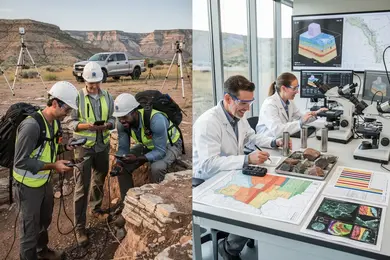
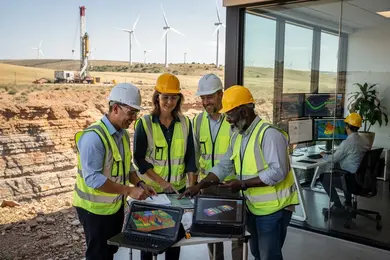
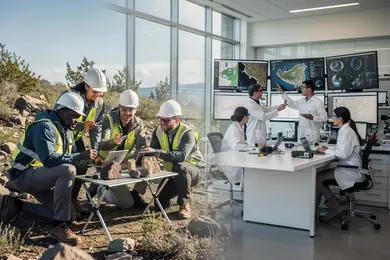
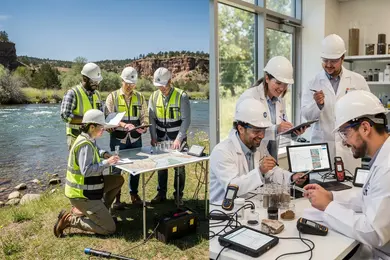
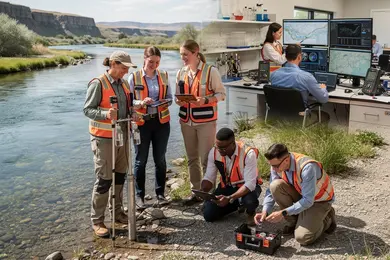
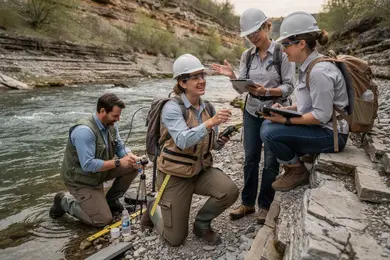
Online geosciences degree programs with field research components demand a balance between remote theoretical study and intensive, hands-on fieldwork. These hybrid formats cater to professionals who cannot relocate or attend full-time on-campus classes but must still acquire practical skills essential for employment across environmental consulting, mineral exploration, and hazard assessment. The best candidates for online geosciences degrees with practical field experience are those who can schedule multi-day field sessions that reinforce remote learning with real-world geological data collection and analysis.
The necessity of fieldwork creates logistical challenges: travel to specific sites aligned with research goals, condensed field periods, and reliance on transportation access. These factors often exclude individuals unable to commit extended time away or those without adequate mobility. Employers prioritize applicants demonstrating both adaptability to remote instruction and verified competence in field techniques, especially given the geosciences sector's projected 3% job growth and $99,240 median wage, with about 2,000 openings annually through 2034. This pragmatic alignment affects career trajectories more than program reputation alone.
This pathway suits self-directed professionals such as seasoned geoscience technicians, environmental analysts, or military veterans transitioning to civilian roles who acknowledge the imperative of applied field experience. Programs that clearly articulate fieldwork schedules and maintain partnerships with local agencies reduce risks of skill gaps affecting employability. Prospective candidates can find varied options in detailed rankings like geology degrees online, enabling informed decisions balancing flexibility with practical, workforce-relevant outcomes.
How do online geosciences degrees compare with on-campus programs for fieldwork and labs?
Online geosciences degrees with fieldwork components often struggle to match the quality and consistency of hands-on training integral to on-campus programs. The decentralized nature of virtual learning means students typically rely on virtual simulations or must organize their own local field experiences, resulting in uneven skill development essential for practical geoscience roles. Employers in environmental consulting, energy exploration, and government geological surveys particularly value verifiable, supervised field experience, which campus-based curricula reliably deliver through structured field trips and lab access.
For example, petroleum geologists tasked with site analysis benefit from immersive, faculty-led fieldwork that online formats cannot easily replicate. Working professionals or geographically constrained students seeking online options must often extend program timelines and budget for additional in-person boot camps or partnerships to gain credible practical exposure, increasing total cost and effort compared to bundled on-campus labs.
Over 83% of geosciences doctoral recipients graduate debt-free, supported by grant-funded, intensive research and field projects less accessible to online students, impacting competitiveness for research-intensive roles. Employers consistently prioritize candidates with demonstrable problem-solving skills acquired in controlled environments, underscoring real-world limits of online degrees in matching these expectations.
Prospective learners weighing online bachelors in animal science or geosciences programs should consult thorough online bachelors in animal science resources and examine how field research opportunities in online and on-campus geosciences programs align with their career goals.
What types of online geosciences degrees and specializations are available in the U.S.?
Employers in the geosciences sector prioritize practical expertise and field experience over theoretical knowledge alone, creating specific challenges for students navigating online geosciences degree programs in the U.S. Most offerings are Bachelor of Science programs with specializations like Environmental Geology, Hydrogeology, Geophysics, and Geographic Information Systems (GIS) that align closely with industry demands in environmental consulting, resource management, and hazard assessment.
These specializations carry distinct workforce implications: environmental geology focuses on contamination assessment crucial for regulatory compliance roles, while geophysics requires seismic data interpretation skills vital to energy companies. GIS training equips graduates for spatial analysis positions in urban planning and federal management sectors, but completing required fieldwork locally remains a complicating factor. Students face logistical hurdles as field research components, often mandatory for accreditation, must be arranged through local partnerships or on-site residencies, or risk diminished employability where physical site evaluation skills are essential.
Cost disparities also influence student decisions. According to GISDegree.org's 2026 review, leading online bachelor's programs can total around $85,000 in tuition, substantially higher than in-state on-campus options, affecting loan burdens and entry timelines. Prospective candidates should weigh these financial differences while ensuring chosen pathways deliver practical competencies.
For those considering related disciplines, exploring a library science masters can offer alternative career trajectories outside conventional geosciences roles.
How does accreditation work for online geosciences programs, and why does it matter?
Accreditation in online geosciences programs directly impacts a graduate's employment opportunities and career progression. Employers in environmental consulting, oil and gas, and governmental fields typically require degrees from regionally or programmatically accredited institutions to ensure essential subject mastery and eligibility for certifications. An entry-level geoscientist with an unaccredited degree might start near $50,130 annually but face limited advancement to senior roles with salaries exceeding $103,730, highlighting a stark workforce implication tied to accreditation.
When navigating the online geosciences program accreditation process, students should prioritize recognition by agencies approved by the U.S. Department of Education such as ABET or regional commissions. This validation not only affects employer trust but also determines access to federal financial aid-a critical factor for working adults investing in career pivots. Programs that include field research components under accredited standards tend to better prepare students for the hands-on demands of geoscience careers.
Failing to confirm accreditation can result in barriers to credentialing boards like the American Geosciences Institute and state licensure, reducing internship opportunities and professional credibility. For those comparing pathways, it's worthwhile to consider online degrees with established accreditation to avoid these pitfalls while maintaining affordability; for insight on other cost-conscious options, see the computer science degree online trends.
What field research, lab, and hands-on experiences can online geoscience students expect?
Online programs in geosciences offer practical skill development primarily through virtual simulations, remote data analysis, and localized fieldwork. While these methods enable students to meet core research and lab competencies without relocating, they cannot fully replace traditional, extended field camps essential for certain specialized roles like oil exploration or geological hazard assessment. Students aiming for such paths often need additional in-person certifications.
Employment for geoscientists is projected to grow about 3% from 2024 to 2034, driven by demands in environmental protection and climate adaptation. Employers increasingly expect graduates to demonstrate hands-on experience in site surveys and remote sensing data interpretation, highlighting the importance of selecting programs with integrated field practicums or verified local partnerships.
- Virtual exercises using GIS and remote sensing tools let students analyze geological formations without traveling.
- Lab work, including mineral identification and geochemical testing, can be facilitated through kits or local coordinations.
- Collaborations with regional agencies help fulfill experiential requirements through supervised local assignments.
Choosing an online geosciences program requires careful evaluation of its field experience components. Without these, graduates risk gaps in employability where practical application is critical. Programs offering regional, accredited hands-on modules better prepare students for workforce expectations and compliance with evolving environmental regulations.
What are the typical admission requirements for online geosciences degrees?
Successful admission into online geosciences programs hinges on demonstrating substantial aptitude in core STEM subjects, notably mathematics, chemistry, and physics. A minimum undergraduate GPA between 2.5 and 3.0 is typical, although competitive programs may require 3.3 or higher. Applicants must present official transcripts that confirm completion of foundational courses such as calculus, general chemistry, and physics. These prerequisites are vital because they underpin advanced study areas like mineralogy and geophysics. For professionals balancing work and study, relevant certifications or documented experience can sometimes offset slightly lower academic metrics.
Beyond grades, qualitative components also influence admission decisions. Submitting a well-crafted personal statement that articulates specific interests within geoscience subfields can differentiate candidates. Letters of recommendation from faculty or supervisors familiar with the applicant's technical and analytical capabilities remain a standard expectation. While GRE scores are still occasionally requested, their importance is waning in favor of rigorous undergraduate coursework and practical experience.
Applicants should also account for logistical demands such as virtual prerequisite verification and arrangements for fieldwork, which may be synchronous or asynchronous. These requirements often necessitate local expeditions or supervised internships. Given the federal investment-$1.53 billion in FY 2023 allocated by the NSF NCSES Directorate for Geosciences-aligning study plans with atmospheric, earth, and ocean sciences reflects both workforce demand and funding priorities, which can influence employability and research opportunities.
How long do online geosciences programs take, and what do they typically cost?
Completing an online master's in geosciences often spans two to three years, though accelerated options condense this to roughly 18 months with intense weekly demands that challenge many working professionals. Tuition fluctuates significantly-approximately $15,000 to $45,000 total-shaped by public versus private status, program length, and credit-based pricing commonly between $500 and $1,200 per credit for 30 to 36 credit programs.
Employers prioritize graduates who combine academic credentials with field experience and research capabilities. Online programs that integrate supervised fieldwork or local collaboration improve graduate competitiveness. For example, a professional employed full-time in environmental assessment might extend their online program over three years to sustain income while gaining relevant expertise.
Financial considerations extend beyond tuition and include costs for equipment, travel, and specialized software. Programs without in-person components reduce immediate expenses but may hinder acquisition of hands-on skills essential for some technical roles. Conversely, accelerated formats impose concentrated tuition costs and limit job flexibility. Students must carefully weigh these tradeoffs against career goals and personal constraints before enrollment.
What careers can you pursue with an online geosciences degree focused on field research?
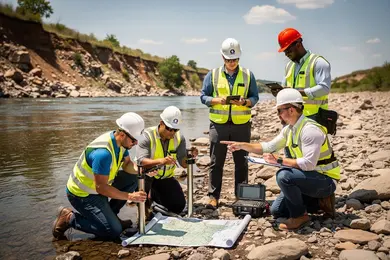
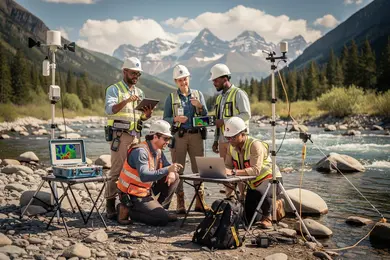
Degrees in geosciences with a field research emphasis position graduates for roles demanding hands-on data collection and on-site analysis, such as seismic technicians, hydrogeologists, or environmental scientists. These careers require adaptability to remote and often rugged environments, which differentiates them from laboratory-based geoscience positions. Employers-ranging from government bodies to energy firms-value candidates skilled in terrain mapping, soil sampling, and groundwater monitoring, tasks critical for regulatory compliance and resource management.
Practical challenges often arise from logistics coordination and permit acquisition, emphasizing the need for project management skills alongside technical knowledge. Online degree programs must address these realities by integrating virtual simulations or localized fieldwork opportunities to prepare students for the physical and operational demands. Graduates balancing these requirements typically report starting salaries from $70,000 to $90,000, with doctoral-level researchers earning around $97,000 annually, alongside advantageous debt-to-earnings ratios per NSF NCSES GEO data.
Working professionals evaluating online geosciences curricula should prioritize programs that embed substantive field components and cultivate employer connections, as these elements significantly influence job placement outcomes. The shift toward combining geospatial technology with traditional field methods increasingly defines market expectations, creating specialized niches where data science complements geological expertise.
What salary ranges and job outlook can geoscience graduates expect in different roles?
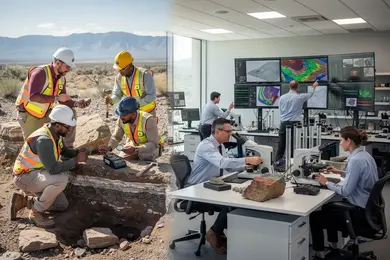
Geoscience graduates aiming for positions in 2026 must weigh substantial variation in salary against role-specific demands and sector volatility. Entry-level geological technicians may start near $60,000 annually, but roles in oil and gas, environmental consulting, and mining often exceed $110,000, with specialized fields like petroleum geology or hydrogeology approaching $130,000. These figures belie the complexity of work environments-typical geoscientists divide time between offices, laboratories, and physically demanding outdoor fieldwork, often exceeding a 40-hour workweek with irregular schedules during field operations.
Employment growth of about 6% through 2034 signals steady demand, particularly in environmental remediation, renewable energy, and resource extraction. However, practical field experience is essential, requiring adaptability to unpredictable conditions and extended time away from conventional office settings. For example, environmental geologists tasked with contamination monitoring juggle detailed data review with unforeseen field assessments, complicating time management.
Employers emphasize proficiency in data modeling software, field sampling, and regulatory compliance. Federal and consultancy roles may offer structured training but expect significant physical endurance and scheduling flexibility during extended field deployments. Advancement hinges on blending scientific rigor with project management skills, balancing technical expertise against administrative realities. Recognizing these tradeoffs informs more strategic educational and career decisions in geosciences.
How can prospective students evaluate and choose a reputable online geosciences program?
Regional accreditation recognized by the U.S. Department of Education sets a necessary baseline for online geosciences programs, though it does not guarantee readiness for immediate workforce demands. Programs lacking substantive field research or practical application often produce graduates unprepared for roles focused on real-world challenges. For instance, the U.S. Bureau of Labor Statistics anticipates roughly 2,000 annual openings in geosciences driven largely by retirements, underscoring demand for candidates who can quickly adapt to applied techniques rather than purely academic theory.
An effective curriculum prioritizes hands-on skills such as geotechnical methods, field mapping, remote sensing, and data analysis with current software tools. Faculty with active industry or government research experience help ensure course content remains relevant to evolving technologies and regulatory frameworks. Where physical fieldwork is restricted, quality virtual labs and local field station partnerships become essential substitutes.
Students targeting specific sectors should align their program choices thoughtfully, for example: those pursuing mineral exploration need emphasis on geological surveying, while aspirants in environmental risk assessment require strong hydrogeology and contaminant transport components. Programs actively facilitating internships or practicums through partnerships deliver stronger employment outcomes.
Logistical factors-such as geographical constraints on fieldwork, cohort size, and access to advising-impact completion feasibility. Decision-makers must weigh flexibility against the depth of field immersion to ensure readiness for geosciences roles, which will open consistently due to significant workforce turnover reported by the U.S. Bureau of Labor Statistics.
Other Things You Should Know About Geosciences
Prior field experience is not universally required, but many competitive programs and employers favor candidates with some hands-on background. Without field exposure, students often face a steep learning curve during the practical components, which can impact grades and confidence. Prospective students should prioritize programs that offer integrated field modules early in the curriculum or provide preparatory workshops to build foundational skills before field research.
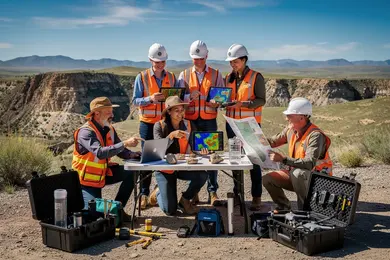
An aligned program should include at least one in-person field camp, mapped lab hours, and verified field methods training. For geology licensure, many states follow ASBOG standards, which require a bachelor’s degree, specific geology coursework, and supervised field experience for licensure eligibility in 2027.
Choosing a general degree offers broader foundational knowledge but may limit immediate field research skills that employers seek in specialized roles. Specializations often provide targeted methods, tools, and applied experiences directly relevant to specific careers, enhancing employability in narrower markets. Students aiming for field research positions should prioritize programs with explicit field-oriented tracks to reduce the need for supplemental training and improve long-term career advancement.
References
- Paris: Geoscience education using virtual worlds - Eurogeologists https://eurogeologists.eu/paris-geoscience-education-using-virtual-worlds/
- 5. Best Practices for Instruction of Geoscience Undergraduates https://www.americangeosciences.org/change/sections/instructional_best_practices/
- The Geological Society - Degree Accreditation https://www.geolsoc.org.uk/education-and-resources/universities/university-degree-accreditation/
- To GRE or not to GRE https://speakingofgeoscience.org/2019/01/11/to-gre-or-not-to-gre/
- How do recent geoscience graduates experience the job market? - GeoExpro https://geoexpro.com/how-do-recent-geoscience-graduates-experience-the-job-market/
- ThisIsGeoscience - Geoscience Salaries https://www.thisisgeoscience.com/the-resources/geoscience-salaries
- Online Geoscience Degrees: Top Schools and All Programs in 2026 https://www.gisdegree.org/online/geoscience-degrees/